
blog Articles
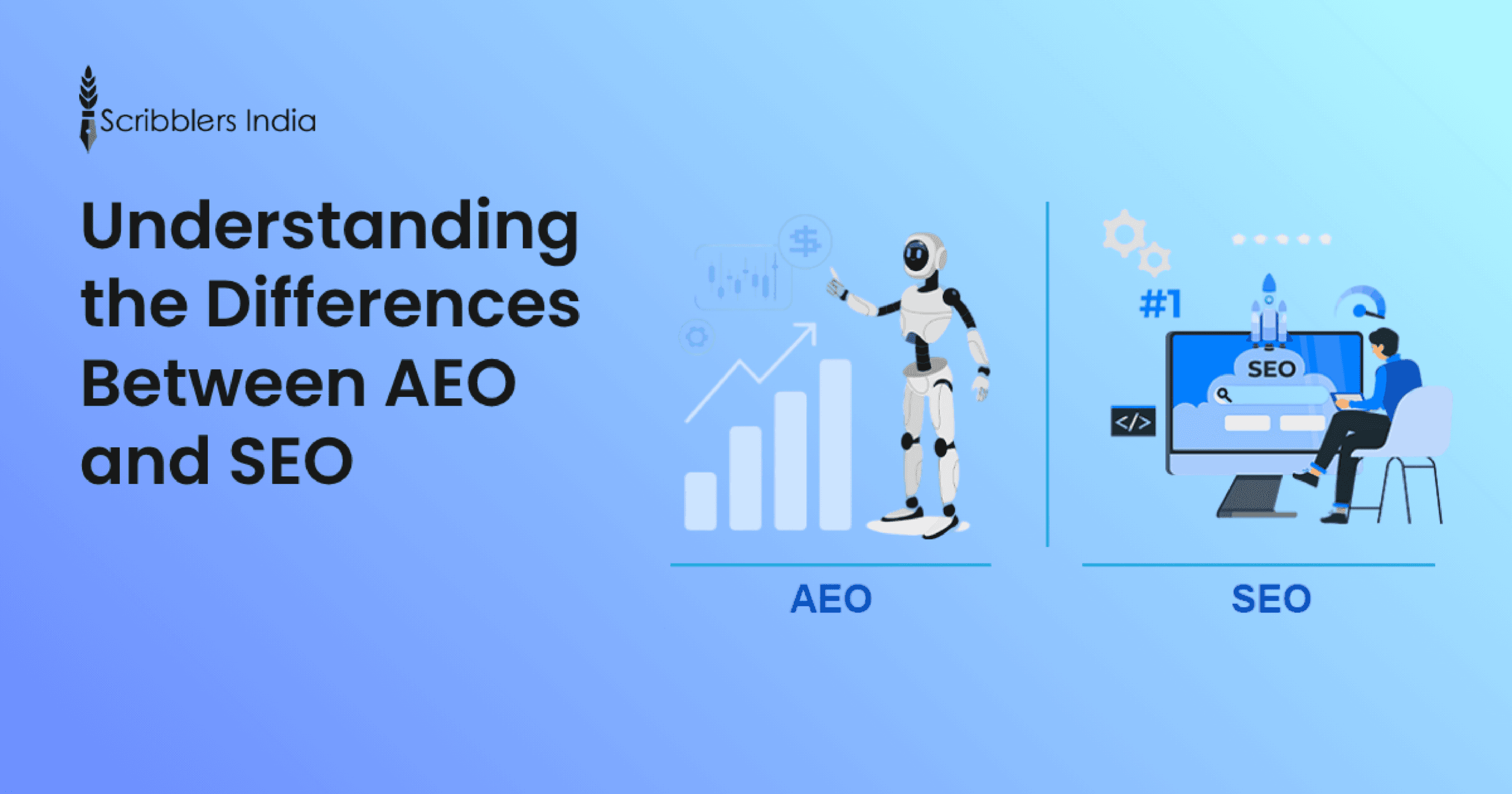
What are the Differences Between AEO vs SEO? (or Do You Need Both?)
Your website ranks on page one of Google. Traffic is solid. Then something shifts. Rankings hold, yet organic clicks drop. You investigate and find that Google is answering your audience’s questions before they ever reach your site. This scenario is playing out across industries in 2026, and it describes why the AEO vs SEO conversation has moved from theoretical to urgent. According to industry reports, 69% of Google searches now end without a click, up from 56% just 12 months earlier. This 13-point jump correlates directly with the expansion of Google AI Overviews, which extracts answers from multiple sources and delivers them at the top of the results page. For every 1,000 searches, only 360 clicks reach the open web. Traditional search engine optimization gets your content into the index. Answer engine optimization helps your content appear in the answer. The difference between AEO vs SEO is not about choosing one over the other. It is about understanding how each works, where they overlap, and how to run both to capture visibility across every layer of modern search. What Is AEO and What Does It Mean in Digital Marketing? Answer Engine Optimization (AEO) refers to the practice of structuring content so that AI-powered platforms, voice assistants, and AI-generated search features can extract, synthesize, and deliver it as a direct response to a user’s query. AEO in digital marketing emerged as a direct response to the rise of platforms like Google AI Overviews, ChatGPT, Perplexity, and voice assistants that answer user questions without displaying a ranked list of links. Rather than competing for a position on a results page, brands optimizing for AEO compete to become the cited, trusted source within the answer itself. The core objective of answer engine optimization vs search engine optimization comes down to this distinction: SEO optimizes for being found through a link. AEO optimizes for being used as the answer. Both forms of visibility have commercial value, but they operate through fundamentally different mechanisms and require different content structures to achieve. What Is the Difference Between AEO and SEO in Practice? The difference between AEO and SEO lies in their target output, success metrics, content format requirements, and the platforms they optimize for. SEO aims to rank a page. AEO aims to become the answer that a platform generates when a user asks a relevant question. Here is how the AEO vs SEO distinction plays out across the five dimensions that matter most to a content strategy: Target Platform and Output SEO targets traditional search engines, primarily Google and Bing, where the output is a ranked list of links that users browse and click. AEO vs SEO in terms of platform: AEO targets AI-powered answer surfaces, including Google AI Overviews, ChatGPT, Perplexity, Amazon Alexa, and Apple Siri. Here, the output is a synthesized response that may or may not include a clickable attribution. A business that appears in an AI Overview earns visibility even when the user never clicks through to the site. Success Metrics SEO success is measured through ranking positions, organic traffic volume, click-through rates, and keyword visibility scores. AEO success is measured through: Featured snippet wins AI Overview citation frequency Voice search answer inclusion People Also Ask appearances Brand mention volume across AI-generated responses Businesses moving into AEO need a measurement framework that captures answer-layer visibility rather than relying on website traffic as the sole indicator of search performance. Content Format Requirements SEO rewards comprehensive, keyword-rich, long-form content that covers a topic with enough depth and breadth to satisfy a range of search queries. The difference between AEO and SEO in content format is significant. AEO rewards concise, direct, question-answering paragraphs of 40 to 60 words that allow an AI system to extract a complete answer from a single content block. The structure that works best for AEO uses question-based headings followed immediately by a complete, standalone answer. This is the exact format that AI Overviews and voice assistants extract and deliver. Optimization Signals SEO optimization relies on keyword research, backlink building, metadata refinement, internal linking, site speed, and Core Web Vitals. The answer engine optimization vs search engine optimization comparison on signals indicates that AEO optimization relies on: Structured data markup (FAQPage, HowTo, Organization schema) E-E-A-T signals, including author credentials and citing original research Entity clarity that allows AI systems to understand exactly what a brand is, what it does, and who it serves. Relationship to Click-Through Traffic SEO is fundamentally traffic-oriented. Its commercial logic depends on users clicking through to the website where conversion opportunities exist. When it comes to AEO vs SEO on traffic indicates that AEO operates partly outside the click economy. When a brand’s content is cited in an AI Overview or read aloud by a voice assistant, it earns brand awareness and authority with an audience that may never visit the site during that session. This awareness-level visibility influences direct search behavior, branded queries, and offline purchase decisions in ways that click-based analytics do not capture. How Does SEO Work in 2026? SEO helps search engines discover, index, and rank your content for relevant queries. It remains essential in 2026 because the majority of commercial, transactional, and navigational queries continue to drive website clicks, and because strong SEO is the technical foundation AEO builds on. SEO operates across three interconnected disciplines. Technical SEO ensures that search engines can crawl, index, and understand your site structure. It is done through fast load times, clean URL architecture, proper robots.txt configuration, and schema markup. On-page SEO aligns your content with the specific queries your audience uses through keyword research, heading structure, meta descriptions, and internal linking. Off-page SEO builds domain authority, which signals to search engines that your site is a credible, trusted source through backlink acquisition and brand mentions across the web. Is SEO Still Relevant in 2026? The commercial case for continued SEO investment is clear. According to a recent analysis, 36% of searches still result in clicks. For transactional queries, where someone
Your website ranks on page one of Google. Traffic is solid. Then something shifts. Rankings hold, yet organic clicks drop. You investigate and find that Google is answering your audience’s questions before they ever reach your site. This scenario is playing out across industries in 2026, and it describes why the AEO vs SEO conversation has moved from theoretical to urgent. According to industry reports, 69% of Google searches now end without a click, up from 56% just 12 months earlier. This 13-point jump correlates directly with the expansion of Google AI Overviews, which extracts answers from multiple sources and delivers them at the top of the results page. For every 1,000 searches, only 360 clicks reach the open web. Traditional search engine optimization gets your content into the index. Answer engine optimization helps your content appear in the answer. The difference between AEO vs SEO is not about choosing one over the other. It is about understanding how each works, where they overlap, and how to run both to capture visibility across every layer of modern search. What Is AEO and What Does It Mean in Digital Marketing? Answer Engine Optimization (AEO) refers to the practice of structuring content so that AI-powered platforms, voice assistants, and AI-generated search features can extract, synthesize, and deliver it as a direct response to a user’s query. AEO in digital marketing emerged as a direct response to the rise of platforms like Google AI Overviews, ChatGPT, Perplexity, and voice assistants that answer user questions without displaying a ranked list of links. Rather than competing for a position on a results page, brands optimizing for AEO compete to become the cited, trusted source within the answer itself. The core objective of answer engine optimization vs search engine optimization comes down to this distinction: SEO optimizes for being found through a link. AEO optimizes for being used as the answer. Both forms of visibility have commercial value, but they operate through fundamentally different mechanisms and require different content structures to achieve. What Is the Difference Between AEO and SEO in Practice? The difference between AEO and SEO lies in their target output, success metrics, content format requirements, and the platforms they optimize for. SEO aims to rank a page. AEO aims to become the answer that a platform generates when a user asks a relevant question. Here is how the AEO vs SEO distinction plays out across the five dimensions that matter most to a content strategy: Target Platform and Output SEO targets traditional search engines, primarily Google and Bing, where the output is a ranked list of links that users browse and click. AEO vs SEO in terms of platform: AEO targets AI-powered answer surfaces, including Google AI Overviews, ChatGPT, Perplexity, Amazon Alexa, and Apple Siri. Here, the output is a synthesized response that may or may not include a clickable attribution. A business that appears in an AI Overview earns visibility even when the user never clicks through to the site. Success Metrics SEO success is measured through ranking positions, organic traffic volume, click-through rates, and keyword visibility scores. AEO success is measured through: Featured snippet wins AI Overview citation frequency Voice search answer inclusion People Also Ask appearances Brand mention volume across AI-generated responses Businesses moving into AEO need a measurement framework that captures answer-layer visibility rather than relying on website traffic as the sole indicator of search performance. Content Format Requirements SEO rewards comprehensive, keyword-rich, long-form content that covers a topic with enough depth and breadth to satisfy a range of search queries. The difference between AEO and SEO in content format is significant. AEO rewards concise, direct, question-answering paragraphs of 40 to 60 words that allow an AI system to extract a complete answer from a single content block. The structure that works best for AEO uses question-based headings followed immediately by a complete, standalone answer. This is the exact format that AI Overviews and voice assistants extract and deliver. Optimization Signals SEO optimization relies on keyword research, backlink building, metadata refinement, internal linking, site speed, and Core Web Vitals. The answer engine optimization vs search engine optimization comparison on signals indicates that AEO optimization relies on: Structured data markup (FAQPage, HowTo, Organization schema) E-E-A-T signals, including author credentials and citing original research Entity clarity that allows AI systems to understand exactly what a brand is, what it does, and who it serves. Relationship to Click-Through Traffic SEO is fundamentally traffic-oriented. Its commercial logic depends on users clicking through to the website where conversion opportunities exist. When it comes to AEO vs SEO on traffic indicates that AEO operates partly outside the click economy. When a brand’s content is cited in an AI Overview or read aloud by a voice assistant, it earns brand awareness and authority with an audience that may never visit the site during that session. This awareness-level visibility influences direct search behavior, branded queries, and offline purchase decisions in ways that click-based analytics do not capture. How Does SEO Work in 2026? SEO helps search engines discover, index, and rank your content for relevant queries. It remains essential in 2026 because the majority of commercial, transactional, and navigational queries continue to drive website clicks, and because strong SEO is the technical foundation AEO builds on. SEO operates across three interconnected disciplines. Technical SEO ensures that search engines can crawl, index, and understand your site structure. It is done through fast load times, clean URL architecture, proper robots.txt configuration, and schema markup. On-page SEO aligns your content with the specific queries your audience uses through keyword research, heading structure, meta descriptions, and internal linking. Off-page SEO builds domain authority, which signals to search engines that your site is a credible, trusted source through backlink acquisition and brand mentions across the web. Is SEO Still Relevant in 2026? The commercial case for continued SEO investment is clear. According to a recent analysis, 36% of searches still result in clicks. For transactional queries, where someone
What Are Professional Ebook Writing Services: How They Turn Expertise into a Revenue Asset?
Your knowledge is sitting inside your business, in the heads of your subject-matter experts, buried in presentations, scattered across internal frameworks that prospects never see. With professional ebook writing services, you can unlock that expertise and transform it into a powerful asset to generate qualified leads, build authority, and shorten your sales cycle. A well-written ebook gives that knowledge a permanent and distributable form that works for your business long after it is published. According to industry reports, ebooks accounted for 39.5% of all demand in B2B content marketing, with total registrations rising 34.5% year over year. That figure makes ebooks one of the most consistently effective gated content formats available to modern marketers. Content marketing generates a 3-to-1 return on investment, outperforming paid advertising. A professionally written ebook, placed behind a strategically designed landing page, functions as a permanent lead generation engine that compounds in value over time rather than stopping the moment a campaign budget runs out. What Do Professional Ebook Writing Services Actually Include? Professional ebook writing services include content strategy development, research, writing, editing, design, and delivery of a completed and formatted ebook. Then you can publish, gate, or distribute it as part of a content marketing program. The scope of ebook writing services includes the following deliverables: Topic Strategy and Audience Mapping A skilled ebook writing agency begins every engagement with an audience and topic strategy session. The goal is to identify the specific pain point or knowledge gap that the ebook will address, determine where in the buyer’s journey the reader sits, and align the ebook’s purpose with a defined business outcome. This can be email capture, sales enablement, or category authority building. Without this step, even a well-written ebook fails to attract the right readers or convert them into leads. Research and Content Architecture Ebook writing services for business involve substantive research into the topic, your industry, your competitors’ existing content, and the questions your target audience is actively asking. This research phase produces a detailed outline that maps every chapter, section, and call-to-action before the writing begins. A strong architecture ensures logical flow from the first page to the final conversion moment. This prevents the rambling structure that causes readers to abandon a download midway through. Long-Form Ghostwriting in Your Brand Voice The writing phase involves producing 5,000 to 20,000 words of audience-focused content that reads in your brand’s voice. It uses your preferred terminology and presents your methodology or perspective with the depth necessary to establish authority. A professional writer captures your thinking through briefs, interviews, or existing content. They then translate it into polished prose that sounds like your organization rather than a generic content mill. Professional Design and Visual Formatting A well-written ebook delivered in a poorly designed PDF fails to build the brand credibility it was meant to establish. Professional ebook writing services include graphic design that creates visual hierarchy, integrates branded color systems, and formats data into readable charts. They produce a finished document that feels as polished as anything a major publisher would release. The design turns a document into an asset your sales team is proud to share. Landing Page and Distribution Strategy Completing the ebook is only the starting point. A comprehensive ebook writing agency also guides or produces the landing page copy, the follow-up email sequence, and the social promotion assets that drive traffic to the download and ensure the content reaches its intended audience. This distribution layer is what separates an ebook that sits on a server from one that actively fills your pipeline. Why Should a Business Invest in Professional Ebook Writing Services? Professional ebook writing services deliver measurable business value through lead generation, authority building, and sales-cycle acceleration. This makes them one of the most cost-effective investments in long-form content. Here is why the investment consistently produces returns: Ebooks generate qualified, high-intent leads: When someone provides their name, email address, and company information to download a gated ebook, they are signaling genuine interest in the topic your business owns. As per industry reports, 80% of users would provide their email address in exchange for a white paper or ebook. This is a conversion rate that paid advertising campaigns rarely achieve on their own. A published ebook builds industry authority: Unlike a blog post that generates traffic and fades, a well-positioned ebook continues to be discovered through search, shared through professional networks, and referenced in sales conversations for years after its initial publication. Every download represents a new prospect who has spent 20 to 40 minutes engaging with your brand’s thinking. This is an engagement depth that no paid impression can replicate. Ebooks support multiple marketing functions: A single well-written ebook serves as a lead magnet on your website and a sales tool for your business development team. It also acts as a speaking reference for your executives and a social proof asset when download numbers are cited publicly. The multi-functional value of ebook content makes the cost per use significantly lower than that of any single-purpose content format. The cost advantage over paid advertising is significant: Content marketing services costs 62% less than outbound marketing while generating 3x more leads. A single ebook investment, managed properly, generates leads for two to three years. A comparable paid campaign stops generating leads the moment the budget is paused. What Is the Difference Between an Ebook and a Whitepaper for B2B Content Marketing and Lead Generation? An ebook and a whitepaper are both gated, long-form content assets used for B2B lead generation. The critical differences lie in audience, tone, depth of research, and where in the buyer’s journey each format performs best. An ebook is conversational, visually engaging, and accessible to a broad professional audience. It typically covers a subject at a strategic level, offering frameworks, best practices, and actionable guidance without requiring a deep technical background. A whitepaper is more academic in nature, presenting original research, data, or technical analysis for a specialized or senior audience that expects
Your knowledge is sitting inside your business, in the heads of your subject-matter experts, buried in presentations, scattered across internal frameworks that prospects never see. With professional ebook writing services, you can unlock that expertise and transform it into a powerful asset to generate qualified leads, build authority, and shorten your sales cycle. A well-written ebook gives that knowledge a permanent and distributable form that works for your business long after it is published. According to industry reports, ebooks accounted for 39.5% of all demand in B2B content marketing, with total registrations rising 34.5% year over year. That figure makes ebooks one of the most consistently effective gated content formats available to modern marketers. Content marketing generates a 3-to-1 return on investment, outperforming paid advertising. A professionally written ebook, placed behind a strategically designed landing page, functions as a permanent lead generation engine that compounds in value over time rather than stopping the moment a campaign budget runs out. What Do Professional Ebook Writing Services Actually Include? Professional ebook writing services include content strategy development, research, writing, editing, design, and delivery of a completed and formatted ebook. Then you can publish, gate, or distribute it as part of a content marketing program. The scope of ebook writing services includes the following deliverables: Topic Strategy and Audience Mapping A skilled ebook writing agency begins every engagement with an audience and topic strategy session. The goal is to identify the specific pain point or knowledge gap that the ebook will address, determine where in the buyer’s journey the reader sits, and align the ebook’s purpose with a defined business outcome. This can be email capture, sales enablement, or category authority building. Without this step, even a well-written ebook fails to attract the right readers or convert them into leads. Research and Content Architecture Ebook writing services for business involve substantive research into the topic, your industry, your competitors’ existing content, and the questions your target audience is actively asking. This research phase produces a detailed outline that maps every chapter, section, and call-to-action before the writing begins. A strong architecture ensures logical flow from the first page to the final conversion moment. This prevents the rambling structure that causes readers to abandon a download midway through. Long-Form Ghostwriting in Your Brand Voice The writing phase involves producing 5,000 to 20,000 words of audience-focused content that reads in your brand’s voice. It uses your preferred terminology and presents your methodology or perspective with the depth necessary to establish authority. A professional writer captures your thinking through briefs, interviews, or existing content. They then translate it into polished prose that sounds like your organization rather than a generic content mill. Professional Design and Visual Formatting A well-written ebook delivered in a poorly designed PDF fails to build the brand credibility it was meant to establish. Professional ebook writing services include graphic design that creates visual hierarchy, integrates branded color systems, and formats data into readable charts. They produce a finished document that feels as polished as anything a major publisher would release. The design turns a document into an asset your sales team is proud to share. Landing Page and Distribution Strategy Completing the ebook is only the starting point. A comprehensive ebook writing agency also guides or produces the landing page copy, the follow-up email sequence, and the social promotion assets that drive traffic to the download and ensure the content reaches its intended audience. This distribution layer is what separates an ebook that sits on a server from one that actively fills your pipeline. Why Should a Business Invest in Professional Ebook Writing Services? Professional ebook writing services deliver measurable business value through lead generation, authority building, and sales-cycle acceleration. This makes them one of the most cost-effective investments in long-form content. Here is why the investment consistently produces returns: Ebooks generate qualified, high-intent leads: When someone provides their name, email address, and company information to download a gated ebook, they are signaling genuine interest in the topic your business owns. As per industry reports, 80% of users would provide their email address in exchange for a white paper or ebook. This is a conversion rate that paid advertising campaigns rarely achieve on their own. A published ebook builds industry authority: Unlike a blog post that generates traffic and fades, a well-positioned ebook continues to be discovered through search, shared through professional networks, and referenced in sales conversations for years after its initial publication. Every download represents a new prospect who has spent 20 to 40 minutes engaging with your brand’s thinking. This is an engagement depth that no paid impression can replicate. Ebooks support multiple marketing functions: A single well-written ebook serves as a lead magnet on your website and a sales tool for your business development team. It also acts as a speaking reference for your executives and a social proof asset when download numbers are cited publicly. The multi-functional value of ebook content makes the cost per use significantly lower than that of any single-purpose content format. The cost advantage over paid advertising is significant: Content marketing services costs 62% less than outbound marketing while generating 3x more leads. A single ebook investment, managed properly, generates leads for two to three years. A comparable paid campaign stops generating leads the moment the budget is paused. What Is the Difference Between an Ebook and a Whitepaper for B2B Content Marketing and Lead Generation? An ebook and a whitepaper are both gated, long-form content assets used for B2B lead generation. The critical differences lie in audience, tone, depth of research, and where in the buyer’s journey each format performs best. An ebook is conversational, visually engaging, and accessible to a broad professional audience. It typically covers a subject at a strategic level, offering frameworks, best practices, and actionable guidance without requiring a deep technical background. A whitepaper is more academic in nature, presenting original research, data, or technical analysis for a specialized or senior audience that expects
What Is Generative Engine Optimization (GEO): Can GEO Boost Your AI Visibility?
Your next customer is asking ChatGPT for a vendor recommendation. Your ideal B2B prospect is running a Perplexity research query about solutions in your category. Google AI Overviews are now reaching over 2 billion users globally. In this new landscape, GEO services can help your business be found where these conversations are happening. The brand that gets cited in those answers earns the discovery, the trust, and often the deal before a competitor’s website is ever opened. This is the environment where generative engine optimization services have become a strategic priority. GEO is the discipline that determines whether AI platforms cite your brand or your competitor’s when users ask questions you should own. The GEO market was valued at $848 million in 2025 and is projected to reach $33.7 billion by 2034, a 50.5% compound annual growth rate. This guide explains what is GEO, how it works across every major AI platform, and what a proven GEO optimization strategy looks like for your business. What Is Generative Engine Optimization (GEO) in Digital Marketing? Generative engine optimization is the practice of structuring your content, brand signals, and technical setup so that AI-powered platforms select, extract, and cite your brand when generating answers to user queries. Unlike traditional SEO, which earns a ranked position in a list of links, what is GEO in SEO comes down to one outcome: your brand becomes part of the answer itself. The distinction matters because AI platforms like ChatGPT, Perplexity, and Google AI Overviews do not display a list of results. They synthesize information from multiple sources into a single conversational response and attribute specific claims to the sources they trust most. GEO services are the structured process of ensuring your content consistently meets the criteria those platforms use to select citation sources. The Technology Behind GEO: How RAG Works Most major AI search platforms use Retrieval-Augmented Generation, or RAG. The system retrieves relevant content from its index, evaluates it for factual accuracy and structural clarity, and then generates a human-readable answer incorporating cited claims. GEO for AI search works by making your content easy to retrieve, easy to evaluate, and easy to incorporate into the generated response. Content that leads with a direct answer, includes verifiable statistics, and uses question-format headings is far more likely to pass the RAG evaluation stage than content buried behind lengthy preambles. The Scale of the Opportunity AI-referred web sessions grew 527% year-over-year through mid-2025, according to industry reports. Yet only 20% of brands have begun implementing generative engine optimization. This gap is the first-mover advantage that well-structured GEO services in India can help you capture before the competitive window closes. Why GEO Is Not a Replacement for SEO What is GEO in SEO is one of the most frequently misunderstood questions in digital marketing today. Generative engine optimization extends and future-proofs your SEO investment. It does not replace it. Research confirms that 99.5% of Google AI Overview citations come from pages already ranking in the top ten organic results. This means your SEO foundation directly enables your GEO performance. The brands that win in AI search are almost always the ones with strong traditional SEO underpinning their content authority. How Is Generative Engine Optimization (GEO) Different from SEO and AEO? Generative engine optimization differs from SEO and AEO in what it optimizes for, how it measures success, and which signals it prioritizes. SEO earns a ranked position on a results page. AEO earns extraction into a featured snippet or direct answer box. GEO for AI search earns a citation inside an AI-generated response, where your brand’s data, definition, or expertise becomes part of the answer a user receives without clicking anywhere. Three Distinct Layers of Modern Visibility Think of these disciplines as three layers working together. SEO builds the infrastructure that makes content discoverable and authoritative. AEO formats content for quick extraction in answer boxes and voice responses. GEO services add a third layer: making content citable, quotable, and trustworthy for AI systems synthesizing information from thousands of user queries every minute. Removing any one layer weakens the other two. How GEO Measures Success Differently? Traditional SEO teams report on keyword rankings, organic traffic, and click-through rates. GEO optimization strategy requires a different measurement framework. The core metrics are: Citation frequency (how often AI platforms mention your brand) Share of voice (your citation rate compared to competitors) Citation sentiment (whether AI platforms describe your brand positively or neutrally) AI-referred traffic in Google Analytics 4. Brands cited in AI answers convert at 4.4 times the rate of standard organic visitors, according to Frase’s 2025 research, making this a high-value channel despite lower raw traffic volume. The Competitive Urgency Between 40% and 60% of cited sources rotate monthly across Google AI Mode and ChatGPT, according to 2026 industry analysis. This volatility creates continuous opportunity for brands that publish consistent, high-quality, structured content. The GEO services agency that helps you build topical authority and maintain content freshness is the one that gives you durable citation share even as platform algorithms evolve. How Do You Optimize Your Content to Appear in ChatGPT Search Results and Answers? Optimizing for ChatGPT requires a different approach from traditional SEO because ChatGPT evaluates content for encyclopedic depth, factual reliability, and entity recognition rather than keyword density or link profiles. Generative AI optimization for ChatGPT centers on creating comprehensive, self-contained answer passages that the platform can extract and synthesize with confidence. The Answer-First Content Structure ChatGPT uses Retrieval-Augmented Generation, which processes the opening content of any page first. The first 200 words of every article must answer the primary question directly and completely. This BLUF structure (Bottom Line Up Front) mirrors how AI systems parse content during the retrieval stage. A blog post that spends its first three paragraphs building context before reaching the answer will consistently lose citations to a competitor whose opening sentence states the answer plainly. Entity Authority and Brand Recognition ChatGPT drives 87.4% of all AI referral traffic
Your next customer is asking ChatGPT for a vendor recommendation. Your ideal B2B prospect is running a Perplexity research query about solutions in your category. Google AI Overviews are now reaching over 2 billion users globally. In this new landscape, GEO services can help your business be found where these conversations are happening. The brand that gets cited in those answers earns the discovery, the trust, and often the deal before a competitor’s website is ever opened. This is the environment where generative engine optimization services have become a strategic priority. GEO is the discipline that determines whether AI platforms cite your brand or your competitor’s when users ask questions you should own. The GEO market was valued at $848 million in 2025 and is projected to reach $33.7 billion by 2034, a 50.5% compound annual growth rate. This guide explains what is GEO, how it works across every major AI platform, and what a proven GEO optimization strategy looks like for your business. What Is Generative Engine Optimization (GEO) in Digital Marketing? Generative engine optimization is the practice of structuring your content, brand signals, and technical setup so that AI-powered platforms select, extract, and cite your brand when generating answers to user queries. Unlike traditional SEO, which earns a ranked position in a list of links, what is GEO in SEO comes down to one outcome: your brand becomes part of the answer itself. The distinction matters because AI platforms like ChatGPT, Perplexity, and Google AI Overviews do not display a list of results. They synthesize information from multiple sources into a single conversational response and attribute specific claims to the sources they trust most. GEO services are the structured process of ensuring your content consistently meets the criteria those platforms use to select citation sources. The Technology Behind GEO: How RAG Works Most major AI search platforms use Retrieval-Augmented Generation, or RAG. The system retrieves relevant content from its index, evaluates it for factual accuracy and structural clarity, and then generates a human-readable answer incorporating cited claims. GEO for AI search works by making your content easy to retrieve, easy to evaluate, and easy to incorporate into the generated response. Content that leads with a direct answer, includes verifiable statistics, and uses question-format headings is far more likely to pass the RAG evaluation stage than content buried behind lengthy preambles. The Scale of the Opportunity AI-referred web sessions grew 527% year-over-year through mid-2025, according to industry reports. Yet only 20% of brands have begun implementing generative engine optimization. This gap is the first-mover advantage that well-structured GEO services in India can help you capture before the competitive window closes. Why GEO Is Not a Replacement for SEO What is GEO in SEO is one of the most frequently misunderstood questions in digital marketing today. Generative engine optimization extends and future-proofs your SEO investment. It does not replace it. Research confirms that 99.5% of Google AI Overview citations come from pages already ranking in the top ten organic results. This means your SEO foundation directly enables your GEO performance. The brands that win in AI search are almost always the ones with strong traditional SEO underpinning their content authority. How Is Generative Engine Optimization (GEO) Different from SEO and AEO? Generative engine optimization differs from SEO and AEO in what it optimizes for, how it measures success, and which signals it prioritizes. SEO earns a ranked position on a results page. AEO earns extraction into a featured snippet or direct answer box. GEO for AI search earns a citation inside an AI-generated response, where your brand’s data, definition, or expertise becomes part of the answer a user receives without clicking anywhere. Three Distinct Layers of Modern Visibility Think of these disciplines as three layers working together. SEO builds the infrastructure that makes content discoverable and authoritative. AEO formats content for quick extraction in answer boxes and voice responses. GEO services add a third layer: making content citable, quotable, and trustworthy for AI systems synthesizing information from thousands of user queries every minute. Removing any one layer weakens the other two. How GEO Measures Success Differently? Traditional SEO teams report on keyword rankings, organic traffic, and click-through rates. GEO optimization strategy requires a different measurement framework. The core metrics are: Citation frequency (how often AI platforms mention your brand) Share of voice (your citation rate compared to competitors) Citation sentiment (whether AI platforms describe your brand positively or neutrally) AI-referred traffic in Google Analytics 4. Brands cited in AI answers convert at 4.4 times the rate of standard organic visitors, according to Frase’s 2025 research, making this a high-value channel despite lower raw traffic volume. The Competitive Urgency Between 40% and 60% of cited sources rotate monthly across Google AI Mode and ChatGPT, according to 2026 industry analysis. This volatility creates continuous opportunity for brands that publish consistent, high-quality, structured content. The GEO services agency that helps you build topical authority and maintain content freshness is the one that gives you durable citation share even as platform algorithms evolve. How Do You Optimize Your Content to Appear in ChatGPT Search Results and Answers? Optimizing for ChatGPT requires a different approach from traditional SEO because ChatGPT evaluates content for encyclopedic depth, factual reliability, and entity recognition rather than keyword density or link profiles. Generative AI optimization for ChatGPT centers on creating comprehensive, self-contained answer passages that the platform can extract and synthesize with confidence. The Answer-First Content Structure ChatGPT uses Retrieval-Augmented Generation, which processes the opening content of any page first. The first 200 words of every article must answer the primary question directly and completely. This BLUF structure (Bottom Line Up Front) mirrors how AI systems parse content during the retrieval stage. A blog post that spends its first three paragraphs building context before reaching the answer will consistently lose citations to a competitor whose opening sentence states the answer plainly. Entity Authority and Brand Recognition ChatGPT drives 87.4% of all AI referral traffic
Are You Ready for the Top Social Media Content Trends in 2026?
Do you remember when a static photo with a generic caption was enough to grow a following? In 2026, even high-quality video is evolving into something entirely new. You are no longer just fighting for attention in a feed; you are competing for relevance in a digital ecosystem that changes daily. Staying on top of social media content trends is essential in this rapidly changing environment. We are witnessing a fundamental shift in how people consume content. The behavior is shifting from scroll and consumption to search and discovery. Audiences are no longer passive observers. They are active hunters, looking for specific answers, communities, and experiences that feel hyper-real rather than curated. You might feel the fatigue of AI-generated noise. Users are tired of robotic, soulless posts and crave raw, unfiltered connection. If your strategy relies on 2025 tactics, you are already behind. This guide will break down the exact formats, strategies, and shifts you need to adopt now to stay relevant. We will explore how social media content trends in 2026 will redefine the way you build trust and drive revenue. Will AI Replace Human Creativity or Enhance It? AI will not replace human creativity; instead, it replaces mediocre execution and repetitive tasks. In 2026, the most successful brands use a hybrid model where AI handles data analysis, drafting, and personalization, while humans provide the emotional hook and strategic direction. Social media content trends in 2026 favor this cyborg approach over purely automated output. You must stop viewing AI as a replacement and start seeing it as an exoskeleton for your creativity. The future of social media marketing relies on ‘Cyborg Content; that presents a seamless blend of human empathy and machine speed. Ideation at Speed: You can use AI to generate 50 topic angles in seconds. However, you must choose the one that aligns with your brand values. Drafting, Not Writing: AI content creation tools in 2026 are excellent for creating rough drafts. A human editor must then refine the tone to ensure it sounds like you, not a robot. Predictive Analytics: AI analyzes historical data to predict which hooks will perform best. This allows you to publish with confidence rather than hope. Imagine creating a single video and using AI to automatically adjust the background visual based on the viewer’s location. This level of hyper-personalization is becoming standard. You can now speak directly to fifty different micro-niches without filming fifty separate videos. Our Visual Content Services leverage these advanced tools to enhance, not replace, human design. We ensure your brand visuals remain distinct and creative while utilizing the efficiency of modern technology. According to a 2026 industry report, 79% of marketers use AI daily, yet 44.7% report that AI-assisted content performs better when refined by human editors. Why Is Social Search Becoming the New SEO in 2026? Social Search is replacing traditional engines because younger generations trust user-generated video over text-based articles. They prefer seeing a product in action on TikTok or Instagram rather than reading a blog review. Therefore, optimizing your captions, on-screen text, and spoken audio for keywords is critical for visibility within social media content trends in 2026. Gen Z and Alpha do not Google a new restaurant; they TikTok it. They want visual proof, not just a Yelp review. This behavior makes Social Search Optimization (SSO) the most valuable skill for digital marketers. Keyword-Rich Captions: You must write captions that answer specific queries. Instead of Happy Monday, use Best B2B marketing agency in India for startups. Visual SEO: Platforms now analyze the text within your video and the objects on screen. Ensure your visuals clearly represent the topic you want to rank for. Spoken Keywords: Algorithms transcribe your audio to understand context. You should clearly speak your primary keywords within the first few seconds of your video. You need to create content that answers questions. Think of your social profile as a library of answers rather than a diary of updates. If you answer the questions your audience is asking, you will dominate the search results on every platform. Our thought leadership content services specialize in crafting content that answers complex industry questions, positioning your executives as the go-to experts in your field. Is Long-Form Video Making a Comeback in 2026? Yes, long-form video is returning as a dominant format because audiences are craving depth after years of fleeting short clips. Platforms like YouTube and even TikTok now reward 10-minute videos and podcasts that offer substantial value. This shift is one of the most surprising social media content trends in 2026 and signals a move toward edutainment. We spent years optimizing for 15-second attention spans. Now, the pendulum is swinging back. Users want to learn, not just be entertained. They are willing to watch a 20-minute breakdown if the content delivers tangible value. The Rise of Deep Dives: Video essays and mini-documentaries are performing exceptionally well. These formats allow you to explore nuance that a 60-second Reel cannot capture. Serialized Content: You can build a loyal following by creating a multi-part series. This encourages viewers to return to your profile repeatedly to watch the next episode. Podcast Integration: Video podcasts have become a primary method of consumption. Uploading full episodes to YouTube while clipping highlights for other apps is a winning strategy. Do not abandon your short-form video strategy entirely. Instead, use short clips as trailers that drive traffic to your longer, more substantive content. This ecosystem approach caters to both casual scrollers and deep learners. How Will Lo-Fi Content Redefine Authenticity in Social Media Content Trends in 2026? Lo-Fi content creates a sense of intimacy and trust that highly polished studio productions cannot match. Handheld footage, raw audio, and unscripted moments signal authentic brand storytelling to skeptical audiences. As one of the defining social media content trends in 2026, this aesthetic proves that real sells better than perfect. High-gloss 4K productions often look like commercials. When users see something that looks like an ad, they immediately scroll
Do you remember when a static photo with a generic caption was enough to grow a following? In 2026, even high-quality video is evolving into something entirely new. You are no longer just fighting for attention in a feed; you are competing for relevance in a digital ecosystem that changes daily. Staying on top of social media content trends is essential in this rapidly changing environment. We are witnessing a fundamental shift in how people consume content. The behavior is shifting from scroll and consumption to search and discovery. Audiences are no longer passive observers. They are active hunters, looking for specific answers, communities, and experiences that feel hyper-real rather than curated. You might feel the fatigue of AI-generated noise. Users are tired of robotic, soulless posts and crave raw, unfiltered connection. If your strategy relies on 2025 tactics, you are already behind. This guide will break down the exact formats, strategies, and shifts you need to adopt now to stay relevant. We will explore how social media content trends in 2026 will redefine the way you build trust and drive revenue. Will AI Replace Human Creativity or Enhance It? AI will not replace human creativity; instead, it replaces mediocre execution and repetitive tasks. In 2026, the most successful brands use a hybrid model where AI handles data analysis, drafting, and personalization, while humans provide the emotional hook and strategic direction. Social media content trends in 2026 favor this cyborg approach over purely automated output. You must stop viewing AI as a replacement and start seeing it as an exoskeleton for your creativity. The future of social media marketing relies on ‘Cyborg Content; that presents a seamless blend of human empathy and machine speed. Ideation at Speed: You can use AI to generate 50 topic angles in seconds. However, you must choose the one that aligns with your brand values. Drafting, Not Writing: AI content creation tools in 2026 are excellent for creating rough drafts. A human editor must then refine the tone to ensure it sounds like you, not a robot. Predictive Analytics: AI analyzes historical data to predict which hooks will perform best. This allows you to publish with confidence rather than hope. Imagine creating a single video and using AI to automatically adjust the background visual based on the viewer’s location. This level of hyper-personalization is becoming standard. You can now speak directly to fifty different micro-niches without filming fifty separate videos. Our Visual Content Services leverage these advanced tools to enhance, not replace, human design. We ensure your brand visuals remain distinct and creative while utilizing the efficiency of modern technology. According to a 2026 industry report, 79% of marketers use AI daily, yet 44.7% report that AI-assisted content performs better when refined by human editors. Why Is Social Search Becoming the New SEO in 2026? Social Search is replacing traditional engines because younger generations trust user-generated video over text-based articles. They prefer seeing a product in action on TikTok or Instagram rather than reading a blog review. Therefore, optimizing your captions, on-screen text, and spoken audio for keywords is critical for visibility within social media content trends in 2026. Gen Z and Alpha do not Google a new restaurant; they TikTok it. They want visual proof, not just a Yelp review. This behavior makes Social Search Optimization (SSO) the most valuable skill for digital marketers. Keyword-Rich Captions: You must write captions that answer specific queries. Instead of Happy Monday, use Best B2B marketing agency in India for startups. Visual SEO: Platforms now analyze the text within your video and the objects on screen. Ensure your visuals clearly represent the topic you want to rank for. Spoken Keywords: Algorithms transcribe your audio to understand context. You should clearly speak your primary keywords within the first few seconds of your video. You need to create content that answers questions. Think of your social profile as a library of answers rather than a diary of updates. If you answer the questions your audience is asking, you will dominate the search results on every platform. Our thought leadership content services specialize in crafting content that answers complex industry questions, positioning your executives as the go-to experts in your field. Is Long-Form Video Making a Comeback in 2026? Yes, long-form video is returning as a dominant format because audiences are craving depth after years of fleeting short clips. Platforms like YouTube and even TikTok now reward 10-minute videos and podcasts that offer substantial value. This shift is one of the most surprising social media content trends in 2026 and signals a move toward edutainment. We spent years optimizing for 15-second attention spans. Now, the pendulum is swinging back. Users want to learn, not just be entertained. They are willing to watch a 20-minute breakdown if the content delivers tangible value. The Rise of Deep Dives: Video essays and mini-documentaries are performing exceptionally well. These formats allow you to explore nuance that a 60-second Reel cannot capture. Serialized Content: You can build a loyal following by creating a multi-part series. This encourages viewers to return to your profile repeatedly to watch the next episode. Podcast Integration: Video podcasts have become a primary method of consumption. Uploading full episodes to YouTube while clipping highlights for other apps is a winning strategy. Do not abandon your short-form video strategy entirely. Instead, use short clips as trailers that drive traffic to your longer, more substantive content. This ecosystem approach caters to both casual scrollers and deep learners. How Will Lo-Fi Content Redefine Authenticity in Social Media Content Trends in 2026? Lo-Fi content creates a sense of intimacy and trust that highly polished studio productions cannot match. Handheld footage, raw audio, and unscripted moments signal authentic brand storytelling to skeptical audiences. As one of the defining social media content trends in 2026, this aesthetic proves that real sells better than perfect. High-gloss 4K productions often look like commercials. When users see something that looks like an ad, they immediately scroll
How to Use an Ebook to Generate Qualified Leads: A Strategic Guide
You face constant noise in the digital marketing ecosystem. Ads have become expensive, and standard blog posts often get skimmed rather than read. You need something stickier to capture attention. One proven strategy is to offer an ebook for lead generation. Most businesses struggle to capture email addresses effectively. Visitors come to your site, read a few lines, and leave without a trace. This is a wasted opportunity. In such situations using a lead magnet ebook is a smart move as it is not just a digital book; it is a high-value currency. An ebook serves as the ethical bribe you offer in exchange for a prospect’s contact details, turning anonymous traffic into known leads. In this guide, you will learn how to plan, write, design, and promote an ebook. This asset will not just sit on a digital shelf but will actively fill your sales pipeline with qualified leads. You will discover the exact strategies expert marketers use to transform passive readers into active buyers. Why is an Ebook the Most Effective Lead Magnet in 2026? Writing an ebook to generate leads offers high perceived value compared to simple checklists. An ebook for lead generation acts as a qualification filter, attracting serious prospects who are willing to invest time in solving their problems. Its longevity makes it an evergreen asset that builds trust and showcases your unique methodology long before a sales call happens. Unlike a simple checklist or a blog post, an ebook feels like a substantial product worth money. It implies depth, research, and authority. When you offer an ebook for lead generation, you signal that you are providing premium knowledge for free. This perception is critical for convincing a user to share their personal data. According to reports, 51% of B2B buyers rely on content like ebooks to research their buying decisions, proving that long-form content is critical for closing deals. High Perceived Value: Create an asset that readers perceive as a comprehensive resource saving them hours of research. This high value makes them willing to exchange their email address to access your specialized knowledge. Strong Qualification Filter: Ensure that only prospects with a specific, urgent pain point take the time to download your guide. This self-selection process guarantees that the leads you generate are genuinely interested in your solution. Long-Term Longevity: Build an evergreen asset that remains relevant for years with only minor annual updates required. This allows your ebook to continue generating qualified leads automatically while you focus on other critical tasks. Trust Before Sales: Deliver immense value upfront which proves your expertise before you ever ask for a credit card. This establishes a foundation of trust that makes the eventual sales conversation much smoother and easier. How Do You Choose a Topic For Your Ebook That the Audience Actually Wants? You must solve a specific pain point rather than writing broadly about your industry. Analyze your customer support tickets and sales questions to find real problems. Conduct a competitor gap analysis to offer something deeper than what exists and use keyword research to validate that people are actively searching for your chosen topic. Do not write about ‘Marketing’ broadly. Write about ‘How to Fix Your Email Open Rates.’ Specificity sells because it promises a concrete solution to a nagging problem. This is the core of successful B2B lead magnet ideas. You need to identify the ‘migraine’ problems that require immediate medication, rather than ‘vitamin’ topics that are merely nice to know. HubSpot reports that companies with 10-15 landing pages (often for ebooks) generate 55% more leads than those with under 10 pages, highlighting the need for diverse topics. Niche Down: You must focus on a specific migraine problem that needs immediate fixing rather than a general topic. Broad topics often get ignored by serious buyers while specific problems get downloaded by eager prospects. Analyze Support Tickets: You should look at the questions your sales and support teams receive every single day. If five customers ask the same question, five hundred others are searching for that exact answer online right now. Competitor Gap Analysis: You must identify what your competitors are missing and fill that void with superior content. If they have a beginner guide, you should write an advanced strategy guide to capture the more experienced market. Validate with Keywords: You need to use tools like Google Trends to see what your customers are actively searching for. Validating your idea with search volume data ensures that people are actually looking for your chosen topic. How Should You Structure Your Ebook for Maximum Engagement? You must respect the ‘skim’ factor by using headers, bullet points, and callout boxes. Visual storytelling through infographics is critical to break up text walls. Structure the content with an actionable arc: define the problem, provide the methodology, and conclude with a clear next step that leads to your product or service. People are busy and will judge your ebook in seconds. Use H2s, H3s, bullet points, and callout boxes to make it scannable. The ebook created for generating leads must be easy to digest. If a reader opens a PDF and sees a wall of text, they will likely close it immediately. You must facilitate a smooth reading experience. According to Demand Gen Report, 55% of B2B buyers say they rely more on practical content like case studies and visual guides within ebooks to make purchasing decisions. The Skim Factor: You must use bold text and short paragraphs to keep the reader moving down the page. Complex ideas should be broken down into easy-to-read bullets rather than dense paragraphs that cause reader fatigue. Visual Storytelling: You should turn boring statistics into colorful charts that are easy to understand at a glance. Visuals help retention and make the content feel premium, professionally produced, and worthy of the reader’s time. The Actionable Arc: You need to structure content logically by starting with empathy for the problem and moving to the solution. Dedicate the bulk of the book
You face constant noise in the digital marketing ecosystem. Ads have become expensive, and standard blog posts often get skimmed rather than read. You need something stickier to capture attention. One proven strategy is to offer an ebook for lead generation. Most businesses struggle to capture email addresses effectively. Visitors come to your site, read a few lines, and leave without a trace. This is a wasted opportunity. In such situations using a lead magnet ebook is a smart move as it is not just a digital book; it is a high-value currency. An ebook serves as the ethical bribe you offer in exchange for a prospect’s contact details, turning anonymous traffic into known leads. In this guide, you will learn how to plan, write, design, and promote an ebook. This asset will not just sit on a digital shelf but will actively fill your sales pipeline with qualified leads. You will discover the exact strategies expert marketers use to transform passive readers into active buyers. Why is an Ebook the Most Effective Lead Magnet in 2026? Writing an ebook to generate leads offers high perceived value compared to simple checklists. An ebook for lead generation acts as a qualification filter, attracting serious prospects who are willing to invest time in solving their problems. Its longevity makes it an evergreen asset that builds trust and showcases your unique methodology long before a sales call happens. Unlike a simple checklist or a blog post, an ebook feels like a substantial product worth money. It implies depth, research, and authority. When you offer an ebook for lead generation, you signal that you are providing premium knowledge for free. This perception is critical for convincing a user to share their personal data. According to reports, 51% of B2B buyers rely on content like ebooks to research their buying decisions, proving that long-form content is critical for closing deals. High Perceived Value: Create an asset that readers perceive as a comprehensive resource saving them hours of research. This high value makes them willing to exchange their email address to access your specialized knowledge. Strong Qualification Filter: Ensure that only prospects with a specific, urgent pain point take the time to download your guide. This self-selection process guarantees that the leads you generate are genuinely interested in your solution. Long-Term Longevity: Build an evergreen asset that remains relevant for years with only minor annual updates required. This allows your ebook to continue generating qualified leads automatically while you focus on other critical tasks. Trust Before Sales: Deliver immense value upfront which proves your expertise before you ever ask for a credit card. This establishes a foundation of trust that makes the eventual sales conversation much smoother and easier. How Do You Choose a Topic For Your Ebook That the Audience Actually Wants? You must solve a specific pain point rather than writing broadly about your industry. Analyze your customer support tickets and sales questions to find real problems. Conduct a competitor gap analysis to offer something deeper than what exists and use keyword research to validate that people are actively searching for your chosen topic. Do not write about ‘Marketing’ broadly. Write about ‘How to Fix Your Email Open Rates.’ Specificity sells because it promises a concrete solution to a nagging problem. This is the core of successful B2B lead magnet ideas. You need to identify the ‘migraine’ problems that require immediate medication, rather than ‘vitamin’ topics that are merely nice to know. HubSpot reports that companies with 10-15 landing pages (often for ebooks) generate 55% more leads than those with under 10 pages, highlighting the need for diverse topics. Niche Down: You must focus on a specific migraine problem that needs immediate fixing rather than a general topic. Broad topics often get ignored by serious buyers while specific problems get downloaded by eager prospects. Analyze Support Tickets: You should look at the questions your sales and support teams receive every single day. If five customers ask the same question, five hundred others are searching for that exact answer online right now. Competitor Gap Analysis: You must identify what your competitors are missing and fill that void with superior content. If they have a beginner guide, you should write an advanced strategy guide to capture the more experienced market. Validate with Keywords: You need to use tools like Google Trends to see what your customers are actively searching for. Validating your idea with search volume data ensures that people are actually looking for your chosen topic. How Should You Structure Your Ebook for Maximum Engagement? You must respect the ‘skim’ factor by using headers, bullet points, and callout boxes. Visual storytelling through infographics is critical to break up text walls. Structure the content with an actionable arc: define the problem, provide the methodology, and conclude with a clear next step that leads to your product or service. People are busy and will judge your ebook in seconds. Use H2s, H3s, bullet points, and callout boxes to make it scannable. The ebook created for generating leads must be easy to digest. If a reader opens a PDF and sees a wall of text, they will likely close it immediately. You must facilitate a smooth reading experience. According to Demand Gen Report, 55% of B2B buyers say they rely more on practical content like case studies and visual guides within ebooks to make purchasing decisions. The Skim Factor: You must use bold text and short paragraphs to keep the reader moving down the page. Complex ideas should be broken down into easy-to-read bullets rather than dense paragraphs that cause reader fatigue. Visual Storytelling: You should turn boring statistics into colorful charts that are easy to understand at a glance. Visuals help retention and make the content feel premium, professionally produced, and worthy of the reader’s time. The Actionable Arc: You need to structure content logically by starting with empathy for the problem and moving to the solution. Dedicate the bulk of the book
Which Social Media Trends in 2026 Will Dominate The Digital Landscape: 12 Key Developments
Have you noticed your feed changing lately, filled with hyper-specific recommendations? This is just one of the many social media trends in 2026 that are shaping our online experiences. You are not imagining it. The days of simply posting a photo and hoping for likes are officially dead. We are entering an era of intelligent immersion where ‘posting and ghosting’ guarantees failure. The algorithms have evolved from simple chronological displays to complex predictive engines that value retention and depth over mere frequency. The landscape is shifting beneath your feet. A recent industry report predicts that by 2026, traditional search engine volume will drop by 25% as users abandon generic search bars for AI-driven, hyper-personalized social discovery. This means your audience is no longer just scrolling; they are using social platforms as their primary source of truth. If your content marketing strategy is not optimized for this new behavior, you are essentially invisible to the modern consumer. To survive, you must adapt to a future where humans and AI work together to cut through the noise. We have analyzed the data to bring you the top 12 social media trends in 2026 that will define your success. 1. Gen Z is Choosing Social Platforms Over Google for Local Searches Younger generations now trust platforms like TikTok and Instagram more than traditional search engines for discovery. Reports indicate that 46% of Gen Z now prioritizes social apps over Google for discovery, you must optimize content with visual elements rather than SEO-bloated text. They want authentic human validation, not just links. The way we find information has fundamentally changed. You likely search for a restaurant on Instagram to see the food rather than reading a text review. This behavior is driving one of the biggest social media trends in 2026, forcing brands to rethink their visibility strategy. Optimize Captions: You cannot rely on hashtags alone anymore. You need to write descriptive captions rich with the keywords your customers actually type into the search bar. Create Visual Answers: You should build a library of videos that answer specific questions. If someone asks ‘how to style a scarf,’ your video needs to be the top result. Focus on Local Tags: You must tag your locations precisely. Social maps are becoming the new Yellow Pages, and social search optimization ensures you are visible when users browse their area. Profile as Landing Page: Your bio is no longer just for vibes; it is your elevator pitch. Ensure it clearly states who you are and what you solve immediately. 2. AI is Changing Content Creation AI will not replace human creativity, but it will automate the heavy lifting of production. You will see a flood of AI-generated content, which means your unique human perspective and ‘imperfect’ behind-the-scenes footage will become more valuable as a signal of authenticity. AI content management tools are becoming standard for efficiency. However, reliance on them creates a ‘sameness’ that you must avoid. The most successful creators will use AI for structure while infusing the final output with raw human personality. Here is how AI will optimize your workflow: Automate the Grunt Work: You should use AI to generate captions, schedule posts, and even slice long videos into shorts. This frees you up to be creative. Label AI Content: You must be transparent. Platforms in 2026 are heavily labeling AI-generated images. If you fake it and get caught, your trust score will plummet. Lean Into Personality: You have something ChatGPT lacks: a life. Share your failures, your face, and your real stories. This ‘un-promptable’ content is your moat. Ideation Partner: You can treat AI as your co-pilot. Ask it for 50 content ideas, then pick the best 5 and make them uniquely yours. 3. Future of Shopping is on Social Apps Social commerce is moving from ‘link in bio’ to ‘checkout in feed.’ Platforms are removing friction so users can buy products instantly without leaving the app. You need to integrate your product catalog directly into your videos and livestreams to capture impulse buyers immediately. Social commerce trends in 2026 indicate that if you make a user click twice, you lose them. This assumes greater importance in the light of the fact that the global social commerce market is expected to reach $8.5 trillion by 2030. This is the year of frictionless purchasing, where the storefront lives entirely within the content itself. Enable In-App Checkout: You must set up your shops on Instagram, TikTok, and Pinterest. The algorithm pushes content that keeps users on the app, including shopping. Host Live Shopping: You can act like a digital QVC host. Live streams where viewers can buy the product being demonstrated are converting at record rates. Use AI Assistants: You will soon see chatbots that help users pick the right size or color inside the DM. Train these bots to close sales for you. Leverage User Reviews: You should tag products in user-generated content. When a real customer shows off your product, make it clickable right there. 4. Private Communities Will Grow Quickly on Social Media People are tired of the noise and toxicity of public comment sections and are retreating to private groups. You cannot run ads in these ‘Dark Social’ spaces, so you must create highly shareable value-driven content that users naturally want to drop into their WhatsApp and Discord groups. While public metrics matter, the real influence happens in private. One of the quietest social media trends in 2026 is the migration to ‘Dark Social,’ where brands must earn their way into the conversation through pure value. Create VIP Groups: You should build a space like a Broadcast Channel or Discord for your superfans. Give them early access to make them feel special. Design for Sharing: You need to make memes, charts, and cheat sheets. These are the assets that get forwarded to private group chats where real influence happens. Encourage Peer Support: You do not always have to be the expert. Create spaces where your customers can help each
Have you noticed your feed changing lately, filled with hyper-specific recommendations? This is just one of the many social media trends in 2026 that are shaping our online experiences. You are not imagining it. The days of simply posting a photo and hoping for likes are officially dead. We are entering an era of intelligent immersion where ‘posting and ghosting’ guarantees failure. The algorithms have evolved from simple chronological displays to complex predictive engines that value retention and depth over mere frequency. The landscape is shifting beneath your feet. A recent industry report predicts that by 2026, traditional search engine volume will drop by 25% as users abandon generic search bars for AI-driven, hyper-personalized social discovery. This means your audience is no longer just scrolling; they are using social platforms as their primary source of truth. If your content marketing strategy is not optimized for this new behavior, you are essentially invisible to the modern consumer. To survive, you must adapt to a future where humans and AI work together to cut through the noise. We have analyzed the data to bring you the top 12 social media trends in 2026 that will define your success. 1. Gen Z is Choosing Social Platforms Over Google for Local Searches Younger generations now trust platforms like TikTok and Instagram more than traditional search engines for discovery. Reports indicate that 46% of Gen Z now prioritizes social apps over Google for discovery, you must optimize content with visual elements rather than SEO-bloated text. They want authentic human validation, not just links. The way we find information has fundamentally changed. You likely search for a restaurant on Instagram to see the food rather than reading a text review. This behavior is driving one of the biggest social media trends in 2026, forcing brands to rethink their visibility strategy. Optimize Captions: You cannot rely on hashtags alone anymore. You need to write descriptive captions rich with the keywords your customers actually type into the search bar. Create Visual Answers: You should build a library of videos that answer specific questions. If someone asks ‘how to style a scarf,’ your video needs to be the top result. Focus on Local Tags: You must tag your locations precisely. Social maps are becoming the new Yellow Pages, and social search optimization ensures you are visible when users browse their area. Profile as Landing Page: Your bio is no longer just for vibes; it is your elevator pitch. Ensure it clearly states who you are and what you solve immediately. 2. AI is Changing Content Creation AI will not replace human creativity, but it will automate the heavy lifting of production. You will see a flood of AI-generated content, which means your unique human perspective and ‘imperfect’ behind-the-scenes footage will become more valuable as a signal of authenticity. AI content management tools are becoming standard for efficiency. However, reliance on them creates a ‘sameness’ that you must avoid. The most successful creators will use AI for structure while infusing the final output with raw human personality. Here is how AI will optimize your workflow: Automate the Grunt Work: You should use AI to generate captions, schedule posts, and even slice long videos into shorts. This frees you up to be creative. Label AI Content: You must be transparent. Platforms in 2026 are heavily labeling AI-generated images. If you fake it and get caught, your trust score will plummet. Lean Into Personality: You have something ChatGPT lacks: a life. Share your failures, your face, and your real stories. This ‘un-promptable’ content is your moat. Ideation Partner: You can treat AI as your co-pilot. Ask it for 50 content ideas, then pick the best 5 and make them uniquely yours. 3. Future of Shopping is on Social Apps Social commerce is moving from ‘link in bio’ to ‘checkout in feed.’ Platforms are removing friction so users can buy products instantly without leaving the app. You need to integrate your product catalog directly into your videos and livestreams to capture impulse buyers immediately. Social commerce trends in 2026 indicate that if you make a user click twice, you lose them. This assumes greater importance in the light of the fact that the global social commerce market is expected to reach $8.5 trillion by 2030. This is the year of frictionless purchasing, where the storefront lives entirely within the content itself. Enable In-App Checkout: You must set up your shops on Instagram, TikTok, and Pinterest. The algorithm pushes content that keeps users on the app, including shopping. Host Live Shopping: You can act like a digital QVC host. Live streams where viewers can buy the product being demonstrated are converting at record rates. Use AI Assistants: You will soon see chatbots that help users pick the right size or color inside the DM. Train these bots to close sales for you. Leverage User Reviews: You should tag products in user-generated content. When a real customer shows off your product, make it clickable right there. 4. Private Communities Will Grow Quickly on Social Media People are tired of the noise and toxicity of public comment sections and are retreating to private groups. You cannot run ads in these ‘Dark Social’ spaces, so you must create highly shareable value-driven content that users naturally want to drop into their WhatsApp and Discord groups. While public metrics matter, the real influence happens in private. One of the quietest social media trends in 2026 is the migration to ‘Dark Social,’ where brands must earn their way into the conversation through pure value. Create VIP Groups: You should build a space like a Broadcast Channel or Discord for your superfans. Give them early access to make them feel special. Design for Sharing: You need to make memes, charts, and cheat sheets. These are the assets that get forwarded to private group chats where real influence happens. Encourage Peer Support: You do not always have to be the expert. Create spaces where your customers can help each