
Hemant Jain
Hemant Jain works on content strategy with a focus on SEO, AEO, GEO, and AI search visibility. He helps brands find content gaps, plan useful topic clusters, and create content that supports discovery across Google, AI Overviews, ChatGPT, Perplexity, and other search-led platforms. His work focuses on clear research, practical structure, and reader value. At Scribblers India, he helps businesses build content that improves visibility and supports long-term authority.
Articles by Hemant Jain

Which Are the Best Personal Branding Agencies in India for 2026
Personal branding agencies help founders, consultants, executives, doctors, coaches, and experts turn their knowledge into trust. The work no longer stops at LinkedIn posts. It now includes positioning, founder voice, thought leadership content, ghostwriting, authority assets, and AI search visibility. That shift matters because serious buyers research people before they start conversations. The 2025 Edelman-LinkedIn B2B Thought Leadership Impact Report found that 56% of target buyers and 55% of hidden buyers use thought leadership during vendor evaluation. The report draws on insights from nearly 2,000 global professionals. Scribblers India is a strategy-led personal branding agency for founders and business leaders in India. This guide compares leading agencies, explains how to evaluate them, and shows why serious personal branding needs strategy, voice, long-form content, and measurable business relevance. Key Takeaways Personal branding helps leaders turn expertise into visible professional trust. Founders need sharper positioning before increasing their posting frequency. LinkedIn matters, although personal branding extends across wider channels. Thought leadership content supports credibility during serious vendor evaluation. Strong agencies capture founder voice before creating regular content. The best personal branding services connect visibility with business outcomes. Agency pricing depends on strategy depth, ghostwriting, and content volume. Scribblers India builds founder-led authority systems across content formats. Why Do Startup Founders and Business Leaders Need to Work with Personal Branding Agencies? Personal branding agencies help founders, consultants, executives, and professionals build visibility through positioning, voice, narrative, and consistent content. The work can cover personal branding strategy, ghostwriting, thought leadership writing, profile optimization, and channel execution. The goal is durable authority, not vanity engagement numbers. Positioning strategy: The agency defines the founder’s audience, category, point of view, and core narrative before regular publishing begins. Clear positioning prevents the founder from sounding like every other professional posting broad advice in the same industry. Founder voice development: Strong agencies study how the founder speaks, explains ideas, uses examples, and responds to disagreement. This work helps ghostwritten content sound credible because the public voice reflects the person behind the profile. LinkedIn content strategy: Personal branding on LinkedIn typically includes profile messaging, content pillars, post formats, comments, carousels, and audience engagement. The best plans connect LinkedIn activity with business goals rather than treating impressions as the only proof of progress. Thought leadership writing: Long-form articles, opinion pieces, case-led essays, and frameworks help founders build authority beyond daily posts. These assets provide stronger evidence for buyers, journalists, podcast hosts, and investors, helping improve AI search discovery benchmarks. Performance refinement: Personal branding services should not measure success only through likes or impressions. A strong agency should also review who is engaging, which posts start conversations, whether the profile attracts relevant visitors, and whether content creates inquiries, referrals, partnerships, or hiring. Who Should Work With Personal Branding Agencies in India? Personal branding agencies in India are best suited to professionals whose growth depends on trust, expertise, and visibility. Founders, consultants, executives, doctors, lawyers, accountants, and educators can use personal branding to build authority, attract better opportunities, and create stronger inbound conversations. Founders and entrepreneurs: Founders use personal branding to attract investors, senior talent, partnerships, media interest, and inbound sales conversations. Strong founder personal branding gives the company a human trust layer before buyers review websites, pitch decks, or sales material. Consultants and coaches: Personal branding strategy for independent experts relies on establishing credibility before clients agree to engage. A personal branding agency can turn their frameworks, client lessons, and market observations into content pillars, case stories, LinkedIn posts, and authority-led articles. C-suite leaders: CEOs, CMOs, CTOs, CFOs, and CHROs use personal branding to shape industry perception. Visible leaders can strengthen company credibility, hiring confidence, media access, employee morale, and partner trust when their content stays aligned with business priorities. Doctors, lawyers, and specialists: Regulated professionals need content that builds trust without creating compliance risk. A strong agency focuses on education, clarity, authority, and careful language while respecting the communication limits within each professional category. Educators and subject experts: Trainers, course creators, professors, and professional educators need discoverable authority around a defined area of expertise. Personal branding can help them attract learners, institutions, speaking invitations, consulting work, and content partnerships. How Should You Evaluate Personal Branding Agencies Before Hiring One? The best personal branding agencies in India should help you build trust, not just publish more posts. A strong partner will define your positioning, capture your voice, shape your LinkedIn presence, and turn your expertise into thought leadership. These areas determine whether visibility translates into business value. Instead of reviewing personal branding agencies only by samples or packages, use the following evaluation framework. What to Check Why It Matters Red Flag Content strategy experience It connects visibility with business outcomes. They start with posting frequency. Founder voice development It makes content sound authentic. Every client sounds similar. LinkedIn positioning It improves first impressions and discovery. Profile work feels cosmetic. Thought leadership writing It builds authority beyond daily posts. Content repeats common advice. Measurement approach It connects content with business relevance. Reports focus only on likes. 1. Content Strategy Experience A capable personal branding agency should start with strategy before any posting calendar. The team must understand your audience, business goals, content pillars, platform role, and conversion path. This decides whether your content attracts the right people over time. For example, a SaaS founder needs a different content system from a doctor, consultant, or executive coach. The audience, proof points, tone, and content formats will change in each case. A good agency should show how these decisions are made before writing begins. Ask the agency: Who is the content meant to influence? What business outcome should it support? Which content pillars will build authority? What role will LinkedIn play? How will performance be reviewed? Personal branding agencies that jumps straight to templates may create activity, but not authority. Likes may rise for a few weeks, but trust rarely lasts without strategic depth. Strong personal branding services connect every content strategy decision to positioning, recall, and business relevance. 2. Founder
Personal branding agencies help founders, consultants, executives, doctors, coaches, and experts turn their knowledge into trust. The work no longer stops at LinkedIn posts. It now includes positioning, founder voice, thought leadership content, ghostwriting, authority assets, and AI search visibility. That shift matters because serious buyers research people before they start conversations. The 2025 Edelman-LinkedIn B2B Thought Leadership Impact Report found that 56% of target buyers and 55% of hidden buyers use thought leadership during vendor evaluation. The report draws on insights from nearly 2,000 global professionals. Scribblers India is a strategy-led personal branding agency for founders and business leaders in India. This guide compares leading agencies, explains how to evaluate them, and shows why serious personal branding needs strategy, voice, long-form content, and measurable business relevance. Key Takeaways Personal branding helps leaders turn expertise into visible professional trust. Founders need sharper positioning before increasing their posting frequency. LinkedIn matters, although personal branding extends across wider channels. Thought leadership content supports credibility during serious vendor evaluation. Strong agencies capture founder voice before creating regular content. The best personal branding services connect visibility with business outcomes. Agency pricing depends on strategy depth, ghostwriting, and content volume. Scribblers India builds founder-led authority systems across content formats. Why Do Startup Founders and Business Leaders Need to Work with Personal Branding Agencies? Personal branding agencies help founders, consultants, executives, and professionals build visibility through positioning, voice, narrative, and consistent content. The work can cover personal branding strategy, ghostwriting, thought leadership writing, profile optimization, and channel execution. The goal is durable authority, not vanity engagement numbers. Positioning strategy: The agency defines the founder’s audience, category, point of view, and core narrative before regular publishing begins. Clear positioning prevents the founder from sounding like every other professional posting broad advice in the same industry. Founder voice development: Strong agencies study how the founder speaks, explains ideas, uses examples, and responds to disagreement. This work helps ghostwritten content sound credible because the public voice reflects the person behind the profile. LinkedIn content strategy: Personal branding on LinkedIn typically includes profile messaging, content pillars, post formats, comments, carousels, and audience engagement. The best plans connect LinkedIn activity with business goals rather than treating impressions as the only proof of progress. Thought leadership writing: Long-form articles, opinion pieces, case-led essays, and frameworks help founders build authority beyond daily posts. These assets provide stronger evidence for buyers, journalists, podcast hosts, and investors, helping improve AI search discovery benchmarks. Performance refinement: Personal branding services should not measure success only through likes or impressions. A strong agency should also review who is engaging, which posts start conversations, whether the profile attracts relevant visitors, and whether content creates inquiries, referrals, partnerships, or hiring. Who Should Work With Personal Branding Agencies in India? Personal branding agencies in India are best suited to professionals whose growth depends on trust, expertise, and visibility. Founders, consultants, executives, doctors, lawyers, accountants, and educators can use personal branding to build authority, attract better opportunities, and create stronger inbound conversations. Founders and entrepreneurs: Founders use personal branding to attract investors, senior talent, partnerships, media interest, and inbound sales conversations. Strong founder personal branding gives the company a human trust layer before buyers review websites, pitch decks, or sales material. Consultants and coaches: Personal branding strategy for independent experts relies on establishing credibility before clients agree to engage. A personal branding agency can turn their frameworks, client lessons, and market observations into content pillars, case stories, LinkedIn posts, and authority-led articles. C-suite leaders: CEOs, CMOs, CTOs, CFOs, and CHROs use personal branding to shape industry perception. Visible leaders can strengthen company credibility, hiring confidence, media access, employee morale, and partner trust when their content stays aligned with business priorities. Doctors, lawyers, and specialists: Regulated professionals need content that builds trust without creating compliance risk. A strong agency focuses on education, clarity, authority, and careful language while respecting the communication limits within each professional category. Educators and subject experts: Trainers, course creators, professors, and professional educators need discoverable authority around a defined area of expertise. Personal branding can help them attract learners, institutions, speaking invitations, consulting work, and content partnerships. How Should You Evaluate Personal Branding Agencies Before Hiring One? The best personal branding agencies in India should help you build trust, not just publish more posts. A strong partner will define your positioning, capture your voice, shape your LinkedIn presence, and turn your expertise into thought leadership. These areas determine whether visibility translates into business value. Instead of reviewing personal branding agencies only by samples or packages, use the following evaluation framework. What to Check Why It Matters Red Flag Content strategy experience It connects visibility with business outcomes. They start with posting frequency. Founder voice development It makes content sound authentic. Every client sounds similar. LinkedIn positioning It improves first impressions and discovery. Profile work feels cosmetic. Thought leadership writing It builds authority beyond daily posts. Content repeats common advice. Measurement approach It connects content with business relevance. Reports focus only on likes. 1. Content Strategy Experience A capable personal branding agency should start with strategy before any posting calendar. The team must understand your audience, business goals, content pillars, platform role, and conversion path. This decides whether your content attracts the right people over time. For example, a SaaS founder needs a different content system from a doctor, consultant, or executive coach. The audience, proof points, tone, and content formats will change in each case. A good agency should show how these decisions are made before writing begins. Ask the agency: Who is the content meant to influence? What business outcome should it support? Which content pillars will build authority? What role will LinkedIn play? How will performance be reviewed? Personal branding agencies that jumps straight to templates may create activity, but not authority. Likes may rise for a few weeks, but trust rarely lasts without strategic depth. Strong personal branding services connect every content strategy decision to positioning, recall, and business relevance. 2. Founder
How to Build a Personal Brand with Zero Followers?
Before a hiring decision, funding conversation, partnership, or speaking opportunity begins, people usually search online first. That is why professionals need to build a personal brand that presents their expertise clearly and creates trust before direct interaction. Strong experience can remain underused when it lacks a visible narrative. A well-defined personal brand integrates achievements, opinions, and industry expertise into a presence that helps decision-makers recognize authority without a formal introduction. According to a 2025 study, half of American professionals believe a strong personal brand matters more than a strong resume. This number rises to 61% among business executives. The professionals who build personal brand authority most efficiently are not the ones who post the most. They are the ones who deliberately position themselves, publish strategically, and let a defined content system manage their visibility. TL;DR Define your positioning before creating any content or optimizing any profile. A strong LinkedIn profile earns discovery even without posting daily. Publishing one high-quality piece monthly outperforms daily generic posts. Ghostwriting gives you consistent content without consuming your working hours. Thought leadership pieces in industry publications build authority faster than social posts. Your email list is the only audience you own across platform changes. Building a personal brand from scratch starts with one specific niche claim. Brand visibility compounds over time when you publish consistently and specifically. Personal branding for busy professionals requires a system, not more hours. A well-optimized LinkedIn profile generates inbound without any active posting at all. Why Does Building a Personal Brand Matter Even When You Have Zero Followers? A robust personal branding strategy starts creating value long before the first post goes live. Every recruiter, client, investor, or collaborator who searches a professional’s name looks for signals of credibility, relevance, and authority. When that search returns little or no meaningful proof, it weakens trust before the first conversation begins. In 2026, this digital first impression matters more than ever. LinkedIn has crossed 1.2 billion users, and the creator economy is valued at over $480 billion. These numbers show how professional discovery has shifted from closed referrals to visible expertise, searchable authority, and consistent online presence. Your reputation is already forming without your input: Every conference talk, published interview, or client outcome generates a digital footprint regardless of whether you manage it. A strong personal brand ensures that footprint tells the story you want told rather than an incomplete or misleading one. Opportunity arrives before the conversation begins: Recruiters shortlist candidates based on LinkedIn profiles before scheduling a call. Investors research founders before agreeing to a pitch meeting. Clients evaluate consultants based on published thought leadership before requesting a proposal. When you build a personal brand, you appear credible, specific, and trustworthy at every pre-conversation moment. Zero followers does not mean zero impact: A well-optimized LinkedIn profile, one bylined industry article, and original research improve professional discoverability. Most professionals never publish searchable authority-building content within their industry or niche. Building a personal brand does not require a large audience initially. A clear positioning statement and strategic content placement create early authority signals. What Is the First Step to Build a Personal Brand from Scratch? The first step to build a personal brand from scratch is defining your positioning before touching any platform or writing any content. Positioning answers three specific questions: what specific territory do you own, who do you serve, and what unique perspective do you bring that your closest peers do not? Most professionals skip this step and publish content before clarifying their positioning. The result is a scattered, inconsistent presence that audiences cannot categorize and platforms cannot amplify. Clarity precedes everything when you build a personal brand authority from zero. Your positioning statement as the brand foundation Your positioning statement does not need to be clever or creative. It needs to be specific. A financial technology consultant who writes about B2B payment infrastructure for Series A companies holds a distinctive position compared to one who writes about general fintech topics for businesses. Specificity creates recall. Recall creates the kind of inbound opportunity that a broad, unfocused presence cannot generate. Choosing the one platform where your audience actually spends time Personal branding for busy professionals requires a focus on platforms rather than platform multiplication. Attempting to maintain active presences on four platforms simultaneously with limited time guarantees mediocre performance on all of them. LinkedIn is the strongest starting point for B2B professionals, executives, and consultants. It combines professional discovery, content distribution, and direct inbound messaging in a single environment. Your target audience treats it as a primary professional research tool. Building a positioning-led LinkedIn profile before writing a single post Your LinkedIn headline, About section, and Featured section together function as a permanent personal brand statement. They work for you around the clock without requiring daily posting. A positioning-led profile earns profile views, connection requests, and inbound messages from the right audiences. This happens even when you have posted nothing in the past 30 days. How Do You Build a Personal Brand with Limited Time Each Week? A personal brand with limited time can be built through a system that separates thinking from creating and creating from publishing. Most professionals conflate all three activities. This is why personal branding feels overwhelming alongside a full-time leadership role or demanding client workload. The most time-efficient approach to build a personal brand authority involves: A monthly ideation session of 60 to 90 minutes A bi-weekly interview with a ghostwriting partner A publishing schedule that maintains visible consistency These activities do not require daily attention or manual content production from the professionals themselves. The 60-minute monthly ideation session: Reserve one 60-minute session per month to capture your most current thinking across two to four priority topics. Record it as a voice memo or video call. This raw material becomes the source for four to eight weeks of structured content. A reliable ghostwriting partner can then produce in your authentic voice and publish on your behalf. Ghostwriting
Before a hiring decision, funding conversation, partnership, or speaking opportunity begins, people usually search online first. That is why professionals need to build a personal brand that presents their expertise clearly and creates trust before direct interaction. Strong experience can remain underused when it lacks a visible narrative. A well-defined personal brand integrates achievements, opinions, and industry expertise into a presence that helps decision-makers recognize authority without a formal introduction. According to a 2025 study, half of American professionals believe a strong personal brand matters more than a strong resume. This number rises to 61% among business executives. The professionals who build personal brand authority most efficiently are not the ones who post the most. They are the ones who deliberately position themselves, publish strategically, and let a defined content system manage their visibility. TL;DR Define your positioning before creating any content or optimizing any profile. A strong LinkedIn profile earns discovery even without posting daily. Publishing one high-quality piece monthly outperforms daily generic posts. Ghostwriting gives you consistent content without consuming your working hours. Thought leadership pieces in industry publications build authority faster than social posts. Your email list is the only audience you own across platform changes. Building a personal brand from scratch starts with one specific niche claim. Brand visibility compounds over time when you publish consistently and specifically. Personal branding for busy professionals requires a system, not more hours. A well-optimized LinkedIn profile generates inbound without any active posting at all. Why Does Building a Personal Brand Matter Even When You Have Zero Followers? A robust personal branding strategy starts creating value long before the first post goes live. Every recruiter, client, investor, or collaborator who searches a professional’s name looks for signals of credibility, relevance, and authority. When that search returns little or no meaningful proof, it weakens trust before the first conversation begins. In 2026, this digital first impression matters more than ever. LinkedIn has crossed 1.2 billion users, and the creator economy is valued at over $480 billion. These numbers show how professional discovery has shifted from closed referrals to visible expertise, searchable authority, and consistent online presence. Your reputation is already forming without your input: Every conference talk, published interview, or client outcome generates a digital footprint regardless of whether you manage it. A strong personal brand ensures that footprint tells the story you want told rather than an incomplete or misleading one. Opportunity arrives before the conversation begins: Recruiters shortlist candidates based on LinkedIn profiles before scheduling a call. Investors research founders before agreeing to a pitch meeting. Clients evaluate consultants based on published thought leadership before requesting a proposal. When you build a personal brand, you appear credible, specific, and trustworthy at every pre-conversation moment. Zero followers does not mean zero impact: A well-optimized LinkedIn profile, one bylined industry article, and original research improve professional discoverability. Most professionals never publish searchable authority-building content within their industry or niche. Building a personal brand does not require a large audience initially. A clear positioning statement and strategic content placement create early authority signals. What Is the First Step to Build a Personal Brand from Scratch? The first step to build a personal brand from scratch is defining your positioning before touching any platform or writing any content. Positioning answers three specific questions: what specific territory do you own, who do you serve, and what unique perspective do you bring that your closest peers do not? Most professionals skip this step and publish content before clarifying their positioning. The result is a scattered, inconsistent presence that audiences cannot categorize and platforms cannot amplify. Clarity precedes everything when you build a personal brand authority from zero. Your positioning statement as the brand foundation Your positioning statement does not need to be clever or creative. It needs to be specific. A financial technology consultant who writes about B2B payment infrastructure for Series A companies holds a distinctive position compared to one who writes about general fintech topics for businesses. Specificity creates recall. Recall creates the kind of inbound opportunity that a broad, unfocused presence cannot generate. Choosing the one platform where your audience actually spends time Personal branding for busy professionals requires a focus on platforms rather than platform multiplication. Attempting to maintain active presences on four platforms simultaneously with limited time guarantees mediocre performance on all of them. LinkedIn is the strongest starting point for B2B professionals, executives, and consultants. It combines professional discovery, content distribution, and direct inbound messaging in a single environment. Your target audience treats it as a primary professional research tool. Building a positioning-led LinkedIn profile before writing a single post Your LinkedIn headline, About section, and Featured section together function as a permanent personal brand statement. They work for you around the clock without requiring daily posting. A positioning-led profile earns profile views, connection requests, and inbound messages from the right audiences. This happens even when you have posted nothing in the past 30 days. How Do You Build a Personal Brand with Limited Time Each Week? A personal brand with limited time can be built through a system that separates thinking from creating and creating from publishing. Most professionals conflate all three activities. This is why personal branding feels overwhelming alongside a full-time leadership role or demanding client workload. The most time-efficient approach to build a personal brand authority involves: A monthly ideation session of 60 to 90 minutes A bi-weekly interview with a ghostwriting partner A publishing schedule that maintains visible consistency These activities do not require daily attention or manual content production from the professionals themselves. The 60-minute monthly ideation session: Reserve one 60-minute session per month to capture your most current thinking across two to four priority topics. Record it as a voice memo or video call. This raw material becomes the source for four to eight weeks of structured content. A reliable ghostwriting partner can then produce in your authentic voice and publish on your behalf. Ghostwriting
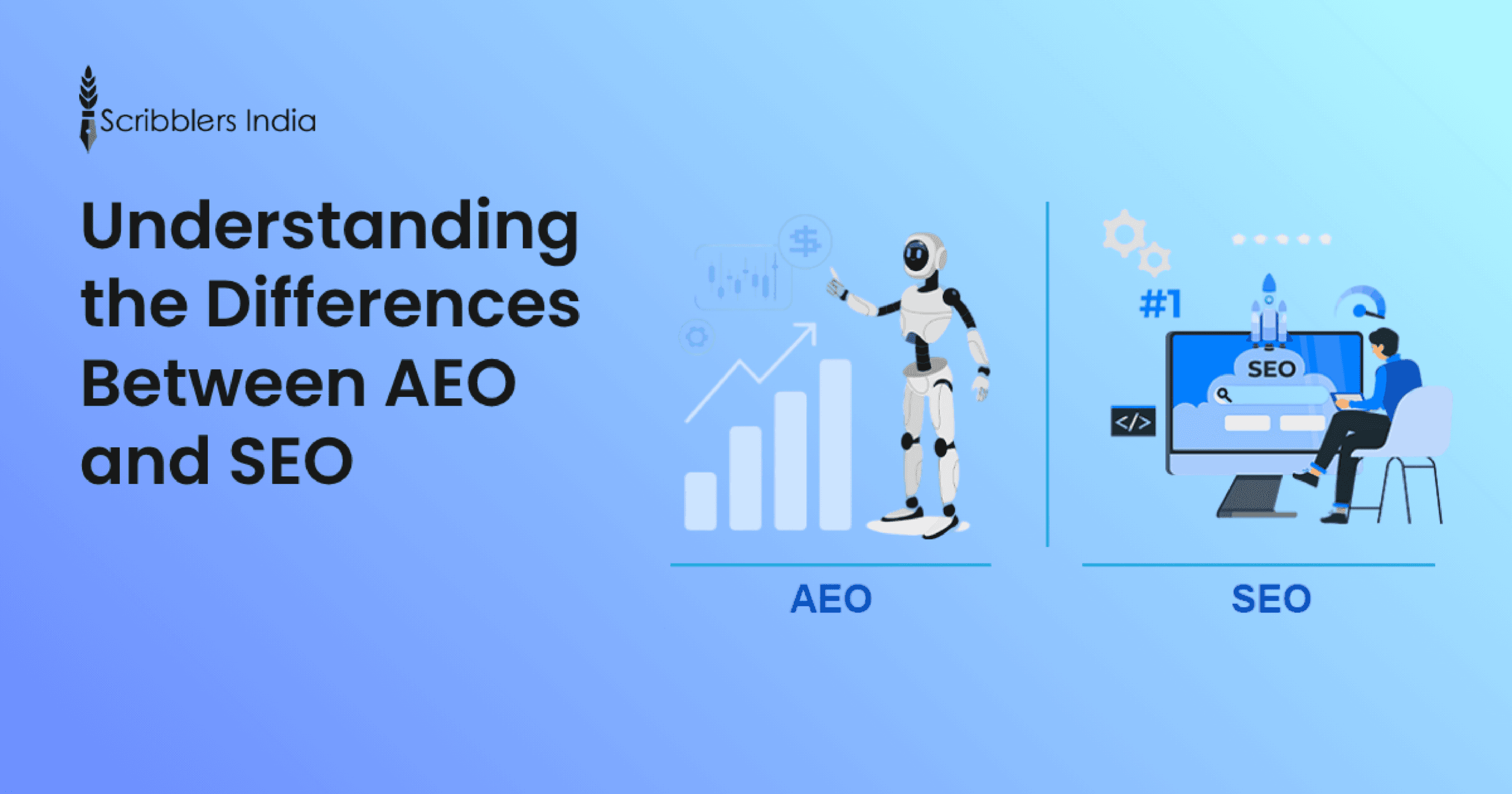
What are the Differences Between AEO vs SEO? (or Do You Need Both?)
Your website ranks on page one of Google. Traffic is solid. Then something shifts. Rankings hold, yet organic clicks drop. You investigate and find that Google is answering your audience’s questions before they ever reach your site. This scenario is playing out across industries in 2026, and it describes why the AEO vs SEO conversation has moved from theoretical to urgent. According to industry reports, 69% of Google searches now end without a click, up from 56% just 12 months earlier. This 13-point jump correlates directly with the expansion of Google AI Overviews, which extracts answers from multiple sources and delivers them at the top of the results page. For every 1,000 searches, only 360 clicks reach the open web. Traditional search engine optimization gets your content into the index. Answer engine optimization helps your content appear in the answer. The difference between AEO vs SEO is not about choosing one over the other. It is about understanding how each works, where they overlap, and how to run both to capture visibility across every layer of modern search. What Is AEO and What Does It Mean in Digital Marketing? Answer Engine Optimization (AEO) refers to the practice of structuring content so that AI-powered platforms, voice assistants, and AI-generated search features can extract, synthesize, and deliver it as a direct response to a user’s query. AEO in digital marketing emerged as a direct response to the rise of platforms like Google AI Overviews, ChatGPT, Perplexity, and voice assistants that answer user questions without displaying a ranked list of links. Rather than competing for a position on a results page, brands optimizing for AEO compete to become the cited, trusted source within the answer itself. The core objective of answer engine optimization vs search engine optimization comes down to this distinction: SEO optimizes for being found through a link. AEO optimizes for being used as the answer. Both forms of visibility have commercial value, but they operate through fundamentally different mechanisms and require different content structures to achieve. What Is the Difference Between AEO and SEO in Practice? The difference between AEO and SEO lies in their target output, success metrics, content format requirements, and the platforms they optimize for. SEO aims to rank a page. AEO aims to become the answer that a platform generates when a user asks a relevant question. Here is how the AEO vs SEO distinction plays out across the five dimensions that matter most to a content strategy: Target Platform and Output SEO targets traditional search engines, primarily Google and Bing, where the output is a ranked list of links that users browse and click. AEO vs SEO in terms of platform: AEO targets AI-powered answer surfaces, including Google AI Overviews, ChatGPT, Perplexity, Amazon Alexa, and Apple Siri. Here, the output is a synthesized response that may or may not include a clickable attribution. A business that appears in an AI Overview earns visibility even when the user never clicks through to the site. Success Metrics SEO success is measured through ranking positions, organic traffic volume, click-through rates, and keyword visibility scores. AEO success is measured through: Featured snippet wins AI Overview citation frequency Voice search answer inclusion People Also Ask appearances Brand mention volume across AI-generated responses Businesses moving into AEO need a measurement framework that captures answer-layer visibility rather than relying on website traffic as the sole indicator of search performance. Content Format Requirements SEO rewards comprehensive, keyword-rich, long-form content that covers a topic with enough depth and breadth to satisfy a range of search queries. The difference between AEO and SEO in content format is significant. AEO rewards concise, direct, question-answering paragraphs of 40 to 60 words that allow an AI system to extract a complete answer from a single content block. The structure that works best for AEO uses question-based headings followed immediately by a complete, standalone answer. This is the exact format that AI Overviews and voice assistants extract and deliver. Optimization Signals SEO optimization relies on keyword research, backlink building, metadata refinement, internal linking, site speed, and Core Web Vitals. The answer engine optimization vs search engine optimization comparison on signals indicates that AEO optimization relies on: Structured data markup (FAQPage, HowTo, Organization schema) E-E-A-T signals, including author credentials and citing original research Entity clarity that allows AI systems to understand exactly what a brand is, what it does, and who it serves. Relationship to Click-Through Traffic SEO is fundamentally traffic-oriented. Its commercial logic depends on users clicking through to the website where conversion opportunities exist. When it comes to AEO vs SEO on traffic indicates that AEO operates partly outside the click economy. When a brand’s content is cited in an AI Overview or read aloud by a voice assistant, it earns brand awareness and authority with an audience that may never visit the site during that session. This awareness-level visibility influences direct search behavior, branded queries, and offline purchase decisions in ways that click-based analytics do not capture. How Does SEO Work in 2026? SEO helps search engines discover, index, and rank your content for relevant queries. It remains essential in 2026 because the majority of commercial, transactional, and navigational queries continue to drive website clicks, and because strong SEO is the technical foundation AEO builds on. SEO operates across three interconnected disciplines. Technical SEO ensures that search engines can crawl, index, and understand your site structure. It is done through fast load times, clean URL architecture, proper robots.txt configuration, and schema markup. On-page SEO aligns your content with the specific queries your audience uses through keyword research, heading structure, meta descriptions, and internal linking. Off-page SEO builds domain authority, which signals to search engines that your site is a credible, trusted source through backlink acquisition and brand mentions across the web. Is SEO Still Relevant in 2026? The commercial case for continued SEO investment is clear. According to a recent analysis, 36% of searches still result in clicks. For transactional queries, where someone
Your website ranks on page one of Google. Traffic is solid. Then something shifts. Rankings hold, yet organic clicks drop. You investigate and find that Google is answering your audience’s questions before they ever reach your site. This scenario is playing out across industries in 2026, and it describes why the AEO vs SEO conversation has moved from theoretical to urgent. According to industry reports, 69% of Google searches now end without a click, up from 56% just 12 months earlier. This 13-point jump correlates directly with the expansion of Google AI Overviews, which extracts answers from multiple sources and delivers them at the top of the results page. For every 1,000 searches, only 360 clicks reach the open web. Traditional search engine optimization gets your content into the index. Answer engine optimization helps your content appear in the answer. The difference between AEO vs SEO is not about choosing one over the other. It is about understanding how each works, where they overlap, and how to run both to capture visibility across every layer of modern search. What Is AEO and What Does It Mean in Digital Marketing? Answer Engine Optimization (AEO) refers to the practice of structuring content so that AI-powered platforms, voice assistants, and AI-generated search features can extract, synthesize, and deliver it as a direct response to a user’s query. AEO in digital marketing emerged as a direct response to the rise of platforms like Google AI Overviews, ChatGPT, Perplexity, and voice assistants that answer user questions without displaying a ranked list of links. Rather than competing for a position on a results page, brands optimizing for AEO compete to become the cited, trusted source within the answer itself. The core objective of answer engine optimization vs search engine optimization comes down to this distinction: SEO optimizes for being found through a link. AEO optimizes for being used as the answer. Both forms of visibility have commercial value, but they operate through fundamentally different mechanisms and require different content structures to achieve. What Is the Difference Between AEO and SEO in Practice? The difference between AEO and SEO lies in their target output, success metrics, content format requirements, and the platforms they optimize for. SEO aims to rank a page. AEO aims to become the answer that a platform generates when a user asks a relevant question. Here is how the AEO vs SEO distinction plays out across the five dimensions that matter most to a content strategy: Target Platform and Output SEO targets traditional search engines, primarily Google and Bing, where the output is a ranked list of links that users browse and click. AEO vs SEO in terms of platform: AEO targets AI-powered answer surfaces, including Google AI Overviews, ChatGPT, Perplexity, Amazon Alexa, and Apple Siri. Here, the output is a synthesized response that may or may not include a clickable attribution. A business that appears in an AI Overview earns visibility even when the user never clicks through to the site. Success Metrics SEO success is measured through ranking positions, organic traffic volume, click-through rates, and keyword visibility scores. AEO success is measured through: Featured snippet wins AI Overview citation frequency Voice search answer inclusion People Also Ask appearances Brand mention volume across AI-generated responses Businesses moving into AEO need a measurement framework that captures answer-layer visibility rather than relying on website traffic as the sole indicator of search performance. Content Format Requirements SEO rewards comprehensive, keyword-rich, long-form content that covers a topic with enough depth and breadth to satisfy a range of search queries. The difference between AEO and SEO in content format is significant. AEO rewards concise, direct, question-answering paragraphs of 40 to 60 words that allow an AI system to extract a complete answer from a single content block. The structure that works best for AEO uses question-based headings followed immediately by a complete, standalone answer. This is the exact format that AI Overviews and voice assistants extract and deliver. Optimization Signals SEO optimization relies on keyword research, backlink building, metadata refinement, internal linking, site speed, and Core Web Vitals. The answer engine optimization vs search engine optimization comparison on signals indicates that AEO optimization relies on: Structured data markup (FAQPage, HowTo, Organization schema) E-E-A-T signals, including author credentials and citing original research Entity clarity that allows AI systems to understand exactly what a brand is, what it does, and who it serves. Relationship to Click-Through Traffic SEO is fundamentally traffic-oriented. Its commercial logic depends on users clicking through to the website where conversion opportunities exist. When it comes to AEO vs SEO on traffic indicates that AEO operates partly outside the click economy. When a brand’s content is cited in an AI Overview or read aloud by a voice assistant, it earns brand awareness and authority with an audience that may never visit the site during that session. This awareness-level visibility influences direct search behavior, branded queries, and offline purchase decisions in ways that click-based analytics do not capture. How Does SEO Work in 2026? SEO helps search engines discover, index, and rank your content for relevant queries. It remains essential in 2026 because the majority of commercial, transactional, and navigational queries continue to drive website clicks, and because strong SEO is the technical foundation AEO builds on. SEO operates across three interconnected disciplines. Technical SEO ensures that search engines can crawl, index, and understand your site structure. It is done through fast load times, clean URL architecture, proper robots.txt configuration, and schema markup. On-page SEO aligns your content with the specific queries your audience uses through keyword research, heading structure, meta descriptions, and internal linking. Off-page SEO builds domain authority, which signals to search engines that your site is a credible, trusted source through backlink acquisition and brand mentions across the web. Is SEO Still Relevant in 2026? The commercial case for continued SEO investment is clear. According to a recent analysis, 36% of searches still result in clicks. For transactional queries, where someone

Online Reputation Management
Every search result, review, social media post, and news article that mentions a brand or professional contributes to how the world perceives them. Online Reputation Management plays a crucial role in controlling that digital narrative. When that body of digital content tells the right story, it attracts clients, partners, and opportunities. When it tells the wrong story, it costs them. Online reputation management (ORM) is the practice of monitoring, influencing, and improving how a brand or individual appears across digital platforms. In 2025, with over 93% of consumers reading online reviews before making a purchase, ORM has moved from a reactive crisis tool to a proactive, ongoing strategic priority for every organization and professional with a digital presence. What Is Online Reputation Management and How Does It Work? Online reputation management is the process of building, monitoring, and influencing how a person or organization is perceived across search engines, social media platforms, review sites, and news coverage. It encompasses both the positive content a brand actively creates and the negative or neutral content it must address, suppress, or counterbalance. ORM works across three parallel tracks. Proactive ORM involves publishing high-quality content, gathering positive reviews, and building a strong digital presence before any reputational challenge arises. Reactive ORM involves responding to negative feedback, correcting misinformation, and managing the narrative during a reputational crisis. Monitoring bridges both tracks by providing continuous visibility into what is being always said across all channels. The practice recognizes that digital perception shapes real-world decisions. A company with strong ratings, a responsive presence, and consistent positive messaging attracts more clients and talent than an equally capable competitor with a neglected or damaged online profile. Why Is Online Reputation Management Critical for Brands and Professionals? Online reputation management directly influences every commercial outcome that matters: customer acquisition, talent recruitment, investor confidence, and partnership development. Each of these outcomes depends on trust, and trust depends on what people find when they search. Research reveals that 68% of consumers check online reviews before engaging with a local business, and 85% actively avoid businesses with recent negative reviews. These figures make ORM a revenue-critical function, not a peripheral marketing concern. Search engine visibility: Google factors review ratings, engagement signals, and online sentiment into search rankings, making a well-managed reputation a direct driver of organic discoverability. Trust and conversion rates: Potential clients who find consistent positive information about an organization progress through the decision process faster and convert at higher rates than those who encounter conflicting or negative signals. Talent attraction and retention: Candidates research leadership and company culture extensively before applying or accepting offers, making the organization’s online reputation a front-line recruitment tool. Crisis damage limitation: Organizations that maintain a strong positive reputation baseline recover from reputational incidents faster than those who have neglected their digital presence prior to the crisis event. What Are the Core Components of an Online Reputation Management Strategy? An effective ORM strategy integrates content creation, review management, social media engagement, search optimization, and crisis response into a unified, ongoing program rather than treating each as a separate activity. The foundation of any ORM strategy is a thorough audit of the current digital footprint. This means reviewing the first two pages of search results for the brand name, assessing review platform ratings across Google, Yelp, and industry-specific directories, and evaluating social media sentiment systematically. Content creation and publishing: A steady stream of authoritative content marketing output in the form of blog posts, expert articles, case studies, and original research fills the search landscape with positive and credible brand signals. This pushes less favorable content further down the results page. Review management: Actively requesting reviews from satisfied clients, responding professionally to all reviews (positive and negative), and addressing recurring concerns demonstrates responsiveness and builds trust with both existing and prospective clients. Social media engagement: A consistent, professional, and responsive social media presence allows a brand to control its narrative in real time, address concerns publicly before they escalate, and build the audience relationships that generate organic advocacy. Search optimization: Strategic SEO applied to owned media such as websites, blog content, press releases, and thought leadership articles, helps positive content rank higher for brand-name searches, reducing the visibility of negative or outdated results. How Does Online Reputation Management Differ from SEO and PR? ORM, SEO, and PR share overlapping tactics but address fundamentally different strategic objectives. Understanding the distinction helps organizations allocate the right resources to each discipline. SEO focuses on ranking content for specific keywords to drive traffic to a website. PR focuses on earning media coverage and managing relationships with journalists and industry publications. ORM focuses specifically on the overall digital perception of a brand or individual across every platform where audiences form judgments, regardless of traffic or coverage volume. Primary objective distinction: SEO aims to drive traffic through keyword rankings. ORM aims to improve the overall quality and sentiment of what an audience finds when they search for a brand name or individual. Content focus: SEO content targets search queries for products, services, and topics. ORM content targets the brand name itself and the narratives that form around it in reviews, forums, news, and social platforms. Success metrics: SEO measures rankings, traffic, and conversions. ORM measures review ratings, sentiment scores, share of positive search results, and brand mention volume across platforms. Crisis response scope: PR handles media narratives and relationships with journalists during a crisis. ORM addresses the broader digital footprint, including review platforms, social comments, forum posts, and search results that PR activities alone do not reach. Audience relationship management: ORM involves direct engagement with customer feedback, public comments, and community mentions in a way that SEO and PR campaigns typically do not. This makes it the most audience-interactive of the three disciplines. What Strategies Drive the Most Effective Online Reputation Management? The most effective ORM strategies combine proactive content investment with responsive engagement protocols and systematic monitoring systems. They treat reputation as an ongoing asset to build rather
Every search result, review, social media post, and news article that mentions a brand or professional contributes to how the world perceives them. Online Reputation Management plays a crucial role in controlling that digital narrative. When that body of digital content tells the right story, it attracts clients, partners, and opportunities. When it tells the wrong story, it costs them. Online reputation management (ORM) is the practice of monitoring, influencing, and improving how a brand or individual appears across digital platforms. In 2025, with over 93% of consumers reading online reviews before making a purchase, ORM has moved from a reactive crisis tool to a proactive, ongoing strategic priority for every organization and professional with a digital presence. What Is Online Reputation Management and How Does It Work? Online reputation management is the process of building, monitoring, and influencing how a person or organization is perceived across search engines, social media platforms, review sites, and news coverage. It encompasses both the positive content a brand actively creates and the negative or neutral content it must address, suppress, or counterbalance. ORM works across three parallel tracks. Proactive ORM involves publishing high-quality content, gathering positive reviews, and building a strong digital presence before any reputational challenge arises. Reactive ORM involves responding to negative feedback, correcting misinformation, and managing the narrative during a reputational crisis. Monitoring bridges both tracks by providing continuous visibility into what is being always said across all channels. The practice recognizes that digital perception shapes real-world decisions. A company with strong ratings, a responsive presence, and consistent positive messaging attracts more clients and talent than an equally capable competitor with a neglected or damaged online profile. Why Is Online Reputation Management Critical for Brands and Professionals? Online reputation management directly influences every commercial outcome that matters: customer acquisition, talent recruitment, investor confidence, and partnership development. Each of these outcomes depends on trust, and trust depends on what people find when they search. Research reveals that 68% of consumers check online reviews before engaging with a local business, and 85% actively avoid businesses with recent negative reviews. These figures make ORM a revenue-critical function, not a peripheral marketing concern. Search engine visibility: Google factors review ratings, engagement signals, and online sentiment into search rankings, making a well-managed reputation a direct driver of organic discoverability. Trust and conversion rates: Potential clients who find consistent positive information about an organization progress through the decision process faster and convert at higher rates than those who encounter conflicting or negative signals. Talent attraction and retention: Candidates research leadership and company culture extensively before applying or accepting offers, making the organization’s online reputation a front-line recruitment tool. Crisis damage limitation: Organizations that maintain a strong positive reputation baseline recover from reputational incidents faster than those who have neglected their digital presence prior to the crisis event. What Are the Core Components of an Online Reputation Management Strategy? An effective ORM strategy integrates content creation, review management, social media engagement, search optimization, and crisis response into a unified, ongoing program rather than treating each as a separate activity. The foundation of any ORM strategy is a thorough audit of the current digital footprint. This means reviewing the first two pages of search results for the brand name, assessing review platform ratings across Google, Yelp, and industry-specific directories, and evaluating social media sentiment systematically. Content creation and publishing: A steady stream of authoritative content marketing output in the form of blog posts, expert articles, case studies, and original research fills the search landscape with positive and credible brand signals. This pushes less favorable content further down the results page. Review management: Actively requesting reviews from satisfied clients, responding professionally to all reviews (positive and negative), and addressing recurring concerns demonstrates responsiveness and builds trust with both existing and prospective clients. Social media engagement: A consistent, professional, and responsive social media presence allows a brand to control its narrative in real time, address concerns publicly before they escalate, and build the audience relationships that generate organic advocacy. Search optimization: Strategic SEO applied to owned media such as websites, blog content, press releases, and thought leadership articles, helps positive content rank higher for brand-name searches, reducing the visibility of negative or outdated results. How Does Online Reputation Management Differ from SEO and PR? ORM, SEO, and PR share overlapping tactics but address fundamentally different strategic objectives. Understanding the distinction helps organizations allocate the right resources to each discipline. SEO focuses on ranking content for specific keywords to drive traffic to a website. PR focuses on earning media coverage and managing relationships with journalists and industry publications. ORM focuses specifically on the overall digital perception of a brand or individual across every platform where audiences form judgments, regardless of traffic or coverage volume. Primary objective distinction: SEO aims to drive traffic through keyword rankings. ORM aims to improve the overall quality and sentiment of what an audience finds when they search for a brand name or individual. Content focus: SEO content targets search queries for products, services, and topics. ORM content targets the brand name itself and the narratives that form around it in reviews, forums, news, and social platforms. Success metrics: SEO measures rankings, traffic, and conversions. ORM measures review ratings, sentiment scores, share of positive search results, and brand mention volume across platforms. Crisis response scope: PR handles media narratives and relationships with journalists during a crisis. ORM addresses the broader digital footprint, including review platforms, social comments, forum posts, and search results that PR activities alone do not reach. Audience relationship management: ORM involves direct engagement with customer feedback, public comments, and community mentions in a way that SEO and PR campaigns typically do not. This makes it the most audience-interactive of the three disciplines. What Strategies Drive the Most Effective Online Reputation Management? The most effective ORM strategies combine proactive content investment with responsive engagement protocols and systematic monitoring systems. They treat reputation as an ongoing asset to build rather

Personal Brand Audit
A professional can spend years building a reputation without ever pausing to assess whether that reputation reflects who they have become today. Conducting a Personal Brand Audit is an important step because skills evolve, career focus shifts, and audiences change, which means the brand a person built two years ago may quietly be sending the wrong signals right now. A personal brand audit provides the clarity that ongoing brand-building work cannot. It reveals the gap between how a professional intends to be perceived and how they are actually being found, understood, and remembered by the audiences that matter most to their goals. What Is a Personal Brand Audit and What Does It Reveal? A personal brand audit is a structured evaluation of how a professional’s current online presence, messaging, and content reflect their professional identity and career goals. Harvard Business School Professor Jill Avery describes it as “A systematic assessment of your brand as it exists now, to determine how well or poorly your current brand supports your vision and sense of self.” The audit reveals the current gap between intention and perception. A professional may believe their brand communicates innovation and expertise, while their digital footprint shows an outdated LinkedIn profile, inconsistent messaging across platforms, and search results that reflect roles they held years ago. This gap in personal branding costs opportunities. Recruiters, clients, and collaborators form judgments based on what they find, not on what the professional intends them to find. A personal brand audit surfaces those gaps with enough specificity to act on them directly. When Should a Professional Conduct a Personal Brand Audit? A personal brand audit delivers the most value at specific inflection points in a professional’s career. Conducting one proactively prevents the kind of brand drift that accumulates gradually and only becomes visible when opportunities start going elsewhere. Most brand audit experts recommend conducting a formal audit every six to twelve months as standard practice. Professionals should also trigger an audit whenever a significant career development makes the current brand positioning potentially outdated or misaligned. Career transition or role change: Moving into a new industry, function, or seniority level requires the existing brand to be updated before the professional begins networking in their new context. Launch of a new business or service: When a professional enters a new market or starts a new venture, an audit ensures the brand signals credibility and relevance to the new audience they want to reach. Declining inbound opportunities: When the volume or quality of inbound connection requests, referrals, and inquiries drops, an audit often reveals messaging or visibility issues at the root of the decline. Preparation for a media or speaking opportunity: Before a professional appears in a major publication or at an industry event, an audit ensures that every platform a new audience might visit reflects consistent, current, and compelling positioning. What Are the Key Steps in a Personal Brand Audit? A thorough personal brand audit follows a structured sequence that moves from assessing external perception to clarifying internal positioning. Each step builds on the previous one to produce a complete picture of where the brand currently stands. The first step involves searching one’s own name on Google and reviewing the first page of results with fresh eyes, as a potential client or collaborator would see it. The results reveal what first impression the professional currently makes on anyone who searches before initiating contact. Google search review: The professional should search their name and note what appears on the first page. This helps determine whether the results are accurate, current, and represent the strong personal brand they want to project. Social media profile consistency check: Check every professional platform, such as LinkedIn, professional Instagram, personal website, and industry directories. They should carry the same core message, tone, and visual identity. Content audit: A review of all published articles, posts, and media appearances reveals whether the professional’s published content consistently reinforces their brand positioning or contradicts it across channels. Third-party perception gathering: Asking trusted colleagues and clients how they would describe the professional’s expertise in three words often reveals perception gaps that self-assessment alone cannot identify. Competitive positioning analysis: Reviewing how peers and competitors in the same space present themselves reveals differentiation opportunities the professional can deliberately address in their repositioned brand. What Metrics Should a Personal Brand Audit Measure? A personal brand audit measures both qualitative and quantitative signals. Together, these signals provide a complete picture of brand health across awareness, perception, consistency, and conversion. Quantitative metrics include: Views on LinkedIn profile Post engagement rates Search ranking for the professional’s name Website traffic from branded search Inbound inquiry volume Growth rate of a professional newsletter or content platform These numbers establish a performance baseline for comparison after brand improvements are made. Qualitative signals include the accuracy of search results, the consistency of messaging across platforms, the sentiment in recommendations and testimonials, and the degree to which the professional’s content reflects their current focus areas rather than past roles or outdated positioning. How Does a Personal Brand Audit Improve Online Visibility? The insights from a personal brand audit directly improve a professional’s visibility in both traditional and AI-powered search. Platforms like Google, LinkedIn, and Perplexity retrieve information about a professional from what currently exists online. This makes an outdated or inconsistent digital footprint a direct obstacle to discovery. Updating LinkedIn profiles with current positioning and keywords, publishing fresh content on priority topics, and removing or deprioritizing outdated profiles from search results all strengthen the professional’s digital footprint following an audit. These improvements benefit online reputation management in direct and measurable ways. Professionals who conduct regular personal brand audits and act on their findings consistently maintain stronger search presence, higher content engagement, and more relevant inbound opportunities than those who build their brand once and never revisit it with fresh assessment. What Happens After a Personal Brand Audit Is Completed? A personal brand audit produces value only when the professional acts on its findings.
A professional can spend years building a reputation without ever pausing to assess whether that reputation reflects who they have become today. Conducting a Personal Brand Audit is an important step because skills evolve, career focus shifts, and audiences change, which means the brand a person built two years ago may quietly be sending the wrong signals right now. A personal brand audit provides the clarity that ongoing brand-building work cannot. It reveals the gap between how a professional intends to be perceived and how they are actually being found, understood, and remembered by the audiences that matter most to their goals. What Is a Personal Brand Audit and What Does It Reveal? A personal brand audit is a structured evaluation of how a professional’s current online presence, messaging, and content reflect their professional identity and career goals. Harvard Business School Professor Jill Avery describes it as “A systematic assessment of your brand as it exists now, to determine how well or poorly your current brand supports your vision and sense of self.” The audit reveals the current gap between intention and perception. A professional may believe their brand communicates innovation and expertise, while their digital footprint shows an outdated LinkedIn profile, inconsistent messaging across platforms, and search results that reflect roles they held years ago. This gap in personal branding costs opportunities. Recruiters, clients, and collaborators form judgments based on what they find, not on what the professional intends them to find. A personal brand audit surfaces those gaps with enough specificity to act on them directly. When Should a Professional Conduct a Personal Brand Audit? A personal brand audit delivers the most value at specific inflection points in a professional’s career. Conducting one proactively prevents the kind of brand drift that accumulates gradually and only becomes visible when opportunities start going elsewhere. Most brand audit experts recommend conducting a formal audit every six to twelve months as standard practice. Professionals should also trigger an audit whenever a significant career development makes the current brand positioning potentially outdated or misaligned. Career transition or role change: Moving into a new industry, function, or seniority level requires the existing brand to be updated before the professional begins networking in their new context. Launch of a new business or service: When a professional enters a new market or starts a new venture, an audit ensures the brand signals credibility and relevance to the new audience they want to reach. Declining inbound opportunities: When the volume or quality of inbound connection requests, referrals, and inquiries drops, an audit often reveals messaging or visibility issues at the root of the decline. Preparation for a media or speaking opportunity: Before a professional appears in a major publication or at an industry event, an audit ensures that every platform a new audience might visit reflects consistent, current, and compelling positioning. What Are the Key Steps in a Personal Brand Audit? A thorough personal brand audit follows a structured sequence that moves from assessing external perception to clarifying internal positioning. Each step builds on the previous one to produce a complete picture of where the brand currently stands. The first step involves searching one’s own name on Google and reviewing the first page of results with fresh eyes, as a potential client or collaborator would see it. The results reveal what first impression the professional currently makes on anyone who searches before initiating contact. Google search review: The professional should search their name and note what appears on the first page. This helps determine whether the results are accurate, current, and represent the strong personal brand they want to project. Social media profile consistency check: Check every professional platform, such as LinkedIn, professional Instagram, personal website, and industry directories. They should carry the same core message, tone, and visual identity. Content audit: A review of all published articles, posts, and media appearances reveals whether the professional’s published content consistently reinforces their brand positioning or contradicts it across channels. Third-party perception gathering: Asking trusted colleagues and clients how they would describe the professional’s expertise in three words often reveals perception gaps that self-assessment alone cannot identify. Competitive positioning analysis: Reviewing how peers and competitors in the same space present themselves reveals differentiation opportunities the professional can deliberately address in their repositioned brand. What Metrics Should a Personal Brand Audit Measure? A personal brand audit measures both qualitative and quantitative signals. Together, these signals provide a complete picture of brand health across awareness, perception, consistency, and conversion. Quantitative metrics include: Views on LinkedIn profile Post engagement rates Search ranking for the professional’s name Website traffic from branded search Inbound inquiry volume Growth rate of a professional newsletter or content platform These numbers establish a performance baseline for comparison after brand improvements are made. Qualitative signals include the accuracy of search results, the consistency of messaging across platforms, the sentiment in recommendations and testimonials, and the degree to which the professional’s content reflects their current focus areas rather than past roles or outdated positioning. How Does a Personal Brand Audit Improve Online Visibility? The insights from a personal brand audit directly improve a professional’s visibility in both traditional and AI-powered search. Platforms like Google, LinkedIn, and Perplexity retrieve information about a professional from what currently exists online. This makes an outdated or inconsistent digital footprint a direct obstacle to discovery. Updating LinkedIn profiles with current positioning and keywords, publishing fresh content on priority topics, and removing or deprioritizing outdated profiles from search results all strengthen the professional’s digital footprint following an audit. These improvements benefit online reputation management in direct and measurable ways. Professionals who conduct regular personal brand audits and act on their findings consistently maintain stronger search presence, higher content engagement, and more relevant inbound opportunities than those who build their brand once and never revisit it with fresh assessment. What Happens After a Personal Brand Audit Is Completed? A personal brand audit produces value only when the professional acts on its findings.
What Is Generative Engine Optimization (GEO): Can GEO Boost Your AI Visibility?
Your next customer is asking ChatGPT for a vendor recommendation. Your ideal B2B prospect is running a Perplexity research query about solutions in your category. Google AI Overviews are now reaching over 2 billion users globally. In this new landscape, GEO services can help your business be found where these conversations are happening. The brand that gets cited in those answers earns the discovery, the trust, and often the deal before a competitor’s website is ever opened. This is the environment where generative engine optimization services have become a strategic priority. GEO is the discipline that determines whether AI platforms cite your brand or your competitor’s when users ask questions you should own. The GEO market was valued at $848 million in 2025 and is projected to reach $33.7 billion by 2034, a 50.5% compound annual growth rate. This guide explains what is GEO, how it works across every major AI platform, and what a proven GEO optimization strategy looks like for your business. What Is Generative Engine Optimization (GEO) in Digital Marketing? Generative engine optimization is the practice of structuring your content, brand signals, and technical setup so that AI-powered platforms select, extract, and cite your brand when generating answers to user queries. Unlike traditional SEO, which earns a ranked position in a list of links, what is GEO in SEO comes down to one outcome: your brand becomes part of the answer itself. The distinction matters because AI platforms like ChatGPT, Perplexity, and Google AI Overviews do not display a list of results. They synthesize information from multiple sources into a single conversational response and attribute specific claims to the sources they trust most. GEO services are the structured process of ensuring your content consistently meets the criteria those platforms use to select citation sources. The Technology Behind GEO: How RAG Works Most major AI search platforms use Retrieval-Augmented Generation, or RAG. The system retrieves relevant content from its index, evaluates it for factual accuracy and structural clarity, and then generates a human-readable answer incorporating cited claims. GEO for AI search works by making your content easy to retrieve, easy to evaluate, and easy to incorporate into the generated response. Content that leads with a direct answer, includes verifiable statistics, and uses question-format headings is far more likely to pass the RAG evaluation stage than content buried behind lengthy preambles. The Scale of the Opportunity AI-referred web sessions grew 527% year-over-year through mid-2025, according to industry reports. Yet only 20% of brands have begun implementing generative engine optimization. This gap is the first-mover advantage that well-structured GEO services in India can help you capture before the competitive window closes. Why GEO Is Not a Replacement for SEO What is GEO in SEO is one of the most frequently misunderstood questions in digital marketing today. Generative engine optimization extends and future-proofs your SEO investment. It does not replace it. Research confirms that 99.5% of Google AI Overview citations come from pages already ranking in the top ten organic results. This means your SEO foundation directly enables your GEO performance. The brands that win in AI search are almost always the ones with strong traditional SEO underpinning their content authority. How Is Generative Engine Optimization (GEO) Different from SEO and AEO? Generative engine optimization differs from SEO and AEO in what it optimizes for, how it measures success, and which signals it prioritizes. SEO earns a ranked position on a results page. AEO earns extraction into a featured snippet or direct answer box. GEO for AI search earns a citation inside an AI-generated response, where your brand’s data, definition, or expertise becomes part of the answer a user receives without clicking anywhere. Three Distinct Layers of Modern Visibility Think of these disciplines as three layers working together. SEO builds the infrastructure that makes content discoverable and authoritative. AEO formats content for quick extraction in answer boxes and voice responses. GEO services add a third layer: making content citable, quotable, and trustworthy for AI systems synthesizing information from thousands of user queries every minute. Removing any one layer weakens the other two. How GEO Measures Success Differently? Traditional SEO teams report on keyword rankings, organic traffic, and click-through rates. GEO optimization strategy requires a different measurement framework. The core metrics are: Citation frequency (how often AI platforms mention your brand) Share of voice (your citation rate compared to competitors) Citation sentiment (whether AI platforms describe your brand positively or neutrally) AI-referred traffic in Google Analytics 4. Brands cited in AI answers convert at 4.4 times the rate of standard organic visitors, according to Frase’s 2025 research, making this a high-value channel despite lower raw traffic volume. The Competitive Urgency Between 40% and 60% of cited sources rotate monthly across Google AI Mode and ChatGPT, according to 2026 industry analysis. This volatility creates continuous opportunity for brands that publish consistent, high-quality, structured content. The GEO services agency that helps you build topical authority and maintain content freshness is the one that gives you durable citation share even as platform algorithms evolve. How Do You Optimize Your Content to Appear in ChatGPT Search Results and Answers? Optimizing for ChatGPT requires a different approach from traditional SEO because ChatGPT evaluates content for encyclopedic depth, factual reliability, and entity recognition rather than keyword density or link profiles. Generative AI optimization for ChatGPT centers on creating comprehensive, self-contained answer passages that the platform can extract and synthesize with confidence. The Answer-First Content Structure ChatGPT uses Retrieval-Augmented Generation, which processes the opening content of any page first. The first 200 words of every article must answer the primary question directly and completely. This BLUF structure (Bottom Line Up Front) mirrors how AI systems parse content during the retrieval stage. A blog post that spends its first three paragraphs building context before reaching the answer will consistently lose citations to a competitor whose opening sentence states the answer plainly. Entity Authority and Brand Recognition ChatGPT drives 87.4% of all AI referral traffic
Your next customer is asking ChatGPT for a vendor recommendation. Your ideal B2B prospect is running a Perplexity research query about solutions in your category. Google AI Overviews are now reaching over 2 billion users globally. In this new landscape, GEO services can help your business be found where these conversations are happening. The brand that gets cited in those answers earns the discovery, the trust, and often the deal before a competitor’s website is ever opened. This is the environment where generative engine optimization services have become a strategic priority. GEO is the discipline that determines whether AI platforms cite your brand or your competitor’s when users ask questions you should own. The GEO market was valued at $848 million in 2025 and is projected to reach $33.7 billion by 2034, a 50.5% compound annual growth rate. This guide explains what is GEO, how it works across every major AI platform, and what a proven GEO optimization strategy looks like for your business. What Is Generative Engine Optimization (GEO) in Digital Marketing? Generative engine optimization is the practice of structuring your content, brand signals, and technical setup so that AI-powered platforms select, extract, and cite your brand when generating answers to user queries. Unlike traditional SEO, which earns a ranked position in a list of links, what is GEO in SEO comes down to one outcome: your brand becomes part of the answer itself. The distinction matters because AI platforms like ChatGPT, Perplexity, and Google AI Overviews do not display a list of results. They synthesize information from multiple sources into a single conversational response and attribute specific claims to the sources they trust most. GEO services are the structured process of ensuring your content consistently meets the criteria those platforms use to select citation sources. The Technology Behind GEO: How RAG Works Most major AI search platforms use Retrieval-Augmented Generation, or RAG. The system retrieves relevant content from its index, evaluates it for factual accuracy and structural clarity, and then generates a human-readable answer incorporating cited claims. GEO for AI search works by making your content easy to retrieve, easy to evaluate, and easy to incorporate into the generated response. Content that leads with a direct answer, includes verifiable statistics, and uses question-format headings is far more likely to pass the RAG evaluation stage than content buried behind lengthy preambles. The Scale of the Opportunity AI-referred web sessions grew 527% year-over-year through mid-2025, according to industry reports. Yet only 20% of brands have begun implementing generative engine optimization. This gap is the first-mover advantage that well-structured GEO services in India can help you capture before the competitive window closes. Why GEO Is Not a Replacement for SEO What is GEO in SEO is one of the most frequently misunderstood questions in digital marketing today. Generative engine optimization extends and future-proofs your SEO investment. It does not replace it. Research confirms that 99.5% of Google AI Overview citations come from pages already ranking in the top ten organic results. This means your SEO foundation directly enables your GEO performance. The brands that win in AI search are almost always the ones with strong traditional SEO underpinning their content authority. How Is Generative Engine Optimization (GEO) Different from SEO and AEO? Generative engine optimization differs from SEO and AEO in what it optimizes for, how it measures success, and which signals it prioritizes. SEO earns a ranked position on a results page. AEO earns extraction into a featured snippet or direct answer box. GEO for AI search earns a citation inside an AI-generated response, where your brand’s data, definition, or expertise becomes part of the answer a user receives without clicking anywhere. Three Distinct Layers of Modern Visibility Think of these disciplines as three layers working together. SEO builds the infrastructure that makes content discoverable and authoritative. AEO formats content for quick extraction in answer boxes and voice responses. GEO services add a third layer: making content citable, quotable, and trustworthy for AI systems synthesizing information from thousands of user queries every minute. Removing any one layer weakens the other two. How GEO Measures Success Differently? Traditional SEO teams report on keyword rankings, organic traffic, and click-through rates. GEO optimization strategy requires a different measurement framework. The core metrics are: Citation frequency (how often AI platforms mention your brand) Share of voice (your citation rate compared to competitors) Citation sentiment (whether AI platforms describe your brand positively or neutrally) AI-referred traffic in Google Analytics 4. Brands cited in AI answers convert at 4.4 times the rate of standard organic visitors, according to Frase’s 2025 research, making this a high-value channel despite lower raw traffic volume. The Competitive Urgency Between 40% and 60% of cited sources rotate monthly across Google AI Mode and ChatGPT, according to 2026 industry analysis. This volatility creates continuous opportunity for brands that publish consistent, high-quality, structured content. The GEO services agency that helps you build topical authority and maintain content freshness is the one that gives you durable citation share even as platform algorithms evolve. How Do You Optimize Your Content to Appear in ChatGPT Search Results and Answers? Optimizing for ChatGPT requires a different approach from traditional SEO because ChatGPT evaluates content for encyclopedic depth, factual reliability, and entity recognition rather than keyword density or link profiles. Generative AI optimization for ChatGPT centers on creating comprehensive, self-contained answer passages that the platform can extract and synthesize with confidence. The Answer-First Content Structure ChatGPT uses Retrieval-Augmented Generation, which processes the opening content of any page first. The first 200 words of every article must answer the primary question directly and completely. This BLUF structure (Bottom Line Up Front) mirrors how AI systems parse content during the retrieval stage. A blog post that spends its first three paragraphs building context before reaching the answer will consistently lose citations to a competitor whose opening sentence states the answer plainly. Entity Authority and Brand Recognition ChatGPT drives 87.4% of all AI referral traffic
Executive Branding
The reputation of a company does not live solely in its logo, product, or advertising. Instead, it lives in the perception of the people who lead it. Executive branding is essential for leaders who want to build a deliberate, visible professional identity. Additionally, it gives their organizations a powerful competitive advantage that paid media alone cannot create. Executive branding is the strategic practice of shaping how a senior leader is perceived by clients, investors, employees, and industry peers. When done consistently, it amplifies the organization’s credibility and attracts top talent. It also accelerates business opportunities across every channel where audiences pay attention. What Is Executive Branding and Who Does It Apply To? Executive branding, also called CEO branding or C-suite personal branding, is the deliberate process of building and communicating a senior leader’s professional identity, values, and expertise across digital platforms. This process applies to founders, CEOs, managing directors, and any senior-level professional whose visibility influences business outcomes. The practice goes well past occasional social media posts or media appearances. Instead, it involves defining what a leader stands for and how they communicate their expertise. Furthermore, it includes how they align their public presence with the organization’s mission and values. Research consistently shows the impact of this work. Up to 82% of people report greater trust in companies whose leaders are visible and authentic online. Executive branding creates that visibility with purpose and consistency. Why Does Executive Branding Matter for Business Growth? Executive branding directly influences business outcomes at every level of an organization. With visible, credible leaders, organizations generate trust faster and attract stronger talent. As a result, they close deals with less friction than organizations where leadership remains invisible. The data support this clearly. Up to 44% of a company’s market value ties directly to the CEO’s reputation. Prospects and partners research leadership before engaging with a company. Therefore, an executive’s online presence becomes a critical part of the sales and partnership funnel. Trust acceleration: A leader with a clear, consistent public presence reduces the skepticism that new clients and partners bring to early conversations, shortening the time required to build confidence. Talent attraction: Research shows that 78% of professionals prefer working for organizations whose leaders are active and transparent on social media, making executive visibility a direct recruiting tool. Market differentiation: In crowded industries, a leader’s distinctive voice and perspective sets the organization apart from competitors whose leadership remains faceless and undifferentiated. Crisis resilience: An executive with an established positive reputation has significant credibility reserves to draw on when the organization faces public scrutiny or reputational challenges. How Does Executive Branding Differ from General Personal Branding? Executive branding and general personal branding share the same foundation. However, they differ in scope, stakes, and strategic intent. General personal branding focuses primarily on the individual’s career advancement, visibility, and professional identity. Yet, executive branding extends that focus to encompass the organization’s reputation, market positioning, and stakeholder trust simultaneously. Organizational alignment: Executive branding requires the leader’s personal narrative to align deliberately with the company’s mission, values, and strategic goals rather than existing as a separate professional identity. Stakeholder audience complexity: Executives communicate simultaneously with investors, clients, employees, media, and industry peers, each of whom requires different messaging within a unified brand framework. Scale of impact: An executive’s personal brand statement and public content directly influence how thousands or millions of people perceive the entire organization, not just the individual leader themselves. Crisis communication responsibility: When the organization faces a reputational challenge, the executive’s brand becomes a primary vehicle for managing the narrative and restoring stakeholder confidence publicly. Long-term legacy building: Executive branding builds industry authority and thought leadership that outlasts individual roles, creating a professional legacy that continues to generate opportunities across career transitions. What Are the Core Pillars of a Strong Executive Brand? An effective executive brand builds on four interlocking pillars that work together to create a consistent, credible, and compelling leadership presence across all channels. The first pillar is a defined point of view. An executive must stand for something specific and communicate that perspective consistently. In addition, leaders who share original insights, challenge conventional thinking, and demonstrate a distinct worldview earn recognition as thought leaders in their industry. Professional narrative: A clear, authentic story about the executive’s journey, values, and mission creates a human connection point that purely credential-based positioning cannot. Content and publishing strategy: Regular, valuable content, whether articles, social posts, or interviews, keeps the executive visible and relevant in the conversations their audience follows. Digital presence optimization: A professional LinkedIn profile, consistent social media activity, and a well-positioned personal website form the infrastructure through which the executive brand reaches and engages its audience. Network and speaking presence: Participation in industry events, podcasts, panel discussions, and collaborative content extends the executive’s reach and credibility into communities where their target audience actively gathers. What Role Does LinkedIn Play in Executive Branding? LinkedIn functions as the primary platform for executive branding in the B2B and professional services world. When investors, clients, and recruits want to understand a leader, LinkedIn is the first place they look. An executive’s LinkedIn profile serves as their permanent professional storefront. It features a professional headshot and a compelling headline that reflects genuine expertise rather than a job title. Besides that, an About section built around the leader’s values and vision works to create a strong first impression. Content published on LinkedIn builds visibility over time. Executives who share original insights, comment on industry developments, and engage authentically with their audience consistently grow their authority and inbound opportunities. As a result, this is where a focused LinkedIn personal branding approach pays compounding dividends over time. How Do Executives Build Thought Leadership Through Content? Thought leadership content is the most powerful tool an executive has for building sustained industry authority. It transforms expertise into visibility and credibility into business opportunities. Effective executive thought leadership content does not simply describe what a leader does. Instead, it teaches, challenges,
The reputation of a company does not live solely in its logo, product, or advertising. Instead, it lives in the perception of the people who lead it. Executive branding is essential for leaders who want to build a deliberate, visible professional identity. Additionally, it gives their organizations a powerful competitive advantage that paid media alone cannot create. Executive branding is the strategic practice of shaping how a senior leader is perceived by clients, investors, employees, and industry peers. When done consistently, it amplifies the organization’s credibility and attracts top talent. It also accelerates business opportunities across every channel where audiences pay attention. What Is Executive Branding and Who Does It Apply To? Executive branding, also called CEO branding or C-suite personal branding, is the deliberate process of building and communicating a senior leader’s professional identity, values, and expertise across digital platforms. This process applies to founders, CEOs, managing directors, and any senior-level professional whose visibility influences business outcomes. The practice goes well past occasional social media posts or media appearances. Instead, it involves defining what a leader stands for and how they communicate their expertise. Furthermore, it includes how they align their public presence with the organization’s mission and values. Research consistently shows the impact of this work. Up to 82% of people report greater trust in companies whose leaders are visible and authentic online. Executive branding creates that visibility with purpose and consistency. Why Does Executive Branding Matter for Business Growth? Executive branding directly influences business outcomes at every level of an organization. With visible, credible leaders, organizations generate trust faster and attract stronger talent. As a result, they close deals with less friction than organizations where leadership remains invisible. The data support this clearly. Up to 44% of a company’s market value ties directly to the CEO’s reputation. Prospects and partners research leadership before engaging with a company. Therefore, an executive’s online presence becomes a critical part of the sales and partnership funnel. Trust acceleration: A leader with a clear, consistent public presence reduces the skepticism that new clients and partners bring to early conversations, shortening the time required to build confidence. Talent attraction: Research shows that 78% of professionals prefer working for organizations whose leaders are active and transparent on social media, making executive visibility a direct recruiting tool. Market differentiation: In crowded industries, a leader’s distinctive voice and perspective sets the organization apart from competitors whose leadership remains faceless and undifferentiated. Crisis resilience: An executive with an established positive reputation has significant credibility reserves to draw on when the organization faces public scrutiny or reputational challenges. How Does Executive Branding Differ from General Personal Branding? Executive branding and general personal branding share the same foundation. However, they differ in scope, stakes, and strategic intent. General personal branding focuses primarily on the individual’s career advancement, visibility, and professional identity. Yet, executive branding extends that focus to encompass the organization’s reputation, market positioning, and stakeholder trust simultaneously. Organizational alignment: Executive branding requires the leader’s personal narrative to align deliberately with the company’s mission, values, and strategic goals rather than existing as a separate professional identity. Stakeholder audience complexity: Executives communicate simultaneously with investors, clients, employees, media, and industry peers, each of whom requires different messaging within a unified brand framework. Scale of impact: An executive’s personal brand statement and public content directly influence how thousands or millions of people perceive the entire organization, not just the individual leader themselves. Crisis communication responsibility: When the organization faces a reputational challenge, the executive’s brand becomes a primary vehicle for managing the narrative and restoring stakeholder confidence publicly. Long-term legacy building: Executive branding builds industry authority and thought leadership that outlasts individual roles, creating a professional legacy that continues to generate opportunities across career transitions. What Are the Core Pillars of a Strong Executive Brand? An effective executive brand builds on four interlocking pillars that work together to create a consistent, credible, and compelling leadership presence across all channels. The first pillar is a defined point of view. An executive must stand for something specific and communicate that perspective consistently. In addition, leaders who share original insights, challenge conventional thinking, and demonstrate a distinct worldview earn recognition as thought leaders in their industry. Professional narrative: A clear, authentic story about the executive’s journey, values, and mission creates a human connection point that purely credential-based positioning cannot. Content and publishing strategy: Regular, valuable content, whether articles, social posts, or interviews, keeps the executive visible and relevant in the conversations their audience follows. Digital presence optimization: A professional LinkedIn profile, consistent social media activity, and a well-positioned personal website form the infrastructure through which the executive brand reaches and engages its audience. Network and speaking presence: Participation in industry events, podcasts, panel discussions, and collaborative content extends the executive’s reach and credibility into communities where their target audience actively gathers. What Role Does LinkedIn Play in Executive Branding? LinkedIn functions as the primary platform for executive branding in the B2B and professional services world. When investors, clients, and recruits want to understand a leader, LinkedIn is the first place they look. An executive’s LinkedIn profile serves as their permanent professional storefront. It features a professional headshot and a compelling headline that reflects genuine expertise rather than a job title. Besides that, an About section built around the leader’s values and vision works to create a strong first impression. Content published on LinkedIn builds visibility over time. Executives who share original insights, comment on industry developments, and engage authentically with their audience consistently grow their authority and inbound opportunities. As a result, this is where a focused LinkedIn personal branding approach pays compounding dividends over time. How Do Executives Build Thought Leadership Through Content? Thought leadership content is the most powerful tool an executive has for building sustained industry authority. It transforms expertise into visibility and credibility into business opportunities. Effective executive thought leadership content does not simply describe what a leader does. Instead, it teaches, challenges,
Are You Ready for the Top Social Media Content Trends in 2026?
Do you remember when a static photo with a generic caption was enough to grow a following? In 2026, even high-quality video is evolving into something entirely new. You are no longer just fighting for attention in a feed; you are competing for relevance in a digital ecosystem that changes daily. Staying on top of social media content trends is essential in this rapidly changing environment. We are witnessing a fundamental shift in how people consume content. The behavior is shifting from scroll and consumption to search and discovery. Audiences are no longer passive observers. They are active hunters, looking for specific answers, communities, and experiences that feel hyper-real rather than curated. You might feel the fatigue of AI-generated noise. Users are tired of robotic, soulless posts and crave raw, unfiltered connection. If your strategy relies on 2025 tactics, you are already behind. This guide will break down the exact formats, strategies, and shifts you need to adopt now to stay relevant. We will explore how social media content trends in 2026 will redefine the way you build trust and drive revenue. Will AI Replace Human Creativity or Enhance It? AI will not replace human creativity; instead, it replaces mediocre execution and repetitive tasks. In 2026, the most successful brands use a hybrid model where AI handles data analysis, drafting, and personalization, while humans provide the emotional hook and strategic direction. Social media content trends in 2026 favor this cyborg approach over purely automated output. You must stop viewing AI as a replacement and start seeing it as an exoskeleton for your creativity. The future of social media marketing relies on ‘Cyborg Content; that presents a seamless blend of human empathy and machine speed. Ideation at Speed: You can use AI to generate 50 topic angles in seconds. However, you must choose the one that aligns with your brand values. Drafting, Not Writing: AI content creation tools in 2026 are excellent for creating rough drafts. A human editor must then refine the tone to ensure it sounds like you, not a robot. Predictive Analytics: AI analyzes historical data to predict which hooks will perform best. This allows you to publish with confidence rather than hope. Imagine creating a single video and using AI to automatically adjust the background visual based on the viewer’s location. This level of hyper-personalization is becoming standard. You can now speak directly to fifty different micro-niches without filming fifty separate videos. Our Visual Content Services leverage these advanced tools to enhance, not replace, human design. We ensure your brand visuals remain distinct and creative while utilizing the efficiency of modern technology. According to a 2026 industry report, 79% of marketers use AI daily, yet 44.7% report that AI-assisted content performs better when refined by human editors. Why Is Social Search Becoming the New SEO in 2026? Social Search is replacing traditional engines because younger generations trust user-generated video over text-based articles. They prefer seeing a product in action on TikTok or Instagram rather than reading a blog review. Therefore, optimizing your captions, on-screen text, and spoken audio for keywords is critical for visibility within social media content trends in 2026. Gen Z and Alpha do not Google a new restaurant; they TikTok it. They want visual proof, not just a Yelp review. This behavior makes Social Search Optimization (SSO) the most valuable skill for digital marketers. Keyword-Rich Captions: You must write captions that answer specific queries. Instead of Happy Monday, use Best B2B marketing agency in India for startups. Visual SEO: Platforms now analyze the text within your video and the objects on screen. Ensure your visuals clearly represent the topic you want to rank for. Spoken Keywords: Algorithms transcribe your audio to understand context. You should clearly speak your primary keywords within the first few seconds of your video. You need to create content that answers questions. Think of your social profile as a library of answers rather than a diary of updates. If you answer the questions your audience is asking, you will dominate the search results on every platform. Our thought leadership content services specialize in crafting content that answers complex industry questions, positioning your executives as the go-to experts in your field. Is Long-Form Video Making a Comeback in 2026? Yes, long-form video is returning as a dominant format because audiences are craving depth after years of fleeting short clips. Platforms like YouTube and even TikTok now reward 10-minute videos and podcasts that offer substantial value. This shift is one of the most surprising social media content trends in 2026 and signals a move toward edutainment. We spent years optimizing for 15-second attention spans. Now, the pendulum is swinging back. Users want to learn, not just be entertained. They are willing to watch a 20-minute breakdown if the content delivers tangible value. The Rise of Deep Dives: Video essays and mini-documentaries are performing exceptionally well. These formats allow you to explore nuance that a 60-second Reel cannot capture. Serialized Content: You can build a loyal following by creating a multi-part series. This encourages viewers to return to your profile repeatedly to watch the next episode. Podcast Integration: Video podcasts have become a primary method of consumption. Uploading full episodes to YouTube while clipping highlights for other apps is a winning strategy. Do not abandon your short-form video strategy entirely. Instead, use short clips as trailers that drive traffic to your longer, more substantive content. This ecosystem approach caters to both casual scrollers and deep learners. How Will Lo-Fi Content Redefine Authenticity in Social Media Content Trends in 2026? Lo-Fi content creates a sense of intimacy and trust that highly polished studio productions cannot match. Handheld footage, raw audio, and unscripted moments signal authentic brand storytelling to skeptical audiences. As one of the defining social media content trends in 2026, this aesthetic proves that real sells better than perfect. High-gloss 4K productions often look like commercials. When users see something that looks like an ad, they immediately scroll
Do you remember when a static photo with a generic caption was enough to grow a following? In 2026, even high-quality video is evolving into something entirely new. You are no longer just fighting for attention in a feed; you are competing for relevance in a digital ecosystem that changes daily. Staying on top of social media content trends is essential in this rapidly changing environment. We are witnessing a fundamental shift in how people consume content. The behavior is shifting from scroll and consumption to search and discovery. Audiences are no longer passive observers. They are active hunters, looking for specific answers, communities, and experiences that feel hyper-real rather than curated. You might feel the fatigue of AI-generated noise. Users are tired of robotic, soulless posts and crave raw, unfiltered connection. If your strategy relies on 2025 tactics, you are already behind. This guide will break down the exact formats, strategies, and shifts you need to adopt now to stay relevant. We will explore how social media content trends in 2026 will redefine the way you build trust and drive revenue. Will AI Replace Human Creativity or Enhance It? AI will not replace human creativity; instead, it replaces mediocre execution and repetitive tasks. In 2026, the most successful brands use a hybrid model where AI handles data analysis, drafting, and personalization, while humans provide the emotional hook and strategic direction. Social media content trends in 2026 favor this cyborg approach over purely automated output. You must stop viewing AI as a replacement and start seeing it as an exoskeleton for your creativity. The future of social media marketing relies on ‘Cyborg Content; that presents a seamless blend of human empathy and machine speed. Ideation at Speed: You can use AI to generate 50 topic angles in seconds. However, you must choose the one that aligns with your brand values. Drafting, Not Writing: AI content creation tools in 2026 are excellent for creating rough drafts. A human editor must then refine the tone to ensure it sounds like you, not a robot. Predictive Analytics: AI analyzes historical data to predict which hooks will perform best. This allows you to publish with confidence rather than hope. Imagine creating a single video and using AI to automatically adjust the background visual based on the viewer’s location. This level of hyper-personalization is becoming standard. You can now speak directly to fifty different micro-niches without filming fifty separate videos. Our Visual Content Services leverage these advanced tools to enhance, not replace, human design. We ensure your brand visuals remain distinct and creative while utilizing the efficiency of modern technology. According to a 2026 industry report, 79% of marketers use AI daily, yet 44.7% report that AI-assisted content performs better when refined by human editors. Why Is Social Search Becoming the New SEO in 2026? Social Search is replacing traditional engines because younger generations trust user-generated video over text-based articles. They prefer seeing a product in action on TikTok or Instagram rather than reading a blog review. Therefore, optimizing your captions, on-screen text, and spoken audio for keywords is critical for visibility within social media content trends in 2026. Gen Z and Alpha do not Google a new restaurant; they TikTok it. They want visual proof, not just a Yelp review. This behavior makes Social Search Optimization (SSO) the most valuable skill for digital marketers. Keyword-Rich Captions: You must write captions that answer specific queries. Instead of Happy Monday, use Best B2B marketing agency in India for startups. Visual SEO: Platforms now analyze the text within your video and the objects on screen. Ensure your visuals clearly represent the topic you want to rank for. Spoken Keywords: Algorithms transcribe your audio to understand context. You should clearly speak your primary keywords within the first few seconds of your video. You need to create content that answers questions. Think of your social profile as a library of answers rather than a diary of updates. If you answer the questions your audience is asking, you will dominate the search results on every platform. Our thought leadership content services specialize in crafting content that answers complex industry questions, positioning your executives as the go-to experts in your field. Is Long-Form Video Making a Comeback in 2026? Yes, long-form video is returning as a dominant format because audiences are craving depth after years of fleeting short clips. Platforms like YouTube and even TikTok now reward 10-minute videos and podcasts that offer substantial value. This shift is one of the most surprising social media content trends in 2026 and signals a move toward edutainment. We spent years optimizing for 15-second attention spans. Now, the pendulum is swinging back. Users want to learn, not just be entertained. They are willing to watch a 20-minute breakdown if the content delivers tangible value. The Rise of Deep Dives: Video essays and mini-documentaries are performing exceptionally well. These formats allow you to explore nuance that a 60-second Reel cannot capture. Serialized Content: You can build a loyal following by creating a multi-part series. This encourages viewers to return to your profile repeatedly to watch the next episode. Podcast Integration: Video podcasts have become a primary method of consumption. Uploading full episodes to YouTube while clipping highlights for other apps is a winning strategy. Do not abandon your short-form video strategy entirely. Instead, use short clips as trailers that drive traffic to your longer, more substantive content. This ecosystem approach caters to both casual scrollers and deep learners. How Will Lo-Fi Content Redefine Authenticity in Social Media Content Trends in 2026? Lo-Fi content creates a sense of intimacy and trust that highly polished studio productions cannot match. Handheld footage, raw audio, and unscripted moments signal authentic brand storytelling to skeptical audiences. As one of the defining social media content trends in 2026, this aesthetic proves that real sells better than perfect. High-gloss 4K productions often look like commercials. When users see something that looks like an ad, they immediately scroll
Retrieval-Augmented Generation (RAG)
AI platforms carry a fundamental limitation. They can only respond based on what they absorbed during training. That training data has a fixed cutoff date, which creates a real problem for brands and businesses alike. They need AI systems to deliver accurate, current, and domain-specific answers. Retrieval-Augmented Generation (RAG) solves this problem directly. It connects a large language model to up-to-date external knowledge sources before generating a response. This connection dramatically improves the accuracy and trustworthiness of the AI’s output. For content marketers and digital strategists, understanding RAG is now essential. It determines how AI search platforms decide which sources to cite when answering user queries. What Is Retrieval-Augmented Generation and How Does It Work? Retrieval-Augmented Generation (RAG) is an AI framework. It enhances large language models by connecting them to external knowledge bases before generating a response. Rather than relying only on training data, a RAG system retrieves relevant documents in real time. It then uses that retrieved content to ground the answer it produces for the user. The process follows a clear sequence. A user submits a query. The RAG system converts it into a vector, i.e., a numerical representation the system searches with. The system then scans a knowledge base for documents semantically similar to the query. It selects the most relevant sources and feeds them into the language model alongside the original question. The language model then synthesizes a response. It draws from its training knowledge and the retrieved documents simultaneously. It often cites the external sources that informed its answer. This retrieve-then-generate workflow powers AI search platforms like Perplexity and Google AI Overviews. Well-structured, authoritative content earns citations more consistently than generic or outdated material. Why Does RAG Matter for Content Marketing and Brand Visibility? RAG directly determines which content an AI platform retrieves and cites. It forms the core mechanism behind Answer Engine Optimization and GEO strategies that brands invest in today. When a RAG-powered platform generates a response, it evaluates candidate documents for relevance, authority, recency, and structural clarity. Content that scores well across these dimensions earns a citation in the AI output. Content that is poorly structured or outdated gets excluded from the response pool entirely. This exclusion happens regardless of how well it ranks in traditional search results. Content structure becomes a retrieval signal: RAG systems favor content organized for extraction. They prioritize clear headings, concise answer paragraphs, and direct statements the system can lift and synthesize without losing meaning. A content strategy built around RAG-friendly formatting consistently improves AI citation rates across major platforms. Original information gives the retriever a specific reason to select content: RAG systems have no reason to cite a source that restates what is already available elsewhere. Original research and proprietary data give the retrieval component a specific reason to select a brand’s content over a competitor’s during the scoring phase. Content recency directly improves retrievability: RAG systems actively favor fresh content. Their purpose is to ground AI responses in accurate, current information. Regular content updates directly improve a brand’s position in the retrieval pool of RAG-powered platforms. E-E-A-T signals strengthen the probability of citation: RAG systems retrieve from demonstrably credible sources. Author credentials, cited sources, and third-party brand mentions all increase the likelihood that a brand’s content is selected during the retrieval scoring phase. What Are the Four Key Components of a RAG System? A RAG system operates through four interconnected components. Together, they determine the quality, accuracy, and relevance of the generated output for any given user query. The knowledge base: The external repository that the RAG system queries when a user submits a prompt. It can include internal documents, product databases, web-indexed content, and research papers. The quality and organization of this knowledge base directly determines how accurately the system retrieves relevant content. The retriever: This component converts the user query into a vector. It then searches the knowledge base for semantically similar content. It evaluates relevance mathematically and selects the most contextually appropriate documents to pass to the language model. Stronger retrieval quality leads to more accurate final responses for the user. The integration layer: This component coordinates the overall RAG pipeline. It combines retrieved documents with the original user query through prompt engineering techniques. It instructs the language model to synthesize retrieved information into a coherent, accurate response that accurately represents the source material. The generator: This is the large language model that produces the final response. It simultaneously draws on retrieved documents and its own training knowledge. Models such as GPT-4, Claude, Gemini, and Llama commonly serve as generators. They combine external evidence with broad language understanding to produce accurate, citation-supported outputs. What Are the Benefits and Challenges of Retrieval-Augmented Generation? RAG transforms what large language models can accomplish. It carries both significant advantages and practical challenges that organizations must navigate thoughtfully to achieve reliable results. Benefits of RAG Reduced AI Hallucinations: RAG decreases instances of false information by grounding every response in verifiable, retrieved documents. This approach improves factual accuracy for high-stakes queries in the finance and healthcare industries. Dynamic Knowledge Updates: Organizations can keep their AI systems current without the high cost of retraining a model from scratch. The knowledge base updates independently whenever new information becomes available in the data source. Improved Source Transparency: RAG provides users with specific citations within each generated response to increase overall trust. These citations allow audiences to verify information directly, especially in regulated and high-credibility industries. Cost-Effective Specialization: This technology enables targeted applications by connecting a general-purpose model to a specialized knowledge base. A single model serves multiple industry contexts without requiring separate, expensive training runs. Challenges of RAG Risk of Contextual Misinterpretation: Systems occasionally retrieve factually correct documents that are contextually misleading for the specific query. The language model may then produce a response that combines accurate data with an incorrect conclusion. Dependence on Data Quality: The quality of the final output depends heavily on the organization and structure of the knowledge base. Poorly
AI platforms carry a fundamental limitation. They can only respond based on what they absorbed during training. That training data has a fixed cutoff date, which creates a real problem for brands and businesses alike. They need AI systems to deliver accurate, current, and domain-specific answers. Retrieval-Augmented Generation (RAG) solves this problem directly. It connects a large language model to up-to-date external knowledge sources before generating a response. This connection dramatically improves the accuracy and trustworthiness of the AI’s output. For content marketers and digital strategists, understanding RAG is now essential. It determines how AI search platforms decide which sources to cite when answering user queries. What Is Retrieval-Augmented Generation and How Does It Work? Retrieval-Augmented Generation (RAG) is an AI framework. It enhances large language models by connecting them to external knowledge bases before generating a response. Rather than relying only on training data, a RAG system retrieves relevant documents in real time. It then uses that retrieved content to ground the answer it produces for the user. The process follows a clear sequence. A user submits a query. The RAG system converts it into a vector, i.e., a numerical representation the system searches with. The system then scans a knowledge base for documents semantically similar to the query. It selects the most relevant sources and feeds them into the language model alongside the original question. The language model then synthesizes a response. It draws from its training knowledge and the retrieved documents simultaneously. It often cites the external sources that informed its answer. This retrieve-then-generate workflow powers AI search platforms like Perplexity and Google AI Overviews. Well-structured, authoritative content earns citations more consistently than generic or outdated material. Why Does RAG Matter for Content Marketing and Brand Visibility? RAG directly determines which content an AI platform retrieves and cites. It forms the core mechanism behind Answer Engine Optimization and GEO strategies that brands invest in today. When a RAG-powered platform generates a response, it evaluates candidate documents for relevance, authority, recency, and structural clarity. Content that scores well across these dimensions earns a citation in the AI output. Content that is poorly structured or outdated gets excluded from the response pool entirely. This exclusion happens regardless of how well it ranks in traditional search results. Content structure becomes a retrieval signal: RAG systems favor content organized for extraction. They prioritize clear headings, concise answer paragraphs, and direct statements the system can lift and synthesize without losing meaning. A content strategy built around RAG-friendly formatting consistently improves AI citation rates across major platforms. Original information gives the retriever a specific reason to select content: RAG systems have no reason to cite a source that restates what is already available elsewhere. Original research and proprietary data give the retrieval component a specific reason to select a brand’s content over a competitor’s during the scoring phase. Content recency directly improves retrievability: RAG systems actively favor fresh content. Their purpose is to ground AI responses in accurate, current information. Regular content updates directly improve a brand’s position in the retrieval pool of RAG-powered platforms. E-E-A-T signals strengthen the probability of citation: RAG systems retrieve from demonstrably credible sources. Author credentials, cited sources, and third-party brand mentions all increase the likelihood that a brand’s content is selected during the retrieval scoring phase. What Are the Four Key Components of a RAG System? A RAG system operates through four interconnected components. Together, they determine the quality, accuracy, and relevance of the generated output for any given user query. The knowledge base: The external repository that the RAG system queries when a user submits a prompt. It can include internal documents, product databases, web-indexed content, and research papers. The quality and organization of this knowledge base directly determines how accurately the system retrieves relevant content. The retriever: This component converts the user query into a vector. It then searches the knowledge base for semantically similar content. It evaluates relevance mathematically and selects the most contextually appropriate documents to pass to the language model. Stronger retrieval quality leads to more accurate final responses for the user. The integration layer: This component coordinates the overall RAG pipeline. It combines retrieved documents with the original user query through prompt engineering techniques. It instructs the language model to synthesize retrieved information into a coherent, accurate response that accurately represents the source material. The generator: This is the large language model that produces the final response. It simultaneously draws on retrieved documents and its own training knowledge. Models such as GPT-4, Claude, Gemini, and Llama commonly serve as generators. They combine external evidence with broad language understanding to produce accurate, citation-supported outputs. What Are the Benefits and Challenges of Retrieval-Augmented Generation? RAG transforms what large language models can accomplish. It carries both significant advantages and practical challenges that organizations must navigate thoughtfully to achieve reliable results. Benefits of RAG Reduced AI Hallucinations: RAG decreases instances of false information by grounding every response in verifiable, retrieved documents. This approach improves factual accuracy for high-stakes queries in the finance and healthcare industries. Dynamic Knowledge Updates: Organizations can keep their AI systems current without the high cost of retraining a model from scratch. The knowledge base updates independently whenever new information becomes available in the data source. Improved Source Transparency: RAG provides users with specific citations within each generated response to increase overall trust. These citations allow audiences to verify information directly, especially in regulated and high-credibility industries. Cost-Effective Specialization: This technology enables targeted applications by connecting a general-purpose model to a specialized knowledge base. A single model serves multiple industry contexts without requiring separate, expensive training runs. Challenges of RAG Risk of Contextual Misinterpretation: Systems occasionally retrieve factually correct documents that are contextually misleading for the specific query. The language model may then produce a response that combines accurate data with an incorrect conclusion. Dependence on Data Quality: The quality of the final output depends heavily on the organization and structure of the knowledge base. Poorly