
Supriya Jain
Supriya Jain works on content strategy, editorial planning, founder personal branding, and ghostwriting for brands that want stronger search and AI visibility. Her experience covers SEO, AEO, GEO, thought leadership content, and AI search-focused content development. She helps founders and leaders shape clear narratives, improve content quality, and create useful resources for readers and answer engines. At Scribblers India, she supports content planning, content gap analysis, editorial quality, and authority-led positioning. Her views on trending topics such as AI, content, and ghostwriting are regularly featured in leading publications.
Articles by Supriya Jain

How Does Storytelling in Annual Reports Turn Data Into a Compelling Narrative?
You might have clean audits, exceptional EBITDA margins, and a solid balance sheet for the fiscal year. However, without incorporating storytelling in annual reports, you likely notice that your investors are skimming past page five of your annual report without engaging with the content. You might be wondering why your robust financial health is failing to generate the excitement it deserves among your key stakeholders. Data without context is often just white noise in the crowded corporate reporting landscape. In the competitive Indian market, numbers tell stakeholders what happened, yet storytelling in annual reports tells them why it matters. A narrative transforms cold statistics into actionable insight that drives investment decisions. In this guide, you will learn how to turn your dry financial tables into a communication powerhouse. We will show you how to write an annual report to keep your stakeholders reading from cover to cover. Why Do You Need Storytelling in a Compliance Document? You need storytelling because compliance ensures legality while a narrative ensures meaningful engagement with your audience. It bridges the gap between mandatory statutory filings and marketing tools to help you stand out in a crowded market. Furthermore, effective storytelling converts passive readers into active believers in your brand vision and long-term potential. Does Storytelling Create an Emotional Hook? Investors invest their capital in people and vision rather than just investing in spreadsheets and margins. Storytelling in annual reports provides the emotional context required to make your company relatable to a diverse audience. It transforms a faceless entity into a living organization with ambitious goals, real struggles, and significant triumphs. Does Storytelling Offer Differentiation? There are thousands of listed companies in India competing for the same pool of investor capital. A unique narrative makes you stand out from the competition by highlighting your specific value proposition. Using storytelling in annual reports allows you to define your specific market position clearly and memorably. Does Storytelling Build Trust? A clear story explains dips in revenue or operational risks honestly without hiding behind jargon. This transparency builds long-term credibility because investors prefer companies that own their narrative. Storytelling in annual reports allows you to control the context around negative data rather than letting the market guess. What Do Investors Actually Want to See in Your Report? Investors expect a clear explanation of your long-term value creation strategy rather than just historical financial data. They look for transparency regarding risks, a solid roadmap for future growth, and evidence of sustainable business practices. In a 2025 survey on investor communications and priorities, 69% of investor relations teams reported that effective storytelling and narrative development is a top strategic priority within their IR strategy. Strategic Clarity: They want to know your 5-year plan to understand the long-term direction. You must use storytelling in annual reports to explain where the company is going rather than focusing solely on last year’s receipts. ESG Integration: Investors need to see how you handle sustainability issues alongside profits. You should link your narrative to your BRSR filings to show that your corporate reporting best practices are authentic and integrated. Risk Management: Investors prefer a company that admits challenges and explains the solution. Storytelling in annual reports helps you explain the solution to a problem over hiding the issue completely. Capital Allocation: You must explain how you spend money to generate future returns. A strong investor communication strategy clarifies why you reinvested profits into new machinery instead of declaring higher dividends. How Can You Turn Boring Data Into Engaging Stories? You can transform dry numbers by contextualizing them within your broader business strategy and humanizing the impact. Use frameworks that position your company as a problem solver and support every financial claim with real-world case studies. Here is how you blend hard data with a soft narrative effectively. Use the Hero Framework Yes, you should treat your fiscal year as a journey similar to a classic story. In this approach to storytelling in annual reports, your company is the hero, the market challenge is the villain, and your strategy is the weapon. Humanize the Numbers Do not simply state that employee costs rose by 10% in the financial highlights. Instead, use storytelling in annual reports to say you invested in upskilling 500 engineers to drive future R&D innovation. Add Case Studies Case studies provide proof of your operational success and validate your strategic claims. You should use box-outs or sidebars for specific client success stories to make storytelling in annual reports tangible and relatable. Employ Visual Storytelling Infographics should replace dense tables where possible to aid retention and understanding. Data storytelling for business relies on visuals to simplify complex trends so your investors can grasp the growth trajectory instantly. Is There a Standard Structure for a Narrative Report? There is no legal standard for the narrative section, unlike the financial statements, which follow specific schedules. However, most successful reports follow a flow that starts with a theme introduction, then leadership messages, and concludes with an operational review. A structured flow ensures your annual report narrative structure remains logical and easy to navigate. Theme Introduction: You should start with the “Big Idea” for the year to hook the reader. This theme sets the tone for storytelling in annual reports and anchors every subsequent chapter. Chairman’s Message: This is the strategic anchor that connects the company to the economy. A well-written letter uses storytelling in annual reports to connect macroeconomic trends to micro-level company performance. Operational Review: This is the boots-on-the-ground story detailing specific divisional performance. Here, you detail how each division contributed to the whole, reinforcing the effectiveness of your storytelling in annual reports. Sustainability Report: This is the impact story regarding your environmental and social footprint. You must use this section to show the human and environmental benefits of your operations beyond profit. How Does Storytelling Improve Your Investor Communication Strategy? Storytelling transforms your investor communication from a one-way data dump into a strategic dialogue that builds confidence. It allows you to control
You might have clean audits, exceptional EBITDA margins, and a solid balance sheet for the fiscal year. However, without incorporating storytelling in annual reports, you likely notice that your investors are skimming past page five of your annual report without engaging with the content. You might be wondering why your robust financial health is failing to generate the excitement it deserves among your key stakeholders. Data without context is often just white noise in the crowded corporate reporting landscape. In the competitive Indian market, numbers tell stakeholders what happened, yet storytelling in annual reports tells them why it matters. A narrative transforms cold statistics into actionable insight that drives investment decisions. In this guide, you will learn how to turn your dry financial tables into a communication powerhouse. We will show you how to write an annual report to keep your stakeholders reading from cover to cover. Why Do You Need Storytelling in a Compliance Document? You need storytelling because compliance ensures legality while a narrative ensures meaningful engagement with your audience. It bridges the gap between mandatory statutory filings and marketing tools to help you stand out in a crowded market. Furthermore, effective storytelling converts passive readers into active believers in your brand vision and long-term potential. Does Storytelling Create an Emotional Hook? Investors invest their capital in people and vision rather than just investing in spreadsheets and margins. Storytelling in annual reports provides the emotional context required to make your company relatable to a diverse audience. It transforms a faceless entity into a living organization with ambitious goals, real struggles, and significant triumphs. Does Storytelling Offer Differentiation? There are thousands of listed companies in India competing for the same pool of investor capital. A unique narrative makes you stand out from the competition by highlighting your specific value proposition. Using storytelling in annual reports allows you to define your specific market position clearly and memorably. Does Storytelling Build Trust? A clear story explains dips in revenue or operational risks honestly without hiding behind jargon. This transparency builds long-term credibility because investors prefer companies that own their narrative. Storytelling in annual reports allows you to control the context around negative data rather than letting the market guess. What Do Investors Actually Want to See in Your Report? Investors expect a clear explanation of your long-term value creation strategy rather than just historical financial data. They look for transparency regarding risks, a solid roadmap for future growth, and evidence of sustainable business practices. In a 2025 survey on investor communications and priorities, 69% of investor relations teams reported that effective storytelling and narrative development is a top strategic priority within their IR strategy. Strategic Clarity: They want to know your 5-year plan to understand the long-term direction. You must use storytelling in annual reports to explain where the company is going rather than focusing solely on last year’s receipts. ESG Integration: Investors need to see how you handle sustainability issues alongside profits. You should link your narrative to your BRSR filings to show that your corporate reporting best practices are authentic and integrated. Risk Management: Investors prefer a company that admits challenges and explains the solution. Storytelling in annual reports helps you explain the solution to a problem over hiding the issue completely. Capital Allocation: You must explain how you spend money to generate future returns. A strong investor communication strategy clarifies why you reinvested profits into new machinery instead of declaring higher dividends. How Can You Turn Boring Data Into Engaging Stories? You can transform dry numbers by contextualizing them within your broader business strategy and humanizing the impact. Use frameworks that position your company as a problem solver and support every financial claim with real-world case studies. Here is how you blend hard data with a soft narrative effectively. Use the Hero Framework Yes, you should treat your fiscal year as a journey similar to a classic story. In this approach to storytelling in annual reports, your company is the hero, the market challenge is the villain, and your strategy is the weapon. Humanize the Numbers Do not simply state that employee costs rose by 10% in the financial highlights. Instead, use storytelling in annual reports to say you invested in upskilling 500 engineers to drive future R&D innovation. Add Case Studies Case studies provide proof of your operational success and validate your strategic claims. You should use box-outs or sidebars for specific client success stories to make storytelling in annual reports tangible and relatable. Employ Visual Storytelling Infographics should replace dense tables where possible to aid retention and understanding. Data storytelling for business relies on visuals to simplify complex trends so your investors can grasp the growth trajectory instantly. Is There a Standard Structure for a Narrative Report? There is no legal standard for the narrative section, unlike the financial statements, which follow specific schedules. However, most successful reports follow a flow that starts with a theme introduction, then leadership messages, and concludes with an operational review. A structured flow ensures your annual report narrative structure remains logical and easy to navigate. Theme Introduction: You should start with the “Big Idea” for the year to hook the reader. This theme sets the tone for storytelling in annual reports and anchors every subsequent chapter. Chairman’s Message: This is the strategic anchor that connects the company to the economy. A well-written letter uses storytelling in annual reports to connect macroeconomic trends to micro-level company performance. Operational Review: This is the boots-on-the-ground story detailing specific divisional performance. Here, you detail how each division contributed to the whole, reinforcing the effectiveness of your storytelling in annual reports. Sustainability Report: This is the impact story regarding your environmental and social footprint. You must use this section to show the human and environmental benefits of your operations beyond profit. How Does Storytelling Improve Your Investor Communication Strategy? Storytelling transforms your investor communication from a one-way data dump into a strategic dialogue that builds confidence. It allows you to control

How To Develop the Perfect Annual Report Structure for Indian Companies in 2026?
So it is that chaotic time of the year again where you are buried under files related to the annual report structure for Indian companies. You likely have a mountain of Excel sheets and countless emails from the legal team. Also, a CEO who expects the report to resemble a premium coffee table book. While you might feel the urge to hit the panic button, we are here to ensure you navigate this season smoothly. In the Indian corporate landscape, an annual report is significantly more than a mere glossy brochure for stakeholders. It is a complex legal minefield governed strictly by the Ministry of Corporate Affairs (MCA) and SEBI regulations. One wrong move with your annual report structure for Indian companies could inadvertently lead to compliance notices. It might also leave your investors thoroughly confused. This guide acts as your key to unlocking a seamless annual report content writing and designing process. We will break down the exact annual report structure for Indian companies you need to follow. This ensures you stay compliant and look professional. Why Does the Annual Report Structure Matter for Indian Businesses? An organized annual report structure for Indian companies is essential. It serves as a primary indicator of corporate governance and operational transparency for both investors and regulators. A messy layout flags you as a risky investment to them. Meanwhile, a clean and logical format builds immediate trust with your stakeholders. Beyond the obvious compliance needs, the right structure allows you to control the narrative effectively. It guides the reader logically from your brand vision to your hard financial data without any friction. Compliance is King: Compliance is effectively the king of corporate reporting, making it absolutely vital that you do not miss any required section. A proper layout ensures you tick every legal box from Section 134 to the complex SEBI regulations. Investor Readability: A recent survey indicates that nearly 70% of institutional investors prioritize clear navigation and readability when assessing corporate reports. A standardized annual report structure for Indian companies allows stakeholders to find critical information like EBITDA or ESG goals quickly. Narrative Flow: A good structure acts as a guide for the reader. It transitions them smoothly from the corporate overview to the financial statements without causing confusion. Risk Mitigation: Listing risks in the Management Discussion and Analysis (MD&A) is vital. A robust framework ensures these disclosures are prominent and satisfy regulatory transparency norms. What Are the Mandatory Sections of an Annual Report in India? The mandatory sections generally include the Corporate Overview, Statutory Reports like the Board’s Report and MD&A, and the Audited Financial Statements. These three pillars form the core of every compliant annual report structure for Indian companies regardless of your specific industry or market cap. Let’s divide this massive document into three key parts: The Story, The Rules, and The Numbers. What Goes into the Corporate Overview in Annual Reports? The Corporate Overview is the non-statutory opening section of the report. Here you introduce your brand theme, achievements, and strategic vision to shareholders. While not legally mandated by the Companies Act, it is the most vital part of the annual report structure for Indian companies. This is mainly for branding purposes. Theme Introduction: You should start by introducing a central theme that sets the tone for the year and binds the entire document together. Vision and Mission: Clearly stating your long-term goals ensures that investors see how your current actions align with your future destination. Operational Highlights: Use infographics here to visually display revenue growth or new product launches, making the annual report structure for Indian companies engaging. Leadership Messages: The Chairman’s and CEO’s messages are the most read pages, providing a human touch and strategic context to the report. What Statutory Reports Are Required by Law in Annual Reports? The Statutory Reports section covers legal disclosures mandated by the Companies Act 2013 and SEBI Listing Regulations (LODR) for public companies. This is the non-negotiable core of the annual report structure for Indian companies. It demands absolute precision and attention to detail. According to recent data from Prime Database, the average length of annual reports has increased by approximately 20% recently. This change is due to enhanced disclosure norms like BRSR. Board’s Report: This is mandatory under Section 134. Your document must include this comprehensive section covering the state of affairs, reserves, and dividend recommendations. MD&A (Management Discussion & Analysis): This explains the reasons behind the numbers. A standard annual report structure for Indian companies uses this section to analyze industry trends, opportunities, and threats. Corporate Governance Report: This is crucial for listed firms. It details board composition and committee meetings, forming a key element of the SEBI Annual Report Requirements. Sustainability Reports (BRSR): Top 1000 listed companies must file a Business Responsibility and Sustainability Report. Integrating this into your layout shows your commitment to ESG. Secretarial Audit Report: Form MR-3 is essential for larger companies. It confirms compliance with various laws and must be annexed in the final report. How Should You Present Financial Statements in Annual Report? The Financial Statements section presents the audited economic performance of the company. It includes the Balance Sheet, Profit and Loss Account, and Cash Flow Statement. This section is the quantitative foundation of the annual report structure for Indian companies. It also must be error-free. Standalone vs. Consolidated: You must present both if you have subsidiaries. A correct layout clearly separates the parent company’s data from the group’s performance. Auditor’s Report: This is the seal of trust. The Independent Auditor’s Report validates the accuracy of your financials and is a non-negotiable part of the annual report structure for Indian companies. Balance Sheet and P&L: These are the primary documents. Ensure they follow the Schedule III format of the Companies Act 2013 to maintain compliance. Notes to Accounts: Here is where the details live. Significant accounting policies and contingent liabilities are explained here, meaning no report is complete without them. Is There a Standard Table
So it is that chaotic time of the year again where you are buried under files related to the annual report structure for Indian companies. You likely have a mountain of Excel sheets and countless emails from the legal team. Also, a CEO who expects the report to resemble a premium coffee table book. While you might feel the urge to hit the panic button, we are here to ensure you navigate this season smoothly. In the Indian corporate landscape, an annual report is significantly more than a mere glossy brochure for stakeholders. It is a complex legal minefield governed strictly by the Ministry of Corporate Affairs (MCA) and SEBI regulations. One wrong move with your annual report structure for Indian companies could inadvertently lead to compliance notices. It might also leave your investors thoroughly confused. This guide acts as your key to unlocking a seamless annual report content writing and designing process. We will break down the exact annual report structure for Indian companies you need to follow. This ensures you stay compliant and look professional. Why Does the Annual Report Structure Matter for Indian Businesses? An organized annual report structure for Indian companies is essential. It serves as a primary indicator of corporate governance and operational transparency for both investors and regulators. A messy layout flags you as a risky investment to them. Meanwhile, a clean and logical format builds immediate trust with your stakeholders. Beyond the obvious compliance needs, the right structure allows you to control the narrative effectively. It guides the reader logically from your brand vision to your hard financial data without any friction. Compliance is King: Compliance is effectively the king of corporate reporting, making it absolutely vital that you do not miss any required section. A proper layout ensures you tick every legal box from Section 134 to the complex SEBI regulations. Investor Readability: A recent survey indicates that nearly 70% of institutional investors prioritize clear navigation and readability when assessing corporate reports. A standardized annual report structure for Indian companies allows stakeholders to find critical information like EBITDA or ESG goals quickly. Narrative Flow: A good structure acts as a guide for the reader. It transitions them smoothly from the corporate overview to the financial statements without causing confusion. Risk Mitigation: Listing risks in the Management Discussion and Analysis (MD&A) is vital. A robust framework ensures these disclosures are prominent and satisfy regulatory transparency norms. What Are the Mandatory Sections of an Annual Report in India? The mandatory sections generally include the Corporate Overview, Statutory Reports like the Board’s Report and MD&A, and the Audited Financial Statements. These three pillars form the core of every compliant annual report structure for Indian companies regardless of your specific industry or market cap. Let’s divide this massive document into three key parts: The Story, The Rules, and The Numbers. What Goes into the Corporate Overview in Annual Reports? The Corporate Overview is the non-statutory opening section of the report. Here you introduce your brand theme, achievements, and strategic vision to shareholders. While not legally mandated by the Companies Act, it is the most vital part of the annual report structure for Indian companies. This is mainly for branding purposes. Theme Introduction: You should start by introducing a central theme that sets the tone for the year and binds the entire document together. Vision and Mission: Clearly stating your long-term goals ensures that investors see how your current actions align with your future destination. Operational Highlights: Use infographics here to visually display revenue growth or new product launches, making the annual report structure for Indian companies engaging. Leadership Messages: The Chairman’s and CEO’s messages are the most read pages, providing a human touch and strategic context to the report. What Statutory Reports Are Required by Law in Annual Reports? The Statutory Reports section covers legal disclosures mandated by the Companies Act 2013 and SEBI Listing Regulations (LODR) for public companies. This is the non-negotiable core of the annual report structure for Indian companies. It demands absolute precision and attention to detail. According to recent data from Prime Database, the average length of annual reports has increased by approximately 20% recently. This change is due to enhanced disclosure norms like BRSR. Board’s Report: This is mandatory under Section 134. Your document must include this comprehensive section covering the state of affairs, reserves, and dividend recommendations. MD&A (Management Discussion & Analysis): This explains the reasons behind the numbers. A standard annual report structure for Indian companies uses this section to analyze industry trends, opportunities, and threats. Corporate Governance Report: This is crucial for listed firms. It details board composition and committee meetings, forming a key element of the SEBI Annual Report Requirements. Sustainability Reports (BRSR): Top 1000 listed companies must file a Business Responsibility and Sustainability Report. Integrating this into your layout shows your commitment to ESG. Secretarial Audit Report: Form MR-3 is essential for larger companies. It confirms compliance with various laws and must be annexed in the final report. How Should You Present Financial Statements in Annual Report? The Financial Statements section presents the audited economic performance of the company. It includes the Balance Sheet, Profit and Loss Account, and Cash Flow Statement. This section is the quantitative foundation of the annual report structure for Indian companies. It also must be error-free. Standalone vs. Consolidated: You must present both if you have subsidiaries. A correct layout clearly separates the parent company’s data from the group’s performance. Auditor’s Report: This is the seal of trust. The Independent Auditor’s Report validates the accuracy of your financials and is a non-negotiable part of the annual report structure for Indian companies. Balance Sheet and P&L: These are the primary documents. Ensure they follow the Schedule III format of the Companies Act 2013 to maintain compliance. Notes to Accounts: Here is where the details live. Significant accounting policies and contingent liabilities are explained here, meaning no report is complete without them. Is There a Standard Table

What is The Need for Annual Report Writing Services in India for Companies?
An annual report is your company’s most important story of the year. It is far more than a legal obligation. It is your single best opportunity to build trust with investors, inspire your employees, and impress stakeholders. This is where annual report writing services in India can make a difference. This document is also famously complex to create, demanding a blend of financial accuracy, legal compliance, and strategic narrative. Many companies see this as a compliance chore, resulting in a document that is dry, dense, and unread. This guide is your roadmap to change that. We will help you transform this document from a complex obligation into a powerful strategic asset. This is your chance to showcase your true value and build lasting stakeholder confidence. You will find special insights for Indian businesses, best practices for how to write an annual report, and details on when to seek professional help. Let us explore the path to a report that gets read and respected, a task where expert annual report writing services in India can be invaluable. What Is an Annual Report? An annual report is a comprehensive document that a company releases once a year to its shareholders and stakeholders. It details the company’s financial performance, operational activities, and future outlook, serving as a key tool for transparency and communication. This report serves two primary purposes: Compliance: The report fulfills your legal requirements under laws like the Companies Act. It is a mandatory disclosure of financial performance, corporate governance, and executive compensation, ensuring you meet regulatory standards. Communication: It is your primary channel to tell your company’s story, articulate its vision, and build trust with your audience. This narrative provides essential context for the financial data, making it understandable and meaningful. The key components of this annual report structure always include a leadership narrative, operational details, and audited financial statements. What is the Importance of Annual Report for a Company? You should care about your annual report because it is more than a legal document. It is a powerful strategic tool to build investor trust, align employees, and strengthen your brand’s reputation. A great report showcases your performance and vision. Here is why it demands your strategic attention: Your Primary Tool for Investor Relations: A study by PwC found that 55% of investors use financial statements and note disclosures (which are a part of the annual report) as a primary source for making or confirming investment decisions. It is your main platform to speak directly to capital markets, providing the detailed, verified data they need for their analysis. A Pillar of Brand Trust and Transparency: Transparency involves being honest about challenges and the plan to overcome them. Your annual report is your official, on-the-record proof of performance, ethics, and integrity. This builds deep, lasting confidence with all stakeholders, from investors to customers. A Tool to Align and Motivate Internal Teams: A clear and compelling report gives employees a sense of purpose and pride. It shows them how their work contributed to the company’s success and where the organization is headed. This alignment is crucial for building a strong, motivated internal culture and retaining top talent. A Powerful Marketing and Recruitment Asset: A well-produced report showcases your stability, vision, and values. This makes it a valuable tool for attracting top talent who want to work for a successful, transparent company. It also reinforces your brand message to potential customers and strategic partners. A Single Source of Truth for Your Year’s Performance: The report consolidates your entire year’s performance—financial, operational, and social—into one verified document. It becomes the official, undisputed record for your company’s history. This is the value you seek from top-tier annual report writing services in India. How Should I Structure an Annual Report? A successful annual report structure typically has three main parts. The “front end” includes the brand story and CEO’s letter. The “middle section” contains operational details like the MD&A. The “back end” holds all the audited financial statements. A good structure is the foundation as this is the blueprint used by professional annual report writing services in India. The “Front End”: The Narrative & Brand Story: This is your report’s first impression, setting the tone and inviting the reader in. It must be engaging. This part typically includes the cover page and theme, the vital Chairman’s or CEO’s Letter, company highlights, and a clear statement of your vision and mission. The “Middle Section”: Operations & Governance: This section provides the crucial context behind the numbers. It includes the Management Discussion & Analysis (MD&A), which explains your performance. It also holds the detailed Corporate Governance Report and profiles of your Board of Directors and leadership team. The “Back End”: The Audited Financials: This is the non-negotiable core of the report, providing the “proof.” It contains the Independent Auditor’s Report, the Balance Sheet (Statement of Financial Position), the Income Statement (Profit & Loss), the Cash Flow Statement, and detailed Notes to Financial Statements. A well-structured report is the difference between clarity and confusion. To dive deeper into a detailed format with specific examples for Indian companies, check out our complete guide on how to write an annual report. Are the Annual Report Rules for Indian Companies? Indian companies must follow rules set by the Companies Act, 2013, and the Ministry of Corporate Affairs (MCA). Listed companies face extra rules from SEBI (LODR), including mandatory reports like the Business Responsibility and Sustainability Report (BRSR). Understanding this annual report compliance in India framework is critical. Listed vs. Unlisted Company Requirements: Listed Companies must adhere to strict SEBI (Listing Obligations and Disclosure Requirements) Regulations. This includes filing the annual report with stock exchanges and providing the detailed Business Responsibility and Sustainability Report (BRSR). This demands extensive ESG disclosures, making their annual report compliance in India far more complex. Unlisted/Private Companies are primarily governed by the Companies Act, 2013, and MCA rules. Their reporting requirements are less extensive than listed entities. However, they still demand rigorous financial and directorial disclosures,
An annual report is your company’s most important story of the year. It is far more than a legal obligation. It is your single best opportunity to build trust with investors, inspire your employees, and impress stakeholders. This is where annual report writing services in India can make a difference. This document is also famously complex to create, demanding a blend of financial accuracy, legal compliance, and strategic narrative. Many companies see this as a compliance chore, resulting in a document that is dry, dense, and unread. This guide is your roadmap to change that. We will help you transform this document from a complex obligation into a powerful strategic asset. This is your chance to showcase your true value and build lasting stakeholder confidence. You will find special insights for Indian businesses, best practices for how to write an annual report, and details on when to seek professional help. Let us explore the path to a report that gets read and respected, a task where expert annual report writing services in India can be invaluable. What Is an Annual Report? An annual report is a comprehensive document that a company releases once a year to its shareholders and stakeholders. It details the company’s financial performance, operational activities, and future outlook, serving as a key tool for transparency and communication. This report serves two primary purposes: Compliance: The report fulfills your legal requirements under laws like the Companies Act. It is a mandatory disclosure of financial performance, corporate governance, and executive compensation, ensuring you meet regulatory standards. Communication: It is your primary channel to tell your company’s story, articulate its vision, and build trust with your audience. This narrative provides essential context for the financial data, making it understandable and meaningful. The key components of this annual report structure always include a leadership narrative, operational details, and audited financial statements. What is the Importance of Annual Report for a Company? You should care about your annual report because it is more than a legal document. It is a powerful strategic tool to build investor trust, align employees, and strengthen your brand’s reputation. A great report showcases your performance and vision. Here is why it demands your strategic attention: Your Primary Tool for Investor Relations: A study by PwC found that 55% of investors use financial statements and note disclosures (which are a part of the annual report) as a primary source for making or confirming investment decisions. It is your main platform to speak directly to capital markets, providing the detailed, verified data they need for their analysis. A Pillar of Brand Trust and Transparency: Transparency involves being honest about challenges and the plan to overcome them. Your annual report is your official, on-the-record proof of performance, ethics, and integrity. This builds deep, lasting confidence with all stakeholders, from investors to customers. A Tool to Align and Motivate Internal Teams: A clear and compelling report gives employees a sense of purpose and pride. It shows them how their work contributed to the company’s success and where the organization is headed. This alignment is crucial for building a strong, motivated internal culture and retaining top talent. A Powerful Marketing and Recruitment Asset: A well-produced report showcases your stability, vision, and values. This makes it a valuable tool for attracting top talent who want to work for a successful, transparent company. It also reinforces your brand message to potential customers and strategic partners. A Single Source of Truth for Your Year’s Performance: The report consolidates your entire year’s performance—financial, operational, and social—into one verified document. It becomes the official, undisputed record for your company’s history. This is the value you seek from top-tier annual report writing services in India. How Should I Structure an Annual Report? A successful annual report structure typically has three main parts. The “front end” includes the brand story and CEO’s letter. The “middle section” contains operational details like the MD&A. The “back end” holds all the audited financial statements. A good structure is the foundation as this is the blueprint used by professional annual report writing services in India. The “Front End”: The Narrative & Brand Story: This is your report’s first impression, setting the tone and inviting the reader in. It must be engaging. This part typically includes the cover page and theme, the vital Chairman’s or CEO’s Letter, company highlights, and a clear statement of your vision and mission. The “Middle Section”: Operations & Governance: This section provides the crucial context behind the numbers. It includes the Management Discussion & Analysis (MD&A), which explains your performance. It also holds the detailed Corporate Governance Report and profiles of your Board of Directors and leadership team. The “Back End”: The Audited Financials: This is the non-negotiable core of the report, providing the “proof.” It contains the Independent Auditor’s Report, the Balance Sheet (Statement of Financial Position), the Income Statement (Profit & Loss), the Cash Flow Statement, and detailed Notes to Financial Statements. A well-structured report is the difference between clarity and confusion. To dive deeper into a detailed format with specific examples for Indian companies, check out our complete guide on how to write an annual report. Are the Annual Report Rules for Indian Companies? Indian companies must follow rules set by the Companies Act, 2013, and the Ministry of Corporate Affairs (MCA). Listed companies face extra rules from SEBI (LODR), including mandatory reports like the Business Responsibility and Sustainability Report (BRSR). Understanding this annual report compliance in India framework is critical. Listed vs. Unlisted Company Requirements: Listed Companies must adhere to strict SEBI (Listing Obligations and Disclosure Requirements) Regulations. This includes filing the annual report with stock exchanges and providing the detailed Business Responsibility and Sustainability Report (BRSR). This demands extensive ESG disclosures, making their annual report compliance in India far more complex. Unlisted/Private Companies are primarily governed by the Companies Act, 2013, and MCA rules. Their reporting requirements are less extensive than listed entities. However, they still demand rigorous financial and directorial disclosures,
Ghostwriting vs Copywriting vs Content Writing: Which Writer Do You Actually Need?
You recognize the need for professional writing to elevate your brand or personal project. The challenge is that the world of writing is diverse. Understanding the differences between ghostwriting vs copywriting vs content writing can help you make an informed decision. The expert who crafts a persuasive sales page is different from the one who builds your blog’s audience, and neither may be the right choice to help you author a book. Understanding the unique roles of these specialists is key to your success. The terms ghostwriter, copywriter, and content writer are often used interchangeably. This common confusion can lead to hiring the wrong expert, mismatched expectations, and disappointing results. This guide will serve as your definitive resource. We will clearly define each role, explore the crucial differences, and help you confidently select the perfect writer for any project. Making the right choice in the ghostwriting vs copywriting vs content writing discussion is your first step toward achieving your goals. What Does a Content Writer Do? A content writer is a professional who creates valuable and relevant material to attract, engage, and retain a specific audience. Their primary focus is on building long-term relationships and establishing brand authority. They use storytelling and information to foster trust, positioning your brand as a helpful expert in its field. Expert content writing services are foundational to modern digital marketing. A reported 70% of marketers are actively investing in content marketing, demonstrating its critical role in business growth. This writer helps you connect with your audience through helpful and informative material. Common projects for a content writer include: Blog posts and long-form articles Website pages like ‘About Us’ or resource centers Social media updates and community engagement posts Email newsletters that nurture your subscriber list Case studies that showcase customer success What is a Copywriter’s Main Goal? A copywriter is a specialist in the art of persuasion. Their main goal is to compel a reader to take a specific, immediate action, such as making a purchase, filling out a form, or scheduling a consultation. Copywriting uses psychology, concise language, and powerful calls-to-action to drive conversions and generate revenue. Understanding what is copywriting is essential for any direct marketing effort. Effective copy is the engine of sales. A simple change in copy, like a button’s text, can increase conversion rates significantly. Their words are crafted with a singular purpose: to get results. When navigating the ghostwriting vs copywriting vs content writing choice, the copywriter is your sales specialist. Common projects for a copywriter include: Advertisements for digital platforms and print media High-conversion landing pages and sales pages Website headlines and compelling call-to-action buttons Persuasive product descriptions for e-commerce Direct response sales emails and promotional campaigns What Does a Professional Ghostwriter Do? A ghostwriter is a professional writer hired to create content that is officially credited to another person. Their expertise lies in their ability to capture the client’s unique voice, perspective, and knowledge, all while remaining completely anonymous. They are the invisible partner behind a writing a lead magnet ebook, speech, or major article. A ghostwriter is your partner in building a legacy. They handle the complex tasks of structuring, writing, and polishing a significant piece of work, allowing your expertise to shine. This relationship is built on deep collaboration and trust, often protected by a Non-Disclosure Agreement. In the ghostwriting vs copywriting vs content writing comparison, the ghostwriter is the ultimate voice chameleon. Common projects for a ghostwriter include: Books, memoirs, and autobiographies Keynote speeches and corporate addresses Thought leadership articles for executives Official reports and manifestos Comprehensive online courses credited to an expert What Are the Key Differences Between Ghostwriting vs Copywriting vs Content Writing The key difference in the ghostwriting vs copywriting vs content writing debate lies in the primary goal of the writing. A content writer aims to inform and engage an audience over time. A copywriter seeks to persuade the audience to take immediate action. A ghostwriter works to channel an individual’s voice into a finished product they can claim as their own. Understanding these distinctions is crucial for allocating your resources effectively. Each writer uses a different set of skills to achieve a different outcome. Hiring the wrong one is like asking a marathon runner to compete in a 100-meter sprint; the core skill is there, but the application is entirely wrong. Primary Goal The ultimate objective shapes every word a writer produces. It dictates their tone, structure, and measures of success, making it the most important factor in the ghostwriting vs copywriting vs content writing decision. Content Writer: Aims to educate and build brand affinity. Engagement metrics, organic traffic, and SEO performance measure success. Copywriter: Aims to sell and convert. Success is measured by conversion rates, lead generation, and return on investment. Ghostwriter: Aims to embody a client’s voice. Success is measured by client satisfaction and the quality of the final manuscript. Credit and Authorship The question of who gets the byline is a clear dividing line between these professions. This aspect of the ghostwriting vs copywriting vs content writing dynamic is often non-negotiable and defined by industry standards. Content Writer: Often receives a byline or is credited as part of a brand’s content marketing team. Authorship is transparent. Copywriter: Almost never receives a byline. The copy is the voice of the brand itself, and authorship is anonymous by default. Ghostwriter: Never receives a byline. Their anonymity is a core, contractual part of the service. The client is the sole author. Typical Tone and Style The tone and style are tailored to the writer’s primary goal. The feel of the writing is your audience’s first impression, making this a critical part of the ghostwriting vs copywriting vs content writing framework. Content Writer: Educational, informative, and conversational. The style is often optimized for readability and search engines. Copywriter: Persuasive, direct, and urgent. The style is emotionally driven, using concise language to inspire action. Ghostwriter: A perfect mimic of the client’s voice. The style can be anything from academic
You recognize the need for professional writing to elevate your brand or personal project. The challenge is that the world of writing is diverse. Understanding the differences between ghostwriting vs copywriting vs content writing can help you make an informed decision. The expert who crafts a persuasive sales page is different from the one who builds your blog’s audience, and neither may be the right choice to help you author a book. Understanding the unique roles of these specialists is key to your success. The terms ghostwriter, copywriter, and content writer are often used interchangeably. This common confusion can lead to hiring the wrong expert, mismatched expectations, and disappointing results. This guide will serve as your definitive resource. We will clearly define each role, explore the crucial differences, and help you confidently select the perfect writer for any project. Making the right choice in the ghostwriting vs copywriting vs content writing discussion is your first step toward achieving your goals. What Does a Content Writer Do? A content writer is a professional who creates valuable and relevant material to attract, engage, and retain a specific audience. Their primary focus is on building long-term relationships and establishing brand authority. They use storytelling and information to foster trust, positioning your brand as a helpful expert in its field. Expert content writing services are foundational to modern digital marketing. A reported 70% of marketers are actively investing in content marketing, demonstrating its critical role in business growth. This writer helps you connect with your audience through helpful and informative material. Common projects for a content writer include: Blog posts and long-form articles Website pages like ‘About Us’ or resource centers Social media updates and community engagement posts Email newsletters that nurture your subscriber list Case studies that showcase customer success What is a Copywriter’s Main Goal? A copywriter is a specialist in the art of persuasion. Their main goal is to compel a reader to take a specific, immediate action, such as making a purchase, filling out a form, or scheduling a consultation. Copywriting uses psychology, concise language, and powerful calls-to-action to drive conversions and generate revenue. Understanding what is copywriting is essential for any direct marketing effort. Effective copy is the engine of sales. A simple change in copy, like a button’s text, can increase conversion rates significantly. Their words are crafted with a singular purpose: to get results. When navigating the ghostwriting vs copywriting vs content writing choice, the copywriter is your sales specialist. Common projects for a copywriter include: Advertisements for digital platforms and print media High-conversion landing pages and sales pages Website headlines and compelling call-to-action buttons Persuasive product descriptions for e-commerce Direct response sales emails and promotional campaigns What Does a Professional Ghostwriter Do? A ghostwriter is a professional writer hired to create content that is officially credited to another person. Their expertise lies in their ability to capture the client’s unique voice, perspective, and knowledge, all while remaining completely anonymous. They are the invisible partner behind a writing a lead magnet ebook, speech, or major article. A ghostwriter is your partner in building a legacy. They handle the complex tasks of structuring, writing, and polishing a significant piece of work, allowing your expertise to shine. This relationship is built on deep collaboration and trust, often protected by a Non-Disclosure Agreement. In the ghostwriting vs copywriting vs content writing comparison, the ghostwriter is the ultimate voice chameleon. Common projects for a ghostwriter include: Books, memoirs, and autobiographies Keynote speeches and corporate addresses Thought leadership articles for executives Official reports and manifestos Comprehensive online courses credited to an expert What Are the Key Differences Between Ghostwriting vs Copywriting vs Content Writing The key difference in the ghostwriting vs copywriting vs content writing debate lies in the primary goal of the writing. A content writer aims to inform and engage an audience over time. A copywriter seeks to persuade the audience to take immediate action. A ghostwriter works to channel an individual’s voice into a finished product they can claim as their own. Understanding these distinctions is crucial for allocating your resources effectively. Each writer uses a different set of skills to achieve a different outcome. Hiring the wrong one is like asking a marathon runner to compete in a 100-meter sprint; the core skill is there, but the application is entirely wrong. Primary Goal The ultimate objective shapes every word a writer produces. It dictates their tone, structure, and measures of success, making it the most important factor in the ghostwriting vs copywriting vs content writing decision. Content Writer: Aims to educate and build brand affinity. Engagement metrics, organic traffic, and SEO performance measure success. Copywriter: Aims to sell and convert. Success is measured by conversion rates, lead generation, and return on investment. Ghostwriter: Aims to embody a client’s voice. Success is measured by client satisfaction and the quality of the final manuscript. Credit and Authorship The question of who gets the byline is a clear dividing line between these professions. This aspect of the ghostwriting vs copywriting vs content writing dynamic is often non-negotiable and defined by industry standards. Content Writer: Often receives a byline or is credited as part of a brand’s content marketing team. Authorship is transparent. Copywriter: Almost never receives a byline. The copy is the voice of the brand itself, and authorship is anonymous by default. Ghostwriter: Never receives a byline. Their anonymity is a core, contractual part of the service. The client is the sole author. Typical Tone and Style The tone and style are tailored to the writer’s primary goal. The feel of the writing is your audience’s first impression, making this a critical part of the ghostwriting vs copywriting vs content writing framework. Content Writer: Educational, informative, and conversational. The style is often optimized for readability and search engines. Copywriter: Persuasive, direct, and urgent. The style is emotionally driven, using concise language to inspire action. Ghostwriter: A perfect mimic of the client’s voice. The style can be anything from academic
When Is It the Right Time to Hire a Ghostwriter for Your Business?
You are a fantastic writer. You know how to turn a phrase, craft a compelling argument, and engage your audience. The idea of hiring someone else to write for you might seem strange. Why would a great writer ever need to hire a ghostwriter? Many people believe ghostwriting is only for those who lack writing skills. This is a common misconception. The decision to work with a ghostwriter is a strategic move for smart, busy professionals, authors, and entrepreneurs who want to scale their impact. It is about leveraging your time and expertise effectively. This guide will explain exactly when and why even the best writers use professional writing assistance. You will learn how to leverage this “secret weapon” to achieve your goals. What Exactly Does a Ghostwriter Do? A ghostwriter is a professional writer you engage to create content that will be officially credited to you. Their job is to translate your ideas, knowledge, and unique voice into polished, well-structured text. The process is a close collaboration, ensuring the final product truly represents you. The scope of a ghostwriter’s work extends far beyond books. Professionals often hire a ghostwriter for many different content needs. These assignments can include: In-depth articles and blog posts Compelling thought leadership content Authoritative whitepapers and case studies Lead magnet ebooks Engaging email newsletters Strategic social media content Why Would a Good Writer Hire a Ghostwriter? Excellent writers choose to hire a ghostwriter for strategic reasons that go beyond writing ability. It is a business decision focused on efficiency, scalability, and impact. It allows you to delegate the time-consuming task of writing while you focus on core business functions and high-level strategy. Do You Have the Time to Write Consistently? Yes, you have to hire a ghostwriter if you lack the time to write consistently. Many skilled professionals running a business or leading a team cannot dedicate the required hours. A ghostwriter provides the dedicated focus to produce regular, high-quality content while you focus on your core responsibilities. Consistent content creation is a significant time commitment. According to a survey by Orbit Media, a typical blog post now takes over four hours to write. For important thought leadership pieces, this time can be much longer. When you use a ghostwriter, you are effectively buying back your time. Do You Need an Outsider’s Perspective? You need to hire a ghostwriter for an outsider’s perspective if you are an expert in your field. Experts can struggle to explain complex topics simply due to the “curse of knowledge.” A ghostwriter acts as a translator, ensuring your brilliant ideas are clear, engaging, and accessible. Your brilliant ideas might get lost in technical jargon or complex explanations. A ghostwriter serves as your first reader, making sure your message connects with your target audience. This is a primary reason people seek professional ghostwriting services, as it ensures the content has the intended impact. Are You Trying to Scale Your Content? You should hire a ghostwriter when you need to scale your content production. A single person has limited output, which can hinder an ambitious content strategy. A ghostwriter acts as a force multiplier, helping you publish consistently to build your audience and improve your search rankings. If your marketing strategy involves publishing multiple blog posts per week, writing a series of ebooks, or a consistent stream of articles, you will need support. A ghostwriter helps you maintain a robust and consistent publishing schedule, which is critical for growing your personal brand’s online presence. Is Writing Draining Your Creative Energy? If writing drains your creative energy, it is a good reason to hire a ghostwriter. Your mental energy is a finite resource better spent on high-level strategy and innovation. Delegating the writing task allows you to conserve this valuable asset for your most critical business functions. Writing is mentally demanding work, even for those who enjoy it. Your creative energy is a finite resource. Many successful leaders choose to hire a ghostwriter specifically to protect their time and energy for the tasks that only they can perform within their organization. Do You Need Specific Format Expertise? Yes, you should hire a ghostwriter when you need expertise in a specific format. Strong writing skills in one area, like emails, do not always translate to books or speeches. A specialist ghostwriter understands the unique rules and structure of different content types, ensuring a professional result. Each content format has its own best practices. Professional ghostwriters are specialists. You can find a writer with deep expertise in structuring a compelling business book, writing a viral LinkedIn post, or scripting a captivating keynote speech. This ensures your content is perfectly tailored to the medium. When Should You Seriously Consider Hiring a Ghostwriter? You should consider hiring a ghostwriter when a writing project is critical for your goals, yet you lack the time or specific format expertise to execute it yourself. This decision is about recognizing when a professional partner can help you achieve a better outcome more efficiently. Writing a Book: Writing a book is an immense undertaking requiring hundreds of hours of focused effort. The process includes outlining, research, writing, editing, and structuring. A professional ghostwriter for a book acts as your project manager, author, and coach. They guide the process from concept to completion, transforming your expertise into a polished manuscript. Establishing Thought Leadership: Consistent, high-quality content is the foundation of thought leadership. Busy executives and experts need to publish articles, blogs, and white papers to build a personal brand. When you hire a ghostwriter, you can maintain a robust public presence without being pulled away from your primary responsibilities. Data shows that 88% of decision-makers say thought leadership is effective in enhancing their perceptions of a company. Launching a New Website or Blog: A new website needs a strong foundation of content to make a good first impression and attract search traffic. A ghostwriter can help you develop the core pages, pillar articles, and initial blog posts. This allows you to launch
You are a fantastic writer. You know how to turn a phrase, craft a compelling argument, and engage your audience. The idea of hiring someone else to write for you might seem strange. Why would a great writer ever need to hire a ghostwriter? Many people believe ghostwriting is only for those who lack writing skills. This is a common misconception. The decision to work with a ghostwriter is a strategic move for smart, busy professionals, authors, and entrepreneurs who want to scale their impact. It is about leveraging your time and expertise effectively. This guide will explain exactly when and why even the best writers use professional writing assistance. You will learn how to leverage this “secret weapon” to achieve your goals. What Exactly Does a Ghostwriter Do? A ghostwriter is a professional writer you engage to create content that will be officially credited to you. Their job is to translate your ideas, knowledge, and unique voice into polished, well-structured text. The process is a close collaboration, ensuring the final product truly represents you. The scope of a ghostwriter’s work extends far beyond books. Professionals often hire a ghostwriter for many different content needs. These assignments can include: In-depth articles and blog posts Compelling thought leadership content Authoritative whitepapers and case studies Lead magnet ebooks Engaging email newsletters Strategic social media content Why Would a Good Writer Hire a Ghostwriter? Excellent writers choose to hire a ghostwriter for strategic reasons that go beyond writing ability. It is a business decision focused on efficiency, scalability, and impact. It allows you to delegate the time-consuming task of writing while you focus on core business functions and high-level strategy. Do You Have the Time to Write Consistently? Yes, you have to hire a ghostwriter if you lack the time to write consistently. Many skilled professionals running a business or leading a team cannot dedicate the required hours. A ghostwriter provides the dedicated focus to produce regular, high-quality content while you focus on your core responsibilities. Consistent content creation is a significant time commitment. According to a survey by Orbit Media, a typical blog post now takes over four hours to write. For important thought leadership pieces, this time can be much longer. When you use a ghostwriter, you are effectively buying back your time. Do You Need an Outsider’s Perspective? You need to hire a ghostwriter for an outsider’s perspective if you are an expert in your field. Experts can struggle to explain complex topics simply due to the “curse of knowledge.” A ghostwriter acts as a translator, ensuring your brilliant ideas are clear, engaging, and accessible. Your brilliant ideas might get lost in technical jargon or complex explanations. A ghostwriter serves as your first reader, making sure your message connects with your target audience. This is a primary reason people seek professional ghostwriting services, as it ensures the content has the intended impact. Are You Trying to Scale Your Content? You should hire a ghostwriter when you need to scale your content production. A single person has limited output, which can hinder an ambitious content strategy. A ghostwriter acts as a force multiplier, helping you publish consistently to build your audience and improve your search rankings. If your marketing strategy involves publishing multiple blog posts per week, writing a series of ebooks, or a consistent stream of articles, you will need support. A ghostwriter helps you maintain a robust and consistent publishing schedule, which is critical for growing your personal brand’s online presence. Is Writing Draining Your Creative Energy? If writing drains your creative energy, it is a good reason to hire a ghostwriter. Your mental energy is a finite resource better spent on high-level strategy and innovation. Delegating the writing task allows you to conserve this valuable asset for your most critical business functions. Writing is mentally demanding work, even for those who enjoy it. Your creative energy is a finite resource. Many successful leaders choose to hire a ghostwriter specifically to protect their time and energy for the tasks that only they can perform within their organization. Do You Need Specific Format Expertise? Yes, you should hire a ghostwriter when you need expertise in a specific format. Strong writing skills in one area, like emails, do not always translate to books or speeches. A specialist ghostwriter understands the unique rules and structure of different content types, ensuring a professional result. Each content format has its own best practices. Professional ghostwriters are specialists. You can find a writer with deep expertise in structuring a compelling business book, writing a viral LinkedIn post, or scripting a captivating keynote speech. This ensures your content is perfectly tailored to the medium. When Should You Seriously Consider Hiring a Ghostwriter? You should consider hiring a ghostwriter when a writing project is critical for your goals, yet you lack the time or specific format expertise to execute it yourself. This decision is about recognizing when a professional partner can help you achieve a better outcome more efficiently. Writing a Book: Writing a book is an immense undertaking requiring hundreds of hours of focused effort. The process includes outlining, research, writing, editing, and structuring. A professional ghostwriter for a book acts as your project manager, author, and coach. They guide the process from concept to completion, transforming your expertise into a polished manuscript. Establishing Thought Leadership: Consistent, high-quality content is the foundation of thought leadership. Busy executives and experts need to publish articles, blogs, and white papers to build a personal brand. When you hire a ghostwriter, you can maintain a robust public presence without being pulled away from your primary responsibilities. Data shows that 88% of decision-makers say thought leadership is effective in enhancing their perceptions of a company. Launching a New Website or Blog: A new website needs a strong foundation of content to make a good first impression and attract search traffic. A ghostwriter can help you develop the core pages, pillar articles, and initial blog posts. This allows you to launch

Why Founders Need a Community-Led Personal Brand for Lasting Growth?
Are you tired of shouting into the social media void? You post insightful content, share valuable tips, and engage with your industry, yet it often feels like you are speaking to an empty room. Embracing a community-led personal brand could be the shift you need to break through. This is a common frustration in today’s crowded digital landscape. The old model of personal branding, which involves being a guru on a stage broadcasting to a passive audience, is broken. It is time for a fundamental shift in thinking. The future of personal branding is not about building a bigger megaphone; it is about building a bigger table. You need to transition from simply collecting followers to cultivating a thriving community. This guide will walk you through the what, why, and how of building a powerful personal brand—a brand built with your audience, not for them. Get ready to unlock a more sustainable and rewarding path to growth with your own community-led personal brand. What Is a Community-Led Personal Brand Anyway? A community-led personal brand is an identity and reputation built collaboratively with your audience. Instead of a top-down approach where you publish thought leadership content, this model positions you as a facilitator who brings people together. You unite them around a shared interest, purpose, or identity, fostering a sense of belonging and collective ownership. Building a community-led personal brand is about shared value. Community-Led Personal Brand vs Traditional Brand: Key Differences The primary difference between these two approaches lies in the direction of communication and value creation. A traditionally robust personal brand is a monologue where you broadcast your expertise to a passive audience. A community-led personal brand is a dialogue. It creates a space where members connect with you and, more importantly, with each other. Aspect Traditional Personal Brand Community-Led Personal Brand Communication Style One-way broadcast of expertise to a mostly passive audience Two-way dialogue where members connect with you and each other Core Focus Building an audience that mainly consumes your created content Nurturing a community that actively participates and co-creates value Your Role Seen as the expert standing alone on the stage Act as the host, guiding conversations like at a dinner party Value Creation Content-centric approach with limited interaction beyond your posts Relationship-centric approach that fosters trust, collaboration, and shared growth The Modern Rise of Online Communities The shift towards community is a direct response to the modern digital environment. With organic reach on social media platforms declining and audiences craving authentic connection, community building has become an effective strategy for creating lasting impact. A community-led personal brand is a move from borrowed attention on social media to owned relationships. According to reports, the organic reach for a typical Facebook post is as low as 1.65%. This means over 94% of your followers will not see your content. A community provides a direct line to your most dedicated supporters, bypassing unpredictable algorithms and fostering genuine audience engagement for personal branding. How Can a Community-Led Personal Brand Skyrocket Your Growth? Adopting a community-led strategy directly fuels sustainable growth. It creates a loyal, engaged, and self-perpetuating ecosystem around your brand. It moves beyond fleeting metrics like likes and views to build tangible assets like trust and powerful word-of-mouth marketing. A strong community-led personal brand creates a significant competitive advantage. Building Unbreakable Trust and Loyalty This approach builds deep trust by making people feel seen, heard, and valued. When you create a space for genuine interaction and shared experiences, you move beyond transactional follower relationships. This fosters psychological safety and belonging, turning casual followers into loyal advocates for your community-led personal brand. Creating a Constant Stream of Content Ideas Your community is your ultimate research and development team. By actively listening to their questions, discussions, and challenges, you gain direct insight into their most pressing needs. This feedback loop provides an endless well of relevant content ideas, ensuring your community-led personal brand is always valuable. Turning Followers Into Your Best Marketing Team A vibrant community becomes a powerful engine for organic, word-of-mouth marketing. Happy and engaged members naturally become advocates who share your work and recommend your services. This authentic promotion is far more effective than any paid advertisement, showcasing the true benefits of a strong personal brand. Real-World Networking and Collaboration The value extends beyond your connection with members; it is in the connections they form with each other. You become the central node of a valuable network, which can lead to powerful collaborations and partnerships. Facilitating these connections elevates your status from a content creator to an indispensable industry leader. How Do You Actually Build a Community-Led Personal Brand from Scratch? Building a thriving community-led personal brand is a strategic process that starts with purpose. It is maintained through consistent engagement and co-creation. It involves defining your mission, choosing the right platform, sparking conversations, encouraging participation, and actively listening to your members. Step 1: Define Your Purpose and “Why” Before gathering people, you must give them a compelling reason to come together. Your purpose is your North Star. It is the shared mission or transformation that your community will rally around. This goes deeper than your niche; it is the core belief that unites everyone. Step 2: Choose Your Community’s Home Choosing the right platform is crucial for fostering interaction. You should build your home where your ideal members feel most comfortable and the tools support your community goals. Choose what is right for the culture you want to create, rather than what is simply popular. This is key for your community-led personal brand. For real-time chat & collaboration: Consider Discord or Slack. For structured discussions & courses: Look into platforms like Circle.so or Mighty Networks. For leveraging an existing network: A Facebook Group or LinkedIn Group can be a simple starting point. Step 3: Create Content That Sparks Conversation The key to engagement is shifting from declarative content (“Here is what I know”) to interrogative content (“What do you think?”). Your goal is to
Are you tired of shouting into the social media void? You post insightful content, share valuable tips, and engage with your industry, yet it often feels like you are speaking to an empty room. Embracing a community-led personal brand could be the shift you need to break through. This is a common frustration in today’s crowded digital landscape. The old model of personal branding, which involves being a guru on a stage broadcasting to a passive audience, is broken. It is time for a fundamental shift in thinking. The future of personal branding is not about building a bigger megaphone; it is about building a bigger table. You need to transition from simply collecting followers to cultivating a thriving community. This guide will walk you through the what, why, and how of building a powerful personal brand—a brand built with your audience, not for them. Get ready to unlock a more sustainable and rewarding path to growth with your own community-led personal brand. What Is a Community-Led Personal Brand Anyway? A community-led personal brand is an identity and reputation built collaboratively with your audience. Instead of a top-down approach where you publish thought leadership content, this model positions you as a facilitator who brings people together. You unite them around a shared interest, purpose, or identity, fostering a sense of belonging and collective ownership. Building a community-led personal brand is about shared value. Community-Led Personal Brand vs Traditional Brand: Key Differences The primary difference between these two approaches lies in the direction of communication and value creation. A traditionally robust personal brand is a monologue where you broadcast your expertise to a passive audience. A community-led personal brand is a dialogue. It creates a space where members connect with you and, more importantly, with each other. Aspect Traditional Personal Brand Community-Led Personal Brand Communication Style One-way broadcast of expertise to a mostly passive audience Two-way dialogue where members connect with you and each other Core Focus Building an audience that mainly consumes your created content Nurturing a community that actively participates and co-creates value Your Role Seen as the expert standing alone on the stage Act as the host, guiding conversations like at a dinner party Value Creation Content-centric approach with limited interaction beyond your posts Relationship-centric approach that fosters trust, collaboration, and shared growth The Modern Rise of Online Communities The shift towards community is a direct response to the modern digital environment. With organic reach on social media platforms declining and audiences craving authentic connection, community building has become an effective strategy for creating lasting impact. A community-led personal brand is a move from borrowed attention on social media to owned relationships. According to reports, the organic reach for a typical Facebook post is as low as 1.65%. This means over 94% of your followers will not see your content. A community provides a direct line to your most dedicated supporters, bypassing unpredictable algorithms and fostering genuine audience engagement for personal branding. How Can a Community-Led Personal Brand Skyrocket Your Growth? Adopting a community-led strategy directly fuels sustainable growth. It creates a loyal, engaged, and self-perpetuating ecosystem around your brand. It moves beyond fleeting metrics like likes and views to build tangible assets like trust and powerful word-of-mouth marketing. A strong community-led personal brand creates a significant competitive advantage. Building Unbreakable Trust and Loyalty This approach builds deep trust by making people feel seen, heard, and valued. When you create a space for genuine interaction and shared experiences, you move beyond transactional follower relationships. This fosters psychological safety and belonging, turning casual followers into loyal advocates for your community-led personal brand. Creating a Constant Stream of Content Ideas Your community is your ultimate research and development team. By actively listening to their questions, discussions, and challenges, you gain direct insight into their most pressing needs. This feedback loop provides an endless well of relevant content ideas, ensuring your community-led personal brand is always valuable. Turning Followers Into Your Best Marketing Team A vibrant community becomes a powerful engine for organic, word-of-mouth marketing. Happy and engaged members naturally become advocates who share your work and recommend your services. This authentic promotion is far more effective than any paid advertisement, showcasing the true benefits of a strong personal brand. Real-World Networking and Collaboration The value extends beyond your connection with members; it is in the connections they form with each other. You become the central node of a valuable network, which can lead to powerful collaborations and partnerships. Facilitating these connections elevates your status from a content creator to an indispensable industry leader. How Do You Actually Build a Community-Led Personal Brand from Scratch? Building a thriving community-led personal brand is a strategic process that starts with purpose. It is maintained through consistent engagement and co-creation. It involves defining your mission, choosing the right platform, sparking conversations, encouraging participation, and actively listening to your members. Step 1: Define Your Purpose and “Why” Before gathering people, you must give them a compelling reason to come together. Your purpose is your North Star. It is the shared mission or transformation that your community will rally around. This goes deeper than your niche; it is the core belief that unites everyone. Step 2: Choose Your Community’s Home Choosing the right platform is crucial for fostering interaction. You should build your home where your ideal members feel most comfortable and the tools support your community goals. Choose what is right for the culture you want to create, rather than what is simply popular. This is key for your community-led personal brand. For real-time chat & collaboration: Consider Discord or Slack. For structured discussions & courses: Look into platforms like Circle.so or Mighty Networks. For leveraging an existing network: A Facebook Group or LinkedIn Group can be a simple starting point. Step 3: Create Content That Sparks Conversation The key to engagement is shifting from declarative content (“Here is what I know”) to interrogative content (“What do you think?”). Your goal is to
What Are the Common Reasons for Wikipedia Page Rejection?
You have dedicated hours, perhaps even days, to researching, writing, and perfecting an article for Wikipedia. You confidently click “Publish page,” anticipating the moment your work goes live. Instead, a notification arrives: your submission has been declined or, even more dishearteningly, speedily deleted. Understanding the reasons for Wikipedia page rejection can help you avoid this frustrating experience. The frustration and confusion are immense, leaving you to wonder what went wrong. This experience is a common rite of passage for many new editors because a Wikipedia page is one of the most trusted digital assets, and the standards for inclusion are rigorously high. A presence on Wikipedia lends prestige, credibility, and SEO benefits to a brand or individual, which is precisely why it is so sought-after. This guide will provide a clear and actionable roadmap to help you understand the most common reasons for Wikipedia page rejection. Read on for key strategies needed to navigate the submission process successfully and understand precisely how to avoid Wikipedia page deletion. Why Is It So Hard to Get a Wikipedia Page Approved? Getting a Wikipedia page approval is difficult as it is a global encyclopedia, not a marketing platform or business directory. Its volunteer editors strictly enforce a set of core principles known as the “Five Pillars” to maintain its integrity, and your article must meet these standards for acceptance. You must fundamentally shift your mindset from that of a marketer to that of an encyclopedist. The platform’s entire purpose is to be a neutral, fact-based summary of human knowledge. A global community of volunteer editors passionately protects this mission and acts as the guardians of the encyclopedia. They do not serve as customer service; they uphold the project’s quality and principles, and they often reject pages when submissions fail to meet those standards. What is Wikipedia’s main goal? Wikipedia’s primary mission, outlined in its Five Pillars, is to build an encyclopedia. It is not a soapbox, an advertising platform, or a place for original research. This goal directly contrasts with the natural aim of an enterprise or individual, which is often to promote a personal or business brand, control a narrative, or establish credibility. Who are the Wikipedia editors who approve or reject pages? The editors are a diverse, global community of unpaid volunteers. They range from casual contributors to highly experienced administrators with advanced permissions. Their motivation is driven by a passion for accuracy and free knowledge. These editors use review processes like “New Page Patrol” and “Articles for Creation” (AfC) to vet new submissions against established policies. This means you are not dealing with an algorithm; you must convince a knowledgeable human peer that your contribution has value, and failing to do so is among the top reasons for Wikipedia page rejection. What Is the Number One Reason My Wikipedia Article Was Rejected? The single most common reason for the ‘Wikipedia page rejected’ notice is the failure to demonstrate “notability,” which is requires that every topic must pass to merit a standalone article. ou must prove notability through strong, verifiable, third-party sources, otherwise reviewers will reject your page regardless of its quality. A lack of notability remains the most significant hurdle in creating a page. A 2022 Wikimedia Foundation study showed that reviewers declined a large percentage of drafts in the Articles for Creation process precisely because they did not cite sources that establish the subject’s notability. This is not just a suggestion; it is the bedrock of inclusion and the most critical of all reasons for Wikipedia page rejection. What does “notability” actually mean on Wikipedia? Notability is formally defined by Wikipedia’s General Notability Guideline (GNG). Its core principle is simple but strict: your topic must have received significant coverage in reliable sources that are independent of the subject. You must satisfy all three of these components. It is not a multiple-choice test. Failing to meet even one of these criteria will lead to rejection. This guideline exists to prevent Wikipedia from becoming an indiscriminate collection of information on every person, company, or garage band that exists. What counts as “significant coverage”? This is where many new editors falter. Significant coverage means that sources discuss your topic directly and in substantive detail. It is not enough for your subject to be mentioned in passing. Routine business announcements, event listings, or directory entries do not count. Think of it this way: Significant Coverage: A full-length feature article in Forbes that analyzes your company’s business model and impact on the industry. Not Significant Coverage: A syndicated press release about your new product that appears on 50 different “news” websites but originates from your own marketing department. This is just one source, not 50. How do I know if my sources are “reliable and independent”? Understanding what constitutes reliable sources for Wikipedia is arguably the most critical skill for a new editor. These sources must have a reputation for fact-checking and editorial oversight. Independence means the source has no vested interest in the topic. Here is a more detailed breakdown: Tier 1: Gold Standard (Highest Quality): Peer-reviewed academic journals. Books published by major academic presses (e.g., Oxford University Press). Articles from globally recognized newspapers of record (e.g., The New York Times, The Wall Street Journal). Tier 2: Generally Reliable: Articles from reputable national and local newspapers with strong editorial standards. Content from established, mainstream magazines (WIRED, The Atlantic, India Today). Books from respected commercial publishers. Tier 3: Questionable (Use with Caution): Trade publications (can be reliable for facts but may have a pro-industry bias). Expert blogs (can only be used to attribute an opinion to that specific expert, not to state a fact). Tier 4: Unacceptable for Notability: Press releases: They are by definition not independent. Sponsored Content/Advertorials: This is paid media and is explicitly rejected. Your Company Website/Personal Blog: You control the content. Social Media, Fan Sites, and Forums: They lack any editorial oversight. Interviews: These are primary sources, as the subject is providing the information directly. Is there a
You have dedicated hours, perhaps even days, to researching, writing, and perfecting an article for Wikipedia. You confidently click “Publish page,” anticipating the moment your work goes live. Instead, a notification arrives: your submission has been declined or, even more dishearteningly, speedily deleted. Understanding the reasons for Wikipedia page rejection can help you avoid this frustrating experience. The frustration and confusion are immense, leaving you to wonder what went wrong. This experience is a common rite of passage for many new editors because a Wikipedia page is one of the most trusted digital assets, and the standards for inclusion are rigorously high. A presence on Wikipedia lends prestige, credibility, and SEO benefits to a brand or individual, which is precisely why it is so sought-after. This guide will provide a clear and actionable roadmap to help you understand the most common reasons for Wikipedia page rejection. Read on for key strategies needed to navigate the submission process successfully and understand precisely how to avoid Wikipedia page deletion. Why Is It So Hard to Get a Wikipedia Page Approved? Getting a Wikipedia page approval is difficult as it is a global encyclopedia, not a marketing platform or business directory. Its volunteer editors strictly enforce a set of core principles known as the “Five Pillars” to maintain its integrity, and your article must meet these standards for acceptance. You must fundamentally shift your mindset from that of a marketer to that of an encyclopedist. The platform’s entire purpose is to be a neutral, fact-based summary of human knowledge. A global community of volunteer editors passionately protects this mission and acts as the guardians of the encyclopedia. They do not serve as customer service; they uphold the project’s quality and principles, and they often reject pages when submissions fail to meet those standards. What is Wikipedia’s main goal? Wikipedia’s primary mission, outlined in its Five Pillars, is to build an encyclopedia. It is not a soapbox, an advertising platform, or a place for original research. This goal directly contrasts with the natural aim of an enterprise or individual, which is often to promote a personal or business brand, control a narrative, or establish credibility. Who are the Wikipedia editors who approve or reject pages? The editors are a diverse, global community of unpaid volunteers. They range from casual contributors to highly experienced administrators with advanced permissions. Their motivation is driven by a passion for accuracy and free knowledge. These editors use review processes like “New Page Patrol” and “Articles for Creation” (AfC) to vet new submissions against established policies. This means you are not dealing with an algorithm; you must convince a knowledgeable human peer that your contribution has value, and failing to do so is among the top reasons for Wikipedia page rejection. What Is the Number One Reason My Wikipedia Article Was Rejected? The single most common reason for the ‘Wikipedia page rejected’ notice is the failure to demonstrate “notability,” which is requires that every topic must pass to merit a standalone article. ou must prove notability through strong, verifiable, third-party sources, otherwise reviewers will reject your page regardless of its quality. A lack of notability remains the most significant hurdle in creating a page. A 2022 Wikimedia Foundation study showed that reviewers declined a large percentage of drafts in the Articles for Creation process precisely because they did not cite sources that establish the subject’s notability. This is not just a suggestion; it is the bedrock of inclusion and the most critical of all reasons for Wikipedia page rejection. What does “notability” actually mean on Wikipedia? Notability is formally defined by Wikipedia’s General Notability Guideline (GNG). Its core principle is simple but strict: your topic must have received significant coverage in reliable sources that are independent of the subject. You must satisfy all three of these components. It is not a multiple-choice test. Failing to meet even one of these criteria will lead to rejection. This guideline exists to prevent Wikipedia from becoming an indiscriminate collection of information on every person, company, or garage band that exists. What counts as “significant coverage”? This is where many new editors falter. Significant coverage means that sources discuss your topic directly and in substantive detail. It is not enough for your subject to be mentioned in passing. Routine business announcements, event listings, or directory entries do not count. Think of it this way: Significant Coverage: A full-length feature article in Forbes that analyzes your company’s business model and impact on the industry. Not Significant Coverage: A syndicated press release about your new product that appears on 50 different “news” websites but originates from your own marketing department. This is just one source, not 50. How do I know if my sources are “reliable and independent”? Understanding what constitutes reliable sources for Wikipedia is arguably the most critical skill for a new editor. These sources must have a reputation for fact-checking and editorial oversight. Independence means the source has no vested interest in the topic. Here is a more detailed breakdown: Tier 1: Gold Standard (Highest Quality): Peer-reviewed academic journals. Books published by major academic presses (e.g., Oxford University Press). Articles from globally recognized newspapers of record (e.g., The New York Times, The Wall Street Journal). Tier 2: Generally Reliable: Articles from reputable national and local newspapers with strong editorial standards. Content from established, mainstream magazines (WIRED, The Atlantic, India Today). Books from respected commercial publishers. Tier 3: Questionable (Use with Caution): Trade publications (can be reliable for facts but may have a pro-industry bias). Expert blogs (can only be used to attribute an opinion to that specific expert, not to state a fact). Tier 4: Unacceptable for Notability: Press releases: They are by definition not independent. Sponsored Content/Advertorials: This is paid media and is explicitly rejected. Your Company Website/Personal Blog: You control the content. Social Media, Fan Sites, and Forums: They lack any editorial oversight. Interviews: These are primary sources, as the subject is providing the information directly. Is there a
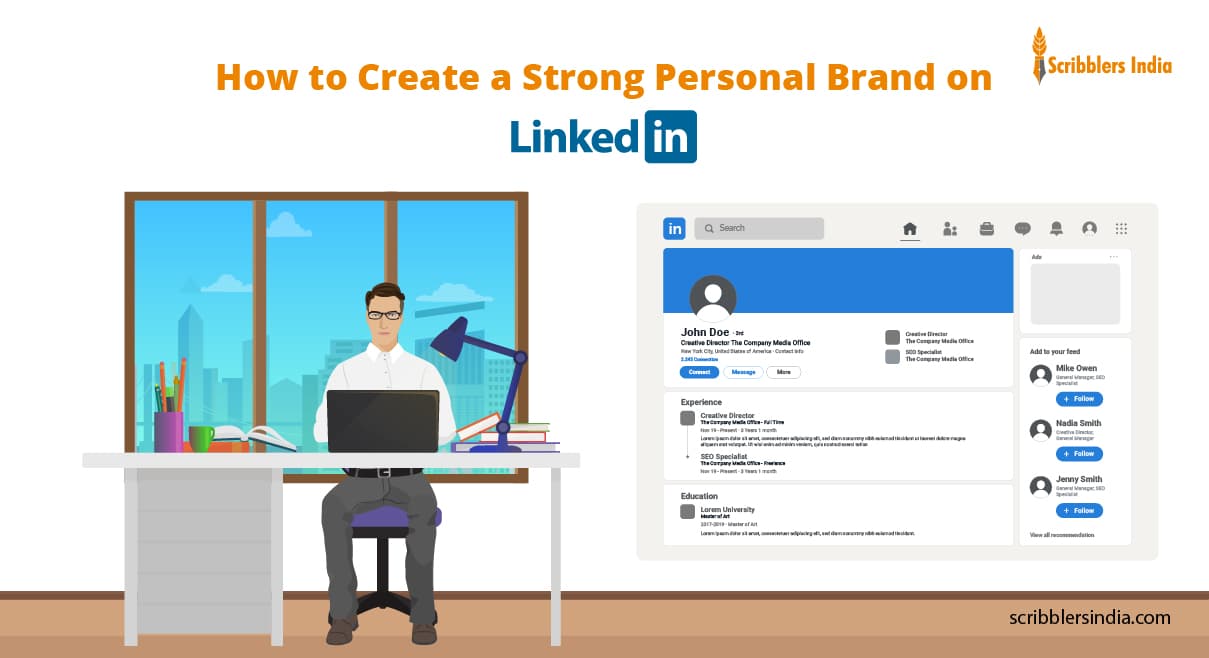
What Makes LinkedIn Personal Branding Effective for Executives and Founders?
LinkedIn personal branding can still produce little professional value when the profile looks polished but the positioning remains unclear. Your headline may sound credible, your About section may read well, and you may publish consistently. Yet visitors can still leave without understanding what you genuinely know, why your experience matters, or where your expertise fits. Effective LinkedIn personal branding solves that problem by connecting positioning, proof, content, relationships, discovery, and measurement. Your profile explains who you are and your work supports the claim. Your content demonstrates how you think, while relevant conversations help the right people encounter those ideas repeatedly. This guide explains how to build a personal brand on LinkedIn as a connected reputation system. You will learn how to define your position, strengthen your profile evidence, build content grounded in real expertise, grow the right network, improve discoverability, measure progress, and create a practical 90-day operating plan. Key Takeaways: Define the expertise and audience before rewriting individual profile sections Make important professional claims traceable to credible work and evidence Align your headline, About, Experience, recommendations, and Featured assets Build ideas from real expertise instead of copying popular posting formulas Prioritize relevant professional relationships instead of maximizing connection volume Use precise expertise language without turning your profile into SEO copy Keep your role and expertise aligned across authoritative online sources Track audience quality, profile activity, discovery, and professional outcomes separately Use the first 90 days to build foundations before increasing volume Which Questions Do You Need to Answer Before Starting LinkedIn Personal Branding? Before you optimize your profile, define who should recognize your expertise, what they should associate with your name, what evidence supports that position, and what professional action matters next. These decisions give your profile, content, network, and measurement system one clear strategic direction. Who Needs to Recognize Your Expertise? Avoid broad audiences such as “everyone in technology” or “business leaders.” A founder may need recognition among buyers, investors, analysts, senior hires, or partners. A consultant may care about decision-makers facing one defined problem, while a job seeker may prioritize hiring managers and relevant industry peers. Your choice of audience affects the evidence you emphasize and the conversations worth joining. If you want enterprise buyers to understand your work, your profile needs different proof from someone seeking a board role. Clear audience priorities also make later analytics easier to interpret. What Should They Associate With Your Name? Choose an expertise territory that is specific enough to become memorable. “Marketing leader” provides limited context, whereas “B2B SaaS positioning and category strategy” establishes a clearer professional association. “Technology executive” stays broad, while “enterprise AI governance and model-risk implementation” gives people a more useful reason to remember you. Strong personal branding on LinkedIn does not require you to discuss one narrow subject forever. Your territory can contain several related themes, provided those themes strengthen the same professional association rather than prompting your audience to infer a new professional identity with every post. What Evidence Makes the Position Credible? Before you claim expertise, identify what proves it. Useful evidence can include operating experience, projects, measurable outcomes, original frameworks, research, recommendations, conference sessions, credentials, interviews, products, teams, or programs you helped build. The strongest proof depends on the professional decision you want to influence. What Should Someone Do After Understanding Your Position? The next action depends on your objective. A consultant may want relevant prospects to start a conversation. A founder may want industry peers or buyers to follow their thinking. An executive may prioritize stakeholder visibility, while a professional planning a career move may want recruiters to understand fit. Your goal should guide the profile without turning every section into a sales pitch. If the positioning still feels unclear, use our guide to creating a personal brand statement before editing LinkedIn sections. Once the position is clear, the profile needs to prove it. How Should You Optimize Your Profile for LinkedIn Personal Branding? A strong LinkedIn profile should help visitors quickly understand your professional relevance and provide enough evidence to investigate further. Effective profile optimization aligns your photo, banner, headline, About section, Experience, skills, recommendations, Featured assets, and contact information around the same professional position. Profile Photo and Banner: Establish Recognition and Context Your profile photo mainly needs to make the account identifiable and appropriate for your professional setting. The banner has a different role. It can reinforce your expertise through one relevant message, visual, research asset, company context, event, or professional theme without competing with the introduction card. Headline: Explain Your Professional Relevance A job title often tells visitors where you sit inside an organization without showing why your expertise matters. A useful headline can combine your role or expertise, the problem or category you understand, and enough context to make the position meaningful to the audience. Executives may need to keep an official title prominent. Independent experts often have greater freedom to foreground the problem or category they understand best. In either case, your headline should sound natural to people rather than be a string of terms added purely for LinkedIn search visibility. About Section: Connect Positioning With Evidence Your About section should help a visitor move from understanding your headline to understanding why you have a credible perspective. Open with the professional territory, explain the experience behind it, add selected evidence, show how you think about the field, and provide appropriate engagement context. Avoid turning the About section into a complete autobiography. Detailed career history belongs in Experience. The strongest version helps someone understand your current professional relevance while giving enough evidence to continue exploring your profile, Featured assets, recent content, or external work. Experience: Show What You Actually Owned Strong Experience sections explain more than responsibilities. Where disclosure allows, show the problems you were responsible for solving, the scale involved, initiatives you led, functions or markets affected, changes implemented, supported outcomes, and specialist knowledge you developed through the work. Recommendations, Featured, and Contact Details: Reduce Uncertainty Recommendations add value when they describe
LinkedIn personal branding can still produce little professional value when the profile looks polished but the positioning remains unclear. Your headline may sound credible, your About section may read well, and you may publish consistently. Yet visitors can still leave without understanding what you genuinely know, why your experience matters, or where your expertise fits. Effective LinkedIn personal branding solves that problem by connecting positioning, proof, content, relationships, discovery, and measurement. Your profile explains who you are and your work supports the claim. Your content demonstrates how you think, while relevant conversations help the right people encounter those ideas repeatedly. This guide explains how to build a personal brand on LinkedIn as a connected reputation system. You will learn how to define your position, strengthen your profile evidence, build content grounded in real expertise, grow the right network, improve discoverability, measure progress, and create a practical 90-day operating plan. Key Takeaways: Define the expertise and audience before rewriting individual profile sections Make important professional claims traceable to credible work and evidence Align your headline, About, Experience, recommendations, and Featured assets Build ideas from real expertise instead of copying popular posting formulas Prioritize relevant professional relationships instead of maximizing connection volume Use precise expertise language without turning your profile into SEO copy Keep your role and expertise aligned across authoritative online sources Track audience quality, profile activity, discovery, and professional outcomes separately Use the first 90 days to build foundations before increasing volume Which Questions Do You Need to Answer Before Starting LinkedIn Personal Branding? Before you optimize your profile, define who should recognize your expertise, what they should associate with your name, what evidence supports that position, and what professional action matters next. These decisions give your profile, content, network, and measurement system one clear strategic direction. Who Needs to Recognize Your Expertise? Avoid broad audiences such as “everyone in technology” or “business leaders.” A founder may need recognition among buyers, investors, analysts, senior hires, or partners. A consultant may care about decision-makers facing one defined problem, while a job seeker may prioritize hiring managers and relevant industry peers. Your choice of audience affects the evidence you emphasize and the conversations worth joining. If you want enterprise buyers to understand your work, your profile needs different proof from someone seeking a board role. Clear audience priorities also make later analytics easier to interpret. What Should They Associate With Your Name? Choose an expertise territory that is specific enough to become memorable. “Marketing leader” provides limited context, whereas “B2B SaaS positioning and category strategy” establishes a clearer professional association. “Technology executive” stays broad, while “enterprise AI governance and model-risk implementation” gives people a more useful reason to remember you. Strong personal branding on LinkedIn does not require you to discuss one narrow subject forever. Your territory can contain several related themes, provided those themes strengthen the same professional association rather than prompting your audience to infer a new professional identity with every post. What Evidence Makes the Position Credible? Before you claim expertise, identify what proves it. Useful evidence can include operating experience, projects, measurable outcomes, original frameworks, research, recommendations, conference sessions, credentials, interviews, products, teams, or programs you helped build. The strongest proof depends on the professional decision you want to influence. What Should Someone Do After Understanding Your Position? The next action depends on your objective. A consultant may want relevant prospects to start a conversation. A founder may want industry peers or buyers to follow their thinking. An executive may prioritize stakeholder visibility, while a professional planning a career move may want recruiters to understand fit. Your goal should guide the profile without turning every section into a sales pitch. If the positioning still feels unclear, use our guide to creating a personal brand statement before editing LinkedIn sections. Once the position is clear, the profile needs to prove it. How Should You Optimize Your Profile for LinkedIn Personal Branding? A strong LinkedIn profile should help visitors quickly understand your professional relevance and provide enough evidence to investigate further. Effective profile optimization aligns your photo, banner, headline, About section, Experience, skills, recommendations, Featured assets, and contact information around the same professional position. Profile Photo and Banner: Establish Recognition and Context Your profile photo mainly needs to make the account identifiable and appropriate for your professional setting. The banner has a different role. It can reinforce your expertise through one relevant message, visual, research asset, company context, event, or professional theme without competing with the introduction card. Headline: Explain Your Professional Relevance A job title often tells visitors where you sit inside an organization without showing why your expertise matters. A useful headline can combine your role or expertise, the problem or category you understand, and enough context to make the position meaningful to the audience. Executives may need to keep an official title prominent. Independent experts often have greater freedom to foreground the problem or category they understand best. In either case, your headline should sound natural to people rather than be a string of terms added purely for LinkedIn search visibility. About Section: Connect Positioning With Evidence Your About section should help a visitor move from understanding your headline to understanding why you have a credible perspective. Open with the professional territory, explain the experience behind it, add selected evidence, show how you think about the field, and provide appropriate engagement context. Avoid turning the About section into a complete autobiography. Detailed career history belongs in Experience. The strongest version helps someone understand your current professional relevance while giving enough evidence to continue exploring your profile, Featured assets, recent content, or external work. Experience: Show What You Actually Owned Strong Experience sections explain more than responsibilities. Where disclosure allows, show the problems you were responsible for solving, the scale involved, initiatives you led, functions or markets affected, changes implemented, supported outcomes, and specialist knowledge you developed through the work. Recommendations, Featured, and Contact Details: Reduce Uncertainty Recommendations add value when they describe

Is Wikipedia Reliable and Relevant in the Age of AI Search?
You have experienced the quiet revolution of modern AI search. It’s like having a brilliant personal research assistant. You ask a complex question, and a platform like Google SGE or ChatGPT instantly crafts a tailored, paragraph-long answer. This frictionless access to information feels like the future, a seamless evolution of how we learn. But as this technology embeds itself into our lives, it forces you to ask questions on what is the role of a legacy platform like Wikipedia in this new era? With AI providing such confident answers, the debate over whether is Wikipedia reliable has taken on a new urgency. Is this human-powered encyclopedia now an obsolete relic? The answer is a resounding no. While AI search is a powerful tool for summarization, it is not a substitute for deep, verifiable knowledge. In fact, Wikipedia’s foundational principles of transparency, human collaboration, and verifiable sourcing make it essential than ever. It serves as a vital anchor of accountability in the often-opaque world of AI-generated content. This article explores why your trust in Wikipedia is well-placed and why it remains a cornerstone of digital literacy. Keep reading to learn more. What is AI Search and How is it Changing How We Find Information? AI search uses artificial intelligence, specifically Large Language Models (LLMs), to provide direct, synthesized answers to your queries. Instead of merely presenting a list of links for you to investigate, this technology interprets your question’s intent. It then generates a unique, conversational response, fundamentally altering your relationship with information seeking from one of searching to one of dialogue. How do AI search engines like Google SGE and ChatGPT work? These platforms are powered by Large Language Models (LLMs). An LLM is an AI that has been pre-trained on a colossal dataset—trillions of words and code snippets from across the public internet. By analyzing this data, it learns the intricate patterns, context, and grammar of human language. This allows it to generate new, coherent text word-by-word. Many modern systems use a technique called Retrieval-Augmented Generation (RAG), where the AI first finds relevant documents from its database and then uses its language skills to summarize that retrieved information into the answer you see. What are the main benefits of using AI for search? You gain immense advantages from SearchGPT, which explains its rapid adoption. The core benefit is the significant reduction in cognitive load, i.e., the mental effort required to find what you need. AI achieves this by offering: Unprecedented Speed: Get a synthesized answer to a question like, “What are the supply chain impacts of lithium-ion battery recycling policies?” in seconds, saving you from reading multiple dense reports. Powerful Summarization: Condense lengthy documents, academic papers, or news articles into key bullet points. You can ask it to simplify complex topics, making them instantly more accessible. Conversational Exploration: Engage in a natural dialogue. You can ask follow-up questions, request different perspectives, or ask for clarification, allowing for a more intuitive and iterative learning process. What is the “black box” problem of AI? The “black box” problem is one of the most significant AI Search Limitations. It describes the inherent opacity of these systems. When an AI provides an answer, the exact process, including which specific sources it prioritized and how it synthesized them, is hidden from you. Even when sources are provided, they may be general or, worse, completely incorrect. This lack of a clear, verifiable trail from claim to source is a critical issue for anyone who needs to trust the information they receive. The question of whether is Wikipedia reliable becomes much clearer when you compare its transparency to this problem. Is Wikipedia Reliable: How Does It Actually Work? Wikipedia’s reliability comes from its open, human-centric structure governed by non-negotiable content policies. It is far more than a website where “anyone can edit.” It is a sophisticated ecosystem of human editors, specialized user roles, and automated tools, all operating in public view to curate and verify information according to a shared set of principles. This process is what ensures the content remains neutral, sourced, and trustworthy. A Wikimedia Foundation report noted that over 260,000 volunteer editors make contributions to Wikipedia every month. This vast, decentralized network is its greatest strength. Who writes and edits Wikipedia articles? Wikipedia is built by a global community of millions of volunteer editors. This community has a well-defined structure. New users can fix typos, but only “autoconfirmed” users (with accounts a few days old and a handful of edits) are eligible for developing Wikipedia pages. Highly contentious topics are often “semi-protected,” meaning only these established editors can contribute. Vandalism is often reverted in seconds by sophisticated bots like ClueBot NG, and a hierarchy of administrators has the tools to lock pages or block disruptive users. This layered security model directly answers the question of whether is Wikipedia reliable against bad actors. What are Wikipedia’s “Three Core Content Policies”? The platform’s entire model of trust is built on three essential, non-negotiable rules. Understanding them is fundamental to understanding why you can and should, trust its content. This directly answers the question “is Wikipedia reliable”. Neutral Point of View (NPOV): This is the guiding editorial principle. It mandates that articles must fairly represent all significant viewpoints that have been published by reliable sources, in proportion to their prominence. It’s not about giving equal time to a fringe theory and a scientific consensus; it’s about giving each “due weight,” a concept that prevents misinformation from taking hold. Verifiability: This is arguably the most important policy. Every substantive claim you read must be attributable to a reliable, published source. The community’s motto is “verifiability, not truth.” This means it doesn’t matter what an editor believes is true; what matters is what they can prove with a citation. This is the cornerstone that lets you verify that is Wikipedia reliable. No Original Research: Wikipedia is a tertiary source. Its purpose is to summarize and synthesize knowledge that has already been published in reliable secondary sources (like
You have experienced the quiet revolution of modern AI search. It’s like having a brilliant personal research assistant. You ask a complex question, and a platform like Google SGE or ChatGPT instantly crafts a tailored, paragraph-long answer. This frictionless access to information feels like the future, a seamless evolution of how we learn. But as this technology embeds itself into our lives, it forces you to ask questions on what is the role of a legacy platform like Wikipedia in this new era? With AI providing such confident answers, the debate over whether is Wikipedia reliable has taken on a new urgency. Is this human-powered encyclopedia now an obsolete relic? The answer is a resounding no. While AI search is a powerful tool for summarization, it is not a substitute for deep, verifiable knowledge. In fact, Wikipedia’s foundational principles of transparency, human collaboration, and verifiable sourcing make it essential than ever. It serves as a vital anchor of accountability in the often-opaque world of AI-generated content. This article explores why your trust in Wikipedia is well-placed and why it remains a cornerstone of digital literacy. Keep reading to learn more. What is AI Search and How is it Changing How We Find Information? AI search uses artificial intelligence, specifically Large Language Models (LLMs), to provide direct, synthesized answers to your queries. Instead of merely presenting a list of links for you to investigate, this technology interprets your question’s intent. It then generates a unique, conversational response, fundamentally altering your relationship with information seeking from one of searching to one of dialogue. How do AI search engines like Google SGE and ChatGPT work? These platforms are powered by Large Language Models (LLMs). An LLM is an AI that has been pre-trained on a colossal dataset—trillions of words and code snippets from across the public internet. By analyzing this data, it learns the intricate patterns, context, and grammar of human language. This allows it to generate new, coherent text word-by-word. Many modern systems use a technique called Retrieval-Augmented Generation (RAG), where the AI first finds relevant documents from its database and then uses its language skills to summarize that retrieved information into the answer you see. What are the main benefits of using AI for search? You gain immense advantages from SearchGPT, which explains its rapid adoption. The core benefit is the significant reduction in cognitive load, i.e., the mental effort required to find what you need. AI achieves this by offering: Unprecedented Speed: Get a synthesized answer to a question like, “What are the supply chain impacts of lithium-ion battery recycling policies?” in seconds, saving you from reading multiple dense reports. Powerful Summarization: Condense lengthy documents, academic papers, or news articles into key bullet points. You can ask it to simplify complex topics, making them instantly more accessible. Conversational Exploration: Engage in a natural dialogue. You can ask follow-up questions, request different perspectives, or ask for clarification, allowing for a more intuitive and iterative learning process. What is the “black box” problem of AI? The “black box” problem is one of the most significant AI Search Limitations. It describes the inherent opacity of these systems. When an AI provides an answer, the exact process, including which specific sources it prioritized and how it synthesized them, is hidden from you. Even when sources are provided, they may be general or, worse, completely incorrect. This lack of a clear, verifiable trail from claim to source is a critical issue for anyone who needs to trust the information they receive. The question of whether is Wikipedia reliable becomes much clearer when you compare its transparency to this problem. Is Wikipedia Reliable: How Does It Actually Work? Wikipedia’s reliability comes from its open, human-centric structure governed by non-negotiable content policies. It is far more than a website where “anyone can edit.” It is a sophisticated ecosystem of human editors, specialized user roles, and automated tools, all operating in public view to curate and verify information according to a shared set of principles. This process is what ensures the content remains neutral, sourced, and trustworthy. A Wikimedia Foundation report noted that over 260,000 volunteer editors make contributions to Wikipedia every month. This vast, decentralized network is its greatest strength. Who writes and edits Wikipedia articles? Wikipedia is built by a global community of millions of volunteer editors. This community has a well-defined structure. New users can fix typos, but only “autoconfirmed” users (with accounts a few days old and a handful of edits) are eligible for developing Wikipedia pages. Highly contentious topics are often “semi-protected,” meaning only these established editors can contribute. Vandalism is often reverted in seconds by sophisticated bots like ClueBot NG, and a hierarchy of administrators has the tools to lock pages or block disruptive users. This layered security model directly answers the question of whether is Wikipedia reliable against bad actors. What are Wikipedia’s “Three Core Content Policies”? The platform’s entire model of trust is built on three essential, non-negotiable rules. Understanding them is fundamental to understanding why you can and should, trust its content. This directly answers the question “is Wikipedia reliable”. Neutral Point of View (NPOV): This is the guiding editorial principle. It mandates that articles must fairly represent all significant viewpoints that have been published by reliable sources, in proportion to their prominence. It’s not about giving equal time to a fringe theory and a scientific consensus; it’s about giving each “due weight,” a concept that prevents misinformation from taking hold. Verifiability: This is arguably the most important policy. Every substantive claim you read must be attributable to a reliable, published source. The community’s motto is “verifiability, not truth.” This means it doesn’t matter what an editor believes is true; what matters is what they can prove with a citation. This is the cornerstone that lets you verify that is Wikipedia reliable. No Original Research: Wikipedia is a tertiary source. Its purpose is to summarize and synthesize knowledge that has already been published in reliable secondary sources (like