
You have the expertise, stories, and ideas for a book. You also have a company to run, a leadership role to manage, and limited time for structured writing. A well-defined book ghostwriting process helps turn your expertise into a manuscript without forcing you to write it alone.
A ghostwriter captures your thinking and shapes it into a clear book. You bring the knowledge, experience, and point of view. The ghostwriter brings structure, voice capture, writing craft, and project discipline. This support is often used by founders, consultants, coaches and executives who want a book but cannot pause their work for months.
Reedsy’s 2026 data show that professional nonfiction ghostwriting often costs between $18,000 and $50,000 globally, depending on the scope and the writer’s experience. A well-written ebook can support speaking opportunities, consulting inquiries, media visibility and long-term thought leadership. The challenge is not only writing the book. The real challenge is building a process that protects your voice, clarifies your ideas and keeps the project moving.
TL;DR
|
What Is the Book Ghostwriting Process?
The book ghostwriting process is a structured collaboration between a client and a professional writer. The client shares ideas, stories and expertise. The ghostwriter turns that material into a polished manuscript that sounds like the client.
This process is different from hiring a content writer for blogs or articles. A book needs deeper thinking, stronger structure and tighter voice control. It also needs a clear reader journey that connects every chapter to one larger promise. A professional ghostwriter usually helps with concept development, interviews, outlining, drafting, revision, and final manuscript polish. Some projects also include book proposal support, publishing guidance, or content repurposing.
The process works best when both sides understand their roles. The client does not need to write the manuscript. The client needs to share experience, review drafts, and give honest feedback. The ghostwriter manages the writing, structure, and editorial flow.
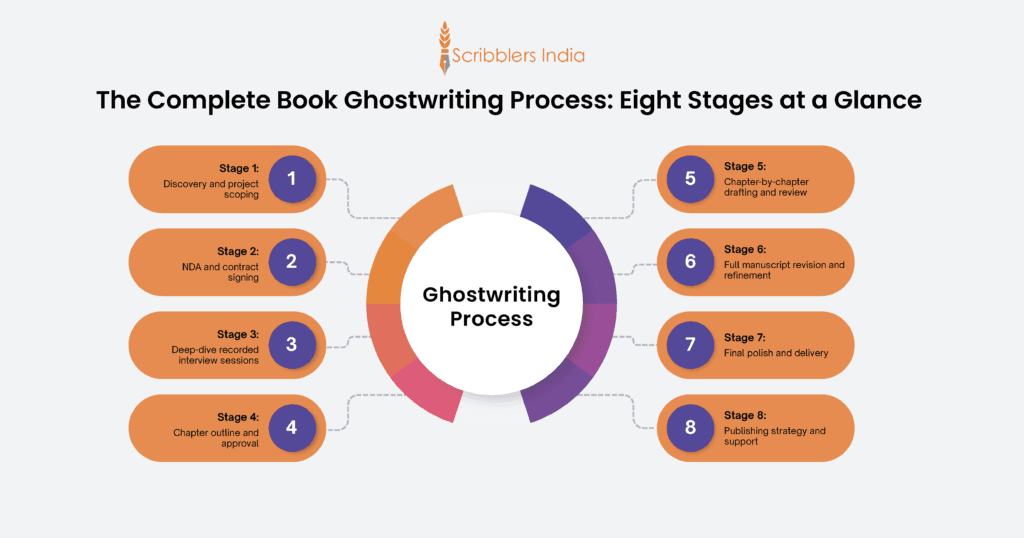
A strong book ghostwriting process usually includes:
- Discovery and project scoping
- NDA and contract signing
- Voice capture interviews
- Book outline development
- Chapter-by-chapter drafting
- Structured revision rounds
- Full manuscript review
- Final delivery and ownership transfer
This structure matters because a book is too large to manage casually. Without a process, ideas drift, chapters repeat and timelines stretch. With a clear process, the book moves from raw expertise to a finished manuscript with less confusion.

When Should You Work With an Experienced Book Ghostwriter?
You should work with an experienced ghostwriter when you have strong expertise but lack time, structure or writing support. A ghostwriter helps you turn scattered ideas into a book that readers can follow and trust.
This is useful for founders, consultants, CXOs, doctors, coaches and service professionals. These professionals often have enough experience to write a valuable book. They usually lack the uninterrupted time needed to complete one at publishing quality. You may need professional ghostwriting services if you speak better than you write. Many leaders explain ideas clearly in conversations, podcasts or keynote sessions. A ghostwriter can turn those spoken ideas into chapters with stronger structure.
You may also need help if your book idea feels too broad. For example, “leadership lessons” is not yet a book. A good ghostwriter helps convert it into a sharper concept with a defined reader, promise and structure. A ghostwriter is also helpful when the book must serve a business goal. An ebook may support consulting leads, founder authority, investor trust, executive visibility or speaking invitations. In each case, the writing must support the outcome.
The best collaborations happen when the client has something real to say. The ghostwriter cannot replace lived experience. The writer can only extract, shape and strengthen it.
Why Is the NDA and Contract Stage So Important in Ghostwriting?
The NDA and contract stage establishes the legal foundation of the ghostwriting relationship. It helps protect the client’s intellectual property, define ownership of the manuscript, and ensure complete confidentiality about the collaboration.
Every professional book ghostwriting process engagement includes a non-disclosure agreement. It prevents the ghostwriter from ever disclosing the client relationship, using the manuscript for their own portfolio, or referencing the client’s work publicly without explicit written permission.
The business world operates on the understanding that ghostwriting is a professional service, not a secret that carries any stigma. The NDA simply formalizes the confidentiality that the industry has always maintained as standard practice.
The contract defines the deliverables, payment schedule, revision policy, intellectual property transfer, and timeline milestones that govern the entire engagement.
Key provisions include:
- Complete copyright transfer to the client upon final payment.
- Specific definition of what constitutes a complete deliverable.
- Clear description of how many revision rounds are included in the fee before additional charges apply.
Reviewing the contract carefully before signing protects both parties. It prevents the misaligned expectations that derail otherwise strong ghostwriting partnerships.
How Does Ghostwriting Work in the Discovery Stage?
The discovery stage defines the book’s purpose, audience, scope, and commercial role. No serious book ghostwriting process should begin with drafting. Strategy must come first.
The ghostwriter usually starts by asking why the book needs to exist. Is the goal to build authority? Generate consulting inquiries? Support a speaking platform? Open doors in a new market? Each goal creates a different book.
The next step is reader clarity. An ebook for first-time founders needs different examples from an ebook for enterprise CEOs. A book for doctors will sound different from one for investors. Reader clarity decides the tone, examples and depth.
A strong discovery stage should answer these questions:
- Who is the book for?
- What problem does the reader face?
- What should the reader believe after reading?
- What ideas must the book include?
- What stories can support those ideas?
- Which books already cover this topic?
- What should this book do differently?
- What business outcome should it support?
Discovery also sets practical expectations. The writer and client agree on estimated word count, chapter count, interview hours, revision rounds and timeline. This prevents confusion later.
At the end of discovery, the ghostwriter should prepare a project brief. This brief becomes the reference point for the entire project. It helps both sides judge drafts against agreed goals, not changing preferences
Why Are NDA and Contract Terms Important in the Ghostwriting Process?
NDA and contract terms protect confidentiality, ownership and expectations. This stage may feel administrative, but it creates the trust needed for a strong ghostwriting partnership. A client may share private stories, business lessons, internal decisions and personal experiences. The ghostwriter may also hear sensitive views about companies, teams or markets. The NDA protects this material from public disclosure.
A professional agreement should explain what the ghostwriter will deliver and when. It should also define payment milestones, revision rounds, cancellation terms and copyright transfer. These terms prevent misunderstandings during the project.
The contract should usually cover:
- Project scope
- Payment schedule
- Delivery milestones
- Revision policy
- Confidentiality terms
- Copyright transfer
- Attribution rules
- Publishing support, if included
Copyright transfer matters most. In a standard ghostwriting arrangement, the client owns the manuscript after final payment and delivery. The ghostwriter does not claim authorship unless both sides agree to a credited collaboration.
This legal clarity also protects the writer. It defines what is included and what counts as additional work. That makes the relationship more professional from the beginning.
How Do Ghostwriters Capture a Client’s Voice?
Ghostwriters capture voice through interviews, past writing, speeches, notes and review cycles. Voice is not only about word choice. It includes rhythm, opinion strength, examples, humor, and the way a person explains ideas.
The interview phase is often the most important part of writing a book with a ghostwriter. A book cannot sound authentic if the writer does not understand how the client thinks. Recorded conversations give the writer direct access to the client’s natural language. A ghostwriter may ask about business decisions, failures, frameworks, turning points and client stories. The goal is not to collect random material. The goal is to identify the ideas that can carry the book.
Voice capture usually focuses on four areas.
- Ideas: These are the arguments, frameworks and lessons that form the book’s foundation.
- Stories: These include personal experiences, client situations and business decisions that make the ideas memorable.
- Language: These are the phrases, metaphors and explanation patterns the client uses naturally.
- Perspective: This is the client’s view of the reader’s problem and the better way forward.
After each session, the ghostwriter reviews transcripts and audio with an editorial lens. Strong phrases are saved. Useful stories are mapped to chapters. Unclear ideas are marked for follow-up.
This is where ghostwriting becomes different from general writing support. The ghostwriter is not inventing a personality. The writer is listening carefully and shaping the client’s clearest thinking into publishable form.
What Happens During the Outline Stage in Book Ghostwriting Process?
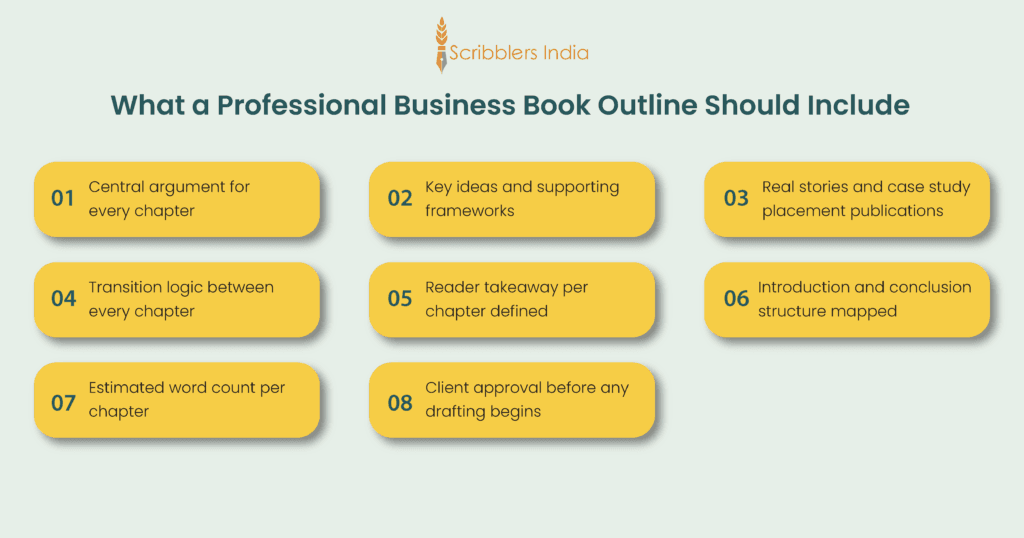
In the book ghostwriting process, the outline stage turns the book idea into a chapter-by-chapter roadmap before drafting begins. It defines the reader promise, argument flow, key stories and chapter takeaways. This keeps the book focused, prevents repeated ideas and gives the ghostwriter a clear structure to follow during drafting.
- Reader Promise and Audience Fit: The outline defines who the book serves and what the reader should gain. This keeps the manuscript from becoming a broad collection of professional lessons. Every chapter then answers a specific reader need with a clear purpose and supports the larger book’s promise throughout the manuscript.
- Chapter Sequence and Argument Flow: The outline decides how one chapter should lead into the next. This matters because ebooks need progression, not scattered advice. A strong sequence helps readers understand the argument, follow the author’s thinking and stay engaged until the final chapter without losing context or interest.
- Stories and Proof Points: The outline places stories where they can support the strongest ideas. It also shows which chapters need client examples and research support. This prevents the ghostwriter from adding proof too late, when completed chapters already need major restructuring during the final manuscript review and revision.
- Client Review and Approval: The client should approve the outline before drafting starts. This approval gives both sides a shared understanding of structure and direction. It also reduces costly rewrites because major decisions are handled before the ghostwriter invests time in drafting full chapters across the manuscript for review.
- Flexibility Without Drift: The outline can evolve when stronger ideas emerge during later interviews. However, the core structure should stay stable enough to guide the project. This balance keeps the book flexible without letting new material pull chapters away from the original reader promise and agreed book direction.
How Does Chapter-by-Chapter Drafting Work in the Book Writing Process?
Chapter-by-chapter drafting turns the approved outline into a manuscript through controlled writing and review cycles. The ghostwriter drafts one chapter at a time, shares it for feedback, and applies revisions before moving ahead. This protects voice and structure while giving the client regular visibility into progress and quality standards throughout.
- Chapter preparation: The ghostwriter starts by reviewing the approved outline, interview transcripts, client notes, and supporting documents. This keeps the draft grounded in the client’s thinking rather than generic research. Any missing context is flagged early, so the next conversation or follow-up note can fill the gap.
- Research and first draft: The writer then adds external context only where it strengthens the chapter. Research should support the client’s argument, not overpower it. The first draft converts interviews and outline notes into a readable chapter with a clear opening, logical flow, practical examples, and useful takeaways.
- Client review: The client checks whether the chapter is accurate and complete, then reviews whether the voice feels right. Feedback should explain what feels incorrect or thin. Specific comments help the ghostwriter revise faster, while vague notes such as “make this stronger” usually slow the book ghostwriting process.
- Revision and approval: The ghostwriter applies feedback before drafting too far ahead. This prevents one early issue from spreading across several chapters. Once the revised chapter is approved, the project moves forward with stronger alignment and a clearer understanding of the client’s preferred tone and examples for the next chapter.
- Behind-the-scenes editorial work: Drafting also includes quiet editorial work between submissions. The ghostwriter improves transitions, removes repetition, checks chapter logic, and connects ideas across the manuscript. This discipline turns the client’s expertise into a book with momentum, rather than a transcript arranged into chapters.
What Happens During Full Manuscript Revision Under the Ghostwriting Process?
Full manuscript revision reviews the book as one complete reading experience after chapter-level approval. The ghostwriter checks whether the manuscript delivers its opening promise, removes repetition, strengthens transitions and aligns tone across chapters. This stage turns approved chapters into a cohesive manuscript ready for the next stage of publishing.
- Manuscript-wide flow: The editor reads the full book in sequence. This reveals uneven pacing, weak transitions and chapters that feel disconnected. The aim is to make the manuscript feel like one guided argument, not separate approved drafts.
- Repetition and gaps: The revision stage removes repeated ideas and fills missing explanations. Many books often revisit similar themes across chapters. A full review decides which points deserve reinforcement and which sections need tighter editing.
- Voice and tone consistency: Early and later chapters must sound like they are by the same author. The revision checks language, sentence rhythm and opinion strength. This helps the finished book feel authentic, especially when interviews took place over several weeks or months.
- Consolidated client feedback: The client reviews the complete manuscript after structural revision. Feedback should focus on accuracy, missing context and overall reading experience. This prevents endless line edits and keeps the final stage focused on quality.
- Final delivery and ownership: The ghostwriter delivers the approved manuscript in an editable format. Depending on scope, delivery may include summaries, back-cover copy or publishing notes. The copyright transfer should follow the contract after the final payment.
How Much Time Does the Client Need to Invest in the Book Ghostwriting Process?
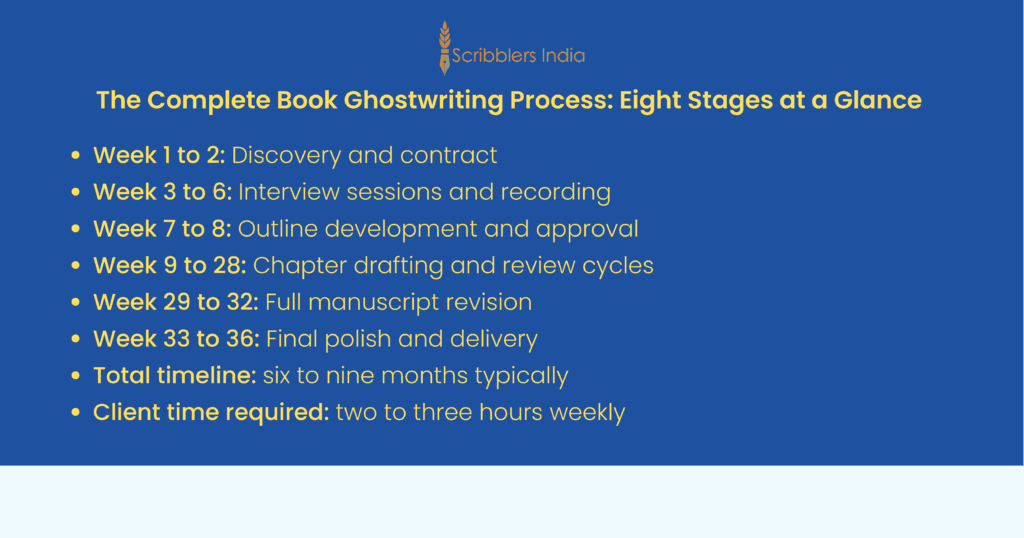
The client usually needs two to three hours per week during active project stages. Most of this time goes into interviews, draft reviews, and feedback. The ghostwriter manages research, writing, and revision between sessions.
The early stages often need more client input. Discovery calls, voice capture interviews, and outline approval require attention. Later stages become smoother once the writer understands the client’s thinking.
Client time is usually spent on:
- Discovery calls
- Recorded interviews
- Reviewing the outline
- Reviewing chapter drafts
- Clarifying stories
- Approving revisions
- Reviewing the full manuscript
The process works best when the client stays engaged without micromanaging. The writer needs access to real thinking. The writer also needs space to shape that thinking professionally.
Busy founders and executives should block review time in advance. This keeps the project moving. A book can be written around a busy schedule, but it cannot succeed without consistent client participation.
How Much Does the Book Ghostwriting Process Cost?
The cost of the standard and ebook writing services depends on manuscript length, interview time, research depth, writer experience and revision scope. Books based on complex or abstract topics cost more because they require stronger structure and a deeper understanding of the subject.
When comparing proposals, review what is included:
| Pricing Factor | What to Check |
| Interview hours | How much voice capture is included? |
| Outline depth | Is the full book structure mapped? |
| Research support | Are sources and examples included? |
| Revision rounds | How many rounds are covered? |
| Project management | Who tracks milestones and feedback? |
| Copyright transfer | Does the client own the manuscript? |
| Publishing support | Is guidance included or separate? |
The right question is not “Who is cheapest?” A better question is, “Which partner can turn my expertise into a book that protects my reputation?”
Why Choose Scribblers India for Your Book Ghostwriting Process?
Scribblers India supports founders, consultants, executives, and subject-matter experts through a structured book ghostwriting process. We help clients turn expertise, stories, and lived experience into clear manuscripts that build authority. The work starts with the book’s purpose, reader promise, and business role from day one.
Before drafting begins, we define the audience, positioning, chapter direction, interview plan, and review flow. This helps the manuscript support a real outcome, such as founder credibility, consulting inquiries, speaking visibility, or category authority, instead of becoming a personal publishing exercise.
We also treat a book as the base for wider thought leadership. Once the manuscript is complete, its ideas can support LinkedIn content, newsletters, podcasts, media pitches, keynote themes, and service-page authority. This makes the book a long-term asset for a professional’s personal brand and commercial goals in future marketing and sales.
Scribblers India Book Ghostwriting Framework
Our framework keeps the book ghostwriting process practical, structured, and voice-led. Each step connects the client’s thinking to reader needs, manuscript quality, and business outcomes, so the final book feels authentic, useful, and ready for broader use in thought leadership content.
- Book Strategy: We define the book’s purpose, reader promise, positioning, and commercial role before drafting begins. This keeps the manuscript focused on a clear outcome. Our content strategy also prevents the project from becoming a broad collection of disconnected professional lessons later.
- Voice Capture Interviews: Structured interviews help us capture the client’s stories, frameworks, vocabulary, and point of view. We study how the client naturally explains ideas. This helps the manuscript sound credible, personal, and close to how the client thinks best.
- Chapter Outline Development: We create a chapter-by-chapter outline before drafting the manuscript. Each chapter gets a central argument, key stories, and reader takeaway. This gives the ghostwriter direction and helps the client approve the structure before the manuscript drafting begins.
- Manuscript Drafting: Our writers turn recorded conversations, notes, and research into polished chapters. Each draft follows the approved outline while preserving the client’s voice. The chapter review process keeps feedback focused on accuracy, depth, and direction throughout the manuscript clearly.
- Editorial Review: We review the full manuscript for flow, repetition, source accuracy, voice consistency, and structure. This final pass strengthens the reader journey. It also prepares the book for editing, publishing, and wider thought leadership use after final delivery stage.
Connect with Scribblers India to turn your expertise into a publication-ready book with confidence.
Frequently Asked Questions
Is it legal to publish a ghostwritten book under your name?
Yes, publishing a ghostwritten book under your name is legal when the contract clearly transfers rights. You should own the manuscript after final payment, approval and delivery. The agreement should also define confidentiality, attribution, royalties, portfolio use and whether the ghostwriter can discuss the project publicly later with written consent.
Is hiring a ghostwriter ethical for memoirs and ebooks?
Hiring a ghostwriter is ethical when the ideas, experience and final approval come from the named author. The writer helps shape, organize and polish the material without taking public credit. It becomes problematic only when authors claim expertise they do not have or publish false details as fact without disclosure.
What should I prepare before hiring a book ghostwriter?
Before hiring a book ghostwriter, collect notes, voice memos, drafts, talks, articles, podcast transcripts and stories from your life or work. You do not need a complete outline, but you should know why the book matters. Clear goals help the writer shape stronger questions, chapters and positioning from the start.
How do I choose the right ghostwriter for my book?
Choose a ghostwriter by reviewing their process, interview style, sample quality, genre understanding and revision approach. A strong partner should ask thoughtful questions before promising deadlines or word counts. They should protect your voice, challenge unclear ideas, explain rights clearly and show how the book will move from idea to manuscript.
Can a ghostwriter help with publishing and book promotion?
Some ghostwriters support publishing and promotion, but this depends on the agreed scope. They may help with book proposals, back-cover copy, author bios, chapter summaries, launch posts or excerpt ideas. Editing, cover design, formatting, distribution, public relations and Amazon setup may need separate specialists unless included in the contract upfront.