Semantic search is a search approach that focuses on meaning, context, and user intent instead of relying on exact keyword matches. It helps search systems understand what people want, how words relate, and which concepts or entities can answer a query. This allows relevant information to surface even when wording differs.
Modern search engines use language models, neural matching, entities, and other systems to interpret queries and webpages. For marketers, semantic search changes content planning from keyword repetition toward useful topic coverage, clear relationships, and search intent. These principles also support retrieval across AI-powered search experiences and RAG systems.
Key Takeaways:
|
What Is Semantic Search and How Does It Work?
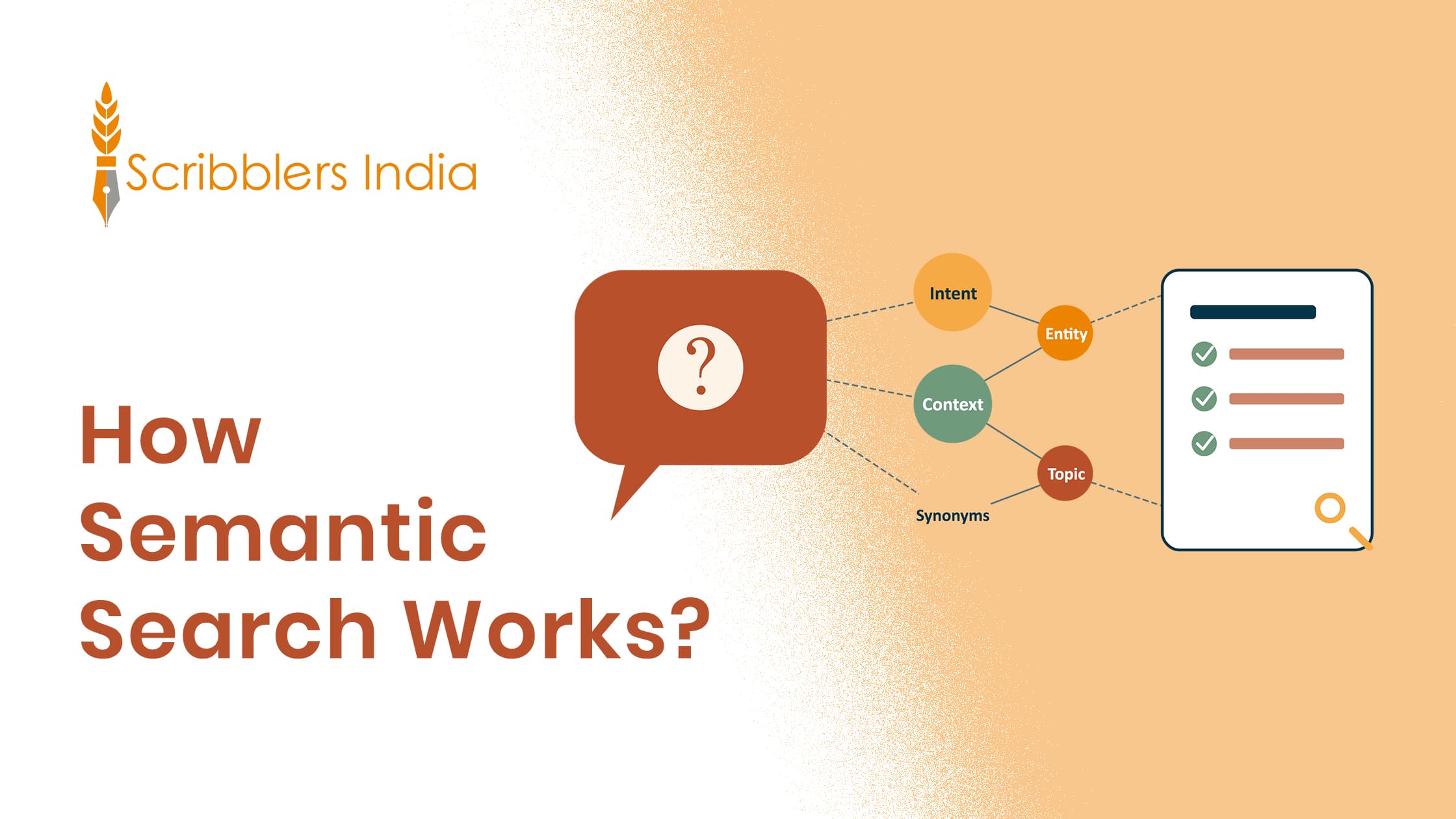
Semantic search seeks information that matches the meaning of a query rather than requiring the same words inside each result. It considers context, intent, concepts, entities, and relationships to identify information that satisfies the searcher’s query.
Google has developed several systems that support this broader language understanding. RankBrain connects unfamiliar wording with related concepts, while neural matching evaluates wider representations of queries and pages. BERT examines how words relate within a sequence to understand context and meaning.
Consider a search for “affordable phones with strong cameras.” A useful result might discuss “budget smartphones for photography” without repeating the original wording. Semantic understanding can connect both phrases through their shared concepts, while literal matching would place greater weight on identical terms.
This does not mean keywords have disappeared from search. Exact wording can remain valuable for product codes, names, technical terms, and queries where specific language changes the intended meaning.

How Is Semantic Search Different From Keyword Search?
Keyword search looks for direct matches between words in a query and words found inside documents. Semantic search expands that process by considering meaning and relationships. Modern retrieval systems often combine both approaches because exact terminology and conceptual similarity solve different search problems.
| Area | Keyword Search | Semantic Search | Simple Example |
| Focus | Matches query terms with words appearing inside indexed documents. | Matches the meaning and concepts represented across queries and documents. | “Cheap laptop” can connect with “affordable notebook computer.” |
| Synonyms | Different wording can weaken matching when exact terms are absent. | Related words can connect when they represent a similar underlying concept. | “Attorney” can relate to content discussing a “lawyer.” |
| Ambiguity | One word may retrieve different subjects sharing the same wording. | Context can help determine which meaning the searcher most likely intended. | “Jaguar” may mean an animal, vehicle, or brand. |
| Best use | Exact identifiers and specialized terminology often benefit from direct matching. | Conversational questions and concept-led queries benefit from meaning-based retrieval. | Product codes favor exact search; research questions need context. |
Semantic search should therefore complement keyword research rather than replace it. Search teams still need the language audiences use while understanding the questions, concepts, and relationships behind those words.
Which Signals Help Search Systems Understand Meaning?
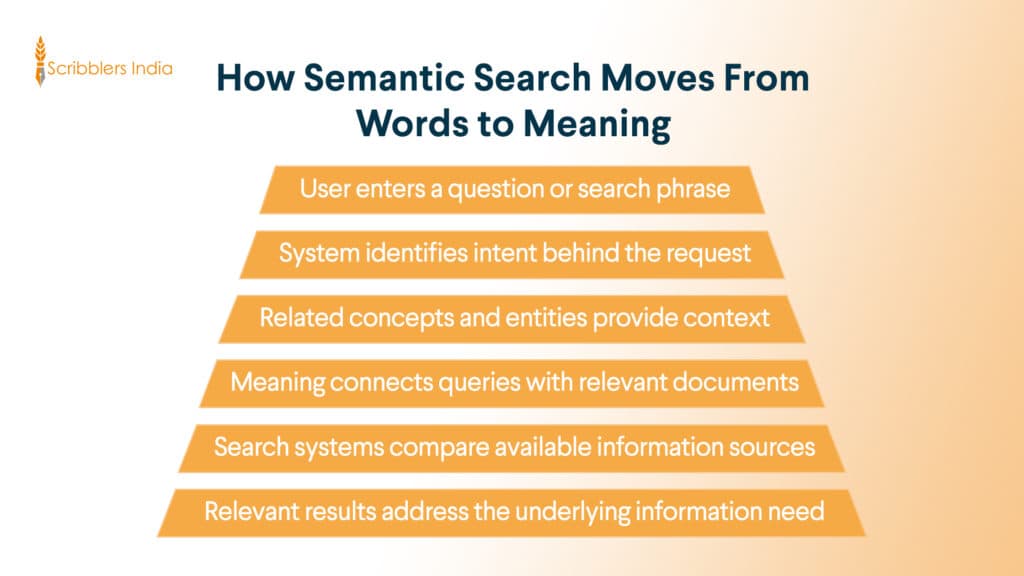
Meaning can come from several parts of a query or document working together, rather than from a single isolated keyword. Search systems examine language patterns and context to connect a request to relevant information, while different search technologies may weigh these inputs differently.
- Search intent helps distinguish whether a user wants information, a website, a comparison, a product, or another outcome.
- Word relationships provide context when the meaning of one term changes according to surrounding words within the query.
- Entities identify distinct subjects such as companies, people, products, places, events, and concepts referenced within search content.
- Synonyms connect related language when users and publishers describe the same idea through different words or common expressions.
- Page context clarifies meaning by showing how headings, supporting explanations, examples, and related concepts fit within one subject.
- Previous search context can help some search experiences interpret follow-up requests when earlier interactions provide useful information about intent.
Google explains that BERT considers words in relation to surrounding words rather than processing each term in isolation. Neural matching can also connect broader concepts represented within queries and webpages.
How Do Entities, Embeddings, and Context Support Semantic Search?
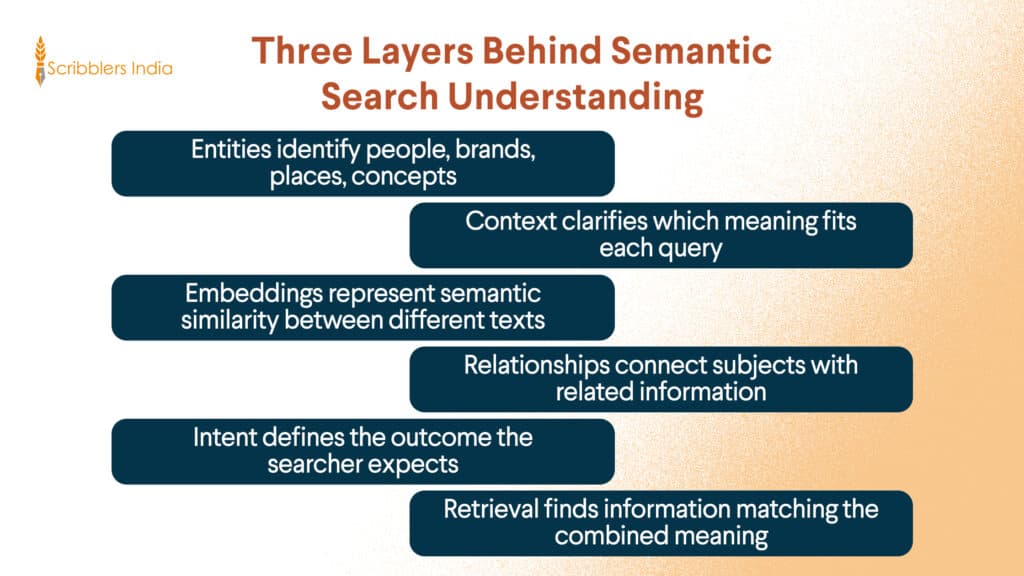
Entities, embeddings, and context support different parts of semantic understanding. An entity identifies a recognizable subject; context helps establish what words mean within a request; and embeddings represent semantic similarity between pieces of information using numerical representations.
An entity could represent Microsoft, Mumbai, a specific product, or a recognized business concept. Relationships between entities add further context. A search engine may connect a company with its founder, products, industry, location, and other subjects represented across available information.
Embeddings take a different approach. Google Cloud explains that semantic search systems can transform text into vectors that represent meaning. Texts with similar meanings can then appear closer within this mathematical space, allowing retrieval even when their exact wording differs.
Context helps resolve the remaining ambiguity. A search for “apple support near me” provides enough surrounding information to suggest a technology brand. A search for “apple varieties for baking” points toward fruit, even though both queries contain the same central word.
How Does Semantic Search Change SEO Content Planning?
Semantic search reduces the value of creating separate pages for every small keyword variation when those searches share the same underlying intent. Strong planning starts by understanding what users need, which concepts support the answer, and where separate pages represent genuinely different information requirements.
- Content teams should group keywords sharing the same intent before deciding whether each variation deserves another independent page.
- Writers should cover supporting questions and concepts when they help readers understand the main subject without creating unnecessary topical detours.
- Important entities should receive clear context so readers can understand which organization, person, product, place, or concept appears.
- Internal links should connect genuine topic relationships between guides, service pages, definitions, research, and related resources across the website.
- Content updates should address missing information rather than synonyms, since repeating different keyword forms adds little value without new answers.
Google’s 2026 guidance states that publishers do not need separate content for every possible query variation. Its systems can understand synonyms and general meaning without requiring every long-tail phrase to appear in website copy.
At Scribblers India, our content strategy services use search intent and content gaps to decide whether a topic requires expansion, consolidation, or a separate page. This avoids content calendars built around keyword variations that compete for the same need.
How Does Semantic Search Connect With AI Search and RAG?
Semantic retrieval also plays an important role in many AI applications because a system often needs to find relevant information before generating an answer. RAG systems can use semantic search to retrieve documents whose meaning matches a prompt, even when the prompt and the document use different wording.
| Stage | What Happens | Role of Semantic Understanding | Content Implication |
| User request | A person asks a question using natural or conversational wording. | The system interprets concepts, intent, and relationships inside the request. | Content should address real questions rather than keyword strings alone. |
| Retrieval | The system searches available sources for information related to the request. | Semantic similarity can connect relevant sources without exact phrase matches. | Pages need clear information around the subject and supporting concepts. |
| Grounding | Retrieved information provides context used when preparing the response. | Relevant passages help connect generated text with current supporting information. | Specific facts and useful explanations provide stronger source material. |
| Generation | An LLM creates an answer using the prompt and available context. | Language understanding helps combine information around the user’s request. | Source selection does not guarantee mention or citation within every response. |
Google describes semantic search as meaning-based retrieval in its RAG guidance. Its current Search documentation also explains that generative Search can retrieve current webpages through core Search systems before generating grounded answers.
Our Retrieval-Augmented Generation glossary explains the wider retrieve-and-generate process. Semantic retrieval can support that process without creating a universal rule for how every AI search platform selects sources.
How Can Teams Improve Content for Semantic Search?
Improving semantic search visibility starts with creating a complete and useful answer around a real information need. Teams should resist adding related words merely because a keyword tool lists them. Every concept, example, and supporting section should earn its place through relevance.
- Review search results to understand the dominant user intent before choosing the page format, angle, and depth required.
- Combine terms that represent the same underlying information need instead of publishing several pages with minor wording changes.
- Add supporting concepts when they resolve natural follow-up questions that readers would need before completing their research.
- Explain important entities with enough identifying context to separate brands, products, people, locations, or concepts sharing similar names.
- Use descriptive internal links to connect related resources naturally rather than inserting repeated exact-match anchors across every supporting page.
- Refresh pages when search needs or information change, rather than adding length to content that already resolves the query.
This approach also supports modern AI search. Google advises publishers to focus on unique, useful information rather than rewriting content for AI systems or creating separate pages for fan-out queries.
For brands reviewing generative discovery, our GEO services examine prompt themes, supporting sources, content gaps, and entity representation together. Semantic coverage forms one part of that wider discovery picture.
How Does Scribblers India Apply Semantic Search Principles?
At Scribblers India, we use semantic-search principles to understand the information behind a keyword before planning another content asset. We examine search intent, related questions, topic relationships, existing coverage, and business relevance so each page has a defined role within the wider content architecture.
- Group searches by genuine intent: Our experts review whether different keywords require different answers or represent alternative wording for the same need. This helps reduce duplicate pages while giving important subtopics their own content when the search journey supports separation.
- Map concepts around the central topic: We identify questions, entities, comparisons, definitions, evidence, and related concepts readers need to understand the subject. The goal is useful topical coverage rather than inserting every semantically related phrase generated by an SEO platform.
- Connect related content with purpose: Our team maps service pages, glossary entries, guides, case studies, thought leadership, and supporting articles around useful relationships. Internal links then help readers continue their research while giving important pages a clearer place within the website structure.
- Review semantic gaps before expanding content: Existing pages may need stronger explanations, clearer entity references, or missing supporting sections before another URL is required. Our audits separate content gaps from keyword gaps, so new production addresses unmet information needs rather than increasing page volume.
- Connect search foundations with AI discovery: Semantic relevance can support both traditional search and AI-led discovery. We therefore review content alongside technical accessibility, source quality, entity clarity, and the wider signals that influence how information is found and represented.
This approach keeps semantic search grounded in reader needs and clear content relationships. It also gives each new asset a stronger purpose across organic discovery, answer experiences, and wider AI search research.
Contact our team today to build content around real search meaning and information gaps that deserve stronger coverage across discovery channels.
FAQs
Is Semantic Search the Same as Vector Search?
Semantic search refers to the goal of finding information based on meaning and context, while vector search is a retrieval technique that can support it. Vector systems compare numerical representations of content. Semantic-search implementations can also combine vector retrieval with keywords, filters, structured information, or other ranking methods.
Does Semantic Search Make Exact-Match Keywords Unnecessary?
Exact-match keywords still provide useful information about audience language, demand, and specialized terminology. Semantic search reduces the need to repeat every keyword variation across a page. Writers should use natural language while making important topics, products, services, and concepts clear enough for readers and search systems.
Can Semantic Search Help Ecommerce Websites?
Semantic search can help ecommerce discovery when shoppers describe needs without knowing exact product names. A search such as “waterproof shoes for winter hiking” contains attributes, use cases, and intent. Strong product data, useful descriptions, filters, and relevant category information can support better matching across those concepts.
Can Scribblers India Audit Semantic Gaps in Existing Content?
Yes. We can compare current pages with search intent, related questions, topic relationships, competing coverage, and internal content overlap. The review identifies missing information, duplicate intent, weak supporting concepts, and pages requiring consolidation. Recommendations then separate content updates from topics that genuinely need a new asset.
Does Scribblers India Use Semantic Keywords as a Fixed Writing Checklist?
We do not treat semantic keywords as a list that writers must insert into every article. Related terms are useful when they belong naturally within the subject. Our research focuses on reader questions, entities, intent, supporting concepts, and information gaps before deciding which terminology to include in the final content.