
Personal Brand Examples Posts
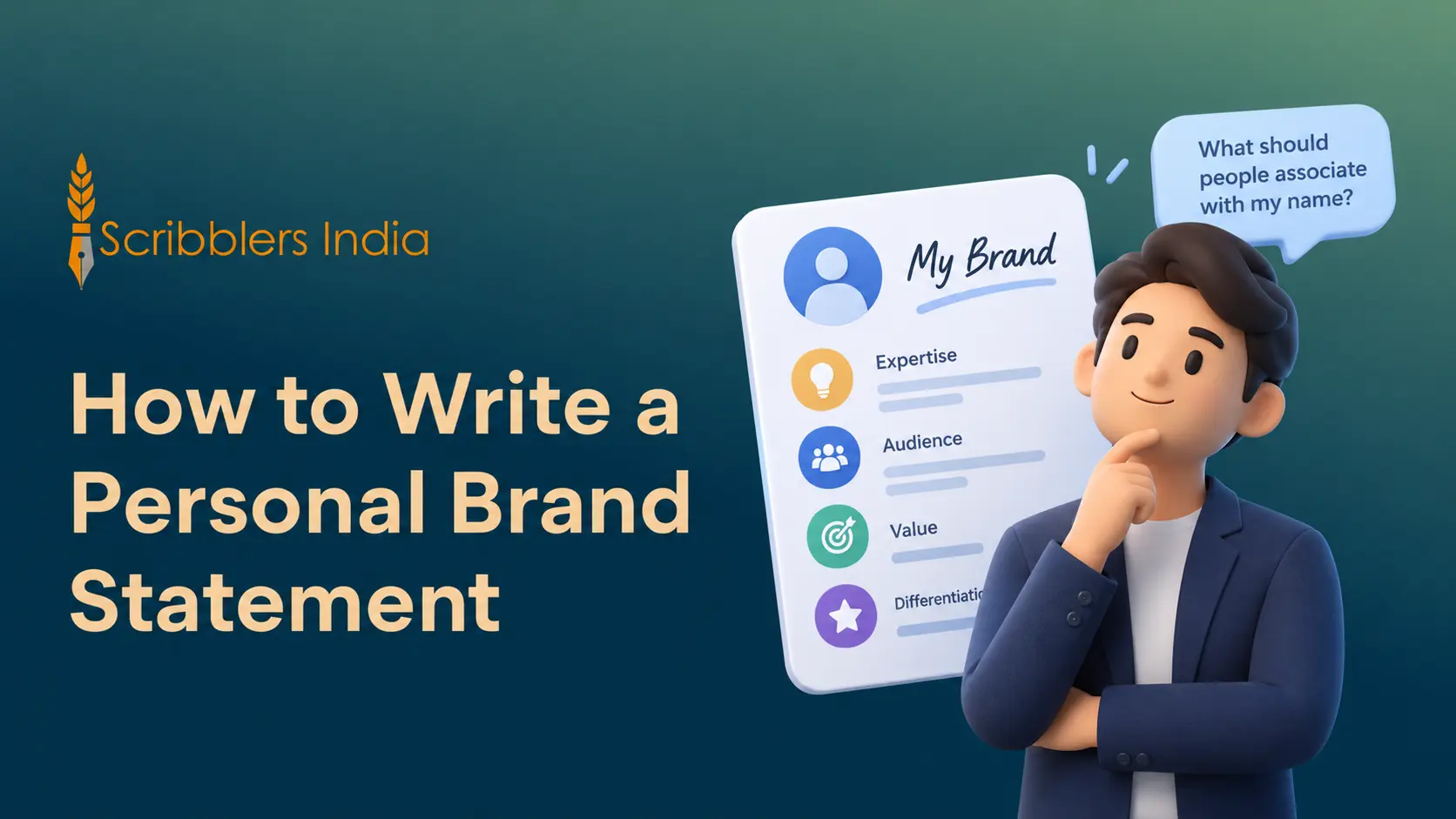
How Do You Write a Personal Brand Statement That Works (15+ Examples)
A personal brand statement explains the professional association you want people to make with your name. It can guide your positioning internally, while shorter versions can shape LinkedIn profiles, websites, portfolios, resumes, speaker materials, and other places where people encounter your professional identity. One sentence rarely performs all those jobs equally well. An internal positioning statement can provide more context about your audience, expertise, and contribution, while a LinkedIn headline needs to be clearer more quickly. The underlying professional position should remain consistent even when the wording changes. This guide starts with that core position and then explains how to build it on evidence rather than adjectives. You will also find role-specific formulas, practical personal brand statement examples, weak-to-strong rewrites, channel adaptations, and a simple framework for testing whether the statement communicates what you intend. Key Takeaways Define what people should professionally associate with your name first. Build recognition around a clear area of professional expertise. Show where your expertise becomes useful for specific audiences. Build differentiation from experience, outcomes, research, or perspective. Keep positioning stable while changing language for each platform. Use structures to guide thinking rather than copy templates. Check whether intended audiences understand your professional position correctly. Update positioning when your career direction or audience changes materially. What Is a Personal Brand Statement? A personal brand statement is a concise expression of the professional position you want associated with your name. It can communicate your expertise, intended audience, contribution, perspective, or relevant differentiation. Its exact length depends on whether it guides internal positioning or appears publicly. Different personal branding frameworks interpret the statement differently. William Arruda, writing in Forbes, treats it primarily as an internal positioning guide, while Shopify recognizes its role across both strategic positioning and outward professional communication. A useful way to reconcile these approaches is to separate the core position from its public expression: Layer Main Question Purpose Core Positioning What should people associate with your name? Guides the wider personal brand Channel Expression How should that idea appear here? Adapts positioning to the context Your core statement becomes the source of truth. A LinkedIn profile, a website, a speaker biography, a portfolio, or an email introduction can then express that position differently without forcing one sentence to carry every communication requirement. How Is a Personal Brand Statement Different From a Bio or Tagline? A personal brand statement defines your professional position within your broader communication. A headline conveys the position quickly, while a professional bio provides evidence and context. A tagline focuses more heavily on memorability, and a value proposition emphasizes usefulness for a defined audience. These assets should reinforce the same professional association without repeating identical wording. When the underlying position shifts with every format change, the problem usually runs deeper than copywriting. The professional identity itself still needs a clearer strategic center. Asset Primary Job Typical Expression Personal Brand Statement Defines professional positioning One or several short sentences LinkedIn Headline Communicates relevance quickly Short searchable profile field Professional Bio Adds evidence and context Short or long paragraph Tagline Improves memorability Very short phrase Elevator Introduction Explains relevance conversationally Short spoken explanation Value Proposition Shows value for an audience Audience and outcome focused Senior leaders often need an even broader positioning system because their reputation can influence employees, customers, investors, and industry peers simultaneously. Our personal branding vs executive branding analysis explains how those stakeholder expectations change the branding approach. What Are the Five Components of a Strong Personal Brand Statement? A strong personal brand statement usually reflects five foundations: audience, expertise territory, professional contribution, credible differentiation, and natural voice. Every element does not need to appear literally in the final sentence, although each should be clear before you start refining the wording. 1. Who Is the Relevant Audience for Your Personal Brand? Start with the people whose decisions your reputation needs to influence. “Business leaders” creates limited direction, while “CFOs at growth-stage SaaS companies” creates a useful boundary. Executives may need several audiences, while consultants can often define their commercial audience more narrowly. 2. What Expertise Should People Associate With Your Name? Choose an expertise territory rather than compiling a list of skills. “Marketing” covers too much, while “B2B category positioning for enterprise software” provides a clearer association. Ask which professional subject you want someone to connect with your name six months from now. 3. Where Does Your Expertise Create Professional Value? Expertise becomes more meaningful when people understand where it applies. Instead of describing yourself as an experienced organizational consultant, explain the context you understand, such as helping scaling leadership teams clarify decision ownership when rapid growth makes coordination increasingly difficult. 4. What Makes Your Personal Positioning Credible? Differentiation does not require claiming that nobody else performs similar work. Credibility can come from specialized industry exposure, repeated experience with one difficult problem, documented outcomes, original research, cross-functional experience, or a professional perspective your career can genuinely support. 5. Does the Personal Brand Statement Sound Like You? Avoid depending on adjectives such as “visionary,” “dynamic,” or “results-driven” to create authority. Specific professional language carries more information. Read the statement aloud and ask whether you could use similar language when someone asks what you do in a real conversation. Which Personal Brand Statement Formula Should You Use? The right formula depends on your role and the professional decision your reputation needs to support. Consultants can lead with an audience problem, while founders may express a market belief. Executives usually need an expertise territory that avoids sounding like a sales proposition. Use these formulas as scaffolds rather than finished templates: Role Formula Example Consultant I help [audience] address [problem] through [expertise]. I help B2B SaaS teams clarify category positioning when product complexity makes enterprise value difficult to explain. Executive I work at the intersection of [expertise] and [business problem]. I work at the intersection of enterprise AI governance and product adoption, helping organizations introduce AI with clearer accountability. Founder I am building [company/category] around the belief that [market
A personal brand statement explains the professional association you want people to make with your name. It can guide your positioning internally, while shorter versions can shape LinkedIn profiles, websites, portfolios, resumes, speaker materials, and other places where people encounter your professional identity. One sentence rarely performs all those jobs equally well. An internal positioning statement can provide more context about your audience, expertise, and contribution, while a LinkedIn headline needs to be clearer more quickly. The underlying professional position should remain consistent even when the wording changes. This guide starts with that core position and then explains how to build it on evidence rather than adjectives. You will also find role-specific formulas, practical personal brand statement examples, weak-to-strong rewrites, channel adaptations, and a simple framework for testing whether the statement communicates what you intend. Key Takeaways Define what people should professionally associate with your name first. Build recognition around a clear area of professional expertise. Show where your expertise becomes useful for specific audiences. Build differentiation from experience, outcomes, research, or perspective. Keep positioning stable while changing language for each platform. Use structures to guide thinking rather than copy templates. Check whether intended audiences understand your professional position correctly. Update positioning when your career direction or audience changes materially. What Is a Personal Brand Statement? A personal brand statement is a concise expression of the professional position you want associated with your name. It can communicate your expertise, intended audience, contribution, perspective, or relevant differentiation. Its exact length depends on whether it guides internal positioning or appears publicly. Different personal branding frameworks interpret the statement differently. William Arruda, writing in Forbes, treats it primarily as an internal positioning guide, while Shopify recognizes its role across both strategic positioning and outward professional communication. A useful way to reconcile these approaches is to separate the core position from its public expression: Layer Main Question Purpose Core Positioning What should people associate with your name? Guides the wider personal brand Channel Expression How should that idea appear here? Adapts positioning to the context Your core statement becomes the source of truth. A LinkedIn profile, a website, a speaker biography, a portfolio, or an email introduction can then express that position differently without forcing one sentence to carry every communication requirement. How Is a Personal Brand Statement Different From a Bio or Tagline? A personal brand statement defines your professional position within your broader communication. A headline conveys the position quickly, while a professional bio provides evidence and context. A tagline focuses more heavily on memorability, and a value proposition emphasizes usefulness for a defined audience. These assets should reinforce the same professional association without repeating identical wording. When the underlying position shifts with every format change, the problem usually runs deeper than copywriting. The professional identity itself still needs a clearer strategic center. Asset Primary Job Typical Expression Personal Brand Statement Defines professional positioning One or several short sentences LinkedIn Headline Communicates relevance quickly Short searchable profile field Professional Bio Adds evidence and context Short or long paragraph Tagline Improves memorability Very short phrase Elevator Introduction Explains relevance conversationally Short spoken explanation Value Proposition Shows value for an audience Audience and outcome focused Senior leaders often need an even broader positioning system because their reputation can influence employees, customers, investors, and industry peers simultaneously. Our personal branding vs executive branding analysis explains how those stakeholder expectations change the branding approach. What Are the Five Components of a Strong Personal Brand Statement? A strong personal brand statement usually reflects five foundations: audience, expertise territory, professional contribution, credible differentiation, and natural voice. Every element does not need to appear literally in the final sentence, although each should be clear before you start refining the wording. 1. Who Is the Relevant Audience for Your Personal Brand? Start with the people whose decisions your reputation needs to influence. “Business leaders” creates limited direction, while “CFOs at growth-stage SaaS companies” creates a useful boundary. Executives may need several audiences, while consultants can often define their commercial audience more narrowly. 2. What Expertise Should People Associate With Your Name? Choose an expertise territory rather than compiling a list of skills. “Marketing” covers too much, while “B2B category positioning for enterprise software” provides a clearer association. Ask which professional subject you want someone to connect with your name six months from now. 3. Where Does Your Expertise Create Professional Value? Expertise becomes more meaningful when people understand where it applies. Instead of describing yourself as an experienced organizational consultant, explain the context you understand, such as helping scaling leadership teams clarify decision ownership when rapid growth makes coordination increasingly difficult. 4. What Makes Your Personal Positioning Credible? Differentiation does not require claiming that nobody else performs similar work. Credibility can come from specialized industry exposure, repeated experience with one difficult problem, documented outcomes, original research, cross-functional experience, or a professional perspective your career can genuinely support. 5. Does the Personal Brand Statement Sound Like You? Avoid depending on adjectives such as “visionary,” “dynamic,” or “results-driven” to create authority. Specific professional language carries more information. Read the statement aloud and ask whether you could use similar language when someone asks what you do in a real conversation. Which Personal Brand Statement Formula Should You Use? The right formula depends on your role and the professional decision your reputation needs to support. Consultants can lead with an audience problem, while founders may express a market belief. Executives usually need an expertise territory that avoids sounding like a sales proposition. Use these formulas as scaffolds rather than finished templates: Role Formula Example Consultant I help [audience] address [problem] through [expertise]. I help B2B SaaS teams clarify category positioning when product complexity makes enterprise value difficult to explain. Executive I work at the intersection of [expertise] and [business problem]. I work at the intersection of enterprise AI governance and product adoption, helping organizations introduce AI with clearer accountability. Founder I am building [company/category] around the belief that [market