
Digital Networking Posts
How To Build a Personal Brand Online in 2026?
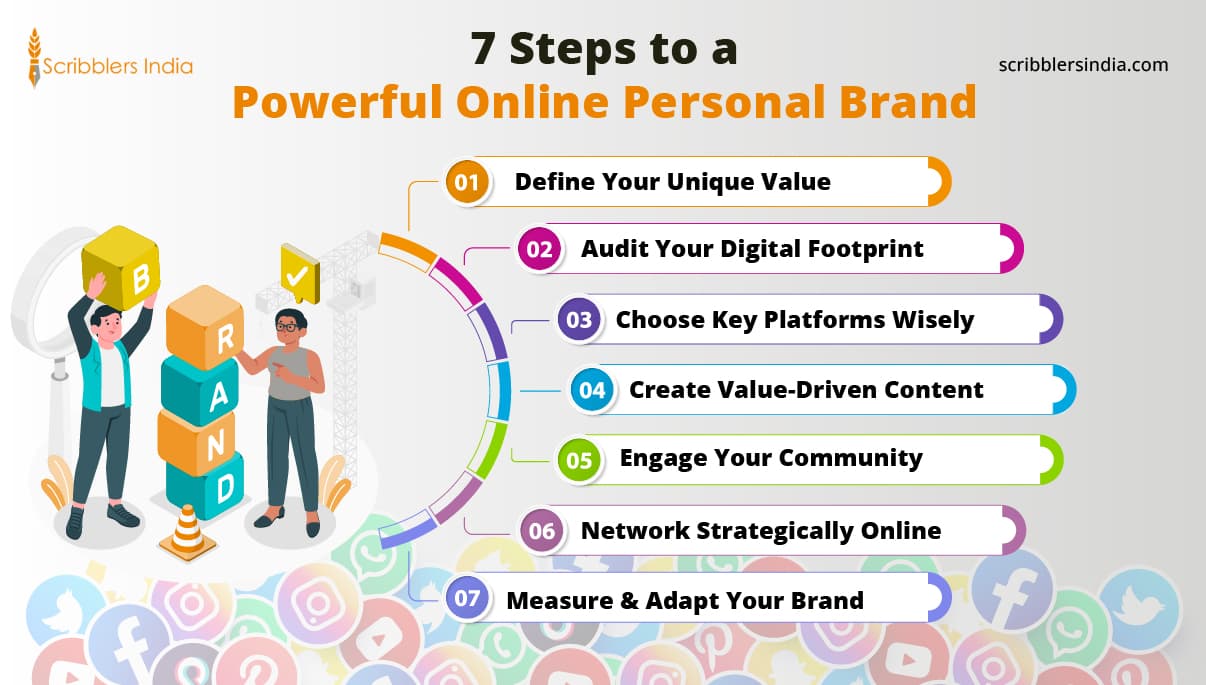
Building a strong professional reputation online is largely a matter of sequencing. Publishing more content cannot solve unclear positioning, while an impressive profile carries limited weight without credible proof. Expanding across several platforms also creates unnecessary work when the people you need to influence concentrate elsewhere. The practical approach to how to build personal brand online starts with understanding what people can already discover about you. You can then define the reputation you want, strengthen the evidence supporting it, choose appropriate channels, publish useful ideas, build relevant relationships, and improve discoverability across search. This guide on how to build personal brand online focuses on that complete operating system rather than individual platform tactics. If you are still evaluating the broader business or career case, start with our analysis on why personal branding is important. The process below begins once you have decided to invest in your reputation. Key Takeaways Review what search results and profiles currently communicate about your expertise. Choose the audience, expertise territory, and professional association you want remembered. Create one reliable home base that preserves control over professional proof. Prioritize platforms where your audience already evaluates expertise and professional credibility. Place cases, recommendations, research, and qualifications close to important claims. Turn real questions, decisions, research, and lessons into useful content. Keep names, biographies, author pages, and expertise descriptions consistently aligned. Track changes in relevant discovery, relationships, opportunities, and reputation over time. How Should You Audit Your Digital Footprint Before You Build Personal Brand Online? Before you build personal brand online, establish what people can already find and what those results communicate. Any practical approach to how to build personal brand online should begin with search results, major profiles, employer pages, author pages, published work, and prominent third-party mentions. Compare that public footprint with the professional association you want to strengthen. Look for outdated information, conflicting descriptions, weak proof, useful existing assets, and prominent pages that no longer reflect your present role, expertise, audience, or professional direction. What Should a Personal Brand Audit Review? Start by searching for your full professional name and inspect the first several result pages. Then review the assets most likely to influence someone evaluating you for a role, project, partnership, speaking opportunity, media request, investment conversation, or professional recommendation. Audit Area What to Review Common Problem Identity Current name, title, company, and role Prominent profiles conflict Positioning Expertise emphasized across visible assets Each platform tells a different story Biography Current experience and specialization Old career stages remain prominent Proof Work, results, research, recommendations Claims have little visible support Content Subjects repeatedly associated with your name Publishing covers unrelated themes Third-Party Pages Events, publications, podcasts, directories Important information is outdated Prioritize high-visibility inaccuracies rather than trying to clean every historical mention. A dated conference biography that still ranks prominently deserves more attention than an obscure directory listing. The audit should finish with three practical decisions: which assets to keep, which to update, and which to de-emphasize. Useful content, interviews, recommendations, case evidence, speaking videos, or research may already support the reputation you want. Identifying these assets before creating new material is an important part of how to build a personal brand online efficiently as it prevents unnecessary duplication and provides stronger evidence for later profile updates. What Type of Reputation You Need Before Building Personal Brand Online? A useful personal branding strategy starts with the association you want relevant people to make with your name. Understanding how to build personal brand online becomes easier once the audience, expertise territory, contribution, and supporting evidence are clear enough to guide later execution. Positioning should be narrow enough to guide recognition without reducing your career to one skill. Choose the association that should lead now, while your biography, experience, portfolio, and broader content provide additional context after people understand the main professional territory. Who Should Your Personal Brand Influence? Define the people whose decisions your reputation needs to influence. A consultant may prioritize buyers facing one recurring problem, while a founder may need credibility with customers and industry peers. An executive may communicate simultaneously with employees, customers, board members, investors, and professional communities. Audience definitions such as “professionals” or “business leaders” usually provide too little direction. A clearer audience helps determine what proof deserves prominence, which questions your content should answer, where you should publish, and which relationships should receive consistent attention over time. What Expertise Should People Associate With Your Name? Ask what someone should confidently approach you about after encountering your work several times. “Marketing” yields weak recall, while “category positioning for technical B2B companies” provides a more useful anchor for the reputation, guiding profile language, content topics, speaking opportunities, and professional introductions. Once the territory is clear, translate it into a concise positioning idea. Our guide to personal brand statements explains in detail how to write such a statement, while this hub uses it as the strategic source for the broader online reputation system. Where Should Your Online Personal Branding Home Base Live? A strong online personal branding system needs one dependable place where people can understand your position, inspect proof, and take a logical next step. In how to build personal brand online, that home base may be a personal website or strong professional profile, depending on the level of control required. The better decision is not website versus social media. Think in terms of owned and rented presence. Owned assets preserve long-term control, while established platforms provide discovery and network access. Most professionals benefit from combining both without building more infrastructure than they can maintain. A useful home base normally needs three things: a current professional biography, visible evidence of expertise, and a clear next step. LinkedIn can handle these for simpler requirements, while a website is more useful when you need deeper control over proofing, long-form work, or inquiries. Do You Need a Personal Website to Build Personal Brand Online? You do not need a website simply because personal-brand advice recommends one. A site becomes valuable
Building a strong professional reputation online is largely a matter of sequencing. Publishing more content cannot solve unclear positioning, while an impressive profile carries limited weight without credible proof. Expanding across several platforms also creates unnecessary work when the people you need to influence concentrate elsewhere. The practical approach to how to build personal brand online starts with understanding what people can already discover about you. You can then define the reputation you want, strengthen the evidence supporting it, choose appropriate channels, publish useful ideas, build relevant relationships, and improve discoverability across search. This guide on how to build personal brand online focuses on that complete operating system rather than individual platform tactics. If you are still evaluating the broader business or career case, start with our analysis on why personal branding is important. The process below begins once you have decided to invest in your reputation. Key Takeaways Review what search results and profiles currently communicate about your expertise. Choose the audience, expertise territory, and professional association you want remembered. Create one reliable home base that preserves control over professional proof. Prioritize platforms where your audience already evaluates expertise and professional credibility. Place cases, recommendations, research, and qualifications close to important claims. Turn real questions, decisions, research, and lessons into useful content. Keep names, biographies, author pages, and expertise descriptions consistently aligned. Track changes in relevant discovery, relationships, opportunities, and reputation over time. How Should You Audit Your Digital Footprint Before You Build Personal Brand Online? Before you build personal brand online, establish what people can already find and what those results communicate. Any practical approach to how to build personal brand online should begin with search results, major profiles, employer pages, author pages, published work, and prominent third-party mentions. Compare that public footprint with the professional association you want to strengthen. Look for outdated information, conflicting descriptions, weak proof, useful existing assets, and prominent pages that no longer reflect your present role, expertise, audience, or professional direction. What Should a Personal Brand Audit Review? Start by searching for your full professional name and inspect the first several result pages. Then review the assets most likely to influence someone evaluating you for a role, project, partnership, speaking opportunity, media request, investment conversation, or professional recommendation. Audit Area What to Review Common Problem Identity Current name, title, company, and role Prominent profiles conflict Positioning Expertise emphasized across visible assets Each platform tells a different story Biography Current experience and specialization Old career stages remain prominent Proof Work, results, research, recommendations Claims have little visible support Content Subjects repeatedly associated with your name Publishing covers unrelated themes Third-Party Pages Events, publications, podcasts, directories Important information is outdated Prioritize high-visibility inaccuracies rather than trying to clean every historical mention. A dated conference biography that still ranks prominently deserves more attention than an obscure directory listing. The audit should finish with three practical decisions: which assets to keep, which to update, and which to de-emphasize. Useful content, interviews, recommendations, case evidence, speaking videos, or research may already support the reputation you want. Identifying these assets before creating new material is an important part of how to build a personal brand online efficiently as it prevents unnecessary duplication and provides stronger evidence for later profile updates. What Type of Reputation You Need Before Building Personal Brand Online? A useful personal branding strategy starts with the association you want relevant people to make with your name. Understanding how to build personal brand online becomes easier once the audience, expertise territory, contribution, and supporting evidence are clear enough to guide later execution. Positioning should be narrow enough to guide recognition without reducing your career to one skill. Choose the association that should lead now, while your biography, experience, portfolio, and broader content provide additional context after people understand the main professional territory. Who Should Your Personal Brand Influence? Define the people whose decisions your reputation needs to influence. A consultant may prioritize buyers facing one recurring problem, while a founder may need credibility with customers and industry peers. An executive may communicate simultaneously with employees, customers, board members, investors, and professional communities. Audience definitions such as “professionals” or “business leaders” usually provide too little direction. A clearer audience helps determine what proof deserves prominence, which questions your content should answer, where you should publish, and which relationships should receive consistent attention over time. What Expertise Should People Associate With Your Name? Ask what someone should confidently approach you about after encountering your work several times. “Marketing” yields weak recall, while “category positioning for technical B2B companies” provides a more useful anchor for the reputation, guiding profile language, content topics, speaking opportunities, and professional introductions. Once the territory is clear, translate it into a concise positioning idea. Our guide to personal brand statements explains in detail how to write such a statement, while this hub uses it as the strategic source for the broader online reputation system. Where Should Your Online Personal Branding Home Base Live? A strong online personal branding system needs one dependable place where people can understand your position, inspect proof, and take a logical next step. In how to build personal brand online, that home base may be a personal website or strong professional profile, depending on the level of control required. The better decision is not website versus social media. Think in terms of owned and rented presence. Owned assets preserve long-term control, while established platforms provide discovery and network access. Most professionals benefit from combining both without building more infrastructure than they can maintain. A useful home base normally needs three things: a current professional biography, visible evidence of expertise, and a clear next step. LinkedIn can handle these for simpler requirements, while a website is more useful when you need deeper control over proofing, long-form work, or inquiries. Do You Need a Personal Website to Build Personal Brand Online? You do not need a website simply because personal-brand advice recommends one. A site becomes valuable
What Are the 10 Key Benefits of Personal Branding for Your Career and Reputation?
The benefits of personal branding extend beyond visibility. A deliberate professional reputation can make expertise easier to recognize, strengthen credibility, improve professional discovery, foster better conversations, support career mobility, and open opportunities aligned with the work you want to be known for. Those outcomes rarely appear at the same time. Recognition may improve before commercial results. Better conversations may develop before a career move. For founders and executives, professional visibility can also influence how customers, candidates, partners, and other stakeholders understand the organization. That is why personal branding should be evaluated through mechanisms and signals rather than follower growth alone. Each benefit develops under specific conditions and produces evidence that can be tracked over time. For the broader strategic case behind investing in reputation, read our analysis on why personal branding is important. Key Takeaways Personal branding makes relevant expertise easier for professional audiences to recognize. Stronger public evidence helps others assess your knowledge and professional credibility. Better discoverability can support career conversations, introductions, speaking, and collaboration. Relevant network growth creates greater value than increasing connection counts alone. Visible expertise can help prospects understand fit before starting commercial conversations. Founders can use professional authority to support category and company credibility. Early gains usually appear through clarity, recognition, searchability, and conversation quality. Career and commercial outcomes depend on fit, timing, proof, and follow-through. What Are the Main Benefits of Personal Branding? The benefits of personal branding become easier to evaluate when each outcome is connected to how it develops and what evidence shows that it is working. The table below separates ten common outcomes from the vanity metrics that can otherwise make reputation-building difficult to assess. S. No. Outcome How the Benefit Develops Best Fit Observable Signal 1 Clearer expertise association Repeated themes connect your name with a defined professional territory Professionals, consultants, executives People describe your expertise using similar language 2 Stronger credibility signals Public work gives others more evidence to assess your knowledge All professionals References to published work, expert requests, profile reviews 3 Better professional discoverability Current profiles and published work create relevant entry points Job seekers, consultants, founders Search appearances, profile visits, inbound discovery 4 Easier career evaluation Decision-makers gain richer context around your experience Employees, executives Better-fit recruiter conversations, role discussions, speaking requests 5 More relevant professional opportunities Clear positioning helps others understand where your expertise fits Employees, executives, consultants Better-quality invitations, introductions, specialist opportunities 6 Stronger conversation starting points Published ideas create context before meetings or introductions Consultants, founders, executives People reference specific ideas during conversations 7 Higher-quality relationship growth Consistent expertise gives new and existing contacts reasons to engage All professionals Relevant introductions, peer discussions, reconnections 8 More informed inbound interest Visible expertise helps people assess fit before contacting you Consultants, advisors, founders Inquiries arrive with specific context or questions 9 Greater thought-leadership influence Distinctive ideas travel through content, events, media, and communities Experts, executives, founders Invitations, citations, media requests, industry discussion 10 Greater professional resilience Reputation and relationships remain portable across role changes Employees, consultants, executives Existing visibility supports transitions or new directions These benefits rarely develop independently. Clear positioning makes expertise easier to recognize. Recognition creates stronger reasons for relevant people to engage, while repeated evidence can deepen credibility and professional relationships. Over time, those signals may contribute to career, commercial, or leadership opportunities. That progression usually begins with reputation and authority, because people first need to understand what you are known for before that recognition can influence larger professional outcomes. How Does Personal Branding Strengthen Professional Reputation and Authority? Personal branding strengthens professional reputation by making expertise easier to understand, verify, and remember. A deliberate presence gives audiences repeated evidence of what you know, the problems you work on, and the experience that supports your perspective. Over time, those signals can create stronger professional associations around your name. Harvard Business School Online describes personal branding as the intentional practice of defining and expressing professional value. It also emphasizes audience perception as part of that process. 1. Your Expertise Becomes Easier to Recognize An experienced professional can still be difficult to place when their public profile covers too many unrelated roles, projects, interests, and achievements. Personal branding creates a clearer association between the person and a defined area of expertise. A cybersecurity leader may become known for identity governance. A CFO might develop a recognizable position around capital discipline. A consultant could become associated with post-merger operating models. The benefit becomes apparent when others begin describing your expertise in similar terms. This recognition creates the foundation for credibility. Once audiences understand what you know, they need evidence that supports the association. 2. Your Credibility Has More Public Evidence Professional credibility becomes easier to assess when expertise leaves a visible record. Articles, research, frameworks, conference sessions, case examples, interviews, recommendations, and documented work provide others with material they can evaluate. A profile no longer must carry the entire reputation claim on its own. One substantive article may later support a speaking invitation. A useful framework can become a reference point during a client introduction. A conference session can provide a recruiter or journalist with additional evidence of the depth of a person’s expertise. The underlying knowledge still creates the credibility. Personal branding makes more of that knowledge visible and verifiable. Once that evidence is publicly available, the next advantage is easier discovery. 3. Your Professional Reputation Becomes Easier to Find People routinely search professional names before meetings, interviews, partnerships, speaking invitations, consulting engagements, or senior appointments. A coherent digital presence gives them useful entry points through LinkedIn profiles, company biographies, author pages, event profiles, published articles, media coverage, research, podcasts, and other credible sources. Professional discovery is also expanding beyond conventional search results. Answer engines and generative search systems can surface information from multiple sources when people research an executive, specialist, founder, or company. Consistent role descriptions, expertise signals, biographies, and published work therefore become increasingly useful. The execution belongs within a broader online personal branding strategy. Brands and leaders who also
The benefits of personal branding extend beyond visibility. A deliberate professional reputation can make expertise easier to recognize, strengthen credibility, improve professional discovery, foster better conversations, support career mobility, and open opportunities aligned with the work you want to be known for. Those outcomes rarely appear at the same time. Recognition may improve before commercial results. Better conversations may develop before a career move. For founders and executives, professional visibility can also influence how customers, candidates, partners, and other stakeholders understand the organization. That is why personal branding should be evaluated through mechanisms and signals rather than follower growth alone. Each benefit develops under specific conditions and produces evidence that can be tracked over time. For the broader strategic case behind investing in reputation, read our analysis on why personal branding is important. Key Takeaways Personal branding makes relevant expertise easier for professional audiences to recognize. Stronger public evidence helps others assess your knowledge and professional credibility. Better discoverability can support career conversations, introductions, speaking, and collaboration. Relevant network growth creates greater value than increasing connection counts alone. Visible expertise can help prospects understand fit before starting commercial conversations. Founders can use professional authority to support category and company credibility. Early gains usually appear through clarity, recognition, searchability, and conversation quality. Career and commercial outcomes depend on fit, timing, proof, and follow-through. What Are the Main Benefits of Personal Branding? The benefits of personal branding become easier to evaluate when each outcome is connected to how it develops and what evidence shows that it is working. The table below separates ten common outcomes from the vanity metrics that can otherwise make reputation-building difficult to assess. S. No. Outcome How the Benefit Develops Best Fit Observable Signal 1 Clearer expertise association Repeated themes connect your name with a defined professional territory Professionals, consultants, executives People describe your expertise using similar language 2 Stronger credibility signals Public work gives others more evidence to assess your knowledge All professionals References to published work, expert requests, profile reviews 3 Better professional discoverability Current profiles and published work create relevant entry points Job seekers, consultants, founders Search appearances, profile visits, inbound discovery 4 Easier career evaluation Decision-makers gain richer context around your experience Employees, executives Better-fit recruiter conversations, role discussions, speaking requests 5 More relevant professional opportunities Clear positioning helps others understand where your expertise fits Employees, executives, consultants Better-quality invitations, introductions, specialist opportunities 6 Stronger conversation starting points Published ideas create context before meetings or introductions Consultants, founders, executives People reference specific ideas during conversations 7 Higher-quality relationship growth Consistent expertise gives new and existing contacts reasons to engage All professionals Relevant introductions, peer discussions, reconnections 8 More informed inbound interest Visible expertise helps people assess fit before contacting you Consultants, advisors, founders Inquiries arrive with specific context or questions 9 Greater thought-leadership influence Distinctive ideas travel through content, events, media, and communities Experts, executives, founders Invitations, citations, media requests, industry discussion 10 Greater professional resilience Reputation and relationships remain portable across role changes Employees, consultants, executives Existing visibility supports transitions or new directions These benefits rarely develop independently. Clear positioning makes expertise easier to recognize. Recognition creates stronger reasons for relevant people to engage, while repeated evidence can deepen credibility and professional relationships. Over time, those signals may contribute to career, commercial, or leadership opportunities. That progression usually begins with reputation and authority, because people first need to understand what you are known for before that recognition can influence larger professional outcomes. How Does Personal Branding Strengthen Professional Reputation and Authority? Personal branding strengthens professional reputation by making expertise easier to understand, verify, and remember. A deliberate presence gives audiences repeated evidence of what you know, the problems you work on, and the experience that supports your perspective. Over time, those signals can create stronger professional associations around your name. Harvard Business School Online describes personal branding as the intentional practice of defining and expressing professional value. It also emphasizes audience perception as part of that process. 1. Your Expertise Becomes Easier to Recognize An experienced professional can still be difficult to place when their public profile covers too many unrelated roles, projects, interests, and achievements. Personal branding creates a clearer association between the person and a defined area of expertise. A cybersecurity leader may become known for identity governance. A CFO might develop a recognizable position around capital discipline. A consultant could become associated with post-merger operating models. The benefit becomes apparent when others begin describing your expertise in similar terms. This recognition creates the foundation for credibility. Once audiences understand what you know, they need evidence that supports the association. 2. Your Credibility Has More Public Evidence Professional credibility becomes easier to assess when expertise leaves a visible record. Articles, research, frameworks, conference sessions, case examples, interviews, recommendations, and documented work provide others with material they can evaluate. A profile no longer must carry the entire reputation claim on its own. One substantive article may later support a speaking invitation. A useful framework can become a reference point during a client introduction. A conference session can provide a recruiter or journalist with additional evidence of the depth of a person’s expertise. The underlying knowledge still creates the credibility. Personal branding makes more of that knowledge visible and verifiable. Once that evidence is publicly available, the next advantage is easier discovery. 3. Your Professional Reputation Becomes Easier to Find People routinely search professional names before meetings, interviews, partnerships, speaking invitations, consulting engagements, or senior appointments. A coherent digital presence gives them useful entry points through LinkedIn profiles, company biographies, author pages, event profiles, published articles, media coverage, research, podcasts, and other credible sources. Professional discovery is also expanding beyond conventional search results. Answer engines and generative search systems can surface information from multiple sources when people research an executive, specialist, founder, or company. Consistent role descriptions, expertise signals, biographies, and published work therefore become increasingly useful. The execution belongs within a broader online personal branding strategy. Brands and leaders who also