
Online Presence Posts
How To Build a Personal Brand Online in 2026?
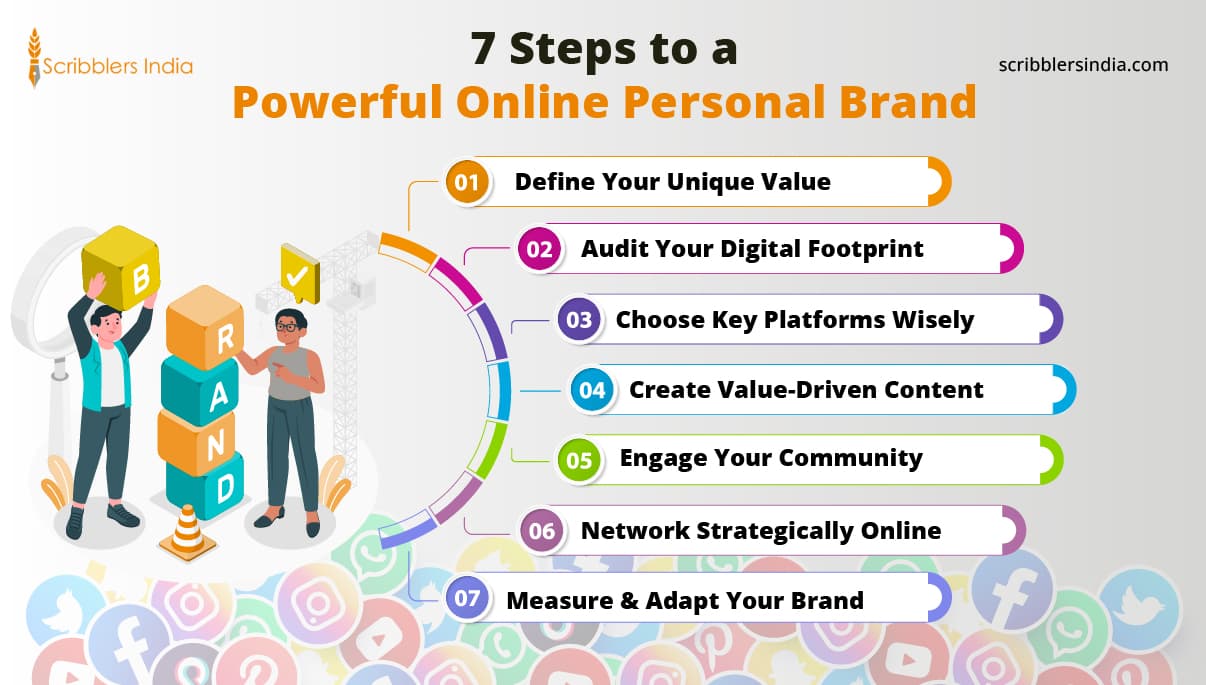
Building a strong professional reputation online is largely a matter of sequencing. Publishing more content cannot solve unclear positioning, while an impressive profile carries limited weight without credible proof. Expanding across several platforms also creates unnecessary work when the people you need to influence concentrate elsewhere. The practical approach to how to build personal brand online starts with understanding what people can already discover about you. You can then define the reputation you want, strengthen the evidence supporting it, choose appropriate channels, publish useful ideas, build relevant relationships, and improve discoverability across search. This guide on how to build personal brand online focuses on that complete operating system rather than individual platform tactics. If you are still evaluating the broader business or career case, start with our analysis on why personal branding is important. The process below begins once you have decided to invest in your reputation. Key Takeaways Review what search results and profiles currently communicate about your expertise. Choose the audience, expertise territory, and professional association you want remembered. Create one reliable home base that preserves control over professional proof. Prioritize platforms where your audience already evaluates expertise and professional credibility. Place cases, recommendations, research, and qualifications close to important claims. Turn real questions, decisions, research, and lessons into useful content. Keep names, biographies, author pages, and expertise descriptions consistently aligned. Track changes in relevant discovery, relationships, opportunities, and reputation over time. How Should You Audit Your Digital Footprint Before You Build Personal Brand Online? Before you build personal brand online, establish what people can already find and what those results communicate. Any practical approach to how to build personal brand online should begin with search results, major profiles, employer pages, author pages, published work, and prominent third-party mentions. Compare that public footprint with the professional association you want to strengthen. Look for outdated information, conflicting descriptions, weak proof, useful existing assets, and prominent pages that no longer reflect your present role, expertise, audience, or professional direction. What Should a Personal Brand Audit Review? Start by searching for your full professional name and inspect the first several result pages. Then review the assets most likely to influence someone evaluating you for a role, project, partnership, speaking opportunity, media request, investment conversation, or professional recommendation. Audit Area What to Review Common Problem Identity Current name, title, company, and role Prominent profiles conflict Positioning Expertise emphasized across visible assets Each platform tells a different story Biography Current experience and specialization Old career stages remain prominent Proof Work, results, research, recommendations Claims have little visible support Content Subjects repeatedly associated with your name Publishing covers unrelated themes Third-Party Pages Events, publications, podcasts, directories Important information is outdated Prioritize high-visibility inaccuracies rather than trying to clean every historical mention. A dated conference biography that still ranks prominently deserves more attention than an obscure directory listing. The audit should finish with three practical decisions: which assets to keep, which to update, and which to de-emphasize. Useful content, interviews, recommendations, case evidence, speaking videos, or research may already support the reputation you want. Identifying these assets before creating new material is an important part of how to build a personal brand online efficiently as it prevents unnecessary duplication and provides stronger evidence for later profile updates. What Type of Reputation You Need Before Building Personal Brand Online? A useful personal branding strategy starts with the association you want relevant people to make with your name. Understanding how to build personal brand online becomes easier once the audience, expertise territory, contribution, and supporting evidence are clear enough to guide later execution. Positioning should be narrow enough to guide recognition without reducing your career to one skill. Choose the association that should lead now, while your biography, experience, portfolio, and broader content provide additional context after people understand the main professional territory. Who Should Your Personal Brand Influence? Define the people whose decisions your reputation needs to influence. A consultant may prioritize buyers facing one recurring problem, while a founder may need credibility with customers and industry peers. An executive may communicate simultaneously with employees, customers, board members, investors, and professional communities. Audience definitions such as “professionals” or “business leaders” usually provide too little direction. A clearer audience helps determine what proof deserves prominence, which questions your content should answer, where you should publish, and which relationships should receive consistent attention over time. What Expertise Should People Associate With Your Name? Ask what someone should confidently approach you about after encountering your work several times. “Marketing” yields weak recall, while “category positioning for technical B2B companies” provides a more useful anchor for the reputation, guiding profile language, content topics, speaking opportunities, and professional introductions. Once the territory is clear, translate it into a concise positioning idea. Our guide to personal brand statements explains in detail how to write such a statement, while this hub uses it as the strategic source for the broader online reputation system. Where Should Your Online Personal Branding Home Base Live? A strong online personal branding system needs one dependable place where people can understand your position, inspect proof, and take a logical next step. In how to build personal brand online, that home base may be a personal website or strong professional profile, depending on the level of control required. The better decision is not website versus social media. Think in terms of owned and rented presence. Owned assets preserve long-term control, while established platforms provide discovery and network access. Most professionals benefit from combining both without building more infrastructure than they can maintain. A useful home base normally needs three things: a current professional biography, visible evidence of expertise, and a clear next step. LinkedIn can handle these for simpler requirements, while a website is more useful when you need deeper control over proofing, long-form work, or inquiries. Do You Need a Personal Website to Build Personal Brand Online? You do not need a website simply because personal-brand advice recommends one. A site becomes valuable
Building a strong professional reputation online is largely a matter of sequencing. Publishing more content cannot solve unclear positioning, while an impressive profile carries limited weight without credible proof. Expanding across several platforms also creates unnecessary work when the people you need to influence concentrate elsewhere. The practical approach to how to build personal brand online starts with understanding what people can already discover about you. You can then define the reputation you want, strengthen the evidence supporting it, choose appropriate channels, publish useful ideas, build relevant relationships, and improve discoverability across search. This guide on how to build personal brand online focuses on that complete operating system rather than individual platform tactics. If you are still evaluating the broader business or career case, start with our analysis on why personal branding is important. The process below begins once you have decided to invest in your reputation. Key Takeaways Review what search results and profiles currently communicate about your expertise. Choose the audience, expertise territory, and professional association you want remembered. Create one reliable home base that preserves control over professional proof. Prioritize platforms where your audience already evaluates expertise and professional credibility. Place cases, recommendations, research, and qualifications close to important claims. Turn real questions, decisions, research, and lessons into useful content. Keep names, biographies, author pages, and expertise descriptions consistently aligned. Track changes in relevant discovery, relationships, opportunities, and reputation over time. How Should You Audit Your Digital Footprint Before You Build Personal Brand Online? Before you build personal brand online, establish what people can already find and what those results communicate. Any practical approach to how to build personal brand online should begin with search results, major profiles, employer pages, author pages, published work, and prominent third-party mentions. Compare that public footprint with the professional association you want to strengthen. Look for outdated information, conflicting descriptions, weak proof, useful existing assets, and prominent pages that no longer reflect your present role, expertise, audience, or professional direction. What Should a Personal Brand Audit Review? Start by searching for your full professional name and inspect the first several result pages. Then review the assets most likely to influence someone evaluating you for a role, project, partnership, speaking opportunity, media request, investment conversation, or professional recommendation. Audit Area What to Review Common Problem Identity Current name, title, company, and role Prominent profiles conflict Positioning Expertise emphasized across visible assets Each platform tells a different story Biography Current experience and specialization Old career stages remain prominent Proof Work, results, research, recommendations Claims have little visible support Content Subjects repeatedly associated with your name Publishing covers unrelated themes Third-Party Pages Events, publications, podcasts, directories Important information is outdated Prioritize high-visibility inaccuracies rather than trying to clean every historical mention. A dated conference biography that still ranks prominently deserves more attention than an obscure directory listing. The audit should finish with three practical decisions: which assets to keep, which to update, and which to de-emphasize. Useful content, interviews, recommendations, case evidence, speaking videos, or research may already support the reputation you want. Identifying these assets before creating new material is an important part of how to build a personal brand online efficiently as it prevents unnecessary duplication and provides stronger evidence for later profile updates. What Type of Reputation You Need Before Building Personal Brand Online? A useful personal branding strategy starts with the association you want relevant people to make with your name. Understanding how to build personal brand online becomes easier once the audience, expertise territory, contribution, and supporting evidence are clear enough to guide later execution. Positioning should be narrow enough to guide recognition without reducing your career to one skill. Choose the association that should lead now, while your biography, experience, portfolio, and broader content provide additional context after people understand the main professional territory. Who Should Your Personal Brand Influence? Define the people whose decisions your reputation needs to influence. A consultant may prioritize buyers facing one recurring problem, while a founder may need credibility with customers and industry peers. An executive may communicate simultaneously with employees, customers, board members, investors, and professional communities. Audience definitions such as “professionals” or “business leaders” usually provide too little direction. A clearer audience helps determine what proof deserves prominence, which questions your content should answer, where you should publish, and which relationships should receive consistent attention over time. What Expertise Should People Associate With Your Name? Ask what someone should confidently approach you about after encountering your work several times. “Marketing” yields weak recall, while “category positioning for technical B2B companies” provides a more useful anchor for the reputation, guiding profile language, content topics, speaking opportunities, and professional introductions. Once the territory is clear, translate it into a concise positioning idea. Our guide to personal brand statements explains in detail how to write such a statement, while this hub uses it as the strategic source for the broader online reputation system. Where Should Your Online Personal Branding Home Base Live? A strong online personal branding system needs one dependable place where people can understand your position, inspect proof, and take a logical next step. In how to build personal brand online, that home base may be a personal website or strong professional profile, depending on the level of control required. The better decision is not website versus social media. Think in terms of owned and rented presence. Owned assets preserve long-term control, while established platforms provide discovery and network access. Most professionals benefit from combining both without building more infrastructure than they can maintain. A useful home base normally needs three things: a current professional biography, visible evidence of expertise, and a clear next step. LinkedIn can handle these for simpler requirements, while a website is more useful when you need deeper control over proofing, long-form work, or inquiries. Do You Need a Personal Website to Build Personal Brand Online? You do not need a website simply because personal-brand advice recommends one. A site becomes valuable
Personal Brand Audit
A professional can spend years building a reputation without ever pausing to assess whether that reputation reflects who they have become today. Conducting a Personal Brand Audit is an important step because skills evolve, career focus shifts, and audiences change, which means the brand a person built two years ago may quietly be sending the wrong signals right now. A personal brand audit provides the clarity that ongoing brand-building work cannot. It reveals the gap between how a professional intends to be perceived and how they are actually being found, understood, and remembered by the audiences that matter most to their goals. What Is a Personal Brand Audit and What Does It Reveal? A personal brand audit is a structured evaluation of how a professional’s current online presence, messaging, and content reflect their professional identity and career goals. Harvard Business School Professor Jill Avery describes it as “A systematic assessment of your brand as it exists now, to determine how well or poorly your current brand supports your vision and sense of self.” The audit reveals the current gap between intention and perception. A professional may believe their brand communicates innovation and expertise, while their digital footprint shows an outdated LinkedIn profile, inconsistent messaging across platforms, and search results that reflect roles they held years ago. This gap in personal branding costs opportunities. Recruiters, clients, and collaborators form judgments based on what they find, not on what the professional intends them to find. A personal brand audit surfaces those gaps with enough specificity to act on them directly. When Should a Professional Conduct a Personal Brand Audit? A personal brand audit delivers the most value at specific inflection points in a professional’s career. Conducting one proactively prevents the kind of brand drift that accumulates gradually and only becomes visible when opportunities start going elsewhere. Most brand audit experts recommend conducting a formal audit every six to twelve months as standard practice. Professionals should also trigger an audit whenever a significant career development makes the current brand positioning potentially outdated or misaligned. Career transition or role change: Moving into a new industry, function, or seniority level requires the existing brand to be updated before the professional begins networking in their new context. Launch of a new business or service: When a professional enters a new market or starts a new venture, an audit ensures the brand signals credibility and relevance to the new audience they want to reach. Declining inbound opportunities: When the volume or quality of inbound connection requests, referrals, and inquiries drops, an audit often reveals messaging or visibility issues at the root of the decline. Preparation for a media or speaking opportunity: Before a professional appears in a major publication or at an industry event, an audit ensures that every platform a new audience might visit reflects consistent, current, and compelling positioning. What Are the Key Steps in a Personal Brand Audit? A thorough personal brand audit follows a structured sequence that moves from assessing external perception to clarifying internal positioning. Each step builds on the previous one to produce a complete picture of where the brand currently stands. The first step involves searching one’s own name on Google and reviewing the first page of results with fresh eyes, as a potential client or collaborator would see it. The results reveal what first impression the professional currently makes on anyone who searches before initiating contact. Google search review: The professional should search their name and note what appears on the first page. This helps determine whether the results are accurate, current, and represent the strong personal brand they want to project. Social media profile consistency check: Check every professional platform, such as LinkedIn, professional Instagram, personal website, and industry directories. They should carry the same core message, tone, and visual identity. Content audit: A review of all published articles, posts, and media appearances reveals whether the professional’s published content consistently reinforces their brand positioning or contradicts it across channels. Third-party perception gathering: Asking trusted colleagues and clients how they would describe the professional’s expertise in three words often reveals perception gaps that self-assessment alone cannot identify. Competitive positioning analysis: Reviewing how peers and competitors in the same space present themselves reveals differentiation opportunities the professional can deliberately address in their repositioned brand. What Metrics Should a Personal Brand Audit Measure? A personal brand audit measures both qualitative and quantitative signals. Together, these signals provide a complete picture of brand health across awareness, perception, consistency, and conversion. Quantitative metrics include: Views on LinkedIn profile Post engagement rates Search ranking for the professional’s name Website traffic from branded search Inbound inquiry volume Growth rate of a professional newsletter or content platform These numbers establish a performance baseline for comparison after brand improvements are made. Qualitative signals include the accuracy of search results, the consistency of messaging across platforms, the sentiment in recommendations and testimonials, and the degree to which the professional’s content reflects their current focus areas rather than past roles or outdated positioning. How Does a Personal Brand Audit Improve Online Visibility? The insights from a personal brand audit directly improve a professional’s visibility in both traditional and AI-powered search. Platforms like Google, LinkedIn, and Perplexity retrieve information about a professional from what currently exists online. This makes an outdated or inconsistent digital footprint a direct obstacle to discovery. Updating LinkedIn profiles with current positioning and keywords, publishing fresh content on priority topics, and removing or deprioritizing outdated profiles from search results all strengthen the professional’s digital footprint following an audit. These improvements benefit online reputation management in direct and measurable ways. Professionals who conduct regular personal brand audits and act on their findings consistently maintain stronger search presence, higher content engagement, and more relevant inbound opportunities than those who build their brand once and never revisit it with fresh assessment. What Happens After a Personal Brand Audit Is Completed? A personal brand audit produces value only when the professional acts on its findings.
A professional can spend years building a reputation without ever pausing to assess whether that reputation reflects who they have become today. Conducting a Personal Brand Audit is an important step because skills evolve, career focus shifts, and audiences change, which means the brand a person built two years ago may quietly be sending the wrong signals right now. A personal brand audit provides the clarity that ongoing brand-building work cannot. It reveals the gap between how a professional intends to be perceived and how they are actually being found, understood, and remembered by the audiences that matter most to their goals. What Is a Personal Brand Audit and What Does It Reveal? A personal brand audit is a structured evaluation of how a professional’s current online presence, messaging, and content reflect their professional identity and career goals. Harvard Business School Professor Jill Avery describes it as “A systematic assessment of your brand as it exists now, to determine how well or poorly your current brand supports your vision and sense of self.” The audit reveals the current gap between intention and perception. A professional may believe their brand communicates innovation and expertise, while their digital footprint shows an outdated LinkedIn profile, inconsistent messaging across platforms, and search results that reflect roles they held years ago. This gap in personal branding costs opportunities. Recruiters, clients, and collaborators form judgments based on what they find, not on what the professional intends them to find. A personal brand audit surfaces those gaps with enough specificity to act on them directly. When Should a Professional Conduct a Personal Brand Audit? A personal brand audit delivers the most value at specific inflection points in a professional’s career. Conducting one proactively prevents the kind of brand drift that accumulates gradually and only becomes visible when opportunities start going elsewhere. Most brand audit experts recommend conducting a formal audit every six to twelve months as standard practice. Professionals should also trigger an audit whenever a significant career development makes the current brand positioning potentially outdated or misaligned. Career transition or role change: Moving into a new industry, function, or seniority level requires the existing brand to be updated before the professional begins networking in their new context. Launch of a new business or service: When a professional enters a new market or starts a new venture, an audit ensures the brand signals credibility and relevance to the new audience they want to reach. Declining inbound opportunities: When the volume or quality of inbound connection requests, referrals, and inquiries drops, an audit often reveals messaging or visibility issues at the root of the decline. Preparation for a media or speaking opportunity: Before a professional appears in a major publication or at an industry event, an audit ensures that every platform a new audience might visit reflects consistent, current, and compelling positioning. What Are the Key Steps in a Personal Brand Audit? A thorough personal brand audit follows a structured sequence that moves from assessing external perception to clarifying internal positioning. Each step builds on the previous one to produce a complete picture of where the brand currently stands. The first step involves searching one’s own name on Google and reviewing the first page of results with fresh eyes, as a potential client or collaborator would see it. The results reveal what first impression the professional currently makes on anyone who searches before initiating contact. Google search review: The professional should search their name and note what appears on the first page. This helps determine whether the results are accurate, current, and represent the strong personal brand they want to project. Social media profile consistency check: Check every professional platform, such as LinkedIn, professional Instagram, personal website, and industry directories. They should carry the same core message, tone, and visual identity. Content audit: A review of all published articles, posts, and media appearances reveals whether the professional’s published content consistently reinforces their brand positioning or contradicts it across channels. Third-party perception gathering: Asking trusted colleagues and clients how they would describe the professional’s expertise in three words often reveals perception gaps that self-assessment alone cannot identify. Competitive positioning analysis: Reviewing how peers and competitors in the same space present themselves reveals differentiation opportunities the professional can deliberately address in their repositioned brand. What Metrics Should a Personal Brand Audit Measure? A personal brand audit measures both qualitative and quantitative signals. Together, these signals provide a complete picture of brand health across awareness, perception, consistency, and conversion. Quantitative metrics include: Views on LinkedIn profile Post engagement rates Search ranking for the professional’s name Website traffic from branded search Inbound inquiry volume Growth rate of a professional newsletter or content platform These numbers establish a performance baseline for comparison after brand improvements are made. Qualitative signals include the accuracy of search results, the consistency of messaging across platforms, the sentiment in recommendations and testimonials, and the degree to which the professional’s content reflects their current focus areas rather than past roles or outdated positioning. How Does a Personal Brand Audit Improve Online Visibility? The insights from a personal brand audit directly improve a professional’s visibility in both traditional and AI-powered search. Platforms like Google, LinkedIn, and Perplexity retrieve information about a professional from what currently exists online. This makes an outdated or inconsistent digital footprint a direct obstacle to discovery. Updating LinkedIn profiles with current positioning and keywords, publishing fresh content on priority topics, and removing or deprioritizing outdated profiles from search results all strengthen the professional’s digital footprint following an audit. These improvements benefit online reputation management in direct and measurable ways. Professionals who conduct regular personal brand audits and act on their findings consistently maintain stronger search presence, higher content engagement, and more relevant inbound opportunities than those who build their brand once and never revisit it with fresh assessment. What Happens After a Personal Brand Audit Is Completed? A personal brand audit produces value only when the professional acts on its findings.