
Query Fan Out Posts
Query Fan-Out
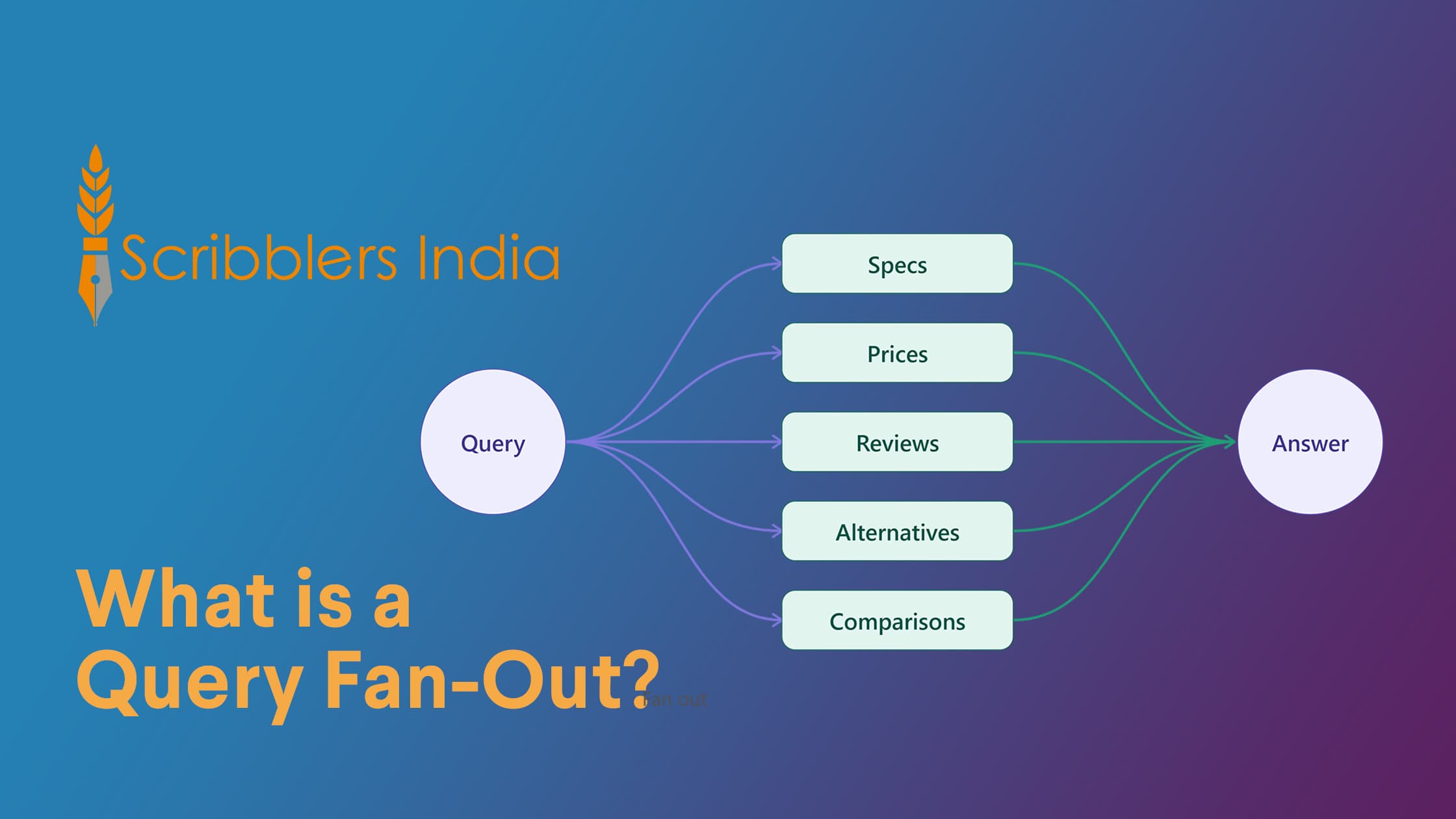
Query fan-out is a search technique that expands a single user question into several related searches or subtopics before generating a response. Instead of relying on the original wording alone, an AI search system can gather information across different angles, helping it address complex questions that would previously require several separate searches. Google uses query fan-out within AI Mode and says AI Overviews may also use the technique. For content teams, this changes how search demand should be interpreted. One visible prompt can represent several hidden information needs, making useful topic coverage and connected supporting content more important than targeting a single phrase. Key Takeaways Query fan-out expands one search into several related information requests. Google uses the technique within AI Mode and generative Search. Google does not publish one fixed number of fan-out queries. Fan-out can explore subtopics, comparisons, constraints, and supporting information. Content strategies should address related needs without creating repetitive pages. Strong topic coverage can improve relevance across several related search paths. Measurement should examine page visibility rather than invented fan-out rankings. What Is Query Fan-Out and How Does It Work? Query fan-out allows an AI search system to explore multiple aspects of a single request before preparing an answer. Google defines it as concurrent related queries generated to request more information and retrieve additional search results relevant to the original user question. For example, a question about repairing a weed-filled lawn might lead Google to explore herbicides, chemical-free removal, and prevention methods. The user enters one question, while Search gathers supporting information across several connected angles before producing the response. This retrieval stage connects query fan-out with Retrieval-Augmented Generation. Both involve gathering external information before generation, although query fan-out describes how a single information need can expand into several retrieval paths rather than a single search request. How Is Query Fan-Out Different From Traditional Search? Traditional search usually begins with one visible query and returns results relevant to that search. Query fan-out can expand the same request into several related searches before an AI-generated response appears. This creates a broader retrieval process behind a single visible user interaction. Area Traditional Search Query Fan-Out Content Implication Starting point One submitted query guides the initial search results returned One query can trigger several connected background searches One visible prompt may contain several information needs Search scope Results primarily address the submitted search and interpreted intent Searches can explore multiple subtopics around the original question Supporting angles can become relevant within one journey User effort People may perform additional searches as their research develops The system can perform related searches on the user’s behalf Content should anticipate natural follow-up information needs Final experience Users usually review individual search results before continuing research AI systems can combine retrieved information into one response Different pages may contribute to the same generated answer Query fan-out is also narrower than the broad concept of query expansion. Search engines have expanded and interpreted queries for years. Query fan-out refers to concurrent, related searches used in newer generative Search experiences to gather broader supporting information. What Does Query Fan-Out Look Like in a Real Search Journey? A useful way to understand query fan-out is to examine a complex buyer question that contains several hidden decisions. The exact searches generated remain platform-controlled, so marketers should treat possible fan-out questions as research hypotheses rather than a list of queries Google has confirmed. Consider this prompt: “Which payroll system works for a growing company with remote employees across several US states?” Possible Subtopic Illustrative Related Search Information Required Useful Content Asset Multi-state compliance Payroll software for employees across multiple US states State payroll requirements and compliance capabilities Detailed product or compliance guide Scalability Payroll platforms suitable for growing employee numbers Limits, workflows, automation, and expansion support Product capability page or comparison Remote workforce Payroll software supporting distributed employee teams Employee access, onboarding, and location requirements Remote payroll or workforce guide Integrations Payroll systems connecting with HR and accounting tools Supported platforms, workflows, and data connections Integration pages or platform documentation Evaluation Features businesses should compare before choosing payroll software Selection criteria, costs, support, and implementation Buyer guide or comparison page These examples illustrate possible branches rather than Google’s internal searches. Google does not publish a single universal fan-out formula, and search results can vary with the original question, available context, Search systems, and the information needed for the response. Why Does Query Fan-Out Change SEO Content Planning? Query fan-out broadens the information space surrounding a single visible search. Content teams therefore need to understand the questions connected with a topic without turning every possible variation into another page. Google specifically warns against producing separate content for every fan-out query primarily to influence generative Search. Keyword research should identify the central search need before teams expand coverage into connected questions and supporting information. Related queries must reveal missing information within existing pages before they automatically become topics for separate new articles. Broader buyer questions can reveal several related decision criteria that warrant coverage in a single useful guide or content cluster. Separate pages remain appropriate when the underlying intent changes enough to require a distinct answer, format, or user journey. Internal links can connect supporting resources within a single topic when several pages contribute useful information to the same research journey. Content calendars should prioritize meaningful information gaps over query volume to reduce duplicate pages created by minor wording variations. This is where a broader content strategy becomes more useful than keyword expansion alone. Teams need to decide what belongs on one page, what deserves supporting content, and which apparent gaps already have sufficient coverage. How Can Teams Find Likely Query Fan-Out Opportunities? Google does not provide marketers with a complete list of every background search generated for each user prompt. Teams can still identify probable information branches by studying real search behavior, customer questions, existing content gaps, and the supporting decisions users make around important topics. Search results might
Query fan-out is a search technique that expands a single user question into several related searches or subtopics before generating a response. Instead of relying on the original wording alone, an AI search system can gather information across different angles, helping it address complex questions that would previously require several separate searches. Google uses query fan-out within AI Mode and says AI Overviews may also use the technique. For content teams, this changes how search demand should be interpreted. One visible prompt can represent several hidden information needs, making useful topic coverage and connected supporting content more important than targeting a single phrase. Key Takeaways Query fan-out expands one search into several related information requests. Google uses the technique within AI Mode and generative Search. Google does not publish one fixed number of fan-out queries. Fan-out can explore subtopics, comparisons, constraints, and supporting information. Content strategies should address related needs without creating repetitive pages. Strong topic coverage can improve relevance across several related search paths. Measurement should examine page visibility rather than invented fan-out rankings. What Is Query Fan-Out and How Does It Work? Query fan-out allows an AI search system to explore multiple aspects of a single request before preparing an answer. Google defines it as concurrent related queries generated to request more information and retrieve additional search results relevant to the original user question. For example, a question about repairing a weed-filled lawn might lead Google to explore herbicides, chemical-free removal, and prevention methods. The user enters one question, while Search gathers supporting information across several connected angles before producing the response. This retrieval stage connects query fan-out with Retrieval-Augmented Generation. Both involve gathering external information before generation, although query fan-out describes how a single information need can expand into several retrieval paths rather than a single search request. How Is Query Fan-Out Different From Traditional Search? Traditional search usually begins with one visible query and returns results relevant to that search. Query fan-out can expand the same request into several related searches before an AI-generated response appears. This creates a broader retrieval process behind a single visible user interaction. Area Traditional Search Query Fan-Out Content Implication Starting point One submitted query guides the initial search results returned One query can trigger several connected background searches One visible prompt may contain several information needs Search scope Results primarily address the submitted search and interpreted intent Searches can explore multiple subtopics around the original question Supporting angles can become relevant within one journey User effort People may perform additional searches as their research develops The system can perform related searches on the user’s behalf Content should anticipate natural follow-up information needs Final experience Users usually review individual search results before continuing research AI systems can combine retrieved information into one response Different pages may contribute to the same generated answer Query fan-out is also narrower than the broad concept of query expansion. Search engines have expanded and interpreted queries for years. Query fan-out refers to concurrent, related searches used in newer generative Search experiences to gather broader supporting information. What Does Query Fan-Out Look Like in a Real Search Journey? A useful way to understand query fan-out is to examine a complex buyer question that contains several hidden decisions. The exact searches generated remain platform-controlled, so marketers should treat possible fan-out questions as research hypotheses rather than a list of queries Google has confirmed. Consider this prompt: “Which payroll system works for a growing company with remote employees across several US states?” Possible Subtopic Illustrative Related Search Information Required Useful Content Asset Multi-state compliance Payroll software for employees across multiple US states State payroll requirements and compliance capabilities Detailed product or compliance guide Scalability Payroll platforms suitable for growing employee numbers Limits, workflows, automation, and expansion support Product capability page or comparison Remote workforce Payroll software supporting distributed employee teams Employee access, onboarding, and location requirements Remote payroll or workforce guide Integrations Payroll systems connecting with HR and accounting tools Supported platforms, workflows, and data connections Integration pages or platform documentation Evaluation Features businesses should compare before choosing payroll software Selection criteria, costs, support, and implementation Buyer guide or comparison page These examples illustrate possible branches rather than Google’s internal searches. Google does not publish a single universal fan-out formula, and search results can vary with the original question, available context, Search systems, and the information needed for the response. Why Does Query Fan-Out Change SEO Content Planning? Query fan-out broadens the information space surrounding a single visible search. Content teams therefore need to understand the questions connected with a topic without turning every possible variation into another page. Google specifically warns against producing separate content for every fan-out query primarily to influence generative Search. Keyword research should identify the central search need before teams expand coverage into connected questions and supporting information. Related queries must reveal missing information within existing pages before they automatically become topics for separate new articles. Broader buyer questions can reveal several related decision criteria that warrant coverage in a single useful guide or content cluster. Separate pages remain appropriate when the underlying intent changes enough to require a distinct answer, format, or user journey. Internal links can connect supporting resources within a single topic when several pages contribute useful information to the same research journey. Content calendars should prioritize meaningful information gaps over query volume to reduce duplicate pages created by minor wording variations. This is where a broader content strategy becomes more useful than keyword expansion alone. Teams need to decide what belongs on one page, what deserves supporting content, and which apparent gaps already have sufficient coverage. How Can Teams Find Likely Query Fan-Out Opportunities? Google does not provide marketers with a complete list of every background search generated for each user prompt. Teams can still identify probable information branches by studying real search behavior, customer questions, existing content gaps, and the supporting decisions users make around important topics. Search results might

We Audited 100+ AI Mode Queries and Found These 10 Content Formats That Win Citations
Google AI Mode has rewritten how users interact with search, and its visibility now determines which brands enter the consideration set. Buyers type long questions rather than short keyword phrases. Google reads each prompt, breaks it into subtopics, and synthesizes a response from multiple sources at once. According to Google, AI Mode has surpassed 1 billion monthly active users globally, and AI Mode queries run longer than traditional Search queries. That growth has reshaped what counts as useful content for Google search across every industry vertical we work with today. Brands that still write for single keywords lose visibility within these AI Mode answers. Brands that write for full questions and complete decision journeys win more citations across the subqueries AI Mode generates from every user prompt during a research session. This requires a broader AI search visibility strategy that connects content structure with the prompts buyers use throughout their research. This blog covers the ten content formats that win the most Google AI Mode citations across the audits we run for SaaS, services, and B2B brands in 2026. TL;DR AI Mode changes how users search Google. Prompts replace short keyword searches today. Query fan-out splits prompts into subtopics. Detailed, modular content earns more citations. Comparison and decision content perform strongly. Outdated examples and weak structure hurt visibility. Topical depth across pages improves AI Mode coverage. We help brands build AI Mode-ready content. What Is Google AI Mode and How Does It Work? Google AI Mode is an AI-powered search experience built on Gemini that handles long, conversational queries. It breaks each prompt into smaller subtopics, runs parallel searches, and combines results into a synthesized answer. Users can ask follow-up questions inside the same session. AI Mode lives in a separate tab in Google Search and handles queries that require reasoning, comparison, or planning depth. The experience supports text, voice, and image inputs, letting users mix media across layered questions about location, style, or fit. AI Mode does not show a list of blue links; instead, it displays a single synthesized answer plus a small set of cited sources. The brands cited in the answer gain visibility even when no clicks occur, which shifts the entire content ROI model. Follow-up questions hold session context, so AI Mode keeps refining answers as users add constraints or shift research direction. Why Is AI Mode Different From Regular Google Search? AI Mode answers the broader intent behind a query instead of presenting only a ranked list of pages. It synthesizes information from multiple sources, so Content built only for traditional rankings may need AEO optimization before it can perform consistently within AI-generated answers. Comparison area Regular Google Search Google AI Mode Query length Queries typically contain three to four words and often target a specific keyword or topic. Queries may reach 70 to 80 words because users can ask detailed, conversational questions. Response format Google displays ranked links, snippets, and other search features that encourage users to visit external pages. AI Mode produces a consolidated answer that addresses the question by synthesizing information from multiple sources. Source selection Pages are primarily ranked using established SEO signals, including relevance, authority and technical performance. Sources may be selected for their ability to answer individual subtopics, even when they do not rank on page one. User journey Users move between search results and websites as they research different aspects of a topic. Users can continue asking follow-up questions and move from research to evaluation within the same interaction. Visibility outcome Visibility is commonly measured through rankings, impressions, clicks, and website sessions. Visibility may come from a brand mention or citation within the generated answer, even when the user does not click. Content requirements A focused page can rank when it matches a target keyword and satisfies the immediate search intent. Comprehensive content performs better when it answers the main question and covers the related subtopics AI Mode may investigate. What Are the 10 Content Formats That Perform Best in Google AI Mode? Ten content formats consistently win the most Google AI Mode citations across the audits we run for SaaS, services, and B2B brands. Each format answers a specific type of subquery generated by AI Mode through query fan-out. Together, they cover the prompt journey from research through decision across every category we work in. 1. Detailed Explainers Detailed explainers cover a topic from definition to use case in a single comprehensive resource. They answer the core question and the follow-up questions readers would ask next. AI Mode favors these pages because they satisfy several subtopics from a single source. A good explainer covers what the topic means, why it matters, how it works, and where it applies. It includes named entities, current examples, and clear sections. Brands publishing explainers as central hub pages earn citations across many Google AI Mode answers in the same category over time. For founder-led brands, these explainers can also support a broader thought-leadership content strategy by turning specialist knowledge into accessible category education. 2. Step-by-Step Guides Step-by-step guides walk readers through a process in clear, ordered stages. AI Mode pulls from these pages when users ask how-to or process questions. The structure helps the engine extract clean, citation-ready instructions across procedural prompts. A structured AEO content strategy can help identify the process questions, prerequisite queries, and follow-up prompts each guide should answer. Each step uses a short heading, a clear instruction, and a brief example. Pages following this format appear across procedural prompts where users search for setup, configuration, or onboarding help within their workflow. 3. Comparison Content Comparison content covers how two or more options differ on price, features, use cases, and support. Google AI Mode relies on these pages to answer middle-funnel prompts. Users often ask questions such as “X versus Y for small teams” or “alternatives to X for enterprise scale”. These pages are more effective when they are part of a broader GEO optimization strategy that covers evaluation- and purchase-stage prompts.
Google AI Mode has rewritten how users interact with search, and its visibility now determines which brands enter the consideration set. Buyers type long questions rather than short keyword phrases. Google reads each prompt, breaks it into subtopics, and synthesizes a response from multiple sources at once. According to Google, AI Mode has surpassed 1 billion monthly active users globally, and AI Mode queries run longer than traditional Search queries. That growth has reshaped what counts as useful content for Google search across every industry vertical we work with today. Brands that still write for single keywords lose visibility within these AI Mode answers. Brands that write for full questions and complete decision journeys win more citations across the subqueries AI Mode generates from every user prompt during a research session. This requires a broader AI search visibility strategy that connects content structure with the prompts buyers use throughout their research. This blog covers the ten content formats that win the most Google AI Mode citations across the audits we run for SaaS, services, and B2B brands in 2026. TL;DR AI Mode changes how users search Google. Prompts replace short keyword searches today. Query fan-out splits prompts into subtopics. Detailed, modular content earns more citations. Comparison and decision content perform strongly. Outdated examples and weak structure hurt visibility. Topical depth across pages improves AI Mode coverage. We help brands build AI Mode-ready content. What Is Google AI Mode and How Does It Work? Google AI Mode is an AI-powered search experience built on Gemini that handles long, conversational queries. It breaks each prompt into smaller subtopics, runs parallel searches, and combines results into a synthesized answer. Users can ask follow-up questions inside the same session. AI Mode lives in a separate tab in Google Search and handles queries that require reasoning, comparison, or planning depth. The experience supports text, voice, and image inputs, letting users mix media across layered questions about location, style, or fit. AI Mode does not show a list of blue links; instead, it displays a single synthesized answer plus a small set of cited sources. The brands cited in the answer gain visibility even when no clicks occur, which shifts the entire content ROI model. Follow-up questions hold session context, so AI Mode keeps refining answers as users add constraints or shift research direction. Why Is AI Mode Different From Regular Google Search? AI Mode answers the broader intent behind a query instead of presenting only a ranked list of pages. It synthesizes information from multiple sources, so Content built only for traditional rankings may need AEO optimization before it can perform consistently within AI-generated answers. Comparison area Regular Google Search Google AI Mode Query length Queries typically contain three to four words and often target a specific keyword or topic. Queries may reach 70 to 80 words because users can ask detailed, conversational questions. Response format Google displays ranked links, snippets, and other search features that encourage users to visit external pages. AI Mode produces a consolidated answer that addresses the question by synthesizing information from multiple sources. Source selection Pages are primarily ranked using established SEO signals, including relevance, authority and technical performance. Sources may be selected for their ability to answer individual subtopics, even when they do not rank on page one. User journey Users move between search results and websites as they research different aspects of a topic. Users can continue asking follow-up questions and move from research to evaluation within the same interaction. Visibility outcome Visibility is commonly measured through rankings, impressions, clicks, and website sessions. Visibility may come from a brand mention or citation within the generated answer, even when the user does not click. Content requirements A focused page can rank when it matches a target keyword and satisfies the immediate search intent. Comprehensive content performs better when it answers the main question and covers the related subtopics AI Mode may investigate. What Are the 10 Content Formats That Perform Best in Google AI Mode? Ten content formats consistently win the most Google AI Mode citations across the audits we run for SaaS, services, and B2B brands. Each format answers a specific type of subquery generated by AI Mode through query fan-out. Together, they cover the prompt journey from research through decision across every category we work in. 1. Detailed Explainers Detailed explainers cover a topic from definition to use case in a single comprehensive resource. They answer the core question and the follow-up questions readers would ask next. AI Mode favors these pages because they satisfy several subtopics from a single source. A good explainer covers what the topic means, why it matters, how it works, and where it applies. It includes named entities, current examples, and clear sections. Brands publishing explainers as central hub pages earn citations across many Google AI Mode answers in the same category over time. For founder-led brands, these explainers can also support a broader thought-leadership content strategy by turning specialist knowledge into accessible category education. 2. Step-by-Step Guides Step-by-step guides walk readers through a process in clear, ordered stages. AI Mode pulls from these pages when users ask how-to or process questions. The structure helps the engine extract clean, citation-ready instructions across procedural prompts. A structured AEO content strategy can help identify the process questions, prerequisite queries, and follow-up prompts each guide should answer. Each step uses a short heading, a clear instruction, and a brief example. Pages following this format appear across procedural prompts where users search for setup, configuration, or onboarding help within their workflow. 3. Comparison Content Comparison content covers how two or more options differ on price, features, use cases, and support. Google AI Mode relies on these pages to answer middle-funnel prompts. Users often ask questions such as “X versus Y for small teams” or “alternatives to X for enterprise scale”. These pages are more effective when they are part of a broader GEO optimization strategy that covers evaluation- and purchase-stage prompts.