
Ai Search Posts
Knowledge Graph
A knowledge graph organizes information by connecting identifiable entities with their attributes and relationships. Instead of storing facts as isolated records, it shows how people, organizations, products, places, concepts, and events relate. This structure provides search systems with more context when they need to understand subjects with similar names or related meanings. Google uses its Knowledge Graph to understand facts about real-world entities and the relationships between them. This information can support several Search experiences, including Knowledge Panels. For brands, knowledge graph SEO therefore focuses on consistent entity information, clear relationships, useful content, and supporting signals rather than chasing one search feature. Key Takeaways Knowledge graphs connect identifiable entities through attributes, facts, and relationships. Google’s Knowledge Graph helps Search understand real-world people, places, and things. A Knowledge Panel is different from the underlying Google Knowledge Graph. Consistent entity information can reduce ambiguity across important search sources. Structured data can provide explicit clues about entities and relationships. Knowledge Graph visibility cannot be guaranteed through schema or SEO tactics. Strong entity foundations also support AEO, GEO, and AI search work. What Is a Knowledge Graph and How Does It Organize Information? A knowledge graph organizes information as connected entities rather than isolated records, giving systems more context for each subject. An entity may represent a person, company, product, place, event, or concept, while relationships show how those subjects connect. Google introduced its Knowledge Graph around the idea of understanding real-world “things” and their relationships instead of matching words alone. This shift also supports broader AI search optimization, where systems increasingly need to interpret subjects, contexts, and relationships across diverse discovery experiences. For example, a graph can connect a founder with a company, that company with a product, and the product with its category. These connected facts provide more useful context than separate records because each relationship explains how one identifiable subject relates to another. What Are Entities, Attributes, and Relationships in a Knowledge Graph? Knowledge graphs become easier to understand when their structure is reduced to three elements. Entities represent the subjects being described, attributes add facts about those subjects, and relationships connect one entity with another. Together, these elements turn separate information into a connected model. Element What It Represents Simple Example Why It Adds Context Entity An identifiable person, company, product, place, event, or concept Scribblers India is an organization entity Establishes the subject being described Attribute A fact or characteristic connected with a specific entity The organization provides content strategy services Adds descriptive information about the entity Relationship A connection showing how two separate entities relate A founder works for an organization Connects subjects within a wider information network Identifier Information that helps distinguish one entity from another Official website or recognized database identifier Reduces confusion between entities sharing similar names Consider a simple entity relationship: Scribblers India → provides → content strategy services. Another relationship could connect Scribblers India → operates in → India. A founder entity could then connect with the same organization through a professional role. These relationships do not create Google Knowledge Graph inclusion by themselves. They demonstrate how connected information provides more meaning than an isolated company name, service phrase, or person reference. How Is Google’s Knowledge Graph Different From a Knowledge Panel? Google’s Knowledge Graph and Knowledge Panels are closely connected, although they describe different parts of the search experience. The Knowledge Graph is Google’s underlying system for organizing entity information, while a Knowledge Panel is a visible search feature that can display selected facts. Area Google Knowledge Graph Knowledge Panel What Brands Should Understand What it is Stores connected facts and relationships about identifiable real-world entities Displays selected entity information directly within Google Search results A panel represents one possible use of graph information Where it appears Works behind several Search systems and entity understanding processes Appears visibly beside or within relevant search result pages Entity recognition does not guarantee a visible panel What it contains Connects entities, attributes, identifiers, facts, and related subjects Shows selected facts, images, links, summaries, and related details Panel content reflects only part of available entity information How it develops Google builds entity understanding from multiple available information sources Google generates panels automatically when systems consider them useful Businesses cannot create panels through one SEO action Knowledge Panels therefore represent one answer-led search surface rather than the complete Knowledge Graph itself. This distinction also matters for Answer Engine Optimization, which encompasses broader opportunities to improve visibility across direct-answer experiences rather than focusing on a single Google feature. Where Does Google Get Knowledge Graph Information From? Google builds its Knowledge Graph understanding from several source types rather than relying on a single website or database. Google says its systems gather facts from information shared across the web, as well as open-source resources, licensed databases, structured information, and other sources specific to specific subject areas. Google can use information found across webpages when its systems identify facts about people, places, organizations, and other entities. Open-source knowledge resources can provide established facts and relationships that support understanding of entities across widely documented public subjects. Licensed data sources can supply structured information for areas such as music, sports, television, and other specialized search categories. Structured data on websites can provide explicit clues about organizations, people, products, events, and relationships represented within visible page content. Official business information can help Google understand names, logos, contact details, locations, and other attributes connected with organizations. Google can also use feedback from verified representatives when eligible entity owners report inaccurate information appearing within supported Search features. This mix explains why brands cannot build knowledge graph visibility from a single website field or database listing. Strong entity information needs agreement across owned content, suitable structured data, and credible external sources that have a real reason to describe the organization. Knowledge graph understanding can also support answer-led search when systems need to identify the organization, person, or concept behind a response. Our Answer Engine Optimization services address the broader visibility problem by
A knowledge graph organizes information by connecting identifiable entities with their attributes and relationships. Instead of storing facts as isolated records, it shows how people, organizations, products, places, concepts, and events relate. This structure provides search systems with more context when they need to understand subjects with similar names or related meanings. Google uses its Knowledge Graph to understand facts about real-world entities and the relationships between them. This information can support several Search experiences, including Knowledge Panels. For brands, knowledge graph SEO therefore focuses on consistent entity information, clear relationships, useful content, and supporting signals rather than chasing one search feature. Key Takeaways Knowledge graphs connect identifiable entities through attributes, facts, and relationships. Google’s Knowledge Graph helps Search understand real-world people, places, and things. A Knowledge Panel is different from the underlying Google Knowledge Graph. Consistent entity information can reduce ambiguity across important search sources. Structured data can provide explicit clues about entities and relationships. Knowledge Graph visibility cannot be guaranteed through schema or SEO tactics. Strong entity foundations also support AEO, GEO, and AI search work. What Is a Knowledge Graph and How Does It Organize Information? A knowledge graph organizes information as connected entities rather than isolated records, giving systems more context for each subject. An entity may represent a person, company, product, place, event, or concept, while relationships show how those subjects connect. Google introduced its Knowledge Graph around the idea of understanding real-world “things” and their relationships instead of matching words alone. This shift also supports broader AI search optimization, where systems increasingly need to interpret subjects, contexts, and relationships across diverse discovery experiences. For example, a graph can connect a founder with a company, that company with a product, and the product with its category. These connected facts provide more useful context than separate records because each relationship explains how one identifiable subject relates to another. What Are Entities, Attributes, and Relationships in a Knowledge Graph? Knowledge graphs become easier to understand when their structure is reduced to three elements. Entities represent the subjects being described, attributes add facts about those subjects, and relationships connect one entity with another. Together, these elements turn separate information into a connected model. Element What It Represents Simple Example Why It Adds Context Entity An identifiable person, company, product, place, event, or concept Scribblers India is an organization entity Establishes the subject being described Attribute A fact or characteristic connected with a specific entity The organization provides content strategy services Adds descriptive information about the entity Relationship A connection showing how two separate entities relate A founder works for an organization Connects subjects within a wider information network Identifier Information that helps distinguish one entity from another Official website or recognized database identifier Reduces confusion between entities sharing similar names Consider a simple entity relationship: Scribblers India → provides → content strategy services. Another relationship could connect Scribblers India → operates in → India. A founder entity could then connect with the same organization through a professional role. These relationships do not create Google Knowledge Graph inclusion by themselves. They demonstrate how connected information provides more meaning than an isolated company name, service phrase, or person reference. How Is Google’s Knowledge Graph Different From a Knowledge Panel? Google’s Knowledge Graph and Knowledge Panels are closely connected, although they describe different parts of the search experience. The Knowledge Graph is Google’s underlying system for organizing entity information, while a Knowledge Panel is a visible search feature that can display selected facts. Area Google Knowledge Graph Knowledge Panel What Brands Should Understand What it is Stores connected facts and relationships about identifiable real-world entities Displays selected entity information directly within Google Search results A panel represents one possible use of graph information Where it appears Works behind several Search systems and entity understanding processes Appears visibly beside or within relevant search result pages Entity recognition does not guarantee a visible panel What it contains Connects entities, attributes, identifiers, facts, and related subjects Shows selected facts, images, links, summaries, and related details Panel content reflects only part of available entity information How it develops Google builds entity understanding from multiple available information sources Google generates panels automatically when systems consider them useful Businesses cannot create panels through one SEO action Knowledge Panels therefore represent one answer-led search surface rather than the complete Knowledge Graph itself. This distinction also matters for Answer Engine Optimization, which encompasses broader opportunities to improve visibility across direct-answer experiences rather than focusing on a single Google feature. Where Does Google Get Knowledge Graph Information From? Google builds its Knowledge Graph understanding from several source types rather than relying on a single website or database. Google says its systems gather facts from information shared across the web, as well as open-source resources, licensed databases, structured information, and other sources specific to specific subject areas. Google can use information found across webpages when its systems identify facts about people, places, organizations, and other entities. Open-source knowledge resources can provide established facts and relationships that support understanding of entities across widely documented public subjects. Licensed data sources can supply structured information for areas such as music, sports, television, and other specialized search categories. Structured data on websites can provide explicit clues about organizations, people, products, events, and relationships represented within visible page content. Official business information can help Google understand names, logos, contact details, locations, and other attributes connected with organizations. Google can also use feedback from verified representatives when eligible entity owners report inaccurate information appearing within supported Search features. This mix explains why brands cannot build knowledge graph visibility from a single website field or database listing. Strong entity information needs agreement across owned content, suitable structured data, and credible external sources that have a real reason to describe the organization. Knowledge graph understanding can also support answer-led search when systems need to identify the organization, person, or concept behind a response. Our Answer Engine Optimization services address the broader visibility problem by
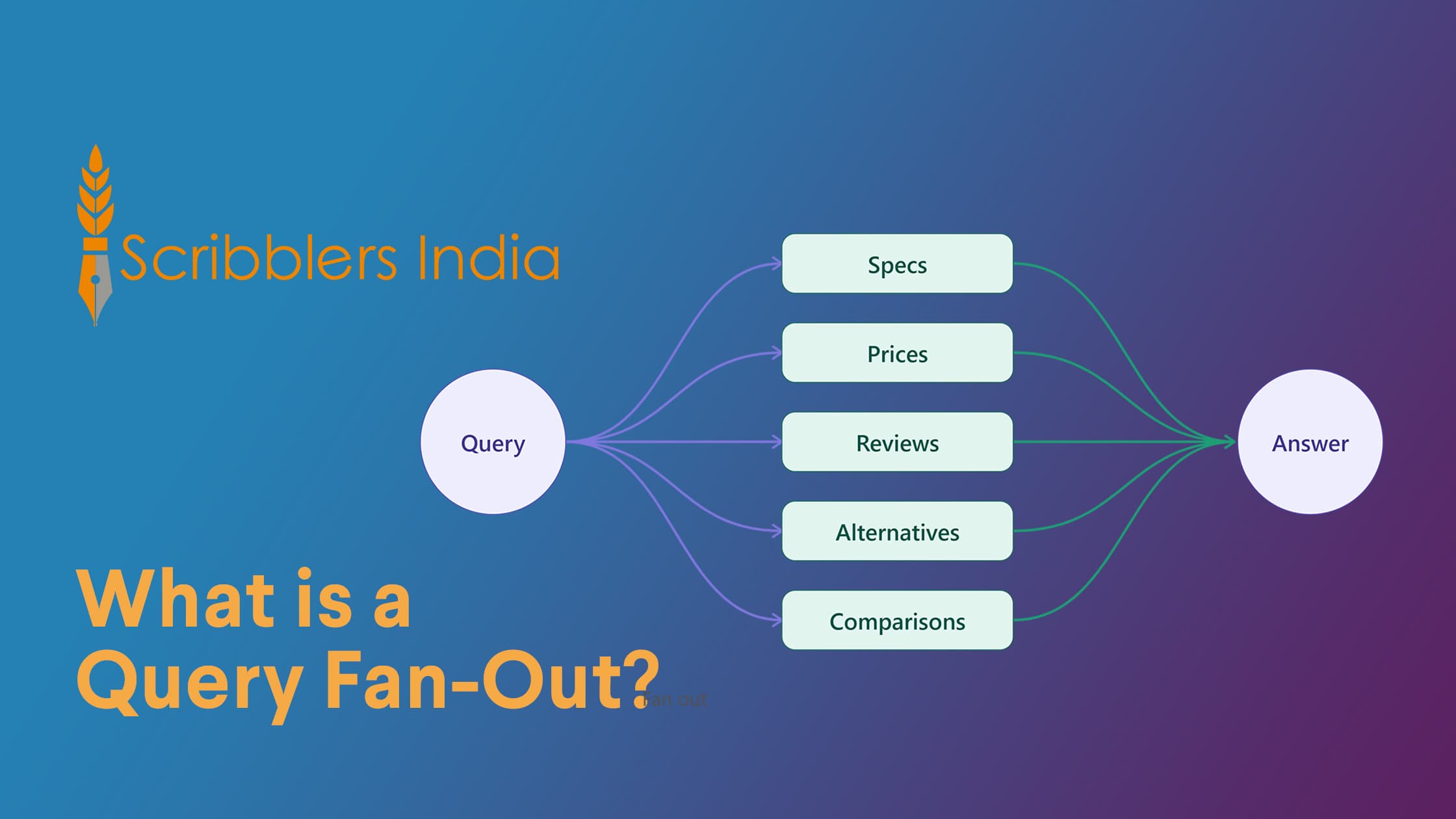
Query Fan-Out
Query fan-out is a search technique that expands a single user question into several related searches or subtopics before generating a response. Instead of relying on the original wording alone, an AI search system can gather information across different angles, helping it address complex questions that would previously require several separate searches. Google uses query fan-out within AI Mode and says AI Overviews may also use the technique. For content teams, this changes how search demand should be interpreted. One visible prompt can represent several hidden information needs, making useful topic coverage and connected supporting content more important than targeting a single phrase. Key Takeaways Query fan-out expands one search into several related information requests. Google uses the technique within AI Mode and generative Search. Google does not publish one fixed number of fan-out queries. Fan-out can explore subtopics, comparisons, constraints, and supporting information. Content strategies should address related needs without creating repetitive pages. Strong topic coverage can improve relevance across several related search paths. Measurement should examine page visibility rather than invented fan-out rankings. What Is Query Fan-Out and How Does It Work? Query fan-out allows an AI search system to explore multiple aspects of a single request before preparing an answer. Google defines it as concurrent related queries generated to request more information and retrieve additional search results relevant to the original user question. For example, a question about repairing a weed-filled lawn might lead Google to explore herbicides, chemical-free removal, and prevention methods. The user enters one question, while Search gathers supporting information across several connected angles before producing the response. This retrieval stage connects query fan-out with Retrieval-Augmented Generation. Both involve gathering external information before generation, although query fan-out describes how a single information need can expand into several retrieval paths rather than a single search request. How Is Query Fan-Out Different From Traditional Search? Traditional search usually begins with one visible query and returns results relevant to that search. Query fan-out can expand the same request into several related searches before an AI-generated response appears. This creates a broader retrieval process behind a single visible user interaction. Area Traditional Search Query Fan-Out Content Implication Starting point One submitted query guides the initial search results returned One query can trigger several connected background searches One visible prompt may contain several information needs Search scope Results primarily address the submitted search and interpreted intent Searches can explore multiple subtopics around the original question Supporting angles can become relevant within one journey User effort People may perform additional searches as their research develops The system can perform related searches on the user’s behalf Content should anticipate natural follow-up information needs Final experience Users usually review individual search results before continuing research AI systems can combine retrieved information into one response Different pages may contribute to the same generated answer Query fan-out is also narrower than the broad concept of query expansion. Search engines have expanded and interpreted queries for years. Query fan-out refers to concurrent, related searches used in newer generative Search experiences to gather broader supporting information. What Does Query Fan-Out Look Like in a Real Search Journey? A useful way to understand query fan-out is to examine a complex buyer question that contains several hidden decisions. The exact searches generated remain platform-controlled, so marketers should treat possible fan-out questions as research hypotheses rather than a list of queries Google has confirmed. Consider this prompt: “Which payroll system works for a growing company with remote employees across several US states?” Possible Subtopic Illustrative Related Search Information Required Useful Content Asset Multi-state compliance Payroll software for employees across multiple US states State payroll requirements and compliance capabilities Detailed product or compliance guide Scalability Payroll platforms suitable for growing employee numbers Limits, workflows, automation, and expansion support Product capability page or comparison Remote workforce Payroll software supporting distributed employee teams Employee access, onboarding, and location requirements Remote payroll or workforce guide Integrations Payroll systems connecting with HR and accounting tools Supported platforms, workflows, and data connections Integration pages or platform documentation Evaluation Features businesses should compare before choosing payroll software Selection criteria, costs, support, and implementation Buyer guide or comparison page These examples illustrate possible branches rather than Google’s internal searches. Google does not publish a single universal fan-out formula, and search results can vary with the original question, available context, Search systems, and the information needed for the response. Why Does Query Fan-Out Change SEO Content Planning? Query fan-out broadens the information space surrounding a single visible search. Content teams therefore need to understand the questions connected with a topic without turning every possible variation into another page. Google specifically warns against producing separate content for every fan-out query primarily to influence generative Search. Keyword research should identify the central search need before teams expand coverage into connected questions and supporting information. Related queries must reveal missing information within existing pages before they automatically become topics for separate new articles. Broader buyer questions can reveal several related decision criteria that warrant coverage in a single useful guide or content cluster. Separate pages remain appropriate when the underlying intent changes enough to require a distinct answer, format, or user journey. Internal links can connect supporting resources within a single topic when several pages contribute useful information to the same research journey. Content calendars should prioritize meaningful information gaps over query volume to reduce duplicate pages created by minor wording variations. This is where a broader content strategy becomes more useful than keyword expansion alone. Teams need to decide what belongs on one page, what deserves supporting content, and which apparent gaps already have sufficient coverage. How Can Teams Find Likely Query Fan-Out Opportunities? Google does not provide marketers with a complete list of every background search generated for each user prompt. Teams can still identify probable information branches by studying real search behavior, customer questions, existing content gaps, and the supporting decisions users make around important topics. Search results might
Query fan-out is a search technique that expands a single user question into several related searches or subtopics before generating a response. Instead of relying on the original wording alone, an AI search system can gather information across different angles, helping it address complex questions that would previously require several separate searches. Google uses query fan-out within AI Mode and says AI Overviews may also use the technique. For content teams, this changes how search demand should be interpreted. One visible prompt can represent several hidden information needs, making useful topic coverage and connected supporting content more important than targeting a single phrase. Key Takeaways Query fan-out expands one search into several related information requests. Google uses the technique within AI Mode and generative Search. Google does not publish one fixed number of fan-out queries. Fan-out can explore subtopics, comparisons, constraints, and supporting information. Content strategies should address related needs without creating repetitive pages. Strong topic coverage can improve relevance across several related search paths. Measurement should examine page visibility rather than invented fan-out rankings. What Is Query Fan-Out and How Does It Work? Query fan-out allows an AI search system to explore multiple aspects of a single request before preparing an answer. Google defines it as concurrent related queries generated to request more information and retrieve additional search results relevant to the original user question. For example, a question about repairing a weed-filled lawn might lead Google to explore herbicides, chemical-free removal, and prevention methods. The user enters one question, while Search gathers supporting information across several connected angles before producing the response. This retrieval stage connects query fan-out with Retrieval-Augmented Generation. Both involve gathering external information before generation, although query fan-out describes how a single information need can expand into several retrieval paths rather than a single search request. How Is Query Fan-Out Different From Traditional Search? Traditional search usually begins with one visible query and returns results relevant to that search. Query fan-out can expand the same request into several related searches before an AI-generated response appears. This creates a broader retrieval process behind a single visible user interaction. Area Traditional Search Query Fan-Out Content Implication Starting point One submitted query guides the initial search results returned One query can trigger several connected background searches One visible prompt may contain several information needs Search scope Results primarily address the submitted search and interpreted intent Searches can explore multiple subtopics around the original question Supporting angles can become relevant within one journey User effort People may perform additional searches as their research develops The system can perform related searches on the user’s behalf Content should anticipate natural follow-up information needs Final experience Users usually review individual search results before continuing research AI systems can combine retrieved information into one response Different pages may contribute to the same generated answer Query fan-out is also narrower than the broad concept of query expansion. Search engines have expanded and interpreted queries for years. Query fan-out refers to concurrent, related searches used in newer generative Search experiences to gather broader supporting information. What Does Query Fan-Out Look Like in a Real Search Journey? A useful way to understand query fan-out is to examine a complex buyer question that contains several hidden decisions. The exact searches generated remain platform-controlled, so marketers should treat possible fan-out questions as research hypotheses rather than a list of queries Google has confirmed. Consider this prompt: “Which payroll system works for a growing company with remote employees across several US states?” Possible Subtopic Illustrative Related Search Information Required Useful Content Asset Multi-state compliance Payroll software for employees across multiple US states State payroll requirements and compliance capabilities Detailed product or compliance guide Scalability Payroll platforms suitable for growing employee numbers Limits, workflows, automation, and expansion support Product capability page or comparison Remote workforce Payroll software supporting distributed employee teams Employee access, onboarding, and location requirements Remote payroll or workforce guide Integrations Payroll systems connecting with HR and accounting tools Supported platforms, workflows, and data connections Integration pages or platform documentation Evaluation Features businesses should compare before choosing payroll software Selection criteria, costs, support, and implementation Buyer guide or comparison page These examples illustrate possible branches rather than Google’s internal searches. Google does not publish a single universal fan-out formula, and search results can vary with the original question, available context, Search systems, and the information needed for the response. Why Does Query Fan-Out Change SEO Content Planning? Query fan-out broadens the information space surrounding a single visible search. Content teams therefore need to understand the questions connected with a topic without turning every possible variation into another page. Google specifically warns against producing separate content for every fan-out query primarily to influence generative Search. Keyword research should identify the central search need before teams expand coverage into connected questions and supporting information. Related queries must reveal missing information within existing pages before they automatically become topics for separate new articles. Broader buyer questions can reveal several related decision criteria that warrant coverage in a single useful guide or content cluster. Separate pages remain appropriate when the underlying intent changes enough to require a distinct answer, format, or user journey. Internal links can connect supporting resources within a single topic when several pages contribute useful information to the same research journey. Content calendars should prioritize meaningful information gaps over query volume to reduce duplicate pages created by minor wording variations. This is where a broader content strategy becomes more useful than keyword expansion alone. Teams need to decide what belongs on one page, what deserves supporting content, and which apparent gaps already have sufficient coverage. How Can Teams Find Likely Query Fan-Out Opportunities? Google does not provide marketers with a complete list of every background search generated for each user prompt. Teams can still identify probable information branches by studying real search behavior, customer questions, existing content gaps, and the supporting decisions users make around important topics. Search results might
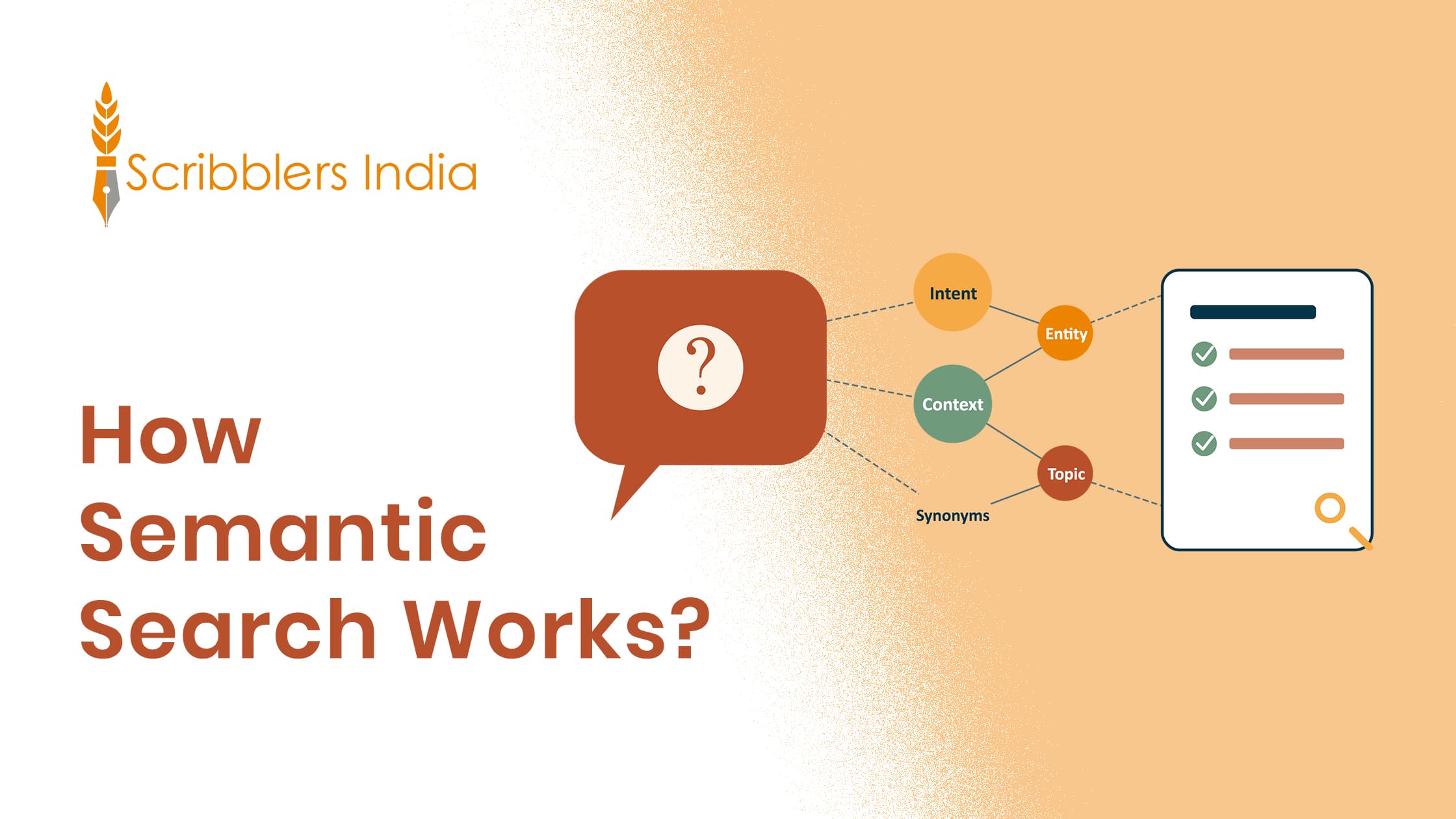
Semantic Search
Semantic search is a search approach that focuses on meaning, context, and user intent instead of relying on exact keyword matches. It helps search systems understand what people want, how words relate, and which concepts or entities can answer a query. This allows relevant information to surface even when wording differs. Modern search engines use language models, neural matching, entities, and other systems to interpret queries and webpages. For marketers, semantic search changes content planning from keyword repetition toward useful topic coverage, clear relationships, and search intent. These principles also support retrieval across AI-powered search experiences and RAG systems. Key Takeaways: Semantic search focuses on the meaning of a query rather than exact word matching. Search intent helps systems understand what information users want. Entities provide identifiable subjects that connect concepts across different webpages. Embeddings can represent meaning through numerical relationships between words and documents. Keyword matching remains useful when exact terms carry important search meaning. Strong content should address genuine questions rather than repeating keyword variations. Semantic retrieval also supports many RAG and AI search applications. What Is Semantic Search and How Does It Work? Semantic search seeks information that matches the meaning of a query rather than requiring the same words inside each result. It considers context, intent, concepts, entities, and relationships to identify information that satisfies the searcher’s query. Google has developed several systems that support this broader language understanding. RankBrain connects unfamiliar wording with related concepts, while neural matching evaluates wider representations of queries and pages. BERT examines how words relate within a sequence to understand context and meaning. Consider a search for “affordable phones with strong cameras.” A useful result might discuss “budget smartphones for photography” without repeating the original wording. Semantic understanding can connect both phrases through their shared concepts, while literal matching would place greater weight on identical terms. This does not mean keywords have disappeared from search. Exact wording can remain valuable for product codes, names, technical terms, and queries where specific language changes the intended meaning. How Is Semantic Search Different From Keyword Search? Keyword search looks for direct matches between words in a query and words found inside documents. Semantic search expands that process by considering meaning and relationships. Modern retrieval systems often combine both approaches because exact terminology and conceptual similarity solve different search problems. Area Keyword Search Semantic Search Simple Example Focus Matches query terms with words appearing inside indexed documents. Matches the meaning and concepts represented across queries and documents. “Cheap laptop” can connect with “affordable notebook computer.” Synonyms Different wording can weaken matching when exact terms are absent. Related words can connect when they represent a similar underlying concept. “Attorney” can relate to content discussing a “lawyer.” Ambiguity One word may retrieve different subjects sharing the same wording. Context can help determine which meaning the searcher most likely intended. “Jaguar” may mean an animal, vehicle, or brand. Best use Exact identifiers and specialized terminology often benefit from direct matching. Conversational questions and concept-led queries benefit from meaning-based retrieval. Product codes favor exact search; research questions need context. Semantic search should therefore complement keyword research rather than replace it. Search teams still need the language audiences use while understanding the questions, concepts, and relationships behind those words. Which Signals Help Search Systems Understand Meaning? Meaning can come from several parts of a query or document working together, rather than from a single isolated keyword. Search systems examine language patterns and context to connect a request to relevant information, while different search technologies may weigh these inputs differently. Search intent helps distinguish whether a user wants information, a website, a comparison, a product, or another outcome. Word relationships provide context when the meaning of one term changes according to surrounding words within the query. Entities identify distinct subjects such as companies, people, products, places, events, and concepts referenced within search content. Synonyms connect related language when users and publishers describe the same idea through different words or common expressions. Page context clarifies meaning by showing how headings, supporting explanations, examples, and related concepts fit within one subject. Previous search context can help some search experiences interpret follow-up requests when earlier interactions provide useful information about intent. Google explains that BERT considers words in relation to surrounding words rather than processing each term in isolation. Neural matching can also connect broader concepts represented within queries and webpages. How Do Entities, Embeddings, and Context Support Semantic Search? Entities, embeddings, and context support different parts of semantic understanding. An entity identifies a recognizable subject; context helps establish what words mean within a request; and embeddings represent semantic similarity between pieces of information using numerical representations. An entity could represent Microsoft, Mumbai, a specific product, or a recognized business concept. Relationships between entities add further context. A search engine may connect a company with its founder, products, industry, location, and other subjects represented across available information. Embeddings take a different approach. Google Cloud explains that semantic search systems can transform text into vectors that represent meaning. Texts with similar meanings can then appear closer within this mathematical space, allowing retrieval even when their exact wording differs. Context helps resolve the remaining ambiguity. A search for “apple support near me” provides enough surrounding information to suggest a technology brand. A search for “apple varieties for baking” points toward fruit, even though both queries contain the same central word. How Does Semantic Search Change SEO Content Planning? Semantic search reduces the value of creating separate pages for every small keyword variation when those searches share the same underlying intent. Strong planning starts by understanding what users need, which concepts support the answer, and where separate pages represent genuinely different information requirements. Content teams should group keywords sharing the same intent before deciding whether each variation deserves another independent page. Writers should cover supporting questions and concepts when they help readers understand the main subject without creating unnecessary topical detours. Important entities should receive clear context
Semantic search is a search approach that focuses on meaning, context, and user intent instead of relying on exact keyword matches. It helps search systems understand what people want, how words relate, and which concepts or entities can answer a query. This allows relevant information to surface even when wording differs. Modern search engines use language models, neural matching, entities, and other systems to interpret queries and webpages. For marketers, semantic search changes content planning from keyword repetition toward useful topic coverage, clear relationships, and search intent. These principles also support retrieval across AI-powered search experiences and RAG systems. Key Takeaways: Semantic search focuses on the meaning of a query rather than exact word matching. Search intent helps systems understand what information users want. Entities provide identifiable subjects that connect concepts across different webpages. Embeddings can represent meaning through numerical relationships between words and documents. Keyword matching remains useful when exact terms carry important search meaning. Strong content should address genuine questions rather than repeating keyword variations. Semantic retrieval also supports many RAG and AI search applications. What Is Semantic Search and How Does It Work? Semantic search seeks information that matches the meaning of a query rather than requiring the same words inside each result. It considers context, intent, concepts, entities, and relationships to identify information that satisfies the searcher’s query. Google has developed several systems that support this broader language understanding. RankBrain connects unfamiliar wording with related concepts, while neural matching evaluates wider representations of queries and pages. BERT examines how words relate within a sequence to understand context and meaning. Consider a search for “affordable phones with strong cameras.” A useful result might discuss “budget smartphones for photography” without repeating the original wording. Semantic understanding can connect both phrases through their shared concepts, while literal matching would place greater weight on identical terms. This does not mean keywords have disappeared from search. Exact wording can remain valuable for product codes, names, technical terms, and queries where specific language changes the intended meaning. How Is Semantic Search Different From Keyword Search? Keyword search looks for direct matches between words in a query and words found inside documents. Semantic search expands that process by considering meaning and relationships. Modern retrieval systems often combine both approaches because exact terminology and conceptual similarity solve different search problems. Area Keyword Search Semantic Search Simple Example Focus Matches query terms with words appearing inside indexed documents. Matches the meaning and concepts represented across queries and documents. “Cheap laptop” can connect with “affordable notebook computer.” Synonyms Different wording can weaken matching when exact terms are absent. Related words can connect when they represent a similar underlying concept. “Attorney” can relate to content discussing a “lawyer.” Ambiguity One word may retrieve different subjects sharing the same wording. Context can help determine which meaning the searcher most likely intended. “Jaguar” may mean an animal, vehicle, or brand. Best use Exact identifiers and specialized terminology often benefit from direct matching. Conversational questions and concept-led queries benefit from meaning-based retrieval. Product codes favor exact search; research questions need context. Semantic search should therefore complement keyword research rather than replace it. Search teams still need the language audiences use while understanding the questions, concepts, and relationships behind those words. Which Signals Help Search Systems Understand Meaning? Meaning can come from several parts of a query or document working together, rather than from a single isolated keyword. Search systems examine language patterns and context to connect a request to relevant information, while different search technologies may weigh these inputs differently. Search intent helps distinguish whether a user wants information, a website, a comparison, a product, or another outcome. Word relationships provide context when the meaning of one term changes according to surrounding words within the query. Entities identify distinct subjects such as companies, people, products, places, events, and concepts referenced within search content. Synonyms connect related language when users and publishers describe the same idea through different words or common expressions. Page context clarifies meaning by showing how headings, supporting explanations, examples, and related concepts fit within one subject. Previous search context can help some search experiences interpret follow-up requests when earlier interactions provide useful information about intent. Google explains that BERT considers words in relation to surrounding words rather than processing each term in isolation. Neural matching can also connect broader concepts represented within queries and webpages. How Do Entities, Embeddings, and Context Support Semantic Search? Entities, embeddings, and context support different parts of semantic understanding. An entity identifies a recognizable subject; context helps establish what words mean within a request; and embeddings represent semantic similarity between pieces of information using numerical representations. An entity could represent Microsoft, Mumbai, a specific product, or a recognized business concept. Relationships between entities add further context. A search engine may connect a company with its founder, products, industry, location, and other subjects represented across available information. Embeddings take a different approach. Google Cloud explains that semantic search systems can transform text into vectors that represent meaning. Texts with similar meanings can then appear closer within this mathematical space, allowing retrieval even when their exact wording differs. Context helps resolve the remaining ambiguity. A search for “apple support near me” provides enough surrounding information to suggest a technology brand. A search for “apple varieties for baking” points toward fruit, even though both queries contain the same central word. How Does Semantic Search Change SEO Content Planning? Semantic search reduces the value of creating separate pages for every small keyword variation when those searches share the same underlying intent. Strong planning starts by understanding what users need, which concepts support the answer, and where separate pages represent genuinely different information requirements. Content teams should group keywords sharing the same intent before deciding whether each variation deserves another independent page. Writers should cover supporting questions and concepts when they help readers understand the main subject without creating unnecessary topical detours. Important entities should receive clear context
Entity SEO
Entity SEO helps search engines understand a brand, person, product, place, or concept as a distinct entity rather than a loose collection of keywords. It focuses on identity, attributes, relationships, and supporting context so search systems can connect the right information with the right real-world subject across different search experiences. Entity-based SEO does not replace keyword research or traditional SEO. It adds another layer that explains what a page is about, who or what it represents, and how related information connects. This is useful across Google Search, AI Overviews, ChatGPT, and other systems that interpret topics based on meaning and relationships. Key Takeaways Entity SEO helps search systems distinguish real-world subjects from similar names or phrases. Entities can include organizations, people, products, places, services, concepts, and events. Consistent facts across owned and external sources can strengthen understanding of the entity. Structured data can describe entities without guaranteeing rankings or AI citations. Internal links help connect related people, services, products, topics, and supporting resources. Entity SEO complements keyword SEO rather than replacing established search optimization foundations. Strong entity clarity can support more accurate brand representation across AI search. What Is Entity SEO and What Counts as an Entity? Entity SEO focuses on helping search systems identify a distinct subject and understand the information connected with it. Google introduced its Knowledge Graph around the idea of understanding “things” and their relationships rather than treating every search as a string of words. An entity can represent a person, company, place, product, event, creative work, or recognizable concept. Google describes Knowledge Graph entities through identifiers, names, types, descriptions, images, URLs, and other attributes that help distinguish one subject from another. Consider a software company called ABCS. Search systems need enough context to determine whether ABCD refers to that company, another business, a fictional brand, or another subject sharing the name. The same challenge applies to people. Two consultants may share the same name, while their employers, locations, specialties, websites, profiles, and published work create distinct entity relationships. Entity optimization therefore focuses on identity and context rather than on repeating a company or person’s name across multiple pages. The search system needs sufficient consistent information to understand which entity the page describes and how that entity relates to related subjects. How Is Entity SEO Different From Keyword SEO and Semantic SEO? Keyword SEO, semantic SEO, and entity SEO overlap because modern search interpretation integrates words, meanings, topics, and identifiable subjects. The difference lies in what each approach emphasizes when teams research queries, organize content, and communicate meaning across a website. Approach Focus Typical Question Example Keyword SEO Search phrases and query demand What words does the audience search? Targeting “payroll software Australia” Semantic SEO Meaning, context, and related concepts What wider subject does this query represent? Covering payroll compliance and processing Entity SEO Identifiable subjects and relationships Which company, person, product, or concept is involved? Connecting a payroll platform with its company and features Topic clustering Organized coverage around connected questions Which supporting pages build subject depth? Connecting payroll guides and product pages A strong search strategy does not require choosing one approach and abandoning the others. Keyword research identifies demand, semantic coverage explains meaning, and entity SEO reduces ambiguity around the people, companies, products, and concepts represented. How Do Search Engines Recognize and Connect Entities? Search systems can build entity understanding from information gathered across webpages, structured databases, licensed sources, and other available resources. Google states that its Knowledge Graph maps attributes and relationships between real-world entities using information collected from several source types. A consistent entity name helps systems connect references that describe the same company, person, product, or service. A clear entity type distinguishes whether a name refers to an organization, person, place, product, event, or another subject. Relevant descriptive attributes provide context such as location, occupation, category, ownership, product type, or organizational role. Meaningful entity relationships connect companies with founders, products, locations, services, publications, partners, and other identifiable subjects. Supporting web references can provide corroborating information when credible sources describe the same entity using compatible facts and context. Structured machine-readable information can label entity details when suitable schema types and properties match the visible webpage content. No individual signal guarantees entity status or a search outcome. Search systems combine available information, relationships, and context when determining whether references describe the same subject. Which Signals Help Search Systems Understand a Brand Entity? Brand entity clarity improves when important information agrees across the places where search systems and users encounter the organization. Companies should concentrate on accurate identity, connected owned content, credible external corroboration, and understandable relationships rather than manufacturing large volumes of repetitive mentions. Consistent brand information: Company names, locations, service descriptions, leadership information, and important product names should remain consistent across key owned pages. Small wording variations are natural, although conflicting facts can create uncertainty around identity or current positioning. Clear About and profile pages: An About page should explain what the organization does, who it serves, where it operates, and whom or what it connects with. Founder and author profiles should also explain professional relationships rather than functioning as thin biography pages. Connected service and product information: Important offerings should connect with the organization through descriptive copy, navigation, internal links, and relevant structured data. This helps prevent products or services from appearing as isolated names without clear ownership, category, or business context. Relevant external references: Industry publications, professional profiles, partner websites, customer reviews, directories, interviews, and event pages can provide independent context. These sources are more valuable when they reflect real relationships rather than placements created solely to manufacture entity signals. Accurate structured data: Organization, Person, Product, ProfilePage, and related schema types can describe relevant page information when implemented correctly. Structured data gives search systems explicit clues about page meaning, while Google does not present schema as a guarantee of rankings. Our schema markup for AI search guide explains why structured data should support accurate page information instead of being treated as an
Entity SEO helps search engines understand a brand, person, product, place, or concept as a distinct entity rather than a loose collection of keywords. It focuses on identity, attributes, relationships, and supporting context so search systems can connect the right information with the right real-world subject across different search experiences. Entity-based SEO does not replace keyword research or traditional SEO. It adds another layer that explains what a page is about, who or what it represents, and how related information connects. This is useful across Google Search, AI Overviews, ChatGPT, and other systems that interpret topics based on meaning and relationships. Key Takeaways Entity SEO helps search systems distinguish real-world subjects from similar names or phrases. Entities can include organizations, people, products, places, services, concepts, and events. Consistent facts across owned and external sources can strengthen understanding of the entity. Structured data can describe entities without guaranteeing rankings or AI citations. Internal links help connect related people, services, products, topics, and supporting resources. Entity SEO complements keyword SEO rather than replacing established search optimization foundations. Strong entity clarity can support more accurate brand representation across AI search. What Is Entity SEO and What Counts as an Entity? Entity SEO focuses on helping search systems identify a distinct subject and understand the information connected with it. Google introduced its Knowledge Graph around the idea of understanding “things” and their relationships rather than treating every search as a string of words. An entity can represent a person, company, place, product, event, creative work, or recognizable concept. Google describes Knowledge Graph entities through identifiers, names, types, descriptions, images, URLs, and other attributes that help distinguish one subject from another. Consider a software company called ABCS. Search systems need enough context to determine whether ABCD refers to that company, another business, a fictional brand, or another subject sharing the name. The same challenge applies to people. Two consultants may share the same name, while their employers, locations, specialties, websites, profiles, and published work create distinct entity relationships. Entity optimization therefore focuses on identity and context rather than on repeating a company or person’s name across multiple pages. The search system needs sufficient consistent information to understand which entity the page describes and how that entity relates to related subjects. How Is Entity SEO Different From Keyword SEO and Semantic SEO? Keyword SEO, semantic SEO, and entity SEO overlap because modern search interpretation integrates words, meanings, topics, and identifiable subjects. The difference lies in what each approach emphasizes when teams research queries, organize content, and communicate meaning across a website. Approach Focus Typical Question Example Keyword SEO Search phrases and query demand What words does the audience search? Targeting “payroll software Australia” Semantic SEO Meaning, context, and related concepts What wider subject does this query represent? Covering payroll compliance and processing Entity SEO Identifiable subjects and relationships Which company, person, product, or concept is involved? Connecting a payroll platform with its company and features Topic clustering Organized coverage around connected questions Which supporting pages build subject depth? Connecting payroll guides and product pages A strong search strategy does not require choosing one approach and abandoning the others. Keyword research identifies demand, semantic coverage explains meaning, and entity SEO reduces ambiguity around the people, companies, products, and concepts represented. How Do Search Engines Recognize and Connect Entities? Search systems can build entity understanding from information gathered across webpages, structured databases, licensed sources, and other available resources. Google states that its Knowledge Graph maps attributes and relationships between real-world entities using information collected from several source types. A consistent entity name helps systems connect references that describe the same company, person, product, or service. A clear entity type distinguishes whether a name refers to an organization, person, place, product, event, or another subject. Relevant descriptive attributes provide context such as location, occupation, category, ownership, product type, or organizational role. Meaningful entity relationships connect companies with founders, products, locations, services, publications, partners, and other identifiable subjects. Supporting web references can provide corroborating information when credible sources describe the same entity using compatible facts and context. Structured machine-readable information can label entity details when suitable schema types and properties match the visible webpage content. No individual signal guarantees entity status or a search outcome. Search systems combine available information, relationships, and context when determining whether references describe the same subject. Which Signals Help Search Systems Understand a Brand Entity? Brand entity clarity improves when important information agrees across the places where search systems and users encounter the organization. Companies should concentrate on accurate identity, connected owned content, credible external corroboration, and understandable relationships rather than manufacturing large volumes of repetitive mentions. Consistent brand information: Company names, locations, service descriptions, leadership information, and important product names should remain consistent across key owned pages. Small wording variations are natural, although conflicting facts can create uncertainty around identity or current positioning. Clear About and profile pages: An About page should explain what the organization does, who it serves, where it operates, and whom or what it connects with. Founder and author profiles should also explain professional relationships rather than functioning as thin biography pages. Connected service and product information: Important offerings should connect with the organization through descriptive copy, navigation, internal links, and relevant structured data. This helps prevent products or services from appearing as isolated names without clear ownership, category, or business context. Relevant external references: Industry publications, professional profiles, partner websites, customer reviews, directories, interviews, and event pages can provide independent context. These sources are more valuable when they reflect real relationships rather than placements created solely to manufacture entity signals. Accurate structured data: Organization, Person, Product, ProfilePage, and related schema types can describe relevant page information when implemented correctly. Structured data gives search systems explicit clues about page meaning, while Google does not present schema as a guarantee of rankings. Our schema markup for AI search guide explains why structured data should support accurate page information instead of being treated as an
LLM Optimization (LLMO)
LLM optimization, or LLMO, improves how content and brand information can appear across LLM-powered search experiences. It focuses on what these systems can retrieve from the web and understand about a brand. The work also considers whether available sources provide enough context for accurate mentions, citations, comparisons, and generated answers. LLMO overlaps with SEO, AEO, and GEO, although each term emphasizes a different part of search visibility. The goal is not to manipulate a model or control what enters its training data. Instead, LLM optimization strengthens the discoverable information environment that can support accurate representation across relevant AI search experiences. Key Takeaways: LLM optimization improves how AI systems find and interpret brand information. LLMO overlaps with SEO, AEO, GEO, and wider AI search optimization. Live retrieval offers brands more control than training the underlying model. Strong LLM visibility depends on useful content and clear entities. External sources can shape how AI systems understand a brand. Technical accessibility remains important when AI search crawlers retrieve webpages. LLM optimization performance requires monitoring of prompts, citations, and representations. Why is LLM Optimization Crucial in AI Search? LLM optimization describes work that helps LLM-powered systems find, interpret, and represent useful information when responding to relevant prompts. The term often appears alongside LLM SEO, GEO, and AEO. There is no platform-defined LLMO standard, so definitions vary across search and marketing discussions. The core focus sits on the information environment available to an AI search experience. A model may answer based on learned information, retrieve current web sources, or combine both approaches, depending on the product and query. For brands, the more actionable layer is current web discovery. Search-enabled systems can retrieve pages and supporting sources when answering questions that require current information, comparisons, recommendations, or evidence. This means LLM optimization should focus on discoverable content instead of attempts to influence model weights. Search foundations, entity clarity, useful information, source credibility, and external references create a more defensible strategy. Readers unfamiliar with the underlying technology can first review our Large Language Model glossary before exploring the optimization layer in more depth. How Is LLM Optimization Different From SEO, GEO, and AEO? LLM optimization shares many foundations with other search disciplines, so treating every acronym as a separate strategy creates unnecessary complexity. Their main difference lies in the aspect of discovery each term emphasizes, rather than in a completely different set of content requirements. Term Main Focus Typical Outcome Core Question SEO Visibility across search engine results Rankings, impressions, clicks, conversions Can search engines discover and rank the page? AEO Selection within direct-answer experiences Answers, snippets, citations, mentions Can the content answer the question well? GEO Visibility within generated search responses Citations, mentions, recommendations Can generative systems use the brand as a source? LLMO Findability and representation across LLM-powered systems Accurate mentions, citations, comparisons Can LLM-based systems retrieve and understand the information? AI search optimization Broader visibility across AI-led discovery Cross-platform visibility and assisted discovery Is the brand discoverable across relevant AI search experiences? Google now states that standard SEO practices remain foundational for visibility across its generative Search experiences. Its guidance advises publishers to focus on useful content and sound technical foundations rather than on separate optimization shortcuts. This overlap means a company rarely needs four independent content programs. A stronger approach connects search foundations with Answer Engine Optimization, GEO, entity clarity, and LLM visibility measurement. Can Brands Optimize LLM Training Data and Live Retrieval the Same Way? Training and retrieval are often discussed together under LLM optimization, although businesses have different levels of influence over each layer. Current retrieval offers a more observable optimization surface because published information can become available without waiting for a future model training cycle. Training data influence: Model providers determine how training datasets are assembled, filtered, licensed, and processed for each model generation. Brands cannot assume that publishing a page guarantees training inclusion or controls how learned information will later appear in model responses. Pretrained model knowledge: An LLM can sometimes answer from information learned before deployment without retrieving a current webpage. That knowledge may become outdated when organizations change products, pricing, positioning, leadership, services, or other information after the model’s training period. Live web retrieval: Search-enabled AI experiences can find up-to-date web pages when a user asks questions requiring up-to-date information or supporting evidence. OpenAI states that public websites can appear in ChatGPT search when OAI-SearchBot can access eligible content, although placement is never guaranteed. Retrieval-augmented generation: RAG combines retrieved information with an LLM before an answer is generated. Retrieval-Augmented Generation (RAG) is a grounding technique that uses Search systems to retrieve relevant, up-to-date webpages for generative Search experiences. For this reason, brands gain more actionable opportunities from current content, crawl access, entity clarity, and source quality than speculative attempts to enter future training datasets. What Makes Content Easier for LLM Systems to Retrieve and Use? LLM optimization does not require a special writing formula that guarantees citations. Strong content still needs to answer genuine questions and provide information worth retrieving. Google now warns publishers against unnecessary AI-specific tactics, including forced content chunking designed around assumed generative search behavior. Cover the question with enough depth: A page should resolve the main query while answering the natural questions that follow. Useful examples, limitations, comparisons, definitions, and implementation details give retrieval systems more relevant information for different user intents. Make important facts easy to identify: Names, dates, products, services, definitions, pricing details, methodologies, and claims should appear in clear language. Readers and machines should not need several paragraphs of promotional copy before understanding the core information being communicated. Add evidence where claims require support: Original research, named sources, product documentation, methodologies, expert input, and verifiable examples make an explanation easier to evaluate. Unsupported statements weaken source material when an answer requires factual evidence or comparative context. Keep information current across key pages: Old service descriptions, pricing information, biographies, statistics, or feature details can create conflicts across a company’s website. Content audits should correct outdated information before
LLM optimization, or LLMO, improves how content and brand information can appear across LLM-powered search experiences. It focuses on what these systems can retrieve from the web and understand about a brand. The work also considers whether available sources provide enough context for accurate mentions, citations, comparisons, and generated answers. LLMO overlaps with SEO, AEO, and GEO, although each term emphasizes a different part of search visibility. The goal is not to manipulate a model or control what enters its training data. Instead, LLM optimization strengthens the discoverable information environment that can support accurate representation across relevant AI search experiences. Key Takeaways: LLM optimization improves how AI systems find and interpret brand information. LLMO overlaps with SEO, AEO, GEO, and wider AI search optimization. Live retrieval offers brands more control than training the underlying model. Strong LLM visibility depends on useful content and clear entities. External sources can shape how AI systems understand a brand. Technical accessibility remains important when AI search crawlers retrieve webpages. LLM optimization performance requires monitoring of prompts, citations, and representations. Why is LLM Optimization Crucial in AI Search? LLM optimization describes work that helps LLM-powered systems find, interpret, and represent useful information when responding to relevant prompts. The term often appears alongside LLM SEO, GEO, and AEO. There is no platform-defined LLMO standard, so definitions vary across search and marketing discussions. The core focus sits on the information environment available to an AI search experience. A model may answer based on learned information, retrieve current web sources, or combine both approaches, depending on the product and query. For brands, the more actionable layer is current web discovery. Search-enabled systems can retrieve pages and supporting sources when answering questions that require current information, comparisons, recommendations, or evidence. This means LLM optimization should focus on discoverable content instead of attempts to influence model weights. Search foundations, entity clarity, useful information, source credibility, and external references create a more defensible strategy. Readers unfamiliar with the underlying technology can first review our Large Language Model glossary before exploring the optimization layer in more depth. How Is LLM Optimization Different From SEO, GEO, and AEO? LLM optimization shares many foundations with other search disciplines, so treating every acronym as a separate strategy creates unnecessary complexity. Their main difference lies in the aspect of discovery each term emphasizes, rather than in a completely different set of content requirements. Term Main Focus Typical Outcome Core Question SEO Visibility across search engine results Rankings, impressions, clicks, conversions Can search engines discover and rank the page? AEO Selection within direct-answer experiences Answers, snippets, citations, mentions Can the content answer the question well? GEO Visibility within generated search responses Citations, mentions, recommendations Can generative systems use the brand as a source? LLMO Findability and representation across LLM-powered systems Accurate mentions, citations, comparisons Can LLM-based systems retrieve and understand the information? AI search optimization Broader visibility across AI-led discovery Cross-platform visibility and assisted discovery Is the brand discoverable across relevant AI search experiences? Google now states that standard SEO practices remain foundational for visibility across its generative Search experiences. Its guidance advises publishers to focus on useful content and sound technical foundations rather than on separate optimization shortcuts. This overlap means a company rarely needs four independent content programs. A stronger approach connects search foundations with Answer Engine Optimization, GEO, entity clarity, and LLM visibility measurement. Can Brands Optimize LLM Training Data and Live Retrieval the Same Way? Training and retrieval are often discussed together under LLM optimization, although businesses have different levels of influence over each layer. Current retrieval offers a more observable optimization surface because published information can become available without waiting for a future model training cycle. Training data influence: Model providers determine how training datasets are assembled, filtered, licensed, and processed for each model generation. Brands cannot assume that publishing a page guarantees training inclusion or controls how learned information will later appear in model responses. Pretrained model knowledge: An LLM can sometimes answer from information learned before deployment without retrieving a current webpage. That knowledge may become outdated when organizations change products, pricing, positioning, leadership, services, or other information after the model’s training period. Live web retrieval: Search-enabled AI experiences can find up-to-date web pages when a user asks questions requiring up-to-date information or supporting evidence. OpenAI states that public websites can appear in ChatGPT search when OAI-SearchBot can access eligible content, although placement is never guaranteed. Retrieval-augmented generation: RAG combines retrieved information with an LLM before an answer is generated. Retrieval-Augmented Generation (RAG) is a grounding technique that uses Search systems to retrieve relevant, up-to-date webpages for generative Search experiences. For this reason, brands gain more actionable opportunities from current content, crawl access, entity clarity, and source quality than speculative attempts to enter future training datasets. What Makes Content Easier for LLM Systems to Retrieve and Use? LLM optimization does not require a special writing formula that guarantees citations. Strong content still needs to answer genuine questions and provide information worth retrieving. Google now warns publishers against unnecessary AI-specific tactics, including forced content chunking designed around assumed generative search behavior. Cover the question with enough depth: A page should resolve the main query while answering the natural questions that follow. Useful examples, limitations, comparisons, definitions, and implementation details give retrieval systems more relevant information for different user intents. Make important facts easy to identify: Names, dates, products, services, definitions, pricing details, methodologies, and claims should appear in clear language. Readers and machines should not need several paragraphs of promotional copy before understanding the core information being communicated. Add evidence where claims require support: Original research, named sources, product documentation, methodologies, expert input, and verifiable examples make an explanation easier to evaluate. Unsupported statements weaken source material when an answer requires factual evidence or comparative context. Keep information current across key pages: Old service descriptions, pricing information, biographies, statistics, or feature details can create conflicts across a company’s website. Content audits should correct outdated information before
Schema Markup
Schema markup is machine-readable code that helps search engines understand what a webpage contains and what its information represents. It can identify articles, products, organizations, people, events, reviews, and other entities in a consistent format. This added context can support richer search appearances when systems recognize and use the markup. However, schema markup does not guarantee higher rankings, AI citations, or inclusion in Google AI Overviews. Its main role is to make page information easier for machines to interpret across search experiences. Used correctly, it strengthens technical clarity while supporting SEO, AEO, and GEO efforts built around useful, well-structured content. Key Takeaways Schema markup gives search systems clearer labels for important webpage information. Schema.org provides the vocabulary for describing entities and page content. Google supports JSON-LD, Microdata, and RDFa for structured data implementation. JSON-LD is preferred because teams can maintain the format with less effort. A valid schema can create eligibility for rich results without guaranteeing their appearance. Schema markup is not a direct shortcut to higher organic rankings. Google does not require special schema for AI Overviews or AI Mode. What Is Schema Markup and How Does It Work? Schema markup adds standardized labels to information that people can already understand from visible webpage content. A product page may show a name, price, brand, availability, and review score. Schema connects those details with machine-readable properties that explain what each value represents. Search engines can then use those labels when processing the page and deciding whether supported search features apply. Google describes structured data as a standardized format for classifying page information, while most Search implementations use Schema.org vocabulary. The markup should describe the same information that is visible to readers, rather than creating a second version of the page. Accurate implementation enhances clarity, while misleading or hidden information can render a page ineligible for rich-results features under Google guidelines. How Is Schema Markup Different From Structured Data and Schema.org? These terms appear together so often that they can sound interchangeable, although each describes a different part of the system. The difference helps content teams discuss requirements with SEO specialists and developers without treating each technical layer as the same thing. Term What It Means Simple Example Main Role Structured data Information organized in a standard machine-readable format A product price identified as a price Gives machines labeled information Schema.org A shared vocabulary containing types and properties Product, Person, Organization Defines what labels mean Schema markup Schema.org vocabulary added to webpage code Product details expressed through JSON-LD Applies structured meaning to a page JSON-LD One supported format for writing structured data A script containing @type and properties Provides an implementation method Google supports JSON-LD, Microdata, and RDFa for Search structured data, while Schema.org provides a much wider vocabulary. Teams should therefore check Google documentation before expecting every valid Schema.org type to create a supported Search feature. Which Schema Markup Types Should a Website Use? A website should use schema types that match each page’s actual purpose and visible content, rather than adding unrelated markup. Teams should start with important page templates, identify the entities or content being described, and select supported types that fit those pages. Organization: Organization markup can describe a company name, logo, URL, address, contact details, and related information when applicable. Google recommends placing organizational information on the home page or on another page that describes the organization to reduce conflicting details across templates. Article: Article markup identifies information such as the headline, images, publication dates, and author details. Publishers can use it on suitable article pages when the marked information matches the visible byline, publication date, main image, and page content. Product: Product structured data can describe price, availability, ratings, shipping details, and other product attributes shown on a page. Google separates product snippets from merchant listings because direct-purchase pages may require different information than editorial pages that review products. LocalBusiness: LocalBusiness markup can describe a physical business location through information such as its address, telephone number, opening hours, and business subtype. The chosen subtype should align with the business represented on the page, and the markup should match the visible location information. Breadcrumb: Breadcrumb structured data describes a page’s position within the website hierarchy and the path leading toward it. Google can use this information in supported Search appearances to show how deeper pages connect with broader categories and website sections. A SaaS website may emphasize Organization, Article, Breadcrumb, and SoftwareApplication information, while ecommerce sites may require Product markup across catalogs. How Do You Add and Validate Schema Markup? Adding schema markup is not limited to generating code and pasting it into a page template. The markup should match visible content, use the correct type, contain required properties, pass validation, and remain accurate after website changes. Choose the page purpose first: Teams should identify what the page represents before selecting markup for its content. A home page, article, product page, author profile, event page, and location page describe different entities that can require different supported schema types. Select an implementation format: Google supports three structured data implementation formats for Search: JSON-LD, Microdata, and RDFa. Google recommends JSON-LD in most situations because teams can maintain it without placing every property throughout visible HTML, although the chosen format should fit the website setup. Map visible information to properties: Required and recommended properties should describe information readers can verify on the page. A product price in markup should match the displayed price, while an article author should match the person shown to readers and the published byline. Validate before deployment: Google’s Rich Results Test checks whether page markup supports eligible Google Search features. The Schema Markup Validator checks broader Schema.org markup for general vocabulary errors. This separates general vocabulary validity from Google-specific rich-result eligibility during implementation reviews. Monitor after publishing: A valid implementation can break when templates, plugins, prices, business details, or page layouts change. Search Console enhancement reports, URL Inspection, and recurring technical reviews can identify stale, broken, or conflicting structured information across
Schema markup is machine-readable code that helps search engines understand what a webpage contains and what its information represents. It can identify articles, products, organizations, people, events, reviews, and other entities in a consistent format. This added context can support richer search appearances when systems recognize and use the markup. However, schema markup does not guarantee higher rankings, AI citations, or inclusion in Google AI Overviews. Its main role is to make page information easier for machines to interpret across search experiences. Used correctly, it strengthens technical clarity while supporting SEO, AEO, and GEO efforts built around useful, well-structured content. Key Takeaways Schema markup gives search systems clearer labels for important webpage information. Schema.org provides the vocabulary for describing entities and page content. Google supports JSON-LD, Microdata, and RDFa for structured data implementation. JSON-LD is preferred because teams can maintain the format with less effort. A valid schema can create eligibility for rich results without guaranteeing their appearance. Schema markup is not a direct shortcut to higher organic rankings. Google does not require special schema for AI Overviews or AI Mode. What Is Schema Markup and How Does It Work? Schema markup adds standardized labels to information that people can already understand from visible webpage content. A product page may show a name, price, brand, availability, and review score. Schema connects those details with machine-readable properties that explain what each value represents. Search engines can then use those labels when processing the page and deciding whether supported search features apply. Google describes structured data as a standardized format for classifying page information, while most Search implementations use Schema.org vocabulary. The markup should describe the same information that is visible to readers, rather than creating a second version of the page. Accurate implementation enhances clarity, while misleading or hidden information can render a page ineligible for rich-results features under Google guidelines. How Is Schema Markup Different From Structured Data and Schema.org? These terms appear together so often that they can sound interchangeable, although each describes a different part of the system. The difference helps content teams discuss requirements with SEO specialists and developers without treating each technical layer as the same thing. Term What It Means Simple Example Main Role Structured data Information organized in a standard machine-readable format A product price identified as a price Gives machines labeled information Schema.org A shared vocabulary containing types and properties Product, Person, Organization Defines what labels mean Schema markup Schema.org vocabulary added to webpage code Product details expressed through JSON-LD Applies structured meaning to a page JSON-LD One supported format for writing structured data A script containing @type and properties Provides an implementation method Google supports JSON-LD, Microdata, and RDFa for Search structured data, while Schema.org provides a much wider vocabulary. Teams should therefore check Google documentation before expecting every valid Schema.org type to create a supported Search feature. Which Schema Markup Types Should a Website Use? A website should use schema types that match each page’s actual purpose and visible content, rather than adding unrelated markup. Teams should start with important page templates, identify the entities or content being described, and select supported types that fit those pages. Organization: Organization markup can describe a company name, logo, URL, address, contact details, and related information when applicable. Google recommends placing organizational information on the home page or on another page that describes the organization to reduce conflicting details across templates. Article: Article markup identifies information such as the headline, images, publication dates, and author details. Publishers can use it on suitable article pages when the marked information matches the visible byline, publication date, main image, and page content. Product: Product structured data can describe price, availability, ratings, shipping details, and other product attributes shown on a page. Google separates product snippets from merchant listings because direct-purchase pages may require different information than editorial pages that review products. LocalBusiness: LocalBusiness markup can describe a physical business location through information such as its address, telephone number, opening hours, and business subtype. The chosen subtype should align with the business represented on the page, and the markup should match the visible location information. Breadcrumb: Breadcrumb structured data describes a page’s position within the website hierarchy and the path leading toward it. Google can use this information in supported Search appearances to show how deeper pages connect with broader categories and website sections. A SaaS website may emphasize Organization, Article, Breadcrumb, and SoftwareApplication information, while ecommerce sites may require Product markup across catalogs. How Do You Add and Validate Schema Markup? Adding schema markup is not limited to generating code and pasting it into a page template. The markup should match visible content, use the correct type, contain required properties, pass validation, and remain accurate after website changes. Choose the page purpose first: Teams should identify what the page represents before selecting markup for its content. A home page, article, product page, author profile, event page, and location page describe different entities that can require different supported schema types. Select an implementation format: Google supports three structured data implementation formats for Search: JSON-LD, Microdata, and RDFa. Google recommends JSON-LD in most situations because teams can maintain it without placing every property throughout visible HTML, although the chosen format should fit the website setup. Map visible information to properties: Required and recommended properties should describe information readers can verify on the page. A product price in markup should match the displayed price, while an article author should match the person shown to readers and the published byline. Validate before deployment: Google’s Rich Results Test checks whether page markup supports eligible Google Search features. The Schema Markup Validator checks broader Schema.org markup for general vocabulary errors. This separates general vocabulary validity from Google-specific rich-result eligibility during implementation reviews. Monitor after publishing: A valid implementation can break when templates, plugins, prices, business details, or page layouts change. Search Console enhancement reports, URL Inspection, and recurring technical reviews can identify stale, broken, or conflicting structured information across
What is AI Citation?
AI citations are becoming an important part of how brands appear inside AI-generated search results. When platforms such as Google AI features, ChatGPT Search, and Perplexity reference a source, that citation can influence brand discovery, perceived authority, and how users verify information before visiting another page. For brands, AI citation visibility depends on more than publishing large volumes of content. Pages need relevant answers, credible evidence, clear source signals, and accurate brand information. Tracking where citations appear, what they support, and how consistently they return helps teams connect content quality with wider AEO, GEO, and AI search visibility goals. Key Takeaways: AI citations connect generated answers with visible supporting source references. Citation visibility does not automatically mean a brand receives a recommendation. Different citation types support definitions, evidence, comparisons, and recommendations. Strong relevance and credible evidence improve potential citation eligibility. Citation quality matters more than counting every visible source link. Repeated testing helps separate stable citations from normal answer variation. AEO improves content structure for clearer retrieval and source extraction. GEO strengthens external authority signals that can support citation visibility. What Does an AI Citation Mean in Search? An AI citation is a visible source reference connected with a generated answer. It helps users verify information and explore supporting pages. For brands, citations create source visibility before users reach conventional search listings or visit the company website directly. A citation may support one definition, statistic, comparison, or procedural step within the answer. It does not confirm that the platform endorses the publisher or recommends its services. Teams must review the surrounding wording to determine whether the source provides evidence, context, or support for recommendations during each buyer interaction today. AI citations differ from organic rankings because the platform filters sources before presenting a synthesized response. This shift makes citation tracking part of wider AI search visibility measurement. Brands should review source ownership, answer accuracy, citation stability, and repeated inclusion across valuable prompts before reporting a durable performance gain. Which Types of AI Citations Should Brands Track? AI citations can support several answer functions across research and evaluation. Each type creates a different visibility outcome. Teams should classify citations before comparing value, stability, source ownership, or business influence across prompts in every reporting cycle to ensure reliable analysis. Citation Type What It Supports What Brands Should Review Definitional citation A term or category explanation Accuracy and topical association Factual citation A statistic, date, or verified claim Currency and source fidelity Explanatory citation A concept, framework, or detailed answer Context and meaning preservation Procedural citation Steps, methods, or implementation guidance Completeness and practical usefulness Comparison citation Differences between providers or approaches Fairness and decision criteria Recommendation citation A shortlist or suggested provider Position and qualifying language Product citation Features, integrations, or service details Description accuracy Evidence citation Research findings, case results, or proof Methodology and claim support Third-party citation Independent coverage about the brand Credibility and message consistency Supporting citation Background context without brand emphasis Repeated use and later visibility Citation classification prevents teams from treating every source link as equal. A recommendation citation may influence shortlisting, while a factual citation strengthens topic authority. Our AI visibility measurement framework reports these roles separately across selected platforms and priority prompts. What Factors Influence AI Citation Selection? AI citation selection depends on relevance, accessibility, evidence quality, and source context for each prompt during retrieval cycles. Formatting alone cannot secure inclusion because answer engines need useful, retrievable evidence across platforms. Brands should create pages that answer questions, support claims, and help users evaluate information across changing search environments. Strong topical alignment improves selection when the page answers the prompt and supporting questions with focused, useful detail today. Indexed and accessible pages remain eligible for retrieval, whereas blocked or unavailable content cannot be used to generate search answers. Original evidence creates distinct value through research, expert experience, verified examples, or practical frameworks that competitors cannot easily replicate. Current information supports trustworthy answers when dates, service details, evidence, and examples accurately reflect present market conditions. Clear passages improve source usability by consistently placing concise definitions, comparisons, procedures, and numerical evidence near relevant headings. Our AEO services integrate these factors into a single editorial system. We strengthen direct answers, evidence blocks, section structure, and source clarity. This approach helps priority pages support readers while making it easier for answer engines to retrieve, interpret, and cite them. How Should Brands Judge AI Citation Quality? Citation counts show source selection, yet they do not reveal how much the page shaped the generated answer. Measurement must assess source influence. Teams should review whether the citation contributes evidence, structure, wording, or factual support within the final response. A 2026 research framework distinguishes between citation selection and citation absorption. Selection records whether a platform chooses the source for an answer. Absorption measures whether the page contributes language, evidence, structure, or factual support across ChatGPT, Google AI Overviews, Gemini, and Perplexity. Marketing teams can assess both outcomes during structured reviews. A separate 2026 Google AI Overviews study found that 11.0% of the examined claims lacked support from the cited pages. Brands should compare each generated claim with the cited passage. This check reveals whether a visible citation preserves context, supports the statement, or creates an accuracy risk around the brand for users. How Should Brands Measure AI Citation Performance? Brands should measure citations across fixed prompts, repeated tests, selected platforms, and defined reporting periods. One observation cannot establish durable performance. A useful review combines source presence with answer context, stability, accuracy, and later commercial signals across priority buyer journeys. Citation rate: Track the percentage of observed answers that cite an owned page or approved external source. Separate platform results so the metric shows source inclusion across the fixed prompt library without hiding channel differences. Cited-page mix: Record which service pages, reports, blogs, case studies, or expert assets receive links. This distribution shows whether citation visibility depends on a single page or consistently extends across the wider content system
AI citations are becoming an important part of how brands appear inside AI-generated search results. When platforms such as Google AI features, ChatGPT Search, and Perplexity reference a source, that citation can influence brand discovery, perceived authority, and how users verify information before visiting another page. For brands, AI citation visibility depends on more than publishing large volumes of content. Pages need relevant answers, credible evidence, clear source signals, and accurate brand information. Tracking where citations appear, what they support, and how consistently they return helps teams connect content quality with wider AEO, GEO, and AI search visibility goals. Key Takeaways: AI citations connect generated answers with visible supporting source references. Citation visibility does not automatically mean a brand receives a recommendation. Different citation types support definitions, evidence, comparisons, and recommendations. Strong relevance and credible evidence improve potential citation eligibility. Citation quality matters more than counting every visible source link. Repeated testing helps separate stable citations from normal answer variation. AEO improves content structure for clearer retrieval and source extraction. GEO strengthens external authority signals that can support citation visibility. What Does an AI Citation Mean in Search? An AI citation is a visible source reference connected with a generated answer. It helps users verify information and explore supporting pages. For brands, citations create source visibility before users reach conventional search listings or visit the company website directly. A citation may support one definition, statistic, comparison, or procedural step within the answer. It does not confirm that the platform endorses the publisher or recommends its services. Teams must review the surrounding wording to determine whether the source provides evidence, context, or support for recommendations during each buyer interaction today. AI citations differ from organic rankings because the platform filters sources before presenting a synthesized response. This shift makes citation tracking part of wider AI search visibility measurement. Brands should review source ownership, answer accuracy, citation stability, and repeated inclusion across valuable prompts before reporting a durable performance gain. Which Types of AI Citations Should Brands Track? AI citations can support several answer functions across research and evaluation. Each type creates a different visibility outcome. Teams should classify citations before comparing value, stability, source ownership, or business influence across prompts in every reporting cycle to ensure reliable analysis. Citation Type What It Supports What Brands Should Review Definitional citation A term or category explanation Accuracy and topical association Factual citation A statistic, date, or verified claim Currency and source fidelity Explanatory citation A concept, framework, or detailed answer Context and meaning preservation Procedural citation Steps, methods, or implementation guidance Completeness and practical usefulness Comparison citation Differences between providers or approaches Fairness and decision criteria Recommendation citation A shortlist or suggested provider Position and qualifying language Product citation Features, integrations, or service details Description accuracy Evidence citation Research findings, case results, or proof Methodology and claim support Third-party citation Independent coverage about the brand Credibility and message consistency Supporting citation Background context without brand emphasis Repeated use and later visibility Citation classification prevents teams from treating every source link as equal. A recommendation citation may influence shortlisting, while a factual citation strengthens topic authority. Our AI visibility measurement framework reports these roles separately across selected platforms and priority prompts. What Factors Influence AI Citation Selection? AI citation selection depends on relevance, accessibility, evidence quality, and source context for each prompt during retrieval cycles. Formatting alone cannot secure inclusion because answer engines need useful, retrievable evidence across platforms. Brands should create pages that answer questions, support claims, and help users evaluate information across changing search environments. Strong topical alignment improves selection when the page answers the prompt and supporting questions with focused, useful detail today. Indexed and accessible pages remain eligible for retrieval, whereas blocked or unavailable content cannot be used to generate search answers. Original evidence creates distinct value through research, expert experience, verified examples, or practical frameworks that competitors cannot easily replicate. Current information supports trustworthy answers when dates, service details, evidence, and examples accurately reflect present market conditions. Clear passages improve source usability by consistently placing concise definitions, comparisons, procedures, and numerical evidence near relevant headings. Our AEO services integrate these factors into a single editorial system. We strengthen direct answers, evidence blocks, section structure, and source clarity. This approach helps priority pages support readers while making it easier for answer engines to retrieve, interpret, and cite them. How Should Brands Judge AI Citation Quality? Citation counts show source selection, yet they do not reveal how much the page shaped the generated answer. Measurement must assess source influence. Teams should review whether the citation contributes evidence, structure, wording, or factual support within the final response. A 2026 research framework distinguishes between citation selection and citation absorption. Selection records whether a platform chooses the source for an answer. Absorption measures whether the page contributes language, evidence, structure, or factual support across ChatGPT, Google AI Overviews, Gemini, and Perplexity. Marketing teams can assess both outcomes during structured reviews. A separate 2026 Google AI Overviews study found that 11.0% of the examined claims lacked support from the cited pages. Brands should compare each generated claim with the cited passage. This check reveals whether a visible citation preserves context, supports the statement, or creates an accuracy risk around the brand for users. How Should Brands Measure AI Citation Performance? Brands should measure citations across fixed prompts, repeated tests, selected platforms, and defined reporting periods. One observation cannot establish durable performance. A useful review combines source presence with answer context, stability, accuracy, and later commercial signals across priority buyer journeys. Citation rate: Track the percentage of observed answers that cite an owned page or approved external source. Separate platform results so the metric shows source inclusion across the fixed prompt library without hiding channel differences. Cited-page mix: Record which service pages, reports, blogs, case studies, or expert assets receive links. This distribution shows whether citation visibility depends on a single page or consistently extends across the wider content system
AI Share of Voice
AI-generated answers can shape which brands buyers discover, compare, and shortlist before they visit a website. This makes competitive AI visibility an important measurement layer alongside rankings, traffic, and traditional search share. AI share of voice shows how much of that visibility your brand captures compared with selected competitors across relevant prompts and platforms. Tracking AI share of voice helps teams see where a brand is consistently present and where competitors control important buyer conversations. The metric can compare mentions, citations, recommendations, or weighted placements across a fixed benchmark. Used carefully, it gives marketing teams a clearer basis for improving content, authority, and AI search share over time. Key Takeaways: AI share of voice compares brand visibility against selected competitors. Stable prompt sets make competitive visibility comparisons more reliable over time. Mention, citation, and recommendation shares should be measured separately for clarity. Buyer-stage weighting keeps AI visibility aligned with commercial priorities over time. Platform-level reporting prevents strong results from hiding weaker performance elsewhere. Repeated testing reduces misleading conclusions from individual generated answers over time. Competitor displacement shows which brands replace others across key prompts. AEO and GEO can strengthen competitive AI visibility across journeys. What Does AI Share of Voice Mean? AI share of voice measures your brand’s visibility relative to selected competitors in AI-generated answers. It can track mentions, citations, recommendations, or weighted placements. The metric shows competitive presence across a defined set of prompts, platform groups, markets, and reporting periods. A 30% score means the brand owns 30% of the chosen visibility units across the benchmark. However, teams must define those units before calculation. Mention-based share differs from citation-based share because the former tracks recognition, while the latter tracks source ownership across the same questions, platforms, markets, and competitors. The metric becomes useful when teams connect it with AI search visibility, answer accuracy, and buyer value. A high score can still hide negative descriptions or weak decision-stage presence. Strong reporting explains where the brand appears, how competitors perform, and why that visibility matters over a single reporting cycle. How Should Teams Calculate AI Share of Voice? Teams calculate AI share of voice by dividing one brand’s visibility units by total tracked brand visibility units. They then multiply the result by 100. Every report should define the method, eligible prompts, competitor group, platform scope, and observation period. Calculation Method Visibility Unit Best Use Main Caution Mention-based share Answers naming each brand Measures category recognition Mentions may remain neutral Citation-based share Links tied to each brand Measures source visibility Citations may support background facts Recommendation share Shortlists containing each brand Measures evaluation-stage inclusion Recommendation strength can differ First-position share Answers placing a brand first Measures leading recommendation presence Ordering may change across runs Top-three share Brands appearing within three positions Measures shortlist strength Some answers lack ordered lists Prompt-weighted share Visibility adjusted by prompt value Protects commercial relevance Weak weights can distort results Platform-weighted share Visibility adjusted by platform importance Reflects audience behavior Platform assumptions need evidence Decision-stage share Mentions within high-intent prompts Measures late-stage influence Narrow scope misses educational value Owned-source share Citations pointing to owned pages Measures website source ownership External authority remains invisible Accurate-mention share Correct brand mentions only Protects message quality Manual review increases effort Teams should report the component scores before presenting one combined percentage. An AI visibility measurement framework keeps definitions, weighting rules, and review cycles consistent. This structure prevents dashboard changes from creating artificial gains or losses between reporting periods. How Should Brands Choose Prompts and Competitors? Brands should choose prompts and competitors that reflect real buyer decisions rather than internal assumptions. The benchmark needs category questions and commercial comparisons. It should include known sales rivals, AI-visible brands, adjacent options, and relevant regional providers within target markets. A strong benchmark combines buyer research with observed AI behavior. Sales conversations reveal known rivals, while repeated testing surfaces brands that influence discovery before buyers contact sales. Our AI search benchmarking process keeps the core set stable while testing emerging questions separately. Map the buyer stages before testing: education, problem discovery, use cases, comparisons, objections, and final decision validation. Include brand-free category prompts to reveal which companies’ AI systems are introduced before buyers develop a shortlist or comparison set. Start with known commercial rivals appearing in sales conversations, procurement reviews, lost deals, or active customer comparisons. Add repeated AI-visible competitors when unfamiliar brands consistently appear across several sessions, platforms, or commercially important prompt groups. Freeze prompts during reporting cycles and test new language separately before changing the formal benchmark or historical comparison base. How Does AI Share of Voice Reveal Category Ownership? Category ownership indicates whether a brand appears frequently enough to become a default AI recommendation within a defined market. AI share of voice provides a starting measure. Teams should examine concentration, prompt breadth, recommendation order, and repeated inclusion across platforms. A June 2026 study analyzed 3,750 responses across 50 brands, five industries, and three AI models. It proposed category ownership, competitive vacuum, and displacement metrics. The study found a moderate concentration of recommendations, challenging the idea that every AI category follows a winner-takes-all pattern. Brands should treat category ownership as a pattern rather than a permanent title. Strong ownership requires visibility across buyer stages, repeat runs, and relevant markets. A focused prompt-coverage program shows whether the brand addresses a single narrow question or supports the broader journey across industries and decision contexts. Why Should Platform Agreement and Brand Displacement Stay Separate? AI platforms can recommend different leaders for the same category question. Teams should keep platform results separate before combining them into a single score. They should also track whether one brand repeatedly replaces another across comparable recommendation sets during evaluation journeys. Platform agreement: Compare which brand leads on ChatGPT, Gemini, Perplexity, and Google AI features. The 2026 category ownership study found only 41.6% agreement on the leading brand across its three tested models. Brand displacement: Record when one competitor appears after another disappears from repeated answers. This pattern can reveal asymmetric competition,
AI-generated answers can shape which brands buyers discover, compare, and shortlist before they visit a website. This makes competitive AI visibility an important measurement layer alongside rankings, traffic, and traditional search share. AI share of voice shows how much of that visibility your brand captures compared with selected competitors across relevant prompts and platforms. Tracking AI share of voice helps teams see where a brand is consistently present and where competitors control important buyer conversations. The metric can compare mentions, citations, recommendations, or weighted placements across a fixed benchmark. Used carefully, it gives marketing teams a clearer basis for improving content, authority, and AI search share over time. Key Takeaways: AI share of voice compares brand visibility against selected competitors. Stable prompt sets make competitive visibility comparisons more reliable over time. Mention, citation, and recommendation shares should be measured separately for clarity. Buyer-stage weighting keeps AI visibility aligned with commercial priorities over time. Platform-level reporting prevents strong results from hiding weaker performance elsewhere. Repeated testing reduces misleading conclusions from individual generated answers over time. Competitor displacement shows which brands replace others across key prompts. AEO and GEO can strengthen competitive AI visibility across journeys. What Does AI Share of Voice Mean? AI share of voice measures your brand’s visibility relative to selected competitors in AI-generated answers. It can track mentions, citations, recommendations, or weighted placements. The metric shows competitive presence across a defined set of prompts, platform groups, markets, and reporting periods. A 30% score means the brand owns 30% of the chosen visibility units across the benchmark. However, teams must define those units before calculation. Mention-based share differs from citation-based share because the former tracks recognition, while the latter tracks source ownership across the same questions, platforms, markets, and competitors. The metric becomes useful when teams connect it with AI search visibility, answer accuracy, and buyer value. A high score can still hide negative descriptions or weak decision-stage presence. Strong reporting explains where the brand appears, how competitors perform, and why that visibility matters over a single reporting cycle. How Should Teams Calculate AI Share of Voice? Teams calculate AI share of voice by dividing one brand’s visibility units by total tracked brand visibility units. They then multiply the result by 100. Every report should define the method, eligible prompts, competitor group, platform scope, and observation period. Calculation Method Visibility Unit Best Use Main Caution Mention-based share Answers naming each brand Measures category recognition Mentions may remain neutral Citation-based share Links tied to each brand Measures source visibility Citations may support background facts Recommendation share Shortlists containing each brand Measures evaluation-stage inclusion Recommendation strength can differ First-position share Answers placing a brand first Measures leading recommendation presence Ordering may change across runs Top-three share Brands appearing within three positions Measures shortlist strength Some answers lack ordered lists Prompt-weighted share Visibility adjusted by prompt value Protects commercial relevance Weak weights can distort results Platform-weighted share Visibility adjusted by platform importance Reflects audience behavior Platform assumptions need evidence Decision-stage share Mentions within high-intent prompts Measures late-stage influence Narrow scope misses educational value Owned-source share Citations pointing to owned pages Measures website source ownership External authority remains invisible Accurate-mention share Correct brand mentions only Protects message quality Manual review increases effort Teams should report the component scores before presenting one combined percentage. An AI visibility measurement framework keeps definitions, weighting rules, and review cycles consistent. This structure prevents dashboard changes from creating artificial gains or losses between reporting periods. How Should Brands Choose Prompts and Competitors? Brands should choose prompts and competitors that reflect real buyer decisions rather than internal assumptions. The benchmark needs category questions and commercial comparisons. It should include known sales rivals, AI-visible brands, adjacent options, and relevant regional providers within target markets. A strong benchmark combines buyer research with observed AI behavior. Sales conversations reveal known rivals, while repeated testing surfaces brands that influence discovery before buyers contact sales. Our AI search benchmarking process keeps the core set stable while testing emerging questions separately. Map the buyer stages before testing: education, problem discovery, use cases, comparisons, objections, and final decision validation. Include brand-free category prompts to reveal which companies’ AI systems are introduced before buyers develop a shortlist or comparison set. Start with known commercial rivals appearing in sales conversations, procurement reviews, lost deals, or active customer comparisons. Add repeated AI-visible competitors when unfamiliar brands consistently appear across several sessions, platforms, or commercially important prompt groups. Freeze prompts during reporting cycles and test new language separately before changing the formal benchmark or historical comparison base. How Does AI Share of Voice Reveal Category Ownership? Category ownership indicates whether a brand appears frequently enough to become a default AI recommendation within a defined market. AI share of voice provides a starting measure. Teams should examine concentration, prompt breadth, recommendation order, and repeated inclusion across platforms. A June 2026 study analyzed 3,750 responses across 50 brands, five industries, and three AI models. It proposed category ownership, competitive vacuum, and displacement metrics. The study found a moderate concentration of recommendations, challenging the idea that every AI category follows a winner-takes-all pattern. Brands should treat category ownership as a pattern rather than a permanent title. Strong ownership requires visibility across buyer stages, repeat runs, and relevant markets. A focused prompt-coverage program shows whether the brand addresses a single narrow question or supports the broader journey across industries and decision contexts. Why Should Platform Agreement and Brand Displacement Stay Separate? AI platforms can recommend different leaders for the same category question. Teams should keep platform results separate before combining them into a single score. They should also track whether one brand repeatedly replaces another across comparable recommendation sets during evaluation journeys. Platform agreement: Compare which brand leads on ChatGPT, Gemini, Perplexity, and Google AI features. The 2026 category ownership study found only 41.6% agreement on the leading brand across its three tested models. Brand displacement: Record when one competitor appears after another disappears from repeated answers. This pattern can reveal asymmetric competition,
How Improved AI Visibility for Personal Brands Strengthens Founder’s Authority?
Buyers no longer wait until a sales call to research founders. They ask ChatGPT for opinions, check LinkedIn feeds, and read AI Overviews before opening the vendor’s website. This shift means AI visibility for personal brands now sits at the heart of every founder-led growth program. Founders who stay invisible across AI systems lose influence before conversations begin. The problem cuts across categories, from B2B SaaS to consulting and professional services. Buyers form opinions inside AI answers, and those opinions shape shortlists. This blog explains what AI visibility for personal brands means for founders and executives, how it works across major platforms, and how founders can build a program that supports long-term authority. Every section connects strategy to specific actions your team can start this quarter. Key Takeaways: AI systems increasingly influence how buyers discover and evaluate founders online. Clear entity signals connect names, roles, expertise, and supporting evidence. Consistent publishing builds stronger topic associations across generative search platforms. LinkedIn content supports discovery when profiles reinforce clear professional authority. Original frameworks give AI systems useful material beyond generic summaries. Third-party mentions strengthen credibility across recommendations and generated professional answers. Owned websites provide deeper context than social profiles alone can. Inconsistent biographies can confuse platforms and weaken professional entity recognition. Prompt testing reveals missing topics, weak sources, competing experts, and inaccurate descriptions. Ghostwriting helps busy founders publish consistently without losing authentic perspective. What is AI Visibility for Personal Brands? AI visibility for personal brands measures how often a founder appears within AI-generated answers across professional queries. It covers mentions, citations, description accuracy, and share of voice against category peers. It also reveals whether platforms associate the founder with the right expertise and business context. The concept extends personal branding into a new discovery layer. Traditional personal branding focused heavily on LinkedIn reach and speaking visibility. AI visibility adds another question: how do ChatGPT, Perplexity, Gemini, and Google AI Overviews describe the founder during buyer research? Accurate visibility depends on entity clarity across the public web. AI systems need reliable evidence linking a founder with their category, company, professional role, and expertise. Consistent biographies, author pages, expert bylines, and regular public content help platforms build that picture. Weak signals may produce inaccurate answers or complete omission. Building those signals requires a connected strategy rather than isolated profile updates. Professional personal branding services help founders align their positioning, profiles, thought leadership, owned content, and external authority signals. This creates a clearer professional identity across search engines and AI-led discovery platforms. What is the Importance of AI Visibility for Personal Brands? AI visibility for personal brands is crucial, as buyers now use AI systems to conduct early founder research across the category. Absent founders lose influence during the earliest, most impressionable stages of the buyer journey. The evidence keeps building across major platforms. OpenAI reported more than 900 million weekly ChatGPT users in March 2026, with search usage nearly tripling across the previous year. Google AI Mode also crossed one billion monthly users by May 2026. Professional platforms now feed AI answers at meaningful scale. Recent Profound data, covered by Axios, showed that LinkedIn citations in ChatGPT responses had doubled since November 2025 for professional queries. This trend confirms that AI systems increasingly pull founder content into vendor research answers. The commercial implication runs deep. When a buyer asks ChatGPT to compare vendors, the AI answer often names founders alongside companies. When a buyer asks Perplexity about a category expert, the answer often cites LinkedIn profiles and published articles. Founders’ absence from these answers hands influence to competitors during the shortlisting stage. How Do AI Systems Discover and Cite Personal Brands? AI systems discover personal brands through training data patterns, live retrieval, entity signals, and third-party validation. Each pathway shapes how often a founder appears inside answers across generative platforms. Training data feeds foundational model behavior. AI systems learn from web content across large datasets during model training cycles. Founders with steady mentions across trusted sources appear more often in category prompts. Consistent messaging across the web strengthens this pattern over time. Live retrieval covers current information across recent pages. ChatGPT Search, Perplexity, and Google AI Mode retrieve information from indexed sources when generating answers. Well-structured LinkedIn articles, expert bylines, and interviews with clear positioning earn retrieval priority across professional queries. Entity signals help platforms connect that evidence with the correct person. Consistent biographies across LinkedIn, personal websites, speaker pages, and company profiles reduce ambiguity. Clear author pages, contextual internal links, and suitable schema markup further explain how the founder, organization, expertise, and published content relate. Independent validation strengthens this information trail by confirming expertise beyond self-published claims. Industry articles, podcast appearances, event profiles, and expert contributions provide additional context during professional research. A comprehensive thought leadership content strategy helps founders build credible external and owned signals through a single, connected authority program. Which Signals Strengthen AI Visibility for Personal Brands? Four signal categories shape AI discovery for personal brands across every generative platform. Founders who address each category build steady visibility gains over time. Consistent entity signals: Aligned bios across LinkedIn, personal websites, About pages, and speaker profiles reduce ambiguity across AI systems. This clarity helps ChatGPT and Perplexity describe the founder accurately across category prompts. Original expert content: LinkedIn articles, blog posts, and bylined pieces with distinct frameworks give AI systems attributable expertise signals. Generic commentary offers no such distinction across the wider category. External authority coverage: Industry publications, podcast appearances, and expert roundups strengthen credibility in response to professional queries. AI systems often prioritize third-party validation over founder-owned content when generating answers. Structured, extractable formatting: Question-led headings, direct answers, and clear definitions inside founder content improve extraction odds across AI Overviews. Well-formatted articles feed clean text chunks into generative answers. Founders who address these four signals together see stronger visibility gains than those working across a single channel. Scattered efforts across single signals produce scattered results across AI platforms over time. How Is AI Visibility Different from Traditional
Buyers no longer wait until a sales call to research founders. They ask ChatGPT for opinions, check LinkedIn feeds, and read AI Overviews before opening the vendor’s website. This shift means AI visibility for personal brands now sits at the heart of every founder-led growth program. Founders who stay invisible across AI systems lose influence before conversations begin. The problem cuts across categories, from B2B SaaS to consulting and professional services. Buyers form opinions inside AI answers, and those opinions shape shortlists. This blog explains what AI visibility for personal brands means for founders and executives, how it works across major platforms, and how founders can build a program that supports long-term authority. Every section connects strategy to specific actions your team can start this quarter. Key Takeaways: AI systems increasingly influence how buyers discover and evaluate founders online. Clear entity signals connect names, roles, expertise, and supporting evidence. Consistent publishing builds stronger topic associations across generative search platforms. LinkedIn content supports discovery when profiles reinforce clear professional authority. Original frameworks give AI systems useful material beyond generic summaries. Third-party mentions strengthen credibility across recommendations and generated professional answers. Owned websites provide deeper context than social profiles alone can. Inconsistent biographies can confuse platforms and weaken professional entity recognition. Prompt testing reveals missing topics, weak sources, competing experts, and inaccurate descriptions. Ghostwriting helps busy founders publish consistently without losing authentic perspective. What is AI Visibility for Personal Brands? AI visibility for personal brands measures how often a founder appears within AI-generated answers across professional queries. It covers mentions, citations, description accuracy, and share of voice against category peers. It also reveals whether platforms associate the founder with the right expertise and business context. The concept extends personal branding into a new discovery layer. Traditional personal branding focused heavily on LinkedIn reach and speaking visibility. AI visibility adds another question: how do ChatGPT, Perplexity, Gemini, and Google AI Overviews describe the founder during buyer research? Accurate visibility depends on entity clarity across the public web. AI systems need reliable evidence linking a founder with their category, company, professional role, and expertise. Consistent biographies, author pages, expert bylines, and regular public content help platforms build that picture. Weak signals may produce inaccurate answers or complete omission. Building those signals requires a connected strategy rather than isolated profile updates. Professional personal branding services help founders align their positioning, profiles, thought leadership, owned content, and external authority signals. This creates a clearer professional identity across search engines and AI-led discovery platforms. What is the Importance of AI Visibility for Personal Brands? AI visibility for personal brands is crucial, as buyers now use AI systems to conduct early founder research across the category. Absent founders lose influence during the earliest, most impressionable stages of the buyer journey. The evidence keeps building across major platforms. OpenAI reported more than 900 million weekly ChatGPT users in March 2026, with search usage nearly tripling across the previous year. Google AI Mode also crossed one billion monthly users by May 2026. Professional platforms now feed AI answers at meaningful scale. Recent Profound data, covered by Axios, showed that LinkedIn citations in ChatGPT responses had doubled since November 2025 for professional queries. This trend confirms that AI systems increasingly pull founder content into vendor research answers. The commercial implication runs deep. When a buyer asks ChatGPT to compare vendors, the AI answer often names founders alongside companies. When a buyer asks Perplexity about a category expert, the answer often cites LinkedIn profiles and published articles. Founders’ absence from these answers hands influence to competitors during the shortlisting stage. How Do AI Systems Discover and Cite Personal Brands? AI systems discover personal brands through training data patterns, live retrieval, entity signals, and third-party validation. Each pathway shapes how often a founder appears inside answers across generative platforms. Training data feeds foundational model behavior. AI systems learn from web content across large datasets during model training cycles. Founders with steady mentions across trusted sources appear more often in category prompts. Consistent messaging across the web strengthens this pattern over time. Live retrieval covers current information across recent pages. ChatGPT Search, Perplexity, and Google AI Mode retrieve information from indexed sources when generating answers. Well-structured LinkedIn articles, expert bylines, and interviews with clear positioning earn retrieval priority across professional queries. Entity signals help platforms connect that evidence with the correct person. Consistent biographies across LinkedIn, personal websites, speaker pages, and company profiles reduce ambiguity. Clear author pages, contextual internal links, and suitable schema markup further explain how the founder, organization, expertise, and published content relate. Independent validation strengthens this information trail by confirming expertise beyond self-published claims. Industry articles, podcast appearances, event profiles, and expert contributions provide additional context during professional research. A comprehensive thought leadership content strategy helps founders build credible external and owned signals through a single, connected authority program. Which Signals Strengthen AI Visibility for Personal Brands? Four signal categories shape AI discovery for personal brands across every generative platform. Founders who address each category build steady visibility gains over time. Consistent entity signals: Aligned bios across LinkedIn, personal websites, About pages, and speaker profiles reduce ambiguity across AI systems. This clarity helps ChatGPT and Perplexity describe the founder accurately across category prompts. Original expert content: LinkedIn articles, blog posts, and bylined pieces with distinct frameworks give AI systems attributable expertise signals. Generic commentary offers no such distinction across the wider category. External authority coverage: Industry publications, podcast appearances, and expert roundups strengthen credibility in response to professional queries. AI systems often prioritize third-party validation over founder-owned content when generating answers. Structured, extractable formatting: Question-led headings, direct answers, and clear definitions inside founder content improve extraction odds across AI Overviews. Well-formatted articles feed clean text chunks into generative answers. Founders who address these four signals together see stronger visibility gains than those working across a single channel. Scattered efforts across single signals produce scattered results across AI platforms over time. How Is AI Visibility Different from Traditional
AI Overview Visibility
Google’s AI Overviews have changed how people discover information across search results. Users can now receive detailed answers before opening a website. This shift towards a growing need for AI Overview visibility makes source inclusion, brand accuracy, and answer relevance important aspects. For marketing teams, visibility inside AI Overviews creates an opportunity to influence research earlier. Brands need clear pages, strong evidence, and consistent expertise across owned and external sources. A focused strategy can strengthen citations while supporting organic traffic and later buyer actions. Key Takeaways: AI Overviews create visibility before organic website clicks. Citations and rankings measure different search outcomes. Query fan-out expands potential supporting source discovery. Direct answers improve extraction across priority search questions. Original evidence strengthens source value and authority. Repeated testing separates stable gains from temporary volatility. Search Console supports AI feature performance analysis. AEO and GEO connect content with citations. What Does AI Overview Visibility Mean for Brands? AI Overview visibility measures how often a brand appears inside Google’s AI-generated answer boxes. It tracks citation frequency and source position across search results. Strong AI search visibility helps brands reach users before any organic click happens. Google built AI Overviews to summarize answers using large language models trained on web content. The feature pulls information from many sources and cites specific pages within its summary. Brands with clear, useful content earn placement inside these boxes more often. AI Overview visibility differs from traditional rankings because it depends on content clarity and structure. Pages must answer questions directly and offer extractable value on the first read. Our AEO content services help brands build pages that AI systems can read and cite with confidence. How Does Google Choose Sources for AI Overviews? Google picks sources based on relevance, clarity, authority signals, and structured formatting. Its models scan pages for extractable answers that match the user query. Trust signals also influence which brands appear inside the summary box. Topical relevance: Pages must cover the exact question the user asked with focused content. Off-topic sections reduce the odds of extraction because Google prefers pages that stay on point. Content depth also improves selection chances during answer generation across query types. Content clarity: Google favours direct answers written in simple language that its models can summarise cleanly. Complex phrasing reduces extraction reliability across query types. Clear sentences and short paragraphs give AI systems the clean text chunks they need. Authority signals: Domain trust, author credentials, and citation history shape source selection heavily. Google rewards pages that show verifiable expertise on the topic. Recognized brands with strong backlink profiles earn more consistent placement inside AI Overviews. Structured formatting: Headings, lists, and tables help Google parse content into extractable pieces. Well-structured pages fit the AI Overview summary format naturally. This structure also supports faster extraction during Google’s answer generation cycle. Freshness signals: Recently updated pages carry weight when queries relate to changing topics. Technology, policy, and industry news queries strongly reward current content. Regular refreshes help brands hold visibility across time-sensitive search categories. These AI Overview visibility signals work best when brands apply them via a single connected content system. Our AEO services combine answer-ready structure, source quality, entity consistency, and content refresh planning so priority pages support stronger AI Overview citation opportunities over time for brands. Why Is AI Overview Visibility Important for Modern SEO? AI Overviews occupy prominent space above many conventional results. They can shape understanding before users open another page. Brands therefore need to measure source inclusion beside rankings, clicks, conversions, and assisted outcomes across searches that influence discovery and evaluation decisions. A 2026 Semrush research study found AI Overview appearances rose from 6.49% of tracked searches in January 2025 to 13.1% in March 2025. This growth changes how users interact with search results across categories. The trend also reshapes what SEO teams should measure each month. These changes show why strong organic rankings cannot provide a complete picture of visibility. Teams should compare AI Overview citations with landing-page engagement, branded demand, lead quality, and later conversions. Our content strategy services help brands connect those findings with focused editorial priorities throughout every planned quarterly review cycle for growth. What Should Brands Do When AI Overview Citations Disappear? AI Overview citations can disappear after content changes, indexing shifts, source updates, or changes in generated responses. One lost citation does not confirm a lasting decline. Teams should diagnose the page, prompt, competitors, and reporting conditions before rewriting valuable content to improve AI Overviews’ visibility. Check indexing and eligibility: Confirm that Google can find, crawl, index, and display the page in search results with a search snippet. Review technical changes, canonical settings, robots directives, page availability, and snippet eligibility before assuming content caused the lost citation across search. Repeat the original query: Test the same query across dates, devices, locations, and clean sessions where possible. Record whether the citation loss repeats or another page replaces it. Also note whether the AI Overview still appears in search over time. Compare competing source changes: Review the pages that now support the answer and identify what changed. Look for fresher evidence, clearer passages, stronger relevance, or better coverage of the supporting question Google may have prioritized during retrieval for that result. Refresh only confirmed gaps: Update the page when evidence shows outdated facts, weak answers, missing context, or poor structure. Avoid rewriting strong sections after one observation because citation variation can occur without a meaningful quality decline during the review cycle. Our AI search visibility strategy separates temporary citation changes from persistent performance gaps. We review page eligibility, prompt stability, competing sources, and answer context, then recommend focused content refreshes that protect strong pages while addressing confirmed visibility weaknesses across search. Which Content Formats Perform Best Inside AI Overview Citations? The strongest content formats for AI search include question-led headings, direct answer paragraphs, comparison sections, and clear definition blocks. These structures give Google clean text chunks it can extract. Format choice often determines whether a page earns
Google’s AI Overviews have changed how people discover information across search results. Users can now receive detailed answers before opening a website. This shift towards a growing need for AI Overview visibility makes source inclusion, brand accuracy, and answer relevance important aspects. For marketing teams, visibility inside AI Overviews creates an opportunity to influence research earlier. Brands need clear pages, strong evidence, and consistent expertise across owned and external sources. A focused strategy can strengthen citations while supporting organic traffic and later buyer actions. Key Takeaways: AI Overviews create visibility before organic website clicks. Citations and rankings measure different search outcomes. Query fan-out expands potential supporting source discovery. Direct answers improve extraction across priority search questions. Original evidence strengthens source value and authority. Repeated testing separates stable gains from temporary volatility. Search Console supports AI feature performance analysis. AEO and GEO connect content with citations. What Does AI Overview Visibility Mean for Brands? AI Overview visibility measures how often a brand appears inside Google’s AI-generated answer boxes. It tracks citation frequency and source position across search results. Strong AI search visibility helps brands reach users before any organic click happens. Google built AI Overviews to summarize answers using large language models trained on web content. The feature pulls information from many sources and cites specific pages within its summary. Brands with clear, useful content earn placement inside these boxes more often. AI Overview visibility differs from traditional rankings because it depends on content clarity and structure. Pages must answer questions directly and offer extractable value on the first read. Our AEO content services help brands build pages that AI systems can read and cite with confidence. How Does Google Choose Sources for AI Overviews? Google picks sources based on relevance, clarity, authority signals, and structured formatting. Its models scan pages for extractable answers that match the user query. Trust signals also influence which brands appear inside the summary box. Topical relevance: Pages must cover the exact question the user asked with focused content. Off-topic sections reduce the odds of extraction because Google prefers pages that stay on point. Content depth also improves selection chances during answer generation across query types. Content clarity: Google favours direct answers written in simple language that its models can summarise cleanly. Complex phrasing reduces extraction reliability across query types. Clear sentences and short paragraphs give AI systems the clean text chunks they need. Authority signals: Domain trust, author credentials, and citation history shape source selection heavily. Google rewards pages that show verifiable expertise on the topic. Recognized brands with strong backlink profiles earn more consistent placement inside AI Overviews. Structured formatting: Headings, lists, and tables help Google parse content into extractable pieces. Well-structured pages fit the AI Overview summary format naturally. This structure also supports faster extraction during Google’s answer generation cycle. Freshness signals: Recently updated pages carry weight when queries relate to changing topics. Technology, policy, and industry news queries strongly reward current content. Regular refreshes help brands hold visibility across time-sensitive search categories. These AI Overview visibility signals work best when brands apply them via a single connected content system. Our AEO services combine answer-ready structure, source quality, entity consistency, and content refresh planning so priority pages support stronger AI Overview citation opportunities over time for brands. Why Is AI Overview Visibility Important for Modern SEO? AI Overviews occupy prominent space above many conventional results. They can shape understanding before users open another page. Brands therefore need to measure source inclusion beside rankings, clicks, conversions, and assisted outcomes across searches that influence discovery and evaluation decisions. A 2026 Semrush research study found AI Overview appearances rose from 6.49% of tracked searches in January 2025 to 13.1% in March 2025. This growth changes how users interact with search results across categories. The trend also reshapes what SEO teams should measure each month. These changes show why strong organic rankings cannot provide a complete picture of visibility. Teams should compare AI Overview citations with landing-page engagement, branded demand, lead quality, and later conversions. Our content strategy services help brands connect those findings with focused editorial priorities throughout every planned quarterly review cycle for growth. What Should Brands Do When AI Overview Citations Disappear? AI Overview citations can disappear after content changes, indexing shifts, source updates, or changes in generated responses. One lost citation does not confirm a lasting decline. Teams should diagnose the page, prompt, competitors, and reporting conditions before rewriting valuable content to improve AI Overviews’ visibility. Check indexing and eligibility: Confirm that Google can find, crawl, index, and display the page in search results with a search snippet. Review technical changes, canonical settings, robots directives, page availability, and snippet eligibility before assuming content caused the lost citation across search. Repeat the original query: Test the same query across dates, devices, locations, and clean sessions where possible. Record whether the citation loss repeats or another page replaces it. Also note whether the AI Overview still appears in search over time. Compare competing source changes: Review the pages that now support the answer and identify what changed. Look for fresher evidence, clearer passages, stronger relevance, or better coverage of the supporting question Google may have prioritized during retrieval for that result. Refresh only confirmed gaps: Update the page when evidence shows outdated facts, weak answers, missing context, or poor structure. Avoid rewriting strong sections after one observation because citation variation can occur without a meaningful quality decline during the review cycle. Our AI search visibility strategy separates temporary citation changes from persistent performance gaps. We review page eligibility, prompt stability, competing sources, and answer context, then recommend focused content refreshes that protect strong pages while addressing confirmed visibility weaknesses across search. Which Content Formats Perform Best Inside AI Overview Citations? The strongest content formats for AI search include question-led headings, direct answer paragraphs, comparison sections, and clear definition blocks. These structures give Google clean text chunks it can extract. Format choice often determines whether a page earns
80+ AI Search Stats for a Smarter AEO and GEO Strategy
AI search stats now influence decisions beyond SEO teams. Marketing leaders use this data to evaluate discovery, traffic quality, brand visibility, and content investment. They also need evidence before shifting budgets toward optimization, reporting tools, or authority-building campaigns. However, AI search data changes quickly. A current platform announcement may conflict with an older independent study. Reports may measure users, visits, searches, sessions, or citations differently. Without context, impressive numbers can produce weak forecasts, misplaced priorities, and misleading targets. This guide brings together 80+ verified data points across Google Search, ChatGPT, Gemini, Perplexity, Claude, and Microsoft Copilot. Each section explains what the numbers mean for marketers. It also shows when brands should respond and how they should measure progress. Key Takeaways AI search now reaches mainstream audiences, making answer visibility a board-level content priority for brands. Google AI Overviews are reshaping discovery by changing how users evaluate answers before clicking websites. ChatGPT referrals may carry stronger intent because users often arrive after focused, conversational research journeys. Traditional rankings do not guarantee generative citations because AI systems select sources differently across prompts. Question-led queries trigger AI summaries more often, making direct answers critical for AEO-ready content. Indian users are adopting AI-enabled discovery quickly, creating new visibility pressure for domestic brands. Brands need recurring mention and citation tracking to separate temporary movement from durable AI visibility. Original expertise strengthens AI visibility signals by giving answer engines clearer evidence to cite. How Were These AI Search Stats Selected and Fact-Checked? We collected these AI search stats through a structured research and verification process. Our priority was recent evidence with clear sources, dates, sample details, and collection periods. Official platform announcements and earnings reports helped us assess adoption, feature reach, usage, and geographic availability. To balance those disclosures, we reviewed academic papers, analytics datasets, institutional surveys, and recognized industry research. These sources helped us examine search behavior, referral traffic, citation patterns, click activity, and commercial outcomes. Each source was assessed within its stated methodology, timeframe, and scope. The next step was separating metrics that appear similar but measure different things. Weekly users differ from monthly users. Website visits cannot represent app usage. Queries, sessions, accounts, and people also describe distinct behaviors. We checked every publication date against the actual data collection period behind it. Finally, we prioritized evidence from 2025 and 2026. Older figures were included only when they showed meaningful change over time. Where credible sources reported different outcomes, we preserved the context rather than forcing a single conclusion. This method helped us separate platform scale, observed behavior, measured outcomes, and forward-looking projections for readers. What Do Global AI Search Adoption Stats Reveal About User Behavior? AI-search discovery is moving beyond early experimentation. Large audiences now use conversational systems for research, guidance, comparisons, planning, and everyday questions. Adoption still varies by age, income, location, and task. Brands therefore need audience-specific conclusions rather than one global assumption. ChatGPT exceeded 900 million weekly active users by March 2026. (OpenAI, 2026) OpenAI reported more than 50 million consumer subscribers to ChatGPT. (OpenAI, 2026) ChatGPT generated 6 times as many monthly web visits and mobile sessions as the next AI application. (OpenAI, 2026) Users spent 4 times as long with ChatGPT as with the next-largest AI application. (OpenAI, 2026) ChatGPT captured 4 times as much user time as all other AI applications combined. (OpenAI, 2026) 34% of American adults had used ChatGPT by mid-2025. (Pew Research Center, 2025) ChatGPT adoption reached 58% among American adults younger than 30. (Pew Research Center, 2025) 57% of American teenagers used chatbots to search for information. (Pew Research Center, 2026) These AI search stats show that AI discovery now reaches broad consumer groups. Brands should map category questions, comparison prompts, and decision-stage concerns within an AI search visibility strategy. Keyword demand still matters, but prompt behavior adds a second layer of audience insight. How Widely Are Google AI Overviews Used in 2026? Google AI Overviews now operate at global scale. Their reach matters because users receive synthesized answers before opening websites. However, monthly reach differs from query activation. Marketers must separate availability, triggering frequency, geography, and click behavior when interpreting AI Overviews stats. AI Overviews reached more than 2.5 billion monthly active users by May 2026. (Google, 2026) Google reported 1.5 billion monthly users of AI Overviews in May 2025. (Google, 2025) AI Overviews reached 2 billion monthly users by July 2025. (Alphabet, 2025) The feature became available across more than 200 countries and territories. (Google, 2025) Google supported AI Overviews in more than 40 languages by May 2025. (Google, 2025) Eligible query types showed more than 10% usage growth within the United States and India. (Google, 2025) A 2026 academic study measured overall AI Overview activation at 13.7%. (Xu, Iqbal, and Montgomery, 2026) Question-form searches triggered AI Overviews at a rate of 64.7%. (Xu, Iqbal, and Montgomery, 2026) Non-question searches triggered them at only 9.5%. (Xu, Iqbal, and Montgomery, 2026) Question phrasing increased activation by 6.8x within the dataset. (Xu, Iqbal, and Montgomery, 2026) These AI search stats show why reach does not guarantee clicks. AI Overviews may reach billions while appearing for only a small share of queries. Visibility changes by topic, wording, location, and intent. Our AI Overviews visibility guide explains how content structure affects inclusion opportunities. What Do Google AI Mode Stats Reveal About Prompt-Led Search? Google AI Mode encourages longer and more complex questions. Users can continue with follow-up prompts without restarting their research. This behavior shifts content planning away from isolated keyword pages. Brands need complete decision journeys with supporting explanations, comparisons, definitions, use cases, and evidence. Let’s have a look at some critical AI search stats to understand the road ahead for AI Mode in 2026 and beyond: AI Mode surpassed 1 billion monthly users within 1 year of launch. (Google, 2026) AI Mode queries more than doubled during every quarter after launch. (Google, 2026) Early Indian users submitted queries that were 2 to 3 times longer than those
AI search stats now influence decisions beyond SEO teams. Marketing leaders use this data to evaluate discovery, traffic quality, brand visibility, and content investment. They also need evidence before shifting budgets toward optimization, reporting tools, or authority-building campaigns. However, AI search data changes quickly. A current platform announcement may conflict with an older independent study. Reports may measure users, visits, searches, sessions, or citations differently. Without context, impressive numbers can produce weak forecasts, misplaced priorities, and misleading targets. This guide brings together 80+ verified data points across Google Search, ChatGPT, Gemini, Perplexity, Claude, and Microsoft Copilot. Each section explains what the numbers mean for marketers. It also shows when brands should respond and how they should measure progress. Key Takeaways AI search now reaches mainstream audiences, making answer visibility a board-level content priority for brands. Google AI Overviews are reshaping discovery by changing how users evaluate answers before clicking websites. ChatGPT referrals may carry stronger intent because users often arrive after focused, conversational research journeys. Traditional rankings do not guarantee generative citations because AI systems select sources differently across prompts. Question-led queries trigger AI summaries more often, making direct answers critical for AEO-ready content. Indian users are adopting AI-enabled discovery quickly, creating new visibility pressure for domestic brands. Brands need recurring mention and citation tracking to separate temporary movement from durable AI visibility. Original expertise strengthens AI visibility signals by giving answer engines clearer evidence to cite. How Were These AI Search Stats Selected and Fact-Checked? We collected these AI search stats through a structured research and verification process. Our priority was recent evidence with clear sources, dates, sample details, and collection periods. Official platform announcements and earnings reports helped us assess adoption, feature reach, usage, and geographic availability. To balance those disclosures, we reviewed academic papers, analytics datasets, institutional surveys, and recognized industry research. These sources helped us examine search behavior, referral traffic, citation patterns, click activity, and commercial outcomes. Each source was assessed within its stated methodology, timeframe, and scope. The next step was separating metrics that appear similar but measure different things. Weekly users differ from monthly users. Website visits cannot represent app usage. Queries, sessions, accounts, and people also describe distinct behaviors. We checked every publication date against the actual data collection period behind it. Finally, we prioritized evidence from 2025 and 2026. Older figures were included only when they showed meaningful change over time. Where credible sources reported different outcomes, we preserved the context rather than forcing a single conclusion. This method helped us separate platform scale, observed behavior, measured outcomes, and forward-looking projections for readers. What Do Global AI Search Adoption Stats Reveal About User Behavior? AI-search discovery is moving beyond early experimentation. Large audiences now use conversational systems for research, guidance, comparisons, planning, and everyday questions. Adoption still varies by age, income, location, and task. Brands therefore need audience-specific conclusions rather than one global assumption. ChatGPT exceeded 900 million weekly active users by March 2026. (OpenAI, 2026) OpenAI reported more than 50 million consumer subscribers to ChatGPT. (OpenAI, 2026) ChatGPT generated 6 times as many monthly web visits and mobile sessions as the next AI application. (OpenAI, 2026) Users spent 4 times as long with ChatGPT as with the next-largest AI application. (OpenAI, 2026) ChatGPT captured 4 times as much user time as all other AI applications combined. (OpenAI, 2026) 34% of American adults had used ChatGPT by mid-2025. (Pew Research Center, 2025) ChatGPT adoption reached 58% among American adults younger than 30. (Pew Research Center, 2025) 57% of American teenagers used chatbots to search for information. (Pew Research Center, 2026) These AI search stats show that AI discovery now reaches broad consumer groups. Brands should map category questions, comparison prompts, and decision-stage concerns within an AI search visibility strategy. Keyword demand still matters, but prompt behavior adds a second layer of audience insight. How Widely Are Google AI Overviews Used in 2026? Google AI Overviews now operate at global scale. Their reach matters because users receive synthesized answers before opening websites. However, monthly reach differs from query activation. Marketers must separate availability, triggering frequency, geography, and click behavior when interpreting AI Overviews stats. AI Overviews reached more than 2.5 billion monthly active users by May 2026. (Google, 2026) Google reported 1.5 billion monthly users of AI Overviews in May 2025. (Google, 2025) AI Overviews reached 2 billion monthly users by July 2025. (Alphabet, 2025) The feature became available across more than 200 countries and territories. (Google, 2025) Google supported AI Overviews in more than 40 languages by May 2025. (Google, 2025) Eligible query types showed more than 10% usage growth within the United States and India. (Google, 2025) A 2026 academic study measured overall AI Overview activation at 13.7%. (Xu, Iqbal, and Montgomery, 2026) Question-form searches triggered AI Overviews at a rate of 64.7%. (Xu, Iqbal, and Montgomery, 2026) Non-question searches triggered them at only 9.5%. (Xu, Iqbal, and Montgomery, 2026) Question phrasing increased activation by 6.8x within the dataset. (Xu, Iqbal, and Montgomery, 2026) These AI search stats show why reach does not guarantee clicks. AI Overviews may reach billions while appearing for only a small share of queries. Visibility changes by topic, wording, location, and intent. Our AI Overviews visibility guide explains how content structure affects inclusion opportunities. What Do Google AI Mode Stats Reveal About Prompt-Led Search? Google AI Mode encourages longer and more complex questions. Users can continue with follow-up prompts without restarting their research. This behavior shifts content planning away from isolated keyword pages. Brands need complete decision journeys with supporting explanations, comparisons, definitions, use cases, and evidence. Let’s have a look at some critical AI search stats to understand the road ahead for AI Mode in 2026 and beyond: AI Mode surpassed 1 billion monthly users within 1 year of launch. (Google, 2026) AI Mode queries more than doubled during every quarter after launch. (Google, 2026) Early Indian users submitted queries that were 2 to 3 times longer than those
How Should Brands Use a Content Marketing Guide in 2026 for AI Search Visibility?
A modern content marketing guide should help brands earn attention across search results, AI answers, professional platforms, and owned channels. It must connect buyer questions with useful content, credible expertise, and measurable business goals. Publishing more articles without this system usually creates cost without durable visibility. Buyer research now moves between Google Search, ChatGPT, AI Overviews, newsletters, videos, and trusted professional voices. Prospects may compare providers or test objections before visiting any company website. Your content must therefore influence discovery before the first direct interaction. This guide explains how to research audience needs, select formats, structure AEO content, strengthen authority, distribute ideas, and measure business value. It treats content marketing as a connected operating system rather than a publishing calendar. Use it to plan campaigns, refresh existing assets, or evaluate agency support. TL;DR Build content around complete buyer research journeys. Search visibility now extends into AI answers. Original expertise creates stronger citation opportunities. Every format needs a defined business role. Distribution should begin before content gets published. AEO content requires clarity without shallow writing. Measurement must connect visibility with qualified demand. Refresh strong assets before creating unnecessary pages. Why Does Your Brand Need a Fresh Content Marketing Guide? Your brand needs an updated content marketing guide because discovery, evaluation, and conversion now happen across several connected surfaces. Traditional rankings remain valuable, yet buyers increasingly use AI-generated answers during research. Content must therefore earn attention, provide evidence, and support decisions before a website visit occurs. AI Search Has Become a Buyer Research Channel Forrester reported that 94% of B2B buyers used AI during their purchase process in its 2025 Buyers’ Journey Survey. Buyers also rated generative AI or conversational search above many traditional information sources. This behavior places content inside earlier discovery and evaluation stages. Your content must answer the questions buyers ask before they know your brand. It should also clarify which problems you solve and where your offer fits. Generative Search Has Reached Mainstream Scale Google reported more than 2.5 billion monthly active users for AI Overview by May 2026. AI Mode also passed one billion monthly users within its first year. These experiences now represent a major layer within Google Search rather than a niche experiment. This growth does not remove the value of SEO. It increases the need for useful, indexable, and source-worthy pages. Click Patterns Are Becoming Less Predictable Pew Research found that users clicked on conventional results in 8% of visits that included an AI summary. The rate reached 15% when no summary appeared. The March 2025 analysis shows why traffic alone can no longer measure content influence. Brands also need visibility metrics covering citations, accurate mentions, branded searches, and assisted conversions. Trust Requires Verifiable Expertise Generic articles can explain common knowledge, yet they rarely prove why a specific brand deserves attention. Buyers need informed opinions, current examples, and transparent evidence. Your content marketing strategy should transform internal expertise into useful public assets. These assets can include research reports, detailed guides, founder commentary, case evidence, and clear service explanations. What Should a Content Marketing Guide Include for AI Search Visibility? For AI search visibility, a practical content marketing guide should define business goals, audience needs, editorial positioning, content formats, distribution, governance, and measurement. It should explain why each asset exists and how it supports the buyer journey. Without these foundations, a publishing calendar becomes activity rather than a business strategy. Content System Element Core Question Expected Output Business goals What commercial outcome should content support? Defined objectives and success measures Audience research Which questions shape buyer decisions? Buyer needs and objection map Editorial positioning Which ideas should the brand own? Clear point of view Content gap analysis What is missing or underperforming? Prioritized refresh and creation plan Format planning Which asset suits each intent? Funnel-based content portfolio Search planning How will users discover the content? SEO and prompt research Distribution Where should each idea travel? Channel-specific promotion plan Conversion design What should readers do next? Relevant internal links and CTAs Governance Who reviews facts and positioning? Editorial ownership workflow Measurement What shows meaningful progress? Reporting framework and review cadence This framework turns content into a managed business asset. It also prevents teams from publishing disconnected pieces that compete for the same intent. How to Build Your Content Marketing Guide Around Buyer Intent? A well-rounded content marketing guide should feature questions buyers ask as they identify problems, compare options, validate claims, and make decisions. Search volumes reveal demand, yet they cannot explain the complete buying context. Teams need customer evidence before choosing topics, formats, or publication priorities. Review Search and Prompt Behavior Search Console, keyword platforms, People Also Ask results, and AI prompt tests reveal how people describe a topic. Group similar questions by intent rather than creating one page for every phrase. Google warns against producing many pages for minor prompt variations. Its systems can understand semantic relationships without exact keyword repetition. Study Sales Conversations Sales teams hear questions that rarely appear inside keyword platforms. Common examples include implementation concerns, pricing expectations, proof requirements, and doubts about switching providers. These insights often support comparison pages, objection articles, case studies, and service-page improvements. Use Customer and Support Inputs Customer interviews reveal why buyers selected the brand and which information influenced them. Support tickets show where existing explanations remain unclear. Both sources can improve onboarding content and help teams identify useful retention resources. Analyze Competitor Coverage Competitive research should identify gaps in information rather than duplicate topics. Review which questions competitors answer and which assumptions remain unsupported. A meaningful gap may involve stronger evidence, clearer examples, deeper implementation guidance, or a more useful decision framework. Listen to Professional Communities LinkedIn discussions, industry forums, reviews, and webinars reveal language used by practitioners. They also expose emerging concerns before those topics gain measurable search volume. Your content should respond to genuine conversations without manufacturing engagement or fabricated social proof. How Can Brands Map Content to Buyer Intent? Brands should map content to
A modern content marketing guide should help brands earn attention across search results, AI answers, professional platforms, and owned channels. It must connect buyer questions with useful content, credible expertise, and measurable business goals. Publishing more articles without this system usually creates cost without durable visibility. Buyer research now moves between Google Search, ChatGPT, AI Overviews, newsletters, videos, and trusted professional voices. Prospects may compare providers or test objections before visiting any company website. Your content must therefore influence discovery before the first direct interaction. This guide explains how to research audience needs, select formats, structure AEO content, strengthen authority, distribute ideas, and measure business value. It treats content marketing as a connected operating system rather than a publishing calendar. Use it to plan campaigns, refresh existing assets, or evaluate agency support. TL;DR Build content around complete buyer research journeys. Search visibility now extends into AI answers. Original expertise creates stronger citation opportunities. Every format needs a defined business role. Distribution should begin before content gets published. AEO content requires clarity without shallow writing. Measurement must connect visibility with qualified demand. Refresh strong assets before creating unnecessary pages. Why Does Your Brand Need a Fresh Content Marketing Guide? Your brand needs an updated content marketing guide because discovery, evaluation, and conversion now happen across several connected surfaces. Traditional rankings remain valuable, yet buyers increasingly use AI-generated answers during research. Content must therefore earn attention, provide evidence, and support decisions before a website visit occurs. AI Search Has Become a Buyer Research Channel Forrester reported that 94% of B2B buyers used AI during their purchase process in its 2025 Buyers’ Journey Survey. Buyers also rated generative AI or conversational search above many traditional information sources. This behavior places content inside earlier discovery and evaluation stages. Your content must answer the questions buyers ask before they know your brand. It should also clarify which problems you solve and where your offer fits. Generative Search Has Reached Mainstream Scale Google reported more than 2.5 billion monthly active users for AI Overview by May 2026. AI Mode also passed one billion monthly users within its first year. These experiences now represent a major layer within Google Search rather than a niche experiment. This growth does not remove the value of SEO. It increases the need for useful, indexable, and source-worthy pages. Click Patterns Are Becoming Less Predictable Pew Research found that users clicked on conventional results in 8% of visits that included an AI summary. The rate reached 15% when no summary appeared. The March 2025 analysis shows why traffic alone can no longer measure content influence. Brands also need visibility metrics covering citations, accurate mentions, branded searches, and assisted conversions. Trust Requires Verifiable Expertise Generic articles can explain common knowledge, yet they rarely prove why a specific brand deserves attention. Buyers need informed opinions, current examples, and transparent evidence. Your content marketing strategy should transform internal expertise into useful public assets. These assets can include research reports, detailed guides, founder commentary, case evidence, and clear service explanations. What Should a Content Marketing Guide Include for AI Search Visibility? For AI search visibility, a practical content marketing guide should define business goals, audience needs, editorial positioning, content formats, distribution, governance, and measurement. It should explain why each asset exists and how it supports the buyer journey. Without these foundations, a publishing calendar becomes activity rather than a business strategy. Content System Element Core Question Expected Output Business goals What commercial outcome should content support? Defined objectives and success measures Audience research Which questions shape buyer decisions? Buyer needs and objection map Editorial positioning Which ideas should the brand own? Clear point of view Content gap analysis What is missing or underperforming? Prioritized refresh and creation plan Format planning Which asset suits each intent? Funnel-based content portfolio Search planning How will users discover the content? SEO and prompt research Distribution Where should each idea travel? Channel-specific promotion plan Conversion design What should readers do next? Relevant internal links and CTAs Governance Who reviews facts and positioning? Editorial ownership workflow Measurement What shows meaningful progress? Reporting framework and review cadence This framework turns content into a managed business asset. It also prevents teams from publishing disconnected pieces that compete for the same intent. How to Build Your Content Marketing Guide Around Buyer Intent? A well-rounded content marketing guide should feature questions buyers ask as they identify problems, compare options, validate claims, and make decisions. Search volumes reveal demand, yet they cannot explain the complete buying context. Teams need customer evidence before choosing topics, formats, or publication priorities. Review Search and Prompt Behavior Search Console, keyword platforms, People Also Ask results, and AI prompt tests reveal how people describe a topic. Group similar questions by intent rather than creating one page for every phrase. Google warns against producing many pages for minor prompt variations. Its systems can understand semantic relationships without exact keyword repetition. Study Sales Conversations Sales teams hear questions that rarely appear inside keyword platforms. Common examples include implementation concerns, pricing expectations, proof requirements, and doubts about switching providers. These insights often support comparison pages, objection articles, case studies, and service-page improvements. Use Customer and Support Inputs Customer interviews reveal why buyers selected the brand and which information influenced them. Support tickets show where existing explanations remain unclear. Both sources can improve onboarding content and help teams identify useful retention resources. Analyze Competitor Coverage Competitive research should identify gaps in information rather than duplicate topics. Review which questions competitors answer and which assumptions remain unsupported. A meaningful gap may involve stronger evidence, clearer examples, deeper implementation guidance, or a more useful decision framework. Listen to Professional Communities LinkedIn discussions, industry forums, reviews, and webinars reveal language used by practitioners. They also expose emerging concerns before those topics gain measurable search volume. Your content should respond to genuine conversations without manufacturing engagement or fabricated social proof. How Can Brands Map Content to Buyer Intent? Brands should map content to