
Professional Development Posts
How Do You Measure Personal Branding ROI Accurately?
A LinkedIn post can reach 100,000 people without generating one relevant opportunity. Another article may reach a much smaller audience and lead to a board introduction, a consulting inquiry, a speaking invitation, or a qualified sales conversation. Both results have value, although they belong to different stages of measurement. That distinction sits at the center of personal branding ROI. Reach, audience quality, authority, conversations, opportunities, and financial outcomes should not be grouped into a single return metric. Doing so can make performance reports appear stronger while making future investment decisions considerably less reliable. A useful measurement system starts with three questions: What are you investing? What professional outcome should change? How confidently can that change relate to the personal brand? The framework below answers those questions through cost calculation, attribution rules, worked examples, and practical reporting. Key Takeaways Choose personal branding metrics only after deciding what professional outcome should improve. Treat reach and search visibility as indicators, rather than financial ROI. Include agency fees, production, tools, distribution, and professional time consistently. Separate direct, assisted, influenced, and qualitative outcomes before assigning financial value. Use self-reported attribution to better identify offline and cross-platform discovery paths. Financial ROI requires attributable monetary value and defensible investment costs. Track operating signals monthly and evaluate meaningful outcomes over longer periods. Reputation influences some decisions that analytics cannot fully observe or isolate. What Does Personal Branding ROI Measure? Personal branding ROI compares the value created by a professional reputation program with the resources invested in building it. Financial ROI can be calculated when monetary outcomes are defensibly attributable. Wider professional value needs separate measures when reputation influences decisions without immediately creating a financial transaction. The standard financial formula remains useful: ROI (%) = (Attributed Financial Value − Total Investment) ÷ Total Investment × 100. The arithmetic is simple. The difficult part is deciding which outcomes deserve monetary value and how much credit the personal brand should receive. A follower, profile visit, search appearance, comment, or speaking invitation does not have an automatic financial value. Each belongs to a different stage of the reputation journey, so return on investment personal branding analysis should separate the following layers: Measurement Layer What It Answers Examples Visibility Are relevant people encountering you? Impressions, searches, profile appearances Audience Quality Are the right people seeing you? Companies, roles, industries, seniority Authority Is your expertise receiving meaningful response? Saves, citations, media or speaking requests Conversation Is reputation creating professional interaction? DMs, replies, introductions, calls Opportunity Are conversations creating valuable possibilities? Leads, interviews, partnerships, board discussions Financial Outcome Has attributable monetary value been created? Revenue, fees, retained business LinkedIn currently provides members with profile appearances and Search Appearances information, including available context such as the companies and job titles associated with people finding them. These signals can help assess professional discovery and audience relevance, although they remain upstream of financial return. What Should Count as the Cost of Personal Branding? To measure personal branding ROI accurately, calculate more than the agency or freelancer invoice. The real investment can include content production, specialist tools, paid distribution, website work, and the professional’s own time. Missing significant inputs artificially lowers the denominator and overstates the eventual return. Here is a useful model you can refer to: Total Investment = External Professional Spend + Production and Tools + Paid Distribution + Professional Time Apply the same cost method across reporting periods so changes in ROI reflect actual performance rather than a different accounting approach. Investment Category Examples How to Treat It Professional Support Strategy, ghostwriting, design, video, PR Include agreed fees Production and Tools Hosting, analytics, software, research tools Allocate relevant program cost Paid Distribution Sponsored posts, event promotion, media amplification Keep separate from earned reach Professional Time Interviews, reviews, events, networking Track hours or apply agreed rate Additional Assets Photography, websites, research, reports Include when created for the program Professional time needs particular care. A founder who spends ten hours each month discussing ideas, reviewing content, attending events, and networking has contributed a meaningful resource. Businesses can assign an agreed opportunity-cost rate where financial analysis requires it, while simpler programs can record those hours separately. If you are still establishing the investment side of the equation, our personal branding services cost guide explains how strategy, ghostwriting, visual production, senior involvement, websites, PR, and other scope variables affect the cost of a professional branding program. Which Personal Branding Metrics Should You Track? The right personal branding metrics depend on the job the reputation is expected to perform. A consultant looking for qualified inquiries needs a different scorecard from an executive building board visibility or a professional preparing for a career move. Start with the objective and work backward. This prevents one of the most common measurement errors: reporting the metrics that are easiest to collect rather than those most closely tied to the desired outcome. A smaller, more relevant audience can create greater professional value than a large audience that is not relevant to the objective. Primary Goal Leading Indicators Outcome Indicators Founder Demand Generation Relevant reach, buyer engagement, site visits Qualified inquiries, influenced pipeline Consulting Growth Case activity, referrals, target-audience engagement Calls, proposals, attributable clients Executive Visibility Stakeholder discovery, media interest Speaking, board, industry opportunities Career Mobility Search appearances, recruiter activity Interviews, role conversations, offers Speaking or Advisory Work Content citations, invitations, expert response Paid engagements, advisory mandates Thought Leadership Saves, citations, expert engagement Media, partnerships, category influence What Is the Difference Between Leading and Lagging Personal Branding Metrics? Leading indicators show whether the reputation system is moving in the intended direction. Visibility, search appearances, relevant profile visits, content saves, website traffic, and target-audience engagement help teams understand early movement before a meaningful professional opportunity appears. Lagging indicators sit closer to the intended result. Qualified inquiries, speaking invitations, interviews, proposals, partnerships, board conversations, and attributable revenue provide stronger evidence that reputation has influenced a real decision. They usually take longer to accumulate and therefore deserve a longer reporting window. Authority belongs between these
A LinkedIn post can reach 100,000 people without generating one relevant opportunity. Another article may reach a much smaller audience and lead to a board introduction, a consulting inquiry, a speaking invitation, or a qualified sales conversation. Both results have value, although they belong to different stages of measurement. That distinction sits at the center of personal branding ROI. Reach, audience quality, authority, conversations, opportunities, and financial outcomes should not be grouped into a single return metric. Doing so can make performance reports appear stronger while making future investment decisions considerably less reliable. A useful measurement system starts with three questions: What are you investing? What professional outcome should change? How confidently can that change relate to the personal brand? The framework below answers those questions through cost calculation, attribution rules, worked examples, and practical reporting. Key Takeaways Choose personal branding metrics only after deciding what professional outcome should improve. Treat reach and search visibility as indicators, rather than financial ROI. Include agency fees, production, tools, distribution, and professional time consistently. Separate direct, assisted, influenced, and qualitative outcomes before assigning financial value. Use self-reported attribution to better identify offline and cross-platform discovery paths. Financial ROI requires attributable monetary value and defensible investment costs. Track operating signals monthly and evaluate meaningful outcomes over longer periods. Reputation influences some decisions that analytics cannot fully observe or isolate. What Does Personal Branding ROI Measure? Personal branding ROI compares the value created by a professional reputation program with the resources invested in building it. Financial ROI can be calculated when monetary outcomes are defensibly attributable. Wider professional value needs separate measures when reputation influences decisions without immediately creating a financial transaction. The standard financial formula remains useful: ROI (%) = (Attributed Financial Value − Total Investment) ÷ Total Investment × 100. The arithmetic is simple. The difficult part is deciding which outcomes deserve monetary value and how much credit the personal brand should receive. A follower, profile visit, search appearance, comment, or speaking invitation does not have an automatic financial value. Each belongs to a different stage of the reputation journey, so return on investment personal branding analysis should separate the following layers: Measurement Layer What It Answers Examples Visibility Are relevant people encountering you? Impressions, searches, profile appearances Audience Quality Are the right people seeing you? Companies, roles, industries, seniority Authority Is your expertise receiving meaningful response? Saves, citations, media or speaking requests Conversation Is reputation creating professional interaction? DMs, replies, introductions, calls Opportunity Are conversations creating valuable possibilities? Leads, interviews, partnerships, board discussions Financial Outcome Has attributable monetary value been created? Revenue, fees, retained business LinkedIn currently provides members with profile appearances and Search Appearances information, including available context such as the companies and job titles associated with people finding them. These signals can help assess professional discovery and audience relevance, although they remain upstream of financial return. What Should Count as the Cost of Personal Branding? To measure personal branding ROI accurately, calculate more than the agency or freelancer invoice. The real investment can include content production, specialist tools, paid distribution, website work, and the professional’s own time. Missing significant inputs artificially lowers the denominator and overstates the eventual return. Here is a useful model you can refer to: Total Investment = External Professional Spend + Production and Tools + Paid Distribution + Professional Time Apply the same cost method across reporting periods so changes in ROI reflect actual performance rather than a different accounting approach. Investment Category Examples How to Treat It Professional Support Strategy, ghostwriting, design, video, PR Include agreed fees Production and Tools Hosting, analytics, software, research tools Allocate relevant program cost Paid Distribution Sponsored posts, event promotion, media amplification Keep separate from earned reach Professional Time Interviews, reviews, events, networking Track hours or apply agreed rate Additional Assets Photography, websites, research, reports Include when created for the program Professional time needs particular care. A founder who spends ten hours each month discussing ideas, reviewing content, attending events, and networking has contributed a meaningful resource. Businesses can assign an agreed opportunity-cost rate where financial analysis requires it, while simpler programs can record those hours separately. If you are still establishing the investment side of the equation, our personal branding services cost guide explains how strategy, ghostwriting, visual production, senior involvement, websites, PR, and other scope variables affect the cost of a professional branding program. Which Personal Branding Metrics Should You Track? The right personal branding metrics depend on the job the reputation is expected to perform. A consultant looking for qualified inquiries needs a different scorecard from an executive building board visibility or a professional preparing for a career move. Start with the objective and work backward. This prevents one of the most common measurement errors: reporting the metrics that are easiest to collect rather than those most closely tied to the desired outcome. A smaller, more relevant audience can create greater professional value than a large audience that is not relevant to the objective. Primary Goal Leading Indicators Outcome Indicators Founder Demand Generation Relevant reach, buyer engagement, site visits Qualified inquiries, influenced pipeline Consulting Growth Case activity, referrals, target-audience engagement Calls, proposals, attributable clients Executive Visibility Stakeholder discovery, media interest Speaking, board, industry opportunities Career Mobility Search appearances, recruiter activity Interviews, role conversations, offers Speaking or Advisory Work Content citations, invitations, expert response Paid engagements, advisory mandates Thought Leadership Saves, citations, expert engagement Media, partnerships, category influence What Is the Difference Between Leading and Lagging Personal Branding Metrics? Leading indicators show whether the reputation system is moving in the intended direction. Visibility, search appearances, relevant profile visits, content saves, website traffic, and target-audience engagement help teams understand early movement before a meaningful professional opportunity appears. Lagging indicators sit closer to the intended result. Qualified inquiries, speaking invitations, interviews, proposals, partnerships, board conversations, and attributable revenue provide stronger evidence that reputation has influenced a real decision. They usually take longer to accumulate and therefore deserve a longer reporting window. Authority belongs between these
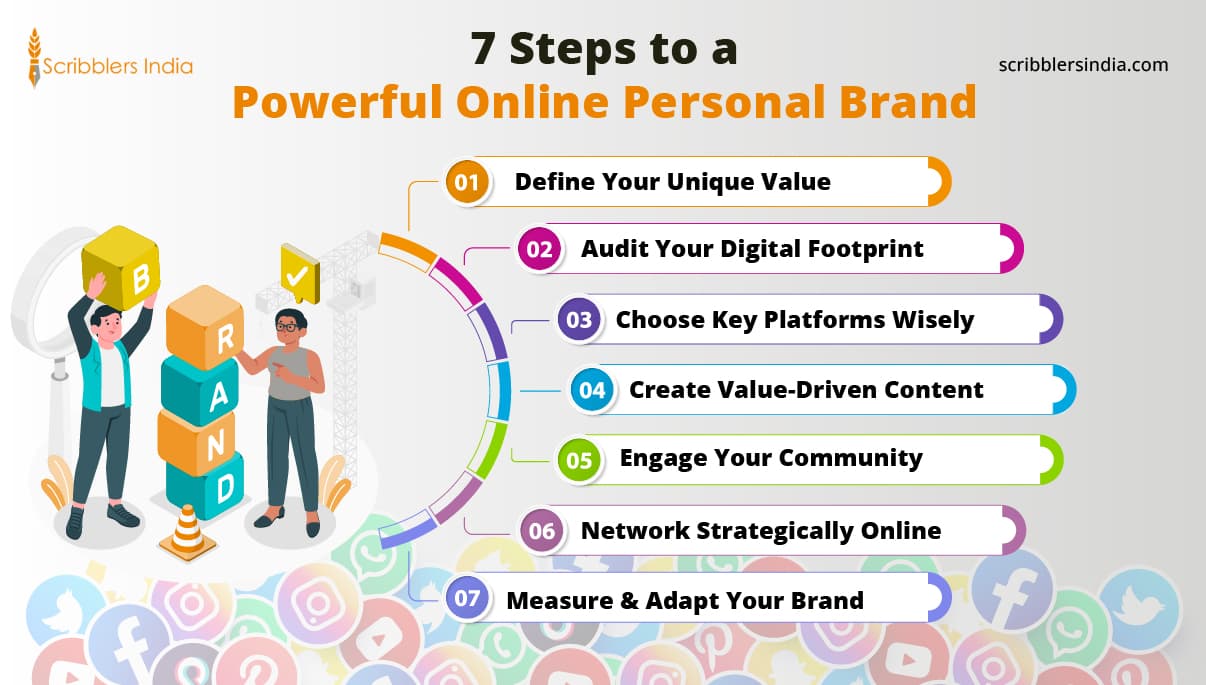
How To Build a Personal Brand Online in 2026?
Building a strong professional reputation online is largely a matter of sequencing. Publishing more content cannot solve unclear positioning, while an impressive profile carries limited weight without credible proof. Expanding across several platforms also creates unnecessary work when the people you need to influence concentrate elsewhere. The practical approach to how to build personal brand online starts with understanding what people can already discover about you. You can then define the reputation you want, strengthen the evidence supporting it, choose appropriate channels, publish useful ideas, build relevant relationships, and improve discoverability across search. This guide on how to build personal brand online focuses on that complete operating system rather than individual platform tactics. If you are still evaluating the broader business or career case, start with our analysis on why personal branding is important. The process below begins once you have decided to invest in your reputation. Key Takeaways Review what search results and profiles currently communicate about your expertise. Choose the audience, expertise territory, and professional association you want remembered. Create one reliable home base that preserves control over professional proof. Prioritize platforms where your audience already evaluates expertise and professional credibility. Place cases, recommendations, research, and qualifications close to important claims. Turn real questions, decisions, research, and lessons into useful content. Keep names, biographies, author pages, and expertise descriptions consistently aligned. Track changes in relevant discovery, relationships, opportunities, and reputation over time. How Should You Audit Your Digital Footprint Before You Build Personal Brand Online? Before you build personal brand online, establish what people can already find and what those results communicate. Any practical approach to how to build personal brand online should begin with search results, major profiles, employer pages, author pages, published work, and prominent third-party mentions. Compare that public footprint with the professional association you want to strengthen. Look for outdated information, conflicting descriptions, weak proof, useful existing assets, and prominent pages that no longer reflect your present role, expertise, audience, or professional direction. What Should a Personal Brand Audit Review? Start by searching for your full professional name and inspect the first several result pages. Then review the assets most likely to influence someone evaluating you for a role, project, partnership, speaking opportunity, media request, investment conversation, or professional recommendation. Audit Area What to Review Common Problem Identity Current name, title, company, and role Prominent profiles conflict Positioning Expertise emphasized across visible assets Each platform tells a different story Biography Current experience and specialization Old career stages remain prominent Proof Work, results, research, recommendations Claims have little visible support Content Subjects repeatedly associated with your name Publishing covers unrelated themes Third-Party Pages Events, publications, podcasts, directories Important information is outdated Prioritize high-visibility inaccuracies rather than trying to clean every historical mention. A dated conference biography that still ranks prominently deserves more attention than an obscure directory listing. The audit should finish with three practical decisions: which assets to keep, which to update, and which to de-emphasize. Useful content, interviews, recommendations, case evidence, speaking videos, or research may already support the reputation you want. Identifying these assets before creating new material is an important part of how to build a personal brand online efficiently as it prevents unnecessary duplication and provides stronger evidence for later profile updates. What Type of Reputation You Need Before Building Personal Brand Online? A useful personal branding strategy starts with the association you want relevant people to make with your name. Understanding how to build personal brand online becomes easier once the audience, expertise territory, contribution, and supporting evidence are clear enough to guide later execution. Positioning should be narrow enough to guide recognition without reducing your career to one skill. Choose the association that should lead now, while your biography, experience, portfolio, and broader content provide additional context after people understand the main professional territory. Who Should Your Personal Brand Influence? Define the people whose decisions your reputation needs to influence. A consultant may prioritize buyers facing one recurring problem, while a founder may need credibility with customers and industry peers. An executive may communicate simultaneously with employees, customers, board members, investors, and professional communities. Audience definitions such as “professionals” or “business leaders” usually provide too little direction. A clearer audience helps determine what proof deserves prominence, which questions your content should answer, where you should publish, and which relationships should receive consistent attention over time. What Expertise Should People Associate With Your Name? Ask what someone should confidently approach you about after encountering your work several times. “Marketing” yields weak recall, while “category positioning for technical B2B companies” provides a more useful anchor for the reputation, guiding profile language, content topics, speaking opportunities, and professional introductions. Once the territory is clear, translate it into a concise positioning idea. Our guide to personal brand statements explains in detail how to write such a statement, while this hub uses it as the strategic source for the broader online reputation system. Where Should Your Online Personal Branding Home Base Live? A strong online personal branding system needs one dependable place where people can understand your position, inspect proof, and take a logical next step. In how to build personal brand online, that home base may be a personal website or strong professional profile, depending on the level of control required. The better decision is not website versus social media. Think in terms of owned and rented presence. Owned assets preserve long-term control, while established platforms provide discovery and network access. Most professionals benefit from combining both without building more infrastructure than they can maintain. A useful home base normally needs three things: a current professional biography, visible evidence of expertise, and a clear next step. LinkedIn can handle these for simpler requirements, while a website is more useful when you need deeper control over proofing, long-form work, or inquiries. Do You Need a Personal Website to Build Personal Brand Online? You do not need a website simply because personal-brand advice recommends one. A site becomes valuable
Building a strong professional reputation online is largely a matter of sequencing. Publishing more content cannot solve unclear positioning, while an impressive profile carries limited weight without credible proof. Expanding across several platforms also creates unnecessary work when the people you need to influence concentrate elsewhere. The practical approach to how to build personal brand online starts with understanding what people can already discover about you. You can then define the reputation you want, strengthen the evidence supporting it, choose appropriate channels, publish useful ideas, build relevant relationships, and improve discoverability across search. This guide on how to build personal brand online focuses on that complete operating system rather than individual platform tactics. If you are still evaluating the broader business or career case, start with our analysis on why personal branding is important. The process below begins once you have decided to invest in your reputation. Key Takeaways Review what search results and profiles currently communicate about your expertise. Choose the audience, expertise territory, and professional association you want remembered. Create one reliable home base that preserves control over professional proof. Prioritize platforms where your audience already evaluates expertise and professional credibility. Place cases, recommendations, research, and qualifications close to important claims. Turn real questions, decisions, research, and lessons into useful content. Keep names, biographies, author pages, and expertise descriptions consistently aligned. Track changes in relevant discovery, relationships, opportunities, and reputation over time. How Should You Audit Your Digital Footprint Before You Build Personal Brand Online? Before you build personal brand online, establish what people can already find and what those results communicate. Any practical approach to how to build personal brand online should begin with search results, major profiles, employer pages, author pages, published work, and prominent third-party mentions. Compare that public footprint with the professional association you want to strengthen. Look for outdated information, conflicting descriptions, weak proof, useful existing assets, and prominent pages that no longer reflect your present role, expertise, audience, or professional direction. What Should a Personal Brand Audit Review? Start by searching for your full professional name and inspect the first several result pages. Then review the assets most likely to influence someone evaluating you for a role, project, partnership, speaking opportunity, media request, investment conversation, or professional recommendation. Audit Area What to Review Common Problem Identity Current name, title, company, and role Prominent profiles conflict Positioning Expertise emphasized across visible assets Each platform tells a different story Biography Current experience and specialization Old career stages remain prominent Proof Work, results, research, recommendations Claims have little visible support Content Subjects repeatedly associated with your name Publishing covers unrelated themes Third-Party Pages Events, publications, podcasts, directories Important information is outdated Prioritize high-visibility inaccuracies rather than trying to clean every historical mention. A dated conference biography that still ranks prominently deserves more attention than an obscure directory listing. The audit should finish with three practical decisions: which assets to keep, which to update, and which to de-emphasize. Useful content, interviews, recommendations, case evidence, speaking videos, or research may already support the reputation you want. Identifying these assets before creating new material is an important part of how to build a personal brand online efficiently as it prevents unnecessary duplication and provides stronger evidence for later profile updates. What Type of Reputation You Need Before Building Personal Brand Online? A useful personal branding strategy starts with the association you want relevant people to make with your name. Understanding how to build personal brand online becomes easier once the audience, expertise territory, contribution, and supporting evidence are clear enough to guide later execution. Positioning should be narrow enough to guide recognition without reducing your career to one skill. Choose the association that should lead now, while your biography, experience, portfolio, and broader content provide additional context after people understand the main professional territory. Who Should Your Personal Brand Influence? Define the people whose decisions your reputation needs to influence. A consultant may prioritize buyers facing one recurring problem, while a founder may need credibility with customers and industry peers. An executive may communicate simultaneously with employees, customers, board members, investors, and professional communities. Audience definitions such as “professionals” or “business leaders” usually provide too little direction. A clearer audience helps determine what proof deserves prominence, which questions your content should answer, where you should publish, and which relationships should receive consistent attention over time. What Expertise Should People Associate With Your Name? Ask what someone should confidently approach you about after encountering your work several times. “Marketing” yields weak recall, while “category positioning for technical B2B companies” provides a more useful anchor for the reputation, guiding profile language, content topics, speaking opportunities, and professional introductions. Once the territory is clear, translate it into a concise positioning idea. Our guide to personal brand statements explains in detail how to write such a statement, while this hub uses it as the strategic source for the broader online reputation system. Where Should Your Online Personal Branding Home Base Live? A strong online personal branding system needs one dependable place where people can understand your position, inspect proof, and take a logical next step. In how to build personal brand online, that home base may be a personal website or strong professional profile, depending on the level of control required. The better decision is not website versus social media. Think in terms of owned and rented presence. Owned assets preserve long-term control, while established platforms provide discovery and network access. Most professionals benefit from combining both without building more infrastructure than they can maintain. A useful home base normally needs three things: a current professional biography, visible evidence of expertise, and a clear next step. LinkedIn can handle these for simpler requirements, while a website is more useful when you need deeper control over proofing, long-form work, or inquiries. Do You Need a Personal Website to Build Personal Brand Online? You do not need a website simply because personal-brand advice recommends one. A site becomes valuable

Why Is Personal Branding Important? A Decision Guide for Professionals and Founders
A promotion, funding round, consulting launch, career move, or public leadership role can change the extent to which your professional reputation influences professional decisions. That is when the question why is personal branding important becomes practical. People may search your name, review your work, read your ideas, and compare your public profile with the expertise or role you represent. Personal branding helps make that evaluation more consistent. It gives people clearer context about what you know, the experience that supports your expertise, and the professional value you can bring before they have worked with you directly. The resulting benefits of personal branding can range from greater recognition of expertise and discoverability to more relevant professional conversations and opportunities. This blog focuses on the decision that comes before those outcomes. It explains when personal branding deserves greater investment, how it creates value, and which situations may require other priorities first. Key Takeaways: Personal branding becomes valuable when professional decisions increasingly depend on public reputation. Clear positioning helps audiences connect your name with relevant expertise and evidence. Career transitions increase the value of searchable professional reputation during evaluation. Founders benefit when market education depends on their specialist knowledge and perspective. Executives need stronger governance as visibility begins representing the wider organization publicly. Consultants gain more from personal branding when expertise influences selection and trust. Personal branding should follow stronger fundamentals when the underlying offer remains unclear. A simple diagnostic can show whether reputation deserves more investment right now. Why Is Personal Branding Important? Personal branding helps other people understand what you are known for, where your expertise comes from, and why your perspective deserves attention. It creates a more coherent professional signal across search results, profiles, published work, conversations, recommendations, and public appearances. The simplest answer to why is personal branding important is that professional reputation already exists, even when you leave it unmanaged. Personal branding gives you more influence over which parts of your experience, expertise, and point of view become easiest for others to discover and remember. Harvard Business School Online describes personal branding as defining what you want to communicate and expressing it effectively. It also treats audience perception as central to understanding a personal brand. The value comes from four mechanisms: Reputation clarity: People can connect your name with a specific area of expertise. Discoverability: Relevant information about you is easier to find when someone searches or evaluates you. Evidence: Your work, thinking, experience, and third-party proof make professional claims easier to assess. Context: Your network and published ideas help audiences understand how your expertise applies to real problems. These mechanisms can support many outcomes, while actual results still depend on expertise, audience fit, timing, and follow-through. That distinction is central to understanding why is personal branding important without turning personal branding into a promise of professional success Branding demands commitment; commitment to continual re-invention; striking chords with people to stir their emotions; and commitment to imagination. It is easy to be cynical about such things, much harder to be successful. ~ Sir Richard Branson When Does Personal Branding Become Strategically Crucial? The need for personal branding changes with the role you occupy and the decisions other people make about you. A private specialist with stable internal responsibilities may need little public visibility. A founder educating a new market may depend heavily on it. Our personal branding case study for a study-abroad consultant shows how a more deliberate visibility strategy was applied in practice. The question why is personal branding important becomes much easier to answer when you examine the professional situation and the decisions shaped by reputation. During a Career Transition A career move creates an information gap. Recruiters, hiring managers, peers, or future collaborators need to understand where your experience fits next. An outdated profile can leave your previous role defining you long after your expertise has changed. For someone changing industries, moving into leadership, returning after a break, or pursuing board roles, why is personal branding important has a practical answer. A clearer public record helps connect earlier experience with the direction you now want to pursue. A career transition rarely requires daily publishing. Relevant case evidence, updated professional profiles, thoughtful commentary, and visible work can be enough to make the transition easier to interpret. When a Founder Has to Educate the Market Some businesses enter categories buyers already understand. Others need the founder to explain an emerging problem, challenge an established assumption, or translate technical change into business language. In that situation, the answer to the question ‘why is personal branding important’ is closely tied to category education. The founder can become a recognizable source of explanation through operating experience, customer questions, product decisions, and informed market observations. This visibility can help audiences understand the category while the company builds recognition around its own capabilities and evidence. The balance becomes more important as the business grows. The founder can continue shaping market conversations, while trust gradually extends to the wider organization. Deciding how much visibility to give to each requires a clear understanding of personal branding vs. company branding at different stages of growth. When an Executive Represents More Than Personal Expertise A senior leader may communicate with employees, customers, investors, partners, regulators, industry peers, and media audiences. Their public presence therefore carries organizational context alongside individual expertise. For senior leaders, understanding why is personal branding important also involves managing that wider responsibility. Expertise needs enough visibility to establish a recognizable professional position, while company claims, sensitive subjects, role boundaries, and public commentary may require more deliberate review. These responsibilities become particularly important after a promotion, a CEO appointment, a board role, or a company transition. At this level, executive branding adds considerations of stakeholder alignment, governance, and reputation risk to the broader personal branding process. When Independent Expertise Drives Selection Consultants, advisors, coaches, fractional leaders, speakers, analysts, and other independent experts are often evaluated before a formal sales conversation begins. Buyers may review articles, presentations, testimonials, frameworks, prior work, or mutual connections before making contact. Here,
A promotion, funding round, consulting launch, career move, or public leadership role can change the extent to which your professional reputation influences professional decisions. That is when the question why is personal branding important becomes practical. People may search your name, review your work, read your ideas, and compare your public profile with the expertise or role you represent. Personal branding helps make that evaluation more consistent. It gives people clearer context about what you know, the experience that supports your expertise, and the professional value you can bring before they have worked with you directly. The resulting benefits of personal branding can range from greater recognition of expertise and discoverability to more relevant professional conversations and opportunities. This blog focuses on the decision that comes before those outcomes. It explains when personal branding deserves greater investment, how it creates value, and which situations may require other priorities first. Key Takeaways: Personal branding becomes valuable when professional decisions increasingly depend on public reputation. Clear positioning helps audiences connect your name with relevant expertise and evidence. Career transitions increase the value of searchable professional reputation during evaluation. Founders benefit when market education depends on their specialist knowledge and perspective. Executives need stronger governance as visibility begins representing the wider organization publicly. Consultants gain more from personal branding when expertise influences selection and trust. Personal branding should follow stronger fundamentals when the underlying offer remains unclear. A simple diagnostic can show whether reputation deserves more investment right now. Why Is Personal Branding Important? Personal branding helps other people understand what you are known for, where your expertise comes from, and why your perspective deserves attention. It creates a more coherent professional signal across search results, profiles, published work, conversations, recommendations, and public appearances. The simplest answer to why is personal branding important is that professional reputation already exists, even when you leave it unmanaged. Personal branding gives you more influence over which parts of your experience, expertise, and point of view become easiest for others to discover and remember. Harvard Business School Online describes personal branding as defining what you want to communicate and expressing it effectively. It also treats audience perception as central to understanding a personal brand. The value comes from four mechanisms: Reputation clarity: People can connect your name with a specific area of expertise. Discoverability: Relevant information about you is easier to find when someone searches or evaluates you. Evidence: Your work, thinking, experience, and third-party proof make professional claims easier to assess. Context: Your network and published ideas help audiences understand how your expertise applies to real problems. These mechanisms can support many outcomes, while actual results still depend on expertise, audience fit, timing, and follow-through. That distinction is central to understanding why is personal branding important without turning personal branding into a promise of professional success Branding demands commitment; commitment to continual re-invention; striking chords with people to stir their emotions; and commitment to imagination. It is easy to be cynical about such things, much harder to be successful. ~ Sir Richard Branson When Does Personal Branding Become Strategically Crucial? The need for personal branding changes with the role you occupy and the decisions other people make about you. A private specialist with stable internal responsibilities may need little public visibility. A founder educating a new market may depend heavily on it. Our personal branding case study for a study-abroad consultant shows how a more deliberate visibility strategy was applied in practice. The question why is personal branding important becomes much easier to answer when you examine the professional situation and the decisions shaped by reputation. During a Career Transition A career move creates an information gap. Recruiters, hiring managers, peers, or future collaborators need to understand where your experience fits next. An outdated profile can leave your previous role defining you long after your expertise has changed. For someone changing industries, moving into leadership, returning after a break, or pursuing board roles, why is personal branding important has a practical answer. A clearer public record helps connect earlier experience with the direction you now want to pursue. A career transition rarely requires daily publishing. Relevant case evidence, updated professional profiles, thoughtful commentary, and visible work can be enough to make the transition easier to interpret. When a Founder Has to Educate the Market Some businesses enter categories buyers already understand. Others need the founder to explain an emerging problem, challenge an established assumption, or translate technical change into business language. In that situation, the answer to the question ‘why is personal branding important’ is closely tied to category education. The founder can become a recognizable source of explanation through operating experience, customer questions, product decisions, and informed market observations. This visibility can help audiences understand the category while the company builds recognition around its own capabilities and evidence. The balance becomes more important as the business grows. The founder can continue shaping market conversations, while trust gradually extends to the wider organization. Deciding how much visibility to give to each requires a clear understanding of personal branding vs. company branding at different stages of growth. When an Executive Represents More Than Personal Expertise A senior leader may communicate with employees, customers, investors, partners, regulators, industry peers, and media audiences. Their public presence therefore carries organizational context alongside individual expertise. For senior leaders, understanding why is personal branding important also involves managing that wider responsibility. Expertise needs enough visibility to establish a recognizable professional position, while company claims, sensitive subjects, role boundaries, and public commentary may require more deliberate review. These responsibilities become particularly important after a promotion, a CEO appointment, a board role, or a company transition. At this level, executive branding adds considerations of stakeholder alignment, governance, and reputation risk to the broader personal branding process. When Independent Expertise Drives Selection Consultants, advisors, coaches, fractional leaders, speakers, analysts, and other independent experts are often evaluated before a formal sales conversation begins. Buyers may review articles, presentations, testimonials, frameworks, prior work, or mutual connections before making contact. Here,
What Are the 10 Key Benefits of Personal Branding for Your Career and Reputation?
The benefits of personal branding extend beyond visibility. A deliberate professional reputation can make expertise easier to recognize, strengthen credibility, improve professional discovery, foster better conversations, support career mobility, and open opportunities aligned with the work you want to be known for. Those outcomes rarely appear at the same time. Recognition may improve before commercial results. Better conversations may develop before a career move. For founders and executives, professional visibility can also influence how customers, candidates, partners, and other stakeholders understand the organization. That is why personal branding should be evaluated through mechanisms and signals rather than follower growth alone. Each benefit develops under specific conditions and produces evidence that can be tracked over time. For the broader strategic case behind investing in reputation, read our analysis on why personal branding is important. Key Takeaways Personal branding makes relevant expertise easier for professional audiences to recognize. Stronger public evidence helps others assess your knowledge and professional credibility. Better discoverability can support career conversations, introductions, speaking, and collaboration. Relevant network growth creates greater value than increasing connection counts alone. Visible expertise can help prospects understand fit before starting commercial conversations. Founders can use professional authority to support category and company credibility. Early gains usually appear through clarity, recognition, searchability, and conversation quality. Career and commercial outcomes depend on fit, timing, proof, and follow-through. What Are the Main Benefits of Personal Branding? The benefits of personal branding become easier to evaluate when each outcome is connected to how it develops and what evidence shows that it is working. The table below separates ten common outcomes from the vanity metrics that can otherwise make reputation-building difficult to assess. S. No. Outcome How the Benefit Develops Best Fit Observable Signal 1 Clearer expertise association Repeated themes connect your name with a defined professional territory Professionals, consultants, executives People describe your expertise using similar language 2 Stronger credibility signals Public work gives others more evidence to assess your knowledge All professionals References to published work, expert requests, profile reviews 3 Better professional discoverability Current profiles and published work create relevant entry points Job seekers, consultants, founders Search appearances, profile visits, inbound discovery 4 Easier career evaluation Decision-makers gain richer context around your experience Employees, executives Better-fit recruiter conversations, role discussions, speaking requests 5 More relevant professional opportunities Clear positioning helps others understand where your expertise fits Employees, executives, consultants Better-quality invitations, introductions, specialist opportunities 6 Stronger conversation starting points Published ideas create context before meetings or introductions Consultants, founders, executives People reference specific ideas during conversations 7 Higher-quality relationship growth Consistent expertise gives new and existing contacts reasons to engage All professionals Relevant introductions, peer discussions, reconnections 8 More informed inbound interest Visible expertise helps people assess fit before contacting you Consultants, advisors, founders Inquiries arrive with specific context or questions 9 Greater thought-leadership influence Distinctive ideas travel through content, events, media, and communities Experts, executives, founders Invitations, citations, media requests, industry discussion 10 Greater professional resilience Reputation and relationships remain portable across role changes Employees, consultants, executives Existing visibility supports transitions or new directions These benefits rarely develop independently. Clear positioning makes expertise easier to recognize. Recognition creates stronger reasons for relevant people to engage, while repeated evidence can deepen credibility and professional relationships. Over time, those signals may contribute to career, commercial, or leadership opportunities. That progression usually begins with reputation and authority, because people first need to understand what you are known for before that recognition can influence larger professional outcomes. How Does Personal Branding Strengthen Professional Reputation and Authority? Personal branding strengthens professional reputation by making expertise easier to understand, verify, and remember. A deliberate presence gives audiences repeated evidence of what you know, the problems you work on, and the experience that supports your perspective. Over time, those signals can create stronger professional associations around your name. Harvard Business School Online describes personal branding as the intentional practice of defining and expressing professional value. It also emphasizes audience perception as part of that process. 1. Your Expertise Becomes Easier to Recognize An experienced professional can still be difficult to place when their public profile covers too many unrelated roles, projects, interests, and achievements. Personal branding creates a clearer association between the person and a defined area of expertise. A cybersecurity leader may become known for identity governance. A CFO might develop a recognizable position around capital discipline. A consultant could become associated with post-merger operating models. The benefit becomes apparent when others begin describing your expertise in similar terms. This recognition creates the foundation for credibility. Once audiences understand what you know, they need evidence that supports the association. 2. Your Credibility Has More Public Evidence Professional credibility becomes easier to assess when expertise leaves a visible record. Articles, research, frameworks, conference sessions, case examples, interviews, recommendations, and documented work provide others with material they can evaluate. A profile no longer must carry the entire reputation claim on its own. One substantive article may later support a speaking invitation. A useful framework can become a reference point during a client introduction. A conference session can provide a recruiter or journalist with additional evidence of the depth of a person’s expertise. The underlying knowledge still creates the credibility. Personal branding makes more of that knowledge visible and verifiable. Once that evidence is publicly available, the next advantage is easier discovery. 3. Your Professional Reputation Becomes Easier to Find People routinely search professional names before meetings, interviews, partnerships, speaking invitations, consulting engagements, or senior appointments. A coherent digital presence gives them useful entry points through LinkedIn profiles, company biographies, author pages, event profiles, published articles, media coverage, research, podcasts, and other credible sources. Professional discovery is also expanding beyond conventional search results. Answer engines and generative search systems can surface information from multiple sources when people research an executive, specialist, founder, or company. Consistent role descriptions, expertise signals, biographies, and published work therefore become increasingly useful. The execution belongs within a broader online personal branding strategy. Brands and leaders who also
The benefits of personal branding extend beyond visibility. A deliberate professional reputation can make expertise easier to recognize, strengthen credibility, improve professional discovery, foster better conversations, support career mobility, and open opportunities aligned with the work you want to be known for. Those outcomes rarely appear at the same time. Recognition may improve before commercial results. Better conversations may develop before a career move. For founders and executives, professional visibility can also influence how customers, candidates, partners, and other stakeholders understand the organization. That is why personal branding should be evaluated through mechanisms and signals rather than follower growth alone. Each benefit develops under specific conditions and produces evidence that can be tracked over time. For the broader strategic case behind investing in reputation, read our analysis on why personal branding is important. Key Takeaways Personal branding makes relevant expertise easier for professional audiences to recognize. Stronger public evidence helps others assess your knowledge and professional credibility. Better discoverability can support career conversations, introductions, speaking, and collaboration. Relevant network growth creates greater value than increasing connection counts alone. Visible expertise can help prospects understand fit before starting commercial conversations. Founders can use professional authority to support category and company credibility. Early gains usually appear through clarity, recognition, searchability, and conversation quality. Career and commercial outcomes depend on fit, timing, proof, and follow-through. What Are the Main Benefits of Personal Branding? The benefits of personal branding become easier to evaluate when each outcome is connected to how it develops and what evidence shows that it is working. The table below separates ten common outcomes from the vanity metrics that can otherwise make reputation-building difficult to assess. S. No. Outcome How the Benefit Develops Best Fit Observable Signal 1 Clearer expertise association Repeated themes connect your name with a defined professional territory Professionals, consultants, executives People describe your expertise using similar language 2 Stronger credibility signals Public work gives others more evidence to assess your knowledge All professionals References to published work, expert requests, profile reviews 3 Better professional discoverability Current profiles and published work create relevant entry points Job seekers, consultants, founders Search appearances, profile visits, inbound discovery 4 Easier career evaluation Decision-makers gain richer context around your experience Employees, executives Better-fit recruiter conversations, role discussions, speaking requests 5 More relevant professional opportunities Clear positioning helps others understand where your expertise fits Employees, executives, consultants Better-quality invitations, introductions, specialist opportunities 6 Stronger conversation starting points Published ideas create context before meetings or introductions Consultants, founders, executives People reference specific ideas during conversations 7 Higher-quality relationship growth Consistent expertise gives new and existing contacts reasons to engage All professionals Relevant introductions, peer discussions, reconnections 8 More informed inbound interest Visible expertise helps people assess fit before contacting you Consultants, advisors, founders Inquiries arrive with specific context or questions 9 Greater thought-leadership influence Distinctive ideas travel through content, events, media, and communities Experts, executives, founders Invitations, citations, media requests, industry discussion 10 Greater professional resilience Reputation and relationships remain portable across role changes Employees, consultants, executives Existing visibility supports transitions or new directions These benefits rarely develop independently. Clear positioning makes expertise easier to recognize. Recognition creates stronger reasons for relevant people to engage, while repeated evidence can deepen credibility and professional relationships. Over time, those signals may contribute to career, commercial, or leadership opportunities. That progression usually begins with reputation and authority, because people first need to understand what you are known for before that recognition can influence larger professional outcomes. How Does Personal Branding Strengthen Professional Reputation and Authority? Personal branding strengthens professional reputation by making expertise easier to understand, verify, and remember. A deliberate presence gives audiences repeated evidence of what you know, the problems you work on, and the experience that supports your perspective. Over time, those signals can create stronger professional associations around your name. Harvard Business School Online describes personal branding as the intentional practice of defining and expressing professional value. It also emphasizes audience perception as part of that process. 1. Your Expertise Becomes Easier to Recognize An experienced professional can still be difficult to place when their public profile covers too many unrelated roles, projects, interests, and achievements. Personal branding creates a clearer association between the person and a defined area of expertise. A cybersecurity leader may become known for identity governance. A CFO might develop a recognizable position around capital discipline. A consultant could become associated with post-merger operating models. The benefit becomes apparent when others begin describing your expertise in similar terms. This recognition creates the foundation for credibility. Once audiences understand what you know, they need evidence that supports the association. 2. Your Credibility Has More Public Evidence Professional credibility becomes easier to assess when expertise leaves a visible record. Articles, research, frameworks, conference sessions, case examples, interviews, recommendations, and documented work provide others with material they can evaluate. A profile no longer must carry the entire reputation claim on its own. One substantive article may later support a speaking invitation. A useful framework can become a reference point during a client introduction. A conference session can provide a recruiter or journalist with additional evidence of the depth of a person’s expertise. The underlying knowledge still creates the credibility. Personal branding makes more of that knowledge visible and verifiable. Once that evidence is publicly available, the next advantage is easier discovery. 3. Your Professional Reputation Becomes Easier to Find People routinely search professional names before meetings, interviews, partnerships, speaking invitations, consulting engagements, or senior appointments. A coherent digital presence gives them useful entry points through LinkedIn profiles, company biographies, author pages, event profiles, published articles, media coverage, research, podcasts, and other credible sources. Professional discovery is also expanding beyond conventional search results. Answer engines and generative search systems can surface information from multiple sources when people research an executive, specialist, founder, or company. Consistent role descriptions, expertise signals, biographies, and published work therefore become increasingly useful. The execution belongs within a broader online personal branding strategy. Brands and leaders who also