

Senior leaders already influence how customers, employees, investors, and journalists interpret their organizations. PR for executives gives that influence a deliberate direction through credible media opportunities. Interviews, expert commentary, contributed articles, and relevant profiles can connect leadership experience with conversations that matter outside company-controlled channels.
Strong executive PR starts before the first journalist pitch reaches an inbox. Leaders need clear expertise, defensible viewpoints, useful evidence, and defined communication boundaries. Media coverage then becomes external proof that supports executive branding, thought leadership, company reputation, and broader discovery across search and AI-led research.
Key Takeaways:
|
What Does PR for Executives Offer?
PR for executives builds public authority around senior leaders through relevant editorial opportunities and consistent professional positioning. It can include interviews, expert commentary, bylined articles, profiles, podcasts, or leadership coverage tied to company developments. Each opportunity should strengthen the executive’s expertise in ways they can genuinely defend.
A useful Digital PR program usually connects the following areas:
- Executive Positioning: Media teams need to understand what the leader represents before outreach begins. A focused authority territory identifies relevant subjects and credible proof. It also prevents seniority from becoming the only reason offered when introducing an executive to journalists.
- Media Narrative: Career history provides background, while a media narrative explains current relevance. It connects leadership experience with market questions, enabling the executive to contribute practical evidence. Strong narratives also identify perspectives worth developing beyond routine company announcements or promotional commentary.
- Opportunity Selection: Different formats reveal different aspects of leadership authority. Interviews can convey judgment, while expert quotes support timely news coverage. Contributed articles allow deeper reasoning. Profiles work better when the leader’s experience connects with a wider story readers already care about.
- Media Preparation: Executives need accurate facts and clear communication boundaries before interviews begin. Supporting research, approved examples, and subject areas should remain accessible. Preparation helps leaders answer naturally while reducing preventable mistakes during fast-moving editorial conversations with reporters.
- Ongoing Measurement: Strong programs assess which expertise journalists repeatedly associate with the executive. They also track relevant coverage, journalist re-engagement, branded discovery, and inbound opportunities. These signals reveal whether media exposure is building a recognizable leadership position rather than temporary attention.
Our Digital PR services connect positioning and story development with targeted journalist outreach and broader authority measurement.

Why Is PR for Executives More Important in 2026?
PR for executives is crucial because senior leaders face stronger expectations around trust, expertise, and public communication. Buyers also research leadership across more channels before making important decisions. Media visibility gives executives a credible way to explain complex issues outside promotional company communication.
The 2026 Edelman Trust Barometer shows a meaningful leadership challenge. Seventy-three percent of respondents say CEOs should help bridge divides, while only 44% believe they perform that role well. The 29-point gap shows that visibility alone cannot create credibility.
Media access still creates meaningful opportunities for leaders with useful expertise. Muck Rack found that 86% of journalists said at least some of their work began with a PR pitch. Strong executive sources can therefore enter important conversations when outreach reflects genuine editorial relevance.
Newsrooms are also adopting AI rapidly. Muck Rack reports 82% journalist AI adoption in 2026. Generic commentary becomes easier to produce in that environment. First-hand operating experience and defensible viewpoints give executives material that automated summaries cannot recreate from widely available information.
These changes make purposeful executive visibility more valuable. Your leader needs a credible point of view before wider exposure begins. Media strategy should then place that expertise where relevant stakeholders already seek independent information.
How Is PR for Executives Different From Corporate PR?
PR for executives builds recognition around a leader’s expertise and professional perspective. Corporate PR focuses primarily on organizational reputation, business developments, products, and company-level messages. Both programs can support each other, although they require different narratives, proof, editorial opportunities, and long-term measurement.
| Area | Executive-focused PR | Corporate PR |
| Primary subject | CEO, CXO, or senior leader | Company or business unit |
| Main story | Expertise and leadership perspective | Organizational developments |
| Common formats | Interviews, quotes, bylines, profiles | Announcements, features, corporate statements |
| Long-term asset | Individual leadership authority | Company reputation |
| Content connection | Personal brand and thought leadership | Corporate communications |
| Portability | Can follow the executive across roles | Remains tied to the organization |
The strongest programs keep both narratives aligned without making them interchangeable. An executive can discuss wider industry issues while the company communicates its own products, performance, or organizational developments.
Your existing executive branding framework can define the leader’s professional position before media outreach expands that authority externally.
What Makes an Executive Worth Quoting or Interviewing?
Journalists consider executives useful when they offer relevant expertise that improves a story. A senior title may establish context, although editorial value comes from experience, evidence, clear explanations, or informed interpretation. Strong sources help reporters understand an issue rather than repeatedly redirecting the conversation toward company promotion.
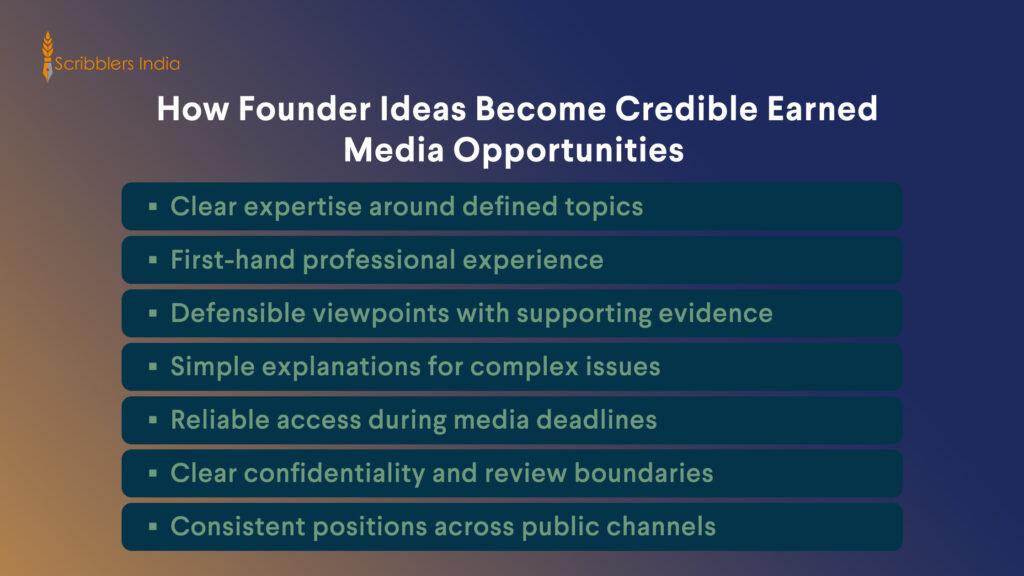
Five qualities improve media readiness:
- First-Hand Experience: Executives often see patterns across customers, operations, technology, or markets before those changes appear in formal research. Useful commentary explains what the leader has observed and carefully distinguishes experience-based interpretation from claims that require broader statistical evidence.
- A Defensible Viewpoint: Journalists rarely need another executive repeating widely accepted industry language. Strong sources interpret developments through their experience and explain why their views differ. A useful viewpoint should remain specific enough for discussion while supporting reasonable challenge during interviews.
- Reliable Evidence: Examples and credible data strengthen executive commentary. Leaders should know which facts come from public sources and which originate internally. Confidential information requires clear approval before use, while important external claims should remain traceable to dependable evidence.
- Clear Communication: Executive expertise becomes more useful when readers can understand it. Leaders should explain important concepts without unnecessary jargon while preserving technical accuracy. Concrete examples can help journalists translate complex subjects into stories suitable for audiences with different levels of specialist knowledge.
- Responsive Availability: News opportunities often develop faster than executive calendars allow. Clear internal processes help journalists reach appropriate experts within realistic deadlines. Communication teams should define interview access and backup spokespeople before reactive media opportunities become urgent.
Which Executive Media Coverage Formats Build the Most Authority?
Executive media coverage works best when the format matches the leader’s expertise and communication strengths. Detailed interviews reveal judgment, while brief commentary demonstrates timeliness and relevance. Bylined articles provide greater depth, and specialist publications can deliver stronger stakeholder relevance than broad outlets with larger audiences.
| Media format | Authority value | Best suited for |
| Executive interview | Shows reasoning and leadership judgment | Complex business issues |
| Expert quotation | Establishes timely subject expertise | Breaking or developing stories |
| Bylined article | Develops a complete viewpoint | Original frameworks and arguments |
| Leadership profile | Explains experience and professional journey | Wider recognition |
| Research commentary | Connects expertise with evidence | Data-led industry discussions |
| Podcast appearance | Shows personality and deeper reasoning | Conversational expert topics |
| Trade media contribution | Builds specialist credibility | Industry buyers and peers |
| Company-linked feature | Connects leader with business context | Relevant organizational developments |
A strong executive PR program usually combines several formats over time. Repetition around connected themes helps audiences recognize expertise while allowing each publication opportunity to provide different supporting evidence.
How Should Executive Media Strategy Connect With Thought Leadership?
An executive media strategy should use thought leadership as intellectual material to secure stronger media opportunities. Original viewpoints, frameworks, research, and operating experience give journalists something meaningful to explore. Media exposure then distributes those ideas beyond channels the executive or company already controls.
Positioning Comes Before Publishing
A leader needs defined authority territory before generating large volumes of content. Clear positioning helps determine which market questions deserve attention and which media opportunities should be declined. Our personal branding services establish that professional direction before wider content distribution begins.
Owned Content Develops the Argument
LinkedIn posts can test ideas, while articles provide greater reasoning and supporting evidence. Longer assets can document frameworks or original research. These materials provide journalists with useful background and demonstrate that the leader’s interest in a subject extends beyond a single news cycle.
Media Adds Independent Context
External coverage places the executive’s thinking inside an editorial environment the leader does not control. Interviews and bylines can expose ideas to audiences outside existing followers. They also create public references that stakeholders can review to independently assess professional expertise.
Distribution Extends the Value
Our thought leadership content writing services can turn executive experience into substantial ideas before media outreach begins. Published coverage can later support additional articles, presentations, or social discussions without reducing every post to an announcement about its appearance in the press.
Edelman and LinkedIn found 95% of hidden B2B buyers become more receptive to sales outreach after strong thought leadership. Media distribution can extend credible executive thinking toward stakeholders sales teams may rarely reach directly.

How Can CEO PR Support Personal Branding Without Creating a Persona?
CEO PR should amplify genuine expertise rather than manufacture a public identity that differs from the leader’s real experience. Personal branding provides the foundation for positioning, while media relations extends credible ideas externally. The executive remains recognizable because public communication begins with existing judgment, language, and professional evidence.
A reliable approach follows several principles:
- The executive should discuss subjects they understand deeply through real professional experience.
- Public viewpoints should remain consistent with evidence the leader can confidently defend.
- Media training should improve clarity without scripting every answer into corporate language.
- Personal stories should support professional context rather than become forced vulnerability exercises.
- Company messaging and personal perspective should remain aligned without becoming identical statements.
- Content support should preserve the executive’s reasoning while improving structure and readability.
Professional writing support can help when leaders have limited time for publishing. Our ghostwriting services begin with interviews and existing expertise, allowing editorial development without inventing opinions the executive cannot credibly own.
Strong CEO media coverage should therefore make the person easier to understand professionally. It should never require a fictionalized online version of the leader.
How Should PR for Executives Prepare Leaders for Media Interviews?
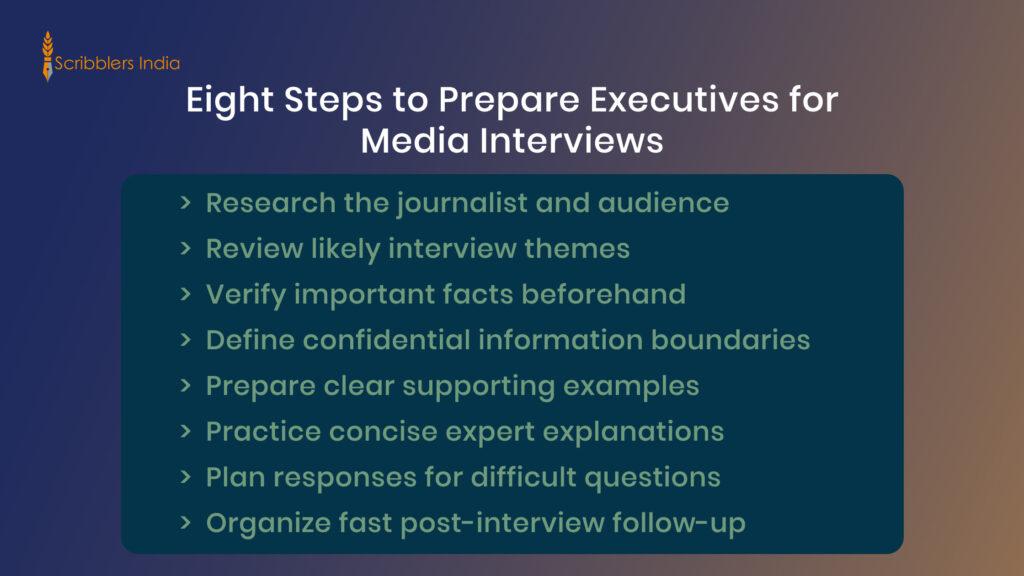
PR for executives should prepare leaders for interviews by improving accuracy, relevance, and confidence in communication. Preparation should identify likely questions and supporting evidence while preserving natural responses. The goal is to help executives contribute useful expertise without turning every answer into a rehearsed statement or company advertisement.
- Research the Journalist: Review recent coverage before the interview begins. This reveals the reporter’s audience and typical depth. It also helps the executive understand whether the conversation requires technical detail, market interpretation, leadership experience, or wider business context.
- Prepare Evidence: Important figures and dates should remain easy to verify during interviews. Leaders should know which information can be shared publicly. Claims involving regulations, company performance, research findings, or market size deserve especially careful sourcing before publication.
- Define Boundaries: Confidential customer information and future company announcements require advance decisions. Legal or regulatory restrictions may also apply. Establishing these boundaries before interviews prevents executives from improvising disclosure rules after sensitive topics arise during live discussions.
- Practice Explanations: Executives should prepare clear examples for difficult concepts while avoiding oversimplification. Media training works best when it improves explanation rather than memorization. Strong leaders can answer follow-up questions while keeping the reasoning understandable for readers outside their specialist field.
- Plan Follow-Up: Journalists may request additional sources or evidence after an interview. Communication teams should know who can respond and how quickly. Reliable follow-up makes an executive easier to work with and can strengthen the relationship for later stories.
How Should PR for Executives Handle Sensitive or High-Risk Topics?
PR for executives should establish communication boundaries before leaders discuss sensitive issues publicly. Risk increases when comments involve regulation, litigation, customers, employees, financial performance, or political topics. Clear governance allows executives to contribute meaningful expertise while protecting accuracy, confidentiality, and organizational responsibilities.
Start by defining subjects requiring legal, compliance, or communications review. This process should identify restricted information and approval responsibility. Seniority should never replace appropriate review when a public statement can create contractual, regulatory, or reputational consequences.
Next, separate professional expertise from unsupported speculation. Executives can explain observable industry consequences without predicting outcomes outside their knowledge. Clear qualification often increases credibility because the leader shows where available evidence ends and personal interpretation begins.
Teams should also prepare for disagreement. The 2026 Edelman Trust Barometer found that 74% consider constructive engagement with company critics an effective trust-building action for CEOs. Leaders need room to respond thoughtfully rather than treating every difficult question as hostile.
Finally, keep records of important public positions. Views can change when evidence changes, although the reasoning should remain explainable. This practice helps communication teams maintain consistency across interviews while allowing leaders to update previous conclusions responsibly.
Can Executive Media Coverage Support Search and AI Visibility?
Credible executive media coverage can create searchable third-party evidence around a leader’s expertise and company role. Search engines and AI-led systems may retrieve these public sources when answering relevant questions. Media coverage expands the information environment, although no publication can guarantee rankings, citations, or recommendations.
Several discovery benefits can emerge:
- External articles can connect an executive’s name with consistent professional subject areas.
- Interviews can provide independent descriptions of the leader’s experience and role within the company.
- Bylined articles can create searchable associations between expertise and specific business topics.
- Media profiles can provide additional context beyond short biographies on owned company pages.
- Repeated coverage can help teams identify inconsistencies between intended and public positioning.
- Current articles provide fresh evidence when leadership roles or areas of expertise change substantially.
Our AEO services improve answer-ready owned content, while our GEO services examine wider brand and source visibility across generative discovery.
Teams can also use the AI Search Discovery Benchmark 2026 to understand prompt coverage, citations, source patterns, and representation across major AI platforms. Media coverage should therefore strengthen a credible public information footprint. It should never be sold as a shortcut to guaranteed AI citations.
How Should Executive Media Strategy Change Across Different Markets?
An executive media strategy should adapt story framing to the audience and publication market without changing the leader’s underlying expertise. US business media may require different evidence or context from Indian, UK, or Asian publications. Effective international outreach starts with local relevance rather than by translating a single global pitch.
| Consideration | What should change by market? |
| Editorial relevance | Connect the story with local business concerns |
| Supporting evidence | Use credible market-specific data where available |
| Publication mix | Balance major media with specialist industry outlets |
| Executive examples | Select cases meaningful to the local audience |
| Regulatory context | Verify local laws before making public interpretations |
| Timing | Consider news cycles and publication lead times |
| Core positioning | Keep the executive’s authority territory consistent |
International CEO PR becomes stronger when the executive has real relevance to each market. Existing media relationships can support access, while journalists still need an editorial reason to cover the leader.
How Can Executives Reuse Media Coverage Without Overpromoting It?
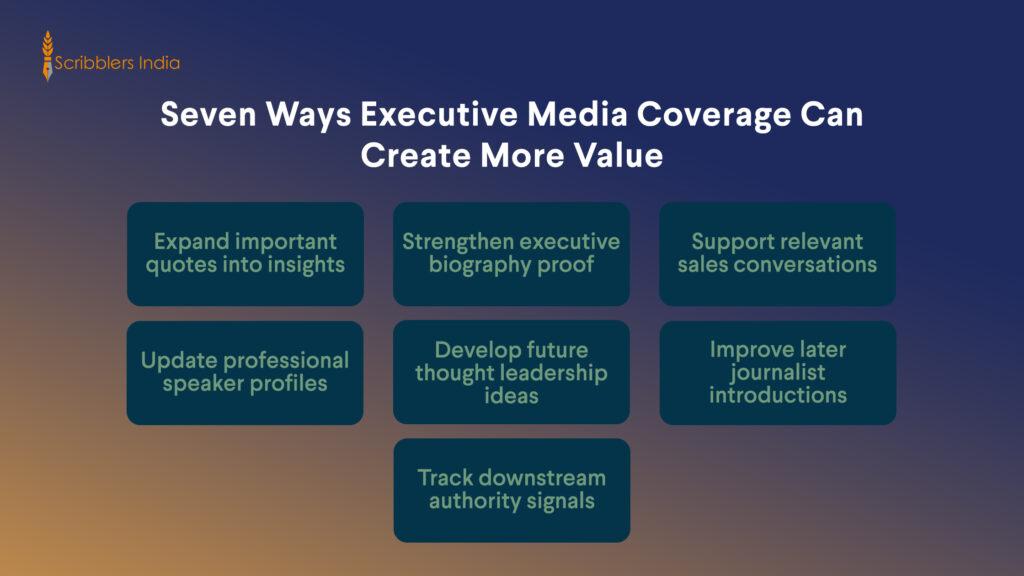
Executives should reuse media coverage by extending the underlying insight rather than repeatedly promoting the publication appearance. One interview can support several authority assets, with each reuse adding context. This approach keeps the audience focused on the executive’s thinking instead of turning external validation into constant self-promotion.
- Expand one quoted idea into a LinkedIn post explaining the reasoning in greater depth.
- Add relevant coverage to executive biographies where stakeholders routinely verify professional experience.
- Reference useful interviews within sales materials when the article supports the discussion directly.
- Develop future thought leadership from questions that emerged during the conversation with the journalist.
- Update speaker profiles when credible media appearances strengthen expertise relevant to proposed sessions.
- Use strong coverage as background evidence when introducing the executive to another relevant journalist.
The original publication still controls its copyrighted content. Teams should link to coverage rather than reproducing complete articles without permission.
This approach helps media exposure continue working after publication while preserving the independent nature of the original coverage.
How Should You Measure PR for Executives?
PR for executives should measure whether relevant stakeholders increasingly recognize the leader for intended expertise. Placement counts provide one activity measure. A stronger evaluation combines publication relevance, message accuracy, repeat journalist interest, executive discovery, and business opportunities that emerge from sustained media visibility.
| Metric | What it reveals |
| Relevant coverage | Whether suitable publications value the executive’s expertise |
| Message accuracy | Whether coverage reflects the intended professional position |
| Journalist re-engagement | Whether reporters return to the executive |
| Expertise association | Which topics become connected with the leader |
| Branded search | Whether people actively research the executive afterward |
| Referral activity | Whether readers explore relevant owned resources |
| Speaking requests | Whether authority extends into external opportunities |
| Qualified inquiries | Whether relevant stakeholders initiate conversations |
| AI visibility | How selected platforms describe or cite the executive |
Measurement works best over several reporting periods because authority develops cumulatively. A single high-profile article can create attention, while repeated relevant coverage demonstrates whether recognition becomes durable.
How Can Scribblers India Support PR for Executives?
At Scribblers India, we connect PR for executives with positioning, media relations, thought leadership, and digital discovery. Our approach starts with the expertise a leader can genuinely defend. We then develop relevant media narratives and pursue opportunities that strengthen the intended authority position.
Our work expands across the following areas:
- Executive Positioning: We clarify what the leader should become known for before increasing media exposure. Professional experience, target audiences, available proof, and future objectives help define an authority territory that can guide both editorial outreach and wider executive communication.
- Media Narrative Development: Our team uses executive interviews and research to identify perspectives worth developing publicly. Market observations, operating experience, original frameworks, and relevant company insights can become stronger editorial angles when they address questions journalists and their audiences already care about.
- Targeted Media Relations: We identify suitable journalists and publications based on subject relevance, audience, geography, and editorial fit. Our strategic media relationships across India and international markets can support access while every earned opportunity remains subject to independent editorial decisions.
- Thought Leadership Integration: Interviews and media discussions often reveal ideas that deserve greater depth. We can develop those perspectives across executive articles, LinkedIn content, reports, and other authority assets, so that earned media and owned publishing reinforce the same professional position.
- Search and AI Measurement: Online coverage creates additional public evidence about the executive. We can review search visibility and selected AI discovery signals alongside media performance, while avoiding unsupported promises of rankings, citations, recommendations, or permanent inclusion in generative search.
Get in touch with our team and book a 1:1 call to build credible executive authority through strategic media relations.
Frequently Asked Questions
Does Every C-Suite Executive Need a Separate PR Strategy?
No single approach fits every leadership team because public responsibilities differ across roles. A CEO may address company direction, while a CTO may focus on technical change. Separate positioning becomes useful when executives bring distinct expertise. Their narratives should remain consistent so that external audiences understand the wider organization without encountering conflicting leadership messages.
Can Executives Build Media Authority Without Posting Regularly on LinkedIn?
Yes, frequent social publishing is not required for every executive media program. Leaders can build authority through interviews, bylined articles, podcasts, specialist commentary, research, or speaking appearances. Owned content still helps journalists understand their expertise. The right publishing mix should reflect audience behavior, communication strengths, and available executive time.
Can Executives at Private Companies Earn Major Media Coverage?
Yes, public-company status is not required for meaningful editorial coverage. Journalists mainly need relevant expertise, credible evidence, or a useful story. Executives at private companies can contribute market data, operational insight, specialist commentary, or industry analysis. Company size matters less when the source materially improves the journalist’s reporting.
How Often Should an Executive Speak to the Media?
There is no universal frequency because useful opportunities depend on expertise and the relevance of the news. Executives should prioritize meaningful appearances instead of chasing monthly quotas. A few strong interviews can provide greater authority than frequent unrelated mentions. Communication teams should evaluate topic fit, publication quality, audience relevance, and timing before accepting opportunities.
Should an Executive Hire Personal PR Support or Use Corporate Communications?
The right model depends on objectives and internal capacity. Corporate communications often manages company reputation, while dedicated executive support can focus more deeply on personal authority. Many leaders use both functions together. Clear ownership prevents duplicate outreach while ensuring that executive positioning remains aligned with key company communication priorities.
Can Executive PR Help With Senior-Level Recruitment?
Yes, credible public visibility can give prospective employees additional context about leadership priorities before recruitment conversations begin. Interviews and expert content reveal how executives think about their markets or organizations. PR cannot replace workplace evidence. It can provide an accessible record of leadership that candidates can review during their research.
What Happens to Executive Media Coverage When a Leader Changes Companies?
Published coverage normally remains part of the executive’s public professional history after a role change. New positioning should clarify the current role while preserving relevant earlier expertise. Fresh interviews and updated biographies can gradually strengthen newer associations. Executives should avoid erasing useful historical evidence unless factual or reputational issues require correction.
Are Podcast Appearances Considered Earned Media for Executives?
Podcast appearances can qualify as earned media when an independent host or producer selects the executive editorially without paid placement. Sponsored appearances operate differently and require appropriate disclosure. Evaluate podcasts through audience relevance and editorial credibility rather than format alone, since specialist shows can reach highly influential professional communities.