
Personal Branding Posts

Personal Brand Voice
A personal brand voice gives a professional’s communication a recognizable character that audiences can identify across different topics and formats. Two people may share similar expertise, yet one may rely on clear examples while another prefers deeper analysis. Those choices shape how each person sounds and is remembered by audiences. A consistent voice reflects how someone explains ideas, shares opinions, responds to disagreement, and shows professional judgment. It should feel natural rather than manufactured for a platform. Over time, that consistency helps audiences connect the person’s name with a familiar way of thinking and communicating across different relevant public channels. Key Takeaways A clear personal brand voice helps audiences recognize communication across changing formats and topics. Voice should remain consistent while tone changes to suit different situations and audiences. Natural communication samples reveal stronger voice patterns than lists of descriptive adjectives alone. Professional beliefs shape how leaders explain ideas and respond when judgment is required. Simple voice guidelines help writers stay consistent without producing imitation or scripted language. Ghostwriting works better when leaders regularly share first-hand thinking behind their decisions. Format changes should preserve the professional’s perspective, preferred language, and reasoning style. Distinctive expertise can strengthen authority signals across search results and AI discovery. What Is Personal Brand Voice? Personal brand voice is the consistent way a professional communicates their ideas, expertise, and perspective. It reflects vocabulary, sentence style, formality, argument patterns, examples, and personal judgment. A strong voice helps audiences recognize how someone thinks while maintaining consistency across profiles, articles, interviews, speeches, and social content. Voice develops from the person rather than from a list of adjectives such as “professional” or “friendly.” A useful personal brand voice should reflect: The language the professional uses naturally How directly they express opinions The examples they prefer using How much detail they usually provide Their approach to disagreement The level of formality they prefer How they explain complex ideas Their recurring professional beliefs A defined voice gives professional communication a recognizable character, although it should never become a rigid script. The next distinction is important because voice remains relatively stable, whereas tone varies with audience, platform, and situation. How Is Personal Brand Voice Different From Tone? Personal brand voice represents the professional’s underlying communication identity. Tone describes how that voice adapts to a particular situation. The voice may remain thoughtful and direct across channels, while the tone becomes more formal for an industry report or more conversational during a LinkedIn discussion. Area Personal brand voice Tone Purpose Creates a recognizable communication identity Adapts communication to the situation Consistency Remains relatively stable Changes according to context Influenced by Personality, beliefs, experience, and language habits Audience, channel, topic, and emotional context Example Analytical and evidence-led Reassuring during a crisis Strategic role Strengthens recognition over time Makes communication appropriate for each situation A leader can therefore use the same voice across an article and keynote while adjusting the tone for each audience. This distinction becomes particularly important when professionals publish frequently. A strong voice can remain recognizable across LinkedIn without turning every post into a formal company statement. Scribblers India’s take on building a personal brand on LinkedIn explains how positioning and content can work together across the platform. What Shapes a Personal Brand Voice? A personal brand voice develops from how someone naturally communicates and how they want audiences to experience their expertise. Professional background influences the language they use. Personal judgment affects how strongly they take positions, while repeated experiences shape the examples and stories they return to. Here are the key elements that deserve attention: Professional Experience: Years spent solving particular problems influence vocabulary and reasoning. A cybersecurity leader may naturally discuss risk differently from a founder building consumer products. Beliefs and Principles: Strong voices reveal how the person evaluates professional questions. These principles help audiences understand the reasoning behind recommendations instead of seeing isolated opinions. Natural Language Patterns: Some professionals use short explanations and direct statements. Others prefer stories or detailed reasoning. Voice should refine these habits without replacing them. Degree of Certainty: Leaders differ in how they express confidence. Some state conclusions firmly, while others emphasize conditions and trade-offs. Both approaches can sound credible when they reflect genuine judgment. Audience Expectations: Voice should remain recognizable while respecting the intended audience’s knowledge level and expectations. Technical depth can increase without turning the professional into a different person. These elements give voice a foundation grounded in real communication rather than invented brand language. Once these elements are documented, professionals can convert those observations into practical voice guidelines that writers and internal teams can follow consistently. How Do You Define Your Personal Brand Voice? Defining a personal brand voice starts with observing existing communication rather than inventing a new personality. Review recorded conversations, personally written emails, presentations, interviews, and published content. Look for repeated language patterns and decision-making habits that sound natural enough to remain sustainable over time. A practical voice-development process includes: Collect natural samples: Use recordings and personally written material rather than polished corporate copy. Identify repeated patterns: Review vocabulary, sentence length, examples, humor, formality, and argument structure. Document strong preferences: Record expressions the professional likes and language they would never use. Map recurring beliefs: Identify viewpoints that regularly influence how the professional interprets industry questions. Define boundaries: Clarify topics requiring caution, specialist review, or different levels of formality. Test real content: Apply the voice guide to several assets before treating it as complete. Update from feedback: Add recurring corrections so later drafts require less intervention. Voice development often forms part of the wider process used by a personal branding agency. Positioning and voice should ideally become clear before higher publishing volumes make inconsistent communication harder to correct. A written guide makes voice easier to preserve, although consistency is tested when one person appears across several formats. The next challenge is adapting that voice to LinkedIn, articles, newsletters, interviews, and deeper owned content without making everything sound identical. How Should Personal Brand Voice
A personal brand voice gives a professional’s communication a recognizable character that audiences can identify across different topics and formats. Two people may share similar expertise, yet one may rely on clear examples while another prefers deeper analysis. Those choices shape how each person sounds and is remembered by audiences. A consistent voice reflects how someone explains ideas, shares opinions, responds to disagreement, and shows professional judgment. It should feel natural rather than manufactured for a platform. Over time, that consistency helps audiences connect the person’s name with a familiar way of thinking and communicating across different relevant public channels. Key Takeaways A clear personal brand voice helps audiences recognize communication across changing formats and topics. Voice should remain consistent while tone changes to suit different situations and audiences. Natural communication samples reveal stronger voice patterns than lists of descriptive adjectives alone. Professional beliefs shape how leaders explain ideas and respond when judgment is required. Simple voice guidelines help writers stay consistent without producing imitation or scripted language. Ghostwriting works better when leaders regularly share first-hand thinking behind their decisions. Format changes should preserve the professional’s perspective, preferred language, and reasoning style. Distinctive expertise can strengthen authority signals across search results and AI discovery. What Is Personal Brand Voice? Personal brand voice is the consistent way a professional communicates their ideas, expertise, and perspective. It reflects vocabulary, sentence style, formality, argument patterns, examples, and personal judgment. A strong voice helps audiences recognize how someone thinks while maintaining consistency across profiles, articles, interviews, speeches, and social content. Voice develops from the person rather than from a list of adjectives such as “professional” or “friendly.” A useful personal brand voice should reflect: The language the professional uses naturally How directly they express opinions The examples they prefer using How much detail they usually provide Their approach to disagreement The level of formality they prefer How they explain complex ideas Their recurring professional beliefs A defined voice gives professional communication a recognizable character, although it should never become a rigid script. The next distinction is important because voice remains relatively stable, whereas tone varies with audience, platform, and situation. How Is Personal Brand Voice Different From Tone? Personal brand voice represents the professional’s underlying communication identity. Tone describes how that voice adapts to a particular situation. The voice may remain thoughtful and direct across channels, while the tone becomes more formal for an industry report or more conversational during a LinkedIn discussion. Area Personal brand voice Tone Purpose Creates a recognizable communication identity Adapts communication to the situation Consistency Remains relatively stable Changes according to context Influenced by Personality, beliefs, experience, and language habits Audience, channel, topic, and emotional context Example Analytical and evidence-led Reassuring during a crisis Strategic role Strengthens recognition over time Makes communication appropriate for each situation A leader can therefore use the same voice across an article and keynote while adjusting the tone for each audience. This distinction becomes particularly important when professionals publish frequently. A strong voice can remain recognizable across LinkedIn without turning every post into a formal company statement. Scribblers India’s take on building a personal brand on LinkedIn explains how positioning and content can work together across the platform. What Shapes a Personal Brand Voice? A personal brand voice develops from how someone naturally communicates and how they want audiences to experience their expertise. Professional background influences the language they use. Personal judgment affects how strongly they take positions, while repeated experiences shape the examples and stories they return to. Here are the key elements that deserve attention: Professional Experience: Years spent solving particular problems influence vocabulary and reasoning. A cybersecurity leader may naturally discuss risk differently from a founder building consumer products. Beliefs and Principles: Strong voices reveal how the person evaluates professional questions. These principles help audiences understand the reasoning behind recommendations instead of seeing isolated opinions. Natural Language Patterns: Some professionals use short explanations and direct statements. Others prefer stories or detailed reasoning. Voice should refine these habits without replacing them. Degree of Certainty: Leaders differ in how they express confidence. Some state conclusions firmly, while others emphasize conditions and trade-offs. Both approaches can sound credible when they reflect genuine judgment. Audience Expectations: Voice should remain recognizable while respecting the intended audience’s knowledge level and expectations. Technical depth can increase without turning the professional into a different person. These elements give voice a foundation grounded in real communication rather than invented brand language. Once these elements are documented, professionals can convert those observations into practical voice guidelines that writers and internal teams can follow consistently. How Do You Define Your Personal Brand Voice? Defining a personal brand voice starts with observing existing communication rather than inventing a new personality. Review recorded conversations, personally written emails, presentations, interviews, and published content. Look for repeated language patterns and decision-making habits that sound natural enough to remain sustainable over time. A practical voice-development process includes: Collect natural samples: Use recordings and personally written material rather than polished corporate copy. Identify repeated patterns: Review vocabulary, sentence length, examples, humor, formality, and argument structure. Document strong preferences: Record expressions the professional likes and language they would never use. Map recurring beliefs: Identify viewpoints that regularly influence how the professional interprets industry questions. Define boundaries: Clarify topics requiring caution, specialist review, or different levels of formality. Test real content: Apply the voice guide to several assets before treating it as complete. Update from feedback: Add recurring corrections so later drafts require less intervention. Voice development often forms part of the wider process used by a personal branding agency. Positioning and voice should ideally become clear before higher publishing volumes make inconsistent communication harder to correct. A written guide makes voice easier to preserve, although consistency is tested when one person appears across several formats. The next challenge is adapting that voice to LinkedIn, articles, newsletters, interviews, and deeper owned content without making everything sound identical. How Should Personal Brand Voice

Personal Brand Content Pillars
Personal brand content pillars help professionals turn scattered publishing into a clearer and more recognizable body of work. Without them, someone may post about many subjects yet still leave audiences unsure about the expertise they should associate with that person. Regular activity alone does not always create a professional identity. Clear content pillars organize expertise into a small number of recurring themes that support long-term positioning. They guide what deserves repeated attention and what should remain outside the main narrative. Over time, these themes can strengthen audience recall and make the professional’s authority easier to understand across different content formats. Key Takeaways Content pillars turn broad expertise into repeatable themes that audiences can recognize over time. Three to five focused pillars usually give enough variety without weakening professional positioning. Each pillar should connect genuine expertise with questions the intended audience actually cares about. Firsthand experience lends recurring themes stronger evidence and keeps content from feeling generic. Different formats can explore a single pillar from fresh angles without altering its core message. Consistent themes across channels help audiences connect the professional with specific areas of expertise. AEO and GEO gain stronger topical context when useful pillar content grows consistently. Measuring performance by pillar shows which themes build authority and create useful opportunities. What Are Personal Brand Content Pillars? Personal brand content pillars are the recurring subject areas that organize a professional’s content around their expertise. Each pillar represents a meaningful theme connected with the person’s authority position, audience interests, and professional goals. Together, they create consistency without requiring every post or article to repeat the same idea. For example, a SaaS founder focused on customer retention might use pillars around onboarding, customer behavior, product adoption, and retention economics. Each pillar can then support several content angles: Direct answers to recurring audience questions Lessons drawn from first-hand experience Original frameworks or operating methods Commentary on relevant industry changes Cases showing the idea in practice Research that adds useful supporting context Contrarian or differentiated professional opinions Deeper guides that consolidate related knowledge Content pillars are therefore editorial categories with strategic purpose. They do more than keep a publishing calendar organized. Once content pillars are understood as recurring expertise themes, an important distinction follows. They should not be confused with the broader elements that make a personal brand credible, because content is one part of the wider authority system. How Are Personal Brand Content Pillars Different From Personal Brand Elements? Personal brand content pillars organize the subjects a professional repeatedly discusses. Personal brand elements describe the wider components that shape professional identity and credibility. Positioning, proof, voice, visibility, and relationships can influence the brand, while content pillars specifically determine which expertise themes deserve repeated public attention. Area Personal brand content pillars Personal brand elements Main purpose Organize recurring publishing themes Build the complete professional brand Primary question What should I regularly discuss? What makes my personal brand credible? Common components Expertise themes and audience questions Positioning, narrative, proof, presence, and relationships Editorial role Guides topic selection Guides wider brand development Measurement Topic association and audience response Overall authority and professional outcomes Typical change rate Can evolve with audience needs Usually changes more gradually Scribblers India’s insights into the core elements of a personal brand encompass the broader components underpinning professional authority. Content pillars sit inside that larger system by translating positioning into repeatable subject areas for publishing. That distinction prevents teams from treating content planning as the entire personal branding strategy. Once the role of pillars is clear, the next decision is how many themes a professional can realistically own without making their public identity too narrow or scattered. How Many Personal Brand Content Pillars Should You Have? Most professionals can work effectively with three to five personal brand content pillars. Too few may limit useful discussion, while too many can weaken the association with the topic. The right number depends on the breadth of expertise, audience needs, publishing frequency, and the degree to which the selected themes align with a single authority position. A useful structure should include: Core Expertise Pillar: The subject the professional most wants associated with their name. This pillar should receive the greatest depth and strongest proof. Problem Pillar: Recurring challenges the audience needs help understanding. These topics make the expertise commercially and professionally relevant. Perspective Pillar: Market changes, beliefs, or professional viewpoints that reveal how the person thinks rather than what they know. Experience Pillar: First-hand lessons, cases, mistakes, decisions, and operating observations that demonstrate practical knowledge. Adjacent Expertise Pillar: A closely related area that provides context without pulling the professional into an unrelated category. The number should remain manageable enough to support repeated depth. A pillar that receives one post every six months is unlikely to create a meaningful audience association. A manageable pillar system creates enough variety without losing professional focus. The next step is to choose themes based on evidence, because useful content pillars should emerge from real expertise and audience demand rather than from attractive labels created during a brainstorming session. How Do You Choose Personal Brand Content Pillars? Choose personal brand content pillars where professional expertise overlaps with audience interest, credible proof, and future goals. Each pillar should be broad enough to support repeated discussion, yet focused enough to reinforce a recognizable authority position. Topics chosen only for engagement can attract attention without strengthening professional relevance. Use these questions to evaluate each potential pillar: Does the professional have meaningful experience in this area? Does the intended audience actively care about the problem? Can first-hand examples support repeated discussion? Does the topic strengthen the desired authority position? Can the theme support short and long-form content? Are there unanswered questions worth exploring? Can external proof strengthen the professional’s perspective? Will this topic remain relevant beyond one trend? A personal brand audit can also reveal which existing topics already attract useful audiences and which themes create little meaningful response. Professionals should avoid selecting content pillars solely from high-volume keywords. Search demand can inform
Personal brand content pillars help professionals turn scattered publishing into a clearer and more recognizable body of work. Without them, someone may post about many subjects yet still leave audiences unsure about the expertise they should associate with that person. Regular activity alone does not always create a professional identity. Clear content pillars organize expertise into a small number of recurring themes that support long-term positioning. They guide what deserves repeated attention and what should remain outside the main narrative. Over time, these themes can strengthen audience recall and make the professional’s authority easier to understand across different content formats. Key Takeaways Content pillars turn broad expertise into repeatable themes that audiences can recognize over time. Three to five focused pillars usually give enough variety without weakening professional positioning. Each pillar should connect genuine expertise with questions the intended audience actually cares about. Firsthand experience lends recurring themes stronger evidence and keeps content from feeling generic. Different formats can explore a single pillar from fresh angles without altering its core message. Consistent themes across channels help audiences connect the professional with specific areas of expertise. AEO and GEO gain stronger topical context when useful pillar content grows consistently. Measuring performance by pillar shows which themes build authority and create useful opportunities. What Are Personal Brand Content Pillars? Personal brand content pillars are the recurring subject areas that organize a professional’s content around their expertise. Each pillar represents a meaningful theme connected with the person’s authority position, audience interests, and professional goals. Together, they create consistency without requiring every post or article to repeat the same idea. For example, a SaaS founder focused on customer retention might use pillars around onboarding, customer behavior, product adoption, and retention economics. Each pillar can then support several content angles: Direct answers to recurring audience questions Lessons drawn from first-hand experience Original frameworks or operating methods Commentary on relevant industry changes Cases showing the idea in practice Research that adds useful supporting context Contrarian or differentiated professional opinions Deeper guides that consolidate related knowledge Content pillars are therefore editorial categories with strategic purpose. They do more than keep a publishing calendar organized. Once content pillars are understood as recurring expertise themes, an important distinction follows. They should not be confused with the broader elements that make a personal brand credible, because content is one part of the wider authority system. How Are Personal Brand Content Pillars Different From Personal Brand Elements? Personal brand content pillars organize the subjects a professional repeatedly discusses. Personal brand elements describe the wider components that shape professional identity and credibility. Positioning, proof, voice, visibility, and relationships can influence the brand, while content pillars specifically determine which expertise themes deserve repeated public attention. Area Personal brand content pillars Personal brand elements Main purpose Organize recurring publishing themes Build the complete professional brand Primary question What should I regularly discuss? What makes my personal brand credible? Common components Expertise themes and audience questions Positioning, narrative, proof, presence, and relationships Editorial role Guides topic selection Guides wider brand development Measurement Topic association and audience response Overall authority and professional outcomes Typical change rate Can evolve with audience needs Usually changes more gradually Scribblers India’s insights into the core elements of a personal brand encompass the broader components underpinning professional authority. Content pillars sit inside that larger system by translating positioning into repeatable subject areas for publishing. That distinction prevents teams from treating content planning as the entire personal branding strategy. Once the role of pillars is clear, the next decision is how many themes a professional can realistically own without making their public identity too narrow or scattered. How Many Personal Brand Content Pillars Should You Have? Most professionals can work effectively with three to five personal brand content pillars. Too few may limit useful discussion, while too many can weaken the association with the topic. The right number depends on the breadth of expertise, audience needs, publishing frequency, and the degree to which the selected themes align with a single authority position. A useful structure should include: Core Expertise Pillar: The subject the professional most wants associated with their name. This pillar should receive the greatest depth and strongest proof. Problem Pillar: Recurring challenges the audience needs help understanding. These topics make the expertise commercially and professionally relevant. Perspective Pillar: Market changes, beliefs, or professional viewpoints that reveal how the person thinks rather than what they know. Experience Pillar: First-hand lessons, cases, mistakes, decisions, and operating observations that demonstrate practical knowledge. Adjacent Expertise Pillar: A closely related area that provides context without pulling the professional into an unrelated category. The number should remain manageable enough to support repeated depth. A pillar that receives one post every six months is unlikely to create a meaningful audience association. A manageable pillar system creates enough variety without losing professional focus. The next step is to choose themes based on evidence, because useful content pillars should emerge from real expertise and audience demand rather than from attractive labels created during a brainstorming session. How Do You Choose Personal Brand Content Pillars? Choose personal brand content pillars where professional expertise overlaps with audience interest, credible proof, and future goals. Each pillar should be broad enough to support repeated discussion, yet focused enough to reinforce a recognizable authority position. Topics chosen only for engagement can attract attention without strengthening professional relevance. Use these questions to evaluate each potential pillar: Does the professional have meaningful experience in this area? Does the intended audience actively care about the problem? Can first-hand examples support repeated discussion? Does the topic strengthen the desired authority position? Can the theme support short and long-form content? Are there unanswered questions worth exploring? Can external proof strengthen the professional’s perspective? Will this topic remain relevant beyond one trend? A personal brand audit can also reveal which existing topics already attract useful audiences and which themes create little meaningful response. Professionals should avoid selecting content pillars solely from high-volume keywords. Search demand can inform

Calculate Personal Branding ROI
Personal branding ROI is the value created by building and maintaining a professional brand compared with the resources invested. The return can include direct financial outcomes and wider professional benefits. Useful measurement connects content activity with audience quality, authority growth, opportunities, saved time, search discovery, and commercial influence. Traditional financial ROI can still apply when revenue is attributable. However, personal branding often influences a longer decision journey. Someone may discover a founder through LinkedIn, read several articles, encounter an interview, and later contact the company through a referral. This means personal branding ROI can include: Qualified inbound inquiries Sales opportunities influenced by content Speaking or media invitations Partnership discussions Recruiting outcomes Investor interest Referral quality Branded search growth Relevant professional network development Search and AI discovery You can better understand these broader measurement layers with our detailed guide to the returns on personal branding initiatives. The framework begins by defining what the professional expects personal branding to influence before selecting metrics. Defining return first prevents teams from celebrating numbers with little connection to their goals. That distinction becomes clearer when meaningful business indicators are compared with likes, impressions, and follower counts that primarily describe attention rather than impact. Why Are Followers and Engagement Insufficient for Measuring Personal Branding ROI? Followers and engagement indicate whether people encounter or react to content, but they alone cannot establish business value. Personal branding ROI requires context around who engaged, what happened afterward, and whether visibility improved professional outcomes. A smaller relevant audience can create greater value than broad attention from unrelated users. Metric What it can show What it cannot prove alone Impressions Distribution volume Audience relevance Follower growth Increasing audience size Professional authority Likes Lightweight content response Buyer intent Comments Conversation around an idea Commercial influence Profile visits Interest in the professional Opportunity quality Qualified inquiries Relevant business interest Final revenue without attribution Speaking requests Growing external authority Direct financial return Assisted opportunities Influence during evaluation Complete causal attribution An executive attracting 200 relevant decision-makers can create more strategic value than another reaching 20,000 unrelated users. The same principle appears across our personal branding case studies. They provide context on positioning, audience fit, content direction, and resulting visibility, rather than presenting reach as the sole measure of progress. Attention provides an early signal, while stronger measurement follows what that attention produces. This creates the need for a layered scorecard separating visibility from audience relevance, authority development, commercial influence, and AI-led discovery. Which Metrics Should You Use to Measure Personal Branding ROI? Personal branding ROI should be measured across connected layers rather than a single headline metric. Visibility shows whether discovery is expanding. Relevance shows who is arriving. Authority indicates stronger professional association, while commercial influence reveals whether that recognition contributes to meaningful business or career opportunities. Measurement layer Useful metrics What they reveal Visibility Profile views, content reach, website discovery, branded search Whether professional discovery is expanding Audience relevance Roles, industries, seniority, target-account engagement Whether the right people are arriving Authority Backlinks, citations, media requests, expert mentions, speaking invitations Whether professional recognition is strengthening Commercial influence Qualified inquiries, referrals, assisted opportunities, hiring conversations Whether authority affects decisions Owned audience Newsletter subscribers, repeat readers, direct traffic Whether the professional builds durable audience access AI discovery Prompt coverage, mentions, citations, source diversity, description accuracy Whether expertise appears during AI-led research Different personal branding goals require different weighting. A consultant may emphasize qualified leads. A CEO may value speaking requests and stakeholder visibility. A founder preparing to raise capital may care more about investor discovery and category authority. Metrics should therefore follow the original objective rather than be selected solely because they are easy to extract from a platform dashboard. Choosing the right metrics makes reporting more useful, although measurement still requires a financial framework in which revenue can be traced. How Do You Calculate the Financial ROI of Personal Branding? Financial personal branding ROI compares attributable financial value with the total investment required to create it. The calculation should include service fees and internal time. Revenue attribution should remain conservative because personal branding often supports a decision alongside referrals, company marketing, sales activity, and existing relationships. A simple calculation is: Personal Branding ROI = (Attributed Value − Total Investment) ÷ Total Investment × 100 For example, total investment may include: Strategy fees Ghostwriting or content production Design and video support Internal review time Founder or executive interview time Distribution support Analytics or measurement tools External media support Attributed value might include revenue from inquiries where the personal brand clearly influenced discovery or evaluation. Suppose a company invests ₹6 lakh in a founder branding program and can conservatively attribute ₹15 lakh of influenced business value to it. The calculation would be: (₹15 lakh − ₹6 lakh) ÷ ₹6 lakh × 100 = 150% ROI The calculation is useful only when attribution rules remain consistent. Counting every deal that happened during the program would exaggerate the return. Businesses researching personal branding services should therefore evaluate the total program investment against its intended outcomes rather than comparing providers solely by monthly fees. How Should You Measure Personal Branding Outcomes Without Direct Revenue? Personal branding can create meaningful value before direct revenue appears. Media requests, speaking opportunities, stronger referrals, senior hiring conversations, partnership interest, and relevant network growth can indicate rising authority. These outcomes should be recorded separately rather than assigned arbitrary financial values simply to inflate an ROI calculation. A practical scorecard can record: Authority Indicators: Track whether journalists, event organizers, peers, or industry organizations increasingly approach the professional because of their expertise. Opportunity Quality: Compare the relevance and seniority of inbound conversations before and after the personal branding program begins. Referral Strength: Record whether introductions increasingly reference specific content, areas of expertise, interviews, or frameworks. Hiring Influence: For founders and executives, track candidate conversations where leadership visibility affected interest in the company. Sales Support: Ask sales teams whether founder articles, LinkedIn posts, ebooks, or interviews help explain expertise during active opportunities.
Personal branding ROI is the value created by building and maintaining a professional brand compared with the resources invested. The return can include direct financial outcomes and wider professional benefits. Useful measurement connects content activity with audience quality, authority growth, opportunities, saved time, search discovery, and commercial influence. Traditional financial ROI can still apply when revenue is attributable. However, personal branding often influences a longer decision journey. Someone may discover a founder through LinkedIn, read several articles, encounter an interview, and later contact the company through a referral. This means personal branding ROI can include: Qualified inbound inquiries Sales opportunities influenced by content Speaking or media invitations Partnership discussions Recruiting outcomes Investor interest Referral quality Branded search growth Relevant professional network development Search and AI discovery You can better understand these broader measurement layers with our detailed guide to the returns on personal branding initiatives. The framework begins by defining what the professional expects personal branding to influence before selecting metrics. Defining return first prevents teams from celebrating numbers with little connection to their goals. That distinction becomes clearer when meaningful business indicators are compared with likes, impressions, and follower counts that primarily describe attention rather than impact. Why Are Followers and Engagement Insufficient for Measuring Personal Branding ROI? Followers and engagement indicate whether people encounter or react to content, but they alone cannot establish business value. Personal branding ROI requires context around who engaged, what happened afterward, and whether visibility improved professional outcomes. A smaller relevant audience can create greater value than broad attention from unrelated users. Metric What it can show What it cannot prove alone Impressions Distribution volume Audience relevance Follower growth Increasing audience size Professional authority Likes Lightweight content response Buyer intent Comments Conversation around an idea Commercial influence Profile visits Interest in the professional Opportunity quality Qualified inquiries Relevant business interest Final revenue without attribution Speaking requests Growing external authority Direct financial return Assisted opportunities Influence during evaluation Complete causal attribution An executive attracting 200 relevant decision-makers can create more strategic value than another reaching 20,000 unrelated users. The same principle appears across our personal branding case studies. They provide context on positioning, audience fit, content direction, and resulting visibility, rather than presenting reach as the sole measure of progress. Attention provides an early signal, while stronger measurement follows what that attention produces. This creates the need for a layered scorecard separating visibility from audience relevance, authority development, commercial influence, and AI-led discovery. Which Metrics Should You Use to Measure Personal Branding ROI? Personal branding ROI should be measured across connected layers rather than a single headline metric. Visibility shows whether discovery is expanding. Relevance shows who is arriving. Authority indicates stronger professional association, while commercial influence reveals whether that recognition contributes to meaningful business or career opportunities. Measurement layer Useful metrics What they reveal Visibility Profile views, content reach, website discovery, branded search Whether professional discovery is expanding Audience relevance Roles, industries, seniority, target-account engagement Whether the right people are arriving Authority Backlinks, citations, media requests, expert mentions, speaking invitations Whether professional recognition is strengthening Commercial influence Qualified inquiries, referrals, assisted opportunities, hiring conversations Whether authority affects decisions Owned audience Newsletter subscribers, repeat readers, direct traffic Whether the professional builds durable audience access AI discovery Prompt coverage, mentions, citations, source diversity, description accuracy Whether expertise appears during AI-led research Different personal branding goals require different weighting. A consultant may emphasize qualified leads. A CEO may value speaking requests and stakeholder visibility. A founder preparing to raise capital may care more about investor discovery and category authority. Metrics should therefore follow the original objective rather than be selected solely because they are easy to extract from a platform dashboard. Choosing the right metrics makes reporting more useful, although measurement still requires a financial framework in which revenue can be traced. How Do You Calculate the Financial ROI of Personal Branding? Financial personal branding ROI compares attributable financial value with the total investment required to create it. The calculation should include service fees and internal time. Revenue attribution should remain conservative because personal branding often supports a decision alongside referrals, company marketing, sales activity, and existing relationships. A simple calculation is: Personal Branding ROI = (Attributed Value − Total Investment) ÷ Total Investment × 100 For example, total investment may include: Strategy fees Ghostwriting or content production Design and video support Internal review time Founder or executive interview time Distribution support Analytics or measurement tools External media support Attributed value might include revenue from inquiries where the personal brand clearly influenced discovery or evaluation. Suppose a company invests ₹6 lakh in a founder branding program and can conservatively attribute ₹15 lakh of influenced business value to it. The calculation would be: (₹15 lakh − ₹6 lakh) ÷ ₹6 lakh × 100 = 150% ROI The calculation is useful only when attribution rules remain consistent. Counting every deal that happened during the program would exaggerate the return. Businesses researching personal branding services should therefore evaluate the total program investment against its intended outcomes rather than comparing providers solely by monthly fees. How Should You Measure Personal Branding Outcomes Without Direct Revenue? Personal branding can create meaningful value before direct revenue appears. Media requests, speaking opportunities, stronger referrals, senior hiring conversations, partnership interest, and relevant network growth can indicate rising authority. These outcomes should be recorded separately rather than assigned arbitrary financial values simply to inflate an ROI calculation. A practical scorecard can record: Authority Indicators: Track whether journalists, event organizers, peers, or industry organizations increasingly approach the professional because of their expertise. Opportunity Quality: Compare the relevance and seniority of inbound conversations before and after the personal branding program begins. Referral Strength: Record whether introductions increasingly reference specific content, areas of expertise, interviews, or frameworks. Hiring Influence: For founders and executives, track candidate conversations where leadership visibility affected interest in the company. Sales Support: Ask sales teams whether founder articles, LinkedIn posts, ebooks, or interviews help explain expertise during active opportunities.

Personal Branding Strategy
A personal branding strategy gives a professional presence a clear purpose, rather than allowing visibility to grow without direction. Profiles may look polished and content may appear regularly, yet audiences can still struggle to understand what the person stands for or why their expertise deserves sustained attention across relevant channels. The strategy connects the desired position to the people who need to recognize it and to the evidence that supports it. Content, profiles, distribution, and measurement then work toward the same professional association. This creates a more coherent presence that can build recognition, authority, and trust over time across discovery channels. Key Takeaways: A strong strategy connects expertise with clear audience expectations. Positioning should guide content across channels before publishing begins. Proof strengthens professional claims and makes authority more credible. Channels should serve distinct discovery, depth, or validation roles. Search visibility improves when identity and expertise remain consistent. AI discovery depends on structured, credible, and connected authority signals. Measurement should track audience relevance, recognition, and business influence. Quarterly reviews help refine execution without constantly changing positioning. What Is a Personal Branding Strategy? A personal branding strategy is a structured plan for building, communicating, and measuring a professional identity. It defines who the person wants to reach, what expertise they should become known for, which evidence supports that position, where they should appear, and how progress should be evaluated over time. The strategy converts professional expertise into a deliberate authority system rather than a collection of unrelated activities. It should clarify questions such as: Which audiences can influence the professional’s goals? What expertise should become associated with their name? Which experiences provide credible supporting proof? What content can consistently demonstrate that expertise? Which channels deserve sustained attention? Which external opportunities can strengthen validation? How should search and AI discovery support visibility? Which indicators will show meaningful progress? A professional may express part of this direction through a personal brand statement, although the wider strategy determines how that message becomes visible through content, profiles, proof, and repeated audience interactions. Once the strategy defines the desired outcome, the next step is separating it from positioning. The two work together, although positioning decides the professional association while strategy determines how that association will be built and reinforced. How Is Personal Branding Strategy Different From Personal Brand Positioning? Personal brand positioning defines what a professional should become known for and why that association is credible. Personal branding strategy determines how the position will be communicated, supported, distributed, and measured. Positioning therefore gives the brand its direction, while strategy organizes the work required to build it. Area Personal brand positioning Personal branding strategy Core question What should this person be known for? How will that association be built? Primary focus Audience, expertise, differentiation, and proof Content, channels, authority building, and measurement Main output Clear professional position Coordinated execution plan Content role Defines which topics fit the position Determines formats, cadence, and distribution Measurement role Clarifies desired perception Tracks whether that perception is developing Review trigger Professional direction changes Performance or audience behavior changes Positioning should therefore come before large-scale publishing. Without it, teams can produce substantial content without building a memorable professional association. What Should a Personal Branding Strategy Include? A personal branding strategy should connect positioning to audience understanding, authoritative content, distribution, credible evidence, and performance measurement. Each element performs a different job. Together, they ensure that visibility supports a defined professional association rather than producing disconnected impressions across social platforms, search results, and external appearances. Audience Definition: Identify the people whose decisions affect the professional’s goals. A founder seeking investors needs different visibility from an executive pursuing board roles. Audience clarity influences examples, proof requirements, channel choices, and the questions content should address. Authority Position: Define the expertise territory and perspective the person should own. The position should reflect real experience and future goals. Broad labels such as “business leader” provide little guidance for content creation or audience recognition. Content System: Translate the position into recurring themes and useful formats. Short posts can maintain familiarity, while articles, interviews, reports, or ebooks can provide deeper evidence of expertise. Proof System: Support public claims with first-hand experience, case evidence, research, external recognition, and documented outcomes. Proof prevents personal branding from becoming self-description without credible evidence. Distribution Plan: Decide where each asset should appear and how stronger ideas should spread through appropriate channels. Distribution should follow audience behavior rather than spreading every piece across every available platform. Measurement Framework: Track whether the intended audience increasingly discovers and associates the professional with the desired expertise. Measurements should include recognition quality, authority development, commercial influence, and AI discovery where relevant. At Scribblers India, we combine these areas in our personal branding services, where profile positioning and content production sit within a broader authority-building system rather than operating as isolated deliverables. How Do You Build a Personal Branding Strategy? Building a personal brand positioning approach starts with evidence of the professional’s current position and desired direction. The process should move from diagnosis into positioning, then content planning and distribution. Measurement comes after the system has enough activity to reveal whether the intended audience association is developing. A practical sequence looks like this: Audit the existing presence: Review search results, LinkedIn, biographies, published content, media appearances, and external references. Define the intended audience: Identify whose decisions can advance the professional’s business or career objectives. Choose the authority territory: Determine which problems and areas of expertise should be associated with the person. Document supporting proof: Map direct experience, cases, frameworks, research, and credible third-party validation. Create content pillars: Build recurring themes around the selected authority territory. Assign channel roles: Decide where discovery, depth, interaction, and owned authority should develop. Establish production workflows: Define responsibilities for interviews, drafting, approvals, repurposing, and publishing. Set measurement criteria: Track audience fit, authority signals, business influence, search discovery, and AI visibility. Existing activity should be examined before adding more. A personal brand audit can reveal outdated positioning or weak evidence that additional
A personal branding strategy gives a professional presence a clear purpose, rather than allowing visibility to grow without direction. Profiles may look polished and content may appear regularly, yet audiences can still struggle to understand what the person stands for or why their expertise deserves sustained attention across relevant channels. The strategy connects the desired position to the people who need to recognize it and to the evidence that supports it. Content, profiles, distribution, and measurement then work toward the same professional association. This creates a more coherent presence that can build recognition, authority, and trust over time across discovery channels. Key Takeaways: A strong strategy connects expertise with clear audience expectations. Positioning should guide content across channels before publishing begins. Proof strengthens professional claims and makes authority more credible. Channels should serve distinct discovery, depth, or validation roles. Search visibility improves when identity and expertise remain consistent. AI discovery depends on structured, credible, and connected authority signals. Measurement should track audience relevance, recognition, and business influence. Quarterly reviews help refine execution without constantly changing positioning. What Is a Personal Branding Strategy? A personal branding strategy is a structured plan for building, communicating, and measuring a professional identity. It defines who the person wants to reach, what expertise they should become known for, which evidence supports that position, where they should appear, and how progress should be evaluated over time. The strategy converts professional expertise into a deliberate authority system rather than a collection of unrelated activities. It should clarify questions such as: Which audiences can influence the professional’s goals? What expertise should become associated with their name? Which experiences provide credible supporting proof? What content can consistently demonstrate that expertise? Which channels deserve sustained attention? Which external opportunities can strengthen validation? How should search and AI discovery support visibility? Which indicators will show meaningful progress? A professional may express part of this direction through a personal brand statement, although the wider strategy determines how that message becomes visible through content, profiles, proof, and repeated audience interactions. Once the strategy defines the desired outcome, the next step is separating it from positioning. The two work together, although positioning decides the professional association while strategy determines how that association will be built and reinforced. How Is Personal Branding Strategy Different From Personal Brand Positioning? Personal brand positioning defines what a professional should become known for and why that association is credible. Personal branding strategy determines how the position will be communicated, supported, distributed, and measured. Positioning therefore gives the brand its direction, while strategy organizes the work required to build it. Area Personal brand positioning Personal branding strategy Core question What should this person be known for? How will that association be built? Primary focus Audience, expertise, differentiation, and proof Content, channels, authority building, and measurement Main output Clear professional position Coordinated execution plan Content role Defines which topics fit the position Determines formats, cadence, and distribution Measurement role Clarifies desired perception Tracks whether that perception is developing Review trigger Professional direction changes Performance or audience behavior changes Positioning should therefore come before large-scale publishing. Without it, teams can produce substantial content without building a memorable professional association. What Should a Personal Branding Strategy Include? A personal branding strategy should connect positioning to audience understanding, authoritative content, distribution, credible evidence, and performance measurement. Each element performs a different job. Together, they ensure that visibility supports a defined professional association rather than producing disconnected impressions across social platforms, search results, and external appearances. Audience Definition: Identify the people whose decisions affect the professional’s goals. A founder seeking investors needs different visibility from an executive pursuing board roles. Audience clarity influences examples, proof requirements, channel choices, and the questions content should address. Authority Position: Define the expertise territory and perspective the person should own. The position should reflect real experience and future goals. Broad labels such as “business leader” provide little guidance for content creation or audience recognition. Content System: Translate the position into recurring themes and useful formats. Short posts can maintain familiarity, while articles, interviews, reports, or ebooks can provide deeper evidence of expertise. Proof System: Support public claims with first-hand experience, case evidence, research, external recognition, and documented outcomes. Proof prevents personal branding from becoming self-description without credible evidence. Distribution Plan: Decide where each asset should appear and how stronger ideas should spread through appropriate channels. Distribution should follow audience behavior rather than spreading every piece across every available platform. Measurement Framework: Track whether the intended audience increasingly discovers and associates the professional with the desired expertise. Measurements should include recognition quality, authority development, commercial influence, and AI discovery where relevant. At Scribblers India, we combine these areas in our personal branding services, where profile positioning and content production sit within a broader authority-building system rather than operating as isolated deliverables. How Do You Build a Personal Branding Strategy? Building a personal brand positioning approach starts with evidence of the professional’s current position and desired direction. The process should move from diagnosis into positioning, then content planning and distribution. Measurement comes after the system has enough activity to reveal whether the intended audience association is developing. A practical sequence looks like this: Audit the existing presence: Review search results, LinkedIn, biographies, published content, media appearances, and external references. Define the intended audience: Identify whose decisions can advance the professional’s business or career objectives. Choose the authority territory: Determine which problems and areas of expertise should be associated with the person. Document supporting proof: Map direct experience, cases, frameworks, research, and credible third-party validation. Create content pillars: Build recurring themes around the selected authority territory. Assign channel roles: Decide where discovery, depth, interaction, and owned authority should develop. Establish production workflows: Define responsibilities for interviews, drafting, approvals, repurposing, and publishing. Set measurement criteria: Track audience fit, authority signals, business influence, search discovery, and AI visibility. Existing activity should be examined before adding more. A personal brand audit can reveal outdated positioning or weak evidence that additional
When Are Professional Ghostwriting Services Worth Hiring?
Senior professionals rarely struggle because they have nothing worth saying. The problem is usually turning years of decisions, conversations, observations, and specialist knowledge into clear content that other people can encounter often enough. This is where professional ghostwriting services offer a robust solution. A strong ghostwriter does more than remove writing from your calendar. They extract the thinking behind your expertise, organize it, challenge weak assumptions, research supporting evidence, and turn the result into content you can credibly publish under your name. The need has become more relevant as publishing itself gets easier. Content Marketing Institute found that 96% of B2B marketers now create thought leadership, yet only 47% describe their programs as established, advanced, or leading. The constraint is increasingly the quality and depth of the thinking behind the output. This blog explains when ghostwriting deserves investment, how a professional engagement should work, where AI can assist, and how executive content can support thought leadership and improve AI-led discovery. Key Takeaways Ghostwriting works best when expertise already exists, but publishing capacity does not. Strong engagements begin with source extraction rather than immediate content drafting. Voice fidelity requires documented reasoning patterns, preferences, examples, and feedback. Different writing problems require ghostwriters, editors, strategists, or AI support. Human judgment should control opinions, evidence, sensitive examples, and approvals. Executive content can support thought leadership across several professional channels. AEO improves answer structure while GEO addresses the wider source ecosystem. Quality should be measured through fidelity, efficiency, authority, and outcomes. Contracts should define confidentiality, rights, AI use, revisions, and handover. Managed ghostwriting is unnecessary when lighter editorial support suffices. What Are Professional Ghostwriting Services? Professional ghostwriting services involve developing content for publication under another person’s name. The author remains responsible for the expertise, experiences, opinions, and final approval. The ghostwriter turns those inputs into clear material while handling much of the research, structure, drafting, editing, and editorial coordination. The service is therefore different from asking a writer to invent a public persona. Good ghostwriting starts with something real. This may include operating experience, professional beliefs, customer observations, research, internal frameworks, stories, or decisions that the named author can explain and defend independently. Formats also extend far beyond books. Executives can use ghostwriting for LinkedIn posts, articles, newsletters, speeches, reports, founder letters, opinion pieces, ebooks, or longer thought leadership. Each format requires different levels of source capture and review. The common thread is authorship of the ideas rather than authorship of every sentence. The client supplies the intellectual source material and professional judgment. The writer supplies interviewing skill, editorial structure, research discipline, and writing craft needed to make those ideas usable. When Are Professional Ghostwriting Services Worth Paying For? Professional ghostwriting services become worthwhile when valuable expertise already exists but converting it into publishable material creates a recurring bottleneck. The strongest case usually appears when time pressure, reputation risk, complex subject matter, or multi-channel publishing makes informal writing support difficult to sustain. The following five signals are helpful for you in making an informed decision: Your expertise already influences important decisions and contains observations, frameworks, or experience that audiences cannot obtain from generic secondary research alone. Writing repeatedly falls behind other priorities, even though ideas continue to emerge from meetings, customer conversations, projects, research, or leadership decisions. Published content carries significant reputational risk because inaccurate claims, careless examples, or poorly framed opinions could affect professional trust or the company’s perception. Several formats need a single recognizable voice across LinkedIn, articles, newsletters, speeches, reports, and other channels used by relevant professional audiences. Internal teams struggle to elicit executive thinking because interviewing an expert in depth requires different skills from managing calendars, distribution, campaigns, or social publishing. The decision is therefore not limited to whether you can write. It is about whether personally managing research, structure, drafting, revision, and publishing is still the best use of your time. Do You Need a Ghostwriter, Editor, Strategist, or AI Workflow? A ghostwriter is only one type of editorial support. The right option depends on where your current process breaks down. Hiring professional ghostwriting services when you already produce strong drafts wastes budget, while asking an editor to extract undeveloped expertise leaves the actual problem unsolved. Here is a detailed comparison to help you separate these roles: Your Situation Best Support Why It Fits Strong ideas exist, but drafts rarely happen Ghostwriter Develops complete content from your source material A solid draft already exists Editor Improves structure, clarity, evidence, and language Topics and direction remain unclear Content strategist Defines positioning, audience, themes, and formats You want another writer publicly credited Co-writer Shares visible authorship and development responsibility You enjoy writing but need greater speed AI-assisted workflow Helps organize notes, outlines, and early drafts Many formats require recurring support Managed ghostwriting program Connects source capture, writing, review, and continuity A useful diagnostic is simple. Determine whether the bottleneck sits in thinking, drafting, editing, or coordination before choosing support. This also prevents several people from solving different parts of the wrong problem. How Should a Professional Ghostwriting Engagement Work? A professional engagement should establish a repeatable process for translating raw expertise into approved content. Professional ghostwriting services need more structure than receiving a topic and returning a finished document. The writer must first understand why the content exists, where the ideas come from, and what the author can credibly say. Let’s have a look at a five-stage model that can be useful here: Set the objective and boundaries: Define the audience, desired professional association, content formats, publishing purpose, review responsibilities, and sensitive areas before drafting. A founder building category authority needs different editorial decisions from an executive preparing industry commentary or an expert developing a book. Capture the author’s knowledge: Interviews, presentations, emails, voice notes, existing articles, meeting observations, and internal documents can provide useful source material. The writer should first distinguish between firsthand experience and external claims that require verification, and identify gaps that warrant follow-up questions. Develop the argument before polishing prose: Raw expertise rarely arrives in publication order. The ghostwriter groups related
Senior professionals rarely struggle because they have nothing worth saying. The problem is usually turning years of decisions, conversations, observations, and specialist knowledge into clear content that other people can encounter often enough. This is where professional ghostwriting services offer a robust solution. A strong ghostwriter does more than remove writing from your calendar. They extract the thinking behind your expertise, organize it, challenge weak assumptions, research supporting evidence, and turn the result into content you can credibly publish under your name. The need has become more relevant as publishing itself gets easier. Content Marketing Institute found that 96% of B2B marketers now create thought leadership, yet only 47% describe their programs as established, advanced, or leading. The constraint is increasingly the quality and depth of the thinking behind the output. This blog explains when ghostwriting deserves investment, how a professional engagement should work, where AI can assist, and how executive content can support thought leadership and improve AI-led discovery. Key Takeaways Ghostwriting works best when expertise already exists, but publishing capacity does not. Strong engagements begin with source extraction rather than immediate content drafting. Voice fidelity requires documented reasoning patterns, preferences, examples, and feedback. Different writing problems require ghostwriters, editors, strategists, or AI support. Human judgment should control opinions, evidence, sensitive examples, and approvals. Executive content can support thought leadership across several professional channels. AEO improves answer structure while GEO addresses the wider source ecosystem. Quality should be measured through fidelity, efficiency, authority, and outcomes. Contracts should define confidentiality, rights, AI use, revisions, and handover. Managed ghostwriting is unnecessary when lighter editorial support suffices. What Are Professional Ghostwriting Services? Professional ghostwriting services involve developing content for publication under another person’s name. The author remains responsible for the expertise, experiences, opinions, and final approval. The ghostwriter turns those inputs into clear material while handling much of the research, structure, drafting, editing, and editorial coordination. The service is therefore different from asking a writer to invent a public persona. Good ghostwriting starts with something real. This may include operating experience, professional beliefs, customer observations, research, internal frameworks, stories, or decisions that the named author can explain and defend independently. Formats also extend far beyond books. Executives can use ghostwriting for LinkedIn posts, articles, newsletters, speeches, reports, founder letters, opinion pieces, ebooks, or longer thought leadership. Each format requires different levels of source capture and review. The common thread is authorship of the ideas rather than authorship of every sentence. The client supplies the intellectual source material and professional judgment. The writer supplies interviewing skill, editorial structure, research discipline, and writing craft needed to make those ideas usable. When Are Professional Ghostwriting Services Worth Paying For? Professional ghostwriting services become worthwhile when valuable expertise already exists but converting it into publishable material creates a recurring bottleneck. The strongest case usually appears when time pressure, reputation risk, complex subject matter, or multi-channel publishing makes informal writing support difficult to sustain. The following five signals are helpful for you in making an informed decision: Your expertise already influences important decisions and contains observations, frameworks, or experience that audiences cannot obtain from generic secondary research alone. Writing repeatedly falls behind other priorities, even though ideas continue to emerge from meetings, customer conversations, projects, research, or leadership decisions. Published content carries significant reputational risk because inaccurate claims, careless examples, or poorly framed opinions could affect professional trust or the company’s perception. Several formats need a single recognizable voice across LinkedIn, articles, newsletters, speeches, reports, and other channels used by relevant professional audiences. Internal teams struggle to elicit executive thinking because interviewing an expert in depth requires different skills from managing calendars, distribution, campaigns, or social publishing. The decision is therefore not limited to whether you can write. It is about whether personally managing research, structure, drafting, revision, and publishing is still the best use of your time. Do You Need a Ghostwriter, Editor, Strategist, or AI Workflow? A ghostwriter is only one type of editorial support. The right option depends on where your current process breaks down. Hiring professional ghostwriting services when you already produce strong drafts wastes budget, while asking an editor to extract undeveloped expertise leaves the actual problem unsolved. Here is a detailed comparison to help you separate these roles: Your Situation Best Support Why It Fits Strong ideas exist, but drafts rarely happen Ghostwriter Develops complete content from your source material A solid draft already exists Editor Improves structure, clarity, evidence, and language Topics and direction remain unclear Content strategist Defines positioning, audience, themes, and formats You want another writer publicly credited Co-writer Shares visible authorship and development responsibility You enjoy writing but need greater speed AI-assisted workflow Helps organize notes, outlines, and early drafts Many formats require recurring support Managed ghostwriting program Connects source capture, writing, review, and continuity A useful diagnostic is simple. Determine whether the bottleneck sits in thinking, drafting, editing, or coordination before choosing support. This also prevents several people from solving different parts of the wrong problem. How Should a Professional Ghostwriting Engagement Work? A professional engagement should establish a repeatable process for translating raw expertise into approved content. Professional ghostwriting services need more structure than receiving a topic and returning a finished document. The writer must first understand why the content exists, where the ideas come from, and what the author can credibly say. Let’s have a look at a five-stage model that can be useful here: Set the objective and boundaries: Define the audience, desired professional association, content formats, publishing purpose, review responsibilities, and sensitive areas before drafting. A founder building category authority needs different editorial decisions from an executive preparing industry commentary or an expert developing a book. Capture the author’s knowledge: Interviews, presentations, emails, voice notes, existing articles, meeting observations, and internal documents can provide useful source material. The writer should first distinguish between firsthand experience and external claims that require verification, and identify gaps that warrant follow-up questions. Develop the argument before polishing prose: Raw expertise rarely arrives in publication order. The ghostwriter groups related
What Are the Most Important Elements of a Strong Personal Brand in 2026?
A professional can publish regularly, maintain an impressive LinkedIn profile, and still leave people unsure what they represent. Key elements of a personal brand work together to solve that problem. They define the professional association someone wants to create and provide sufficient evidence for others to believe it. That foundation matters because personal branding is increasingly tied to how professionals are researched before direct interaction. A buyer may encounter an article first, while a recruiter may begin with LinkedIn. Someone else may search a name after hearing it during a meeting, podcast, event, or referral. The strongest brands therefore extend beyond profile optimization or content frequency. They connect positioning with audience relevance, recognizable thinking, credible proof, useful content, professional discovery, and relationships. This guide explains each element and shows how to identify the weakest part of your current reputation system. Key Takeaways: Strong personal brands begin with positioning before profiles or content production. Audience clarity improves relevance without forcing professionals into narrow artificial niches. Recognizable viewpoints build recall when they reflect genuine professional judgment. Credible proof supports positioning more effectively than impressive self-description alone. Content makes expertise observable before a meeting or direct professional conversation. Visibility requires multiple discovery paths beyond one social media platform. External validation strengthens trust because reputation cannot remain entirely self-declared. Visual identity supports recognition but cannot compensate for unclear professional positioning. Different professional roles require different balances across the same branding foundations. Regular brand audits reveal gaps between intended reputation and public perception. What Are the 7 Core Elements of a Personal Brand? The seven elements of a personal brand connect what you want to become known for with how others encounter and evaluate that reputation. Each performs a different job. Weakness in one area can limit the others, even when profiles, visuals, or individual content pieces look polished. Here is how these seven elements fit together: Element Main Question Role in the Personal Brand Positioning What should people associate with your name? Creates a clear professional territory Audience Whose perception matters most? Keeps communication relevant Point of View and Voice How should your thinking become recognizable? Builds intellectual and verbal distinction Proof Why should people believe your positioning? Converts claims into credibility Content System How will expertise become visible repeatedly? Demonstrates thinking over time Visibility Architecture Where can relevant audiences discover and verify you? Extends reputation across channels Relationships and Validation Who else reinforces your credibility? Adds external trust and professional reach These components form a reputation system rather than seven isolated tactics. A professional can have excellent content but weak positioning. Another can have strong credentials but limited visibility, leaving valuable expertise difficult for relevant audiences to discover. 1. Personal Brand Positioning to Define What You Want to Own Personal brand positioning defines the professional association you want people to make with your name. It gives direction to everything that follows, including profiles, content, speaking topics, and visibility efforts. Strong personal brand positioning connects existing expertise with the reputation you want to build next. The following decisions shape that positioning: Authority territory: Choose the professional problem, capability, or area of expertise you want audiences to associate with you. The goal is not to squeeze your career into one narrow label. It is to create enough focus that people can explain what you are particularly well placed to contribute. Future direction: Positioning should reflect where your career or business is heading rather than functioning as a summary of past roles. A founder building category authority may need different emphasis from an executive seeking board opportunities or a consultant expanding into strategic advisory work. Meaningful differentiation: Distinction often comes from how you approach a familiar problem rather than from inventing an entirely new category. Your operating experience, methodology, professional beliefs, market exposure, or unusual combination of expertise can create a position that feels both credible and recognizable. Position before messaging: A polished tagline cannot fix unclear positioning. Define the audience, expertise territory, contribution, and supporting evidence before compressing them into a statement. 2. Audience Clarity to Keep Your Brand Relevant A personal brand becomes useful only when it matters to the people who influence your professional goals. That audience may include customers or employers, but it can also include investors, board members, employees, industry peers, journalists, or potential collaborators, depending on your role. The first step is identifying which audience should guide most public communication. A consultant may prioritize prospective clients, while a senior executive may need to consider employees and industry peers alongside future employers. Trying to speak equally to every possible stakeholder usually weakens relevance. The next step is understanding what those people evaluate. Buyers may look for problem-solving ability, while recruiters may assess leadership scope and career progression. Investors can care about category knowledge or founder credibility. These differences should influence which proof, examples, and topics receive the most attention. Audience priorities can also change as professional goals evolve. Moving into entrepreneurship, advisory work, international leadership, or board roles may require a different reputation. Revisiting audience definition helps the personal brand remain connected with the opportunities the individual now wants to create. 3. Point of View and Voice to Make Your Expertise Recognizable Expertise becomes easier to remember when audiences can recognize how someone thinks as well as what they know. Point of view reflects professional judgment, while voice shapes how that judgment is communicated. Together, they make content feel connected with a real professional rather than an interchangeable content engine. Here are five areas worth developing deliberately: Recurring professional beliefs should emerge from real decisions, repeated experience, and lessons about what succeeds or fails in practice. Reasoning should accompany conclusions clearly so readers understand why you support one approach and where its limitations begin. Natural communication habits should remain across vocabulary, sentence rhythm, examples, explanation style, and the level of certainty you normally use. Stories should support professional meaning by explaining how experience shaped a belief, a decision, a method, or a change in perspective. Ghostwriting should preserve
A professional can publish regularly, maintain an impressive LinkedIn profile, and still leave people unsure what they represent. Key elements of a personal brand work together to solve that problem. They define the professional association someone wants to create and provide sufficient evidence for others to believe it. That foundation matters because personal branding is increasingly tied to how professionals are researched before direct interaction. A buyer may encounter an article first, while a recruiter may begin with LinkedIn. Someone else may search a name after hearing it during a meeting, podcast, event, or referral. The strongest brands therefore extend beyond profile optimization or content frequency. They connect positioning with audience relevance, recognizable thinking, credible proof, useful content, professional discovery, and relationships. This guide explains each element and shows how to identify the weakest part of your current reputation system. Key Takeaways: Strong personal brands begin with positioning before profiles or content production. Audience clarity improves relevance without forcing professionals into narrow artificial niches. Recognizable viewpoints build recall when they reflect genuine professional judgment. Credible proof supports positioning more effectively than impressive self-description alone. Content makes expertise observable before a meeting or direct professional conversation. Visibility requires multiple discovery paths beyond one social media platform. External validation strengthens trust because reputation cannot remain entirely self-declared. Visual identity supports recognition but cannot compensate for unclear professional positioning. Different professional roles require different balances across the same branding foundations. Regular brand audits reveal gaps between intended reputation and public perception. What Are the 7 Core Elements of a Personal Brand? The seven elements of a personal brand connect what you want to become known for with how others encounter and evaluate that reputation. Each performs a different job. Weakness in one area can limit the others, even when profiles, visuals, or individual content pieces look polished. Here is how these seven elements fit together: Element Main Question Role in the Personal Brand Positioning What should people associate with your name? Creates a clear professional territory Audience Whose perception matters most? Keeps communication relevant Point of View and Voice How should your thinking become recognizable? Builds intellectual and verbal distinction Proof Why should people believe your positioning? Converts claims into credibility Content System How will expertise become visible repeatedly? Demonstrates thinking over time Visibility Architecture Where can relevant audiences discover and verify you? Extends reputation across channels Relationships and Validation Who else reinforces your credibility? Adds external trust and professional reach These components form a reputation system rather than seven isolated tactics. A professional can have excellent content but weak positioning. Another can have strong credentials but limited visibility, leaving valuable expertise difficult for relevant audiences to discover. 1. Personal Brand Positioning to Define What You Want to Own Personal brand positioning defines the professional association you want people to make with your name. It gives direction to everything that follows, including profiles, content, speaking topics, and visibility efforts. Strong personal brand positioning connects existing expertise with the reputation you want to build next. The following decisions shape that positioning: Authority territory: Choose the professional problem, capability, or area of expertise you want audiences to associate with you. The goal is not to squeeze your career into one narrow label. It is to create enough focus that people can explain what you are particularly well placed to contribute. Future direction: Positioning should reflect where your career or business is heading rather than functioning as a summary of past roles. A founder building category authority may need different emphasis from an executive seeking board opportunities or a consultant expanding into strategic advisory work. Meaningful differentiation: Distinction often comes from how you approach a familiar problem rather than from inventing an entirely new category. Your operating experience, methodology, professional beliefs, market exposure, or unusual combination of expertise can create a position that feels both credible and recognizable. Position before messaging: A polished tagline cannot fix unclear positioning. Define the audience, expertise territory, contribution, and supporting evidence before compressing them into a statement. 2. Audience Clarity to Keep Your Brand Relevant A personal brand becomes useful only when it matters to the people who influence your professional goals. That audience may include customers or employers, but it can also include investors, board members, employees, industry peers, journalists, or potential collaborators, depending on your role. The first step is identifying which audience should guide most public communication. A consultant may prioritize prospective clients, while a senior executive may need to consider employees and industry peers alongside future employers. Trying to speak equally to every possible stakeholder usually weakens relevance. The next step is understanding what those people evaluate. Buyers may look for problem-solving ability, while recruiters may assess leadership scope and career progression. Investors can care about category knowledge or founder credibility. These differences should influence which proof, examples, and topics receive the most attention. Audience priorities can also change as professional goals evolve. Moving into entrepreneurship, advisory work, international leadership, or board roles may require a different reputation. Revisiting audience definition helps the personal brand remain connected with the opportunities the individual now wants to create. 3. Point of View and Voice to Make Your Expertise Recognizable Expertise becomes easier to remember when audiences can recognize how someone thinks as well as what they know. Point of view reflects professional judgment, while voice shapes how that judgment is communicated. Together, they make content feel connected with a real professional rather than an interchangeable content engine. Here are five areas worth developing deliberately: Recurring professional beliefs should emerge from real decisions, repeated experience, and lessons about what succeeds or fails in practice. Reasoning should accompany conclusions clearly so readers understand why you support one approach and where its limitations begin. Natural communication habits should remain across vocabulary, sentence rhythm, examples, explanation style, and the level of certainty you normally use. Stories should support professional meaning by explaining how experience shaped a belief, a decision, a method, or a change in perspective. Ghostwriting should preserve

How Did Personal Branding Services Improve an HR Leader’s LinkedIn Visibility?
This LinkedIn growth case study follows an experienced HR leader with more than a decade of industry experience. The expertise already existed, but LinkedIn did not yet present that experience through a clear positioning and consistent content system. We built the engagement around profile alignment, content pillars, executive ghostwriting, and performance refinement. During the measured 77-day period, the client generated 57,056 impressions, up 4,870% from the preceding period. Total followers reached 3,973, while follower growth improved by 21%. The client’s identity and employer remain anonymous for confidentiality. The case study focuses on the strategy, execution, and measurable LinkedIn changes that developed during the engagement. Key Takeaways: Established HR expertise needed stronger positioning before wider LinkedIn visibility. Ghostwriting turned professional experience into consistent, audience-relevant LinkedIn content. Content generated 57,056 impressions during the measured 77-day period. LinkedIn impressions increased 4,870% compared with the previous period. Total followers reached 3,973 during the reporting window. Follower growth improved 21% compared with the preceding period. Profile alignment supported a clearer professional identity after content discovery. What Challenge Did This LinkedIn Growth Case Study Need to Solve? The core challenge was not a lack of expertise. The client already had substantial HR leadership experience, but that knowledge was not organized into a recognizable public authority position. LinkedIn needed to show clearer professional relevance without turning the leader into a generic content creator. For experienced professionals, valuable knowledge often remains inside meetings or day-to-day decisions. Without a publishing system, that expertise produces limited public evidence for people discovering the professional online. A personal brand audit can help identify this type of gap by reviewing positioning, proof, profile information, and existing content themes. The engagement therefore began with authority direction rather than content volume. Publishing more posts before defining that direction could have increased activity without improving what audiences remembered about the leader. Which Strategy Turned Existing HR Expertise Into a Clearer Personal Brand? The strategy connected the client’s existing expertise with a defined professional position and repeatable content system. We aligned audience needs with profile messaging, recurring themes, and editorial support. This gave each post a clear role instead of treating LinkedIn as an open-ended publishing calendar. Authority Position: The professional narrative needed to communicate more than broad HR experience. We identified areas where the leader could share informed judgment grounded in real work. That gave future posts a clearer strategic boundary. Audience Relevance: Topics needed to matter to professionals who would value the client’s perspective. The editorial plan therefore favored useful workplace and leadership questions over broad motivational commentary designed mainly for reach. Content Pillars: Recurring themes helped the client build recognizable associations without repeating the same argument. Each pillar provided enough depth for multiple angles while remaining connected to the broader authority position. Profile and Content Alignment: Increased discovery had greater value when profile visitors encountered the same positioning reflected in posts. The profile therefore needed to reinforce the story rather than operate as an unrelated resume. Our personal branding strategy guide follows the same principle: clarify positioning before increasing publishing output. The LinkedIn growth case study shows why that sequence mattered during execution. Where Did Ghostwriting Fit Into the Publishing System for the HR Leader? Ghostwriting reduced the gap between having valuable ideas and consistently publishing them. The client remained the source of professional expertise and judgment, while our editorial team shaped those inputs for LinkedIn. This helped maintain content quality without requiring the leader to write every post personally. Through our ghostwriting services, first-hand experience can become structured public content while preserving the professional’s natural perspective. We focused on viewpoints the client could credibly own. Practical observations became stronger when posts explained why an issue mattered rather than repeating common HR advice available across many profiles. Voice consistency mattered as much as topic selection. The writing retained the client’s professional tone while improving openings, flow, and readability for LinkedIn. That editorial support made the LinkedIn growth case study more sustainable because the leader could contribute expertise without carrying the full writing workload. Which Content Pillars Kept LinkedIn Publishing Focused? Consistency came from reinforcing the same authority territory through different content roles. The client did not need to repeat one message every week. Instead, each theme explored a different part of the professional experience while supporting the same wider positioning. Content Role Purpose Expertise-led insights Show how the leader interprets professional questions Experience-based lessons Turn real work into useful audience takeaways Business-facing perspectives Connect HR thinking with wider organizational issues Timely commentary Add relevant views without chasing every trend Deeper authority content Develop stronger ideas beyond short LinkedIn posts This structure also created opportunities for deeper thought leadership content when one topic deserved more explanation than a social post could provide. The goal was therefore not constant novelty. It was repeated evidence that the client could discuss selected professional questions with credible depth. Why Did Profile Optimization Matter Once Reach Increased? Profile optimization helped turn greater content discovery into a clearer professional experience. Posts can create initial interest, but the profile must explain who the person is and why their expertise matters. Both surfaces therefore needed to reinforce the same position of authority. The profile narrative emphasized experience without turning LinkedIn into an expanded resume. A clear personal brand statement can support this by expressing the professional association across headlines, summaries, and other visible touchpoints. A strong LinkedIn personal branding approach also treats profile positioning and publishing as connected systems. Posts create discovery, while the profile provides additional context for people who want to understand the professional behind those ideas. This alignment became more valuable as reach increased because higher impressions created more opportunities for people to evaluate the client beyond individual posts. What Results Did This LinkedIn Growth Case Study Record in 77 Days? The strongest measurable change appeared in content visibility. During the 77-day review period, LinkedIn content generated 57,056 impressions, representing 4,870% growth versus the preceding equivalent period. Follower growth also strengthened, with the account reaching
This LinkedIn growth case study follows an experienced HR leader with more than a decade of industry experience. The expertise already existed, but LinkedIn did not yet present that experience through a clear positioning and consistent content system. We built the engagement around profile alignment, content pillars, executive ghostwriting, and performance refinement. During the measured 77-day period, the client generated 57,056 impressions, up 4,870% from the preceding period. Total followers reached 3,973, while follower growth improved by 21%. The client’s identity and employer remain anonymous for confidentiality. The case study focuses on the strategy, execution, and measurable LinkedIn changes that developed during the engagement. Key Takeaways: Established HR expertise needed stronger positioning before wider LinkedIn visibility. Ghostwriting turned professional experience into consistent, audience-relevant LinkedIn content. Content generated 57,056 impressions during the measured 77-day period. LinkedIn impressions increased 4,870% compared with the previous period. Total followers reached 3,973 during the reporting window. Follower growth improved 21% compared with the preceding period. Profile alignment supported a clearer professional identity after content discovery. What Challenge Did This LinkedIn Growth Case Study Need to Solve? The core challenge was not a lack of expertise. The client already had substantial HR leadership experience, but that knowledge was not organized into a recognizable public authority position. LinkedIn needed to show clearer professional relevance without turning the leader into a generic content creator. For experienced professionals, valuable knowledge often remains inside meetings or day-to-day decisions. Without a publishing system, that expertise produces limited public evidence for people discovering the professional online. A personal brand audit can help identify this type of gap by reviewing positioning, proof, profile information, and existing content themes. The engagement therefore began with authority direction rather than content volume. Publishing more posts before defining that direction could have increased activity without improving what audiences remembered about the leader. Which Strategy Turned Existing HR Expertise Into a Clearer Personal Brand? The strategy connected the client’s existing expertise with a defined professional position and repeatable content system. We aligned audience needs with profile messaging, recurring themes, and editorial support. This gave each post a clear role instead of treating LinkedIn as an open-ended publishing calendar. Authority Position: The professional narrative needed to communicate more than broad HR experience. We identified areas where the leader could share informed judgment grounded in real work. That gave future posts a clearer strategic boundary. Audience Relevance: Topics needed to matter to professionals who would value the client’s perspective. The editorial plan therefore favored useful workplace and leadership questions over broad motivational commentary designed mainly for reach. Content Pillars: Recurring themes helped the client build recognizable associations without repeating the same argument. Each pillar provided enough depth for multiple angles while remaining connected to the broader authority position. Profile and Content Alignment: Increased discovery had greater value when profile visitors encountered the same positioning reflected in posts. The profile therefore needed to reinforce the story rather than operate as an unrelated resume. Our personal branding strategy guide follows the same principle: clarify positioning before increasing publishing output. The LinkedIn growth case study shows why that sequence mattered during execution. Where Did Ghostwriting Fit Into the Publishing System for the HR Leader? Ghostwriting reduced the gap between having valuable ideas and consistently publishing them. The client remained the source of professional expertise and judgment, while our editorial team shaped those inputs for LinkedIn. This helped maintain content quality without requiring the leader to write every post personally. Through our ghostwriting services, first-hand experience can become structured public content while preserving the professional’s natural perspective. We focused on viewpoints the client could credibly own. Practical observations became stronger when posts explained why an issue mattered rather than repeating common HR advice available across many profiles. Voice consistency mattered as much as topic selection. The writing retained the client’s professional tone while improving openings, flow, and readability for LinkedIn. That editorial support made the LinkedIn growth case study more sustainable because the leader could contribute expertise without carrying the full writing workload. Which Content Pillars Kept LinkedIn Publishing Focused? Consistency came from reinforcing the same authority territory through different content roles. The client did not need to repeat one message every week. Instead, each theme explored a different part of the professional experience while supporting the same wider positioning. Content Role Purpose Expertise-led insights Show how the leader interprets professional questions Experience-based lessons Turn real work into useful audience takeaways Business-facing perspectives Connect HR thinking with wider organizational issues Timely commentary Add relevant views without chasing every trend Deeper authority content Develop stronger ideas beyond short LinkedIn posts This structure also created opportunities for deeper thought leadership content when one topic deserved more explanation than a social post could provide. The goal was therefore not constant novelty. It was repeated evidence that the client could discuss selected professional questions with credible depth. Why Did Profile Optimization Matter Once Reach Increased? Profile optimization helped turn greater content discovery into a clearer professional experience. Posts can create initial interest, but the profile must explain who the person is and why their expertise matters. Both surfaces therefore needed to reinforce the same position of authority. The profile narrative emphasized experience without turning LinkedIn into an expanded resume. A clear personal brand statement can support this by expressing the professional association across headlines, summaries, and other visible touchpoints. A strong LinkedIn personal branding approach also treats profile positioning and publishing as connected systems. Posts create discovery, while the profile provides additional context for people who want to understand the professional behind those ideas. This alignment became more valuable as reach increased because higher impressions created more opportunities for people to evaluate the client beyond individual posts. What Results Did This LinkedIn Growth Case Study Record in 77 Days? The strongest measurable change appeared in content visibility. During the 77-day review period, LinkedIn content generated 57,056 impressions, representing 4,870% growth versus the preceding equivalent period. Follower growth also strengthened, with the account reaching
Founder Personal Branding
A founder can become one of the most visible signals behind a company. Buyers may discover the founder through LinkedIn posts, articles, interviews, podcasts, search results, or AI-generated answers before visiting the business website. Founder personal branding gives those encounters a consistent professional context and helps audiences understand the expertise behind the company. At its core, founder personal branding connects a founder’s experience, viewpoints, and subject expertise with the problems they are qualified to discuss. Done consistently, it can build professional authority, strengthen company trust, and make the founder easier to discover across search, social platforms, media, and AI-led research. Key Takeaways Founder personal branding connects individual expertise with company trust and visibility. Clear positioning helps founders become associated with specific problems and expertise. Firsthand experience gives the founder content greater credibility and differentiation over time. Consistent publishing builds recognition across search, social, media, and AI discovery. Independent validation strengthens authority beyond content published on owned channels alone. Founder and company messaging should align without becoming identical or promotional. Starting early gives authority time to grow before major business moments. Structured support helps founders build visibility without having to manage every content task. What Is Founder Personal Branding? Founder personal branding is the structured process of shaping how a company founder is understood, remembered, and discovered professionally. It connects expertise, positioning, public content, and credible proof around a defined authority position. The founder retains a distinct professional identity, and their visibility can also strengthen confidence in the company. The process starts by defining why the founder should become known. That position then guides profiles, interviews, LinkedIn content, long-form articles, speaking opportunities, and external contributions. A strong founder personal brand should make several points clear: Which audience should recognize the founder? What expertise should they associate with the founder? Which experience supports that authority? What viewpoints belong distinctly to the founder? How does that expertise connect with the company? Where can audiences verify the founder’s experience? This makes founder personal branding different from frequent social posting. Publishing creates visibility, while positioning determines what that visibility should build toward. Once that foundation is clear, the next question is how founder branding differs from other leadership branding models. The distinction is crucial because founders carry a different relationship with company identity, market story, and business risk. How Is Founder Personal Branding Different From Executive Branding? Founder personal branding focuses on the individual who created or leads a business. Executive branding applies more broadly to CEOs, CXOs, senior professionals, and organizational leaders whose public authority extends beyond ownership or creation of a company. Both approaches build individual authority, though the founder’s identity is often more closely linked to the company’s origins and market direction. Area Founder personal branding Executive branding Business relationship Connected closely with a company the person founded Connected with a leadership role or organization Common themes Founder lessons, market interpretation, company direction, category thinking Leadership expertise, organizational insight, functional knowledge, industry perspective Portability Moves with the founder across future ventures Evolves across roles and organizations Business influence Can shape how audiences perceive the company itself Can strengthen confidence in organizational leadership Content emphasis Building experience and founder judgment Leadership expertise and professional perspective Founder branding also carries a different balance between personal and company identity. The founder can discuss decisions or lessons that extend beyond the company’s marketing while remaining connected to the problems the business addresses. Why Can Founder Personal Branding Influence Company Trust? Founder personal branding can influence trust in the company by giving audiences insight into the thinking behind the business. Product pages explain capabilities and offers. Founder content can reveal how leadership interprets customer problems, responds to market change, and makes decisions when the answer is less obvious. This becomes especially relevant for startups, SaaS companies, consulting firms, and expertise-led businesses. Buyers often evaluate the people behind the company alongside the solution itself. Founder content can support trust through several signals: First-hand explanations of recurring customer problems Clear opinions supported by direct experience Documented lessons from building the company Original frameworks derived from practical work Consistent viewpoints across different public channels External validation through interviews or industry contributions The quality of the audience also matters. Our EdTech leader personal branding case study shows how sharper positioning and audience-focused content can extend discovery beyond people already following the leader. Trust grows more reliably when the founder’s public presence is supported by clear positioning and visible proof. That makes the next question practical: what elements should sit inside a founder personal brand from the start? What Should a Founder Personal Brand Include? A founder personal brand should combine clear positioning with credible proof and a repeatable publishing system. Each element should help audiences understand the founder’s expertise without forcing them to piece together an identity from disconnected profiles, posts, biographies, and appearances across different channels. The following areas create a strong foundation for founder personal branding: Clear Positioning: The founder needs a defined audience and authority territory. Broad labels such as “entrepreneur” or “business leader” offer limited differentiation. Stronger positioning connects the founder with a recognizable problem, relevant experience, and a credible professional perspective. First-Hand Proof: Operating decisions, customer patterns, company-building lessons, frameworks, and documented outcomes give the founder something original to contribute. These signals separate experience-led authority from commentary that anyone could recreate through secondary research. Consistent Content: Articles, newsletters, LinkedIn posts, reports, interviews, and speaking appearances should reinforce related themes of expertise. Founders who cannot write every asset themselves can use ghostwriting services to turn structured interviews into publishable content without losing their original perspective. Independent Validation: Media coverage, podcast appearances, conference profiles, industry contributions, and relevant third-party references add evidence beyond channels controlled by the founder. This helps audiences verify authority rather than relying entirely on self-published claims. Together, these elements create a clearer system of authority around the founder’s name. Once that system exists, it can also influence how search engines and AI platforms understand, retrieve, and describe the founder’s
A founder can become one of the most visible signals behind a company. Buyers may discover the founder through LinkedIn posts, articles, interviews, podcasts, search results, or AI-generated answers before visiting the business website. Founder personal branding gives those encounters a consistent professional context and helps audiences understand the expertise behind the company. At its core, founder personal branding connects a founder’s experience, viewpoints, and subject expertise with the problems they are qualified to discuss. Done consistently, it can build professional authority, strengthen company trust, and make the founder easier to discover across search, social platforms, media, and AI-led research. Key Takeaways Founder personal branding connects individual expertise with company trust and visibility. Clear positioning helps founders become associated with specific problems and expertise. Firsthand experience gives the founder content greater credibility and differentiation over time. Consistent publishing builds recognition across search, social, media, and AI discovery. Independent validation strengthens authority beyond content published on owned channels alone. Founder and company messaging should align without becoming identical or promotional. Starting early gives authority time to grow before major business moments. Structured support helps founders build visibility without having to manage every content task. What Is Founder Personal Branding? Founder personal branding is the structured process of shaping how a company founder is understood, remembered, and discovered professionally. It connects expertise, positioning, public content, and credible proof around a defined authority position. The founder retains a distinct professional identity, and their visibility can also strengthen confidence in the company. The process starts by defining why the founder should become known. That position then guides profiles, interviews, LinkedIn content, long-form articles, speaking opportunities, and external contributions. A strong founder personal brand should make several points clear: Which audience should recognize the founder? What expertise should they associate with the founder? Which experience supports that authority? What viewpoints belong distinctly to the founder? How does that expertise connect with the company? Where can audiences verify the founder’s experience? This makes founder personal branding different from frequent social posting. Publishing creates visibility, while positioning determines what that visibility should build toward. Once that foundation is clear, the next question is how founder branding differs from other leadership branding models. The distinction is crucial because founders carry a different relationship with company identity, market story, and business risk. How Is Founder Personal Branding Different From Executive Branding? Founder personal branding focuses on the individual who created or leads a business. Executive branding applies more broadly to CEOs, CXOs, senior professionals, and organizational leaders whose public authority extends beyond ownership or creation of a company. Both approaches build individual authority, though the founder’s identity is often more closely linked to the company’s origins and market direction. Area Founder personal branding Executive branding Business relationship Connected closely with a company the person founded Connected with a leadership role or organization Common themes Founder lessons, market interpretation, company direction, category thinking Leadership expertise, organizational insight, functional knowledge, industry perspective Portability Moves with the founder across future ventures Evolves across roles and organizations Business influence Can shape how audiences perceive the company itself Can strengthen confidence in organizational leadership Content emphasis Building experience and founder judgment Leadership expertise and professional perspective Founder branding also carries a different balance between personal and company identity. The founder can discuss decisions or lessons that extend beyond the company’s marketing while remaining connected to the problems the business addresses. Why Can Founder Personal Branding Influence Company Trust? Founder personal branding can influence trust in the company by giving audiences insight into the thinking behind the business. Product pages explain capabilities and offers. Founder content can reveal how leadership interprets customer problems, responds to market change, and makes decisions when the answer is less obvious. This becomes especially relevant for startups, SaaS companies, consulting firms, and expertise-led businesses. Buyers often evaluate the people behind the company alongside the solution itself. Founder content can support trust through several signals: First-hand explanations of recurring customer problems Clear opinions supported by direct experience Documented lessons from building the company Original frameworks derived from practical work Consistent viewpoints across different public channels External validation through interviews or industry contributions The quality of the audience also matters. Our EdTech leader personal branding case study shows how sharper positioning and audience-focused content can extend discovery beyond people already following the leader. Trust grows more reliably when the founder’s public presence is supported by clear positioning and visible proof. That makes the next question practical: what elements should sit inside a founder personal brand from the start? What Should a Founder Personal Brand Include? A founder personal brand should combine clear positioning with credible proof and a repeatable publishing system. Each element should help audiences understand the founder’s expertise without forcing them to piece together an identity from disconnected profiles, posts, biographies, and appearances across different channels. The following areas create a strong foundation for founder personal branding: Clear Positioning: The founder needs a defined audience and authority territory. Broad labels such as “entrepreneur” or “business leader” offer limited differentiation. Stronger positioning connects the founder with a recognizable problem, relevant experience, and a credible professional perspective. First-Hand Proof: Operating decisions, customer patterns, company-building lessons, frameworks, and documented outcomes give the founder something original to contribute. These signals separate experience-led authority from commentary that anyone could recreate through secondary research. Consistent Content: Articles, newsletters, LinkedIn posts, reports, interviews, and speaking appearances should reinforce related themes of expertise. Founders who cannot write every asset themselves can use ghostwriting services to turn structured interviews into publishable content without losing their original perspective. Independent Validation: Media coverage, podcast appearances, conference profiles, industry contributions, and relevant third-party references add evidence beyond channels controlled by the founder. This helps audiences verify authority rather than relying entirely on self-published claims. Together, these elements create a clearer system of authority around the founder’s name. Once that system exists, it can also influence how search engines and AI platforms understand, retrieve, and describe the founder’s

How to Choose Between Personal Branding vs Online Reputation Management?
When someone searches a founder’s name, they rarely separate branding from reputation. They judge whatever appears across profiles, articles, reviews, and generated answers. Undertaking a comparison between personal branding vs reputation management helps leaders shape that experience. It prevents incomplete information from defining their identity across digital touchpoints. Personal branding gives the market a clear reason to remember and trust someone. Reputation management monitors the information environment and responds when accuracy or public confidence is at risk. One builds the narrative over time, while the other protects it when pressure rises during important business decisions. The strongest approach starts before a crisis. It builds searchable expertise, proof, case evidence, and third-party validation, then adds monitoring and response rules. This guide explains the differences between personal branding and reputation management, the overlap, the right order of investment, and the practical boundaries. It also covers measurement across search and AI discovery channels. Key Takeaways: Personal branding builds authority before reputation risks influence public judgment. Reputation management protects accuracy when harmful digital information appears. Branding shapes your narrative, while ORM responds to existing threats. Strong owned content provides audiences with more credible context under scrutiny. Clear profiles and evidence improve visibility across search and AI. Monitoring helps leaders identify inaccuracies, impersonation, privacy risks, and criticism. Serious crises require specialist support beyond routine personal branding efforts. Separate scorecards help accurately measure authority growth and reputation risk. Is Personal Branding Same as Reputation Management? Personal branding defines how relevant audiences should understand a professional’s expertise, values, goals, and point of view. Online reputation management tracks how digital information currently shapes public perception. The first creates recognizable authority across public platforms, while the second protects accuracy and reduces reputational risk. A strong personal branding strategy begins with positioning. It identifies the audience, professional territory, useful viewpoints, and evidence supporting the desired identity. Content then turns that strategy into visible proof across LinkedIn, owned websites, interviews, newsletters, and industry publications. A sustained publishing cycle strengthens recognition. Online reputation management, often called ORM, begins with the existing information environment. It reviews search results, media coverage, public comments, outdated profiles, privacy exposure, and impersonation risks. This strategy explains how monitoring, correction, response, and escalation fit together across relevant digital channels. The comparison between personal branding vs reputation management becomes clearer when reputation is understood as the audience’s accumulated judgment. Leaders shape evidence through communication and conduct. Audiences interpret it through expectations and experience. This distinction prepares the reader to compare how the two disciplines operate in daily business operations. What are the Key Differences Between Personal Branding vs Reputation Management? Personal branding develops the authority a leader wants to own over time. Online reputation management protects the accuracy and stability of the leader’s existing digital footprint. Their goals overlap around trust, although their triggers, processes, specialists, deliverables, success measures, and budget choices remain distinctly different. A detailed analysis of personal branding vs reputation management shows where each discipline begins and how its work creates practical value. Comparison area Personal branding Reputation management What this means for leaders Primary goal Build recognition and authority Protect accuracy and reduce risk Each needs a separate strategy Starting point Desired future position Current public information One begins with intent, the other with evidence Typical trigger Growth, visibility, or category leadership Inaccuracy, criticism, privacy, or crisis Timing changes the work required Main activities Positioning, content, profiles, and thought leadership Monitoring, correction, response, and escalation Team capabilities differ considerably Level of control High control over owned communication Limited control over third-party information ORM influences perception within clear limits Main metrics Authority, discovery, audience quality, and opportunities Accuracy, exposure, response speed, and resolution Reporting should use two scorecards This analysis will help you understand the key differences between the two strategies. The personal branding vs online reputation management decision now depends on why proactive authority should usually come first. How Does Personal Branding Build Trust Before a Reputation Problem? Personal branding builds trust by giving audiences repeated evidence of a leader’s judgment before any sensitive event occurs. Clear positioning creates recognition, while useful content demonstrates expertise. Cases and external validation strengthen credibility. This public record helps stakeholders assess new information against established professional evidence. The following trust signals help turn a visible profile into a credible authority system over time: Clear professional positioning: A leader becomes easier to remember when audiences can connect one name with a specific business problem. Broad labels create weak recall. A focused personal brand statement gives profiles, content, interviews, and professional introductions one consistent direction. Useful first-hand insight: Strong content explains decisions, constraints, lessons, and trade-offs drawn from real professional work. The 2025 Edelman and LinkedIn report found that 91% of hidden buyers value insights revealing overlooked challenges or opportunities. That finding rewards experience-led publishing. Visible evidence and validation: Case studies, documented outcomes, customer patterns, and practical frameworks make claims easier to assess. Media mentions, client references, event invitations, and expert citations add outside confirmation. Together, these signals create trust more reliably than repeated descriptions of expertise. Consistent content over time: Repeated publishing gives audiences several opportunities to evaluate the leader’s thinking. The same study found that 95% of hidden buyers become more receptive to outreach after strong thought leadership. Consistency therefore supports trust before sales contact Why a Digital Reputation Shield is Crucial for Personal Branding vs Reputation Management Comparison? A digital reputation shield connects accurate profiles, owned content, credible proof, independent validation, and monitoring. Together, these assets surround a professional name with useful context. Audiences can form a balanced view from several reliable signals. The shield improves resilience before reputation pressure appears and reduces dependence on crisis-led repair. These connected layers make that protection useful and credible across the wider digital information environment: Clear Identity Signals Every major profile should carry the same current name, role, organization, expertise, and professional description. Consistency reduces confusion across Google Search, LinkedIn, directories, author pages, and AI-generated answers. It also helps audiences distinguish the real professional from
When someone searches a founder’s name, they rarely separate branding from reputation. They judge whatever appears across profiles, articles, reviews, and generated answers. Undertaking a comparison between personal branding vs reputation management helps leaders shape that experience. It prevents incomplete information from defining their identity across digital touchpoints. Personal branding gives the market a clear reason to remember and trust someone. Reputation management monitors the information environment and responds when accuracy or public confidence is at risk. One builds the narrative over time, while the other protects it when pressure rises during important business decisions. The strongest approach starts before a crisis. It builds searchable expertise, proof, case evidence, and third-party validation, then adds monitoring and response rules. This guide explains the differences between personal branding and reputation management, the overlap, the right order of investment, and the practical boundaries. It also covers measurement across search and AI discovery channels. Key Takeaways: Personal branding builds authority before reputation risks influence public judgment. Reputation management protects accuracy when harmful digital information appears. Branding shapes your narrative, while ORM responds to existing threats. Strong owned content provides audiences with more credible context under scrutiny. Clear profiles and evidence improve visibility across search and AI. Monitoring helps leaders identify inaccuracies, impersonation, privacy risks, and criticism. Serious crises require specialist support beyond routine personal branding efforts. Separate scorecards help accurately measure authority growth and reputation risk. Is Personal Branding Same as Reputation Management? Personal branding defines how relevant audiences should understand a professional’s expertise, values, goals, and point of view. Online reputation management tracks how digital information currently shapes public perception. The first creates recognizable authority across public platforms, while the second protects accuracy and reduces reputational risk. A strong personal branding strategy begins with positioning. It identifies the audience, professional territory, useful viewpoints, and evidence supporting the desired identity. Content then turns that strategy into visible proof across LinkedIn, owned websites, interviews, newsletters, and industry publications. A sustained publishing cycle strengthens recognition. Online reputation management, often called ORM, begins with the existing information environment. It reviews search results, media coverage, public comments, outdated profiles, privacy exposure, and impersonation risks. This strategy explains how monitoring, correction, response, and escalation fit together across relevant digital channels. The comparison between personal branding vs reputation management becomes clearer when reputation is understood as the audience’s accumulated judgment. Leaders shape evidence through communication and conduct. Audiences interpret it through expectations and experience. This distinction prepares the reader to compare how the two disciplines operate in daily business operations. What are the Key Differences Between Personal Branding vs Reputation Management? Personal branding develops the authority a leader wants to own over time. Online reputation management protects the accuracy and stability of the leader’s existing digital footprint. Their goals overlap around trust, although their triggers, processes, specialists, deliverables, success measures, and budget choices remain distinctly different. A detailed analysis of personal branding vs reputation management shows where each discipline begins and how its work creates practical value. Comparison area Personal branding Reputation management What this means for leaders Primary goal Build recognition and authority Protect accuracy and reduce risk Each needs a separate strategy Starting point Desired future position Current public information One begins with intent, the other with evidence Typical trigger Growth, visibility, or category leadership Inaccuracy, criticism, privacy, or crisis Timing changes the work required Main activities Positioning, content, profiles, and thought leadership Monitoring, correction, response, and escalation Team capabilities differ considerably Level of control High control over owned communication Limited control over third-party information ORM influences perception within clear limits Main metrics Authority, discovery, audience quality, and opportunities Accuracy, exposure, response speed, and resolution Reporting should use two scorecards This analysis will help you understand the key differences between the two strategies. The personal branding vs online reputation management decision now depends on why proactive authority should usually come first. How Does Personal Branding Build Trust Before a Reputation Problem? Personal branding builds trust by giving audiences repeated evidence of a leader’s judgment before any sensitive event occurs. Clear positioning creates recognition, while useful content demonstrates expertise. Cases and external validation strengthen credibility. This public record helps stakeholders assess new information against established professional evidence. The following trust signals help turn a visible profile into a credible authority system over time: Clear professional positioning: A leader becomes easier to remember when audiences can connect one name with a specific business problem. Broad labels create weak recall. A focused personal brand statement gives profiles, content, interviews, and professional introductions one consistent direction. Useful first-hand insight: Strong content explains decisions, constraints, lessons, and trade-offs drawn from real professional work. The 2025 Edelman and LinkedIn report found that 91% of hidden buyers value insights revealing overlooked challenges or opportunities. That finding rewards experience-led publishing. Visible evidence and validation: Case studies, documented outcomes, customer patterns, and practical frameworks make claims easier to assess. Media mentions, client references, event invitations, and expert citations add outside confirmation. Together, these signals create trust more reliably than repeated descriptions of expertise. Consistent content over time: Repeated publishing gives audiences several opportunities to evaluate the leader’s thinking. The same study found that 95% of hidden buyers become more receptive to outreach after strong thought leadership. Consistency therefore supports trust before sales contact Why a Digital Reputation Shield is Crucial for Personal Branding vs Reputation Management Comparison? A digital reputation shield connects accurate profiles, owned content, credible proof, independent validation, and monitoring. Together, these assets surround a professional name with useful context. Audiences can form a balanced view from several reliable signals. The shield improves resilience before reputation pressure appears and reduces dependence on crisis-led repair. These connected layers make that protection useful and credible across the wider digital information environment: Clear Identity Signals Every major profile should carry the same current name, role, organization, expertise, and professional description. Consistency reduces confusion across Google Search, LinkedIn, directories, author pages, and AI-generated answers. It also helps audiences distinguish the real professional from
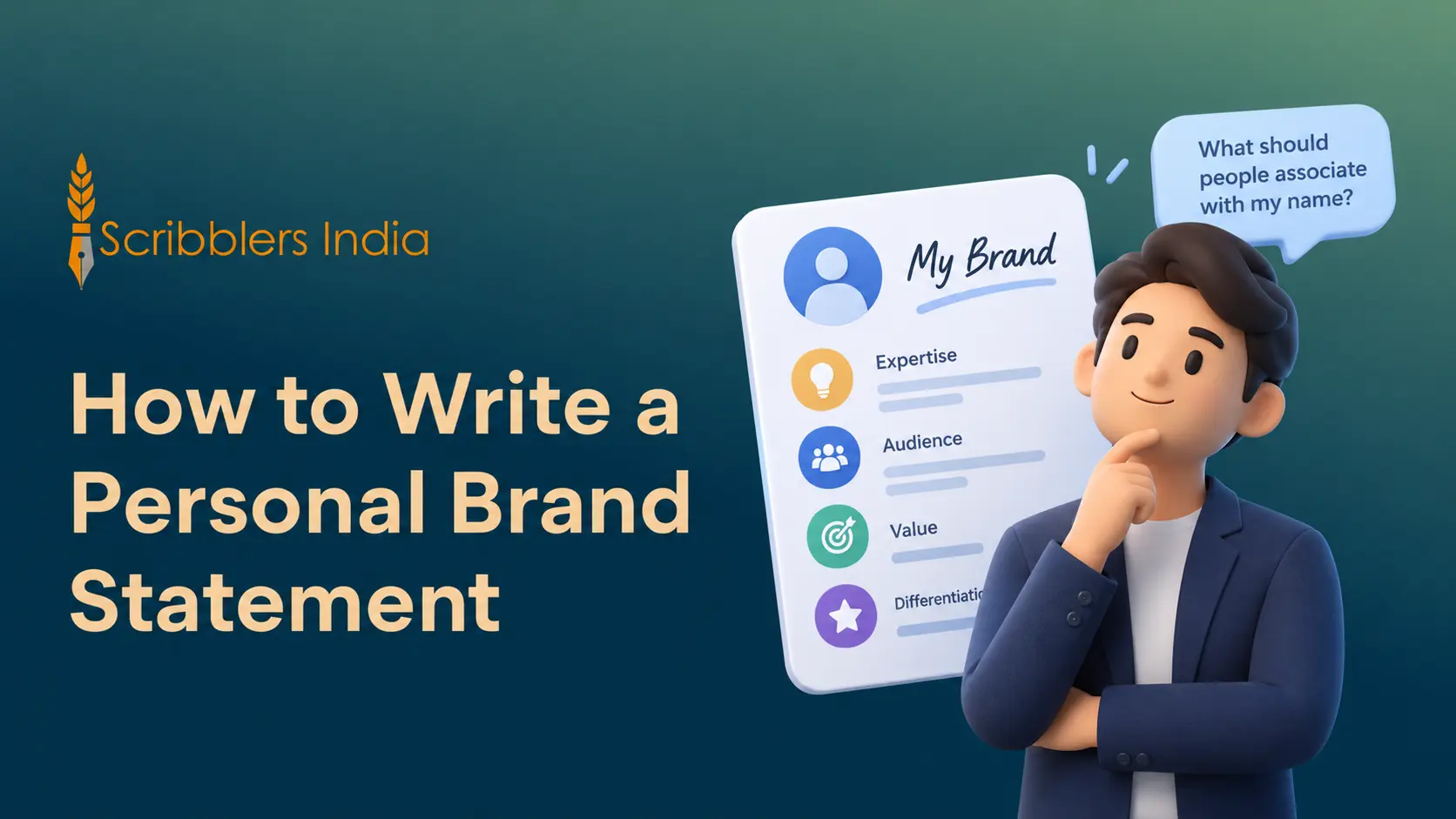
How Do You Write a Personal Brand Statement That Works (15+ Examples)
A personal brand statement explains the professional association you want people to make with your name. It can guide your positioning internally, while shorter versions can shape LinkedIn profiles, websites, portfolios, resumes, speaker materials, and other places where people encounter your professional identity. One sentence rarely performs all those jobs equally well. An internal positioning statement can provide more context about your audience, expertise, and contribution, while a LinkedIn headline needs to be clearer more quickly. The underlying professional position should remain consistent even when the wording changes. This guide starts with that core position and then explains how to build it on evidence rather than adjectives. You will also find role-specific formulas, practical personal brand statement examples, weak-to-strong rewrites, channel adaptations, and a simple framework for testing whether the statement communicates what you intend. Key Takeaways Define what people should professionally associate with your name first. Build recognition around a clear area of professional expertise. Show where your expertise becomes useful for specific audiences. Build differentiation from experience, outcomes, research, or perspective. Keep positioning stable while changing language for each platform. Use structures to guide thinking rather than copy templates. Check whether intended audiences understand your professional position correctly. Update positioning when your career direction or audience changes materially. What Is a Personal Brand Statement? A personal brand statement is a concise expression of the professional position you want associated with your name. It can communicate your expertise, intended audience, contribution, perspective, or relevant differentiation. Its exact length depends on whether it guides internal positioning or appears publicly. Different personal branding frameworks interpret the statement differently. William Arruda, writing in Forbes, treats it primarily as an internal positioning guide, while Shopify recognizes its role across both strategic positioning and outward professional communication. A useful way to reconcile these approaches is to separate the core position from its public expression: Layer Main Question Purpose Core Positioning What should people associate with your name? Guides the wider personal brand Channel Expression How should that idea appear here? Adapts positioning to the context Your core statement becomes the source of truth. A LinkedIn profile, a website, a speaker biography, a portfolio, or an email introduction can then express that position differently without forcing one sentence to carry every communication requirement. How Is a Personal Brand Statement Different From a Bio or Tagline? A personal brand statement defines your professional position within your broader communication. A headline conveys the position quickly, while a professional bio provides evidence and context. A tagline focuses more heavily on memorability, and a value proposition emphasizes usefulness for a defined audience. These assets should reinforce the same professional association without repeating identical wording. When the underlying position shifts with every format change, the problem usually runs deeper than copywriting. The professional identity itself still needs a clearer strategic center. Asset Primary Job Typical Expression Personal Brand Statement Defines professional positioning One or several short sentences LinkedIn Headline Communicates relevance quickly Short searchable profile field Professional Bio Adds evidence and context Short or long paragraph Tagline Improves memorability Very short phrase Elevator Introduction Explains relevance conversationally Short spoken explanation Value Proposition Shows value for an audience Audience and outcome focused Senior leaders often need an even broader positioning system because their reputation can influence employees, customers, investors, and industry peers simultaneously. Our personal branding vs executive branding analysis explains how those stakeholder expectations change the branding approach. What Are the Five Components of a Strong Personal Brand Statement? A strong personal brand statement usually reflects five foundations: audience, expertise territory, professional contribution, credible differentiation, and natural voice. Every element does not need to appear literally in the final sentence, although each should be clear before you start refining the wording. 1. Who Is the Relevant Audience for Your Personal Brand? Start with the people whose decisions your reputation needs to influence. “Business leaders” creates limited direction, while “CFOs at growth-stage SaaS companies” creates a useful boundary. Executives may need several audiences, while consultants can often define their commercial audience more narrowly. 2. What Expertise Should People Associate With Your Name? Choose an expertise territory rather than compiling a list of skills. “Marketing” covers too much, while “B2B category positioning for enterprise software” provides a clearer association. Ask which professional subject you want someone to connect with your name six months from now. 3. Where Does Your Expertise Create Professional Value? Expertise becomes more meaningful when people understand where it applies. Instead of describing yourself as an experienced organizational consultant, explain the context you understand, such as helping scaling leadership teams clarify decision ownership when rapid growth makes coordination increasingly difficult. 4. What Makes Your Personal Positioning Credible? Differentiation does not require claiming that nobody else performs similar work. Credibility can come from specialized industry exposure, repeated experience with one difficult problem, documented outcomes, original research, cross-functional experience, or a professional perspective your career can genuinely support. 5. Does the Personal Brand Statement Sound Like You? Avoid depending on adjectives such as “visionary,” “dynamic,” or “results-driven” to create authority. Specific professional language carries more information. Read the statement aloud and ask whether you could use similar language when someone asks what you do in a real conversation. Which Personal Brand Statement Formula Should You Use? The right formula depends on your role and the professional decision your reputation needs to support. Consultants can lead with an audience problem, while founders may express a market belief. Executives usually need an expertise territory that avoids sounding like a sales proposition. Use these formulas as scaffolds rather than finished templates: Role Formula Example Consultant I help [audience] address [problem] through [expertise]. I help B2B SaaS teams clarify category positioning when product complexity makes enterprise value difficult to explain. Executive I work at the intersection of [expertise] and [business problem]. I work at the intersection of enterprise AI governance and product adoption, helping organizations introduce AI with clearer accountability. Founder I am building [company/category] around the belief that [market
A personal brand statement explains the professional association you want people to make with your name. It can guide your positioning internally, while shorter versions can shape LinkedIn profiles, websites, portfolios, resumes, speaker materials, and other places where people encounter your professional identity. One sentence rarely performs all those jobs equally well. An internal positioning statement can provide more context about your audience, expertise, and contribution, while a LinkedIn headline needs to be clearer more quickly. The underlying professional position should remain consistent even when the wording changes. This guide starts with that core position and then explains how to build it on evidence rather than adjectives. You will also find role-specific formulas, practical personal brand statement examples, weak-to-strong rewrites, channel adaptations, and a simple framework for testing whether the statement communicates what you intend. Key Takeaways Define what people should professionally associate with your name first. Build recognition around a clear area of professional expertise. Show where your expertise becomes useful for specific audiences. Build differentiation from experience, outcomes, research, or perspective. Keep positioning stable while changing language for each platform. Use structures to guide thinking rather than copy templates. Check whether intended audiences understand your professional position correctly. Update positioning when your career direction or audience changes materially. What Is a Personal Brand Statement? A personal brand statement is a concise expression of the professional position you want associated with your name. It can communicate your expertise, intended audience, contribution, perspective, or relevant differentiation. Its exact length depends on whether it guides internal positioning or appears publicly. Different personal branding frameworks interpret the statement differently. William Arruda, writing in Forbes, treats it primarily as an internal positioning guide, while Shopify recognizes its role across both strategic positioning and outward professional communication. A useful way to reconcile these approaches is to separate the core position from its public expression: Layer Main Question Purpose Core Positioning What should people associate with your name? Guides the wider personal brand Channel Expression How should that idea appear here? Adapts positioning to the context Your core statement becomes the source of truth. A LinkedIn profile, a website, a speaker biography, a portfolio, or an email introduction can then express that position differently without forcing one sentence to carry every communication requirement. How Is a Personal Brand Statement Different From a Bio or Tagline? A personal brand statement defines your professional position within your broader communication. A headline conveys the position quickly, while a professional bio provides evidence and context. A tagline focuses more heavily on memorability, and a value proposition emphasizes usefulness for a defined audience. These assets should reinforce the same professional association without repeating identical wording. When the underlying position shifts with every format change, the problem usually runs deeper than copywriting. The professional identity itself still needs a clearer strategic center. Asset Primary Job Typical Expression Personal Brand Statement Defines professional positioning One or several short sentences LinkedIn Headline Communicates relevance quickly Short searchable profile field Professional Bio Adds evidence and context Short or long paragraph Tagline Improves memorability Very short phrase Elevator Introduction Explains relevance conversationally Short spoken explanation Value Proposition Shows value for an audience Audience and outcome focused Senior leaders often need an even broader positioning system because their reputation can influence employees, customers, investors, and industry peers simultaneously. Our personal branding vs executive branding analysis explains how those stakeholder expectations change the branding approach. What Are the Five Components of a Strong Personal Brand Statement? A strong personal brand statement usually reflects five foundations: audience, expertise territory, professional contribution, credible differentiation, and natural voice. Every element does not need to appear literally in the final sentence, although each should be clear before you start refining the wording. 1. Who Is the Relevant Audience for Your Personal Brand? Start with the people whose decisions your reputation needs to influence. “Business leaders” creates limited direction, while “CFOs at growth-stage SaaS companies” creates a useful boundary. Executives may need several audiences, while consultants can often define their commercial audience more narrowly. 2. What Expertise Should People Associate With Your Name? Choose an expertise territory rather than compiling a list of skills. “Marketing” covers too much, while “B2B category positioning for enterprise software” provides a clearer association. Ask which professional subject you want someone to connect with your name six months from now. 3. Where Does Your Expertise Create Professional Value? Expertise becomes more meaningful when people understand where it applies. Instead of describing yourself as an experienced organizational consultant, explain the context you understand, such as helping scaling leadership teams clarify decision ownership when rapid growth makes coordination increasingly difficult. 4. What Makes Your Personal Positioning Credible? Differentiation does not require claiming that nobody else performs similar work. Credibility can come from specialized industry exposure, repeated experience with one difficult problem, documented outcomes, original research, cross-functional experience, or a professional perspective your career can genuinely support. 5. Does the Personal Brand Statement Sound Like You? Avoid depending on adjectives such as “visionary,” “dynamic,” or “results-driven” to create authority. Specific professional language carries more information. Read the statement aloud and ask whether you could use similar language when someone asks what you do in a real conversation. Which Personal Brand Statement Formula Should You Use? The right formula depends on your role and the professional decision your reputation needs to support. Consultants can lead with an audience problem, while founders may express a market belief. Executives usually need an expertise territory that avoids sounding like a sales proposition. Use these formulas as scaffolds rather than finished templates: Role Formula Example Consultant I help [audience] address [problem] through [expertise]. I help B2B SaaS teams clarify category positioning when product complexity makes enterprise value difficult to explain. Executive I work at the intersection of [expertise] and [business problem]. I work at the intersection of enterprise AI governance and product adoption, helping organizations introduce AI with clearer accountability. Founder I am building [company/category] around the belief that [market
How Should You Use AI for Personal Branding in 2026?
A founder can turn a detailed interview into several possible content angles, while an executive can organize months’ worth of audience questions without having to review every note manually. These efficiencies explain the growing interest in AI for personal branding, especially when professionals already produce substantial knowledge through their work. The risk begins when AI starts supplying the expertise it was meant to communicate. Effective AI for personal branding uses technology to organize, compare, draft, transform, and analyze approved material while the professional retains ownership of experiences, facts, opinions, confidential information, and the final publication decision. This article focuses on that operating model rather than on AI search optimization or another debate about humans versus machines. For the wider positioning, proof, channel, networking, and distribution system, use our how to build a personal brand online guide as the broader strategic foundation. Key Takeaways AI should process genuine experience rather than manufacture professional authority. Verified facts and voice references make recurring AI workflows more reliable. Professionals should control positioning, opinions, sensitive information, and final publication. Organize questions and supplied evidence before developing stronger content angles. Interviews, notes, presentations, and approved examples preserve voice and factual grounding. Adapt approved ideas by channel without changing evidence, meaning, or certainty. AI can identify patterns while humans judge causality and business relevance. Privacy controls, factual verification, disclosure rules, and approvals remain essential safeguards. What Can AI for Personal Branding Handle Safely? AI for personal branding can reduce repetitive work across research, organization, drafting, editing, repurposing, and performance review. The safest boundary depends on the consequence of an error: AI can assist with processing information, while human owners remain responsible for professional claims, judgment, sensitive facts, and publication. A practical workflow separates tasks according to who owns the source material, who can accelerate the work, and where human review is mandatory. This avoids treating every task as equally suitable for automation simply because a model can technically produce an answer. Task Human Owns AI Can Assist With Human Review Professional Positioning Expertise territory and audience Alternatives, objections, clarity checks Always Career Facts Verified roles and achievements Organizing approved information Always Personal Experiences What happened and why it matters Theme extraction and structure Always Point of View Final opinion and judgment Counterarguments and implications Always Research Source standards and final conclusions Question clustering and synthesis Always Drafting Argument and approved inputs Initial prose and restructuring Always Repurposing Original meaning and channel boundaries Format adaptation Always Performance Analysis Business interpretation Pattern detection and summarization Always Publication Final accountability Formatting and preflight checks Always Which Personal Branding Tasks Should Remain Human-Owned? Human ownership should remain strongest where errors can alter professional identity, credibility, or accountability. Positioning, personal experience, judgment, sensitive facts, and final approval need direct human control, while AI can support organization, critique, restructuring, and alternative wording within defined boundaries. Keep positioning decisions with the professional because they determine the expertise, audience, and publicly built reputation. Require personal experiences and stories to come from verified memory, notes, interviews, or other genuine first-hand sources. Reserve professional judgments and opinions for human owners, even when AI helps test objections or alternative interpretations. Verify achievements, client results, dates, and career facts independently before allowing them to appear in published content. Keep sensitive reputation decisions under human review, especially when content involves employers, clients, regulated topics, or confidential information. Make final publication approval a human responsibility so that every claim, example, and viewpoint is clearly accountable. How Do You Build a Source Library for AI for Personal Branding? Recurring AI for personal branding becomes more reliable when each session starts with verified material rather than a blank prompt. Build a controlled source-of-truth library containing approved biography facts, professional claims, experience stories, viewpoints, voice references, and restricted topics before asking AI to support recurring content production. Source Library Component What to Store Why It Helps Verified Biography Current role, previous positions, credentials, links Prevents invented or outdated career facts Approved Claims Public company facts, disclosed results, approved milestones Creates boundaries around usable evidence Experience Bank Decisions, failures, lessons, customer conversations Supplies genuine narrative material Point-of-View Library Beliefs, supporting experience, limits, disagreements Preserves real professional judgment Voice References Transcripts, posts, articles, presentations, emails Improves wording and tone calibration Restricted Topics Confidential, regulated, privileged, or unpublished information Prevents unsafe workflow inputs How Should You Build a Professional Point-of-View Library? For each important topic, document what the professional believes, why they believe it, which experience supports the position, and where the argument has limits. This creates better source material than a generic instruction asking AI to sound “authoritative,” “bold,” or “thought-provoking.” A founder discussing AI adoption, for example, should provide actual operating experience and documented views rather than asking a model to invent a provocative stance. The same principle applies when building thought leadership around executives whose professional credibility depends on informed judgment. How Can AI for Personal Branding Improve Research and Audience Listening? Research is one of AI’s strongest roles in a personal-brand workflow because models can quickly organize large collections of questions, notes, transcripts, comments, and supplied documents. The value comes from finding patterns in real material, while source selection and final interpretation remain human responsibilities. Start with audience evidence already generated through professional activity. Sales-call notes, webinar questions, conference discussions, LinkedIn comments, customer FAQs, interviews, and internal subject-matter notes can reveal recurring objections, misconceptions, decision questions, and areas where audiences repeatedly need clearer explanations. Can AI Turn Real Audience Questions Into Better Content Ideas? Ask AI to cluster similar questions, identify recurring themes, and separate introductory questions from decision-stage concerns. The output becomes an editorial research map that professionals can evaluate against their expertise, rather than a generic trend list produced without evidence about the intended audience. This also helps distinguish popular subjects from useful subjects. A theme that appears repeatedly among relevant buyers or professional peers may deserve deeper attention even when it attracts less broad search volume than a generic industry trend with limited connection to the
A founder can turn a detailed interview into several possible content angles, while an executive can organize months’ worth of audience questions without having to review every note manually. These efficiencies explain the growing interest in AI for personal branding, especially when professionals already produce substantial knowledge through their work. The risk begins when AI starts supplying the expertise it was meant to communicate. Effective AI for personal branding uses technology to organize, compare, draft, transform, and analyze approved material while the professional retains ownership of experiences, facts, opinions, confidential information, and the final publication decision. This article focuses on that operating model rather than on AI search optimization or another debate about humans versus machines. For the wider positioning, proof, channel, networking, and distribution system, use our how to build a personal brand online guide as the broader strategic foundation. Key Takeaways AI should process genuine experience rather than manufacture professional authority. Verified facts and voice references make recurring AI workflows more reliable. Professionals should control positioning, opinions, sensitive information, and final publication. Organize questions and supplied evidence before developing stronger content angles. Interviews, notes, presentations, and approved examples preserve voice and factual grounding. Adapt approved ideas by channel without changing evidence, meaning, or certainty. AI can identify patterns while humans judge causality and business relevance. Privacy controls, factual verification, disclosure rules, and approvals remain essential safeguards. What Can AI for Personal Branding Handle Safely? AI for personal branding can reduce repetitive work across research, organization, drafting, editing, repurposing, and performance review. The safest boundary depends on the consequence of an error: AI can assist with processing information, while human owners remain responsible for professional claims, judgment, sensitive facts, and publication. A practical workflow separates tasks according to who owns the source material, who can accelerate the work, and where human review is mandatory. This avoids treating every task as equally suitable for automation simply because a model can technically produce an answer. Task Human Owns AI Can Assist With Human Review Professional Positioning Expertise territory and audience Alternatives, objections, clarity checks Always Career Facts Verified roles and achievements Organizing approved information Always Personal Experiences What happened and why it matters Theme extraction and structure Always Point of View Final opinion and judgment Counterarguments and implications Always Research Source standards and final conclusions Question clustering and synthesis Always Drafting Argument and approved inputs Initial prose and restructuring Always Repurposing Original meaning and channel boundaries Format adaptation Always Performance Analysis Business interpretation Pattern detection and summarization Always Publication Final accountability Formatting and preflight checks Always Which Personal Branding Tasks Should Remain Human-Owned? Human ownership should remain strongest where errors can alter professional identity, credibility, or accountability. Positioning, personal experience, judgment, sensitive facts, and final approval need direct human control, while AI can support organization, critique, restructuring, and alternative wording within defined boundaries. Keep positioning decisions with the professional because they determine the expertise, audience, and publicly built reputation. Require personal experiences and stories to come from verified memory, notes, interviews, or other genuine first-hand sources. Reserve professional judgments and opinions for human owners, even when AI helps test objections or alternative interpretations. Verify achievements, client results, dates, and career facts independently before allowing them to appear in published content. Keep sensitive reputation decisions under human review, especially when content involves employers, clients, regulated topics, or confidential information. Make final publication approval a human responsibility so that every claim, example, and viewpoint is clearly accountable. How Do You Build a Source Library for AI for Personal Branding? Recurring AI for personal branding becomes more reliable when each session starts with verified material rather than a blank prompt. Build a controlled source-of-truth library containing approved biography facts, professional claims, experience stories, viewpoints, voice references, and restricted topics before asking AI to support recurring content production. Source Library Component What to Store Why It Helps Verified Biography Current role, previous positions, credentials, links Prevents invented or outdated career facts Approved Claims Public company facts, disclosed results, approved milestones Creates boundaries around usable evidence Experience Bank Decisions, failures, lessons, customer conversations Supplies genuine narrative material Point-of-View Library Beliefs, supporting experience, limits, disagreements Preserves real professional judgment Voice References Transcripts, posts, articles, presentations, emails Improves wording and tone calibration Restricted Topics Confidential, regulated, privileged, or unpublished information Prevents unsafe workflow inputs How Should You Build a Professional Point-of-View Library? For each important topic, document what the professional believes, why they believe it, which experience supports the position, and where the argument has limits. This creates better source material than a generic instruction asking AI to sound “authoritative,” “bold,” or “thought-provoking.” A founder discussing AI adoption, for example, should provide actual operating experience and documented views rather than asking a model to invent a provocative stance. The same principle applies when building thought leadership around executives whose professional credibility depends on informed judgment. How Can AI for Personal Branding Improve Research and Audience Listening? Research is one of AI’s strongest roles in a personal-brand workflow because models can quickly organize large collections of questions, notes, transcripts, comments, and supplied documents. The value comes from finding patterns in real material, while source selection and final interpretation remain human responsibilities. Start with audience evidence already generated through professional activity. Sales-call notes, webinar questions, conference discussions, LinkedIn comments, customer FAQs, interviews, and internal subject-matter notes can reveal recurring objections, misconceptions, decision questions, and areas where audiences repeatedly need clearer explanations. Can AI Turn Real Audience Questions Into Better Content Ideas? Ask AI to cluster similar questions, identify recurring themes, and separate introductory questions from decision-stage concerns. The output becomes an editorial research map that professionals can evaluate against their expertise, rather than a generic trend list produced without evidence about the intended audience. This also helps distinguish popular subjects from useful subjects. A theme that appears repeatedly among relevant buyers or professional peers may deserve deeper attention even when it attracts less broad search volume than a generic industry trend with limited connection to the
How Do You Measure Personal Branding ROI Accurately?
A LinkedIn post can reach 100,000 people without generating one relevant opportunity. Another article may reach a much smaller audience and lead to a board introduction, a consulting inquiry, a speaking invitation, or a qualified sales conversation. Both results have value, although they belong to different stages of measurement. That distinction sits at the center of personal branding ROI. Reach, audience quality, authority, conversations, opportunities, and financial outcomes should not be grouped into a single return metric. Doing so can make performance reports appear stronger while making future investment decisions considerably less reliable. A useful measurement system starts with three questions: What are you investing? What professional outcome should change? How confidently can that change relate to the personal brand? The framework below answers those questions through cost calculation, attribution rules, worked examples, and practical reporting. Key Takeaways Choose personal branding metrics only after deciding what professional outcome should improve. Treat reach and search visibility as indicators, rather than financial ROI. Include agency fees, production, tools, distribution, and professional time consistently. Separate direct, assisted, influenced, and qualitative outcomes before assigning financial value. Use self-reported attribution to better identify offline and cross-platform discovery paths. Financial ROI requires attributable monetary value and defensible investment costs. Track operating signals monthly and evaluate meaningful outcomes over longer periods. Reputation influences some decisions that analytics cannot fully observe or isolate. What Does Personal Branding ROI Measure? Personal branding ROI compares the value created by a professional reputation program with the resources invested in building it. Financial ROI can be calculated when monetary outcomes are defensibly attributable. Wider professional value needs separate measures when reputation influences decisions without immediately creating a financial transaction. The standard financial formula remains useful: ROI (%) = (Attributed Financial Value − Total Investment) ÷ Total Investment × 100. The arithmetic is simple. The difficult part is deciding which outcomes deserve monetary value and how much credit the personal brand should receive. A follower, profile visit, search appearance, comment, or speaking invitation does not have an automatic financial value. Each belongs to a different stage of the reputation journey, so return on investment personal branding analysis should separate the following layers: Measurement Layer What It Answers Examples Visibility Are relevant people encountering you? Impressions, searches, profile appearances Audience Quality Are the right people seeing you? Companies, roles, industries, seniority Authority Is your expertise receiving meaningful response? Saves, citations, media or speaking requests Conversation Is reputation creating professional interaction? DMs, replies, introductions, calls Opportunity Are conversations creating valuable possibilities? Leads, interviews, partnerships, board discussions Financial Outcome Has attributable monetary value been created? Revenue, fees, retained business LinkedIn currently provides members with profile appearances and Search Appearances information, including available context such as the companies and job titles associated with people finding them. These signals can help assess professional discovery and audience relevance, although they remain upstream of financial return. What Should Count as the Cost of Personal Branding? To measure personal branding ROI accurately, calculate more than the agency or freelancer invoice. The real investment can include content production, specialist tools, paid distribution, website work, and the professional’s own time. Missing significant inputs artificially lowers the denominator and overstates the eventual return. Here is a useful model you can refer to: Total Investment = External Professional Spend + Production and Tools + Paid Distribution + Professional Time Apply the same cost method across reporting periods so changes in ROI reflect actual performance rather than a different accounting approach. Investment Category Examples How to Treat It Professional Support Strategy, ghostwriting, design, video, PR Include agreed fees Production and Tools Hosting, analytics, software, research tools Allocate relevant program cost Paid Distribution Sponsored posts, event promotion, media amplification Keep separate from earned reach Professional Time Interviews, reviews, events, networking Track hours or apply agreed rate Additional Assets Photography, websites, research, reports Include when created for the program Professional time needs particular care. A founder who spends ten hours each month discussing ideas, reviewing content, attending events, and networking has contributed a meaningful resource. Businesses can assign an agreed opportunity-cost rate where financial analysis requires it, while simpler programs can record those hours separately. If you are still establishing the investment side of the equation, our personal branding services cost guide explains how strategy, ghostwriting, visual production, senior involvement, websites, PR, and other scope variables affect the cost of a professional branding program. Which Personal Branding Metrics Should You Track? The right personal branding metrics depend on the job the reputation is expected to perform. A consultant looking for qualified inquiries needs a different scorecard from an executive building board visibility or a professional preparing for a career move. Start with the objective and work backward. This prevents one of the most common measurement errors: reporting the metrics that are easiest to collect rather than those most closely tied to the desired outcome. A smaller, more relevant audience can create greater professional value than a large audience that is not relevant to the objective. Primary Goal Leading Indicators Outcome Indicators Founder Demand Generation Relevant reach, buyer engagement, site visits Qualified inquiries, influenced pipeline Consulting Growth Case activity, referrals, target-audience engagement Calls, proposals, attributable clients Executive Visibility Stakeholder discovery, media interest Speaking, board, industry opportunities Career Mobility Search appearances, recruiter activity Interviews, role conversations, offers Speaking or Advisory Work Content citations, invitations, expert response Paid engagements, advisory mandates Thought Leadership Saves, citations, expert engagement Media, partnerships, category influence What Is the Difference Between Leading and Lagging Personal Branding Metrics? Leading indicators show whether the reputation system is moving in the intended direction. Visibility, search appearances, relevant profile visits, content saves, website traffic, and target-audience engagement help teams understand early movement before a meaningful professional opportunity appears. Lagging indicators sit closer to the intended result. Qualified inquiries, speaking invitations, interviews, proposals, partnerships, board conversations, and attributable revenue provide stronger evidence that reputation has influenced a real decision. They usually take longer to accumulate and therefore deserve a longer reporting window. Authority belongs between these
A LinkedIn post can reach 100,000 people without generating one relevant opportunity. Another article may reach a much smaller audience and lead to a board introduction, a consulting inquiry, a speaking invitation, or a qualified sales conversation. Both results have value, although they belong to different stages of measurement. That distinction sits at the center of personal branding ROI. Reach, audience quality, authority, conversations, opportunities, and financial outcomes should not be grouped into a single return metric. Doing so can make performance reports appear stronger while making future investment decisions considerably less reliable. A useful measurement system starts with three questions: What are you investing? What professional outcome should change? How confidently can that change relate to the personal brand? The framework below answers those questions through cost calculation, attribution rules, worked examples, and practical reporting. Key Takeaways Choose personal branding metrics only after deciding what professional outcome should improve. Treat reach and search visibility as indicators, rather than financial ROI. Include agency fees, production, tools, distribution, and professional time consistently. Separate direct, assisted, influenced, and qualitative outcomes before assigning financial value. Use self-reported attribution to better identify offline and cross-platform discovery paths. Financial ROI requires attributable monetary value and defensible investment costs. Track operating signals monthly and evaluate meaningful outcomes over longer periods. Reputation influences some decisions that analytics cannot fully observe or isolate. What Does Personal Branding ROI Measure? Personal branding ROI compares the value created by a professional reputation program with the resources invested in building it. Financial ROI can be calculated when monetary outcomes are defensibly attributable. Wider professional value needs separate measures when reputation influences decisions without immediately creating a financial transaction. The standard financial formula remains useful: ROI (%) = (Attributed Financial Value − Total Investment) ÷ Total Investment × 100. The arithmetic is simple. The difficult part is deciding which outcomes deserve monetary value and how much credit the personal brand should receive. A follower, profile visit, search appearance, comment, or speaking invitation does not have an automatic financial value. Each belongs to a different stage of the reputation journey, so return on investment personal branding analysis should separate the following layers: Measurement Layer What It Answers Examples Visibility Are relevant people encountering you? Impressions, searches, profile appearances Audience Quality Are the right people seeing you? Companies, roles, industries, seniority Authority Is your expertise receiving meaningful response? Saves, citations, media or speaking requests Conversation Is reputation creating professional interaction? DMs, replies, introductions, calls Opportunity Are conversations creating valuable possibilities? Leads, interviews, partnerships, board discussions Financial Outcome Has attributable monetary value been created? Revenue, fees, retained business LinkedIn currently provides members with profile appearances and Search Appearances information, including available context such as the companies and job titles associated with people finding them. These signals can help assess professional discovery and audience relevance, although they remain upstream of financial return. What Should Count as the Cost of Personal Branding? To measure personal branding ROI accurately, calculate more than the agency or freelancer invoice. The real investment can include content production, specialist tools, paid distribution, website work, and the professional’s own time. Missing significant inputs artificially lowers the denominator and overstates the eventual return. Here is a useful model you can refer to: Total Investment = External Professional Spend + Production and Tools + Paid Distribution + Professional Time Apply the same cost method across reporting periods so changes in ROI reflect actual performance rather than a different accounting approach. Investment Category Examples How to Treat It Professional Support Strategy, ghostwriting, design, video, PR Include agreed fees Production and Tools Hosting, analytics, software, research tools Allocate relevant program cost Paid Distribution Sponsored posts, event promotion, media amplification Keep separate from earned reach Professional Time Interviews, reviews, events, networking Track hours or apply agreed rate Additional Assets Photography, websites, research, reports Include when created for the program Professional time needs particular care. A founder who spends ten hours each month discussing ideas, reviewing content, attending events, and networking has contributed a meaningful resource. Businesses can assign an agreed opportunity-cost rate where financial analysis requires it, while simpler programs can record those hours separately. If you are still establishing the investment side of the equation, our personal branding services cost guide explains how strategy, ghostwriting, visual production, senior involvement, websites, PR, and other scope variables affect the cost of a professional branding program. Which Personal Branding Metrics Should You Track? The right personal branding metrics depend on the job the reputation is expected to perform. A consultant looking for qualified inquiries needs a different scorecard from an executive building board visibility or a professional preparing for a career move. Start with the objective and work backward. This prevents one of the most common measurement errors: reporting the metrics that are easiest to collect rather than those most closely tied to the desired outcome. A smaller, more relevant audience can create greater professional value than a large audience that is not relevant to the objective. Primary Goal Leading Indicators Outcome Indicators Founder Demand Generation Relevant reach, buyer engagement, site visits Qualified inquiries, influenced pipeline Consulting Growth Case activity, referrals, target-audience engagement Calls, proposals, attributable clients Executive Visibility Stakeholder discovery, media interest Speaking, board, industry opportunities Career Mobility Search appearances, recruiter activity Interviews, role conversations, offers Speaking or Advisory Work Content citations, invitations, expert response Paid engagements, advisory mandates Thought Leadership Saves, citations, expert engagement Media, partnerships, category influence What Is the Difference Between Leading and Lagging Personal Branding Metrics? Leading indicators show whether the reputation system is moving in the intended direction. Visibility, search appearances, relevant profile visits, content saves, website traffic, and target-audience engagement help teams understand early movement before a meaningful professional opportunity appears. Lagging indicators sit closer to the intended result. Qualified inquiries, speaking invitations, interviews, proposals, partnerships, board conversations, and attributable revenue provide stronger evidence that reputation has influenced a real decision. They usually take longer to accumulate and therefore deserve a longer reporting window. Authority belongs between these