
Personal Branding Posts
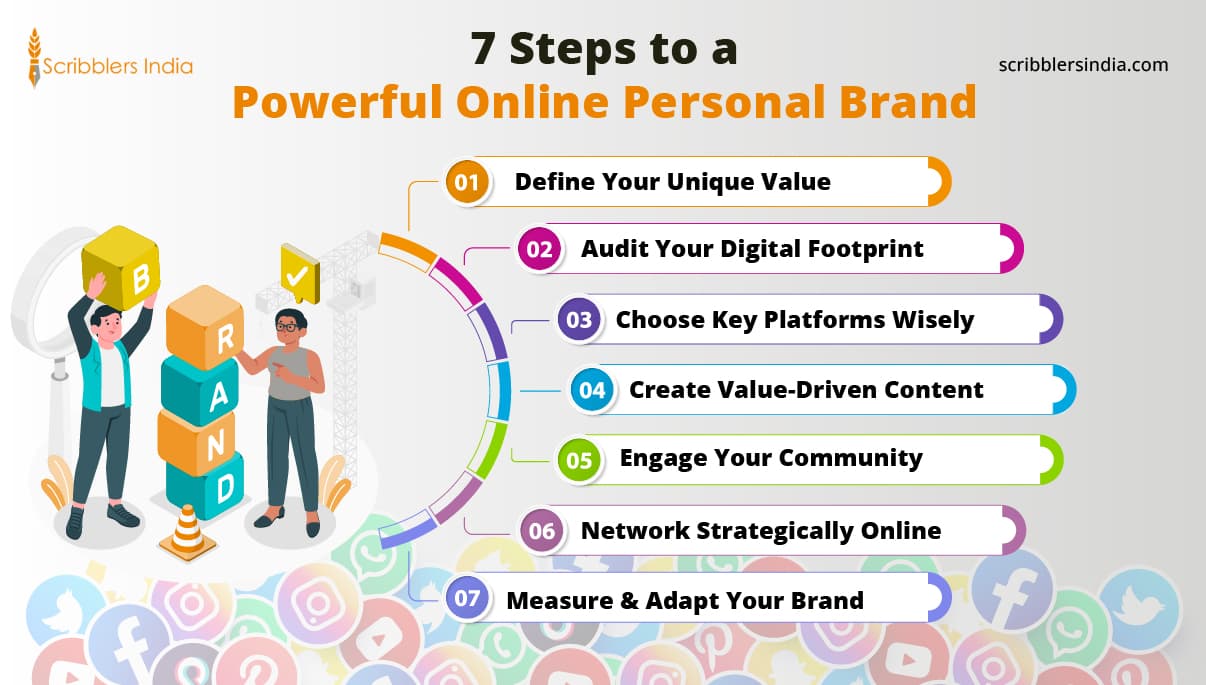
How To Build a Personal Brand Online in 2026?
Building a strong professional reputation online is largely a matter of sequencing. Publishing more content cannot solve unclear positioning, while an impressive profile carries limited weight without credible proof. Expanding across several platforms also creates unnecessary work when the people you need to influence concentrate elsewhere. The practical approach to how to build personal brand online starts with understanding what people can already discover about you. You can then define the reputation you want, strengthen the evidence supporting it, choose appropriate channels, publish useful ideas, build relevant relationships, and improve discoverability across search. This guide on how to build personal brand online focuses on that complete operating system rather than individual platform tactics. If you are still evaluating the broader business or career case, start with our analysis on why personal branding is important. The process below begins once you have decided to invest in your reputation. Key Takeaways Review what search results and profiles currently communicate about your expertise. Choose the audience, expertise territory, and professional association you want remembered. Create one reliable home base that preserves control over professional proof. Prioritize platforms where your audience already evaluates expertise and professional credibility. Place cases, recommendations, research, and qualifications close to important claims. Turn real questions, decisions, research, and lessons into useful content. Keep names, biographies, author pages, and expertise descriptions consistently aligned. Track changes in relevant discovery, relationships, opportunities, and reputation over time. How Should You Audit Your Digital Footprint Before You Build Personal Brand Online? Before you build personal brand online, establish what people can already find and what those results communicate. Any practical approach to how to build personal brand online should begin with search results, major profiles, employer pages, author pages, published work, and prominent third-party mentions. Compare that public footprint with the professional association you want to strengthen. Look for outdated information, conflicting descriptions, weak proof, useful existing assets, and prominent pages that no longer reflect your present role, expertise, audience, or professional direction. What Should a Personal Brand Audit Review? Start by searching for your full professional name and inspect the first several result pages. Then review the assets most likely to influence someone evaluating you for a role, project, partnership, speaking opportunity, media request, investment conversation, or professional recommendation. Audit Area What to Review Common Problem Identity Current name, title, company, and role Prominent profiles conflict Positioning Expertise emphasized across visible assets Each platform tells a different story Biography Current experience and specialization Old career stages remain prominent Proof Work, results, research, recommendations Claims have little visible support Content Subjects repeatedly associated with your name Publishing covers unrelated themes Third-Party Pages Events, publications, podcasts, directories Important information is outdated Prioritize high-visibility inaccuracies rather than trying to clean every historical mention. A dated conference biography that still ranks prominently deserves more attention than an obscure directory listing. The audit should finish with three practical decisions: which assets to keep, which to update, and which to de-emphasize. Useful content, interviews, recommendations, case evidence, speaking videos, or research may already support the reputation you want. Identifying these assets before creating new material is an important part of how to build a personal brand online efficiently as it prevents unnecessary duplication and provides stronger evidence for later profile updates. What Type of Reputation You Need Before Building Personal Brand Online? A useful personal branding strategy starts with the association you want relevant people to make with your name. Understanding how to build personal brand online becomes easier once the audience, expertise territory, contribution, and supporting evidence are clear enough to guide later execution. Positioning should be narrow enough to guide recognition without reducing your career to one skill. Choose the association that should lead now, while your biography, experience, portfolio, and broader content provide additional context after people understand the main professional territory. Who Should Your Personal Brand Influence? Define the people whose decisions your reputation needs to influence. A consultant may prioritize buyers facing one recurring problem, while a founder may need credibility with customers and industry peers. An executive may communicate simultaneously with employees, customers, board members, investors, and professional communities. Audience definitions such as “professionals” or “business leaders” usually provide too little direction. A clearer audience helps determine what proof deserves prominence, which questions your content should answer, where you should publish, and which relationships should receive consistent attention over time. What Expertise Should People Associate With Your Name? Ask what someone should confidently approach you about after encountering your work several times. “Marketing” yields weak recall, while “category positioning for technical B2B companies” provides a more useful anchor for the reputation, guiding profile language, content topics, speaking opportunities, and professional introductions. Once the territory is clear, translate it into a concise positioning idea. Our guide to personal brand statements explains in detail how to write such a statement, while this hub uses it as the strategic source for the broader online reputation system. Where Should Your Online Personal Branding Home Base Live? A strong online personal branding system needs one dependable place where people can understand your position, inspect proof, and take a logical next step. In how to build personal brand online, that home base may be a personal website or strong professional profile, depending on the level of control required. The better decision is not website versus social media. Think in terms of owned and rented presence. Owned assets preserve long-term control, while established platforms provide discovery and network access. Most professionals benefit from combining both without building more infrastructure than they can maintain. A useful home base normally needs three things: a current professional biography, visible evidence of expertise, and a clear next step. LinkedIn can handle these for simpler requirements, while a website is more useful when you need deeper control over proofing, long-form work, or inquiries. Do You Need a Personal Website to Build Personal Brand Online? You do not need a website simply because personal-brand advice recommends one. A site becomes valuable
Building a strong professional reputation online is largely a matter of sequencing. Publishing more content cannot solve unclear positioning, while an impressive profile carries limited weight without credible proof. Expanding across several platforms also creates unnecessary work when the people you need to influence concentrate elsewhere. The practical approach to how to build personal brand online starts with understanding what people can already discover about you. You can then define the reputation you want, strengthen the evidence supporting it, choose appropriate channels, publish useful ideas, build relevant relationships, and improve discoverability across search. This guide on how to build personal brand online focuses on that complete operating system rather than individual platform tactics. If you are still evaluating the broader business or career case, start with our analysis on why personal branding is important. The process below begins once you have decided to invest in your reputation. Key Takeaways Review what search results and profiles currently communicate about your expertise. Choose the audience, expertise territory, and professional association you want remembered. Create one reliable home base that preserves control over professional proof. Prioritize platforms where your audience already evaluates expertise and professional credibility. Place cases, recommendations, research, and qualifications close to important claims. Turn real questions, decisions, research, and lessons into useful content. Keep names, biographies, author pages, and expertise descriptions consistently aligned. Track changes in relevant discovery, relationships, opportunities, and reputation over time. How Should You Audit Your Digital Footprint Before You Build Personal Brand Online? Before you build personal brand online, establish what people can already find and what those results communicate. Any practical approach to how to build personal brand online should begin with search results, major profiles, employer pages, author pages, published work, and prominent third-party mentions. Compare that public footprint with the professional association you want to strengthen. Look for outdated information, conflicting descriptions, weak proof, useful existing assets, and prominent pages that no longer reflect your present role, expertise, audience, or professional direction. What Should a Personal Brand Audit Review? Start by searching for your full professional name and inspect the first several result pages. Then review the assets most likely to influence someone evaluating you for a role, project, partnership, speaking opportunity, media request, investment conversation, or professional recommendation. Audit Area What to Review Common Problem Identity Current name, title, company, and role Prominent profiles conflict Positioning Expertise emphasized across visible assets Each platform tells a different story Biography Current experience and specialization Old career stages remain prominent Proof Work, results, research, recommendations Claims have little visible support Content Subjects repeatedly associated with your name Publishing covers unrelated themes Third-Party Pages Events, publications, podcasts, directories Important information is outdated Prioritize high-visibility inaccuracies rather than trying to clean every historical mention. A dated conference biography that still ranks prominently deserves more attention than an obscure directory listing. The audit should finish with three practical decisions: which assets to keep, which to update, and which to de-emphasize. Useful content, interviews, recommendations, case evidence, speaking videos, or research may already support the reputation you want. Identifying these assets before creating new material is an important part of how to build a personal brand online efficiently as it prevents unnecessary duplication and provides stronger evidence for later profile updates. What Type of Reputation You Need Before Building Personal Brand Online? A useful personal branding strategy starts with the association you want relevant people to make with your name. Understanding how to build personal brand online becomes easier once the audience, expertise territory, contribution, and supporting evidence are clear enough to guide later execution. Positioning should be narrow enough to guide recognition without reducing your career to one skill. Choose the association that should lead now, while your biography, experience, portfolio, and broader content provide additional context after people understand the main professional territory. Who Should Your Personal Brand Influence? Define the people whose decisions your reputation needs to influence. A consultant may prioritize buyers facing one recurring problem, while a founder may need credibility with customers and industry peers. An executive may communicate simultaneously with employees, customers, board members, investors, and professional communities. Audience definitions such as “professionals” or “business leaders” usually provide too little direction. A clearer audience helps determine what proof deserves prominence, which questions your content should answer, where you should publish, and which relationships should receive consistent attention over time. What Expertise Should People Associate With Your Name? Ask what someone should confidently approach you about after encountering your work several times. “Marketing” yields weak recall, while “category positioning for technical B2B companies” provides a more useful anchor for the reputation, guiding profile language, content topics, speaking opportunities, and professional introductions. Once the territory is clear, translate it into a concise positioning idea. Our guide to personal brand statements explains in detail how to write such a statement, while this hub uses it as the strategic source for the broader online reputation system. Where Should Your Online Personal Branding Home Base Live? A strong online personal branding system needs one dependable place where people can understand your position, inspect proof, and take a logical next step. In how to build personal brand online, that home base may be a personal website or strong professional profile, depending on the level of control required. The better decision is not website versus social media. Think in terms of owned and rented presence. Owned assets preserve long-term control, while established platforms provide discovery and network access. Most professionals benefit from combining both without building more infrastructure than they can maintain. A useful home base normally needs three things: a current professional biography, visible evidence of expertise, and a clear next step. LinkedIn can handle these for simpler requirements, while a website is more useful when you need deeper control over proofing, long-form work, or inquiries. Do You Need a Personal Website to Build Personal Brand Online? You do not need a website simply because personal-brand advice recommends one. A site becomes valuable
How Does a LinkedIn Ghostwriting Agency Build Thought Leadership?
A founder can have strong opinions, years of experience, and useful stories without having time to turn them into LinkedIn posts every week. The difficult part is rarely finding something to say. It is capturing those ideas, developing them, and publishing them in a voice people recognize. A LinkedIn ghostwriting agency creates the system around that work. The executive remains the source of expertise while writers handle interviews, research, drafting, editing, and content planning. The strongest engagements preserve the leader’s judgment rather than replace it with generic social content. This distinction has become crucial in 2026. LinkedIn is actively addressing low-effort AI content that sounds polished while offering little original perspective. This guide explains how the process should work, which service model suits different requirements, what you should receive each month, and how to evaluate an agency before signing a retainer. Key Takeaways: A LinkedIn ghostwriting agency turns executive expertise into consistent, publishable professional content. Strong ghostwriting starts with source extraction before writers begin drafting LinkedIn posts. Voice guides should capture thinking patterns, language preferences, examples, and editorial boundaries. Generic AI content makes first-hand experience and clear professional opinions more valuable. Agencies, freelancers, internal writers, and AI-assisted workflows serve different operating requirements. Compare providers through source depth, voice continuity, evidence standards, workflow, and measurement. Monthly deliverables should include source capture, drafts, approvals, planning, and performance review. Measure progress from relevant exposure through conversations, opportunities, and attributable professional outcomes. What Does a LinkedIn Ghostwriting Agency Actually Do? A LinkedIn ghostwriting agency helps founders and executives turn their knowledge into content published under their own names. The work can include positioning, interviews, idea development, research, writing, editing, content planning, and performance reviews. The leader supplies the expertise and retains final control over what becomes public. This is different from sending a writer a topic and asking for ten posts. Professional LinkedIn ghostwriting needs enough context to understand how the executive thinks. Writers need access to opinions, customer observations, industry experience, previous content, and current business priorities. A useful division of responsibilities looks like this: The Executive Should Provide The Ghostwriting Team Can Handle Professional opinions and positions Turning raw ideas into structured posts First-hand experiences Researching supporting context Customer and market observations Developing content angles Examples from actual work Drafting and editing Sensitive-context decisions Formatting and content sequencing Final approval Maintaining the publishing calendar The writer therefore works with existing expertise. They should never manufacture professional positions the executive would not defend in a real conversation. This approach also connects naturally with LinkedIn personal branding. A recognizable public voice is more effective when the profile, content themes, and professional positioning reinforce one another. With the responsibilities clear, the next question is how raw executive knowledge becomes usable content. How Does a LinkedIn Ghostwriting Agency Work? A capable LinkedIn ghostwriting agency should have a repeatable process for collecting ideas and improving them over time. The workflow usually requires more executive input during onboarding. Once the writer understands the voice, recurring source collection and batch approvals can make publishing easier to manage. 1. Define What the Executive Should Be Known For Posting starts after positioning is clear. A LinkedIn ghostwriting agency first identifies the executive’s audience, expertise, business context, and subjects worth owning. It should also define which topics sit outside the intended public position. For example, a cybersecurity founder could build content around enterprise AI security, security operations, and emerging risk. Random leadership advice would add activity without strengthening that association. A broader personal branding strategy can help establish these positioning decisions before regular LinkedIn publishing begins. 2. Capture the Executive’s Raw Knowledge Interviews are among the most useful sources because executives often explain ideas better in conversation than in a blank document. The writer can ask about recent customer discussions, decisions, failed assumptions, market shifts, internal debates, and professional opinions. Existing podcasts, presentations, articles, emails, sales calls, and conference appearances can add further context. Published 2026 agency processes increasingly use detailed voice interviews during onboarding. Some describe initial voice-calibration sessions lasting around 60 to 90 minutes. The duration will vary. The important point is depth. A five-question form rarely captures enough context for sustained executive ghostwriting. 3. Build a Working Voice Guide Voice capture extends beyond labels such as “professional,” “friendly,” or “authoritative.” A useful guide records how the executive explains ideas. It should capture preferred vocabulary, sentence patterns, recurring beliefs, examples, subjects to be avoided, and phrases the person would never use. The guide should evolve as new drafts receive feedback. If every post requires the executive to rewrite entire sections, the system has not learned enough from previous reviews. 4. Develop Ideas Before Drafting Posts Strong source material can produce several angles. One customer conversation might lead to a market observation. A related operating decision could become a lesson for founders. The same underlying idea may later support an article or newsletter. The agency should therefore maintain an idea bank rather than treating each publication date as a fresh search for a topic. Each idea also needs an editorial purpose. Some posts can explain expertise. Others can share a point of view or make a complex subject easier to understand. 5. Draft, Review, and Learn From Feedback The first drafts establish the initial voice match. Executive feedback then becomes new information for the writer. Comments such as “I would never say this,” “this example needs more context,” or “my position is stronger than this” should be included in the voice guide. Batch reviews can reduce repetitive approvals. The executive still retains final decision-making authority over what appears under their name. Over several cycles, the goal is simple: the writer understands more context, while the executive needs fewer corrections. This learning loop is becoming especially valuable as LinkedIn fills with easily generated content. Why Has LinkedIn Ghostwriting Become Harder in an AI-Saturated Feed? LinkedIn is actively trying to reduce low-effort content that lacks real perspective. In May 2026, LinkedIn clarified its stance: AI can support writing, but
A founder can have strong opinions, years of experience, and useful stories without having time to turn them into LinkedIn posts every week. The difficult part is rarely finding something to say. It is capturing those ideas, developing them, and publishing them in a voice people recognize. A LinkedIn ghostwriting agency creates the system around that work. The executive remains the source of expertise while writers handle interviews, research, drafting, editing, and content planning. The strongest engagements preserve the leader’s judgment rather than replace it with generic social content. This distinction has become crucial in 2026. LinkedIn is actively addressing low-effort AI content that sounds polished while offering little original perspective. This guide explains how the process should work, which service model suits different requirements, what you should receive each month, and how to evaluate an agency before signing a retainer. Key Takeaways: A LinkedIn ghostwriting agency turns executive expertise into consistent, publishable professional content. Strong ghostwriting starts with source extraction before writers begin drafting LinkedIn posts. Voice guides should capture thinking patterns, language preferences, examples, and editorial boundaries. Generic AI content makes first-hand experience and clear professional opinions more valuable. Agencies, freelancers, internal writers, and AI-assisted workflows serve different operating requirements. Compare providers through source depth, voice continuity, evidence standards, workflow, and measurement. Monthly deliverables should include source capture, drafts, approvals, planning, and performance review. Measure progress from relevant exposure through conversations, opportunities, and attributable professional outcomes. What Does a LinkedIn Ghostwriting Agency Actually Do? A LinkedIn ghostwriting agency helps founders and executives turn their knowledge into content published under their own names. The work can include positioning, interviews, idea development, research, writing, editing, content planning, and performance reviews. The leader supplies the expertise and retains final control over what becomes public. This is different from sending a writer a topic and asking for ten posts. Professional LinkedIn ghostwriting needs enough context to understand how the executive thinks. Writers need access to opinions, customer observations, industry experience, previous content, and current business priorities. A useful division of responsibilities looks like this: The Executive Should Provide The Ghostwriting Team Can Handle Professional opinions and positions Turning raw ideas into structured posts First-hand experiences Researching supporting context Customer and market observations Developing content angles Examples from actual work Drafting and editing Sensitive-context decisions Formatting and content sequencing Final approval Maintaining the publishing calendar The writer therefore works with existing expertise. They should never manufacture professional positions the executive would not defend in a real conversation. This approach also connects naturally with LinkedIn personal branding. A recognizable public voice is more effective when the profile, content themes, and professional positioning reinforce one another. With the responsibilities clear, the next question is how raw executive knowledge becomes usable content. How Does a LinkedIn Ghostwriting Agency Work? A capable LinkedIn ghostwriting agency should have a repeatable process for collecting ideas and improving them over time. The workflow usually requires more executive input during onboarding. Once the writer understands the voice, recurring source collection and batch approvals can make publishing easier to manage. 1. Define What the Executive Should Be Known For Posting starts after positioning is clear. A LinkedIn ghostwriting agency first identifies the executive’s audience, expertise, business context, and subjects worth owning. It should also define which topics sit outside the intended public position. For example, a cybersecurity founder could build content around enterprise AI security, security operations, and emerging risk. Random leadership advice would add activity without strengthening that association. A broader personal branding strategy can help establish these positioning decisions before regular LinkedIn publishing begins. 2. Capture the Executive’s Raw Knowledge Interviews are among the most useful sources because executives often explain ideas better in conversation than in a blank document. The writer can ask about recent customer discussions, decisions, failed assumptions, market shifts, internal debates, and professional opinions. Existing podcasts, presentations, articles, emails, sales calls, and conference appearances can add further context. Published 2026 agency processes increasingly use detailed voice interviews during onboarding. Some describe initial voice-calibration sessions lasting around 60 to 90 minutes. The duration will vary. The important point is depth. A five-question form rarely captures enough context for sustained executive ghostwriting. 3. Build a Working Voice Guide Voice capture extends beyond labels such as “professional,” “friendly,” or “authoritative.” A useful guide records how the executive explains ideas. It should capture preferred vocabulary, sentence patterns, recurring beliefs, examples, subjects to be avoided, and phrases the person would never use. The guide should evolve as new drafts receive feedback. If every post requires the executive to rewrite entire sections, the system has not learned enough from previous reviews. 4. Develop Ideas Before Drafting Posts Strong source material can produce several angles. One customer conversation might lead to a market observation. A related operating decision could become a lesson for founders. The same underlying idea may later support an article or newsletter. The agency should therefore maintain an idea bank rather than treating each publication date as a fresh search for a topic. Each idea also needs an editorial purpose. Some posts can explain expertise. Others can share a point of view or make a complex subject easier to understand. 5. Draft, Review, and Learn From Feedback The first drafts establish the initial voice match. Executive feedback then becomes new information for the writer. Comments such as “I would never say this,” “this example needs more context,” or “my position is stronger than this” should be included in the voice guide. Batch reviews can reduce repetitive approvals. The executive still retains final decision-making authority over what appears under their name. Over several cycles, the goal is simple: the writer understands more context, while the executive needs fewer corrections. This learning loop is becoming especially valuable as LinkedIn fills with easily generated content. Why Has LinkedIn Ghostwriting Become Harder in an AI-Saturated Feed? LinkedIn is actively trying to reduce low-effort content that lacks real perspective. In May 2026, LinkedIn clarified its stance: AI can support writing, but

Why Is Personal Branding Important? A Decision Guide for Professionals and Founders
A promotion, funding round, consulting launch, career move, or public leadership role can change the extent to which your professional reputation influences professional decisions. That is when the question why is personal branding important becomes practical. People may search your name, review your work, read your ideas, and compare your public profile with the expertise or role you represent. Personal branding helps make that evaluation more consistent. It gives people clearer context about what you know, the experience that supports your expertise, and the professional value you can bring before they have worked with you directly. The resulting benefits of personal branding can range from greater recognition of expertise and discoverability to more relevant professional conversations and opportunities. This blog focuses on the decision that comes before those outcomes. It explains when personal branding deserves greater investment, how it creates value, and which situations may require other priorities first. Key Takeaways: Personal branding becomes valuable when professional decisions increasingly depend on public reputation. Clear positioning helps audiences connect your name with relevant expertise and evidence. Career transitions increase the value of searchable professional reputation during evaluation. Founders benefit when market education depends on their specialist knowledge and perspective. Executives need stronger governance as visibility begins representing the wider organization publicly. Consultants gain more from personal branding when expertise influences selection and trust. Personal branding should follow stronger fundamentals when the underlying offer remains unclear. A simple diagnostic can show whether reputation deserves more investment right now. Why Is Personal Branding Important? Personal branding helps other people understand what you are known for, where your expertise comes from, and why your perspective deserves attention. It creates a more coherent professional signal across search results, profiles, published work, conversations, recommendations, and public appearances. The simplest answer to why is personal branding important is that professional reputation already exists, even when you leave it unmanaged. Personal branding gives you more influence over which parts of your experience, expertise, and point of view become easiest for others to discover and remember. Harvard Business School Online describes personal branding as defining what you want to communicate and expressing it effectively. It also treats audience perception as central to understanding a personal brand. The value comes from four mechanisms: Reputation clarity: People can connect your name with a specific area of expertise. Discoverability: Relevant information about you is easier to find when someone searches or evaluates you. Evidence: Your work, thinking, experience, and third-party proof make professional claims easier to assess. Context: Your network and published ideas help audiences understand how your expertise applies to real problems. These mechanisms can support many outcomes, while actual results still depend on expertise, audience fit, timing, and follow-through. That distinction is central to understanding why is personal branding important without turning personal branding into a promise of professional success Branding demands commitment; commitment to continual re-invention; striking chords with people to stir their emotions; and commitment to imagination. It is easy to be cynical about such things, much harder to be successful. ~ Sir Richard Branson When Does Personal Branding Become Strategically Crucial? The need for personal branding changes with the role you occupy and the decisions other people make about you. A private specialist with stable internal responsibilities may need little public visibility. A founder educating a new market may depend heavily on it. Our personal branding case study for a study-abroad consultant shows how a more deliberate visibility strategy was applied in practice. The question why is personal branding important becomes much easier to answer when you examine the professional situation and the decisions shaped by reputation. During a Career Transition A career move creates an information gap. Recruiters, hiring managers, peers, or future collaborators need to understand where your experience fits next. An outdated profile can leave your previous role defining you long after your expertise has changed. For someone changing industries, moving into leadership, returning after a break, or pursuing board roles, why is personal branding important has a practical answer. A clearer public record helps connect earlier experience with the direction you now want to pursue. A career transition rarely requires daily publishing. Relevant case evidence, updated professional profiles, thoughtful commentary, and visible work can be enough to make the transition easier to interpret. When a Founder Has to Educate the Market Some businesses enter categories buyers already understand. Others need the founder to explain an emerging problem, challenge an established assumption, or translate technical change into business language. In that situation, the answer to the question ‘why is personal branding important’ is closely tied to category education. The founder can become a recognizable source of explanation through operating experience, customer questions, product decisions, and informed market observations. This visibility can help audiences understand the category while the company builds recognition around its own capabilities and evidence. The balance becomes more important as the business grows. The founder can continue shaping market conversations, while trust gradually extends to the wider organization. Deciding how much visibility to give to each requires a clear understanding of personal branding vs. company branding at different stages of growth. When an Executive Represents More Than Personal Expertise A senior leader may communicate with employees, customers, investors, partners, regulators, industry peers, and media audiences. Their public presence therefore carries organizational context alongside individual expertise. For senior leaders, understanding why is personal branding important also involves managing that wider responsibility. Expertise needs enough visibility to establish a recognizable professional position, while company claims, sensitive subjects, role boundaries, and public commentary may require more deliberate review. These responsibilities become particularly important after a promotion, a CEO appointment, a board role, or a company transition. At this level, executive branding adds considerations of stakeholder alignment, governance, and reputation risk to the broader personal branding process. When Independent Expertise Drives Selection Consultants, advisors, coaches, fractional leaders, speakers, analysts, and other independent experts are often evaluated before a formal sales conversation begins. Buyers may review articles, presentations, testimonials, frameworks, prior work, or mutual connections before making contact. Here,
A promotion, funding round, consulting launch, career move, or public leadership role can change the extent to which your professional reputation influences professional decisions. That is when the question why is personal branding important becomes practical. People may search your name, review your work, read your ideas, and compare your public profile with the expertise or role you represent. Personal branding helps make that evaluation more consistent. It gives people clearer context about what you know, the experience that supports your expertise, and the professional value you can bring before they have worked with you directly. The resulting benefits of personal branding can range from greater recognition of expertise and discoverability to more relevant professional conversations and opportunities. This blog focuses on the decision that comes before those outcomes. It explains when personal branding deserves greater investment, how it creates value, and which situations may require other priorities first. Key Takeaways: Personal branding becomes valuable when professional decisions increasingly depend on public reputation. Clear positioning helps audiences connect your name with relevant expertise and evidence. Career transitions increase the value of searchable professional reputation during evaluation. Founders benefit when market education depends on their specialist knowledge and perspective. Executives need stronger governance as visibility begins representing the wider organization publicly. Consultants gain more from personal branding when expertise influences selection and trust. Personal branding should follow stronger fundamentals when the underlying offer remains unclear. A simple diagnostic can show whether reputation deserves more investment right now. Why Is Personal Branding Important? Personal branding helps other people understand what you are known for, where your expertise comes from, and why your perspective deserves attention. It creates a more coherent professional signal across search results, profiles, published work, conversations, recommendations, and public appearances. The simplest answer to why is personal branding important is that professional reputation already exists, even when you leave it unmanaged. Personal branding gives you more influence over which parts of your experience, expertise, and point of view become easiest for others to discover and remember. Harvard Business School Online describes personal branding as defining what you want to communicate and expressing it effectively. It also treats audience perception as central to understanding a personal brand. The value comes from four mechanisms: Reputation clarity: People can connect your name with a specific area of expertise. Discoverability: Relevant information about you is easier to find when someone searches or evaluates you. Evidence: Your work, thinking, experience, and third-party proof make professional claims easier to assess. Context: Your network and published ideas help audiences understand how your expertise applies to real problems. These mechanisms can support many outcomes, while actual results still depend on expertise, audience fit, timing, and follow-through. That distinction is central to understanding why is personal branding important without turning personal branding into a promise of professional success Branding demands commitment; commitment to continual re-invention; striking chords with people to stir their emotions; and commitment to imagination. It is easy to be cynical about such things, much harder to be successful. ~ Sir Richard Branson When Does Personal Branding Become Strategically Crucial? The need for personal branding changes with the role you occupy and the decisions other people make about you. A private specialist with stable internal responsibilities may need little public visibility. A founder educating a new market may depend heavily on it. Our personal branding case study for a study-abroad consultant shows how a more deliberate visibility strategy was applied in practice. The question why is personal branding important becomes much easier to answer when you examine the professional situation and the decisions shaped by reputation. During a Career Transition A career move creates an information gap. Recruiters, hiring managers, peers, or future collaborators need to understand where your experience fits next. An outdated profile can leave your previous role defining you long after your expertise has changed. For someone changing industries, moving into leadership, returning after a break, or pursuing board roles, why is personal branding important has a practical answer. A clearer public record helps connect earlier experience with the direction you now want to pursue. A career transition rarely requires daily publishing. Relevant case evidence, updated professional profiles, thoughtful commentary, and visible work can be enough to make the transition easier to interpret. When a Founder Has to Educate the Market Some businesses enter categories buyers already understand. Others need the founder to explain an emerging problem, challenge an established assumption, or translate technical change into business language. In that situation, the answer to the question ‘why is personal branding important’ is closely tied to category education. The founder can become a recognizable source of explanation through operating experience, customer questions, product decisions, and informed market observations. This visibility can help audiences understand the category while the company builds recognition around its own capabilities and evidence. The balance becomes more important as the business grows. The founder can continue shaping market conversations, while trust gradually extends to the wider organization. Deciding how much visibility to give to each requires a clear understanding of personal branding vs. company branding at different stages of growth. When an Executive Represents More Than Personal Expertise A senior leader may communicate with employees, customers, investors, partners, regulators, industry peers, and media audiences. Their public presence therefore carries organizational context alongside individual expertise. For senior leaders, understanding why is personal branding important also involves managing that wider responsibility. Expertise needs enough visibility to establish a recognizable professional position, while company claims, sensitive subjects, role boundaries, and public commentary may require more deliberate review. These responsibilities become particularly important after a promotion, a CEO appointment, a board role, or a company transition. At this level, executive branding adds considerations of stakeholder alignment, governance, and reputation risk to the broader personal branding process. When Independent Expertise Drives Selection Consultants, advisors, coaches, fractional leaders, speakers, analysts, and other independent experts are often evaluated before a formal sales conversation begins. Buyers may review articles, presentations, testimonials, frameworks, prior work, or mutual connections before making contact. Here,

Are Affordable Ghostwriting Services in India Worth Hiring for Business Content?
A low quote can appear attractive when demand for content continues to grow. Poorly planned ghostwriting creates hidden costs through revisions, weak positioning, delayed approvals, and missed publishing opportunities. Choosing affordable ghostwriting services in India requires a broader assessment than simply comparing rates or calculating a fixed price per word. The right partner understands your audience and the ideas you want associated with your name. They should capture your voice, support your professional position, and consistently deliver publishable content. The service becomes affordable when its workflow reduces your involvement while increasing the usable value of every asset. This guide to affordable ghostwriting companies in India explains how to compare providers without sacrificing credibility. It covers scope, pricing models, voice development, search readiness, ownership, pilot projects, and performance measurement. The goal is a partnership that fits your budget while giving your expertise the structure required for sustained business value. Key Takeaways Affordable ghostwriting should reduce total effort without weakening strategic content quality. Clear scopes prevent misleading comparisons between different ghostwriting packages and providers. Voice capture separates credible ghostwriting from ordinary outsourced content production services. Domain knowledge significantly reduces factual errors, revisions, and reputational risk. Content formats require different workloads for research, interviews, editing, and approval. Strong processes protect deadlines, confidentiality, authorship rights, and publishing consistency. Paid pilots reveal voice alignment before longer ghostwriting commitments begin. Ghostwriting ROI includes saved time, authority growth, and qualified opportunities. What Are Affordable Ghostwriting Services? Affordable ghostwriting services in India create content under another person’s name at a sustainable total cost. They combine writing quality, relevant expertise, efficient workflows, and suitable editorial support. Their value comes from reducing leadership effort while producing credible content that supports AI search visibility, authority, audience education, or commercial goals over time. Affordability depends on the client’s objective. A consultant publishing four LinkedIn posts needs a different service from a SaaS founder building a complete authority program. True cost includes briefing, research, editing, approvals, and internal coordination. A low-priced draft becomes expensive when senior employees spend several hours correcting its argument or rebuilding its structure. Professional ghostwriting is not limited to grammatical accuracy. The writer must understand how the author thinks, which experiences support the argument, and which claims require restraint. The Scribblers India guide explaining what a ghostwriter does explores this distinction in greater detail. Affordable ghostwriting delivers the required quality and consistency without moving avoidable work back to the client. What Costs Do Affordable Ghostwriting Guides Often Miss? Most guides compare hourly fees, project prices, or per-word rates. These numbers rarely reflect the full cost of publishing content. Buyers should also consider internal review time, unpublished drafts, long-term asset value, and reputational risk before deciding whether affordable ghostwriting services offer genuine savings. These overlooked factors can often determine whether a low quote creates genuine savings. Internal Review Cost: Senior leaders may spend several hours correcting generic drafts, supplying missing context, or rebuilding arguments. Those hours have a direct business cost. A stronger initial process can justify a higher writing fee by reducing the need for repeated intervention throughout the engagement. Unused Content Cost: A draft has limited value when it remains unpublished. Delays often begin with weak voice alignment or unclear approval responsibilities. Affordable ghostwriting services should produce assets that teams can confidently approve, publish, repurpose, and use within wider commercial workflows. Intellectual Property Value: Founder interviews often contain frameworks, customer patterns, operating lessons, and market observations. Skilled ghostwriting turns this knowledge into reusable intellectual property. Per-word pricing rarely captures the value of an article that later supports sales enablement or an ebook. Reputational Cost: Content published under a leader’s name influences professional credibility. Unsupported claims or shallow opinions can weaken trust. A credible provider protects the author through source checks, editorial restraint, and clear boundaries around confidential or sensitive information. Ghostwriting services can genuinely be considered affordable when they reduce internal effort, produce publishable content, create reusable assets, and protect credibility. The initial quote shows only one part of that value. What are the Differences Between Cheap and Affordable Ghostwriting Services? Cheap ghostwriting reduces the invoice by removing interviews, research, specialist editing, or strategic planning. Affordable ghostwriting services remove avoidable production friction while protecting the work that supports credibility. The distinction becomes evident in author involvement, draft quality, revision time, and the usefulness of the final content across business channels. The comparison below shows how low pricing can lead to higher costs elsewhere: Comparison point Cheap ghostwriting services Affordable ghostwriting services Briefing Short questionnaire with limited business context Structured discovery using interviews and source material Voice capture General labels such as formal or conversational Language patterns, beliefs, examples, and argument preferences Research Surface summaries from easily available pages Relevant sources combined with first-hand author knowledge First draft Requires extensive clarification and rewriting Reflects the intended argument and professional position Revisions Reactive changes without a learning process Feedback enters a living voice and editorial guide Strategy Executes isolated topics Connects content with audience needs and business goals Asset value Produces one disposable deliverable Creates content suitable for reuse across several channels Client effort Moves editorial work back to internal teams Reduces involvement after initial voice calibration The 2026 Content Marketing Institute research found that 96% of surveyed B2B marketers create thought leadership. Only 47% described their programs as established, advanced, or leading. The gap shows why frequent output cannot replace a mature editorial process. Affordable ghostwriting services should remove work from your schedule. The engagement should never create additional writing responsibilities for the author or the marketing team. What Should an Affordable Ghostwriting Services Package Include? Affordable ghostwriting services should include every activity required to produce usable content within the agreed scope. The package may exclude publishing or design. It still needs sufficient discovery, research, voice development, drafting, editing, and revision support to prevent the client from having to rebuild every asset internally after delivery. A complete proposal for ghostwriting services in India should clarify the following services before production begins: A discovery
A low quote can appear attractive when demand for content continues to grow. Poorly planned ghostwriting creates hidden costs through revisions, weak positioning, delayed approvals, and missed publishing opportunities. Choosing affordable ghostwriting services in India requires a broader assessment than simply comparing rates or calculating a fixed price per word. The right partner understands your audience and the ideas you want associated with your name. They should capture your voice, support your professional position, and consistently deliver publishable content. The service becomes affordable when its workflow reduces your involvement while increasing the usable value of every asset. This guide to affordable ghostwriting companies in India explains how to compare providers without sacrificing credibility. It covers scope, pricing models, voice development, search readiness, ownership, pilot projects, and performance measurement. The goal is a partnership that fits your budget while giving your expertise the structure required for sustained business value. Key Takeaways Affordable ghostwriting should reduce total effort without weakening strategic content quality. Clear scopes prevent misleading comparisons between different ghostwriting packages and providers. Voice capture separates credible ghostwriting from ordinary outsourced content production services. Domain knowledge significantly reduces factual errors, revisions, and reputational risk. Content formats require different workloads for research, interviews, editing, and approval. Strong processes protect deadlines, confidentiality, authorship rights, and publishing consistency. Paid pilots reveal voice alignment before longer ghostwriting commitments begin. Ghostwriting ROI includes saved time, authority growth, and qualified opportunities. What Are Affordable Ghostwriting Services? Affordable ghostwriting services in India create content under another person’s name at a sustainable total cost. They combine writing quality, relevant expertise, efficient workflows, and suitable editorial support. Their value comes from reducing leadership effort while producing credible content that supports AI search visibility, authority, audience education, or commercial goals over time. Affordability depends on the client’s objective. A consultant publishing four LinkedIn posts needs a different service from a SaaS founder building a complete authority program. True cost includes briefing, research, editing, approvals, and internal coordination. A low-priced draft becomes expensive when senior employees spend several hours correcting its argument or rebuilding its structure. Professional ghostwriting is not limited to grammatical accuracy. The writer must understand how the author thinks, which experiences support the argument, and which claims require restraint. The Scribblers India guide explaining what a ghostwriter does explores this distinction in greater detail. Affordable ghostwriting delivers the required quality and consistency without moving avoidable work back to the client. What Costs Do Affordable Ghostwriting Guides Often Miss? Most guides compare hourly fees, project prices, or per-word rates. These numbers rarely reflect the full cost of publishing content. Buyers should also consider internal review time, unpublished drafts, long-term asset value, and reputational risk before deciding whether affordable ghostwriting services offer genuine savings. These overlooked factors can often determine whether a low quote creates genuine savings. Internal Review Cost: Senior leaders may spend several hours correcting generic drafts, supplying missing context, or rebuilding arguments. Those hours have a direct business cost. A stronger initial process can justify a higher writing fee by reducing the need for repeated intervention throughout the engagement. Unused Content Cost: A draft has limited value when it remains unpublished. Delays often begin with weak voice alignment or unclear approval responsibilities. Affordable ghostwriting services should produce assets that teams can confidently approve, publish, repurpose, and use within wider commercial workflows. Intellectual Property Value: Founder interviews often contain frameworks, customer patterns, operating lessons, and market observations. Skilled ghostwriting turns this knowledge into reusable intellectual property. Per-word pricing rarely captures the value of an article that later supports sales enablement or an ebook. Reputational Cost: Content published under a leader’s name influences professional credibility. Unsupported claims or shallow opinions can weaken trust. A credible provider protects the author through source checks, editorial restraint, and clear boundaries around confidential or sensitive information. Ghostwriting services can genuinely be considered affordable when they reduce internal effort, produce publishable content, create reusable assets, and protect credibility. The initial quote shows only one part of that value. What are the Differences Between Cheap and Affordable Ghostwriting Services? Cheap ghostwriting reduces the invoice by removing interviews, research, specialist editing, or strategic planning. Affordable ghostwriting services remove avoidable production friction while protecting the work that supports credibility. The distinction becomes evident in author involvement, draft quality, revision time, and the usefulness of the final content across business channels. The comparison below shows how low pricing can lead to higher costs elsewhere: Comparison point Cheap ghostwriting services Affordable ghostwriting services Briefing Short questionnaire with limited business context Structured discovery using interviews and source material Voice capture General labels such as formal or conversational Language patterns, beliefs, examples, and argument preferences Research Surface summaries from easily available pages Relevant sources combined with first-hand author knowledge First draft Requires extensive clarification and rewriting Reflects the intended argument and professional position Revisions Reactive changes without a learning process Feedback enters a living voice and editorial guide Strategy Executes isolated topics Connects content with audience needs and business goals Asset value Produces one disposable deliverable Creates content suitable for reuse across several channels Client effort Moves editorial work back to internal teams Reduces involvement after initial voice calibration The 2026 Content Marketing Institute research found that 96% of surveyed B2B marketers create thought leadership. Only 47% described their programs as established, advanced, or leading. The gap shows why frequent output cannot replace a mature editorial process. Affordable ghostwriting services should remove work from your schedule. The engagement should never create additional writing responsibilities for the author or the marketing team. What Should an Affordable Ghostwriting Services Package Include? Affordable ghostwriting services should include every activity required to produce usable content within the agreed scope. The package may exclude publishing or design. It still needs sufficient discovery, research, voice development, drafting, editing, and revision support to prevent the client from having to rebuild every asset internally after delivery. A complete proposal for ghostwriting services in India should clarify the following services before production begins: A discovery
How Improved AI Visibility for Personal Brands Strengthens Founder’s Authority?
Buyers no longer wait until a sales call to research founders. They ask ChatGPT for opinions, check LinkedIn feeds, and read AI Overviews before opening the vendor’s website. This shift means AI visibility for personal brands now sits at the heart of every founder-led growth program. Founders who stay invisible across AI systems lose influence before conversations begin. The problem cuts across categories, from B2B SaaS to consulting and professional services. Buyers form opinions inside AI answers, and those opinions shape shortlists. This blog explains what AI visibility for personal brands means for founders and executives, how it works across major platforms, and how founders can build a program that supports long-term authority. Every section connects strategy to specific actions your team can start this quarter. Key Takeaways: AI systems increasingly influence how buyers discover and evaluate founders online. Clear entity signals connect names, roles, expertise, and supporting evidence. Consistent publishing builds stronger topic associations across generative search platforms. LinkedIn content supports discovery when profiles reinforce clear professional authority. Original frameworks give AI systems useful material beyond generic summaries. Third-party mentions strengthen credibility across recommendations and generated professional answers. Owned websites provide deeper context than social profiles alone can. Inconsistent biographies can confuse platforms and weaken professional entity recognition. Prompt testing reveals missing topics, weak sources, competing experts, and inaccurate descriptions. Ghostwriting helps busy founders publish consistently without losing authentic perspective. What is AI Visibility for Personal Brands? AI visibility for personal brands measures how often a founder appears within AI-generated answers across professional queries. It covers mentions, citations, description accuracy, and share of voice against category peers. It also reveals whether platforms associate the founder with the right expertise and business context. The concept extends personal branding into a new discovery layer. Traditional personal branding focused heavily on LinkedIn reach and speaking visibility. AI visibility adds another question: how do ChatGPT, Perplexity, Gemini, and Google AI Overviews describe the founder during buyer research? Accurate visibility depends on entity clarity across the public web. AI systems need reliable evidence linking a founder with their category, company, professional role, and expertise. Consistent biographies, author pages, expert bylines, and regular public content help platforms build that picture. Weak signals may produce inaccurate answers or complete omission. Building those signals requires a connected strategy rather than isolated profile updates. Professional personal branding services help founders align their positioning, profiles, thought leadership, owned content, and external authority signals. This creates a clearer professional identity across search engines and AI-led discovery platforms. What is the Importance of AI Visibility for Personal Brands? AI visibility for personal brands is crucial, as buyers now use AI systems to conduct early founder research across the category. Absent founders lose influence during the earliest, most impressionable stages of the buyer journey. The evidence keeps building across major platforms. OpenAI reported more than 900 million weekly ChatGPT users in March 2026, with search usage nearly tripling across the previous year. Google AI Mode also crossed one billion monthly users by May 2026. Professional platforms now feed AI answers at meaningful scale. Recent Profound data, covered by Axios, showed that LinkedIn citations in ChatGPT responses had doubled since November 2025 for professional queries. This trend confirms that AI systems increasingly pull founder content into vendor research answers. The commercial implication runs deep. When a buyer asks ChatGPT to compare vendors, the AI answer often names founders alongside companies. When a buyer asks Perplexity about a category expert, the answer often cites LinkedIn profiles and published articles. Founders’ absence from these answers hands influence to competitors during the shortlisting stage. How Do AI Systems Discover and Cite Personal Brands? AI systems discover personal brands through training data patterns, live retrieval, entity signals, and third-party validation. Each pathway shapes how often a founder appears inside answers across generative platforms. Training data feeds foundational model behavior. AI systems learn from web content across large datasets during model training cycles. Founders with steady mentions across trusted sources appear more often in category prompts. Consistent messaging across the web strengthens this pattern over time. Live retrieval covers current information across recent pages. ChatGPT Search, Perplexity, and Google AI Mode retrieve information from indexed sources when generating answers. Well-structured LinkedIn articles, expert bylines, and interviews with clear positioning earn retrieval priority across professional queries. Entity signals help platforms connect that evidence with the correct person. Consistent biographies across LinkedIn, personal websites, speaker pages, and company profiles reduce ambiguity. Clear author pages, contextual internal links, and suitable schema markup further explain how the founder, organization, expertise, and published content relate. Independent validation strengthens this information trail by confirming expertise beyond self-published claims. Industry articles, podcast appearances, event profiles, and expert contributions provide additional context during professional research. A comprehensive thought leadership content strategy helps founders build credible external and owned signals through a single, connected authority program. Which Signals Strengthen AI Visibility for Personal Brands? Four signal categories shape AI discovery for personal brands across every generative platform. Founders who address each category build steady visibility gains over time. Consistent entity signals: Aligned bios across LinkedIn, personal websites, About pages, and speaker profiles reduce ambiguity across AI systems. This clarity helps ChatGPT and Perplexity describe the founder accurately across category prompts. Original expert content: LinkedIn articles, blog posts, and bylined pieces with distinct frameworks give AI systems attributable expertise signals. Generic commentary offers no such distinction across the wider category. External authority coverage: Industry publications, podcast appearances, and expert roundups strengthen credibility in response to professional queries. AI systems often prioritize third-party validation over founder-owned content when generating answers. Structured, extractable formatting: Question-led headings, direct answers, and clear definitions inside founder content improve extraction odds across AI Overviews. Well-formatted articles feed clean text chunks into generative answers. Founders who address these four signals together see stronger visibility gains than those working across a single channel. Scattered efforts across single signals produce scattered results across AI platforms over time. How Is AI Visibility Different from Traditional
Buyers no longer wait until a sales call to research founders. They ask ChatGPT for opinions, check LinkedIn feeds, and read AI Overviews before opening the vendor’s website. This shift means AI visibility for personal brands now sits at the heart of every founder-led growth program. Founders who stay invisible across AI systems lose influence before conversations begin. The problem cuts across categories, from B2B SaaS to consulting and professional services. Buyers form opinions inside AI answers, and those opinions shape shortlists. This blog explains what AI visibility for personal brands means for founders and executives, how it works across major platforms, and how founders can build a program that supports long-term authority. Every section connects strategy to specific actions your team can start this quarter. Key Takeaways: AI systems increasingly influence how buyers discover and evaluate founders online. Clear entity signals connect names, roles, expertise, and supporting evidence. Consistent publishing builds stronger topic associations across generative search platforms. LinkedIn content supports discovery when profiles reinforce clear professional authority. Original frameworks give AI systems useful material beyond generic summaries. Third-party mentions strengthen credibility across recommendations and generated professional answers. Owned websites provide deeper context than social profiles alone can. Inconsistent biographies can confuse platforms and weaken professional entity recognition. Prompt testing reveals missing topics, weak sources, competing experts, and inaccurate descriptions. Ghostwriting helps busy founders publish consistently without losing authentic perspective. What is AI Visibility for Personal Brands? AI visibility for personal brands measures how often a founder appears within AI-generated answers across professional queries. It covers mentions, citations, description accuracy, and share of voice against category peers. It also reveals whether platforms associate the founder with the right expertise and business context. The concept extends personal branding into a new discovery layer. Traditional personal branding focused heavily on LinkedIn reach and speaking visibility. AI visibility adds another question: how do ChatGPT, Perplexity, Gemini, and Google AI Overviews describe the founder during buyer research? Accurate visibility depends on entity clarity across the public web. AI systems need reliable evidence linking a founder with their category, company, professional role, and expertise. Consistent biographies, author pages, expert bylines, and regular public content help platforms build that picture. Weak signals may produce inaccurate answers or complete omission. Building those signals requires a connected strategy rather than isolated profile updates. Professional personal branding services help founders align their positioning, profiles, thought leadership, owned content, and external authority signals. This creates a clearer professional identity across search engines and AI-led discovery platforms. What is the Importance of AI Visibility for Personal Brands? AI visibility for personal brands is crucial, as buyers now use AI systems to conduct early founder research across the category. Absent founders lose influence during the earliest, most impressionable stages of the buyer journey. The evidence keeps building across major platforms. OpenAI reported more than 900 million weekly ChatGPT users in March 2026, with search usage nearly tripling across the previous year. Google AI Mode also crossed one billion monthly users by May 2026. Professional platforms now feed AI answers at meaningful scale. Recent Profound data, covered by Axios, showed that LinkedIn citations in ChatGPT responses had doubled since November 2025 for professional queries. This trend confirms that AI systems increasingly pull founder content into vendor research answers. The commercial implication runs deep. When a buyer asks ChatGPT to compare vendors, the AI answer often names founders alongside companies. When a buyer asks Perplexity about a category expert, the answer often cites LinkedIn profiles and published articles. Founders’ absence from these answers hands influence to competitors during the shortlisting stage. How Do AI Systems Discover and Cite Personal Brands? AI systems discover personal brands through training data patterns, live retrieval, entity signals, and third-party validation. Each pathway shapes how often a founder appears inside answers across generative platforms. Training data feeds foundational model behavior. AI systems learn from web content across large datasets during model training cycles. Founders with steady mentions across trusted sources appear more often in category prompts. Consistent messaging across the web strengthens this pattern over time. Live retrieval covers current information across recent pages. ChatGPT Search, Perplexity, and Google AI Mode retrieve information from indexed sources when generating answers. Well-structured LinkedIn articles, expert bylines, and interviews with clear positioning earn retrieval priority across professional queries. Entity signals help platforms connect that evidence with the correct person. Consistent biographies across LinkedIn, personal websites, speaker pages, and company profiles reduce ambiguity. Clear author pages, contextual internal links, and suitable schema markup further explain how the founder, organization, expertise, and published content relate. Independent validation strengthens this information trail by confirming expertise beyond self-published claims. Industry articles, podcast appearances, event profiles, and expert contributions provide additional context during professional research. A comprehensive thought leadership content strategy helps founders build credible external and owned signals through a single, connected authority program. Which Signals Strengthen AI Visibility for Personal Brands? Four signal categories shape AI discovery for personal brands across every generative platform. Founders who address each category build steady visibility gains over time. Consistent entity signals: Aligned bios across LinkedIn, personal websites, About pages, and speaker profiles reduce ambiguity across AI systems. This clarity helps ChatGPT and Perplexity describe the founder accurately across category prompts. Original expert content: LinkedIn articles, blog posts, and bylined pieces with distinct frameworks give AI systems attributable expertise signals. Generic commentary offers no such distinction across the wider category. External authority coverage: Industry publications, podcast appearances, and expert roundups strengthen credibility in response to professional queries. AI systems often prioritize third-party validation over founder-owned content when generating answers. Structured, extractable formatting: Question-led headings, direct answers, and clear definitions inside founder content improve extraction odds across AI Overviews. Well-formatted articles feed clean text chunks into generative answers. Founders who address these four signals together see stronger visibility gains than those working across a single channel. Scattered efforts across single signals produce scattered results across AI platforms over time. How Is AI Visibility Different from Traditional
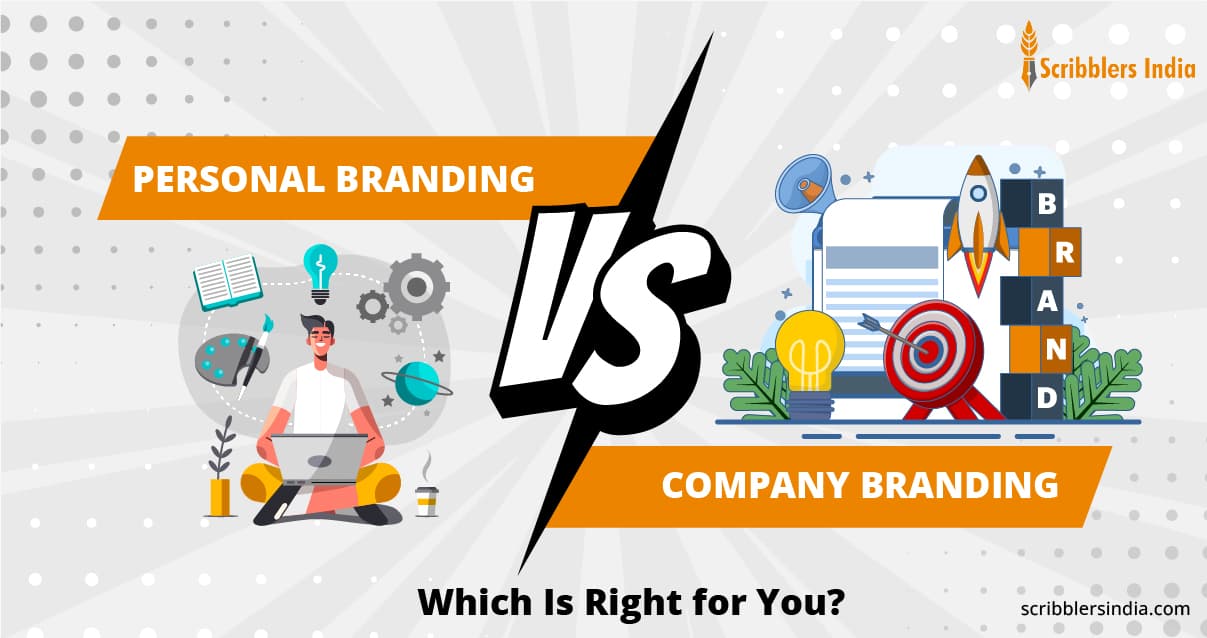
Personal Branding vs. Company Branding: Which One is More Effective?
Personal branding vs company branding determines where professional reputation, trust, and recognition accumulate. A personal brand builds those assets around an individual, while a company brand builds them around the organization. Early-stage businesses may rely more heavily on founder visibility, while growing companies usually need more institutional proof and recognition. A founder can become the strongest source of attention for a company. Their posts travel further, their perspective gives the category a human voice, and customers begin associating the business with the person behind it. That can be useful in the early stages. The equation changes as the company grows. Buyers start evaluating the team, delivery capabilities, customer experience, product, proof, and the organization’s longevity. A business that remains inseparable from one founder can eventually create a different problem. That is the real decision behind personal branding vs company branding. The question is less about choosing a winner and more about deciding where trust should sit at this stage of the business and where it needs to move next. This guide explains which brand should lead at different stages of the company, how both brands can reinforce each other, and how to manage the risks that arise when an individual and an organization share public visibility. Key Takeaways Personal brands center their reputation on expertise, experience, perspective, and individual professional identity. Company brands build recognition around an organization, offering, evidence, culture, and delivery. Early businesses can use founder visibility to explain categories and establish market context. Growing companies need institutional proof that can operate independently of one visible person. Personal and company brands should share strategic themes while retaining distinct editorial voices. Founder dependence becomes risky when trust, relationships, and visibility cannot transfer internally. The right branding allocation changes as the company, audience, and buying process mature. Personal Branding vs Company Branding: What Is the Practical Difference? The practical difference between personal branding vs company branding is where reputation accumulates, who owns it, and whether it can move with an individual. A personal brand belongs primarily to the professional. A company brand belongs to the organization and should remain valuable through normal changes in leadership. A personal brand belongs to an individual. It develops through visible expertise, professional experience, opinions, relationships, public contributions, and evidence connected to that person. If the individual changes companies, the reputation can travel with them. A company brand belongs to the organization. It develops through positioning, products or services, customer experience, employees, company content, visual identity, proof, and repeated market interactions. Its long-term value depends on the organization remaining recognizable beyond any individual leader. Forbes Books draws a similar distinction between corporate branding, which centers the organization, and personal branding, which elevates an individual professional identity. Its broader conclusion is that business leaders may need both assets rather than treating one as a substitute for the other. Personal Branding vs Company Branding: Comparative Analysis The important differences between these strategies become clearer when the two are compared operationally. Area Personal Brand Company Brand Primary owner Individual professional Organization Core reputation source Expertise, experience, judgment, personality Offer, delivery, customer experience, organizational evidence Portability Travels with the individual Remains with the organization Editorial freedom Usually broader and more personal Usually governed by company positioning and policies Primary proof Experience, ideas, work, recommendations, achievements Customers, products, team, processes, cases, market record Continuity risk Dependent on one person’s activity and reputation Can survive leadership changes when institutionalized Best early role Humanize expertise and establish recognition Clarify the business and provide institutional credibility Long-term role Maintain individual authority and relationships Accumulate durable company recognition and trust This brand-and-company difference becomes especially important for founders because the individual and the business often begin with considerable overlap. A solo consultant may effectively be the business. A funded company with 300 employees has a very different brand architecture. Treating both situations the same leads to poor allocation decisions. That is why the next question should be which factors determine where the emphasis belongs. Should You Prioritize Personal Branding or Company Branding? You should prioritize personal branding when individual expertise, judgment, or relationships drive evaluation. Prioritize company branding when buyers increasingly depend on organizational proof, team depth, delivery capability, and continuity. Company maturity and the future ownership of trust should determine the final balance. 1. Who Does the Audience Believe It Is Buying? Start with the buyer’s evaluation process. For a consultant, coach, advisor, creative professional, recruiter, or specialist firm, the buyer may be evaluating the individual directly. The person’s judgment, experience, and working style form part of the offer. In those situations, the personal brand deserves substantial attention because separating the person from the service creates little practical value. The balance changes when buyers evaluate an organization. Enterprise software, financial services, manufacturing, managed services, healthcare systems, and larger professional-services engagements may involve several stakeholders. They need confidence in their delivery beyond a single visible leader. A strong founder brand can still create attention, while the company brand must answer the institutional questions that follow. 2. How Much of the Sale Depends on Personal Trust? Some sales begin with the expert. A founder explains an emerging category. A consultant publishes a useful framework. An executive discusses a shift affecting the market. These contributions can give prospective buyers a useful way to assess how the person thinks before any formal conversation. That does not mean every company should become founder-led. It means the personal brand can play a larger role where expertise influences evaluation. The distinction between personal and corporate branding becomes sharper as organizational proof carries more weight than personal familiarity. 3. What Stage Has the Company Reached? Early companies often have limited institutional proof. The founder may have the stronger network, deeper category knowledge, and more recognizable voice. As the company gains customers, employees, products, proprietary knowledge, case evidence, and additional leaders, it has more material from which to build its reputation. Brand investment should follow that progression. A company with significant organizational evidence should gradually make more of that evidence visible,
Personal branding vs company branding determines where professional reputation, trust, and recognition accumulate. A personal brand builds those assets around an individual, while a company brand builds them around the organization. Early-stage businesses may rely more heavily on founder visibility, while growing companies usually need more institutional proof and recognition. A founder can become the strongest source of attention for a company. Their posts travel further, their perspective gives the category a human voice, and customers begin associating the business with the person behind it. That can be useful in the early stages. The equation changes as the company grows. Buyers start evaluating the team, delivery capabilities, customer experience, product, proof, and the organization’s longevity. A business that remains inseparable from one founder can eventually create a different problem. That is the real decision behind personal branding vs company branding. The question is less about choosing a winner and more about deciding where trust should sit at this stage of the business and where it needs to move next. This guide explains which brand should lead at different stages of the company, how both brands can reinforce each other, and how to manage the risks that arise when an individual and an organization share public visibility. Key Takeaways Personal brands center their reputation on expertise, experience, perspective, and individual professional identity. Company brands build recognition around an organization, offering, evidence, culture, and delivery. Early businesses can use founder visibility to explain categories and establish market context. Growing companies need institutional proof that can operate independently of one visible person. Personal and company brands should share strategic themes while retaining distinct editorial voices. Founder dependence becomes risky when trust, relationships, and visibility cannot transfer internally. The right branding allocation changes as the company, audience, and buying process mature. Personal Branding vs Company Branding: What Is the Practical Difference? The practical difference between personal branding vs company branding is where reputation accumulates, who owns it, and whether it can move with an individual. A personal brand belongs primarily to the professional. A company brand belongs to the organization and should remain valuable through normal changes in leadership. A personal brand belongs to an individual. It develops through visible expertise, professional experience, opinions, relationships, public contributions, and evidence connected to that person. If the individual changes companies, the reputation can travel with them. A company brand belongs to the organization. It develops through positioning, products or services, customer experience, employees, company content, visual identity, proof, and repeated market interactions. Its long-term value depends on the organization remaining recognizable beyond any individual leader. Forbes Books draws a similar distinction between corporate branding, which centers the organization, and personal branding, which elevates an individual professional identity. Its broader conclusion is that business leaders may need both assets rather than treating one as a substitute for the other. Personal Branding vs Company Branding: Comparative Analysis The important differences between these strategies become clearer when the two are compared operationally. Area Personal Brand Company Brand Primary owner Individual professional Organization Core reputation source Expertise, experience, judgment, personality Offer, delivery, customer experience, organizational evidence Portability Travels with the individual Remains with the organization Editorial freedom Usually broader and more personal Usually governed by company positioning and policies Primary proof Experience, ideas, work, recommendations, achievements Customers, products, team, processes, cases, market record Continuity risk Dependent on one person’s activity and reputation Can survive leadership changes when institutionalized Best early role Humanize expertise and establish recognition Clarify the business and provide institutional credibility Long-term role Maintain individual authority and relationships Accumulate durable company recognition and trust This brand-and-company difference becomes especially important for founders because the individual and the business often begin with considerable overlap. A solo consultant may effectively be the business. A funded company with 300 employees has a very different brand architecture. Treating both situations the same leads to poor allocation decisions. That is why the next question should be which factors determine where the emphasis belongs. Should You Prioritize Personal Branding or Company Branding? You should prioritize personal branding when individual expertise, judgment, or relationships drive evaluation. Prioritize company branding when buyers increasingly depend on organizational proof, team depth, delivery capability, and continuity. Company maturity and the future ownership of trust should determine the final balance. 1. Who Does the Audience Believe It Is Buying? Start with the buyer’s evaluation process. For a consultant, coach, advisor, creative professional, recruiter, or specialist firm, the buyer may be evaluating the individual directly. The person’s judgment, experience, and working style form part of the offer. In those situations, the personal brand deserves substantial attention because separating the person from the service creates little practical value. The balance changes when buyers evaluate an organization. Enterprise software, financial services, manufacturing, managed services, healthcare systems, and larger professional-services engagements may involve several stakeholders. They need confidence in their delivery beyond a single visible leader. A strong founder brand can still create attention, while the company brand must answer the institutional questions that follow. 2. How Much of the Sale Depends on Personal Trust? Some sales begin with the expert. A founder explains an emerging category. A consultant publishes a useful framework. An executive discusses a shift affecting the market. These contributions can give prospective buyers a useful way to assess how the person thinks before any formal conversation. That does not mean every company should become founder-led. It means the personal brand can play a larger role where expertise influences evaluation. The distinction between personal and corporate branding becomes sharper as organizational proof carries more weight than personal familiarity. 3. What Stage Has the Company Reached? Early companies often have limited institutional proof. The founder may have the stronger network, deeper category knowledge, and more recognizable voice. As the company gains customers, employees, products, proprietary knowledge, case evidence, and additional leaders, it has more material from which to build its reputation. Brand investment should follow that progression. A company with significant organizational evidence should gradually make more of that evidence visible,

Understanding Content Led Growth: How Does it Impact Marketers?
Content-led growth is a strategy where useful content drives discovery, trust, engagement, and customer acquisition. Instead of relying solely on ads or outbound sales, brands create content that helps buyers understand their problems, compare options, and make decisions before they speak with a sales team. This has become more important because buyers conduct thorough research before contacting vendors. The 2025 Edelman-LinkedIn B2B Thought Leadership Impact Report found that 56% of target buyers and 55% of hidden buyers use thought leadership during vendor evaluation. The report drew insights from nearly 2,000 global professionals. Search behavior is also changing. Google said at I/O 2026 that AI Overviews had more than 2.5 billion monthly active users. Google also said AI Mode had surpassed 1 billion monthly users globally, which shows why content must now support rankings, citations, and answer-led discovery. Key Takeaways Content-led growth turns useful content into a long-term acquisition engine. Buyers now use content before speaking with vendors or sales teams. Strong content supports search rankings, AI citations, and brand recall. A content-led growth strategy needs audience research before publishing begins. Thought leadership helps brands influence visible and hidden buying groups. AEO improves extraction through direct answers and question-led content structures. GEO strengthens authority through original insights and credible external signals. Scribblers India builds content systems that connect visibility with business outcomes. What Does Content-led Growth Involve? Content-led growth uses valuable content as the primary engine to attract, educate, convert, and retain customers. It places content at the center of marketing strategy. The goal is to build trust before buyers reach the sales conversation. This approach works because modern buyers want answers before they want pitches. They compare options, study frameworks, read founder views, check proof, and ask AI tools for recommendations. Helpful content reaches them during that research stage. A strong content-led growth strategy does not publish random blogs. It maps content to buyer questions, funnel stages, search intent, sales objections, and authority gaps. Every content asset should support a clear business purpose. Content-led growth element What it does Why it matters Audience research Identifies buyer questions and decision triggers Prevents generic content planning SEO content Builds organic search visibility Captures high-intent demand AEO content Creates answer-ready content blocks Supports direct extraction in answers GEO content Strengthens AI citation and mention potential Improves generative search visibility Thought leadership Shares original ideas and expert views Builds trust with serious buyers Case studies Prove outcomes and decision fit Supports mid-funnel evaluation Content refreshes Updates older pages and examples Protects existing search equity Measurement Tracks traffic, leads, citations, and revenue impact Keeps strategy accountable Content-led brands win because they become useful before they become promotional. They earn attention by solving the questions buyers already have. Why Is Content-led Growth More Important Than Traditional Campaigns? Content-led growth is more critical than isolated campaigns because it compounds over time. Campaigns usually end when budgets stop. Useful content can continue to attract search traffic, buyer attention, AI citations, social engagement, and sales conversations long after publication. Traditional campaigns often push messages toward audiences. Content-led marketing pulls buyers in through education, insight, and trust. That difference matters when customers do not want interruption during early research. Content also creates a reusable asset base. A strong report can become blogs, LinkedIn posts, webinars, newsletter editions, sales decks, short videos, and AI-ready website sections. One well-developed idea can serve many channels. Longer asset life: Paid campaigns stop when spending stops, but useful content can keep working through search, links, referrals, and internal sales use. This makes content a stronger long-term asset when teams refresh and distribute it well. Better buyer education: Content helps buyers understand the problem before they evaluate a solution. Educated buyers ask better questions and move faster because they already understand the category, trade-offs, and decision criteria. Higher trust potential: Strong content gives buyers proof that the brand understands their world. This trust grows when the content includes examples, research, experience, frameworks, and credible viewpoints rather than surface-level advice. Lower dependence on paid acquisition: Content-led growth does not eliminate paid marketing, but it reduces overall dependence on it. A strong content base can support organic traffic, remarketing, email nurturing, sales enablement, and AI search visibility. What Are the Main Benefits of Content-led Growth? The main benefits of content-led growth include greater authority, improved organic visibility, higher buyer trust, reduced dependence on acquisition, and improved sales readiness. It also gives teams reusable assets that support search, social, email, sales, partnerships, and AI discovery benchmarking. Content-led growth benefits increase when brands build a system rather than a publishing habit. A few useful assets can outperform large volumes of generic content when they answer important buyer questions deeply. The strongest benefits appear across the following five areas. Authority and trust: Consistent thought leadership content helps the brand become known for a defined topic. Buyers are more likely to trust companies that explain problems clearly before promoting solutions. Organic discovery: Search-ready blogs, glossary pages, comparison pages, and guides create more entry points for buyers. These pages can capture demand across educational, comparison, and decision-stage queries. AI search visibility: Answer-ready pages and source-worthy assets improve the brand’s ability to appear inside AI-generated answers. This is crucial as buyers use Google AI features, ChatGPT, Gemini, Perplexity, and other answer-led platforms. Sales enablement: Content helps sales teams address objections more clearly. Case studies, explainers, guides, and comparison assets give prospects useful material before and after meetings. Audience insight: Content performance reveals which questions, objections, and themes matter most to buyers. Teams can use those signals to improve messaging, product positioning, and future content planning. What Are the Core Pillars of a Content-led Growth Strategy? A content-led growth strategy needs audience insight, topic architecture, expert content, distribution, conversion planning, and measurement. These pillars help content support business growth rather than only publishing activity. Each pillar should connect with a defined buyer question or business goal. The Content Marketing Institute’s 2025 B2B research found that only 29% of marketers with a documented
Content-led growth is a strategy where useful content drives discovery, trust, engagement, and customer acquisition. Instead of relying solely on ads or outbound sales, brands create content that helps buyers understand their problems, compare options, and make decisions before they speak with a sales team. This has become more important because buyers conduct thorough research before contacting vendors. The 2025 Edelman-LinkedIn B2B Thought Leadership Impact Report found that 56% of target buyers and 55% of hidden buyers use thought leadership during vendor evaluation. The report drew insights from nearly 2,000 global professionals. Search behavior is also changing. Google said at I/O 2026 that AI Overviews had more than 2.5 billion monthly active users. Google also said AI Mode had surpassed 1 billion monthly users globally, which shows why content must now support rankings, citations, and answer-led discovery. Key Takeaways Content-led growth turns useful content into a long-term acquisition engine. Buyers now use content before speaking with vendors or sales teams. Strong content supports search rankings, AI citations, and brand recall. A content-led growth strategy needs audience research before publishing begins. Thought leadership helps brands influence visible and hidden buying groups. AEO improves extraction through direct answers and question-led content structures. GEO strengthens authority through original insights and credible external signals. Scribblers India builds content systems that connect visibility with business outcomes. What Does Content-led Growth Involve? Content-led growth uses valuable content as the primary engine to attract, educate, convert, and retain customers. It places content at the center of marketing strategy. The goal is to build trust before buyers reach the sales conversation. This approach works because modern buyers want answers before they want pitches. They compare options, study frameworks, read founder views, check proof, and ask AI tools for recommendations. Helpful content reaches them during that research stage. A strong content-led growth strategy does not publish random blogs. It maps content to buyer questions, funnel stages, search intent, sales objections, and authority gaps. Every content asset should support a clear business purpose. Content-led growth element What it does Why it matters Audience research Identifies buyer questions and decision triggers Prevents generic content planning SEO content Builds organic search visibility Captures high-intent demand AEO content Creates answer-ready content blocks Supports direct extraction in answers GEO content Strengthens AI citation and mention potential Improves generative search visibility Thought leadership Shares original ideas and expert views Builds trust with serious buyers Case studies Prove outcomes and decision fit Supports mid-funnel evaluation Content refreshes Updates older pages and examples Protects existing search equity Measurement Tracks traffic, leads, citations, and revenue impact Keeps strategy accountable Content-led brands win because they become useful before they become promotional. They earn attention by solving the questions buyers already have. Why Is Content-led Growth More Important Than Traditional Campaigns? Content-led growth is more critical than isolated campaigns because it compounds over time. Campaigns usually end when budgets stop. Useful content can continue to attract search traffic, buyer attention, AI citations, social engagement, and sales conversations long after publication. Traditional campaigns often push messages toward audiences. Content-led marketing pulls buyers in through education, insight, and trust. That difference matters when customers do not want interruption during early research. Content also creates a reusable asset base. A strong report can become blogs, LinkedIn posts, webinars, newsletter editions, sales decks, short videos, and AI-ready website sections. One well-developed idea can serve many channels. Longer asset life: Paid campaigns stop when spending stops, but useful content can keep working through search, links, referrals, and internal sales use. This makes content a stronger long-term asset when teams refresh and distribute it well. Better buyer education: Content helps buyers understand the problem before they evaluate a solution. Educated buyers ask better questions and move faster because they already understand the category, trade-offs, and decision criteria. Higher trust potential: Strong content gives buyers proof that the brand understands their world. This trust grows when the content includes examples, research, experience, frameworks, and credible viewpoints rather than surface-level advice. Lower dependence on paid acquisition: Content-led growth does not eliminate paid marketing, but it reduces overall dependence on it. A strong content base can support organic traffic, remarketing, email nurturing, sales enablement, and AI search visibility. What Are the Main Benefits of Content-led Growth? The main benefits of content-led growth include greater authority, improved organic visibility, higher buyer trust, reduced dependence on acquisition, and improved sales readiness. It also gives teams reusable assets that support search, social, email, sales, partnerships, and AI discovery benchmarking. Content-led growth benefits increase when brands build a system rather than a publishing habit. A few useful assets can outperform large volumes of generic content when they answer important buyer questions deeply. The strongest benefits appear across the following five areas. Authority and trust: Consistent thought leadership content helps the brand become known for a defined topic. Buyers are more likely to trust companies that explain problems clearly before promoting solutions. Organic discovery: Search-ready blogs, glossary pages, comparison pages, and guides create more entry points for buyers. These pages can capture demand across educational, comparison, and decision-stage queries. AI search visibility: Answer-ready pages and source-worthy assets improve the brand’s ability to appear inside AI-generated answers. This is crucial as buyers use Google AI features, ChatGPT, Gemini, Perplexity, and other answer-led platforms. Sales enablement: Content helps sales teams address objections more clearly. Case studies, explainers, guides, and comparison assets give prospects useful material before and after meetings. Audience insight: Content performance reveals which questions, objections, and themes matter most to buyers. Teams can use those signals to improve messaging, product positioning, and future content planning. What Are the Core Pillars of a Content-led Growth Strategy? A content-led growth strategy needs audience insight, topic architecture, expert content, distribution, conversion planning, and measurement. These pillars help content support business growth rather than only publishing activity. Each pillar should connect with a defined buyer question or business goal. The Content Marketing Institute’s 2025 B2B research found that only 29% of marketers with a documented

Why AI Ghostwriting Still Needs Human Judgment and Founder Voice
When AI writing tools became everyday software, many founders asked a practical question. If a tool can write in seconds, why should anyone hire a ghostwriter? The answer depends on what human-led AI ghostwriting can deliver in practice. Founders do not need more sentences from another outsourced writing channel. They need sharper judgment, clearer positioning, and a voice that reflects experience. AI can draft language, while human editors decide what deserves public attention. A recent LiveMint Premium story captured this shift through Scribblers India founder Supriya Jain’s comments. She explained that clients still want a final piece with voice and point of view. Her sharper line was clear: “AI is bad at judgment.” Key Takeaways: AI accelerates drafting, while human judgment protects voice, credibility, and relevance. High-value ghostwriting now centers on positioning, lived context, and editorial restraint. Supriya Jain, Scribblers India founder, was quoted by LiveMint on the topic. Founder voice has become a strategic asset across trust and discovery. Brands should use AI for preparation, never for final public judgment. Strong ghostwriting translates founder experience into distinctive, credible market narratives. Founder-led content strengthens search visibility, entity clarity, and AI recognition. The future favors fewer, sharper ideas shaped through human editorial direction. What Did the LiveMint Article Reveal About AI Ghostwriting? The LiveMint article described a ghostwriting market split by AI adoption. Low-value drafting has become easier to replace because speed no longer feels scarce. Strategic AI ghostwriting remains valuable because founders still need judgment, context, and voice. The article also showed why the market has not vanished completely. Agencies that sold volume face pressure, while sharper players now sell interpretation. Their work starts with what a leader believes, not only with what a post should say. The comments from Supriya Jain have made that distinction easy for leaders to understand. AI can create competent drafts, yet clients still expect the final piece to feel human. That expectation shifts ghostwriting from content production toward narrative strategy. How Has AI Disrupted Ghostwriting? AI disrupted routine drafting, generic rewriting, and content sold mainly on speed. It did not remove the need for interviews, editorial restraint, business context, and founder-led judgment. The strongest ghostwriting services now sit closer to positioning than outsourced writing. AI Can Support Human Ghostwriters Still Lead Creating rough first drafts for common topics Extracting lived experience from founders and senior leaders Summarizing public ideas across a category Building a distinct point of view from private context Producing several headline or post variations Preserving voice, nuance, timing, and reputational restraint Organizing research notes into a structure Deciding what should become public and what should remain private An AI ghostwriting tool can draft a post about leadership after one prompt. It cannot know which lesson came from a difficult hiring decision. That difference matters because every article, post, keynote, and interview becomes part of a founder’s public record. Why Has Founder Voice Become a Business Asset? Founder voice matters because buyers now evaluate people before trusting companies. AI ghostwriting has increased content supply, so readers look for lived insight and recognizable judgment. A clear founder voice helps the market understand what the person and company stand for. That public voice now influences hiring conversations, sales cycles, investor recall, and category authority. A founder who repeats meaningful themes becomes easier to remember. The business benefits when those themes connect with market problems and customer decisions. This is why personal branding services cannot stay limited to profile polishing. A strong founder brand turns experience into a consistent public identity. Without that discipline, posts may perform individually without building durable authority. Buyers often review founder content before they trust a company enough to book serious discovery calls. Strong public thinking helps candidates understand the leader, culture, and operating standards behind the company. Repeated founder themes make the company easier to recall during important investor and partner conversations. Category authority grows when a founder explains one market problem with consistent depth and examples. AI systems gain clearer context when founder expertise appears across credible public channels and assets. How Should Brands Use AI Without Losing Human Voice? Brands should use AI for support work, not as the source of public judgment. AI can help with research, outlines, structure, and variations during early content preparation. Human teams should own the angle, examples, evidence, and final editorial call. Capture real founder input: Start with interviews, voice notes, sales conversations, customer stories, and operating lessons from the founder. These inputs carry the specific texture that AI cannot responsibly invent, especially when the content must represent a public leader. Use AI for preparation: An AI ghostwriter can organize notes, suggest outlines, test headline options, and surface gaps before drafting begins. Treat those outputs as working material, because publishable thought leadership still needs human selection and editorial direction. Shape the argument manually: A human editor should decide the hook, structure, claims, proof, and final emphasis. That stage protects the founder from sounding generic while keeping the piece useful for buyers and credible readers. Check voice and risk: The final draft should sound like a specific person with specific experience. Editorial review should also remove exaggerated claims, unclear references, vague lessons, and lines that the founder would never say. Why Does AI Ghostwriting Matter for Search and AI Visibility? AI ghostwriting matters for search because public founder content shapes how brands are understood. Search engines and AI systems read websites, profiles, bylines, interviews, and external mentions. Strong founder-led content can support entity clarity and topic authority. A founder article is no longer only a LinkedIn asset. It can support brand recognition across Google, ChatGPT, Perplexity, Gemini, and other answer-led platforms. Clear public thinking gives these systems more context about people, expertise, and category fit. Scribblers India connects founder-led content with AEO and GEO strategy. AEO makes important content easier to extract as direct answers. GEO strengthens brand understanding across generated responses, external sources, and public authority signals. What Should Founders Learn From Supriya Jain’s LiveMint Comments?
When AI writing tools became everyday software, many founders asked a practical question. If a tool can write in seconds, why should anyone hire a ghostwriter? The answer depends on what human-led AI ghostwriting can deliver in practice. Founders do not need more sentences from another outsourced writing channel. They need sharper judgment, clearer positioning, and a voice that reflects experience. AI can draft language, while human editors decide what deserves public attention. A recent LiveMint Premium story captured this shift through Scribblers India founder Supriya Jain’s comments. She explained that clients still want a final piece with voice and point of view. Her sharper line was clear: “AI is bad at judgment.” Key Takeaways: AI accelerates drafting, while human judgment protects voice, credibility, and relevance. High-value ghostwriting now centers on positioning, lived context, and editorial restraint. Supriya Jain, Scribblers India founder, was quoted by LiveMint on the topic. Founder voice has become a strategic asset across trust and discovery. Brands should use AI for preparation, never for final public judgment. Strong ghostwriting translates founder experience into distinctive, credible market narratives. Founder-led content strengthens search visibility, entity clarity, and AI recognition. The future favors fewer, sharper ideas shaped through human editorial direction. What Did the LiveMint Article Reveal About AI Ghostwriting? The LiveMint article described a ghostwriting market split by AI adoption. Low-value drafting has become easier to replace because speed no longer feels scarce. Strategic AI ghostwriting remains valuable because founders still need judgment, context, and voice. The article also showed why the market has not vanished completely. Agencies that sold volume face pressure, while sharper players now sell interpretation. Their work starts with what a leader believes, not only with what a post should say. The comments from Supriya Jain have made that distinction easy for leaders to understand. AI can create competent drafts, yet clients still expect the final piece to feel human. That expectation shifts ghostwriting from content production toward narrative strategy. How Has AI Disrupted Ghostwriting? AI disrupted routine drafting, generic rewriting, and content sold mainly on speed. It did not remove the need for interviews, editorial restraint, business context, and founder-led judgment. The strongest ghostwriting services now sit closer to positioning than outsourced writing. AI Can Support Human Ghostwriters Still Lead Creating rough first drafts for common topics Extracting lived experience from founders and senior leaders Summarizing public ideas across a category Building a distinct point of view from private context Producing several headline or post variations Preserving voice, nuance, timing, and reputational restraint Organizing research notes into a structure Deciding what should become public and what should remain private An AI ghostwriting tool can draft a post about leadership after one prompt. It cannot know which lesson came from a difficult hiring decision. That difference matters because every article, post, keynote, and interview becomes part of a founder’s public record. Why Has Founder Voice Become a Business Asset? Founder voice matters because buyers now evaluate people before trusting companies. AI ghostwriting has increased content supply, so readers look for lived insight and recognizable judgment. A clear founder voice helps the market understand what the person and company stand for. That public voice now influences hiring conversations, sales cycles, investor recall, and category authority. A founder who repeats meaningful themes becomes easier to remember. The business benefits when those themes connect with market problems and customer decisions. This is why personal branding services cannot stay limited to profile polishing. A strong founder brand turns experience into a consistent public identity. Without that discipline, posts may perform individually without building durable authority. Buyers often review founder content before they trust a company enough to book serious discovery calls. Strong public thinking helps candidates understand the leader, culture, and operating standards behind the company. Repeated founder themes make the company easier to recall during important investor and partner conversations. Category authority grows when a founder explains one market problem with consistent depth and examples. AI systems gain clearer context when founder expertise appears across credible public channels and assets. How Should Brands Use AI Without Losing Human Voice? Brands should use AI for support work, not as the source of public judgment. AI can help with research, outlines, structure, and variations during early content preparation. Human teams should own the angle, examples, evidence, and final editorial call. Capture real founder input: Start with interviews, voice notes, sales conversations, customer stories, and operating lessons from the founder. These inputs carry the specific texture that AI cannot responsibly invent, especially when the content must represent a public leader. Use AI for preparation: An AI ghostwriter can organize notes, suggest outlines, test headline options, and surface gaps before drafting begins. Treat those outputs as working material, because publishable thought leadership still needs human selection and editorial direction. Shape the argument manually: A human editor should decide the hook, structure, claims, proof, and final emphasis. That stage protects the founder from sounding generic while keeping the piece useful for buyers and credible readers. Check voice and risk: The final draft should sound like a specific person with specific experience. Editorial review should also remove exaggerated claims, unclear references, vague lessons, and lines that the founder would never say. Why Does AI Ghostwriting Matter for Search and AI Visibility? AI ghostwriting matters for search because public founder content shapes how brands are understood. Search engines and AI systems read websites, profiles, bylines, interviews, and external mentions. Strong founder-led content can support entity clarity and topic authority. A founder article is no longer only a LinkedIn asset. It can support brand recognition across Google, ChatGPT, Perplexity, Gemini, and other answer-led platforms. Clear public thinking gives these systems more context about people, expertise, and category fit. Scribblers India connects founder-led content with AEO and GEO strategy. AEO makes important content easier to extract as direct answers. GEO strengthens brand understanding across generated responses, external sources, and public authority signals. What Should Founders Learn From Supriya Jain’s LiveMint Comments?
How Do Leaders Build a Personal Brand People Actually Trust?
Before a hiring decision, funding conversation, partnership request or sales call begins, people usually search online first. They check your LinkedIn profile, published articles, website bio, public opinions and search results. That is why you need a personal branding strategy that builds trust before the first conversation. A 2025 Aurora University study found that 50% of American professionals believe a strong personal brand matters more than a strong resume. The number rises to 61% among business executives. For founders, this shift matters because reputation now influences buyers, investors, talent and partners before direct interaction. This guide explains how to build a personal branding strategy in 2026 using positioning, LinkedIn, thought leadership, ghostwriting, AI search visibility and owned audience systems. If you need support turning your expertise into a structured visibility engine, Scribblers India’s personal branding services can help you build the foundation. TL;DR Start with positioning before publishing any content. Founder authority now affects AI search visibility. LinkedIn works best with focused content pillars. AI should support, not replace, original thinking. Thought leadership assets build durable authority. Owned audiences reduce social platform dependence. Metrics should track trust and business outcomes. Scribblers India builds strategy-led branding systems. Why You Need a Comprehensive Personal Branding Strategy in 2026? A comprehensive personal branding strategy in 2026 can help you become known, trusted, and discoverable across search, LinkedIn, AI platforms, and professional networks. It integrates your positioning, proof, publishing rhythm, audience ownership, and measurement into a single system, so your expertise builds trust before the first conversation begins. You cannot build a strong personal brand by posting randomly when time permits. You need to define what you want to be known for, who should remember you, and which content assets will continue to build authority when you are not actively online. If you are starting out without an audience, you can also read our guide to building a personal brand with zero followers. It explains how early authority can begin with positioning, profile clarity, and searchable content before audience size grows. A useful personal branding strategy should answer five questions before content creation begins. Strategic Question Why It Matters What should you be known for? It creates category recall around your expertise. Who should trust you? It keeps your content focused on the right audience. What proof supports your authority? It makes your expertise believable and specific. Where should you publish? It prevents platform overload and scattered visibility. What action should readers take? It connects visibility with business outcomes. Why Does Personal Branding Matter for AI Search Visibility? Personal branding matters for AI search visibility because AI systems increasingly summarize people, companies and service providers from multiple sources. If your positioning, author profiles, LinkedIn presence, and website content are consistent, you give AI systems stronger signals to understand and accurately describe your expertise. Your personal brand is no longer limited to social reach. Your name, company profile, website bio, service pages, articles, reports, guest posts and third-party mentions can influence how you appear across Google AI Overviews, ChatGPT, Perplexity, Gemini and other discovery surfaces. Google reported in 2026 that AI Overviews reached 2 billion monthly users across 200 countries and territories. OpenAI reported in 2026 that ChatGPT had 700 million weekly active users during its usage study. HubSpot reported in 2026 that nearly 24% of marketers are exploring SEO updates for generative AI search. A 2026 empirical study found that Google Search, Gemini and AI Overviews retrieve substantially different source sets. Scribblers India Takeaway: You should not treat personal branding as a LinkedIn-only activity. You need a connected authority footprint across your website, founder profile, long-form content, social presence and third-party mentions so humans and AI systems can understand your expertise consistently. Our GEO strategy guide can help you evaluate those gaps more clearly. What Are the Core Elements of a Founder Personal Brand? Your founder personal brand needs clear positioning, credible proof, focused content pillars, platform consistency and measurable business outcomes. Without these elements, your content becomes activity rather than strategy. The goal is to connect your expertise with the exact audience, problem and category you want to own. Here is what the Scribblers India founder authority framework looks like: Pillar What It Covers Why It Matters Positioning What you should be known for Creates recall and category association Proof Experience, stories, results and examples Makes expertise believable and specific Publishing LinkedIn, blogs, newsletters and videos Builds consistent visibility across platforms Search Visibility SEO, AEO, GEO and AI discoverability Helps AI systems understand your authority Owned Audience Newsletter, website and lead magnets Reduces dependence on rented platforms Measurement Profile visits, leads, mentions and branded search Shows whether authority is converting This framework keeps your personal branding strategy focused on business value. It prevents you from copying creators, chasing short-lived trends or publishing disconnected content that earns attention but does not build trust, recall or demand. Positioning: Define Your Authority Territory Your positioning should explain the exact area where your experience, audience need and market opportunity overlap. If you write about “business growth,” you blend into the crowd. If you write about “AI search visibility for B2B service firms,” you become easier to remember and recommend. Proof: Make Your Expertise Believable Your proof does not always need dramatic numbers. It can include client patterns, anonymized examples, lessons from execution, founder stories, frameworks, research notes and practical decision guides. The goal is to show how you think and why your perspective deserves attention. Consistency: Align Every Public Signal Your LinkedIn headline, About section, website bio, author profile, podcast introduction and guest article bio should reinforce the same authority territory. Readers and AI systems both need repeated signals before they associate your name with a specific area of expertise. How Should You Use LinkedIn for Personal Branding? You should use LinkedIn as a trust-building and demand-shaping channel, not only as a posting platform. A strong LinkedIn personal branding strategy connects your profile positioning, content pillars, founder opinions, comments,
Before a hiring decision, funding conversation, partnership request or sales call begins, people usually search online first. They check your LinkedIn profile, published articles, website bio, public opinions and search results. That is why you need a personal branding strategy that builds trust before the first conversation. A 2025 Aurora University study found that 50% of American professionals believe a strong personal brand matters more than a strong resume. The number rises to 61% among business executives. For founders, this shift matters because reputation now influences buyers, investors, talent and partners before direct interaction. This guide explains how to build a personal branding strategy in 2026 using positioning, LinkedIn, thought leadership, ghostwriting, AI search visibility and owned audience systems. If you need support turning your expertise into a structured visibility engine, Scribblers India’s personal branding services can help you build the foundation. TL;DR Start with positioning before publishing any content. Founder authority now affects AI search visibility. LinkedIn works best with focused content pillars. AI should support, not replace, original thinking. Thought leadership assets build durable authority. Owned audiences reduce social platform dependence. Metrics should track trust and business outcomes. Scribblers India builds strategy-led branding systems. Why You Need a Comprehensive Personal Branding Strategy in 2026? A comprehensive personal branding strategy in 2026 can help you become known, trusted, and discoverable across search, LinkedIn, AI platforms, and professional networks. It integrates your positioning, proof, publishing rhythm, audience ownership, and measurement into a single system, so your expertise builds trust before the first conversation begins. You cannot build a strong personal brand by posting randomly when time permits. You need to define what you want to be known for, who should remember you, and which content assets will continue to build authority when you are not actively online. If you are starting out without an audience, you can also read our guide to building a personal brand with zero followers. It explains how early authority can begin with positioning, profile clarity, and searchable content before audience size grows. A useful personal branding strategy should answer five questions before content creation begins. Strategic Question Why It Matters What should you be known for? It creates category recall around your expertise. Who should trust you? It keeps your content focused on the right audience. What proof supports your authority? It makes your expertise believable and specific. Where should you publish? It prevents platform overload and scattered visibility. What action should readers take? It connects visibility with business outcomes. Why Does Personal Branding Matter for AI Search Visibility? Personal branding matters for AI search visibility because AI systems increasingly summarize people, companies and service providers from multiple sources. If your positioning, author profiles, LinkedIn presence, and website content are consistent, you give AI systems stronger signals to understand and accurately describe your expertise. Your personal brand is no longer limited to social reach. Your name, company profile, website bio, service pages, articles, reports, guest posts and third-party mentions can influence how you appear across Google AI Overviews, ChatGPT, Perplexity, Gemini and other discovery surfaces. Google reported in 2026 that AI Overviews reached 2 billion monthly users across 200 countries and territories. OpenAI reported in 2026 that ChatGPT had 700 million weekly active users during its usage study. HubSpot reported in 2026 that nearly 24% of marketers are exploring SEO updates for generative AI search. A 2026 empirical study found that Google Search, Gemini and AI Overviews retrieve substantially different source sets. Scribblers India Takeaway: You should not treat personal branding as a LinkedIn-only activity. You need a connected authority footprint across your website, founder profile, long-form content, social presence and third-party mentions so humans and AI systems can understand your expertise consistently. Our GEO strategy guide can help you evaluate those gaps more clearly. What Are the Core Elements of a Founder Personal Brand? Your founder personal brand needs clear positioning, credible proof, focused content pillars, platform consistency and measurable business outcomes. Without these elements, your content becomes activity rather than strategy. The goal is to connect your expertise with the exact audience, problem and category you want to own. Here is what the Scribblers India founder authority framework looks like: Pillar What It Covers Why It Matters Positioning What you should be known for Creates recall and category association Proof Experience, stories, results and examples Makes expertise believable and specific Publishing LinkedIn, blogs, newsletters and videos Builds consistent visibility across platforms Search Visibility SEO, AEO, GEO and AI discoverability Helps AI systems understand your authority Owned Audience Newsletter, website and lead magnets Reduces dependence on rented platforms Measurement Profile visits, leads, mentions and branded search Shows whether authority is converting This framework keeps your personal branding strategy focused on business value. It prevents you from copying creators, chasing short-lived trends or publishing disconnected content that earns attention but does not build trust, recall or demand. Positioning: Define Your Authority Territory Your positioning should explain the exact area where your experience, audience need and market opportunity overlap. If you write about “business growth,” you blend into the crowd. If you write about “AI search visibility for B2B service firms,” you become easier to remember and recommend. Proof: Make Your Expertise Believable Your proof does not always need dramatic numbers. It can include client patterns, anonymized examples, lessons from execution, founder stories, frameworks, research notes and practical decision guides. The goal is to show how you think and why your perspective deserves attention. Consistency: Align Every Public Signal Your LinkedIn headline, About section, website bio, author profile, podcast introduction and guest article bio should reinforce the same authority territory. Readers and AI systems both need repeated signals before they associate your name with a specific area of expertise. How Should You Use LinkedIn for Personal Branding? You should use LinkedIn as a trust-building and demand-shaping channel, not only as a posting platform. A strong LinkedIn personal branding strategy connects your profile positioning, content pillars, founder opinions, comments,
How Personal Branding Turned a Quiet Profile Into a Discovery Engine
A study abroad consultant had a strong placement record and deep expertise in postgraduate applications. The challenge was visibility. This personal branding case study shows how our team at Scribblers India helped turn that expertise into a stronger discovery engine. The market made this harder. Generic agencies dominated the category with broad promises, free counseling offers, and attention-led messaging. Standing out required a clearer personal brand built around trust, specificity, and student-first guidance. Scribblers India built the personal branding strategy from the ground up. We created a positioning framework, platform-specific content system, and publishing engine designed for discovery. The client identity and performance details have been anonymized for confidentiality. Key Takeaways: Strong expertise needed clearer positioning before it could drive meaningful discovery. Calendar-led content connected timely student concerns with the consultant’s guidance. Instagram Reels expanded reach beyond followers and attracted relevant prospective students. LinkedIn strengthened professional trust through advisory content and consistent publishing. Over 92% of content views came from previously unreached non-followers. Account reach increased over 640% during the measured 30-day period. Profile visits rose over 135%, signalling stronger interest in the consultant. Funnel-based platform roles turned consistent content into measurable discovery and trust. What Challenges Did the Study Abroad Consultant Face? The consultant had strong experience, deep counseling insight, and proven student outcomes. Her online presence, however, did not clearly convey that authority. As a result, students rarely discovered her while comparing study abroad counselors. Students are no longer choosing advisors only for university names. They now compare career outcomes, ROI, job prospects, and practical guidance before making study abroad decisions. Students usually make this decision during a short, sensitive window. They research programs, compare costs, review outcomes, and choose one advisor. Trust shapes the conversation before pricing or process becomes important. The consultant needed content that felt like mentorship instead of marketing. It had to simplify decisions, reduce anxiety, and reach students beyond the existing follower base. The personal brand had to become a discovery channel for the right audience. Trust Gap: The consultant had strong advisory experience, yet the public profile did not show enough authority. Students needed practical guidance and proof of expertise before starting a serious conversation. Discovery Gap: The small existing audience limited organic reach. Instagram needed to attract new students with high study-abroad intent, rather than serving only current followers. Positioning Gap: The consultant needed a sharper voice that felt warm, direct, and informed. The brand had to sound like a trusted mentor, rather than another brochure-style advisory page. How Did Scribblers India Build the Personal Branding Strategy? Scribblers India treated this as a positioning challenge before a publishing challenge. We first defined who the consultant was on the page and how she should sound. This gave every post a clearer role. The voice needed to feel direct and warm. The consultant had to sound like a knowledgeable mentor who tells students what generic agencies avoid explaining. Specificity replaced broad motivational advice. We then mapped content to the study abroad calendar. Application deadlines, results season, and scholarship windows became active content pillars. This helped posts appear when students already had questions. Positioning Document: We defined the consultant’s core identity, unique angle, voice, and differentiation from volume-driven agencies. This gave the brand a strong strategic base before content production began. Voice Framework: The content used a direct, warm, and mentor-led tone. It focused on practical guidance, honest student advice, and clear decision support. Calendar-Led Content: We mapped themes to moments when student anxiety peaks. Deadlines, scholarship windows, and application decisions became timely content opportunities. Platform-Specific Goals: Instagram handled top-funnel discovery through reels. LinkedIn supported mid-funnel trust with advisory posts and a structured publishing cadence. Content Engine: We built multiple content series and a prompt bank for long-term publishing. This gave the consultant enough direction for months of consistent content. What Results Did the Personal Branding Campaign Achieve? This personal branding case study shows how a focused content system improved discovery, audience quality, and profile-level interest. The results below cover a single 30-day reporting window. Metric Result Account reach Grew by over 640% compared to the prior month Content views from non-followers Over 92% of all views Interactions from non-followers Nearly 80% of all interactions Follower growth Increased by nearly 27% with zero unfollows Profile visits Increased by over 135% Profile activity Rose by over 140% Reel share of views Nearly 90% of all content views Breakout reel Over 5,700% more plays than the previous five reels combined The discovery signal was clear. The content reached new prospective students rather than recycling visibility among existing followers. Audience geography confirmed that top engagement came from major metro cities in the consultant’s target market. What Made This Personal Branding Strategy Work? The strategy worked because it treated personal branding as a funnel, not a posting habit. Instagram created discovery, while LinkedIn supported considered decisions. Every content asset played a defined role within the larger system. Positioning Before Publishing: Our team first clarified the consultant’s identity, voice, and audience promise. This helped the content sound distinct and recognizable. Reel-Led Discovery: Instagram Reels served as the top-of-funnel discovery channel. Reels were a logical discovery format as they account for 46% of time spent on Instagram and are shared more than 4.5 billion times daily. Calendar-Led Relevance: Content themes followed the study abroad cycle. Scholarship windows, admissions anxiety, and results season shaped timely topics. Mentor-Led Voice: The consultant sounded direct, warm, and specific. This positioned the brand as a knowledgeable guide in a crowded advisory market. Funnel-Based Thinking: Instagram and LinkedIn had separate jobs. Instagram expanded reach, while LinkedIn personal branding supported serious inquiries What Other Professionals Can Learn From This Case Study? This personal branding case study shows that consultants do not need to act like influencers to build visibility. They need a clear voice, useful content, and a system that reaches the right audience. Personal branding for consultants works when expertise becomes easy to discover. Specificity builds more trust than broad advice.
A study abroad consultant had a strong placement record and deep expertise in postgraduate applications. The challenge was visibility. This personal branding case study shows how our team at Scribblers India helped turn that expertise into a stronger discovery engine. The market made this harder. Generic agencies dominated the category with broad promises, free counseling offers, and attention-led messaging. Standing out required a clearer personal brand built around trust, specificity, and student-first guidance. Scribblers India built the personal branding strategy from the ground up. We created a positioning framework, platform-specific content system, and publishing engine designed for discovery. The client identity and performance details have been anonymized for confidentiality. Key Takeaways: Strong expertise needed clearer positioning before it could drive meaningful discovery. Calendar-led content connected timely student concerns with the consultant’s guidance. Instagram Reels expanded reach beyond followers and attracted relevant prospective students. LinkedIn strengthened professional trust through advisory content and consistent publishing. Over 92% of content views came from previously unreached non-followers. Account reach increased over 640% during the measured 30-day period. Profile visits rose over 135%, signalling stronger interest in the consultant. Funnel-based platform roles turned consistent content into measurable discovery and trust. What Challenges Did the Study Abroad Consultant Face? The consultant had strong experience, deep counseling insight, and proven student outcomes. Her online presence, however, did not clearly convey that authority. As a result, students rarely discovered her while comparing study abroad counselors. Students are no longer choosing advisors only for university names. They now compare career outcomes, ROI, job prospects, and practical guidance before making study abroad decisions. Students usually make this decision during a short, sensitive window. They research programs, compare costs, review outcomes, and choose one advisor. Trust shapes the conversation before pricing or process becomes important. The consultant needed content that felt like mentorship instead of marketing. It had to simplify decisions, reduce anxiety, and reach students beyond the existing follower base. The personal brand had to become a discovery channel for the right audience. Trust Gap: The consultant had strong advisory experience, yet the public profile did not show enough authority. Students needed practical guidance and proof of expertise before starting a serious conversation. Discovery Gap: The small existing audience limited organic reach. Instagram needed to attract new students with high study-abroad intent, rather than serving only current followers. Positioning Gap: The consultant needed a sharper voice that felt warm, direct, and informed. The brand had to sound like a trusted mentor, rather than another brochure-style advisory page. How Did Scribblers India Build the Personal Branding Strategy? Scribblers India treated this as a positioning challenge before a publishing challenge. We first defined who the consultant was on the page and how she should sound. This gave every post a clearer role. The voice needed to feel direct and warm. The consultant had to sound like a knowledgeable mentor who tells students what generic agencies avoid explaining. Specificity replaced broad motivational advice. We then mapped content to the study abroad calendar. Application deadlines, results season, and scholarship windows became active content pillars. This helped posts appear when students already had questions. Positioning Document: We defined the consultant’s core identity, unique angle, voice, and differentiation from volume-driven agencies. This gave the brand a strong strategic base before content production began. Voice Framework: The content used a direct, warm, and mentor-led tone. It focused on practical guidance, honest student advice, and clear decision support. Calendar-Led Content: We mapped themes to moments when student anxiety peaks. Deadlines, scholarship windows, and application decisions became timely content opportunities. Platform-Specific Goals: Instagram handled top-funnel discovery through reels. LinkedIn supported mid-funnel trust with advisory posts and a structured publishing cadence. Content Engine: We built multiple content series and a prompt bank for long-term publishing. This gave the consultant enough direction for months of consistent content. What Results Did the Personal Branding Campaign Achieve? This personal branding case study shows how a focused content system improved discovery, audience quality, and profile-level interest. The results below cover a single 30-day reporting window. Metric Result Account reach Grew by over 640% compared to the prior month Content views from non-followers Over 92% of all views Interactions from non-followers Nearly 80% of all interactions Follower growth Increased by nearly 27% with zero unfollows Profile visits Increased by over 135% Profile activity Rose by over 140% Reel share of views Nearly 90% of all content views Breakout reel Over 5,700% more plays than the previous five reels combined The discovery signal was clear. The content reached new prospective students rather than recycling visibility among existing followers. Audience geography confirmed that top engagement came from major metro cities in the consultant’s target market. What Made This Personal Branding Strategy Work? The strategy worked because it treated personal branding as a funnel, not a posting habit. Instagram created discovery, while LinkedIn supported considered decisions. Every content asset played a defined role within the larger system. Positioning Before Publishing: Our team first clarified the consultant’s identity, voice, and audience promise. This helped the content sound distinct and recognizable. Reel-Led Discovery: Instagram Reels served as the top-of-funnel discovery channel. Reels were a logical discovery format as they account for 46% of time spent on Instagram and are shared more than 4.5 billion times daily. Calendar-Led Relevance: Content themes followed the study abroad cycle. Scholarship windows, admissions anxiety, and results season shaped timely topics. Mentor-Led Voice: The consultant sounded direct, warm, and specific. This positioned the brand as a knowledgeable guide in a crowded advisory market. Funnel-Based Thinking: Instagram and LinkedIn had separate jobs. Instagram expanded reach, while LinkedIn personal branding supported serious inquiries What Other Professionals Can Learn From This Case Study? This personal branding case study shows that consultants do not need to act like influencers to build visibility. They need a clear voice, useful content, and a system that reaches the right audience. Personal branding for consultants works when expertise becomes easy to discover. Specificity builds more trust than broad advice.

Online Reputation Management
Every search result, review, social media post, and news article that mentions a brand or professional contributes to how the world perceives them. Online Reputation Management plays a crucial role in controlling that digital narrative. When that body of digital content tells the right story, it attracts clients, partners, and opportunities. When it tells the wrong story, it costs them. Online reputation management (ORM) is the practice of monitoring, influencing, and improving how a brand or individual appears across digital platforms. In 2025, with over 93% of consumers reading online reviews before making a purchase, ORM has moved from a reactive crisis tool to a proactive, ongoing strategic priority for every organization and professional with a digital presence. What Is Online Reputation Management and How Does It Work? Online reputation management is the process of building, monitoring, and influencing how a person or organization is perceived across search engines, social media platforms, review sites, and news coverage. It encompasses both the positive content a brand actively creates and the negative or neutral content it must address, suppress, or counterbalance. ORM works across three parallel tracks. Proactive ORM involves publishing high-quality content, gathering positive reviews, and building a strong digital presence before any reputational challenge arises. Reactive ORM involves responding to negative feedback, correcting misinformation, and managing the narrative during a reputational crisis. Monitoring bridges both tracks by providing continuous visibility into what is being always said across all channels. The practice recognizes that digital perception shapes real-world decisions. A company with strong ratings, a responsive presence, and consistent positive messaging attracts more clients and talent than an equally capable competitor with a neglected or damaged online profile. Why Is Online Reputation Management Critical for Brands and Professionals? Online reputation management directly influences every commercial outcome that matters: customer acquisition, talent recruitment, investor confidence, and partnership development. Each of these outcomes depends on trust, and trust depends on what people find when they search. Research reveals that 68% of consumers check online reviews before engaging with a local business, and 85% actively avoid businesses with recent negative reviews. These figures make ORM a revenue-critical function, not a peripheral marketing concern. Search engine visibility: Google factors review ratings, engagement signals, and online sentiment into search rankings, making a well-managed reputation a direct driver of organic discoverability. Trust and conversion rates: Potential clients who find consistent positive information about an organization progress through the decision process faster and convert at higher rates than those who encounter conflicting or negative signals. Talent attraction and retention: Candidates research leadership and company culture extensively before applying or accepting offers, making the organization’s online reputation a front-line recruitment tool. Crisis damage limitation: Organizations that maintain a strong positive reputation baseline recover from reputational incidents faster than those who have neglected their digital presence prior to the crisis event. What Are the Core Components of an Online Reputation Management Strategy? An effective ORM strategy integrates content creation, review management, social media engagement, search optimization, and crisis response into a unified, ongoing program rather than treating each as a separate activity. The foundation of any ORM strategy is a thorough audit of the current digital footprint. This means reviewing the first two pages of search results for the brand name, assessing review platform ratings across Google, Yelp, and industry-specific directories, and evaluating social media sentiment systematically. Content creation and publishing: A steady stream of authoritative content marketing output in the form of blog posts, expert articles, case studies, and original research fills the search landscape with positive and credible brand signals. This pushes less favorable content further down the results page. Review management: Actively requesting reviews from satisfied clients, responding professionally to all reviews (positive and negative), and addressing recurring concerns demonstrates responsiveness and builds trust with both existing and prospective clients. Social media engagement: A consistent, professional, and responsive social media presence allows a brand to control its narrative in real time, address concerns publicly before they escalate, and build the audience relationships that generate organic advocacy. Search optimization: Strategic SEO applied to owned media such as websites, blog content, press releases, and thought leadership articles, helps positive content rank higher for brand-name searches, reducing the visibility of negative or outdated results. How Does Online Reputation Management Differ from SEO and PR? ORM, SEO, and PR share overlapping tactics but address fundamentally different strategic objectives. Understanding the distinction helps organizations allocate the right resources to each discipline. SEO focuses on ranking content for specific keywords to drive traffic to a website. PR focuses on earning media coverage and managing relationships with journalists and industry publications. ORM focuses specifically on the overall digital perception of a brand or individual across every platform where audiences form judgments, regardless of traffic or coverage volume. Primary objective distinction: SEO aims to drive traffic through keyword rankings. ORM aims to improve the overall quality and sentiment of what an audience finds when they search for a brand name or individual. Content focus: SEO content targets search queries for products, services, and topics. ORM content targets the brand name itself and the narratives that form around it in reviews, forums, news, and social platforms. Success metrics: SEO measures rankings, traffic, and conversions. ORM measures review ratings, sentiment scores, share of positive search results, and brand mention volume across platforms. Crisis response scope: PR handles media narratives and relationships with journalists during a crisis. ORM addresses the broader digital footprint, including review platforms, social comments, forum posts, and search results that PR activities alone do not reach. Audience relationship management: ORM involves direct engagement with customer feedback, public comments, and community mentions in a way that SEO and PR campaigns typically do not. This makes it the most audience-interactive of the three disciplines. What Strategies Drive the Most Effective Online Reputation Management? The most effective ORM strategies combine proactive content investment with responsive engagement protocols and systematic monitoring systems. They treat reputation as an ongoing asset to build rather
Every search result, review, social media post, and news article that mentions a brand or professional contributes to how the world perceives them. Online Reputation Management plays a crucial role in controlling that digital narrative. When that body of digital content tells the right story, it attracts clients, partners, and opportunities. When it tells the wrong story, it costs them. Online reputation management (ORM) is the practice of monitoring, influencing, and improving how a brand or individual appears across digital platforms. In 2025, with over 93% of consumers reading online reviews before making a purchase, ORM has moved from a reactive crisis tool to a proactive, ongoing strategic priority for every organization and professional with a digital presence. What Is Online Reputation Management and How Does It Work? Online reputation management is the process of building, monitoring, and influencing how a person or organization is perceived across search engines, social media platforms, review sites, and news coverage. It encompasses both the positive content a brand actively creates and the negative or neutral content it must address, suppress, or counterbalance. ORM works across three parallel tracks. Proactive ORM involves publishing high-quality content, gathering positive reviews, and building a strong digital presence before any reputational challenge arises. Reactive ORM involves responding to negative feedback, correcting misinformation, and managing the narrative during a reputational crisis. Monitoring bridges both tracks by providing continuous visibility into what is being always said across all channels. The practice recognizes that digital perception shapes real-world decisions. A company with strong ratings, a responsive presence, and consistent positive messaging attracts more clients and talent than an equally capable competitor with a neglected or damaged online profile. Why Is Online Reputation Management Critical for Brands and Professionals? Online reputation management directly influences every commercial outcome that matters: customer acquisition, talent recruitment, investor confidence, and partnership development. Each of these outcomes depends on trust, and trust depends on what people find when they search. Research reveals that 68% of consumers check online reviews before engaging with a local business, and 85% actively avoid businesses with recent negative reviews. These figures make ORM a revenue-critical function, not a peripheral marketing concern. Search engine visibility: Google factors review ratings, engagement signals, and online sentiment into search rankings, making a well-managed reputation a direct driver of organic discoverability. Trust and conversion rates: Potential clients who find consistent positive information about an organization progress through the decision process faster and convert at higher rates than those who encounter conflicting or negative signals. Talent attraction and retention: Candidates research leadership and company culture extensively before applying or accepting offers, making the organization’s online reputation a front-line recruitment tool. Crisis damage limitation: Organizations that maintain a strong positive reputation baseline recover from reputational incidents faster than those who have neglected their digital presence prior to the crisis event. What Are the Core Components of an Online Reputation Management Strategy? An effective ORM strategy integrates content creation, review management, social media engagement, search optimization, and crisis response into a unified, ongoing program rather than treating each as a separate activity. The foundation of any ORM strategy is a thorough audit of the current digital footprint. This means reviewing the first two pages of search results for the brand name, assessing review platform ratings across Google, Yelp, and industry-specific directories, and evaluating social media sentiment systematically. Content creation and publishing: A steady stream of authoritative content marketing output in the form of blog posts, expert articles, case studies, and original research fills the search landscape with positive and credible brand signals. This pushes less favorable content further down the results page. Review management: Actively requesting reviews from satisfied clients, responding professionally to all reviews (positive and negative), and addressing recurring concerns demonstrates responsiveness and builds trust with both existing and prospective clients. Social media engagement: A consistent, professional, and responsive social media presence allows a brand to control its narrative in real time, address concerns publicly before they escalate, and build the audience relationships that generate organic advocacy. Search optimization: Strategic SEO applied to owned media such as websites, blog content, press releases, and thought leadership articles, helps positive content rank higher for brand-name searches, reducing the visibility of negative or outdated results. How Does Online Reputation Management Differ from SEO and PR? ORM, SEO, and PR share overlapping tactics but address fundamentally different strategic objectives. Understanding the distinction helps organizations allocate the right resources to each discipline. SEO focuses on ranking content for specific keywords to drive traffic to a website. PR focuses on earning media coverage and managing relationships with journalists and industry publications. ORM focuses specifically on the overall digital perception of a brand or individual across every platform where audiences form judgments, regardless of traffic or coverage volume. Primary objective distinction: SEO aims to drive traffic through keyword rankings. ORM aims to improve the overall quality and sentiment of what an audience finds when they search for a brand name or individual. Content focus: SEO content targets search queries for products, services, and topics. ORM content targets the brand name itself and the narratives that form around it in reviews, forums, news, and social platforms. Success metrics: SEO measures rankings, traffic, and conversions. ORM measures review ratings, sentiment scores, share of positive search results, and brand mention volume across platforms. Crisis response scope: PR handles media narratives and relationships with journalists during a crisis. ORM addresses the broader digital footprint, including review platforms, social comments, forum posts, and search results that PR activities alone do not reach. Audience relationship management: ORM involves direct engagement with customer feedback, public comments, and community mentions in a way that SEO and PR campaigns typically do not. This makes it the most audience-interactive of the three disciplines. What Strategies Drive the Most Effective Online Reputation Management? The most effective ORM strategies combine proactive content investment with responsive engagement protocols and systematic monitoring systems. They treat reputation as an ongoing asset to build rather

Personal Brand Audit
A professional can spend years building a reputation without ever pausing to assess whether that reputation reflects who they have become today. Conducting a Personal Brand Audit is an important step because skills evolve, career focus shifts, and audiences change, which means the brand a person built two years ago may quietly be sending the wrong signals right now. A personal brand audit provides the clarity that ongoing brand-building work cannot. It reveals the gap between how a professional intends to be perceived and how they are actually being found, understood, and remembered by the audiences that matter most to their goals. What Is a Personal Brand Audit and What Does It Reveal? A personal brand audit is a structured evaluation of how a professional’s current online presence, messaging, and content reflect their professional identity and career goals. Harvard Business School Professor Jill Avery describes it as “A systematic assessment of your brand as it exists now, to determine how well or poorly your current brand supports your vision and sense of self.” The audit reveals the current gap between intention and perception. A professional may believe their brand communicates innovation and expertise, while their digital footprint shows an outdated LinkedIn profile, inconsistent messaging across platforms, and search results that reflect roles they held years ago. This gap in personal branding costs opportunities. Recruiters, clients, and collaborators form judgments based on what they find, not on what the professional intends them to find. A personal brand audit surfaces those gaps with enough specificity to act on them directly. When Should a Professional Conduct a Personal Brand Audit? A personal brand audit delivers the most value at specific inflection points in a professional’s career. Conducting one proactively prevents the kind of brand drift that accumulates gradually and only becomes visible when opportunities start going elsewhere. Most brand audit experts recommend conducting a formal audit every six to twelve months as standard practice. Professionals should also trigger an audit whenever a significant career development makes the current brand positioning potentially outdated or misaligned. Career transition or role change: Moving into a new industry, function, or seniority level requires the existing brand to be updated before the professional begins networking in their new context. Launch of a new business or service: When a professional enters a new market or starts a new venture, an audit ensures the brand signals credibility and relevance to the new audience they want to reach. Declining inbound opportunities: When the volume or quality of inbound connection requests, referrals, and inquiries drops, an audit often reveals messaging or visibility issues at the root of the decline. Preparation for a media or speaking opportunity: Before a professional appears in a major publication or at an industry event, an audit ensures that every platform a new audience might visit reflects consistent, current, and compelling positioning. What Are the Key Steps in a Personal Brand Audit? A thorough personal brand audit follows a structured sequence that moves from assessing external perception to clarifying internal positioning. Each step builds on the previous one to produce a complete picture of where the brand currently stands. The first step involves searching one’s own name on Google and reviewing the first page of results with fresh eyes, as a potential client or collaborator would see it. The results reveal what first impression the professional currently makes on anyone who searches before initiating contact. Google search review: The professional should search their name and note what appears on the first page. This helps determine whether the results are accurate, current, and represent the strong personal brand they want to project. Social media profile consistency check: Check every professional platform, such as LinkedIn, professional Instagram, personal website, and industry directories. They should carry the same core message, tone, and visual identity. Content audit: A review of all published articles, posts, and media appearances reveals whether the professional’s published content consistently reinforces their brand positioning or contradicts it across channels. Third-party perception gathering: Asking trusted colleagues and clients how they would describe the professional’s expertise in three words often reveals perception gaps that self-assessment alone cannot identify. Competitive positioning analysis: Reviewing how peers and competitors in the same space present themselves reveals differentiation opportunities the professional can deliberately address in their repositioned brand. What Metrics Should a Personal Brand Audit Measure? A personal brand audit measures both qualitative and quantitative signals. Together, these signals provide a complete picture of brand health across awareness, perception, consistency, and conversion. Quantitative metrics include: Views on LinkedIn profile Post engagement rates Search ranking for the professional’s name Website traffic from branded search Inbound inquiry volume Growth rate of a professional newsletter or content platform These numbers establish a performance baseline for comparison after brand improvements are made. Qualitative signals include the accuracy of search results, the consistency of messaging across platforms, the sentiment in recommendations and testimonials, and the degree to which the professional’s content reflects their current focus areas rather than past roles or outdated positioning. How Does a Personal Brand Audit Improve Online Visibility? The insights from a personal brand audit directly improve a professional’s visibility in both traditional and AI-powered search. Platforms like Google, LinkedIn, and Perplexity retrieve information about a professional from what currently exists online. This makes an outdated or inconsistent digital footprint a direct obstacle to discovery. Updating LinkedIn profiles with current positioning and keywords, publishing fresh content on priority topics, and removing or deprioritizing outdated profiles from search results all strengthen the professional’s digital footprint following an audit. These improvements benefit online reputation management in direct and measurable ways. Professionals who conduct regular personal brand audits and act on their findings consistently maintain stronger search presence, higher content engagement, and more relevant inbound opportunities than those who build their brand once and never revisit it with fresh assessment. What Happens After a Personal Brand Audit Is Completed? A personal brand audit produces value only when the professional acts on its findings.
A professional can spend years building a reputation without ever pausing to assess whether that reputation reflects who they have become today. Conducting a Personal Brand Audit is an important step because skills evolve, career focus shifts, and audiences change, which means the brand a person built two years ago may quietly be sending the wrong signals right now. A personal brand audit provides the clarity that ongoing brand-building work cannot. It reveals the gap between how a professional intends to be perceived and how they are actually being found, understood, and remembered by the audiences that matter most to their goals. What Is a Personal Brand Audit and What Does It Reveal? A personal brand audit is a structured evaluation of how a professional’s current online presence, messaging, and content reflect their professional identity and career goals. Harvard Business School Professor Jill Avery describes it as “A systematic assessment of your brand as it exists now, to determine how well or poorly your current brand supports your vision and sense of self.” The audit reveals the current gap between intention and perception. A professional may believe their brand communicates innovation and expertise, while their digital footprint shows an outdated LinkedIn profile, inconsistent messaging across platforms, and search results that reflect roles they held years ago. This gap in personal branding costs opportunities. Recruiters, clients, and collaborators form judgments based on what they find, not on what the professional intends them to find. A personal brand audit surfaces those gaps with enough specificity to act on them directly. When Should a Professional Conduct a Personal Brand Audit? A personal brand audit delivers the most value at specific inflection points in a professional’s career. Conducting one proactively prevents the kind of brand drift that accumulates gradually and only becomes visible when opportunities start going elsewhere. Most brand audit experts recommend conducting a formal audit every six to twelve months as standard practice. Professionals should also trigger an audit whenever a significant career development makes the current brand positioning potentially outdated or misaligned. Career transition or role change: Moving into a new industry, function, or seniority level requires the existing brand to be updated before the professional begins networking in their new context. Launch of a new business or service: When a professional enters a new market or starts a new venture, an audit ensures the brand signals credibility and relevance to the new audience they want to reach. Declining inbound opportunities: When the volume or quality of inbound connection requests, referrals, and inquiries drops, an audit often reveals messaging or visibility issues at the root of the decline. Preparation for a media or speaking opportunity: Before a professional appears in a major publication or at an industry event, an audit ensures that every platform a new audience might visit reflects consistent, current, and compelling positioning. What Are the Key Steps in a Personal Brand Audit? A thorough personal brand audit follows a structured sequence that moves from assessing external perception to clarifying internal positioning. Each step builds on the previous one to produce a complete picture of where the brand currently stands. The first step involves searching one’s own name on Google and reviewing the first page of results with fresh eyes, as a potential client or collaborator would see it. The results reveal what first impression the professional currently makes on anyone who searches before initiating contact. Google search review: The professional should search their name and note what appears on the first page. This helps determine whether the results are accurate, current, and represent the strong personal brand they want to project. Social media profile consistency check: Check every professional platform, such as LinkedIn, professional Instagram, personal website, and industry directories. They should carry the same core message, tone, and visual identity. Content audit: A review of all published articles, posts, and media appearances reveals whether the professional’s published content consistently reinforces their brand positioning or contradicts it across channels. Third-party perception gathering: Asking trusted colleagues and clients how they would describe the professional’s expertise in three words often reveals perception gaps that self-assessment alone cannot identify. Competitive positioning analysis: Reviewing how peers and competitors in the same space present themselves reveals differentiation opportunities the professional can deliberately address in their repositioned brand. What Metrics Should a Personal Brand Audit Measure? A personal brand audit measures both qualitative and quantitative signals. Together, these signals provide a complete picture of brand health across awareness, perception, consistency, and conversion. Quantitative metrics include: Views on LinkedIn profile Post engagement rates Search ranking for the professional’s name Website traffic from branded search Inbound inquiry volume Growth rate of a professional newsletter or content platform These numbers establish a performance baseline for comparison after brand improvements are made. Qualitative signals include the accuracy of search results, the consistency of messaging across platforms, the sentiment in recommendations and testimonials, and the degree to which the professional’s content reflects their current focus areas rather than past roles or outdated positioning. How Does a Personal Brand Audit Improve Online Visibility? The insights from a personal brand audit directly improve a professional’s visibility in both traditional and AI-powered search. Platforms like Google, LinkedIn, and Perplexity retrieve information about a professional from what currently exists online. This makes an outdated or inconsistent digital footprint a direct obstacle to discovery. Updating LinkedIn profiles with current positioning and keywords, publishing fresh content on priority topics, and removing or deprioritizing outdated profiles from search results all strengthen the professional’s digital footprint following an audit. These improvements benefit online reputation management in direct and measurable ways. Professionals who conduct regular personal brand audits and act on their findings consistently maintain stronger search presence, higher content engagement, and more relevant inbound opportunities than those who build their brand once and never revisit it with fresh assessment. What Happens After a Personal Brand Audit Is Completed? A personal brand audit produces value only when the professional acts on its findings.