
blog Articles
Why Founders Need a Community-Led Personal Brand for Lasting Growth?
Are you tired of shouting into the social media void? You post insightful content, share valuable tips, and engage with your industry, yet it often feels like you are speaking to an empty room. Embracing a community-led personal brand could be the shift you need to break through. This is a common frustration in today’s crowded digital landscape. The old model of personal branding, which involves being a guru on a stage broadcasting to a passive audience, is broken. It is time for a fundamental shift in thinking. The future of personal branding is not about building a bigger megaphone; it is about building a bigger table. You need to transition from simply collecting followers to cultivating a thriving community. This guide will walk you through the what, why, and how of building a powerful personal brand—a brand built with your audience, not for them. Get ready to unlock a more sustainable and rewarding path to growth with your own community-led personal brand. What Is a Community-Led Personal Brand Anyway? A community-led personal brand is an identity and reputation built collaboratively with your audience. Instead of a top-down approach where you publish thought leadership content, this model positions you as a facilitator who brings people together. You unite them around a shared interest, purpose, or identity, fostering a sense of belonging and collective ownership. Building a community-led personal brand is about shared value. Community-Led Personal Brand vs Traditional Brand: Key Differences The primary difference between these two approaches lies in the direction of communication and value creation. A traditionally robust personal brand is a monologue where you broadcast your expertise to a passive audience. A community-led personal brand is a dialogue. It creates a space where members connect with you and, more importantly, with each other. Aspect Traditional Personal Brand Community-Led Personal Brand Communication Style One-way broadcast of expertise to a mostly passive audience Two-way dialogue where members connect with you and each other Core Focus Building an audience that mainly consumes your created content Nurturing a community that actively participates and co-creates value Your Role Seen as the expert standing alone on the stage Act as the host, guiding conversations like at a dinner party Value Creation Content-centric approach with limited interaction beyond your posts Relationship-centric approach that fosters trust, collaboration, and shared growth The Modern Rise of Online Communities The shift towards community is a direct response to the modern digital environment. With organic reach on social media platforms declining and audiences craving authentic connection, community building has become an effective strategy for creating lasting impact. A community-led personal brand is a move from borrowed attention on social media to owned relationships. According to reports, the organic reach for a typical Facebook post is as low as 1.65%. This means over 94% of your followers will not see your content. A community provides a direct line to your most dedicated supporters, bypassing unpredictable algorithms and fostering genuine audience engagement for personal branding. How Can a Community-Led Personal Brand Skyrocket Your Growth? Adopting a community-led strategy directly fuels sustainable growth. It creates a loyal, engaged, and self-perpetuating ecosystem around your brand. It moves beyond fleeting metrics like likes and views to build tangible assets like trust and powerful word-of-mouth marketing. A strong community-led personal brand creates a significant competitive advantage. Building Unbreakable Trust and Loyalty This approach builds deep trust by making people feel seen, heard, and valued. When you create a space for genuine interaction and shared experiences, you move beyond transactional follower relationships. This fosters psychological safety and belonging, turning casual followers into loyal advocates for your community-led personal brand. Creating a Constant Stream of Content Ideas Your community is your ultimate research and development team. By actively listening to their questions, discussions, and challenges, you gain direct insight into their most pressing needs. This feedback loop provides an endless well of relevant content ideas, ensuring your community-led personal brand is always valuable. Turning Followers Into Your Best Marketing Team A vibrant community becomes a powerful engine for organic, word-of-mouth marketing. Happy and engaged members naturally become advocates who share your work and recommend your services. This authentic promotion is far more effective than any paid advertisement, showcasing the true benefits of a strong personal brand. Real-World Networking and Collaboration The value extends beyond your connection with members; it is in the connections they form with each other. You become the central node of a valuable network, which can lead to powerful collaborations and partnerships. Facilitating these connections elevates your status from a content creator to an indispensable industry leader. How Do You Actually Build a Community-Led Personal Brand from Scratch? Building a thriving community-led personal brand is a strategic process that starts with purpose. It is maintained through consistent engagement and co-creation. It involves defining your mission, choosing the right platform, sparking conversations, encouraging participation, and actively listening to your members. Step 1: Define Your Purpose and “Why” Before gathering people, you must give them a compelling reason to come together. Your purpose is your North Star. It is the shared mission or transformation that your community will rally around. This goes deeper than your niche; it is the core belief that unites everyone. Step 2: Choose Your Community’s Home Choosing the right platform is crucial for fostering interaction. You should build your home where your ideal members feel most comfortable and the tools support your community goals. Choose what is right for the culture you want to create, rather than what is simply popular. This is key for your community-led personal brand. For real-time chat & collaboration: Consider Discord or Slack. For structured discussions & courses: Look into platforms like Circle.so or Mighty Networks. For leveraging an existing network: A Facebook Group or LinkedIn Group can be a simple starting point. Step 3: Create Content That Sparks Conversation The key to engagement is shifting from declarative content (“Here is what I know”) to interrogative content (“What do you think?”). Your goal is to
Are you tired of shouting into the social media void? You post insightful content, share valuable tips, and engage with your industry, yet it often feels like you are speaking to an empty room. Embracing a community-led personal brand could be the shift you need to break through. This is a common frustration in today’s crowded digital landscape. The old model of personal branding, which involves being a guru on a stage broadcasting to a passive audience, is broken. It is time for a fundamental shift in thinking. The future of personal branding is not about building a bigger megaphone; it is about building a bigger table. You need to transition from simply collecting followers to cultivating a thriving community. This guide will walk you through the what, why, and how of building a powerful personal brand—a brand built with your audience, not for them. Get ready to unlock a more sustainable and rewarding path to growth with your own community-led personal brand. What Is a Community-Led Personal Brand Anyway? A community-led personal brand is an identity and reputation built collaboratively with your audience. Instead of a top-down approach where you publish thought leadership content, this model positions you as a facilitator who brings people together. You unite them around a shared interest, purpose, or identity, fostering a sense of belonging and collective ownership. Building a community-led personal brand is about shared value. Community-Led Personal Brand vs Traditional Brand: Key Differences The primary difference between these two approaches lies in the direction of communication and value creation. A traditionally robust personal brand is a monologue where you broadcast your expertise to a passive audience. A community-led personal brand is a dialogue. It creates a space where members connect with you and, more importantly, with each other. Aspect Traditional Personal Brand Community-Led Personal Brand Communication Style One-way broadcast of expertise to a mostly passive audience Two-way dialogue where members connect with you and each other Core Focus Building an audience that mainly consumes your created content Nurturing a community that actively participates and co-creates value Your Role Seen as the expert standing alone on the stage Act as the host, guiding conversations like at a dinner party Value Creation Content-centric approach with limited interaction beyond your posts Relationship-centric approach that fosters trust, collaboration, and shared growth The Modern Rise of Online Communities The shift towards community is a direct response to the modern digital environment. With organic reach on social media platforms declining and audiences craving authentic connection, community building has become an effective strategy for creating lasting impact. A community-led personal brand is a move from borrowed attention on social media to owned relationships. According to reports, the organic reach for a typical Facebook post is as low as 1.65%. This means over 94% of your followers will not see your content. A community provides a direct line to your most dedicated supporters, bypassing unpredictable algorithms and fostering genuine audience engagement for personal branding. How Can a Community-Led Personal Brand Skyrocket Your Growth? Adopting a community-led strategy directly fuels sustainable growth. It creates a loyal, engaged, and self-perpetuating ecosystem around your brand. It moves beyond fleeting metrics like likes and views to build tangible assets like trust and powerful word-of-mouth marketing. A strong community-led personal brand creates a significant competitive advantage. Building Unbreakable Trust and Loyalty This approach builds deep trust by making people feel seen, heard, and valued. When you create a space for genuine interaction and shared experiences, you move beyond transactional follower relationships. This fosters psychological safety and belonging, turning casual followers into loyal advocates for your community-led personal brand. Creating a Constant Stream of Content Ideas Your community is your ultimate research and development team. By actively listening to their questions, discussions, and challenges, you gain direct insight into their most pressing needs. This feedback loop provides an endless well of relevant content ideas, ensuring your community-led personal brand is always valuable. Turning Followers Into Your Best Marketing Team A vibrant community becomes a powerful engine for organic, word-of-mouth marketing. Happy and engaged members naturally become advocates who share your work and recommend your services. This authentic promotion is far more effective than any paid advertisement, showcasing the true benefits of a strong personal brand. Real-World Networking and Collaboration The value extends beyond your connection with members; it is in the connections they form with each other. You become the central node of a valuable network, which can lead to powerful collaborations and partnerships. Facilitating these connections elevates your status from a content creator to an indispensable industry leader. How Do You Actually Build a Community-Led Personal Brand from Scratch? Building a thriving community-led personal brand is a strategic process that starts with purpose. It is maintained through consistent engagement and co-creation. It involves defining your mission, choosing the right platform, sparking conversations, encouraging participation, and actively listening to your members. Step 1: Define Your Purpose and “Why” Before gathering people, you must give them a compelling reason to come together. Your purpose is your North Star. It is the shared mission or transformation that your community will rally around. This goes deeper than your niche; it is the core belief that unites everyone. Step 2: Choose Your Community’s Home Choosing the right platform is crucial for fostering interaction. You should build your home where your ideal members feel most comfortable and the tools support your community goals. Choose what is right for the culture you want to create, rather than what is simply popular. This is key for your community-led personal brand. For real-time chat & collaboration: Consider Discord or Slack. For structured discussions & courses: Look into platforms like Circle.so or Mighty Networks. For leveraging an existing network: A Facebook Group or LinkedIn Group can be a simple starting point. Step 3: Create Content That Sparks Conversation The key to engagement is shifting from declarative content (“Here is what I know”) to interrogative content (“What do you think?”). Your goal is to
What Are the Common Reasons for Wikipedia Page Rejection?
You have dedicated hours, perhaps even days, to researching, writing, and perfecting an article for Wikipedia. You confidently click “Publish page,” anticipating the moment your work goes live. Instead, a notification arrives: your submission has been declined or, even more dishearteningly, speedily deleted. Understanding the reasons for Wikipedia page rejection can help you avoid this frustrating experience. The frustration and confusion are immense, leaving you to wonder what went wrong. This experience is a common rite of passage for many new editors because a Wikipedia page is one of the most trusted digital assets, and the standards for inclusion are rigorously high. A presence on Wikipedia lends prestige, credibility, and SEO benefits to a brand or individual, which is precisely why it is so sought-after. This guide will provide a clear and actionable roadmap to help you understand the most common reasons for Wikipedia page rejection. Read on for key strategies needed to navigate the submission process successfully and understand precisely how to avoid Wikipedia page deletion. Why Is It So Hard to Get a Wikipedia Page Approved? Getting a Wikipedia page approval is difficult as it is a global encyclopedia, not a marketing platform or business directory. Its volunteer editors strictly enforce a set of core principles known as the “Five Pillars” to maintain its integrity, and your article must meet these standards for acceptance. You must fundamentally shift your mindset from that of a marketer to that of an encyclopedist. The platform’s entire purpose is to be a neutral, fact-based summary of human knowledge. A global community of volunteer editors passionately protects this mission and acts as the guardians of the encyclopedia. They do not serve as customer service; they uphold the project’s quality and principles, and they often reject pages when submissions fail to meet those standards. What is Wikipedia’s main goal? Wikipedia’s primary mission, outlined in its Five Pillars, is to build an encyclopedia. It is not a soapbox, an advertising platform, or a place for original research. This goal directly contrasts with the natural aim of an enterprise or individual, which is often to promote a personal or business brand, control a narrative, or establish credibility. Who are the Wikipedia editors who approve or reject pages? The editors are a diverse, global community of unpaid volunteers. They range from casual contributors to highly experienced administrators with advanced permissions. Their motivation is driven by a passion for accuracy and free knowledge. These editors use review processes like “New Page Patrol” and “Articles for Creation” (AfC) to vet new submissions against established policies. This means you are not dealing with an algorithm; you must convince a knowledgeable human peer that your contribution has value, and failing to do so is among the top reasons for Wikipedia page rejection. What Is the Number One Reason My Wikipedia Article Was Rejected? The single most common reason for the ‘Wikipedia page rejected’ notice is the failure to demonstrate “notability,” which is requires that every topic must pass to merit a standalone article. ou must prove notability through strong, verifiable, third-party sources, otherwise reviewers will reject your page regardless of its quality. A lack of notability remains the most significant hurdle in creating a page. A 2022 Wikimedia Foundation study showed that reviewers declined a large percentage of drafts in the Articles for Creation process precisely because they did not cite sources that establish the subject’s notability. This is not just a suggestion; it is the bedrock of inclusion and the most critical of all reasons for Wikipedia page rejection. What does “notability” actually mean on Wikipedia? Notability is formally defined by Wikipedia’s General Notability Guideline (GNG). Its core principle is simple but strict: your topic must have received significant coverage in reliable sources that are independent of the subject. You must satisfy all three of these components. It is not a multiple-choice test. Failing to meet even one of these criteria will lead to rejection. This guideline exists to prevent Wikipedia from becoming an indiscriminate collection of information on every person, company, or garage band that exists. What counts as “significant coverage”? This is where many new editors falter. Significant coverage means that sources discuss your topic directly and in substantive detail. It is not enough for your subject to be mentioned in passing. Routine business announcements, event listings, or directory entries do not count. Think of it this way: Significant Coverage: A full-length feature article in Forbes that analyzes your company’s business model and impact on the industry. Not Significant Coverage: A syndicated press release about your new product that appears on 50 different “news” websites but originates from your own marketing department. This is just one source, not 50. How do I know if my sources are “reliable and independent”? Understanding what constitutes reliable sources for Wikipedia is arguably the most critical skill for a new editor. These sources must have a reputation for fact-checking and editorial oversight. Independence means the source has no vested interest in the topic. Here is a more detailed breakdown: Tier 1: Gold Standard (Highest Quality): Peer-reviewed academic journals. Books published by major academic presses (e.g., Oxford University Press). Articles from globally recognized newspapers of record (e.g., The New York Times, The Wall Street Journal). Tier 2: Generally Reliable: Articles from reputable national and local newspapers with strong editorial standards. Content from established, mainstream magazines (WIRED, The Atlantic, India Today). Books from respected commercial publishers. Tier 3: Questionable (Use with Caution): Trade publications (can be reliable for facts but may have a pro-industry bias). Expert blogs (can only be used to attribute an opinion to that specific expert, not to state a fact). Tier 4: Unacceptable for Notability: Press releases: They are by definition not independent. Sponsored Content/Advertorials: This is paid media and is explicitly rejected. Your Company Website/Personal Blog: You control the content. Social Media, Fan Sites, and Forums: They lack any editorial oversight. Interviews: These are primary sources, as the subject is providing the information directly. Is there a
You have dedicated hours, perhaps even days, to researching, writing, and perfecting an article for Wikipedia. You confidently click “Publish page,” anticipating the moment your work goes live. Instead, a notification arrives: your submission has been declined or, even more dishearteningly, speedily deleted. Understanding the reasons for Wikipedia page rejection can help you avoid this frustrating experience. The frustration and confusion are immense, leaving you to wonder what went wrong. This experience is a common rite of passage for many new editors because a Wikipedia page is one of the most trusted digital assets, and the standards for inclusion are rigorously high. A presence on Wikipedia lends prestige, credibility, and SEO benefits to a brand or individual, which is precisely why it is so sought-after. This guide will provide a clear and actionable roadmap to help you understand the most common reasons for Wikipedia page rejection. Read on for key strategies needed to navigate the submission process successfully and understand precisely how to avoid Wikipedia page deletion. Why Is It So Hard to Get a Wikipedia Page Approved? Getting a Wikipedia page approval is difficult as it is a global encyclopedia, not a marketing platform or business directory. Its volunteer editors strictly enforce a set of core principles known as the “Five Pillars” to maintain its integrity, and your article must meet these standards for acceptance. You must fundamentally shift your mindset from that of a marketer to that of an encyclopedist. The platform’s entire purpose is to be a neutral, fact-based summary of human knowledge. A global community of volunteer editors passionately protects this mission and acts as the guardians of the encyclopedia. They do not serve as customer service; they uphold the project’s quality and principles, and they often reject pages when submissions fail to meet those standards. What is Wikipedia’s main goal? Wikipedia’s primary mission, outlined in its Five Pillars, is to build an encyclopedia. It is not a soapbox, an advertising platform, or a place for original research. This goal directly contrasts with the natural aim of an enterprise or individual, which is often to promote a personal or business brand, control a narrative, or establish credibility. Who are the Wikipedia editors who approve or reject pages? The editors are a diverse, global community of unpaid volunteers. They range from casual contributors to highly experienced administrators with advanced permissions. Their motivation is driven by a passion for accuracy and free knowledge. These editors use review processes like “New Page Patrol” and “Articles for Creation” (AfC) to vet new submissions against established policies. This means you are not dealing with an algorithm; you must convince a knowledgeable human peer that your contribution has value, and failing to do so is among the top reasons for Wikipedia page rejection. What Is the Number One Reason My Wikipedia Article Was Rejected? The single most common reason for the ‘Wikipedia page rejected’ notice is the failure to demonstrate “notability,” which is requires that every topic must pass to merit a standalone article. ou must prove notability through strong, verifiable, third-party sources, otherwise reviewers will reject your page regardless of its quality. A lack of notability remains the most significant hurdle in creating a page. A 2022 Wikimedia Foundation study showed that reviewers declined a large percentage of drafts in the Articles for Creation process precisely because they did not cite sources that establish the subject’s notability. This is not just a suggestion; it is the bedrock of inclusion and the most critical of all reasons for Wikipedia page rejection. What does “notability” actually mean on Wikipedia? Notability is formally defined by Wikipedia’s General Notability Guideline (GNG). Its core principle is simple but strict: your topic must have received significant coverage in reliable sources that are independent of the subject. You must satisfy all three of these components. It is not a multiple-choice test. Failing to meet even one of these criteria will lead to rejection. This guideline exists to prevent Wikipedia from becoming an indiscriminate collection of information on every person, company, or garage band that exists. What counts as “significant coverage”? This is where many new editors falter. Significant coverage means that sources discuss your topic directly and in substantive detail. It is not enough for your subject to be mentioned in passing. Routine business announcements, event listings, or directory entries do not count. Think of it this way: Significant Coverage: A full-length feature article in Forbes that analyzes your company’s business model and impact on the industry. Not Significant Coverage: A syndicated press release about your new product that appears on 50 different “news” websites but originates from your own marketing department. This is just one source, not 50. How do I know if my sources are “reliable and independent”? Understanding what constitutes reliable sources for Wikipedia is arguably the most critical skill for a new editor. These sources must have a reputation for fact-checking and editorial oversight. Independence means the source has no vested interest in the topic. Here is a more detailed breakdown: Tier 1: Gold Standard (Highest Quality): Peer-reviewed academic journals. Books published by major academic presses (e.g., Oxford University Press). Articles from globally recognized newspapers of record (e.g., The New York Times, The Wall Street Journal). Tier 2: Generally Reliable: Articles from reputable national and local newspapers with strong editorial standards. Content from established, mainstream magazines (WIRED, The Atlantic, India Today). Books from respected commercial publishers. Tier 3: Questionable (Use with Caution): Trade publications (can be reliable for facts but may have a pro-industry bias). Expert blogs (can only be used to attribute an opinion to that specific expert, not to state a fact). Tier 4: Unacceptable for Notability: Press releases: They are by definition not independent. Sponsored Content/Advertorials: This is paid media and is explicitly rejected. Your Company Website/Personal Blog: You control the content. Social Media, Fan Sites, and Forums: They lack any editorial oversight. Interviews: These are primary sources, as the subject is providing the information directly. Is there a
How Can You Use AI for Ebook Writing as a Co-Pilot, Not a Ghostwriter?
Is artificial intelligence a threat to authors, or is it the most powerful tool a writer has ever had? As AI writing tools become advanced, this question becomes increasingly relevant. The answer depends entirely on how you use them. This guide introduces our core philosophy: the “Co-Pilot, Not Ghostwriter” model. Think of AI as a transformative assistant for brainstorming, research, and polishing. However, you, the human author, must always remain the “pilot.” You provide the strategy, voice, expertise, and soul that turns mere text into a transformative reading experience. We will show you exactly how to use AI to write an ebook at every stage, what pitfalls to avoid, and why your human creativity is the most important ingredient for success. This is your complete guide to AI for ebook writing. What is the Difference Between an AI Co-Pilot and an AI Ghostwriter? The key to successfully using AI for ebook writing is understanding its role. An AI ghostwriter attempts to replace you, often producing generic content that lacks authority. An AI co-pilot, however, augments your abilities, making you faster and more efficient without sacrificing the authenticity that you can provide. This distinction is crucial. One approach leads to forgettable, low-value content, while the other empowers you to produce your best work at an unprecedented speed. The difference lies not in the tool itself, but in the strategy you employ when using it. Let’s explore a detailed comparison. What does an AI ghostwriter do? Low-effort, high-level prompts define the AI ghostwriter approach. Imagine asking an AI, “Write a 10,000-word ebook on digital marketing for small businesses.” The result will be predictable and shallow. It will generate chapters with generic titles like “What is SEO?” and “The Importance of Social Media,” filled with surface-level definitions you could find anywhere. It will lack novel strategies, specific case studies, and a compelling voice. This is AI content creation at its worst—it adds to the noise instead of providing a clear signal. What does an AI co-pilot do? The AI co-pilot approach is a strategic partnership. The AI assists with specific, well-defined tasks under your expert direction. It becomes a tireless assistant that can wear many hats: a brainstorming partner to challenge your ideas, a research assistant to summarize dense articles, and a meticulous editor to polish your prose. You provide the creative spark, the critical thinking, and the overarching strategy; the AI helps with the heavy lifting. To illustrate, here is how the two approaches differ in practice: Task AI Ghostwriter (Flawed Approach) AI Co-Pilot (Effective Approach) Idea Generation “Give me an ebook idea.” “Act as a marketing strategist. My audience is [describe audience]. Brainstorm 5 ebook titles that address their primary pain point: [describe pain point].” Drafting “Write Chapter 1 about SEO.” “Here is my outline for Chapter 1 and my three key points. Draft an introductory paragraph that uses the analogy of a library to explain how search engines work.” Tone & Voice “Write this in a friendly tone.” “Analyze this 500-word sample of my writing [paste text]. Now, rewrite the following paragraph to match my voice, focusing on shorter sentences and using more analogies.” Why should a human always be the pilot for ebook writing? You must always be the pilot to protect your most valuable assets: your credibility, your brand, and your intellectual property. When you are the pilot, you are the undisputed author. You infuse the text with unique experiences, which is the cornerstone of Google’s E-E-A-T (Experience, Expertise, Authoritativeness, Trustworthiness) guidelines. Pure AI content fails the “Experience” test completely. Furthermore, your personal brand cannot be built on a generic AI voice. Readers connect with human stories and authentic perspectives, elements only you can provide. How Can I Use AI at Each Stage of Writing an Ebook? You can leverage AI for ebook writing as a powerful assistant throughout the entire creation workflow. From generating initial ideas to performing the final polish, AI writing tools can streamline tasks that are often time-consuming. This allows you to focus more of your energy on the creative aspects of your project, such as storytelling and sharing your unique expertise. Here is a detailed, practical look at how to use AI to write an ebook smartly and effectively at every step, complete with prompt examples. How can AI help with ebook ideas and research? Before you write a single word, AI can act as a world-class market research analyst. It can help you validate ideas, understand your audience more deeply, and even analyze your competition. Brainstorming and Validation: Instead of just asking for ideas, ask AI to role-play. Prompt Example: “Act as a market research analyst specializing in the creator economy. I want to write an ebook for aspiring podcasters. What are the top 5 most searched-for problems or questions this audience has? Provide any available data or common forum topics.” Competitor Analysis: Feed the AI the URL to a competitor’s ebook sales page or their table of contents. Prompt Example: “Here is the table of contents for a popular ebook on podcasting. Analyze it and identify three potential content gaps or niche angles that my own ebook could fill to stand out.” How can AI help create a powerful outline? A detailed outline is the blueprint for a successful ebook. Using AI to help structure your thoughts can save dozens of hours. The key is to be specific with your request. From Simple Idea to Detailed Structure: Contrast a weak prompt with a strong one. Weak Prompt: “Outline an ebook on project management.” Strong Prompt: “You are an expert instructional designer creating a curriculum. Generate a detailed, 7-chapter outline for an ebook titled ‘The Agile Startup: Project Management for Fast-Growing Teams.’ The target audience is non-technical founders. The structure should start with the basics of Agile, move to practical implementation with tools like Trello, cover team communication, and end with scaling these processes. Include 3-5 descriptive bullet points for each chapter.” How can AI help with writing the first
Is artificial intelligence a threat to authors, or is it the most powerful tool a writer has ever had? As AI writing tools become advanced, this question becomes increasingly relevant. The answer depends entirely on how you use them. This guide introduces our core philosophy: the “Co-Pilot, Not Ghostwriter” model. Think of AI as a transformative assistant for brainstorming, research, and polishing. However, you, the human author, must always remain the “pilot.” You provide the strategy, voice, expertise, and soul that turns mere text into a transformative reading experience. We will show you exactly how to use AI to write an ebook at every stage, what pitfalls to avoid, and why your human creativity is the most important ingredient for success. This is your complete guide to AI for ebook writing. What is the Difference Between an AI Co-Pilot and an AI Ghostwriter? The key to successfully using AI for ebook writing is understanding its role. An AI ghostwriter attempts to replace you, often producing generic content that lacks authority. An AI co-pilot, however, augments your abilities, making you faster and more efficient without sacrificing the authenticity that you can provide. This distinction is crucial. One approach leads to forgettable, low-value content, while the other empowers you to produce your best work at an unprecedented speed. The difference lies not in the tool itself, but in the strategy you employ when using it. Let’s explore a detailed comparison. What does an AI ghostwriter do? Low-effort, high-level prompts define the AI ghostwriter approach. Imagine asking an AI, “Write a 10,000-word ebook on digital marketing for small businesses.” The result will be predictable and shallow. It will generate chapters with generic titles like “What is SEO?” and “The Importance of Social Media,” filled with surface-level definitions you could find anywhere. It will lack novel strategies, specific case studies, and a compelling voice. This is AI content creation at its worst—it adds to the noise instead of providing a clear signal. What does an AI co-pilot do? The AI co-pilot approach is a strategic partnership. The AI assists with specific, well-defined tasks under your expert direction. It becomes a tireless assistant that can wear many hats: a brainstorming partner to challenge your ideas, a research assistant to summarize dense articles, and a meticulous editor to polish your prose. You provide the creative spark, the critical thinking, and the overarching strategy; the AI helps with the heavy lifting. To illustrate, here is how the two approaches differ in practice: Task AI Ghostwriter (Flawed Approach) AI Co-Pilot (Effective Approach) Idea Generation “Give me an ebook idea.” “Act as a marketing strategist. My audience is [describe audience]. Brainstorm 5 ebook titles that address their primary pain point: [describe pain point].” Drafting “Write Chapter 1 about SEO.” “Here is my outline for Chapter 1 and my three key points. Draft an introductory paragraph that uses the analogy of a library to explain how search engines work.” Tone & Voice “Write this in a friendly tone.” “Analyze this 500-word sample of my writing [paste text]. Now, rewrite the following paragraph to match my voice, focusing on shorter sentences and using more analogies.” Why should a human always be the pilot for ebook writing? You must always be the pilot to protect your most valuable assets: your credibility, your brand, and your intellectual property. When you are the pilot, you are the undisputed author. You infuse the text with unique experiences, which is the cornerstone of Google’s E-E-A-T (Experience, Expertise, Authoritativeness, Trustworthiness) guidelines. Pure AI content fails the “Experience” test completely. Furthermore, your personal brand cannot be built on a generic AI voice. Readers connect with human stories and authentic perspectives, elements only you can provide. How Can I Use AI at Each Stage of Writing an Ebook? You can leverage AI for ebook writing as a powerful assistant throughout the entire creation workflow. From generating initial ideas to performing the final polish, AI writing tools can streamline tasks that are often time-consuming. This allows you to focus more of your energy on the creative aspects of your project, such as storytelling and sharing your unique expertise. Here is a detailed, practical look at how to use AI to write an ebook smartly and effectively at every step, complete with prompt examples. How can AI help with ebook ideas and research? Before you write a single word, AI can act as a world-class market research analyst. It can help you validate ideas, understand your audience more deeply, and even analyze your competition. Brainstorming and Validation: Instead of just asking for ideas, ask AI to role-play. Prompt Example: “Act as a market research analyst specializing in the creator economy. I want to write an ebook for aspiring podcasters. What are the top 5 most searched-for problems or questions this audience has? Provide any available data or common forum topics.” Competitor Analysis: Feed the AI the URL to a competitor’s ebook sales page or their table of contents. Prompt Example: “Here is the table of contents for a popular ebook on podcasting. Analyze it and identify three potential content gaps or niche angles that my own ebook could fill to stand out.” How can AI help create a powerful outline? A detailed outline is the blueprint for a successful ebook. Using AI to help structure your thoughts can save dozens of hours. The key is to be specific with your request. From Simple Idea to Detailed Structure: Contrast a weak prompt with a strong one. Weak Prompt: “Outline an ebook on project management.” Strong Prompt: “You are an expert instructional designer creating a curriculum. Generate a detailed, 7-chapter outline for an ebook titled ‘The Agile Startup: Project Management for Fast-Growing Teams.’ The target audience is non-technical founders. The structure should start with the basics of Agile, move to practical implementation with tools like Trello, cover team communication, and end with scaling these processes. Include 3-5 descriptive bullet points for each chapter.” How can AI help with writing the first
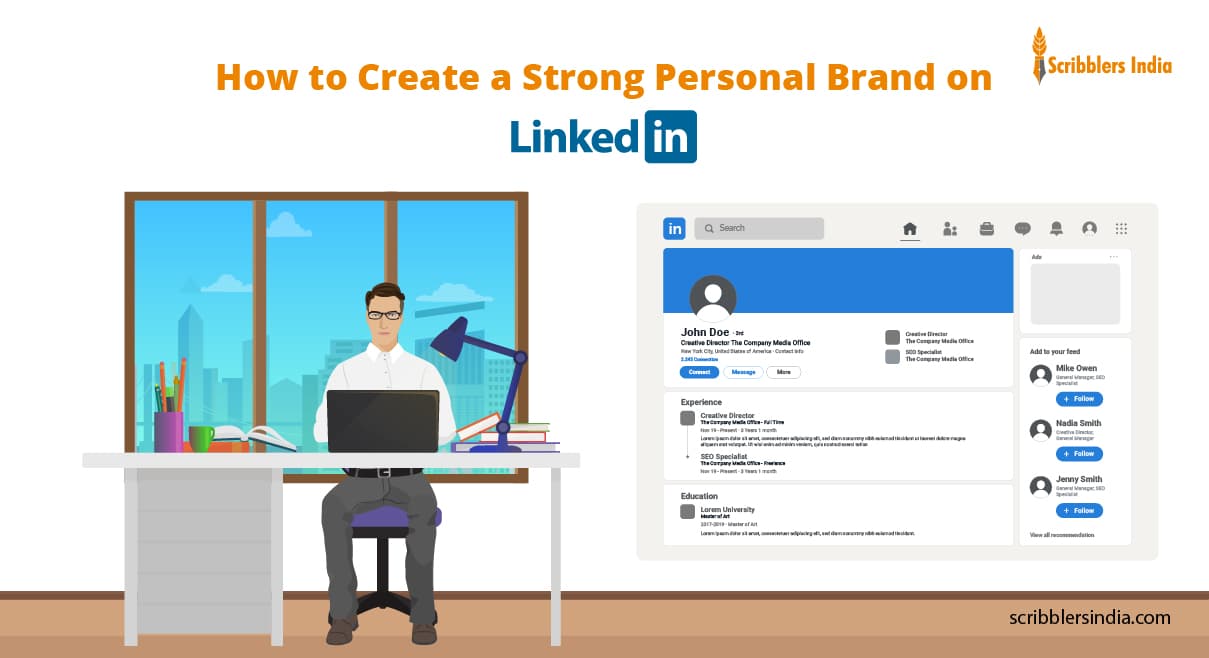
What Makes LinkedIn Personal Branding Effective for Executives and Founders?
LinkedIn personal branding can still produce little professional value when the profile looks polished but the positioning remains unclear. Your headline may sound credible, your About section may read well, and you may publish consistently. Yet visitors can still leave without understanding what you genuinely know, why your experience matters, or where your expertise fits. Effective LinkedIn personal branding solves that problem by connecting positioning, proof, content, relationships, discovery, and measurement. Your profile explains who you are and your work supports the claim. Your content demonstrates how you think, while relevant conversations help the right people encounter those ideas repeatedly. This guide explains how to build a personal brand on LinkedIn as a connected reputation system. You will learn how to define your position, strengthen your profile evidence, build content grounded in real expertise, grow the right network, improve discoverability, measure progress, and create a practical 90-day operating plan. Key Takeaways: Define the expertise and audience before rewriting individual profile sections Make important professional claims traceable to credible work and evidence Align your headline, About, Experience, recommendations, and Featured assets Build ideas from real expertise instead of copying popular posting formulas Prioritize relevant professional relationships instead of maximizing connection volume Use precise expertise language without turning your profile into SEO copy Keep your role and expertise aligned across authoritative online sources Track audience quality, profile activity, discovery, and professional outcomes separately Use the first 90 days to build foundations before increasing volume Which Questions Do You Need to Answer Before Starting LinkedIn Personal Branding? Before you optimize your profile, define who should recognize your expertise, what they should associate with your name, what evidence supports that position, and what professional action matters next. These decisions give your profile, content, network, and measurement system one clear strategic direction. Who Needs to Recognize Your Expertise? Avoid broad audiences such as “everyone in technology” or “business leaders.” A founder may need recognition among buyers, investors, analysts, senior hires, or partners. A consultant may care about decision-makers facing one defined problem, while a job seeker may prioritize hiring managers and relevant industry peers. Your choice of audience affects the evidence you emphasize and the conversations worth joining. If you want enterprise buyers to understand your work, your profile needs different proof from someone seeking a board role. Clear audience priorities also make later analytics easier to interpret. What Should They Associate With Your Name? Choose an expertise territory that is specific enough to become memorable. “Marketing leader” provides limited context, whereas “B2B SaaS positioning and category strategy” establishes a clearer professional association. “Technology executive” stays broad, while “enterprise AI governance and model-risk implementation” gives people a more useful reason to remember you. Strong personal branding on LinkedIn does not require you to discuss one narrow subject forever. Your territory can contain several related themes, provided those themes strengthen the same professional association rather than prompting your audience to infer a new professional identity with every post. What Evidence Makes the Position Credible? Before you claim expertise, identify what proves it. Useful evidence can include operating experience, projects, measurable outcomes, original frameworks, research, recommendations, conference sessions, credentials, interviews, products, teams, or programs you helped build. The strongest proof depends on the professional decision you want to influence. What Should Someone Do After Understanding Your Position? The next action depends on your objective. A consultant may want relevant prospects to start a conversation. A founder may want industry peers or buyers to follow their thinking. An executive may prioritize stakeholder visibility, while a professional planning a career move may want recruiters to understand fit. Your goal should guide the profile without turning every section into a sales pitch. If the positioning still feels unclear, use our guide to creating a personal brand statement before editing LinkedIn sections. Once the position is clear, the profile needs to prove it. How Should You Optimize Your Profile for LinkedIn Personal Branding? A strong LinkedIn profile should help visitors quickly understand your professional relevance and provide enough evidence to investigate further. Effective profile optimization aligns your photo, banner, headline, About section, Experience, skills, recommendations, Featured assets, and contact information around the same professional position. Profile Photo and Banner: Establish Recognition and Context Your profile photo mainly needs to make the account identifiable and appropriate for your professional setting. The banner has a different role. It can reinforce your expertise through one relevant message, visual, research asset, company context, event, or professional theme without competing with the introduction card. Headline: Explain Your Professional Relevance A job title often tells visitors where you sit inside an organization without showing why your expertise matters. A useful headline can combine your role or expertise, the problem or category you understand, and enough context to make the position meaningful to the audience. Executives may need to keep an official title prominent. Independent experts often have greater freedom to foreground the problem or category they understand best. In either case, your headline should sound natural to people rather than be a string of terms added purely for LinkedIn search visibility. About Section: Connect Positioning With Evidence Your About section should help a visitor move from understanding your headline to understanding why you have a credible perspective. Open with the professional territory, explain the experience behind it, add selected evidence, show how you think about the field, and provide appropriate engagement context. Avoid turning the About section into a complete autobiography. Detailed career history belongs in Experience. The strongest version helps someone understand your current professional relevance while giving enough evidence to continue exploring your profile, Featured assets, recent content, or external work. Experience: Show What You Actually Owned Strong Experience sections explain more than responsibilities. Where disclosure allows, show the problems you were responsible for solving, the scale involved, initiatives you led, functions or markets affected, changes implemented, supported outcomes, and specialist knowledge you developed through the work. Recommendations, Featured, and Contact Details: Reduce Uncertainty Recommendations add value when they describe
LinkedIn personal branding can still produce little professional value when the profile looks polished but the positioning remains unclear. Your headline may sound credible, your About section may read well, and you may publish consistently. Yet visitors can still leave without understanding what you genuinely know, why your experience matters, or where your expertise fits. Effective LinkedIn personal branding solves that problem by connecting positioning, proof, content, relationships, discovery, and measurement. Your profile explains who you are and your work supports the claim. Your content demonstrates how you think, while relevant conversations help the right people encounter those ideas repeatedly. This guide explains how to build a personal brand on LinkedIn as a connected reputation system. You will learn how to define your position, strengthen your profile evidence, build content grounded in real expertise, grow the right network, improve discoverability, measure progress, and create a practical 90-day operating plan. Key Takeaways: Define the expertise and audience before rewriting individual profile sections Make important professional claims traceable to credible work and evidence Align your headline, About, Experience, recommendations, and Featured assets Build ideas from real expertise instead of copying popular posting formulas Prioritize relevant professional relationships instead of maximizing connection volume Use precise expertise language without turning your profile into SEO copy Keep your role and expertise aligned across authoritative online sources Track audience quality, profile activity, discovery, and professional outcomes separately Use the first 90 days to build foundations before increasing volume Which Questions Do You Need to Answer Before Starting LinkedIn Personal Branding? Before you optimize your profile, define who should recognize your expertise, what they should associate with your name, what evidence supports that position, and what professional action matters next. These decisions give your profile, content, network, and measurement system one clear strategic direction. Who Needs to Recognize Your Expertise? Avoid broad audiences such as “everyone in technology” or “business leaders.” A founder may need recognition among buyers, investors, analysts, senior hires, or partners. A consultant may care about decision-makers facing one defined problem, while a job seeker may prioritize hiring managers and relevant industry peers. Your choice of audience affects the evidence you emphasize and the conversations worth joining. If you want enterprise buyers to understand your work, your profile needs different proof from someone seeking a board role. Clear audience priorities also make later analytics easier to interpret. What Should They Associate With Your Name? Choose an expertise territory that is specific enough to become memorable. “Marketing leader” provides limited context, whereas “B2B SaaS positioning and category strategy” establishes a clearer professional association. “Technology executive” stays broad, while “enterprise AI governance and model-risk implementation” gives people a more useful reason to remember you. Strong personal branding on LinkedIn does not require you to discuss one narrow subject forever. Your territory can contain several related themes, provided those themes strengthen the same professional association rather than prompting your audience to infer a new professional identity with every post. What Evidence Makes the Position Credible? Before you claim expertise, identify what proves it. Useful evidence can include operating experience, projects, measurable outcomes, original frameworks, research, recommendations, conference sessions, credentials, interviews, products, teams, or programs you helped build. The strongest proof depends on the professional decision you want to influence. What Should Someone Do After Understanding Your Position? The next action depends on your objective. A consultant may want relevant prospects to start a conversation. A founder may want industry peers or buyers to follow their thinking. An executive may prioritize stakeholder visibility, while a professional planning a career move may want recruiters to understand fit. Your goal should guide the profile without turning every section into a sales pitch. If the positioning still feels unclear, use our guide to creating a personal brand statement before editing LinkedIn sections. Once the position is clear, the profile needs to prove it. How Should You Optimize Your Profile for LinkedIn Personal Branding? A strong LinkedIn profile should help visitors quickly understand your professional relevance and provide enough evidence to investigate further. Effective profile optimization aligns your photo, banner, headline, About section, Experience, skills, recommendations, Featured assets, and contact information around the same professional position. Profile Photo and Banner: Establish Recognition and Context Your profile photo mainly needs to make the account identifiable and appropriate for your professional setting. The banner has a different role. It can reinforce your expertise through one relevant message, visual, research asset, company context, event, or professional theme without competing with the introduction card. Headline: Explain Your Professional Relevance A job title often tells visitors where you sit inside an organization without showing why your expertise matters. A useful headline can combine your role or expertise, the problem or category you understand, and enough context to make the position meaningful to the audience. Executives may need to keep an official title prominent. Independent experts often have greater freedom to foreground the problem or category they understand best. In either case, your headline should sound natural to people rather than be a string of terms added purely for LinkedIn search visibility. About Section: Connect Positioning With Evidence Your About section should help a visitor move from understanding your headline to understanding why you have a credible perspective. Open with the professional territory, explain the experience behind it, add selected evidence, show how you think about the field, and provide appropriate engagement context. Avoid turning the About section into a complete autobiography. Detailed career history belongs in Experience. The strongest version helps someone understand your current professional relevance while giving enough evidence to continue exploring your profile, Featured assets, recent content, or external work. Experience: Show What You Actually Owned Strong Experience sections explain more than responsibilities. Where disclosure allows, show the problems you were responsible for solving, the scale involved, initiatives you led, functions or markets affected, changes implemented, supported outcomes, and specialist knowledge you developed through the work. Recommendations, Featured, and Contact Details: Reduce Uncertainty Recommendations add value when they describe
What Are the 10 Key Benefits of Personal Branding for Your Career and Reputation?
The benefits of personal branding extend beyond visibility. A deliberate professional reputation can make expertise easier to recognize, strengthen credibility, improve professional discovery, foster better conversations, support career mobility, and open opportunities aligned with the work you want to be known for. Those outcomes rarely appear at the same time. Recognition may improve before commercial results. Better conversations may develop before a career move. For founders and executives, professional visibility can also influence how customers, candidates, partners, and other stakeholders understand the organization. That is why personal branding should be evaluated through mechanisms and signals rather than follower growth alone. Each benefit develops under specific conditions and produces evidence that can be tracked over time. For the broader strategic case behind investing in reputation, read our analysis on why personal branding is important. Key Takeaways Personal branding makes relevant expertise easier for professional audiences to recognize. Stronger public evidence helps others assess your knowledge and professional credibility. Better discoverability can support career conversations, introductions, speaking, and collaboration. Relevant network growth creates greater value than increasing connection counts alone. Visible expertise can help prospects understand fit before starting commercial conversations. Founders can use professional authority to support category and company credibility. Early gains usually appear through clarity, recognition, searchability, and conversation quality. Career and commercial outcomes depend on fit, timing, proof, and follow-through. What Are the Main Benefits of Personal Branding? The benefits of personal branding become easier to evaluate when each outcome is connected to how it develops and what evidence shows that it is working. The table below separates ten common outcomes from the vanity metrics that can otherwise make reputation-building difficult to assess. S. No. Outcome How the Benefit Develops Best Fit Observable Signal 1 Clearer expertise association Repeated themes connect your name with a defined professional territory Professionals, consultants, executives People describe your expertise using similar language 2 Stronger credibility signals Public work gives others more evidence to assess your knowledge All professionals References to published work, expert requests, profile reviews 3 Better professional discoverability Current profiles and published work create relevant entry points Job seekers, consultants, founders Search appearances, profile visits, inbound discovery 4 Easier career evaluation Decision-makers gain richer context around your experience Employees, executives Better-fit recruiter conversations, role discussions, speaking requests 5 More relevant professional opportunities Clear positioning helps others understand where your expertise fits Employees, executives, consultants Better-quality invitations, introductions, specialist opportunities 6 Stronger conversation starting points Published ideas create context before meetings or introductions Consultants, founders, executives People reference specific ideas during conversations 7 Higher-quality relationship growth Consistent expertise gives new and existing contacts reasons to engage All professionals Relevant introductions, peer discussions, reconnections 8 More informed inbound interest Visible expertise helps people assess fit before contacting you Consultants, advisors, founders Inquiries arrive with specific context or questions 9 Greater thought-leadership influence Distinctive ideas travel through content, events, media, and communities Experts, executives, founders Invitations, citations, media requests, industry discussion 10 Greater professional resilience Reputation and relationships remain portable across role changes Employees, consultants, executives Existing visibility supports transitions or new directions These benefits rarely develop independently. Clear positioning makes expertise easier to recognize. Recognition creates stronger reasons for relevant people to engage, while repeated evidence can deepen credibility and professional relationships. Over time, those signals may contribute to career, commercial, or leadership opportunities. That progression usually begins with reputation and authority, because people first need to understand what you are known for before that recognition can influence larger professional outcomes. How Does Personal Branding Strengthen Professional Reputation and Authority? Personal branding strengthens professional reputation by making expertise easier to understand, verify, and remember. A deliberate presence gives audiences repeated evidence of what you know, the problems you work on, and the experience that supports your perspective. Over time, those signals can create stronger professional associations around your name. Harvard Business School Online describes personal branding as the intentional practice of defining and expressing professional value. It also emphasizes audience perception as part of that process. 1. Your Expertise Becomes Easier to Recognize An experienced professional can still be difficult to place when their public profile covers too many unrelated roles, projects, interests, and achievements. Personal branding creates a clearer association between the person and a defined area of expertise. A cybersecurity leader may become known for identity governance. A CFO might develop a recognizable position around capital discipline. A consultant could become associated with post-merger operating models. The benefit becomes apparent when others begin describing your expertise in similar terms. This recognition creates the foundation for credibility. Once audiences understand what you know, they need evidence that supports the association. 2. Your Credibility Has More Public Evidence Professional credibility becomes easier to assess when expertise leaves a visible record. Articles, research, frameworks, conference sessions, case examples, interviews, recommendations, and documented work provide others with material they can evaluate. A profile no longer must carry the entire reputation claim on its own. One substantive article may later support a speaking invitation. A useful framework can become a reference point during a client introduction. A conference session can provide a recruiter or journalist with additional evidence of the depth of a person’s expertise. The underlying knowledge still creates the credibility. Personal branding makes more of that knowledge visible and verifiable. Once that evidence is publicly available, the next advantage is easier discovery. 3. Your Professional Reputation Becomes Easier to Find People routinely search professional names before meetings, interviews, partnerships, speaking invitations, consulting engagements, or senior appointments. A coherent digital presence gives them useful entry points through LinkedIn profiles, company biographies, author pages, event profiles, published articles, media coverage, research, podcasts, and other credible sources. Professional discovery is also expanding beyond conventional search results. Answer engines and generative search systems can surface information from multiple sources when people research an executive, specialist, founder, or company. Consistent role descriptions, expertise signals, biographies, and published work therefore become increasingly useful. The execution belongs within a broader online personal branding strategy. Brands and leaders who also
The benefits of personal branding extend beyond visibility. A deliberate professional reputation can make expertise easier to recognize, strengthen credibility, improve professional discovery, foster better conversations, support career mobility, and open opportunities aligned with the work you want to be known for. Those outcomes rarely appear at the same time. Recognition may improve before commercial results. Better conversations may develop before a career move. For founders and executives, professional visibility can also influence how customers, candidates, partners, and other stakeholders understand the organization. That is why personal branding should be evaluated through mechanisms and signals rather than follower growth alone. Each benefit develops under specific conditions and produces evidence that can be tracked over time. For the broader strategic case behind investing in reputation, read our analysis on why personal branding is important. Key Takeaways Personal branding makes relevant expertise easier for professional audiences to recognize. Stronger public evidence helps others assess your knowledge and professional credibility. Better discoverability can support career conversations, introductions, speaking, and collaboration. Relevant network growth creates greater value than increasing connection counts alone. Visible expertise can help prospects understand fit before starting commercial conversations. Founders can use professional authority to support category and company credibility. Early gains usually appear through clarity, recognition, searchability, and conversation quality. Career and commercial outcomes depend on fit, timing, proof, and follow-through. What Are the Main Benefits of Personal Branding? The benefits of personal branding become easier to evaluate when each outcome is connected to how it develops and what evidence shows that it is working. The table below separates ten common outcomes from the vanity metrics that can otherwise make reputation-building difficult to assess. S. No. Outcome How the Benefit Develops Best Fit Observable Signal 1 Clearer expertise association Repeated themes connect your name with a defined professional territory Professionals, consultants, executives People describe your expertise using similar language 2 Stronger credibility signals Public work gives others more evidence to assess your knowledge All professionals References to published work, expert requests, profile reviews 3 Better professional discoverability Current profiles and published work create relevant entry points Job seekers, consultants, founders Search appearances, profile visits, inbound discovery 4 Easier career evaluation Decision-makers gain richer context around your experience Employees, executives Better-fit recruiter conversations, role discussions, speaking requests 5 More relevant professional opportunities Clear positioning helps others understand where your expertise fits Employees, executives, consultants Better-quality invitations, introductions, specialist opportunities 6 Stronger conversation starting points Published ideas create context before meetings or introductions Consultants, founders, executives People reference specific ideas during conversations 7 Higher-quality relationship growth Consistent expertise gives new and existing contacts reasons to engage All professionals Relevant introductions, peer discussions, reconnections 8 More informed inbound interest Visible expertise helps people assess fit before contacting you Consultants, advisors, founders Inquiries arrive with specific context or questions 9 Greater thought-leadership influence Distinctive ideas travel through content, events, media, and communities Experts, executives, founders Invitations, citations, media requests, industry discussion 10 Greater professional resilience Reputation and relationships remain portable across role changes Employees, consultants, executives Existing visibility supports transitions or new directions These benefits rarely develop independently. Clear positioning makes expertise easier to recognize. Recognition creates stronger reasons for relevant people to engage, while repeated evidence can deepen credibility and professional relationships. Over time, those signals may contribute to career, commercial, or leadership opportunities. That progression usually begins with reputation and authority, because people first need to understand what you are known for before that recognition can influence larger professional outcomes. How Does Personal Branding Strengthen Professional Reputation and Authority? Personal branding strengthens professional reputation by making expertise easier to understand, verify, and remember. A deliberate presence gives audiences repeated evidence of what you know, the problems you work on, and the experience that supports your perspective. Over time, those signals can create stronger professional associations around your name. Harvard Business School Online describes personal branding as the intentional practice of defining and expressing professional value. It also emphasizes audience perception as part of that process. 1. Your Expertise Becomes Easier to Recognize An experienced professional can still be difficult to place when their public profile covers too many unrelated roles, projects, interests, and achievements. Personal branding creates a clearer association between the person and a defined area of expertise. A cybersecurity leader may become known for identity governance. A CFO might develop a recognizable position around capital discipline. A consultant could become associated with post-merger operating models. The benefit becomes apparent when others begin describing your expertise in similar terms. This recognition creates the foundation for credibility. Once audiences understand what you know, they need evidence that supports the association. 2. Your Credibility Has More Public Evidence Professional credibility becomes easier to assess when expertise leaves a visible record. Articles, research, frameworks, conference sessions, case examples, interviews, recommendations, and documented work provide others with material they can evaluate. A profile no longer must carry the entire reputation claim on its own. One substantive article may later support a speaking invitation. A useful framework can become a reference point during a client introduction. A conference session can provide a recruiter or journalist with additional evidence of the depth of a person’s expertise. The underlying knowledge still creates the credibility. Personal branding makes more of that knowledge visible and verifiable. Once that evidence is publicly available, the next advantage is easier discovery. 3. Your Professional Reputation Becomes Easier to Find People routinely search professional names before meetings, interviews, partnerships, speaking invitations, consulting engagements, or senior appointments. A coherent digital presence gives them useful entry points through LinkedIn profiles, company biographies, author pages, event profiles, published articles, media coverage, research, podcasts, and other credible sources. Professional discovery is also expanding beyond conventional search results. Answer engines and generative search systems can surface information from multiple sources when people research an executive, specialist, founder, or company. Consistent role descriptions, expertise signals, biographies, and published work therefore become increasingly useful. The execution belongs within a broader online personal branding strategy. Brands and leaders who also
Is Wikipedia Reliable and Relevant in the Age of AI Search?
You have experienced the quiet revolution of modern AI search. It’s like having a brilliant personal research assistant. You ask a complex question, and a platform like Google SGE or ChatGPT instantly crafts a tailored, paragraph-long answer. This frictionless access to information feels like the future, a seamless evolution of how we learn. But as this technology embeds itself into our lives, it forces you to ask questions on what is the role of a legacy platform like Wikipedia in this new era? With AI providing such confident answers, the debate over whether is Wikipedia reliable has taken on a new urgency. Is this human-powered encyclopedia now an obsolete relic? The answer is a resounding no. While AI search is a powerful tool for summarization, it is not a substitute for deep, verifiable knowledge. In fact, Wikipedia’s foundational principles of transparency, human collaboration, and verifiable sourcing make it essential than ever. It serves as a vital anchor of accountability in the often-opaque world of AI-generated content. This article explores why your trust in Wikipedia is well-placed and why it remains a cornerstone of digital literacy. Keep reading to learn more. What is AI Search and How is it Changing How We Find Information? AI search uses artificial intelligence, specifically Large Language Models (LLMs), to provide direct, synthesized answers to your queries. Instead of merely presenting a list of links for you to investigate, this technology interprets your question’s intent. It then generates a unique, conversational response, fundamentally altering your relationship with information seeking from one of searching to one of dialogue. How do AI search engines like Google SGE and ChatGPT work? These platforms are powered by Large Language Models (LLMs). An LLM is an AI that has been pre-trained on a colossal dataset—trillions of words and code snippets from across the public internet. By analyzing this data, it learns the intricate patterns, context, and grammar of human language. This allows it to generate new, coherent text word-by-word. Many modern systems use a technique called Retrieval-Augmented Generation (RAG), where the AI first finds relevant documents from its database and then uses its language skills to summarize that retrieved information into the answer you see. What are the main benefits of using AI for search? You gain immense advantages from SearchGPT, which explains its rapid adoption. The core benefit is the significant reduction in cognitive load, i.e., the mental effort required to find what you need. AI achieves this by offering: Unprecedented Speed: Get a synthesized answer to a question like, “What are the supply chain impacts of lithium-ion battery recycling policies?” in seconds, saving you from reading multiple dense reports. Powerful Summarization: Condense lengthy documents, academic papers, or news articles into key bullet points. You can ask it to simplify complex topics, making them instantly more accessible. Conversational Exploration: Engage in a natural dialogue. You can ask follow-up questions, request different perspectives, or ask for clarification, allowing for a more intuitive and iterative learning process. What is the “black box” problem of AI? The “black box” problem is one of the most significant AI Search Limitations. It describes the inherent opacity of these systems. When an AI provides an answer, the exact process, including which specific sources it prioritized and how it synthesized them, is hidden from you. Even when sources are provided, they may be general or, worse, completely incorrect. This lack of a clear, verifiable trail from claim to source is a critical issue for anyone who needs to trust the information they receive. The question of whether is Wikipedia reliable becomes much clearer when you compare its transparency to this problem. Is Wikipedia Reliable: How Does It Actually Work? Wikipedia’s reliability comes from its open, human-centric structure governed by non-negotiable content policies. It is far more than a website where “anyone can edit.” It is a sophisticated ecosystem of human editors, specialized user roles, and automated tools, all operating in public view to curate and verify information according to a shared set of principles. This process is what ensures the content remains neutral, sourced, and trustworthy. A Wikimedia Foundation report noted that over 260,000 volunteer editors make contributions to Wikipedia every month. This vast, decentralized network is its greatest strength. Who writes and edits Wikipedia articles? Wikipedia is built by a global community of millions of volunteer editors. This community has a well-defined structure. New users can fix typos, but only “autoconfirmed” users (with accounts a few days old and a handful of edits) are eligible for developing Wikipedia pages. Highly contentious topics are often “semi-protected,” meaning only these established editors can contribute. Vandalism is often reverted in seconds by sophisticated bots like ClueBot NG, and a hierarchy of administrators has the tools to lock pages or block disruptive users. This layered security model directly answers the question of whether is Wikipedia reliable against bad actors. What are Wikipedia’s “Three Core Content Policies”? The platform’s entire model of trust is built on three essential, non-negotiable rules. Understanding them is fundamental to understanding why you can and should, trust its content. This directly answers the question “is Wikipedia reliable”. Neutral Point of View (NPOV): This is the guiding editorial principle. It mandates that articles must fairly represent all significant viewpoints that have been published by reliable sources, in proportion to their prominence. It’s not about giving equal time to a fringe theory and a scientific consensus; it’s about giving each “due weight,” a concept that prevents misinformation from taking hold. Verifiability: This is arguably the most important policy. Every substantive claim you read must be attributable to a reliable, published source. The community’s motto is “verifiability, not truth.” This means it doesn’t matter what an editor believes is true; what matters is what they can prove with a citation. This is the cornerstone that lets you verify that is Wikipedia reliable. No Original Research: Wikipedia is a tertiary source. Its purpose is to summarize and synthesize knowledge that has already been published in reliable secondary sources (like
You have experienced the quiet revolution of modern AI search. It’s like having a brilliant personal research assistant. You ask a complex question, and a platform like Google SGE or ChatGPT instantly crafts a tailored, paragraph-long answer. This frictionless access to information feels like the future, a seamless evolution of how we learn. But as this technology embeds itself into our lives, it forces you to ask questions on what is the role of a legacy platform like Wikipedia in this new era? With AI providing such confident answers, the debate over whether is Wikipedia reliable has taken on a new urgency. Is this human-powered encyclopedia now an obsolete relic? The answer is a resounding no. While AI search is a powerful tool for summarization, it is not a substitute for deep, verifiable knowledge. In fact, Wikipedia’s foundational principles of transparency, human collaboration, and verifiable sourcing make it essential than ever. It serves as a vital anchor of accountability in the often-opaque world of AI-generated content. This article explores why your trust in Wikipedia is well-placed and why it remains a cornerstone of digital literacy. Keep reading to learn more. What is AI Search and How is it Changing How We Find Information? AI search uses artificial intelligence, specifically Large Language Models (LLMs), to provide direct, synthesized answers to your queries. Instead of merely presenting a list of links for you to investigate, this technology interprets your question’s intent. It then generates a unique, conversational response, fundamentally altering your relationship with information seeking from one of searching to one of dialogue. How do AI search engines like Google SGE and ChatGPT work? These platforms are powered by Large Language Models (LLMs). An LLM is an AI that has been pre-trained on a colossal dataset—trillions of words and code snippets from across the public internet. By analyzing this data, it learns the intricate patterns, context, and grammar of human language. This allows it to generate new, coherent text word-by-word. Many modern systems use a technique called Retrieval-Augmented Generation (RAG), where the AI first finds relevant documents from its database and then uses its language skills to summarize that retrieved information into the answer you see. What are the main benefits of using AI for search? You gain immense advantages from SearchGPT, which explains its rapid adoption. The core benefit is the significant reduction in cognitive load, i.e., the mental effort required to find what you need. AI achieves this by offering: Unprecedented Speed: Get a synthesized answer to a question like, “What are the supply chain impacts of lithium-ion battery recycling policies?” in seconds, saving you from reading multiple dense reports. Powerful Summarization: Condense lengthy documents, academic papers, or news articles into key bullet points. You can ask it to simplify complex topics, making them instantly more accessible. Conversational Exploration: Engage in a natural dialogue. You can ask follow-up questions, request different perspectives, or ask for clarification, allowing for a more intuitive and iterative learning process. What is the “black box” problem of AI? The “black box” problem is one of the most significant AI Search Limitations. It describes the inherent opacity of these systems. When an AI provides an answer, the exact process, including which specific sources it prioritized and how it synthesized them, is hidden from you. Even when sources are provided, they may be general or, worse, completely incorrect. This lack of a clear, verifiable trail from claim to source is a critical issue for anyone who needs to trust the information they receive. The question of whether is Wikipedia reliable becomes much clearer when you compare its transparency to this problem. Is Wikipedia Reliable: How Does It Actually Work? Wikipedia’s reliability comes from its open, human-centric structure governed by non-negotiable content policies. It is far more than a website where “anyone can edit.” It is a sophisticated ecosystem of human editors, specialized user roles, and automated tools, all operating in public view to curate and verify information according to a shared set of principles. This process is what ensures the content remains neutral, sourced, and trustworthy. A Wikimedia Foundation report noted that over 260,000 volunteer editors make contributions to Wikipedia every month. This vast, decentralized network is its greatest strength. Who writes and edits Wikipedia articles? Wikipedia is built by a global community of millions of volunteer editors. This community has a well-defined structure. New users can fix typos, but only “autoconfirmed” users (with accounts a few days old and a handful of edits) are eligible for developing Wikipedia pages. Highly contentious topics are often “semi-protected,” meaning only these established editors can contribute. Vandalism is often reverted in seconds by sophisticated bots like ClueBot NG, and a hierarchy of administrators has the tools to lock pages or block disruptive users. This layered security model directly answers the question of whether is Wikipedia reliable against bad actors. What are Wikipedia’s “Three Core Content Policies”? The platform’s entire model of trust is built on three essential, non-negotiable rules. Understanding them is fundamental to understanding why you can and should, trust its content. This directly answers the question “is Wikipedia reliable”. Neutral Point of View (NPOV): This is the guiding editorial principle. It mandates that articles must fairly represent all significant viewpoints that have been published by reliable sources, in proportion to their prominence. It’s not about giving equal time to a fringe theory and a scientific consensus; it’s about giving each “due weight,” a concept that prevents misinformation from taking hold. Verifiability: This is arguably the most important policy. Every substantive claim you read must be attributable to a reliable, published source. The community’s motto is “verifiability, not truth.” This means it doesn’t matter what an editor believes is true; what matters is what they can prove with a citation. This is the cornerstone that lets you verify that is Wikipedia reliable. No Original Research: Wikipedia is a tertiary source. Its purpose is to summarize and synthesize knowledge that has already been published in reliable secondary sources (like