
Founder Branding Posts
How Can GEO for Startups Build AI Search Visibility on a Budget?
Startups face a different AI search problem from established companies. They need visibility while building the product, refining positioning, and managing limited marketing resources. A large GEO program can therefore consume budget before the company knows which discovery gaps deserve serious investment. GEO for startups should begin with ruthless prioritization. A young company needs enough public information for buyers and AI systems to understand its category, product, audience, expertise, and proof. It does not need hundreds of optimized pages or an expensive monitoring stack from the first month. The strongest early approach is to build a small information system around real commercial questions. Startups can then expand after evidence shows where AI-led discovery is influencing their market. Key Takeaways GEO for startups should begin with commercial clarity before expanding content production. Startups need strong core pages before funding large informational content libraries. Commercial buyer questions deserve priority over broad prompts with weak business relevance. Founder expertise can build authority without creating another expensive publishing operation separately. Existing pages should be improved before startups commission large volumes of content. Free first-party measurement can establish visibility baselines before paid tools become necessary. Startups should delay advanced GEO work until basic search foundations remain reliable. More GEO spending should follow evidence of opportunity rather than market excitement. What Does GEO for Startups Mean When the Budget Is Limited? GEO for startups improves how a young company is understood and surfaced during AI-assisted research without treating every possible visibility tactic as urgent. The work should focus first on commercial pages, buyer questions, credible proof, founder expertise, and simple measurement. Broader content investment can follow these foundations to produce useful learning. The wider principles behind Generative Engine Optimization still apply. Startups need useful content, clear entity information, and credible public evidence. Their smaller budget changes the sequence rather than the basic requirement. The shift is already visible in how people search. Deloitte predicts that 29% of adults in developed markets will use AI-enhanced search daily during 2026. That makes AI-assisted discovery part of routine search behavior rather than a separate experimental channel. The better starting point is understanding which information buyers need before they can confidently consider the company. Why GEO for Startups Is a Sequencing Problem? Limited budgets make sequencing more important than volume. A startup can spend heavily on AI visibility tools or new blogs while its positioning remains unclear. GEO for startups works better when each investment removes the next obstacle stopping buyers and AI systems from understanding, validating, or considering the company. The difference becomes clearer when activities are separated by timing. Spend Now Why It Deserves Priority Delay Until Clear product or service pages Buyers need accurate category and value information first Core positioning becomes stable Commercial question research Reveals which information can influence buyer consideration Priority journeys are already mapped Existing-page improvements Builds on assets already available to search systems Important pages are already strong Founder expertise content Adds credible public expertise around emerging brands Founder has no differentiated insight Basic visibility measurement Creates evidence before larger investments begin A baseline already exists Large prompt-monitoring platforms Useful after the prompt portfolio becomes meaningful Recurring tracking needs justify cost This sequence also fits Google’s current guidance. Google states that AI Overviews and AI Mode need no special technical optimization beyond normal Search eligibility. Strong SEO fundamentals and useful content remain the foundation. Startups can therefore avoid paying early for technical tactics presented as mandatory “AI hacks.” What Is the Minimum Viable GEO System for a Startup? A minimum viable GEO system for startups contains the smallest set of assets needed to accurately describe the startup and support relevant buyer research. It should cover category positioning, commercial questions, product proof, founder expertise, and repeatable visibility checks. Everything else should earn its place after this system works. Clear Commercial Information Layer: The homepage and core product pages should explain what the startup provides and who should consider it. Buyers should understand the problem being solved and the major use cases without having to interpret vague category language or conflicting descriptions across the website. Commercial Prompt Map: Start with 20–30 questions buyers may ask before contacting the company. Include category discovery and product-fit questions alongside comparisons or objections. Our GEO audit checklist explains why commercial prompts should define the audit before teams examine broad visibility metrics. Enough Proof to Support Important Claims: Case evidence, customer outcomes, founder experience, technical documentation, or original insights should support the company’s strongest claims. A startup with limited brand recognition needs verifiable information because buyers cannot rely on years of established market reputation. Small Supporting Content Library: Publish content only where important buyer questions lack a suitable answer. The AI content gap analysis framework helps startups separate genuine information gaps from topics that already have adequate coverage on existing pages. Repeatable Baseline: Record whether the startup appears across selected commercial prompts and which sources support relevant answers. A simple spreadsheet can establish the first benchmark without purchasing another platform before the team knows what deserves recurring measurement. Which Startup Pages Should You Fix Before Publishing More Content? Startups should improve pages closest to commercial evaluation before expanding their blog library. Buyers and AI systems first need accurate information about the company, product, audience, use cases, proof, and commercial model. Missing details on these pages create larger problems with GEO for startups than an incomplete top-of-funnel publishing calendar. Review pages in this order: Page Question It Must Answer Common Startup Gap Homepage What does this company actually do? Vague category or outcome language Product or service page How does the solution work? Feature claims without enough explanation Use-case page Does this fit my problem? Generic scenarios without buyer context Pricing page How does the commercial model work? Important buying conditions remain unclear Case study Has this worked before? Testimonials without enough supporting detail Founder page Why trust this company’s expertise? Founder experience remains disconnected from category SaaS startups can go
Startups face a different AI search problem from established companies. They need visibility while building the product, refining positioning, and managing limited marketing resources. A large GEO program can therefore consume budget before the company knows which discovery gaps deserve serious investment. GEO for startups should begin with ruthless prioritization. A young company needs enough public information for buyers and AI systems to understand its category, product, audience, expertise, and proof. It does not need hundreds of optimized pages or an expensive monitoring stack from the first month. The strongest early approach is to build a small information system around real commercial questions. Startups can then expand after evidence shows where AI-led discovery is influencing their market. Key Takeaways GEO for startups should begin with commercial clarity before expanding content production. Startups need strong core pages before funding large informational content libraries. Commercial buyer questions deserve priority over broad prompts with weak business relevance. Founder expertise can build authority without creating another expensive publishing operation separately. Existing pages should be improved before startups commission large volumes of content. Free first-party measurement can establish visibility baselines before paid tools become necessary. Startups should delay advanced GEO work until basic search foundations remain reliable. More GEO spending should follow evidence of opportunity rather than market excitement. What Does GEO for Startups Mean When the Budget Is Limited? GEO for startups improves how a young company is understood and surfaced during AI-assisted research without treating every possible visibility tactic as urgent. The work should focus first on commercial pages, buyer questions, credible proof, founder expertise, and simple measurement. Broader content investment can follow these foundations to produce useful learning. The wider principles behind Generative Engine Optimization still apply. Startups need useful content, clear entity information, and credible public evidence. Their smaller budget changes the sequence rather than the basic requirement. The shift is already visible in how people search. Deloitte predicts that 29% of adults in developed markets will use AI-enhanced search daily during 2026. That makes AI-assisted discovery part of routine search behavior rather than a separate experimental channel. The better starting point is understanding which information buyers need before they can confidently consider the company. Why GEO for Startups Is a Sequencing Problem? Limited budgets make sequencing more important than volume. A startup can spend heavily on AI visibility tools or new blogs while its positioning remains unclear. GEO for startups works better when each investment removes the next obstacle stopping buyers and AI systems from understanding, validating, or considering the company. The difference becomes clearer when activities are separated by timing. Spend Now Why It Deserves Priority Delay Until Clear product or service pages Buyers need accurate category and value information first Core positioning becomes stable Commercial question research Reveals which information can influence buyer consideration Priority journeys are already mapped Existing-page improvements Builds on assets already available to search systems Important pages are already strong Founder expertise content Adds credible public expertise around emerging brands Founder has no differentiated insight Basic visibility measurement Creates evidence before larger investments begin A baseline already exists Large prompt-monitoring platforms Useful after the prompt portfolio becomes meaningful Recurring tracking needs justify cost This sequence also fits Google’s current guidance. Google states that AI Overviews and AI Mode need no special technical optimization beyond normal Search eligibility. Strong SEO fundamentals and useful content remain the foundation. Startups can therefore avoid paying early for technical tactics presented as mandatory “AI hacks.” What Is the Minimum Viable GEO System for a Startup? A minimum viable GEO system for startups contains the smallest set of assets needed to accurately describe the startup and support relevant buyer research. It should cover category positioning, commercial questions, product proof, founder expertise, and repeatable visibility checks. Everything else should earn its place after this system works. Clear Commercial Information Layer: The homepage and core product pages should explain what the startup provides and who should consider it. Buyers should understand the problem being solved and the major use cases without having to interpret vague category language or conflicting descriptions across the website. Commercial Prompt Map: Start with 20–30 questions buyers may ask before contacting the company. Include category discovery and product-fit questions alongside comparisons or objections. Our GEO audit checklist explains why commercial prompts should define the audit before teams examine broad visibility metrics. Enough Proof to Support Important Claims: Case evidence, customer outcomes, founder experience, technical documentation, or original insights should support the company’s strongest claims. A startup with limited brand recognition needs verifiable information because buyers cannot rely on years of established market reputation. Small Supporting Content Library: Publish content only where important buyer questions lack a suitable answer. The AI content gap analysis framework helps startups separate genuine information gaps from topics that already have adequate coverage on existing pages. Repeatable Baseline: Record whether the startup appears across selected commercial prompts and which sources support relevant answers. A simple spreadsheet can establish the first benchmark without purchasing another platform before the team knows what deserves recurring measurement. Which Startup Pages Should You Fix Before Publishing More Content? Startups should improve pages closest to commercial evaluation before expanding their blog library. Buyers and AI systems first need accurate information about the company, product, audience, use cases, proof, and commercial model. Missing details on these pages create larger problems with GEO for startups than an incomplete top-of-funnel publishing calendar. Review pages in this order: Page Question It Must Answer Common Startup Gap Homepage What does this company actually do? Vague category or outcome language Product or service page How does the solution work? Feature claims without enough explanation Use-case page Does this fit my problem? Generic scenarios without buyer context Pricing page How does the commercial model work? Important buying conditions remain unclear Case study Has this worked before? Testimonials without enough supporting detail Founder page Why trust this company’s expertise? Founder experience remains disconnected from category SaaS startups can go
What Are the Most Important Elements of a Strong Personal Brand in 2026?
A professional can publish regularly, maintain an impressive LinkedIn profile, and still leave people unsure what they represent. Key elements of a personal brand work together to solve that problem. They define the professional association someone wants to create and provide sufficient evidence for others to believe it. That foundation matters because personal branding is increasingly tied to how professionals are researched before direct interaction. A buyer may encounter an article first, while a recruiter may begin with LinkedIn. Someone else may search a name after hearing it during a meeting, podcast, event, or referral. The strongest brands therefore extend beyond profile optimization or content frequency. They connect positioning with audience relevance, recognizable thinking, credible proof, useful content, professional discovery, and relationships. This guide explains each element and shows how to identify the weakest part of your current reputation system. Key Takeaways: Strong personal brands begin with positioning before profiles or content production. Audience clarity improves relevance without forcing professionals into narrow artificial niches. Recognizable viewpoints build recall when they reflect genuine professional judgment. Credible proof supports positioning more effectively than impressive self-description alone. Content makes expertise observable before a meeting or direct professional conversation. Visibility requires multiple discovery paths beyond one social media platform. External validation strengthens trust because reputation cannot remain entirely self-declared. Visual identity supports recognition but cannot compensate for unclear professional positioning. Different professional roles require different balances across the same branding foundations. Regular brand audits reveal gaps between intended reputation and public perception. What Are the 7 Core Elements of a Personal Brand? The seven elements of a personal brand connect what you want to become known for with how others encounter and evaluate that reputation. Each performs a different job. Weakness in one area can limit the others, even when profiles, visuals, or individual content pieces look polished. Here is how these seven elements fit together: Element Main Question Role in the Personal Brand Positioning What should people associate with your name? Creates a clear professional territory Audience Whose perception matters most? Keeps communication relevant Point of View and Voice How should your thinking become recognizable? Builds intellectual and verbal distinction Proof Why should people believe your positioning? Converts claims into credibility Content System How will expertise become visible repeatedly? Demonstrates thinking over time Visibility Architecture Where can relevant audiences discover and verify you? Extends reputation across channels Relationships and Validation Who else reinforces your credibility? Adds external trust and professional reach These components form a reputation system rather than seven isolated tactics. A professional can have excellent content but weak positioning. Another can have strong credentials but limited visibility, leaving valuable expertise difficult for relevant audiences to discover. 1. Personal Brand Positioning to Define What You Want to Own Personal brand positioning defines the professional association you want people to make with your name. It gives direction to everything that follows, including profiles, content, speaking topics, and visibility efforts. Strong personal brand positioning connects existing expertise with the reputation you want to build next. The following decisions shape that positioning: Authority territory: Choose the professional problem, capability, or area of expertise you want audiences to associate with you. The goal is not to squeeze your career into one narrow label. It is to create enough focus that people can explain what you are particularly well placed to contribute. Future direction: Positioning should reflect where your career or business is heading rather than functioning as a summary of past roles. A founder building category authority may need different emphasis from an executive seeking board opportunities or a consultant expanding into strategic advisory work. Meaningful differentiation: Distinction often comes from how you approach a familiar problem rather than from inventing an entirely new category. Your operating experience, methodology, professional beliefs, market exposure, or unusual combination of expertise can create a position that feels both credible and recognizable. Position before messaging: A polished tagline cannot fix unclear positioning. Define the audience, expertise territory, contribution, and supporting evidence before compressing them into a statement. 2. Audience Clarity to Keep Your Brand Relevant A personal brand becomes useful only when it matters to the people who influence your professional goals. That audience may include customers or employers, but it can also include investors, board members, employees, industry peers, journalists, or potential collaborators, depending on your role. The first step is identifying which audience should guide most public communication. A consultant may prioritize prospective clients, while a senior executive may need to consider employees and industry peers alongside future employers. Trying to speak equally to every possible stakeholder usually weakens relevance. The next step is understanding what those people evaluate. Buyers may look for problem-solving ability, while recruiters may assess leadership scope and career progression. Investors can care about category knowledge or founder credibility. These differences should influence which proof, examples, and topics receive the most attention. Audience priorities can also change as professional goals evolve. Moving into entrepreneurship, advisory work, international leadership, or board roles may require a different reputation. Revisiting audience definition helps the personal brand remain connected with the opportunities the individual now wants to create. 3. Point of View and Voice to Make Your Expertise Recognizable Expertise becomes easier to remember when audiences can recognize how someone thinks as well as what they know. Point of view reflects professional judgment, while voice shapes how that judgment is communicated. Together, they make content feel connected with a real professional rather than an interchangeable content engine. Here are five areas worth developing deliberately: Recurring professional beliefs should emerge from real decisions, repeated experience, and lessons about what succeeds or fails in practice. Reasoning should accompany conclusions clearly so readers understand why you support one approach and where its limitations begin. Natural communication habits should remain across vocabulary, sentence rhythm, examples, explanation style, and the level of certainty you normally use. Stories should support professional meaning by explaining how experience shaped a belief, a decision, a method, or a change in perspective. Ghostwriting should preserve
A professional can publish regularly, maintain an impressive LinkedIn profile, and still leave people unsure what they represent. Key elements of a personal brand work together to solve that problem. They define the professional association someone wants to create and provide sufficient evidence for others to believe it. That foundation matters because personal branding is increasingly tied to how professionals are researched before direct interaction. A buyer may encounter an article first, while a recruiter may begin with LinkedIn. Someone else may search a name after hearing it during a meeting, podcast, event, or referral. The strongest brands therefore extend beyond profile optimization or content frequency. They connect positioning with audience relevance, recognizable thinking, credible proof, useful content, professional discovery, and relationships. This guide explains each element and shows how to identify the weakest part of your current reputation system. Key Takeaways: Strong personal brands begin with positioning before profiles or content production. Audience clarity improves relevance without forcing professionals into narrow artificial niches. Recognizable viewpoints build recall when they reflect genuine professional judgment. Credible proof supports positioning more effectively than impressive self-description alone. Content makes expertise observable before a meeting or direct professional conversation. Visibility requires multiple discovery paths beyond one social media platform. External validation strengthens trust because reputation cannot remain entirely self-declared. Visual identity supports recognition but cannot compensate for unclear professional positioning. Different professional roles require different balances across the same branding foundations. Regular brand audits reveal gaps between intended reputation and public perception. What Are the 7 Core Elements of a Personal Brand? The seven elements of a personal brand connect what you want to become known for with how others encounter and evaluate that reputation. Each performs a different job. Weakness in one area can limit the others, even when profiles, visuals, or individual content pieces look polished. Here is how these seven elements fit together: Element Main Question Role in the Personal Brand Positioning What should people associate with your name? Creates a clear professional territory Audience Whose perception matters most? Keeps communication relevant Point of View and Voice How should your thinking become recognizable? Builds intellectual and verbal distinction Proof Why should people believe your positioning? Converts claims into credibility Content System How will expertise become visible repeatedly? Demonstrates thinking over time Visibility Architecture Where can relevant audiences discover and verify you? Extends reputation across channels Relationships and Validation Who else reinforces your credibility? Adds external trust and professional reach These components form a reputation system rather than seven isolated tactics. A professional can have excellent content but weak positioning. Another can have strong credentials but limited visibility, leaving valuable expertise difficult for relevant audiences to discover. 1. Personal Brand Positioning to Define What You Want to Own Personal brand positioning defines the professional association you want people to make with your name. It gives direction to everything that follows, including profiles, content, speaking topics, and visibility efforts. Strong personal brand positioning connects existing expertise with the reputation you want to build next. The following decisions shape that positioning: Authority territory: Choose the professional problem, capability, or area of expertise you want audiences to associate with you. The goal is not to squeeze your career into one narrow label. It is to create enough focus that people can explain what you are particularly well placed to contribute. Future direction: Positioning should reflect where your career or business is heading rather than functioning as a summary of past roles. A founder building category authority may need different emphasis from an executive seeking board opportunities or a consultant expanding into strategic advisory work. Meaningful differentiation: Distinction often comes from how you approach a familiar problem rather than from inventing an entirely new category. Your operating experience, methodology, professional beliefs, market exposure, or unusual combination of expertise can create a position that feels both credible and recognizable. Position before messaging: A polished tagline cannot fix unclear positioning. Define the audience, expertise territory, contribution, and supporting evidence before compressing them into a statement. 2. Audience Clarity to Keep Your Brand Relevant A personal brand becomes useful only when it matters to the people who influence your professional goals. That audience may include customers or employers, but it can also include investors, board members, employees, industry peers, journalists, or potential collaborators, depending on your role. The first step is identifying which audience should guide most public communication. A consultant may prioritize prospective clients, while a senior executive may need to consider employees and industry peers alongside future employers. Trying to speak equally to every possible stakeholder usually weakens relevance. The next step is understanding what those people evaluate. Buyers may look for problem-solving ability, while recruiters may assess leadership scope and career progression. Investors can care about category knowledge or founder credibility. These differences should influence which proof, examples, and topics receive the most attention. Audience priorities can also change as professional goals evolve. Moving into entrepreneurship, advisory work, international leadership, or board roles may require a different reputation. Revisiting audience definition helps the personal brand remain connected with the opportunities the individual now wants to create. 3. Point of View and Voice to Make Your Expertise Recognizable Expertise becomes easier to remember when audiences can recognize how someone thinks as well as what they know. Point of view reflects professional judgment, while voice shapes how that judgment is communicated. Together, they make content feel connected with a real professional rather than an interchangeable content engine. Here are five areas worth developing deliberately: Recurring professional beliefs should emerge from real decisions, repeated experience, and lessons about what succeeds or fails in practice. Reasoning should accompany conclusions clearly so readers understand why you support one approach and where its limitations begin. Natural communication habits should remain across vocabulary, sentence rhythm, examples, explanation style, and the level of certainty you normally use. Stories should support professional meaning by explaining how experience shaped a belief, a decision, a method, or a change in perspective. Ghostwriting should preserve

Personal Brand Positioning
Personal brand positioning helps professionals shape the association they want audiences to make with their name. Instead of being remembered for a long list of roles or skills, a clear position connects the person to a specific audience, problem, area of expertise, and perspective that others can recognize and trust. That position then guides profiles, content, speaking opportunities, media contributions, and professional proof. A strong personal branding strategy keeps these signals aligned so the same authority territory appears across search, social platforms, external references, and AI-led discovery. Over time, this consistency can make professional expertise easier to understand, verify, and remember. Key Takeaways: Personal brand positioning defines the association professionals want audiences to remember. Clear positioning connects audience needs with relevant expertise and credible differentiation. Strong proof makes a chosen authority position easier to trust. Content should repeatedly reinforce the same core expertise across public channels. Search and AI discovery improve when public signals remain consistent. Repositioning helps when professional goals, audiences, or market context changes. Personal brand audits reveal gaps between intended and current perception. Scribblers India connects positioning with content, authority, and discovery measurement. What Is Personal Brand Positioning? Personal brand positioning is the strategic process of defining how a professional should be understood within their field. It identifies the audience, expertise territory, differentiated perspective, and evidence that should become associated with the person’s name across search, social platforms, professional content, and industry conversations. Positioning is deeper than a tagline or biography. It answers three essential questions: Who should remember this professional? What should they remember them for? Why should they believe that association? Those answers become the filter for future profiles, content topics, speaking opportunities, media contributions, and professional proof. Strong positioning also requires selection. Trying to become known for every skill usually creates a vague identity. A clearer authority territory gives audiences one strong reason to remember the person while leaving room for related expertise. How Is Personal Brand Positioning Different From a Personal Brand Statement? Personal brand positioning defines the professional association a person wants to build. A personal brand statement expresses part of that position concisely and can appear in biographies, profiles, websites, presentations, or professional introductions. The distinction is important because a strong statement cannot repair weak positioning. Element Personal brand positioning Personal brand statement Purpose Defines the desired professional association Communicates that position concisely Scope Covers audience, expertise, differentiation, proof, and goals Condenses the position into a short message Role Guides content and wider visibility Supports introductions and profile communication Longevity Changes when professional direction changes Can adapt across different contexts Core question What should I become known for? How should I describe that clearly? For example, someone may want to become known for helping SaaS companies improve customer retention. That is positioning. The sentence used to communicate that expertise on LinkedIn becomes the personal brand statement. The statement therefore works best after the positioning decisions are settled. To make those decisions well, professionals need to clearly define the audience, expertise territory, differentiating perspective, supporting proof, and future direction behind the brand. What Are the Core Elements of Personal Brand Positioning? Personal brand positioning requires a clear audience, relevant expertise, credible differentiation, supporting proof, and alignment with future goals. These elements ensure the chosen position reflects real capability while giving the intended audience a specific reason to recognize and remember the professional. Here are some key questions that help define the position: Who Is the Priority Audience? Positioning becomes weak when it tries to appeal to everyone equally. Buyers, investors, employers, industry peers, and potential partners may value different experiences. The position should reflect the audience most connected with the professional’s next goals. Which Problem Should the Person Own? Job titles rarely create enough differentiation. Stronger positioning connects the person with a recurring problem or area of expertise that audiences already consider important. What Makes Their Perspective Different? Two professionals can understand the same problem while approaching it differently. First-hand experience, operating philosophy, methodology, or informed market interpretation can create a more recognizable point of view. What Evidence Supports the Position? Cases, outcomes, published research, media recognition, original frameworks, and relevant professional experience make positioning believable. Without proof, even well-written positioning remains a claim. Where Should the Position Lead Next? A founder building category authority requires different emphasis from an executive seeking board opportunities. The position should support future opportunities rather than merely describe experience. These elements create a practical filter for choosing what deserves attention. The next step is deciding which expertise to prioritize, especially when a professional has several credible skills, experiences, or future opportunities. How Do You Decide What You Want to Be Known For? Deciding what to be known for requires an overlap among proven expertise, audience demand, future goals, and available evidence. The strongest position usually comes from work the professional understands deeply and can explain with greater authority than people repeating commonly available industry advice. Start by reviewing the following areas: Repeated Problems: Which questions do clients or colleagues repeatedly ask you to solve? Strongest Evidence: Where can you show direct experience or measurable outcomes? Audience Relevance: Which problems are important enough to influence decisions? Future Direction: Which expertise should support your next professional opportunities? The final position should be specific without becoming restrictive. For example, “technology leader” is difficult to remember. “Enterprise AI governance leader” provides more clarity while still allowing content around implementation, regulation, risk, organizational readiness, and operational lessons. A clear choice makes later content planning much easier because every topic can be tested against the desired association. That creates the bridge from positioning strategy into content strategy, where authority becomes visible through repeated public evidence. How Does Personal Brand Positioning Shape Content Strategy? Personal brand positioning gives content a clear purpose. Once the authority territory is defined, every topic can be assessed against one question: does this strengthen the association the professional wants to own? That filter prevents frequent publishing from creating a scattered or contradictory public
Personal brand positioning helps professionals shape the association they want audiences to make with their name. Instead of being remembered for a long list of roles or skills, a clear position connects the person to a specific audience, problem, area of expertise, and perspective that others can recognize and trust. That position then guides profiles, content, speaking opportunities, media contributions, and professional proof. A strong personal branding strategy keeps these signals aligned so the same authority territory appears across search, social platforms, external references, and AI-led discovery. Over time, this consistency can make professional expertise easier to understand, verify, and remember. Key Takeaways: Personal brand positioning defines the association professionals want audiences to remember. Clear positioning connects audience needs with relevant expertise and credible differentiation. Strong proof makes a chosen authority position easier to trust. Content should repeatedly reinforce the same core expertise across public channels. Search and AI discovery improve when public signals remain consistent. Repositioning helps when professional goals, audiences, or market context changes. Personal brand audits reveal gaps between intended and current perception. Scribblers India connects positioning with content, authority, and discovery measurement. What Is Personal Brand Positioning? Personal brand positioning is the strategic process of defining how a professional should be understood within their field. It identifies the audience, expertise territory, differentiated perspective, and evidence that should become associated with the person’s name across search, social platforms, professional content, and industry conversations. Positioning is deeper than a tagline or biography. It answers three essential questions: Who should remember this professional? What should they remember them for? Why should they believe that association? Those answers become the filter for future profiles, content topics, speaking opportunities, media contributions, and professional proof. Strong positioning also requires selection. Trying to become known for every skill usually creates a vague identity. A clearer authority territory gives audiences one strong reason to remember the person while leaving room for related expertise. How Is Personal Brand Positioning Different From a Personal Brand Statement? Personal brand positioning defines the professional association a person wants to build. A personal brand statement expresses part of that position concisely and can appear in biographies, profiles, websites, presentations, or professional introductions. The distinction is important because a strong statement cannot repair weak positioning. Element Personal brand positioning Personal brand statement Purpose Defines the desired professional association Communicates that position concisely Scope Covers audience, expertise, differentiation, proof, and goals Condenses the position into a short message Role Guides content and wider visibility Supports introductions and profile communication Longevity Changes when professional direction changes Can adapt across different contexts Core question What should I become known for? How should I describe that clearly? For example, someone may want to become known for helping SaaS companies improve customer retention. That is positioning. The sentence used to communicate that expertise on LinkedIn becomes the personal brand statement. The statement therefore works best after the positioning decisions are settled. To make those decisions well, professionals need to clearly define the audience, expertise territory, differentiating perspective, supporting proof, and future direction behind the brand. What Are the Core Elements of Personal Brand Positioning? Personal brand positioning requires a clear audience, relevant expertise, credible differentiation, supporting proof, and alignment with future goals. These elements ensure the chosen position reflects real capability while giving the intended audience a specific reason to recognize and remember the professional. Here are some key questions that help define the position: Who Is the Priority Audience? Positioning becomes weak when it tries to appeal to everyone equally. Buyers, investors, employers, industry peers, and potential partners may value different experiences. The position should reflect the audience most connected with the professional’s next goals. Which Problem Should the Person Own? Job titles rarely create enough differentiation. Stronger positioning connects the person with a recurring problem or area of expertise that audiences already consider important. What Makes Their Perspective Different? Two professionals can understand the same problem while approaching it differently. First-hand experience, operating philosophy, methodology, or informed market interpretation can create a more recognizable point of view. What Evidence Supports the Position? Cases, outcomes, published research, media recognition, original frameworks, and relevant professional experience make positioning believable. Without proof, even well-written positioning remains a claim. Where Should the Position Lead Next? A founder building category authority requires different emphasis from an executive seeking board opportunities. The position should support future opportunities rather than merely describe experience. These elements create a practical filter for choosing what deserves attention. The next step is deciding which expertise to prioritize, especially when a professional has several credible skills, experiences, or future opportunities. How Do You Decide What You Want to Be Known For? Deciding what to be known for requires an overlap among proven expertise, audience demand, future goals, and available evidence. The strongest position usually comes from work the professional understands deeply and can explain with greater authority than people repeating commonly available industry advice. Start by reviewing the following areas: Repeated Problems: Which questions do clients or colleagues repeatedly ask you to solve? Strongest Evidence: Where can you show direct experience or measurable outcomes? Audience Relevance: Which problems are important enough to influence decisions? Future Direction: Which expertise should support your next professional opportunities? The final position should be specific without becoming restrictive. For example, “technology leader” is difficult to remember. “Enterprise AI governance leader” provides more clarity while still allowing content around implementation, regulation, risk, organizational readiness, and operational lessons. A clear choice makes later content planning much easier because every topic can be tested against the desired association. That creates the bridge from positioning strategy into content strategy, where authority becomes visible through repeated public evidence. How Does Personal Brand Positioning Shape Content Strategy? Personal brand positioning gives content a clear purpose. Once the authority territory is defined, every topic can be assessed against one question: does this strengthen the association the professional wants to own? That filter prevents frequent publishing from creating a scattered or contradictory public
Founder Personal Branding
A founder can become one of the most visible signals behind a company. Buyers may discover the founder through LinkedIn posts, articles, interviews, podcasts, search results, or AI-generated answers before visiting the business website. Founder personal branding gives those encounters a consistent professional context and helps audiences understand the expertise behind the company. At its core, founder personal branding connects a founder’s experience, viewpoints, and subject expertise with the problems they are qualified to discuss. Done consistently, it can build professional authority, strengthen company trust, and make the founder easier to discover across search, social platforms, media, and AI-led research. Key Takeaways Founder personal branding connects individual expertise with company trust and visibility. Clear positioning helps founders become associated with specific problems and expertise. Firsthand experience gives the founder content greater credibility and differentiation over time. Consistent publishing builds recognition across search, social, media, and AI discovery. Independent validation strengthens authority beyond content published on owned channels alone. Founder and company messaging should align without becoming identical or promotional. Starting early gives authority time to grow before major business moments. Structured support helps founders build visibility without having to manage every content task. What Is Founder Personal Branding? Founder personal branding is the structured process of shaping how a company founder is understood, remembered, and discovered professionally. It connects expertise, positioning, public content, and credible proof around a defined authority position. The founder retains a distinct professional identity, and their visibility can also strengthen confidence in the company. The process starts by defining why the founder should become known. That position then guides profiles, interviews, LinkedIn content, long-form articles, speaking opportunities, and external contributions. A strong founder personal brand should make several points clear: Which audience should recognize the founder? What expertise should they associate with the founder? Which experience supports that authority? What viewpoints belong distinctly to the founder? How does that expertise connect with the company? Where can audiences verify the founder’s experience? This makes founder personal branding different from frequent social posting. Publishing creates visibility, while positioning determines what that visibility should build toward. Once that foundation is clear, the next question is how founder branding differs from other leadership branding models. The distinction is crucial because founders carry a different relationship with company identity, market story, and business risk. How Is Founder Personal Branding Different From Executive Branding? Founder personal branding focuses on the individual who created or leads a business. Executive branding applies more broadly to CEOs, CXOs, senior professionals, and organizational leaders whose public authority extends beyond ownership or creation of a company. Both approaches build individual authority, though the founder’s identity is often more closely linked to the company’s origins and market direction. Area Founder personal branding Executive branding Business relationship Connected closely with a company the person founded Connected with a leadership role or organization Common themes Founder lessons, market interpretation, company direction, category thinking Leadership expertise, organizational insight, functional knowledge, industry perspective Portability Moves with the founder across future ventures Evolves across roles and organizations Business influence Can shape how audiences perceive the company itself Can strengthen confidence in organizational leadership Content emphasis Building experience and founder judgment Leadership expertise and professional perspective Founder branding also carries a different balance between personal and company identity. The founder can discuss decisions or lessons that extend beyond the company’s marketing while remaining connected to the problems the business addresses. Why Can Founder Personal Branding Influence Company Trust? Founder personal branding can influence trust in the company by giving audiences insight into the thinking behind the business. Product pages explain capabilities and offers. Founder content can reveal how leadership interprets customer problems, responds to market change, and makes decisions when the answer is less obvious. This becomes especially relevant for startups, SaaS companies, consulting firms, and expertise-led businesses. Buyers often evaluate the people behind the company alongside the solution itself. Founder content can support trust through several signals: First-hand explanations of recurring customer problems Clear opinions supported by direct experience Documented lessons from building the company Original frameworks derived from practical work Consistent viewpoints across different public channels External validation through interviews or industry contributions The quality of the audience also matters. Our EdTech leader personal branding case study shows how sharper positioning and audience-focused content can extend discovery beyond people already following the leader. Trust grows more reliably when the founder’s public presence is supported by clear positioning and visible proof. That makes the next question practical: what elements should sit inside a founder personal brand from the start? What Should a Founder Personal Brand Include? A founder personal brand should combine clear positioning with credible proof and a repeatable publishing system. Each element should help audiences understand the founder’s expertise without forcing them to piece together an identity from disconnected profiles, posts, biographies, and appearances across different channels. The following areas create a strong foundation for founder personal branding: Clear Positioning: The founder needs a defined audience and authority territory. Broad labels such as “entrepreneur” or “business leader” offer limited differentiation. Stronger positioning connects the founder with a recognizable problem, relevant experience, and a credible professional perspective. First-Hand Proof: Operating decisions, customer patterns, company-building lessons, frameworks, and documented outcomes give the founder something original to contribute. These signals separate experience-led authority from commentary that anyone could recreate through secondary research. Consistent Content: Articles, newsletters, LinkedIn posts, reports, interviews, and speaking appearances should reinforce related themes of expertise. Founders who cannot write every asset themselves can use ghostwriting services to turn structured interviews into publishable content without losing their original perspective. Independent Validation: Media coverage, podcast appearances, conference profiles, industry contributions, and relevant third-party references add evidence beyond channels controlled by the founder. This helps audiences verify authority rather than relying entirely on self-published claims. Together, these elements create a clearer system of authority around the founder’s name. Once that system exists, it can also influence how search engines and AI platforms understand, retrieve, and describe the founder’s
A founder can become one of the most visible signals behind a company. Buyers may discover the founder through LinkedIn posts, articles, interviews, podcasts, search results, or AI-generated answers before visiting the business website. Founder personal branding gives those encounters a consistent professional context and helps audiences understand the expertise behind the company. At its core, founder personal branding connects a founder’s experience, viewpoints, and subject expertise with the problems they are qualified to discuss. Done consistently, it can build professional authority, strengthen company trust, and make the founder easier to discover across search, social platforms, media, and AI-led research. Key Takeaways Founder personal branding connects individual expertise with company trust and visibility. Clear positioning helps founders become associated with specific problems and expertise. Firsthand experience gives the founder content greater credibility and differentiation over time. Consistent publishing builds recognition across search, social, media, and AI discovery. Independent validation strengthens authority beyond content published on owned channels alone. Founder and company messaging should align without becoming identical or promotional. Starting early gives authority time to grow before major business moments. Structured support helps founders build visibility without having to manage every content task. What Is Founder Personal Branding? Founder personal branding is the structured process of shaping how a company founder is understood, remembered, and discovered professionally. It connects expertise, positioning, public content, and credible proof around a defined authority position. The founder retains a distinct professional identity, and their visibility can also strengthen confidence in the company. The process starts by defining why the founder should become known. That position then guides profiles, interviews, LinkedIn content, long-form articles, speaking opportunities, and external contributions. A strong founder personal brand should make several points clear: Which audience should recognize the founder? What expertise should they associate with the founder? Which experience supports that authority? What viewpoints belong distinctly to the founder? How does that expertise connect with the company? Where can audiences verify the founder’s experience? This makes founder personal branding different from frequent social posting. Publishing creates visibility, while positioning determines what that visibility should build toward. Once that foundation is clear, the next question is how founder branding differs from other leadership branding models. The distinction is crucial because founders carry a different relationship with company identity, market story, and business risk. How Is Founder Personal Branding Different From Executive Branding? Founder personal branding focuses on the individual who created or leads a business. Executive branding applies more broadly to CEOs, CXOs, senior professionals, and organizational leaders whose public authority extends beyond ownership or creation of a company. Both approaches build individual authority, though the founder’s identity is often more closely linked to the company’s origins and market direction. Area Founder personal branding Executive branding Business relationship Connected closely with a company the person founded Connected with a leadership role or organization Common themes Founder lessons, market interpretation, company direction, category thinking Leadership expertise, organizational insight, functional knowledge, industry perspective Portability Moves with the founder across future ventures Evolves across roles and organizations Business influence Can shape how audiences perceive the company itself Can strengthen confidence in organizational leadership Content emphasis Building experience and founder judgment Leadership expertise and professional perspective Founder branding also carries a different balance between personal and company identity. The founder can discuss decisions or lessons that extend beyond the company’s marketing while remaining connected to the problems the business addresses. Why Can Founder Personal Branding Influence Company Trust? Founder personal branding can influence trust in the company by giving audiences insight into the thinking behind the business. Product pages explain capabilities and offers. Founder content can reveal how leadership interprets customer problems, responds to market change, and makes decisions when the answer is less obvious. This becomes especially relevant for startups, SaaS companies, consulting firms, and expertise-led businesses. Buyers often evaluate the people behind the company alongside the solution itself. Founder content can support trust through several signals: First-hand explanations of recurring customer problems Clear opinions supported by direct experience Documented lessons from building the company Original frameworks derived from practical work Consistent viewpoints across different public channels External validation through interviews or industry contributions The quality of the audience also matters. Our EdTech leader personal branding case study shows how sharper positioning and audience-focused content can extend discovery beyond people already following the leader. Trust grows more reliably when the founder’s public presence is supported by clear positioning and visible proof. That makes the next question practical: what elements should sit inside a founder personal brand from the start? What Should a Founder Personal Brand Include? A founder personal brand should combine clear positioning with credible proof and a repeatable publishing system. Each element should help audiences understand the founder’s expertise without forcing them to piece together an identity from disconnected profiles, posts, biographies, and appearances across different channels. The following areas create a strong foundation for founder personal branding: Clear Positioning: The founder needs a defined audience and authority territory. Broad labels such as “entrepreneur” or “business leader” offer limited differentiation. Stronger positioning connects the founder with a recognizable problem, relevant experience, and a credible professional perspective. First-Hand Proof: Operating decisions, customer patterns, company-building lessons, frameworks, and documented outcomes give the founder something original to contribute. These signals separate experience-led authority from commentary that anyone could recreate through secondary research. Consistent Content: Articles, newsletters, LinkedIn posts, reports, interviews, and speaking appearances should reinforce related themes of expertise. Founders who cannot write every asset themselves can use ghostwriting services to turn structured interviews into publishable content without losing their original perspective. Independent Validation: Media coverage, podcast appearances, conference profiles, industry contributions, and relevant third-party references add evidence beyond channels controlled by the founder. This helps audiences verify authority rather than relying entirely on self-published claims. Together, these elements create a clearer system of authority around the founder’s name. Once that system exists, it can also influence how search engines and AI platforms understand, retrieve, and describe the founder’s
How Do You Write a Personal Brand Statement That Works (15+ Examples)
A personal brand statement explains the professional association you want people to make with your name. It can guide your positioning internally, while shorter versions can shape LinkedIn profiles, websites, portfolios, resumes, speaker materials, and other places where people encounter your professional identity. One sentence rarely performs all those jobs equally well. An internal positioning statement can provide more context about your audience, expertise, and contribution, while a LinkedIn headline needs to be clearer more quickly. The underlying professional position should remain consistent even when the wording changes. This guide starts with that core position and then explains how to build it on evidence rather than adjectives. You will also find role-specific formulas, practical personal brand statement examples, weak-to-strong rewrites, channel adaptations, and a simple framework for testing whether the statement communicates what you intend. Key Takeaways Define what people should professionally associate with your name first. Build recognition around a clear area of professional expertise. Show where your expertise becomes useful for specific audiences. Build differentiation from experience, outcomes, research, or perspective. Keep positioning stable while changing language for each platform. Use structures to guide thinking rather than copy templates. Check whether intended audiences understand your professional position correctly. Update positioning when your career direction or audience changes materially. What Is a Personal Brand Statement? A personal brand statement is a concise expression of the professional position you want associated with your name. It can communicate your expertise, intended audience, contribution, perspective, or relevant differentiation. Its exact length depends on whether it guides internal positioning or appears publicly. Different personal branding frameworks interpret the statement differently. William Arruda, writing in Forbes, treats it primarily as an internal positioning guide, while Shopify recognizes its role across both strategic positioning and outward professional communication. A useful way to reconcile these approaches is to separate the core position from its public expression: Layer Main Question Purpose Core Positioning What should people associate with your name? Guides the wider personal brand Channel Expression How should that idea appear here? Adapts positioning to the context Your core statement becomes the source of truth. A LinkedIn profile, a website, a speaker biography, a portfolio, or an email introduction can then express that position differently without forcing one sentence to carry every communication requirement. How Is a Personal Brand Statement Different From a Bio or Tagline? A personal brand statement defines your professional position within your broader communication. A headline conveys the position quickly, while a professional bio provides evidence and context. A tagline focuses more heavily on memorability, and a value proposition emphasizes usefulness for a defined audience. These assets should reinforce the same professional association without repeating identical wording. When the underlying position shifts with every format change, the problem usually runs deeper than copywriting. The professional identity itself still needs a clearer strategic center. Asset Primary Job Typical Expression Personal Brand Statement Defines professional positioning One or several short sentences LinkedIn Headline Communicates relevance quickly Short searchable profile field Professional Bio Adds evidence and context Short or long paragraph Tagline Improves memorability Very short phrase Elevator Introduction Explains relevance conversationally Short spoken explanation Value Proposition Shows value for an audience Audience and outcome focused Senior leaders often need an even broader positioning system because their reputation can influence employees, customers, investors, and industry peers simultaneously. Our personal branding vs executive branding analysis explains how those stakeholder expectations change the branding approach. What Are the Five Components of a Strong Personal Brand Statement? A strong personal brand statement usually reflects five foundations: audience, expertise territory, professional contribution, credible differentiation, and natural voice. Every element does not need to appear literally in the final sentence, although each should be clear before you start refining the wording. 1. Who Is the Relevant Audience for Your Personal Brand? Start with the people whose decisions your reputation needs to influence. “Business leaders” creates limited direction, while “CFOs at growth-stage SaaS companies” creates a useful boundary. Executives may need several audiences, while consultants can often define their commercial audience more narrowly. 2. What Expertise Should People Associate With Your Name? Choose an expertise territory rather than compiling a list of skills. “Marketing” covers too much, while “B2B category positioning for enterprise software” provides a clearer association. Ask which professional subject you want someone to connect with your name six months from now. 3. Where Does Your Expertise Create Professional Value? Expertise becomes more meaningful when people understand where it applies. Instead of describing yourself as an experienced organizational consultant, explain the context you understand, such as helping scaling leadership teams clarify decision ownership when rapid growth makes coordination increasingly difficult. 4. What Makes Your Personal Positioning Credible? Differentiation does not require claiming that nobody else performs similar work. Credibility can come from specialized industry exposure, repeated experience with one difficult problem, documented outcomes, original research, cross-functional experience, or a professional perspective your career can genuinely support. 5. Does the Personal Brand Statement Sound Like You? Avoid depending on adjectives such as “visionary,” “dynamic,” or “results-driven” to create authority. Specific professional language carries more information. Read the statement aloud and ask whether you could use similar language when someone asks what you do in a real conversation. Which Personal Brand Statement Formula Should You Use? The right formula depends on your role and the professional decision your reputation needs to support. Consultants can lead with an audience problem, while founders may express a market belief. Executives usually need an expertise territory that avoids sounding like a sales proposition. Use these formulas as scaffolds rather than finished templates: Role Formula Example Consultant I help [audience] address [problem] through [expertise]. I help B2B SaaS teams clarify category positioning when product complexity makes enterprise value difficult to explain. Executive I work at the intersection of [expertise] and [business problem]. I work at the intersection of enterprise AI governance and product adoption, helping organizations introduce AI with clearer accountability. Founder I am building [company/category] around the belief that [market
A personal brand statement explains the professional association you want people to make with your name. It can guide your positioning internally, while shorter versions can shape LinkedIn profiles, websites, portfolios, resumes, speaker materials, and other places where people encounter your professional identity. One sentence rarely performs all those jobs equally well. An internal positioning statement can provide more context about your audience, expertise, and contribution, while a LinkedIn headline needs to be clearer more quickly. The underlying professional position should remain consistent even when the wording changes. This guide starts with that core position and then explains how to build it on evidence rather than adjectives. You will also find role-specific formulas, practical personal brand statement examples, weak-to-strong rewrites, channel adaptations, and a simple framework for testing whether the statement communicates what you intend. Key Takeaways Define what people should professionally associate with your name first. Build recognition around a clear area of professional expertise. Show where your expertise becomes useful for specific audiences. Build differentiation from experience, outcomes, research, or perspective. Keep positioning stable while changing language for each platform. Use structures to guide thinking rather than copy templates. Check whether intended audiences understand your professional position correctly. Update positioning when your career direction or audience changes materially. What Is a Personal Brand Statement? A personal brand statement is a concise expression of the professional position you want associated with your name. It can communicate your expertise, intended audience, contribution, perspective, or relevant differentiation. Its exact length depends on whether it guides internal positioning or appears publicly. Different personal branding frameworks interpret the statement differently. William Arruda, writing in Forbes, treats it primarily as an internal positioning guide, while Shopify recognizes its role across both strategic positioning and outward professional communication. A useful way to reconcile these approaches is to separate the core position from its public expression: Layer Main Question Purpose Core Positioning What should people associate with your name? Guides the wider personal brand Channel Expression How should that idea appear here? Adapts positioning to the context Your core statement becomes the source of truth. A LinkedIn profile, a website, a speaker biography, a portfolio, or an email introduction can then express that position differently without forcing one sentence to carry every communication requirement. How Is a Personal Brand Statement Different From a Bio or Tagline? A personal brand statement defines your professional position within your broader communication. A headline conveys the position quickly, while a professional bio provides evidence and context. A tagline focuses more heavily on memorability, and a value proposition emphasizes usefulness for a defined audience. These assets should reinforce the same professional association without repeating identical wording. When the underlying position shifts with every format change, the problem usually runs deeper than copywriting. The professional identity itself still needs a clearer strategic center. Asset Primary Job Typical Expression Personal Brand Statement Defines professional positioning One or several short sentences LinkedIn Headline Communicates relevance quickly Short searchable profile field Professional Bio Adds evidence and context Short or long paragraph Tagline Improves memorability Very short phrase Elevator Introduction Explains relevance conversationally Short spoken explanation Value Proposition Shows value for an audience Audience and outcome focused Senior leaders often need an even broader positioning system because their reputation can influence employees, customers, investors, and industry peers simultaneously. Our personal branding vs executive branding analysis explains how those stakeholder expectations change the branding approach. What Are the Five Components of a Strong Personal Brand Statement? A strong personal brand statement usually reflects five foundations: audience, expertise territory, professional contribution, credible differentiation, and natural voice. Every element does not need to appear literally in the final sentence, although each should be clear before you start refining the wording. 1. Who Is the Relevant Audience for Your Personal Brand? Start with the people whose decisions your reputation needs to influence. “Business leaders” creates limited direction, while “CFOs at growth-stage SaaS companies” creates a useful boundary. Executives may need several audiences, while consultants can often define their commercial audience more narrowly. 2. What Expertise Should People Associate With Your Name? Choose an expertise territory rather than compiling a list of skills. “Marketing” covers too much, while “B2B category positioning for enterprise software” provides a clearer association. Ask which professional subject you want someone to connect with your name six months from now. 3. Where Does Your Expertise Create Professional Value? Expertise becomes more meaningful when people understand where it applies. Instead of describing yourself as an experienced organizational consultant, explain the context you understand, such as helping scaling leadership teams clarify decision ownership when rapid growth makes coordination increasingly difficult. 4. What Makes Your Personal Positioning Credible? Differentiation does not require claiming that nobody else performs similar work. Credibility can come from specialized industry exposure, repeated experience with one difficult problem, documented outcomes, original research, cross-functional experience, or a professional perspective your career can genuinely support. 5. Does the Personal Brand Statement Sound Like You? Avoid depending on adjectives such as “visionary,” “dynamic,” or “results-driven” to create authority. Specific professional language carries more information. Read the statement aloud and ask whether you could use similar language when someone asks what you do in a real conversation. Which Personal Brand Statement Formula Should You Use? The right formula depends on your role and the professional decision your reputation needs to support. Consultants can lead with an audience problem, while founders may express a market belief. Executives usually need an expertise territory that avoids sounding like a sales proposition. Use these formulas as scaffolds rather than finished templates: Role Formula Example Consultant I help [audience] address [problem] through [expertise]. I help B2B SaaS teams clarify category positioning when product complexity makes enterprise value difficult to explain. Executive I work at the intersection of [expertise] and [business problem]. I work at the intersection of enterprise AI governance and product adoption, helping organizations introduce AI with clearer accountability. Founder I am building [company/category] around the belief that [market
How Improved AI Visibility for Personal Brands Strengthens Founder’s Authority?
Buyers no longer wait until a sales call to research founders. They ask ChatGPT for opinions, check LinkedIn feeds, and read AI Overviews before opening the vendor’s website. This shift means AI visibility for personal brands now sits at the heart of every founder-led growth program. Founders who stay invisible across AI systems lose influence before conversations begin. The problem cuts across categories, from B2B SaaS to consulting and professional services. Buyers form opinions inside AI answers, and those opinions shape shortlists. This blog explains what AI visibility for personal brands means for founders and executives, how it works across major platforms, and how founders can build a program that supports long-term authority. Every section connects strategy to specific actions your team can start this quarter. Key Takeaways: AI systems increasingly influence how buyers discover and evaluate founders online. Clear entity signals connect names, roles, expertise, and supporting evidence. Consistent publishing builds stronger topic associations across generative search platforms. LinkedIn content supports discovery when profiles reinforce clear professional authority. Original frameworks give AI systems useful material beyond generic summaries. Third-party mentions strengthen credibility across recommendations and generated professional answers. Owned websites provide deeper context than social profiles alone can. Inconsistent biographies can confuse platforms and weaken professional entity recognition. Prompt testing reveals missing topics, weak sources, competing experts, and inaccurate descriptions. Ghostwriting helps busy founders publish consistently without losing authentic perspective. What is AI Visibility for Personal Brands? AI visibility for personal brands measures how often a founder appears within AI-generated answers across professional queries. It covers mentions, citations, description accuracy, and share of voice against category peers. It also reveals whether platforms associate the founder with the right expertise and business context. The concept extends personal branding into a new discovery layer. Traditional personal branding focused heavily on LinkedIn reach and speaking visibility. AI visibility adds another question: how do ChatGPT, Perplexity, Gemini, and Google AI Overviews describe the founder during buyer research? Accurate visibility depends on entity clarity across the public web. AI systems need reliable evidence linking a founder with their category, company, professional role, and expertise. Consistent biographies, author pages, expert bylines, and regular public content help platforms build that picture. Weak signals may produce inaccurate answers or complete omission. Building those signals requires a connected strategy rather than isolated profile updates. Professional personal branding services help founders align their positioning, profiles, thought leadership, owned content, and external authority signals. This creates a clearer professional identity across search engines and AI-led discovery platforms. What is the Importance of AI Visibility for Personal Brands? AI visibility for personal brands is crucial, as buyers now use AI systems to conduct early founder research across the category. Absent founders lose influence during the earliest, most impressionable stages of the buyer journey. The evidence keeps building across major platforms. OpenAI reported more than 900 million weekly ChatGPT users in March 2026, with search usage nearly tripling across the previous year. Google AI Mode also crossed one billion monthly users by May 2026. Professional platforms now feed AI answers at meaningful scale. Recent Profound data, covered by Axios, showed that LinkedIn citations in ChatGPT responses had doubled since November 2025 for professional queries. This trend confirms that AI systems increasingly pull founder content into vendor research answers. The commercial implication runs deep. When a buyer asks ChatGPT to compare vendors, the AI answer often names founders alongside companies. When a buyer asks Perplexity about a category expert, the answer often cites LinkedIn profiles and published articles. Founders’ absence from these answers hands influence to competitors during the shortlisting stage. How Do AI Systems Discover and Cite Personal Brands? AI systems discover personal brands through training data patterns, live retrieval, entity signals, and third-party validation. Each pathway shapes how often a founder appears inside answers across generative platforms. Training data feeds foundational model behavior. AI systems learn from web content across large datasets during model training cycles. Founders with steady mentions across trusted sources appear more often in category prompts. Consistent messaging across the web strengthens this pattern over time. Live retrieval covers current information across recent pages. ChatGPT Search, Perplexity, and Google AI Mode retrieve information from indexed sources when generating answers. Well-structured LinkedIn articles, expert bylines, and interviews with clear positioning earn retrieval priority across professional queries. Entity signals help platforms connect that evidence with the correct person. Consistent biographies across LinkedIn, personal websites, speaker pages, and company profiles reduce ambiguity. Clear author pages, contextual internal links, and suitable schema markup further explain how the founder, organization, expertise, and published content relate. Independent validation strengthens this information trail by confirming expertise beyond self-published claims. Industry articles, podcast appearances, event profiles, and expert contributions provide additional context during professional research. A comprehensive thought leadership content strategy helps founders build credible external and owned signals through a single, connected authority program. Which Signals Strengthen AI Visibility for Personal Brands? Four signal categories shape AI discovery for personal brands across every generative platform. Founders who address each category build steady visibility gains over time. Consistent entity signals: Aligned bios across LinkedIn, personal websites, About pages, and speaker profiles reduce ambiguity across AI systems. This clarity helps ChatGPT and Perplexity describe the founder accurately across category prompts. Original expert content: LinkedIn articles, blog posts, and bylined pieces with distinct frameworks give AI systems attributable expertise signals. Generic commentary offers no such distinction across the wider category. External authority coverage: Industry publications, podcast appearances, and expert roundups strengthen credibility in response to professional queries. AI systems often prioritize third-party validation over founder-owned content when generating answers. Structured, extractable formatting: Question-led headings, direct answers, and clear definitions inside founder content improve extraction odds across AI Overviews. Well-formatted articles feed clean text chunks into generative answers. Founders who address these four signals together see stronger visibility gains than those working across a single channel. Scattered efforts across single signals produce scattered results across AI platforms over time. How Is AI Visibility Different from Traditional
Buyers no longer wait until a sales call to research founders. They ask ChatGPT for opinions, check LinkedIn feeds, and read AI Overviews before opening the vendor’s website. This shift means AI visibility for personal brands now sits at the heart of every founder-led growth program. Founders who stay invisible across AI systems lose influence before conversations begin. The problem cuts across categories, from B2B SaaS to consulting and professional services. Buyers form opinions inside AI answers, and those opinions shape shortlists. This blog explains what AI visibility for personal brands means for founders and executives, how it works across major platforms, and how founders can build a program that supports long-term authority. Every section connects strategy to specific actions your team can start this quarter. Key Takeaways: AI systems increasingly influence how buyers discover and evaluate founders online. Clear entity signals connect names, roles, expertise, and supporting evidence. Consistent publishing builds stronger topic associations across generative search platforms. LinkedIn content supports discovery when profiles reinforce clear professional authority. Original frameworks give AI systems useful material beyond generic summaries. Third-party mentions strengthen credibility across recommendations and generated professional answers. Owned websites provide deeper context than social profiles alone can. Inconsistent biographies can confuse platforms and weaken professional entity recognition. Prompt testing reveals missing topics, weak sources, competing experts, and inaccurate descriptions. Ghostwriting helps busy founders publish consistently without losing authentic perspective. What is AI Visibility for Personal Brands? AI visibility for personal brands measures how often a founder appears within AI-generated answers across professional queries. It covers mentions, citations, description accuracy, and share of voice against category peers. It also reveals whether platforms associate the founder with the right expertise and business context. The concept extends personal branding into a new discovery layer. Traditional personal branding focused heavily on LinkedIn reach and speaking visibility. AI visibility adds another question: how do ChatGPT, Perplexity, Gemini, and Google AI Overviews describe the founder during buyer research? Accurate visibility depends on entity clarity across the public web. AI systems need reliable evidence linking a founder with their category, company, professional role, and expertise. Consistent biographies, author pages, expert bylines, and regular public content help platforms build that picture. Weak signals may produce inaccurate answers or complete omission. Building those signals requires a connected strategy rather than isolated profile updates. Professional personal branding services help founders align their positioning, profiles, thought leadership, owned content, and external authority signals. This creates a clearer professional identity across search engines and AI-led discovery platforms. What is the Importance of AI Visibility for Personal Brands? AI visibility for personal brands is crucial, as buyers now use AI systems to conduct early founder research across the category. Absent founders lose influence during the earliest, most impressionable stages of the buyer journey. The evidence keeps building across major platforms. OpenAI reported more than 900 million weekly ChatGPT users in March 2026, with search usage nearly tripling across the previous year. Google AI Mode also crossed one billion monthly users by May 2026. Professional platforms now feed AI answers at meaningful scale. Recent Profound data, covered by Axios, showed that LinkedIn citations in ChatGPT responses had doubled since November 2025 for professional queries. This trend confirms that AI systems increasingly pull founder content into vendor research answers. The commercial implication runs deep. When a buyer asks ChatGPT to compare vendors, the AI answer often names founders alongside companies. When a buyer asks Perplexity about a category expert, the answer often cites LinkedIn profiles and published articles. Founders’ absence from these answers hands influence to competitors during the shortlisting stage. How Do AI Systems Discover and Cite Personal Brands? AI systems discover personal brands through training data patterns, live retrieval, entity signals, and third-party validation. Each pathway shapes how often a founder appears inside answers across generative platforms. Training data feeds foundational model behavior. AI systems learn from web content across large datasets during model training cycles. Founders with steady mentions across trusted sources appear more often in category prompts. Consistent messaging across the web strengthens this pattern over time. Live retrieval covers current information across recent pages. ChatGPT Search, Perplexity, and Google AI Mode retrieve information from indexed sources when generating answers. Well-structured LinkedIn articles, expert bylines, and interviews with clear positioning earn retrieval priority across professional queries. Entity signals help platforms connect that evidence with the correct person. Consistent biographies across LinkedIn, personal websites, speaker pages, and company profiles reduce ambiguity. Clear author pages, contextual internal links, and suitable schema markup further explain how the founder, organization, expertise, and published content relate. Independent validation strengthens this information trail by confirming expertise beyond self-published claims. Industry articles, podcast appearances, event profiles, and expert contributions provide additional context during professional research. A comprehensive thought leadership content strategy helps founders build credible external and owned signals through a single, connected authority program. Which Signals Strengthen AI Visibility for Personal Brands? Four signal categories shape AI discovery for personal brands across every generative platform. Founders who address each category build steady visibility gains over time. Consistent entity signals: Aligned bios across LinkedIn, personal websites, About pages, and speaker profiles reduce ambiguity across AI systems. This clarity helps ChatGPT and Perplexity describe the founder accurately across category prompts. Original expert content: LinkedIn articles, blog posts, and bylined pieces with distinct frameworks give AI systems attributable expertise signals. Generic commentary offers no such distinction across the wider category. External authority coverage: Industry publications, podcast appearances, and expert roundups strengthen credibility in response to professional queries. AI systems often prioritize third-party validation over founder-owned content when generating answers. Structured, extractable formatting: Question-led headings, direct answers, and clear definitions inside founder content improve extraction odds across AI Overviews. Well-formatted articles feed clean text chunks into generative answers. Founders who address these four signals together see stronger visibility gains than those working across a single channel. Scattered efforts across single signals produce scattered results across AI platforms over time. How Is AI Visibility Different from Traditional
How Does Founder Personal Branding Build Trust and Credibility for the Company?
A capable founder can build a strong business but still remain difficult for prospective buyers to evaluate. Company pages explain products and services, yet buyers often want to understand the person shaping important decisions. Founder personal branding closes this gap by making relevant expertise, experience, and thinking easier to assess before a direct conversation. This visibility becomes more credible when supported by clear viewpoints, practical evidence, consistent publishing, and third-party validation. Founders may build these systems internally or work with a personal branding agency to bring greater structure to positioning, content development, and distribution. In either case, repeated proof builds stronger trust than frequent claims about authority or experience. The goal is to give buyers enough credible information to form their own conclusions during research and evaluation. This guide explains how to build a strong personal brand for a founder through positioning, thought leadership, LinkedIn personal branding, owned content, AI discovery, measurement, and a practical strategy. Key Takeaways Clear positioning helps audiences quickly understand a founder’s expertise. Specific proof turns founder claims into credible evidence. Consistent viewpoints build recognition across repeated buyer encounters. Useful thought leadership earns attention from hidden buyers. Founder visibility can strengthen trust in the company before outreach. Owned content expands authority across search and AI. Strong measurement connects visibility with real business outcomes. Strategic ghostwriting preserves voice while sustaining publishing consistency. What Is Founder Personal Branding? Founder personal branding is a strategy that shapes how people understand a founder’s expertise, judgment, values, and relevance. It connects public communication with real experience. The result is a recognizable reputation that supports buyer trust, company credibility, talent attraction, partnerships, and long-term category authority. The work begins with a clear answer to one question: What should the founder become known for? Content then gives that position visible proof across repeated audience encounters. A complete founder branding strategy covers four connected areas: Positioning: Defines the audience, area of expertise, point of view, and promised value. Proof: Shows experience through examples, outcomes, lessons, research, and informed commentary. Publishing: Distributes useful ideas through LinkedIn, articles, newsletters, videos, and interviews. Reputation: Aligns profiles, search results, media coverage, references, and company messaging. Personal branding and self-promotion produce different audience experiences. Self-promotion asks people to accept a claim. Personal branding lets people inspect the evidence behind that claim. A founder who repeatedly explains a difficult industry problem builds familiarity. A founder who shares decisions, constraints, trade-offs, and outcomes builds credibility in their personal brand. Over time, the audience associates that founder with a clear professional territory. Refer to this personal branding strategy guide from Scribblers India to understand how positioning connects with voice, proof, channels, and long-form authority assets. Why Does Founder Personal Branding Influence Company Decisions? Founder personal branding influences company decisions when buyers connect leadership judgment with delivery confidence. This effect is strongest in startups, SaaS firms, professional services, and founder-led businesses. Before choosing a company, buyers often assess the founder’s clarity, consistency, and credibility as signals of whether the business can deliver reliably after engagement begins. The 2026 Edelman Trust Barometer CEO Insights found that 66% trust their own CEO, while 54% trust CEOs generally. This 12-point difference shows how familiarity shapes confidence. Repeated exposure to a leader’s decisions, language, conduct, and responses helps audiences form a clearer view of professional reliability during major evaluations. Founder-led content creates a similar observation layer for external audiences. Buyers can see how the founder frames problems, explains trade-offs, and responds to industry change. This becomes evaluable when the company sells expertise, software, advisory services, or another high-consideration solution that requires confidence before commitment or investment decisions. This visibility also gives the company a human interpretation layer. Product pages explain capabilities, while founder content explains priorities, reasoning, customer understanding, and market direction. Clear communication reduces uncertainty earlier in the decision process, improving conversation quality, referral confidence, hiring interest, and internal buyer advocacy across the organization over time. How Does Founder Personal Branding Build Trust Over Time? Founder personal branding builds trust through repeated signals that support the same professional promise. Each signal answers a buyer question: Clear positioning explains relevance, evidence proves capability, consistent viewpoints show judgment, third-party validation reduces self-claim risk, and accessible communication makes expertise easier to evaluate. The trust process rarely depends on one viral post. Buyers often encounter a founder through several channels across different weeks. Every encounter either strengthens the same conclusion or creates confusion. Trust mechanism Buyer question answered Strong founder signal Trust outcome Positioning clarity What does this founder understand deeply? Specific audience and problem ownership Faster category association Evidence quality Can this founder support the claim? Cases, results, examples, and research Lower perceived risk Viewpoint consistency Does this person think coherently? Repeated principles across formats Stronger recognition Communication usefulness Will this founder help before selling? Practical explanations and frameworks Greater goodwill External validation Do credible others support this reputation? Testimonials, media, references, and invitations Stronger belief Trust builds more effectively when these mechanisms reinforce one another across different touchpoints. A sharp LinkedIn headline may create the first impression, while a detailed article demonstrates depth, a case study shows how that expertise translates into practice, and a podcast appearance adds third-party validation. Together, these signals create a credible trail that buyers can follow independently, without relying on a sales representative to explain the founder’s expertise. As that trail strengthens, the founder becomes easier to research, understand, and remember, while internal recommendations also become easier to make and support. Which Signals Make Founder Personal Branding Believable? Believable founder credibility combines lived experience with inspectable proof. Audiences need detail to judge the founder’s understanding. Strong signals include clear examples, documented outcomes, credible references, and accountability for previous decisions. Specificity gives every claim a visible foundation. Experience Should Produce Transferable Insight Experience gains value when the founder explains what others can learn from it. A project story should reveal the situation, decision logic, outcome, and reusable lesson. “Built three SaaS companies” provides a credential. “Here is
A capable founder can build a strong business but still remain difficult for prospective buyers to evaluate. Company pages explain products and services, yet buyers often want to understand the person shaping important decisions. Founder personal branding closes this gap by making relevant expertise, experience, and thinking easier to assess before a direct conversation. This visibility becomes more credible when supported by clear viewpoints, practical evidence, consistent publishing, and third-party validation. Founders may build these systems internally or work with a personal branding agency to bring greater structure to positioning, content development, and distribution. In either case, repeated proof builds stronger trust than frequent claims about authority or experience. The goal is to give buyers enough credible information to form their own conclusions during research and evaluation. This guide explains how to build a strong personal brand for a founder through positioning, thought leadership, LinkedIn personal branding, owned content, AI discovery, measurement, and a practical strategy. Key Takeaways Clear positioning helps audiences quickly understand a founder’s expertise. Specific proof turns founder claims into credible evidence. Consistent viewpoints build recognition across repeated buyer encounters. Useful thought leadership earns attention from hidden buyers. Founder visibility can strengthen trust in the company before outreach. Owned content expands authority across search and AI. Strong measurement connects visibility with real business outcomes. Strategic ghostwriting preserves voice while sustaining publishing consistency. What Is Founder Personal Branding? Founder personal branding is a strategy that shapes how people understand a founder’s expertise, judgment, values, and relevance. It connects public communication with real experience. The result is a recognizable reputation that supports buyer trust, company credibility, talent attraction, partnerships, and long-term category authority. The work begins with a clear answer to one question: What should the founder become known for? Content then gives that position visible proof across repeated audience encounters. A complete founder branding strategy covers four connected areas: Positioning: Defines the audience, area of expertise, point of view, and promised value. Proof: Shows experience through examples, outcomes, lessons, research, and informed commentary. Publishing: Distributes useful ideas through LinkedIn, articles, newsletters, videos, and interviews. Reputation: Aligns profiles, search results, media coverage, references, and company messaging. Personal branding and self-promotion produce different audience experiences. Self-promotion asks people to accept a claim. Personal branding lets people inspect the evidence behind that claim. A founder who repeatedly explains a difficult industry problem builds familiarity. A founder who shares decisions, constraints, trade-offs, and outcomes builds credibility in their personal brand. Over time, the audience associates that founder with a clear professional territory. Refer to this personal branding strategy guide from Scribblers India to understand how positioning connects with voice, proof, channels, and long-form authority assets. Why Does Founder Personal Branding Influence Company Decisions? Founder personal branding influences company decisions when buyers connect leadership judgment with delivery confidence. This effect is strongest in startups, SaaS firms, professional services, and founder-led businesses. Before choosing a company, buyers often assess the founder’s clarity, consistency, and credibility as signals of whether the business can deliver reliably after engagement begins. The 2026 Edelman Trust Barometer CEO Insights found that 66% trust their own CEO, while 54% trust CEOs generally. This 12-point difference shows how familiarity shapes confidence. Repeated exposure to a leader’s decisions, language, conduct, and responses helps audiences form a clearer view of professional reliability during major evaluations. Founder-led content creates a similar observation layer for external audiences. Buyers can see how the founder frames problems, explains trade-offs, and responds to industry change. This becomes evaluable when the company sells expertise, software, advisory services, or another high-consideration solution that requires confidence before commitment or investment decisions. This visibility also gives the company a human interpretation layer. Product pages explain capabilities, while founder content explains priorities, reasoning, customer understanding, and market direction. Clear communication reduces uncertainty earlier in the decision process, improving conversation quality, referral confidence, hiring interest, and internal buyer advocacy across the organization over time. How Does Founder Personal Branding Build Trust Over Time? Founder personal branding builds trust through repeated signals that support the same professional promise. Each signal answers a buyer question: Clear positioning explains relevance, evidence proves capability, consistent viewpoints show judgment, third-party validation reduces self-claim risk, and accessible communication makes expertise easier to evaluate. The trust process rarely depends on one viral post. Buyers often encounter a founder through several channels across different weeks. Every encounter either strengthens the same conclusion or creates confusion. Trust mechanism Buyer question answered Strong founder signal Trust outcome Positioning clarity What does this founder understand deeply? Specific audience and problem ownership Faster category association Evidence quality Can this founder support the claim? Cases, results, examples, and research Lower perceived risk Viewpoint consistency Does this person think coherently? Repeated principles across formats Stronger recognition Communication usefulness Will this founder help before selling? Practical explanations and frameworks Greater goodwill External validation Do credible others support this reputation? Testimonials, media, references, and invitations Stronger belief Trust builds more effectively when these mechanisms reinforce one another across different touchpoints. A sharp LinkedIn headline may create the first impression, while a detailed article demonstrates depth, a case study shows how that expertise translates into practice, and a podcast appearance adds third-party validation. Together, these signals create a credible trail that buyers can follow independently, without relying on a sales representative to explain the founder’s expertise. As that trail strengthens, the founder becomes easier to research, understand, and remember, while internal recommendations also become easier to make and support. Which Signals Make Founder Personal Branding Believable? Believable founder credibility combines lived experience with inspectable proof. Audiences need detail to judge the founder’s understanding. Strong signals include clear examples, documented outcomes, credible references, and accountability for previous decisions. Specificity gives every claim a visible foundation. Experience Should Produce Transferable Insight Experience gains value when the founder explains what others can learn from it. A project story should reveal the situation, decision logic, outcome, and reusable lesson. “Built three SaaS companies” provides a credential. “Here is
Personal Branding vs. Company Branding: Which One is More Effective?
Personal branding vs company branding determines where professional reputation, trust, and recognition accumulate. A personal brand builds those assets around an individual, while a company brand builds them around the organization. Early-stage businesses may rely more heavily on founder visibility, while growing companies usually need more institutional proof and recognition. A founder can become the strongest source of attention for a company. Their posts travel further, their perspective gives the category a human voice, and customers begin associating the business with the person behind it. That can be useful in the early stages. The equation changes as the company grows. Buyers start evaluating the team, delivery capabilities, customer experience, product, proof, and the organization’s longevity. A business that remains inseparable from one founder can eventually create a different problem. That is the real decision behind personal branding vs company branding. The question is less about choosing a winner and more about deciding where trust should sit at this stage of the business and where it needs to move next. This guide explains which brand should lead at different stages of the company, how both brands can reinforce each other, and how to manage the risks that arise when an individual and an organization share public visibility. Key Takeaways Personal brands center their reputation on expertise, experience, perspective, and individual professional identity. Company brands build recognition around an organization, offering, evidence, culture, and delivery. Early businesses can use founder visibility to explain categories and establish market context. Growing companies need institutional proof that can operate independently of one visible person. Personal and company brands should share strategic themes while retaining distinct editorial voices. Founder dependence becomes risky when trust, relationships, and visibility cannot transfer internally. The right branding allocation changes as the company, audience, and buying process mature. Personal Branding vs Company Branding: What Is the Practical Difference? The practical difference between personal branding vs company branding is where reputation accumulates, who owns it, and whether it can move with an individual. A personal brand belongs primarily to the professional. A company brand belongs to the organization and should remain valuable through normal changes in leadership. A personal brand belongs to an individual. It develops through visible expertise, professional experience, opinions, relationships, public contributions, and evidence connected to that person. If the individual changes companies, the reputation can travel with them. A company brand belongs to the organization. It develops through positioning, products or services, customer experience, employees, company content, visual identity, proof, and repeated market interactions. Its long-term value depends on the organization remaining recognizable beyond any individual leader. Forbes Books draws a similar distinction between corporate branding, which centers the organization, and personal branding, which elevates an individual professional identity. Its broader conclusion is that business leaders may need both assets rather than treating one as a substitute for the other. Personal Branding vs Company Branding: Comparative Analysis The important differences between these strategies become clearer when the two are compared operationally. Area Personal Brand Company Brand Primary owner Individual professional Organization Core reputation source Expertise, experience, judgment, personality Offer, delivery, customer experience, organizational evidence Portability Travels with the individual Remains with the organization Editorial freedom Usually broader and more personal Usually governed by company positioning and policies Primary proof Experience, ideas, work, recommendations, achievements Customers, products, team, processes, cases, market record Continuity risk Dependent on one person’s activity and reputation Can survive leadership changes when institutionalized Best early role Humanize expertise and establish recognition Clarify the business and provide institutional credibility Long-term role Maintain individual authority and relationships Accumulate durable company recognition and trust This brand-and-company difference becomes especially important for founders because the individual and the business often begin with considerable overlap. A solo consultant may effectively be the business. A funded company with 300 employees has a very different brand architecture. Treating both situations the same leads to poor allocation decisions. That is why the next question should be which factors determine where the emphasis belongs. Should You Prioritize Personal Branding or Company Branding? You should prioritize personal branding when individual expertise, judgment, or relationships drive evaluation. Prioritize company branding when buyers increasingly depend on organizational proof, team depth, delivery capability, and continuity. Company maturity and the future ownership of trust should determine the final balance. 1. Who Does the Audience Believe It Is Buying? Start with the buyer’s evaluation process. For a consultant, coach, advisor, creative professional, recruiter, or specialist firm, the buyer may be evaluating the individual directly. The person’s judgment, experience, and working style form part of the offer. In those situations, the personal brand deserves substantial attention because separating the person from the service creates little practical value. The balance changes when buyers evaluate an organization. Enterprise software, financial services, manufacturing, managed services, healthcare systems, and larger professional-services engagements may involve several stakeholders. They need confidence in their delivery beyond a single visible leader. A strong founder brand can still create attention, while the company brand must answer the institutional questions that follow. 2. How Much of the Sale Depends on Personal Trust? Some sales begin with the expert. A founder explains an emerging category. A consultant publishes a useful framework. An executive discusses a shift affecting the market. These contributions can give prospective buyers a useful way to assess how the person thinks before any formal conversation. That does not mean every company should become founder-led. It means the personal brand can play a larger role where expertise influences evaluation. The distinction between personal and corporate branding becomes sharper as organizational proof carries more weight than personal familiarity. 3. What Stage Has the Company Reached? Early companies often have limited institutional proof. The founder may have the stronger network, deeper category knowledge, and more recognizable voice. As the company gains customers, employees, products, proprietary knowledge, case evidence, and additional leaders, it has more material from which to build its reputation. Brand investment should follow that progression. A company with significant organizational evidence should gradually make more of that evidence visible,
Personal branding vs company branding determines where professional reputation, trust, and recognition accumulate. A personal brand builds those assets around an individual, while a company brand builds them around the organization. Early-stage businesses may rely more heavily on founder visibility, while growing companies usually need more institutional proof and recognition. A founder can become the strongest source of attention for a company. Their posts travel further, their perspective gives the category a human voice, and customers begin associating the business with the person behind it. That can be useful in the early stages. The equation changes as the company grows. Buyers start evaluating the team, delivery capabilities, customer experience, product, proof, and the organization’s longevity. A business that remains inseparable from one founder can eventually create a different problem. That is the real decision behind personal branding vs company branding. The question is less about choosing a winner and more about deciding where trust should sit at this stage of the business and where it needs to move next. This guide explains which brand should lead at different stages of the company, how both brands can reinforce each other, and how to manage the risks that arise when an individual and an organization share public visibility. Key Takeaways Personal brands center their reputation on expertise, experience, perspective, and individual professional identity. Company brands build recognition around an organization, offering, evidence, culture, and delivery. Early businesses can use founder visibility to explain categories and establish market context. Growing companies need institutional proof that can operate independently of one visible person. Personal and company brands should share strategic themes while retaining distinct editorial voices. Founder dependence becomes risky when trust, relationships, and visibility cannot transfer internally. The right branding allocation changes as the company, audience, and buying process mature. Personal Branding vs Company Branding: What Is the Practical Difference? The practical difference between personal branding vs company branding is where reputation accumulates, who owns it, and whether it can move with an individual. A personal brand belongs primarily to the professional. A company brand belongs to the organization and should remain valuable through normal changes in leadership. A personal brand belongs to an individual. It develops through visible expertise, professional experience, opinions, relationships, public contributions, and evidence connected to that person. If the individual changes companies, the reputation can travel with them. A company brand belongs to the organization. It develops through positioning, products or services, customer experience, employees, company content, visual identity, proof, and repeated market interactions. Its long-term value depends on the organization remaining recognizable beyond any individual leader. Forbes Books draws a similar distinction between corporate branding, which centers the organization, and personal branding, which elevates an individual professional identity. Its broader conclusion is that business leaders may need both assets rather than treating one as a substitute for the other. Personal Branding vs Company Branding: Comparative Analysis The important differences between these strategies become clearer when the two are compared operationally. Area Personal Brand Company Brand Primary owner Individual professional Organization Core reputation source Expertise, experience, judgment, personality Offer, delivery, customer experience, organizational evidence Portability Travels with the individual Remains with the organization Editorial freedom Usually broader and more personal Usually governed by company positioning and policies Primary proof Experience, ideas, work, recommendations, achievements Customers, products, team, processes, cases, market record Continuity risk Dependent on one person’s activity and reputation Can survive leadership changes when institutionalized Best early role Humanize expertise and establish recognition Clarify the business and provide institutional credibility Long-term role Maintain individual authority and relationships Accumulate durable company recognition and trust This brand-and-company difference becomes especially important for founders because the individual and the business often begin with considerable overlap. A solo consultant may effectively be the business. A funded company with 300 employees has a very different brand architecture. Treating both situations the same leads to poor allocation decisions. That is why the next question should be which factors determine where the emphasis belongs. Should You Prioritize Personal Branding or Company Branding? You should prioritize personal branding when individual expertise, judgment, or relationships drive evaluation. Prioritize company branding when buyers increasingly depend on organizational proof, team depth, delivery capability, and continuity. Company maturity and the future ownership of trust should determine the final balance. 1. Who Does the Audience Believe It Is Buying? Start with the buyer’s evaluation process. For a consultant, coach, advisor, creative professional, recruiter, or specialist firm, the buyer may be evaluating the individual directly. The person’s judgment, experience, and working style form part of the offer. In those situations, the personal brand deserves substantial attention because separating the person from the service creates little practical value. The balance changes when buyers evaluate an organization. Enterprise software, financial services, manufacturing, managed services, healthcare systems, and larger professional-services engagements may involve several stakeholders. They need confidence in their delivery beyond a single visible leader. A strong founder brand can still create attention, while the company brand must answer the institutional questions that follow. 2. How Much of the Sale Depends on Personal Trust? Some sales begin with the expert. A founder explains an emerging category. A consultant publishes a useful framework. An executive discusses a shift affecting the market. These contributions can give prospective buyers a useful way to assess how the person thinks before any formal conversation. That does not mean every company should become founder-led. It means the personal brand can play a larger role where expertise influences evaluation. The distinction between personal and corporate branding becomes sharper as organizational proof carries more weight than personal familiarity. 3. What Stage Has the Company Reached? Early companies often have limited institutional proof. The founder may have the stronger network, deeper category knowledge, and more recognizable voice. As the company gains customers, employees, products, proprietary knowledge, case evidence, and additional leaders, it has more material from which to build its reputation. Brand investment should follow that progression. A company with significant organizational evidence should gradually make more of that evidence visible,

Why AI Ghostwriting Still Needs Human Judgment and Founder Voice
When AI writing tools became everyday software, many founders asked a practical question. If a tool can write in seconds, why should anyone hire a ghostwriter? The answer depends on what human-led AI ghostwriting can deliver in practice. Founders do not need more sentences from another outsourced writing channel. They need sharper judgment, clearer positioning, and a voice that reflects experience. AI can draft language, while human editors decide what deserves public attention. A recent LiveMint Premium story captured this shift through Scribblers India founder Supriya Jain’s comments. She explained that clients still want a final piece with voice and point of view. Her sharper line was clear: “AI is bad at judgment.” Key Takeaways: AI accelerates drafting, while human judgment protects voice, credibility, and relevance. High-value ghostwriting now centers on positioning, lived context, and editorial restraint. Supriya Jain, Scribblers India founder, was quoted by LiveMint on the topic. Founder voice has become a strategic asset across trust and discovery. Brands should use AI for preparation, never for final public judgment. Strong ghostwriting translates founder experience into distinctive, credible market narratives. Founder-led content strengthens search visibility, entity clarity, and AI recognition. The future favors fewer, sharper ideas shaped through human editorial direction. What Did the LiveMint Article Reveal About AI Ghostwriting? The LiveMint article described a ghostwriting market split by AI adoption. Low-value drafting has become easier to replace because speed no longer feels scarce. Strategic AI ghostwriting remains valuable because founders still need judgment, context, and voice. The article also showed why the market has not vanished completely. Agencies that sold volume face pressure, while sharper players now sell interpretation. Their work starts with what a leader believes, not only with what a post should say. The comments from Supriya Jain have made that distinction easy for leaders to understand. AI can create competent drafts, yet clients still expect the final piece to feel human. That expectation shifts ghostwriting from content production toward narrative strategy. How Has AI Disrupted Ghostwriting? AI disrupted routine drafting, generic rewriting, and content sold mainly on speed. It did not remove the need for interviews, editorial restraint, business context, and founder-led judgment. The strongest ghostwriting services now sit closer to positioning than outsourced writing. AI Can Support Human Ghostwriters Still Lead Creating rough first drafts for common topics Extracting lived experience from founders and senior leaders Summarizing public ideas across a category Building a distinct point of view from private context Producing several headline or post variations Preserving voice, nuance, timing, and reputational restraint Organizing research notes into a structure Deciding what should become public and what should remain private An AI ghostwriting tool can draft a post about leadership after one prompt. It cannot know which lesson came from a difficult hiring decision. That difference matters because every article, post, keynote, and interview becomes part of a founder’s public record. Why Has Founder Voice Become a Business Asset? Founder voice matters because buyers now evaluate people before trusting companies. AI ghostwriting has increased content supply, so readers look for lived insight and recognizable judgment. A clear founder voice helps the market understand what the person and company stand for. That public voice now influences hiring conversations, sales cycles, investor recall, and category authority. A founder who repeats meaningful themes becomes easier to remember. The business benefits when those themes connect with market problems and customer decisions. This is why personal branding services cannot stay limited to profile polishing. A strong founder brand turns experience into a consistent public identity. Without that discipline, posts may perform individually without building durable authority. Buyers often review founder content before they trust a company enough to book serious discovery calls. Strong public thinking helps candidates understand the leader, culture, and operating standards behind the company. Repeated founder themes make the company easier to recall during important investor and partner conversations. Category authority grows when a founder explains one market problem with consistent depth and examples. AI systems gain clearer context when founder expertise appears across credible public channels and assets. How Should Brands Use AI Without Losing Human Voice? Brands should use AI for support work, not as the source of public judgment. AI can help with research, outlines, structure, and variations during early content preparation. Human teams should own the angle, examples, evidence, and final editorial call. Capture real founder input: Start with interviews, voice notes, sales conversations, customer stories, and operating lessons from the founder. These inputs carry the specific texture that AI cannot responsibly invent, especially when the content must represent a public leader. Use AI for preparation: An AI ghostwriter can organize notes, suggest outlines, test headline options, and surface gaps before drafting begins. Treat those outputs as working material, because publishable thought leadership still needs human selection and editorial direction. Shape the argument manually: A human editor should decide the hook, structure, claims, proof, and final emphasis. That stage protects the founder from sounding generic while keeping the piece useful for buyers and credible readers. Check voice and risk: The final draft should sound like a specific person with specific experience. Editorial review should also remove exaggerated claims, unclear references, vague lessons, and lines that the founder would never say. Why Does AI Ghostwriting Matter for Search and AI Visibility? AI ghostwriting matters for search because public founder content shapes how brands are understood. Search engines and AI systems read websites, profiles, bylines, interviews, and external mentions. Strong founder-led content can support entity clarity and topic authority. A founder article is no longer only a LinkedIn asset. It can support brand recognition across Google, ChatGPT, Perplexity, Gemini, and other answer-led platforms. Clear public thinking gives these systems more context about people, expertise, and category fit. Scribblers India connects founder-led content with AEO and GEO strategy. AEO makes important content easier to extract as direct answers. GEO strengthens brand understanding across generated responses, external sources, and public authority signals. What Should Founders Learn From Supriya Jain’s LiveMint Comments?
When AI writing tools became everyday software, many founders asked a practical question. If a tool can write in seconds, why should anyone hire a ghostwriter? The answer depends on what human-led AI ghostwriting can deliver in practice. Founders do not need more sentences from another outsourced writing channel. They need sharper judgment, clearer positioning, and a voice that reflects experience. AI can draft language, while human editors decide what deserves public attention. A recent LiveMint Premium story captured this shift through Scribblers India founder Supriya Jain’s comments. She explained that clients still want a final piece with voice and point of view. Her sharper line was clear: “AI is bad at judgment.” Key Takeaways: AI accelerates drafting, while human judgment protects voice, credibility, and relevance. High-value ghostwriting now centers on positioning, lived context, and editorial restraint. Supriya Jain, Scribblers India founder, was quoted by LiveMint on the topic. Founder voice has become a strategic asset across trust and discovery. Brands should use AI for preparation, never for final public judgment. Strong ghostwriting translates founder experience into distinctive, credible market narratives. Founder-led content strengthens search visibility, entity clarity, and AI recognition. The future favors fewer, sharper ideas shaped through human editorial direction. What Did the LiveMint Article Reveal About AI Ghostwriting? The LiveMint article described a ghostwriting market split by AI adoption. Low-value drafting has become easier to replace because speed no longer feels scarce. Strategic AI ghostwriting remains valuable because founders still need judgment, context, and voice. The article also showed why the market has not vanished completely. Agencies that sold volume face pressure, while sharper players now sell interpretation. Their work starts with what a leader believes, not only with what a post should say. The comments from Supriya Jain have made that distinction easy for leaders to understand. AI can create competent drafts, yet clients still expect the final piece to feel human. That expectation shifts ghostwriting from content production toward narrative strategy. How Has AI Disrupted Ghostwriting? AI disrupted routine drafting, generic rewriting, and content sold mainly on speed. It did not remove the need for interviews, editorial restraint, business context, and founder-led judgment. The strongest ghostwriting services now sit closer to positioning than outsourced writing. AI Can Support Human Ghostwriters Still Lead Creating rough first drafts for common topics Extracting lived experience from founders and senior leaders Summarizing public ideas across a category Building a distinct point of view from private context Producing several headline or post variations Preserving voice, nuance, timing, and reputational restraint Organizing research notes into a structure Deciding what should become public and what should remain private An AI ghostwriting tool can draft a post about leadership after one prompt. It cannot know which lesson came from a difficult hiring decision. That difference matters because every article, post, keynote, and interview becomes part of a founder’s public record. Why Has Founder Voice Become a Business Asset? Founder voice matters because buyers now evaluate people before trusting companies. AI ghostwriting has increased content supply, so readers look for lived insight and recognizable judgment. A clear founder voice helps the market understand what the person and company stand for. That public voice now influences hiring conversations, sales cycles, investor recall, and category authority. A founder who repeats meaningful themes becomes easier to remember. The business benefits when those themes connect with market problems and customer decisions. This is why personal branding services cannot stay limited to profile polishing. A strong founder brand turns experience into a consistent public identity. Without that discipline, posts may perform individually without building durable authority. Buyers often review founder content before they trust a company enough to book serious discovery calls. Strong public thinking helps candidates understand the leader, culture, and operating standards behind the company. Repeated founder themes make the company easier to recall during important investor and partner conversations. Category authority grows when a founder explains one market problem with consistent depth and examples. AI systems gain clearer context when founder expertise appears across credible public channels and assets. How Should Brands Use AI Without Losing Human Voice? Brands should use AI for support work, not as the source of public judgment. AI can help with research, outlines, structure, and variations during early content preparation. Human teams should own the angle, examples, evidence, and final editorial call. Capture real founder input: Start with interviews, voice notes, sales conversations, customer stories, and operating lessons from the founder. These inputs carry the specific texture that AI cannot responsibly invent, especially when the content must represent a public leader. Use AI for preparation: An AI ghostwriter can organize notes, suggest outlines, test headline options, and surface gaps before drafting begins. Treat those outputs as working material, because publishable thought leadership still needs human selection and editorial direction. Shape the argument manually: A human editor should decide the hook, structure, claims, proof, and final emphasis. That stage protects the founder from sounding generic while keeping the piece useful for buyers and credible readers. Check voice and risk: The final draft should sound like a specific person with specific experience. Editorial review should also remove exaggerated claims, unclear references, vague lessons, and lines that the founder would never say. Why Does AI Ghostwriting Matter for Search and AI Visibility? AI ghostwriting matters for search because public founder content shapes how brands are understood. Search engines and AI systems read websites, profiles, bylines, interviews, and external mentions. Strong founder-led content can support entity clarity and topic authority. A founder article is no longer only a LinkedIn asset. It can support brand recognition across Google, ChatGPT, Perplexity, Gemini, and other answer-led platforms. Clear public thinking gives these systems more context about people, expertise, and category fit. Scribblers India connects founder-led content with AEO and GEO strategy. AEO makes important content easier to extract as direct answers. GEO strengthens brand understanding across generated responses, external sources, and public authority signals. What Should Founders Learn From Supriya Jain’s LiveMint Comments?
10 AI Search Trends Driving Brand Visibility in 2026 and 2027
AI search trends now shape how buyers discover categories, compare providers, assess credibility, and shortlist brands. Visibility no longer starts or ends with ranked links. AI systems can influence perception before a website receives a visit, shaping branded searches, consideration, and later conversion paths. This makes early visibility commercially meaningful, even before measurable traffic appears. That shift does not make SEO less important. Technical accessibility, useful pages, internal linking, and clear positioning still provide the foundation for discoverability. However, rankings alone cannot reveal whether ChatGPT recommends a brand, whether Google cites its content, or whether AI systems describe its services accurately across different buyer questions and decision stages. This guide examines observed developments in 2026 alongside 10 evidence-based projections for 2027. It explains what each trend means for B2B brands, founders, content teams, and marketing leaders. It also shows how stronger AI search visibility can translate changing search behavior into a practical roadmap for content, measurement, authority building, and brand growth. Key Takeaways AI search increasingly shapes brand discovery before buyers visit websites or begin branded searches. SEO remains foundational, but rankings alone cannot measure AI mentions, citations, or accuracy. AI Overviews now influence informational, commercial, comparison, navigational, and product research journeys. ChatGPT visibility requires tracking mentions, recommendation positions, competitors, citations, and description accuracy. SEO, AEO, GEO, and brand strategy increasingly operate as one visibility program. Founder expertise, third-party validation, and original research strengthen AI credibility and differentiation. AI search volatility demands recurring monitoring across prompts, platforms, geographies, models, and citations. Indian brands should prepare for longer prompts, voice, images, and regional-language discovery. Brands need phased roadmaps combining audits, answer-ready content, authority building, and recurring measurement. #1: AI Search Trends Are Reshaping Brand Discovery AI search is becoming a discovery layer because users ask systems to explain categories and identify options. They also compare providers, assess trade-offs, review evidence, and request recommendations. A brand can enter or miss the shortlist before a website visit. AI search visibility therefore includes influence without an immediate click. Prompt-led category research: Buyers can explore an unfamiliar market through one detailed question. AI systems combine definitions, provider types, evaluation criteria, use cases, and risks. Brands need content that addresses the full research need rather than a single isolated keyword. Provider comparison before website visits: AI Mode surpassed one billion monthly users and queries more than doubled every quarter after launch. Follow-up questions let users compare providers without restarting research or opening several result pages. AI-first product discovery: 35% of US consumers started product discovery with an AI tool. Only 13.6% began with traditional search. This shift can influence the initial shortlist before branded research begins. Influence beyond referral traffic: An AI answer may name a brand without sending a visit. That mention can shape awareness, credibility, sales conversations, and later branded searches. Traffic therefore measures only one part of AI-led discovery. 2027 projection: As per AI search trends for 2027, AI-led shortlisting will likely become a standard measurement area for categories with complex research cycles. Marketing teams may track which brands appear, how often they are recommended, and which sources support those recommendations. This view will help connect early discovery influence with later commercial outcomes across the funnel. #2: AI Overviews Are Expanding Beyond Informational Searches AI Overviews increasingly appear for instructional, commercial, comparison, and navigational searches. This creates more opportunities for useful content to surface. It also increases the chance that Google answers part of the query before users open a result. The shift changes which pages influence later evaluation. Query type Likely AI behavior Content opportunity Recommended format Informational Summarizes a concept Provide an extractable definition Definition with examples Instructional Builds a process Explain stages and decisions Step-by-step guide Comparison Contrasts options Clarify real selection factors Comparison table Commercial Supports evaluation Explain fit, limits, proof, and pricing Buyer guide Navigational Explains an entity Clarify brand or product details Strong entity page Product research Combines evidence Address use cases and risks Evidence-led review AI Overviews appeared for 6.49% of tracked keywords in January 2025 and reached nearly 25% by July. This growth shows why brands should strengthen content for AI Overviews while measuring citations and clicks separately. 2027 projection: As per AI search trends for 2027, AI Overviews will likely appear across more comparison and decision-stage searches. Their expansion will remain uneven because activation varies across query types, industries, devices, and user intent. Marketing teams should monitor where summaries appear, which pages earn citations, and how those placements influence later visits and conversions. #3: ChatGPT Visibility Is Becoming a Core Brand Metric ChatGPT influences research, recommendations, category education, and vendor discovery at mainstream scale. Marketing teams need to know whether their brand appears and which competitors receive recommendations. They should also verify sources and descriptions. Referral traffic cannot answer those questions alone. Brands need a dedicated view of visibility and accuracy. Metric What it reveals Review cycle Recommended action Mention frequency How often the brand appears Monthly Strengthen missing topics AI share of voice Visibility against competitors Monthly Build distinct authority Recommendation position Placement within answers Monthly Improve category relevance Cited domains Sources shaping answers Monthly Strengthen source ecosystems Description accuracy How ChatGPT explains the brand Monthly Clarify entity messaging Competitor inclusion Brands appearing nearby Monthly Review competitor signals Prompt coverage Questions containing the brand Quarterly Fill content gaps Referral quality Value of generated visits Monthly Improve landing pages ChatGPT reached more than 900 million weekly users by March 2026. Use a fixed prompt set within a ChatGPT visibility strategy and repeat tests across dates and sessions. A few manual searches cannot prove lasting visibility. 2027 projection: By 2027, AI share of voice will likely become a standard metric for complex buying journeys. Teams may track recommendation frequency, competitor presence, citation sources, and answer accuracy across repeat prompts. This view can connect early brand influence with later searches, qualified visits, sales conversations, and revenue outcomes. #4: AI Search Trends Are Bringing SEO, AEO, GEO, and Brand Strategy Together
AI search trends now shape how buyers discover categories, compare providers, assess credibility, and shortlist brands. Visibility no longer starts or ends with ranked links. AI systems can influence perception before a website receives a visit, shaping branded searches, consideration, and later conversion paths. This makes early visibility commercially meaningful, even before measurable traffic appears. That shift does not make SEO less important. Technical accessibility, useful pages, internal linking, and clear positioning still provide the foundation for discoverability. However, rankings alone cannot reveal whether ChatGPT recommends a brand, whether Google cites its content, or whether AI systems describe its services accurately across different buyer questions and decision stages. This guide examines observed developments in 2026 alongside 10 evidence-based projections for 2027. It explains what each trend means for B2B brands, founders, content teams, and marketing leaders. It also shows how stronger AI search visibility can translate changing search behavior into a practical roadmap for content, measurement, authority building, and brand growth. Key Takeaways AI search increasingly shapes brand discovery before buyers visit websites or begin branded searches. SEO remains foundational, but rankings alone cannot measure AI mentions, citations, or accuracy. AI Overviews now influence informational, commercial, comparison, navigational, and product research journeys. ChatGPT visibility requires tracking mentions, recommendation positions, competitors, citations, and description accuracy. SEO, AEO, GEO, and brand strategy increasingly operate as one visibility program. Founder expertise, third-party validation, and original research strengthen AI credibility and differentiation. AI search volatility demands recurring monitoring across prompts, platforms, geographies, models, and citations. Indian brands should prepare for longer prompts, voice, images, and regional-language discovery. Brands need phased roadmaps combining audits, answer-ready content, authority building, and recurring measurement. #1: AI Search Trends Are Reshaping Brand Discovery AI search is becoming a discovery layer because users ask systems to explain categories and identify options. They also compare providers, assess trade-offs, review evidence, and request recommendations. A brand can enter or miss the shortlist before a website visit. AI search visibility therefore includes influence without an immediate click. Prompt-led category research: Buyers can explore an unfamiliar market through one detailed question. AI systems combine definitions, provider types, evaluation criteria, use cases, and risks. Brands need content that addresses the full research need rather than a single isolated keyword. Provider comparison before website visits: AI Mode surpassed one billion monthly users and queries more than doubled every quarter after launch. Follow-up questions let users compare providers without restarting research or opening several result pages. AI-first product discovery: 35% of US consumers started product discovery with an AI tool. Only 13.6% began with traditional search. This shift can influence the initial shortlist before branded research begins. Influence beyond referral traffic: An AI answer may name a brand without sending a visit. That mention can shape awareness, credibility, sales conversations, and later branded searches. Traffic therefore measures only one part of AI-led discovery. 2027 projection: As per AI search trends for 2027, AI-led shortlisting will likely become a standard measurement area for categories with complex research cycles. Marketing teams may track which brands appear, how often they are recommended, and which sources support those recommendations. This view will help connect early discovery influence with later commercial outcomes across the funnel. #2: AI Overviews Are Expanding Beyond Informational Searches AI Overviews increasingly appear for instructional, commercial, comparison, and navigational searches. This creates more opportunities for useful content to surface. It also increases the chance that Google answers part of the query before users open a result. The shift changes which pages influence later evaluation. Query type Likely AI behavior Content opportunity Recommended format Informational Summarizes a concept Provide an extractable definition Definition with examples Instructional Builds a process Explain stages and decisions Step-by-step guide Comparison Contrasts options Clarify real selection factors Comparison table Commercial Supports evaluation Explain fit, limits, proof, and pricing Buyer guide Navigational Explains an entity Clarify brand or product details Strong entity page Product research Combines evidence Address use cases and risks Evidence-led review AI Overviews appeared for 6.49% of tracked keywords in January 2025 and reached nearly 25% by July. This growth shows why brands should strengthen content for AI Overviews while measuring citations and clicks separately. 2027 projection: As per AI search trends for 2027, AI Overviews will likely appear across more comparison and decision-stage searches. Their expansion will remain uneven because activation varies across query types, industries, devices, and user intent. Marketing teams should monitor where summaries appear, which pages earn citations, and how those placements influence later visits and conversions. #3: ChatGPT Visibility Is Becoming a Core Brand Metric ChatGPT influences research, recommendations, category education, and vendor discovery at mainstream scale. Marketing teams need to know whether their brand appears and which competitors receive recommendations. They should also verify sources and descriptions. Referral traffic cannot answer those questions alone. Brands need a dedicated view of visibility and accuracy. Metric What it reveals Review cycle Recommended action Mention frequency How often the brand appears Monthly Strengthen missing topics AI share of voice Visibility against competitors Monthly Build distinct authority Recommendation position Placement within answers Monthly Improve category relevance Cited domains Sources shaping answers Monthly Strengthen source ecosystems Description accuracy How ChatGPT explains the brand Monthly Clarify entity messaging Competitor inclusion Brands appearing nearby Monthly Review competitor signals Prompt coverage Questions containing the brand Quarterly Fill content gaps Referral quality Value of generated visits Monthly Improve landing pages ChatGPT reached more than 900 million weekly users by March 2026. Use a fixed prompt set within a ChatGPT visibility strategy and repeat tests across dates and sessions. A few manual searches cannot prove lasting visibility. 2027 projection: By 2027, AI share of voice will likely become a standard metric for complex buying journeys. Teams may track recommendation frequency, competitor presence, citation sources, and answer accuracy across repeat prompts. This view can connect early brand influence with later searches, qualified visits, sales conversations, and revenue outcomes. #4: AI Search Trends Are Bringing SEO, AEO, GEO, and Brand Strategy Together
How Do Leaders Build a Personal Brand People Actually Trust?
Before a hiring decision, funding conversation, partnership request or sales call begins, people usually search online first. They check your LinkedIn profile, published articles, website bio, public opinions and search results. That is why you need a personal branding strategy that builds trust before the first conversation. A 2025 Aurora University study found that 50% of American professionals believe a strong personal brand matters more than a strong resume. The number rises to 61% among business executives. For founders, this shift matters because reputation now influences buyers, investors, talent and partners before direct interaction. This guide explains how to build a personal branding strategy in 2026 using positioning, LinkedIn, thought leadership, ghostwriting, AI search visibility and owned audience systems. If you need support turning your expertise into a structured visibility engine, Scribblers India’s personal branding services can help you build the foundation. TL;DR Start with positioning before publishing any content. Founder authority now affects AI search visibility. LinkedIn works best with focused content pillars. AI should support, not replace, original thinking. Thought leadership assets build durable authority. Owned audiences reduce social platform dependence. Metrics should track trust and business outcomes. Scribblers India builds strategy-led branding systems. Why You Need a Comprehensive Personal Branding Strategy in 2026? A comprehensive personal branding strategy in 2026 can help you become known, trusted, and discoverable across search, LinkedIn, AI platforms, and professional networks. It integrates your positioning, proof, publishing rhythm, audience ownership, and measurement into a single system, so your expertise builds trust before the first conversation begins. You cannot build a strong personal brand by posting randomly when time permits. You need to define what you want to be known for, who should remember you, and which content assets will continue to build authority when you are not actively online. If you are starting out without an audience, you can also read our guide to building a personal brand with zero followers. It explains how early authority can begin with positioning, profile clarity, and searchable content before audience size grows. A useful personal branding strategy should answer five questions before content creation begins. Strategic Question Why It Matters What should you be known for? It creates category recall around your expertise. Who should trust you? It keeps your content focused on the right audience. What proof supports your authority? It makes your expertise believable and specific. Where should you publish? It prevents platform overload and scattered visibility. What action should readers take? It connects visibility with business outcomes. Why Does Personal Branding Matter for AI Search Visibility? Personal branding matters for AI search visibility because AI systems increasingly summarize people, companies and service providers from multiple sources. If your positioning, author profiles, LinkedIn presence, and website content are consistent, you give AI systems stronger signals to understand and accurately describe your expertise. Your personal brand is no longer limited to social reach. Your name, company profile, website bio, service pages, articles, reports, guest posts and third-party mentions can influence how you appear across Google AI Overviews, ChatGPT, Perplexity, Gemini and other discovery surfaces. Google reported in 2026 that AI Overviews reached 2 billion monthly users across 200 countries and territories. OpenAI reported in 2026 that ChatGPT had 700 million weekly active users during its usage study. HubSpot reported in 2026 that nearly 24% of marketers are exploring SEO updates for generative AI search. A 2026 empirical study found that Google Search, Gemini and AI Overviews retrieve substantially different source sets. Scribblers India Takeaway: You should not treat personal branding as a LinkedIn-only activity. You need a connected authority footprint across your website, founder profile, long-form content, social presence and third-party mentions so humans and AI systems can understand your expertise consistently. Our GEO strategy guide can help you evaluate those gaps more clearly. What Are the Core Elements of a Founder Personal Brand? Your founder personal brand needs clear positioning, credible proof, focused content pillars, platform consistency and measurable business outcomes. Without these elements, your content becomes activity rather than strategy. The goal is to connect your expertise with the exact audience, problem and category you want to own. Here is what the Scribblers India founder authority framework looks like: Pillar What It Covers Why It Matters Positioning What you should be known for Creates recall and category association Proof Experience, stories, results and examples Makes expertise believable and specific Publishing LinkedIn, blogs, newsletters and videos Builds consistent visibility across platforms Search Visibility SEO, AEO, GEO and AI discoverability Helps AI systems understand your authority Owned Audience Newsletter, website and lead magnets Reduces dependence on rented platforms Measurement Profile visits, leads, mentions and branded search Shows whether authority is converting This framework keeps your personal branding strategy focused on business value. It prevents you from copying creators, chasing short-lived trends or publishing disconnected content that earns attention but does not build trust, recall or demand. Positioning: Define Your Authority Territory Your positioning should explain the exact area where your experience, audience need and market opportunity overlap. If you write about “business growth,” you blend into the crowd. If you write about “AI search visibility for B2B service firms,” you become easier to remember and recommend. Proof: Make Your Expertise Believable Your proof does not always need dramatic numbers. It can include client patterns, anonymized examples, lessons from execution, founder stories, frameworks, research notes and practical decision guides. The goal is to show how you think and why your perspective deserves attention. Consistency: Align Every Public Signal Your LinkedIn headline, About section, website bio, author profile, podcast introduction and guest article bio should reinforce the same authority territory. Readers and AI systems both need repeated signals before they associate your name with a specific area of expertise. How Should You Use LinkedIn for Personal Branding? You should use LinkedIn as a trust-building and demand-shaping channel, not only as a posting platform. A strong LinkedIn personal branding strategy connects your profile positioning, content pillars, founder opinions, comments,
Before a hiring decision, funding conversation, partnership request or sales call begins, people usually search online first. They check your LinkedIn profile, published articles, website bio, public opinions and search results. That is why you need a personal branding strategy that builds trust before the first conversation. A 2025 Aurora University study found that 50% of American professionals believe a strong personal brand matters more than a strong resume. The number rises to 61% among business executives. For founders, this shift matters because reputation now influences buyers, investors, talent and partners before direct interaction. This guide explains how to build a personal branding strategy in 2026 using positioning, LinkedIn, thought leadership, ghostwriting, AI search visibility and owned audience systems. If you need support turning your expertise into a structured visibility engine, Scribblers India’s personal branding services can help you build the foundation. TL;DR Start with positioning before publishing any content. Founder authority now affects AI search visibility. LinkedIn works best with focused content pillars. AI should support, not replace, original thinking. Thought leadership assets build durable authority. Owned audiences reduce social platform dependence. Metrics should track trust and business outcomes. Scribblers India builds strategy-led branding systems. Why You Need a Comprehensive Personal Branding Strategy in 2026? A comprehensive personal branding strategy in 2026 can help you become known, trusted, and discoverable across search, LinkedIn, AI platforms, and professional networks. It integrates your positioning, proof, publishing rhythm, audience ownership, and measurement into a single system, so your expertise builds trust before the first conversation begins. You cannot build a strong personal brand by posting randomly when time permits. You need to define what you want to be known for, who should remember you, and which content assets will continue to build authority when you are not actively online. If you are starting out without an audience, you can also read our guide to building a personal brand with zero followers. It explains how early authority can begin with positioning, profile clarity, and searchable content before audience size grows. A useful personal branding strategy should answer five questions before content creation begins. Strategic Question Why It Matters What should you be known for? It creates category recall around your expertise. Who should trust you? It keeps your content focused on the right audience. What proof supports your authority? It makes your expertise believable and specific. Where should you publish? It prevents platform overload and scattered visibility. What action should readers take? It connects visibility with business outcomes. Why Does Personal Branding Matter for AI Search Visibility? Personal branding matters for AI search visibility because AI systems increasingly summarize people, companies and service providers from multiple sources. If your positioning, author profiles, LinkedIn presence, and website content are consistent, you give AI systems stronger signals to understand and accurately describe your expertise. Your personal brand is no longer limited to social reach. Your name, company profile, website bio, service pages, articles, reports, guest posts and third-party mentions can influence how you appear across Google AI Overviews, ChatGPT, Perplexity, Gemini and other discovery surfaces. Google reported in 2026 that AI Overviews reached 2 billion monthly users across 200 countries and territories. OpenAI reported in 2026 that ChatGPT had 700 million weekly active users during its usage study. HubSpot reported in 2026 that nearly 24% of marketers are exploring SEO updates for generative AI search. A 2026 empirical study found that Google Search, Gemini and AI Overviews retrieve substantially different source sets. Scribblers India Takeaway: You should not treat personal branding as a LinkedIn-only activity. You need a connected authority footprint across your website, founder profile, long-form content, social presence and third-party mentions so humans and AI systems can understand your expertise consistently. Our GEO strategy guide can help you evaluate those gaps more clearly. What Are the Core Elements of a Founder Personal Brand? Your founder personal brand needs clear positioning, credible proof, focused content pillars, platform consistency and measurable business outcomes. Without these elements, your content becomes activity rather than strategy. The goal is to connect your expertise with the exact audience, problem and category you want to own. Here is what the Scribblers India founder authority framework looks like: Pillar What It Covers Why It Matters Positioning What you should be known for Creates recall and category association Proof Experience, stories, results and examples Makes expertise believable and specific Publishing LinkedIn, blogs, newsletters and videos Builds consistent visibility across platforms Search Visibility SEO, AEO, GEO and AI discoverability Helps AI systems understand your authority Owned Audience Newsletter, website and lead magnets Reduces dependence on rented platforms Measurement Profile visits, leads, mentions and branded search Shows whether authority is converting This framework keeps your personal branding strategy focused on business value. It prevents you from copying creators, chasing short-lived trends or publishing disconnected content that earns attention but does not build trust, recall or demand. Positioning: Define Your Authority Territory Your positioning should explain the exact area where your experience, audience need and market opportunity overlap. If you write about “business growth,” you blend into the crowd. If you write about “AI search visibility for B2B service firms,” you become easier to remember and recommend. Proof: Make Your Expertise Believable Your proof does not always need dramatic numbers. It can include client patterns, anonymized examples, lessons from execution, founder stories, frameworks, research notes and practical decision guides. The goal is to show how you think and why your perspective deserves attention. Consistency: Align Every Public Signal Your LinkedIn headline, About section, website bio, author profile, podcast introduction and guest article bio should reinforce the same authority territory. Readers and AI systems both need repeated signals before they associate your name with a specific area of expertise. How Should You Use LinkedIn for Personal Branding? You should use LinkedIn as a trust-building and demand-shaping channel, not only as a posting platform. A strong LinkedIn personal branding strategy connects your profile positioning, content pillars, founder opinions, comments,
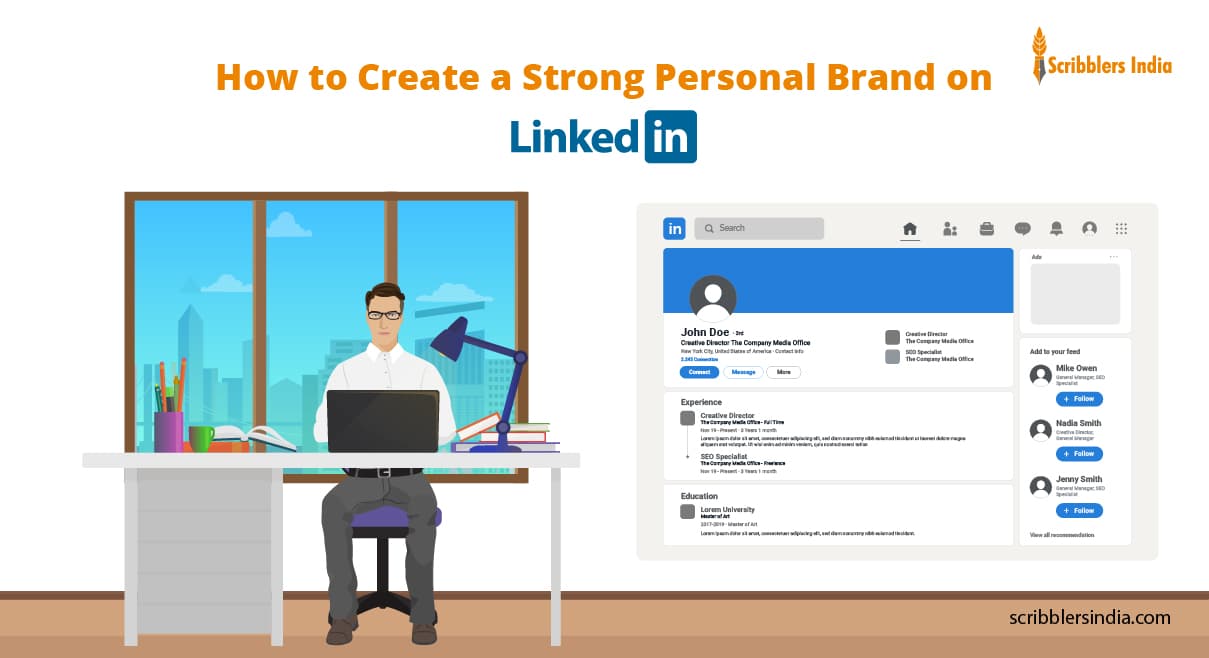
What Makes LinkedIn Personal Branding Effective for Executives and Founders?
LinkedIn personal branding can still produce little professional value when the profile looks polished but the positioning remains unclear. Your headline may sound credible, your About section may read well, and you may publish consistently. Yet visitors can still leave without understanding what you genuinely know, why your experience matters, or where your expertise fits. Effective LinkedIn personal branding solves that problem by connecting positioning, proof, content, relationships, discovery, and measurement. Your profile explains who you are and your work supports the claim. Your content demonstrates how you think, while relevant conversations help the right people encounter those ideas repeatedly. This guide explains how to build a personal brand on LinkedIn as a connected reputation system. You will learn how to define your position, strengthen your profile evidence, build content grounded in real expertise, grow the right network, improve discoverability, measure progress, and create a practical 90-day operating plan. Key Takeaways: Define the expertise and audience before rewriting individual profile sections Make important professional claims traceable to credible work and evidence Align your headline, About, Experience, recommendations, and Featured assets Build ideas from real expertise instead of copying popular posting formulas Prioritize relevant professional relationships instead of maximizing connection volume Use precise expertise language without turning your profile into SEO copy Keep your role and expertise aligned across authoritative online sources Track audience quality, profile activity, discovery, and professional outcomes separately Use the first 90 days to build foundations before increasing volume Which Questions Do You Need to Answer Before Starting LinkedIn Personal Branding? Before you optimize your profile, define who should recognize your expertise, what they should associate with your name, what evidence supports that position, and what professional action matters next. These decisions give your profile, content, network, and measurement system one clear strategic direction. Who Needs to Recognize Your Expertise? Avoid broad audiences such as “everyone in technology” or “business leaders.” A founder may need recognition among buyers, investors, analysts, senior hires, or partners. A consultant may care about decision-makers facing one defined problem, while a job seeker may prioritize hiring managers and relevant industry peers. Your choice of audience affects the evidence you emphasize and the conversations worth joining. If you want enterprise buyers to understand your work, your profile needs different proof from someone seeking a board role. Clear audience priorities also make later analytics easier to interpret. What Should They Associate With Your Name? Choose an expertise territory that is specific enough to become memorable. “Marketing leader” provides limited context, whereas “B2B SaaS positioning and category strategy” establishes a clearer professional association. “Technology executive” stays broad, while “enterprise AI governance and model-risk implementation” gives people a more useful reason to remember you. Strong personal branding on LinkedIn does not require you to discuss one narrow subject forever. Your territory can contain several related themes, provided those themes strengthen the same professional association rather than prompting your audience to infer a new professional identity with every post. What Evidence Makes the Position Credible? Before you claim expertise, identify what proves it. Useful evidence can include operating experience, projects, measurable outcomes, original frameworks, research, recommendations, conference sessions, credentials, interviews, products, teams, or programs you helped build. The strongest proof depends on the professional decision you want to influence. What Should Someone Do After Understanding Your Position? The next action depends on your objective. A consultant may want relevant prospects to start a conversation. A founder may want industry peers or buyers to follow their thinking. An executive may prioritize stakeholder visibility, while a professional planning a career move may want recruiters to understand fit. Your goal should guide the profile without turning every section into a sales pitch. If the positioning still feels unclear, use our guide to creating a personal brand statement before editing LinkedIn sections. Once the position is clear, the profile needs to prove it. How Should You Optimize Your Profile for LinkedIn Personal Branding? A strong LinkedIn profile should help visitors quickly understand your professional relevance and provide enough evidence to investigate further. Effective profile optimization aligns your photo, banner, headline, About section, Experience, skills, recommendations, Featured assets, and contact information around the same professional position. Profile Photo and Banner: Establish Recognition and Context Your profile photo mainly needs to make the account identifiable and appropriate for your professional setting. The banner has a different role. It can reinforce your expertise through one relevant message, visual, research asset, company context, event, or professional theme without competing with the introduction card. Headline: Explain Your Professional Relevance A job title often tells visitors where you sit inside an organization without showing why your expertise matters. A useful headline can combine your role or expertise, the problem or category you understand, and enough context to make the position meaningful to the audience. Executives may need to keep an official title prominent. Independent experts often have greater freedom to foreground the problem or category they understand best. In either case, your headline should sound natural to people rather than be a string of terms added purely for LinkedIn search visibility. About Section: Connect Positioning With Evidence Your About section should help a visitor move from understanding your headline to understanding why you have a credible perspective. Open with the professional territory, explain the experience behind it, add selected evidence, show how you think about the field, and provide appropriate engagement context. Avoid turning the About section into a complete autobiography. Detailed career history belongs in Experience. The strongest version helps someone understand your current professional relevance while giving enough evidence to continue exploring your profile, Featured assets, recent content, or external work. Experience: Show What You Actually Owned Strong Experience sections explain more than responsibilities. Where disclosure allows, show the problems you were responsible for solving, the scale involved, initiatives you led, functions or markets affected, changes implemented, supported outcomes, and specialist knowledge you developed through the work. Recommendations, Featured, and Contact Details: Reduce Uncertainty Recommendations add value when they describe
LinkedIn personal branding can still produce little professional value when the profile looks polished but the positioning remains unclear. Your headline may sound credible, your About section may read well, and you may publish consistently. Yet visitors can still leave without understanding what you genuinely know, why your experience matters, or where your expertise fits. Effective LinkedIn personal branding solves that problem by connecting positioning, proof, content, relationships, discovery, and measurement. Your profile explains who you are and your work supports the claim. Your content demonstrates how you think, while relevant conversations help the right people encounter those ideas repeatedly. This guide explains how to build a personal brand on LinkedIn as a connected reputation system. You will learn how to define your position, strengthen your profile evidence, build content grounded in real expertise, grow the right network, improve discoverability, measure progress, and create a practical 90-day operating plan. Key Takeaways: Define the expertise and audience before rewriting individual profile sections Make important professional claims traceable to credible work and evidence Align your headline, About, Experience, recommendations, and Featured assets Build ideas from real expertise instead of copying popular posting formulas Prioritize relevant professional relationships instead of maximizing connection volume Use precise expertise language without turning your profile into SEO copy Keep your role and expertise aligned across authoritative online sources Track audience quality, profile activity, discovery, and professional outcomes separately Use the first 90 days to build foundations before increasing volume Which Questions Do You Need to Answer Before Starting LinkedIn Personal Branding? Before you optimize your profile, define who should recognize your expertise, what they should associate with your name, what evidence supports that position, and what professional action matters next. These decisions give your profile, content, network, and measurement system one clear strategic direction. Who Needs to Recognize Your Expertise? Avoid broad audiences such as “everyone in technology” or “business leaders.” A founder may need recognition among buyers, investors, analysts, senior hires, or partners. A consultant may care about decision-makers facing one defined problem, while a job seeker may prioritize hiring managers and relevant industry peers. Your choice of audience affects the evidence you emphasize and the conversations worth joining. If you want enterprise buyers to understand your work, your profile needs different proof from someone seeking a board role. Clear audience priorities also make later analytics easier to interpret. What Should They Associate With Your Name? Choose an expertise territory that is specific enough to become memorable. “Marketing leader” provides limited context, whereas “B2B SaaS positioning and category strategy” establishes a clearer professional association. “Technology executive” stays broad, while “enterprise AI governance and model-risk implementation” gives people a more useful reason to remember you. Strong personal branding on LinkedIn does not require you to discuss one narrow subject forever. Your territory can contain several related themes, provided those themes strengthen the same professional association rather than prompting your audience to infer a new professional identity with every post. What Evidence Makes the Position Credible? Before you claim expertise, identify what proves it. Useful evidence can include operating experience, projects, measurable outcomes, original frameworks, research, recommendations, conference sessions, credentials, interviews, products, teams, or programs you helped build. The strongest proof depends on the professional decision you want to influence. What Should Someone Do After Understanding Your Position? The next action depends on your objective. A consultant may want relevant prospects to start a conversation. A founder may want industry peers or buyers to follow their thinking. An executive may prioritize stakeholder visibility, while a professional planning a career move may want recruiters to understand fit. Your goal should guide the profile without turning every section into a sales pitch. If the positioning still feels unclear, use our guide to creating a personal brand statement before editing LinkedIn sections. Once the position is clear, the profile needs to prove it. How Should You Optimize Your Profile for LinkedIn Personal Branding? A strong LinkedIn profile should help visitors quickly understand your professional relevance and provide enough evidence to investigate further. Effective profile optimization aligns your photo, banner, headline, About section, Experience, skills, recommendations, Featured assets, and contact information around the same professional position. Profile Photo and Banner: Establish Recognition and Context Your profile photo mainly needs to make the account identifiable and appropriate for your professional setting. The banner has a different role. It can reinforce your expertise through one relevant message, visual, research asset, company context, event, or professional theme without competing with the introduction card. Headline: Explain Your Professional Relevance A job title often tells visitors where you sit inside an organization without showing why your expertise matters. A useful headline can combine your role or expertise, the problem or category you understand, and enough context to make the position meaningful to the audience. Executives may need to keep an official title prominent. Independent experts often have greater freedom to foreground the problem or category they understand best. In either case, your headline should sound natural to people rather than be a string of terms added purely for LinkedIn search visibility. About Section: Connect Positioning With Evidence Your About section should help a visitor move from understanding your headline to understanding why you have a credible perspective. Open with the professional territory, explain the experience behind it, add selected evidence, show how you think about the field, and provide appropriate engagement context. Avoid turning the About section into a complete autobiography. Detailed career history belongs in Experience. The strongest version helps someone understand your current professional relevance while giving enough evidence to continue exploring your profile, Featured assets, recent content, or external work. Experience: Show What You Actually Owned Strong Experience sections explain more than responsibilities. Where disclosure allows, show the problems you were responsible for solving, the scale involved, initiatives you led, functions or markets affected, changes implemented, supported outcomes, and specialist knowledge you developed through the work. Recommendations, Featured, and Contact Details: Reduce Uncertainty Recommendations add value when they describe