How Much Do Personal Branding Services Cost in India in 2026?
Two personal branding proposals can have very different prices yet appear similar on the first page. One may cover a profile refresh and monthly social posts. Another may include positioning, executive interviews, ghostwriting, design, long-form thought leadership, analytics, reputation monitoring, and senior editorial involvement. That variation explains why personal branding services cost cannot be judged sensibly from a single monthly figure.
For Indian buyers, the more useful question is what operating model sits behind the quote. Scope, content volume, provider seniority, channels, research requirements, review depth, visual production, and executive involvement can significantly affect the investment. This guide uses current public India-focused pricing examples to establish context, then shows how to normalize proposals before choosing a provider.
Key Takeaways:
|
Personal Branding Services Cost in India: What Do Current Public Prices Show?
Current public pricing indicates a very wide market rather than one reliable average. Focused strategy or content work can begin in the tens of thousands of rupees, while integrated founder or executive programs can reach several lakhs per month when they include multiple channels, PR, websites, video, or specialist support.
The table below should therefore be read as observed public benchmarks as of August 2026, rather than a formal market-rate survey.
| Engagement Example | Publicly Stated Pricing | Scope Context |
| Personal-brand strategy and roadmap | ₹20,000–₹50,000 | Positioning, audience, narrative, visibility roadmap in one consultant’s published guide |
| Freelance specialist support | ₹15,000–₹75,000/month | Writing, design, social-management or related task-specific work |
| Basic LinkedIn/social branding | ₹15,000–₹50,000/month | LinkedIn profile and social strategy |
| General monthly retainer | ₹30,000–₹1,50,000/month | Content, social management and wider support in Ohh My Brand’s Bangalore pricing guide |
| Independent consultant project | ₹1,00,000–₹3,00,000/project | Strategy and positioning work in Personeur’s benchmark |
| Broad full-service program | ₹3,00,000–₹7,00,000+/month | Content, PR, website and wider personal-brand execution |
| Integrated agency program | $1,300/month for nine months | For a package covering strategy, website, SEO/AI search, LinkedIn and media |
Another Indian provider, LexiConn, currently describes its LinkedIn program as a fixed monthly retainer that covers eight posts, strategy, content creation, posting, engagement support, and analytics, and directs buyers to request a custom quote.
These examples explain why personal branding services cost comparisons break down when buyers compare headline prices without first aligning on scope.

How Did We Research Personal Branding Pricing for This Guide?
We reviewed publicly available pricing and service information from Indian personal branding providers on August 16, 2026. Published figures show what individual providers charge or estimate. They should not be treated as a verified industry-wide average.
The main challenge is scope. Two proposals at ₹50,000 can cover completely different work. One may include positioning and profile development. Another may cover monthly ghostwriting, interviews, design, publishing, or reporting.
For this reason, this guide compares personal branding services cost through four variables: provider model, scope depth, recurring workload, and additional costs. This approach gives you a more useful benchmark than one artificial market average.
Pricing source note: Public pricing pages were reviewed to understand current Indian market positioning and service ranges. Competitor-published figures are used as directional examples rather than independent market benchmarks.
This distinction becomes important when you compare different types of providers.
How Does Personal Branding Services Cost Change by Provider Model?
The provider model affects the cost of personal branding services because each model offers varying levels of strategy, execution, continuity, and coordination. A freelancer may handle one specialist task. A consultant may develop the strategy. An agency can manage several connected workstreams within a single system.
Freelancers Work Best for Defined Specialist Tasks
Freelancers usually fit narrow requirements where the overall strategy already exists.
You might use separate specialists for:
- LinkedIn ghostwriting and executive posts;
- long-form articles and newsletters;
- graphic design and carousel development;
- video editing and short-form production;
- profile copy and positioning updates;
- social publishing and community support.
Current Indian pricing guides place specialist freelance support across a wide range. Actual fees depend on skill, workload, format, and seniority. The larger cost often sits in coordination. Someone still needs to connect briefs, reviews, publishing, visual direction, and performance. That responsibility usually remains with you or your internal team.
Best fit: Choose freelancers when you already know what needs to be produced and can manage the workflow internally.
Independent Consultants Focus More Heavily on Strategy
A personal branding consultant often provides deeper strategic involvement with lower production capacity.
Typical work can include:
- digital-presence and reputation audits;
- professional positioning and differentiation;
- audience and stakeholder mapping;
- narrative and expertise development;
- channel strategy and content direction;
- executive coaching and review sessions.
This model works well when an internal team can execute the recommendations afterward. The key question is therefore not how many posts the consultant produces. Ask what strategic decisions become clearer after the engagement.
Best fit: Choose a consultant when the problem is positioning, direction, or senior advisory support rather than continuous production.
Boutique Agencies Connect Strategy With Ongoing Execution
An agency becomes more useful when several parts of the personal brand need to work together. A program may combine positioning, executive interviews, ghostwriting, design, publishing, analytics, and project management.
The practical advantage is continuity.
A writer can work from the same positioning system as the strategist. Designers receive the same editorial context. Feedback can flow across the account without the executive having to manage several separate suppliers. This integrated workflow helps explain why agency pricing can exceed individual freelancer fees even when the visible content volume looks similar.
Best fit: Consider an agency when you need recurring content and want a single team to coordinate the entire editorial workflow.
Executive Reputation Programs Extend Beyond Content
The highest-cost engagements usually include work beyond social publishing.
The scope can include:
- long-form thought leadership and executive articles;
- research reports and original intellectual property;
- newsletters and owned audience development;
- personal website strategy and search visibility;
- digital PR and earned-media outreach;
- video production and executive communications;
- reputation monitoring and stakeholder communication;
- senior editorial governance and approval support.
These programs can require input from legal teams, communications leaders, or business stakeholders. The workflow becomes more complex as visibility increases. Our take on executive branding explains why senior leadership programs often need stronger governance and approval systems. The provider model explains part of the quote. The actual scope explains much more.
Which Factors Have the Biggest Impact on Personal Branding Services Cost?
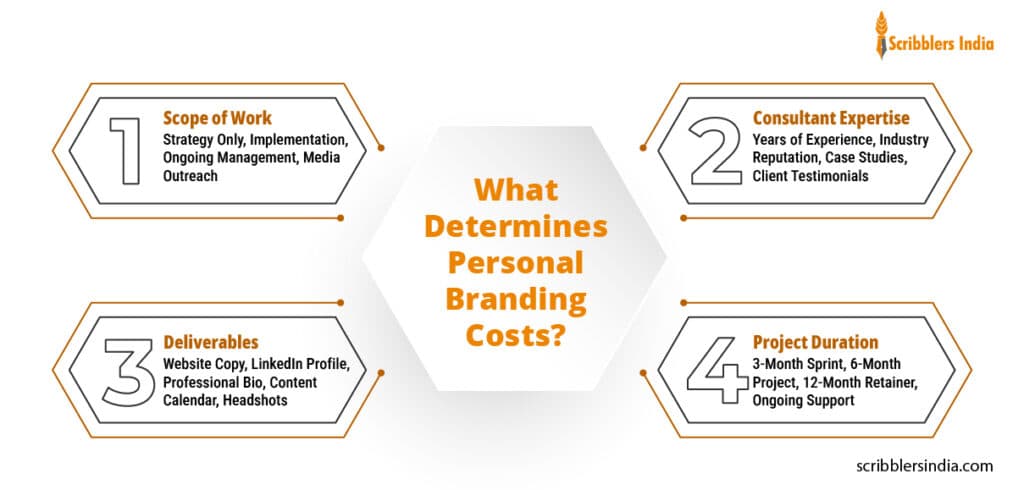
The biggest differences in personal branding services cost come from the amount of strategic thinking and production required. Research depth, content volume, executive access, channel complexity, and senior involvement can all change the workload. Buyers should therefore compare inputs and deliverables before comparing total fees.
Strategy Depth Changes the Starting Investment
A short discovery call followed by content themes requires limited strategy work. A deeper engagement may assess positioning, audience groups, professional evidence, digital footprint, channel roles, and measurable objectives.
Ask what the strategy phase produces. Useful outputs can include:
- A clear professional positioning framework;
- An audience and stakeholder map;
- Defined expertise territories;
- Narrative themes and editorial boundaries;
- An approved evidence library;
- Channel roles and publishing priorities;
- A measurement framework.
The word “strategy” tells you little unless the proposal defines its outputs.
Content Volume Changes the Production System
Eight LinkedIn posts and four research-backed articles require very different workflows. Higher volume increases the requirements for research, drafting, editing, design, approvals, and project management.
Volume also needs context. 12 short posts based on supplied notes may require less work than 4 posts developed through interviews and original research.
Ask providers: What production process sits behind each deliverable?
That answer is more useful than the post count alone.
Ghostwriting Depth Changes Editorial Workload
Ghostwriting can describe several levels of support. One writer may turn your finished notes into polished copy. Another may interview you, identify the argument, research the topic, verify claims, draft the piece, and manage revisions.
A meaningful quote should clarify:
- How source material enters the process;
- How often interviews take place;
- What level of research is included;
- How voice calibration works;
- Who verifies external claims;
- How many review rounds apply.
Deeper ghostwriting requires more editorial time because the writer develops the thinking alongside the content.
Channels and Formats Expand the Scope
A LinkedIn-only program has a narrower production system than a multi-channel executive brand. Additional channels may require new formats, visual decisions, publishing workflows, and measurement.
A newsletter requires a different level of editorial depth than a LinkedIn post. Video needs scripting and production support. Long-form articles usually require deeper research.
Our guide to LinkedIn personal branding explains the requirements of a LinkedIn-led program separately.
Senior Involvement Can Change the Quote
Ask who performs the actual work after onboarding. An engagement can involve writers, strategists, researchers, editors, account managers, designers, subject specialists, or senior agency leaders.
Provider reputation and senior involvement are separate questions. Find out who joins executive interviews. Ask who approves positioning decisions and reviews sensitive content.
A senior-led model will usually cost more when experienced professionals spend meaningful time on the account.
Research Requirements Depend on the Subject
A founder sharing an operating lesson may need limited external research.
A healthcare executive discussing clinical evidence requires a different standard. Financial, legal, or technical topics can also require greater source verification. Research depth can therefore increase personal branding services cost even when the visible content volume remains unchanged.
The proposal should state who verifies important claims and who provides subject expertise. These variables become easier to compare once you group personal branding programs by scope.
What Should Different Personal Branding Scope Levels Include?
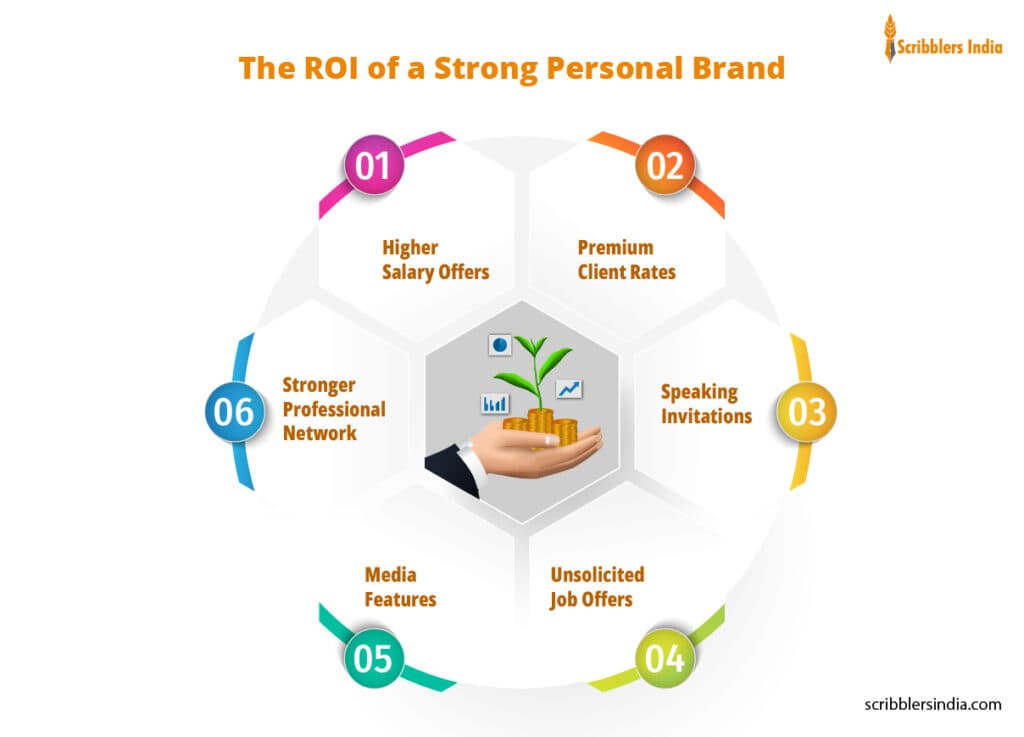
Different service levels solve different problems. A one-time positioning project should not be compared directly with recurring LinkedIn ghostwriting. An integrated executive program may add search visibility, media support, or deeper thought leadership. Separate the engagement type first, then compare the personal branding services cost within that category.
Foundation or One-Time Personal Branding Project
Best for: Professionals who need strategic clarity before regular publishing begins.
A typical scope may cover:
- Current digital-presence review;
- Positioning and differentiation;
- Audience definition;
- Professional narrative development;
- LinkedIn profile refinement;
- Priority content themes;
- Initial channel roadmap.
A project model works here because these outputs have a clear completion point. The client can then decide whether ongoing execution needs internal or external support.
LinkedIn Personal Branding Program
Best for: Professionals who have selected LinkedIn as their main visibility channel.
The recurring scope can include:
- Executive interviews or source capture;
- Post ideation and editorial planning;
- LinkedIn ghostwriting;
- Selected visual content;
- Publishing support;
- Monthly performance review.
The important pricing variable is the process behind the posts. Ask how much executive input is required and how the provider learns from feedback. Also confirm whether strategy, writing, design, publishing, and analytics sit inside the same fee.
Thought Leadership Program
Best for: Senior experts who need to develop a recognizable body of professional thinking.
The program can include:
- Research-backed executive articles;
- Newsletters and deeper commentary;
- Original frameworks and viewpoints;
- Structured executive interviews;
- Conference or speaking content;
- LinkedIn distribution and repurposing;
- Editorial performance review.
Here, the added cost comes from intellectual development rather than social publishing volume. A strong thought leadership program should improve the quality of the ideas reaching the market.
Integrated Personal Branding Program
Best for: Founders or executives who need visibility across several professional touchpoints.
The scope may connect:
- Personal brand strategy;
- LinkedIn content;
- Long-form thought leadership;
- Personal website content;
- SEO and AI-search visibility;
- Video content;
- PR and media support;
- Reputation management.
At this level, proposals become difficult to compare because the service boundaries widen considerably. When evaluating the benefits of personal branding, compare the scope against your objective. A larger package creates little value when half its components do not support the outcome you need.
A simple scope framework can make that decision easier.
The Scribblers India Scope-to-Cost Framework
Use the following four questions before comparing personal branding proposals:
| Question | What It Reveals |
| What needs to change? | Whether you need strategy, execution, or both |
| What needs to be produced? | The real editorial and production workload |
| Who needs to participate? | Executive and internal coordination requirements |
| What needs to be measured? | The reporting and optimization depth required |
This framework prevents package names from controlling the buying decision. The next step is to check costs that may fall outside the headline fee.
Which Personal Branding Costs Often Sit Outside the Main Quote?
The published cost of personal branding services may cover the core professional fee but exclude production expenses. Photography, development, specialist research, paid distribution, or travel can sit outside the proposal. Buyers should identify these costs before comparing providers, as they can materially affect the total investment.
| Potential Add-On | Why It May Be Separate | What to Confirm |
| Professional photography | Requires separate production resources | Shoot scope, image rights, travel |
| Video production | Cost changes with production depth | Shoot days, clips, editing |
| Website development | Needs design and development resources | Pages, maintenance, hosting |
| PR and media outreach | Uses a separate outreach workflow | Campaign scope and media activity |
| Paid distribution | Media spend sits outside service fees | Platform budget and management fees |
| Specialist research | Complex subjects need additional expertise | Research hours and review responsibility |
| Travel | Interviews or shoots may happen in person | Frequency and reimbursement |
| Rush work | Compressed timelines need added capacity | Surcharge and delivery expectation |
The procurement question is simple: Is each cost included, optional, separately quoted, or passed through at cost?
Request that information in writing. It makes proposals easier to compare and reduces unexpected expenses after work begins. External production costs are still only one part of the real investment. Executive time can create another substantial difference.
How Does Your Own Time Affect Personal Branding Services Cost?
Your effective personal branding services cost includes the work required from you and your internal team. Interviews, approvals, source clarification, stakeholder reviews, and publishing can consume meaningful executive time. A lower agency fee can therefore create a higher operating burden when the client must coordinate much of the process.
Use a simple budgeting model:
Effective investment = Provider fee + internal time + external production costs
The purpose is not to assign an artificial hourly value to every conversation.
It helps you compare how different service models operate.
Consider two proposals:
- Proposal A: Lower monthly fee with several executive inputs and separate supplier coordination.
- Proposal B: Higher monthly fee with one structured source session and consolidated approvals.
The lower invoice does not automatically create the lower-cost operating model. Ask the following questions from each provider:
- How often will you need my input?
- Can source interviews be batched?
- Who consolidates feedback?
- What happens when approvals are delayed?
- Can existing calls or presentations become source material?
- Which decisions need my direct approval?
The answers show how much work remains on your side of the engagement. Once internal effort is visible, proposal comparison becomes much more accurate.
How Should You Compare Personal Branding Quotes?
Compare personal branding proposals by normalizing their scope before comparing total fees. Review strategy, content volume, research, executive access, senior involvement, publishing, measurement, and additional costs. This approach makes personal branding services cost easier to evaluate because each quote is measured against the same buying criteria.
Use this comparison matrix:
| Comparison Area | Quote A | Quote B | Quote C |
| Strategy deliverable | |||
| Monthly content volume | |||
| Long-form content | |||
| Interview frequency | |||
| Senior strategist involvement | |||
| Research included | |||
| Design included | |||
| Video included | |||
| Publishing support | |||
| Community support | |||
| Revision policy | |||
| Analytics and reporting | |||
| Website or SEO support | |||
| PR or media support | |||
| Asset ownership | |||
| Minimum engagement | |||
| Cancellation terms | |||
| Additional charges | |||
| Expected client time |
This exercise usually explains a large part of the apparent price difference.
A ₹40,000 writing proposal and a ₹1,00,000 managed personal branding program may share only a small part of their scope. The cheapest option should therefore be the one with the lowest cost for the required outcome, rather than the lowest invoice.
If you are still comparing providers, our analysis of the best personal branding agencies in India covers agency selection separately from pricing. The next decision concerns how the engagement itself should be billed.
Should You Choose Project or Retainer Pricing for Personal Branding?
Project pricing fits work with a defined finish, while retainers suit recurring production and improvement. A hybrid structure can work when strategy requires heavier initial effort before ongoing content begins. The right model affects personal branding services cost because each structure distributes strategy and execution differently.
Choose a Project for Defined Outcomes
Project pricing can work well for:
- A personal brand audit;
- Positioning development;
- Profile rewriting;
- Content strategy;
- Personal website copy;
- An initial editorial roadmap.
Each deliverable can be completed and reviewed before the relationship continues. This gives buyers a lower-risk way to solve a defined problem.
Choose a Retainer for Recurring Work
A retainer suits activities that repeat throughout the year. Here are some examples:
- Executive ghostwriting;
- LinkedIn publishing;
- Recurring interviews;
- Newsletters;
- Thought leadership development;
- Reputation monitoring;
- Analytics and optimization.
Continuity can improve efficiency because the provider accumulates knowledge about voice, approved claims, audience, and review preferences.
Use a Hybrid Model When Strategy Comes First
Some engagements benefit from a substantial strategy project followed by a smaller execution retainer.
This model makes the initial strategic work visible. It also prevents the first few monthly fees from including strategy costs, which would make later comparisons difficult.
The right commercial structure should follow the work rather than an agency’s preferred billing model. Price becomes meaningful only when it can be connected to the outcome you want.
How Should You Assess Personal Branding Value Without Assuming ROI?
Assess value by defining the professional or commercial change the engagement should support. Different personal branding objectives require different signals. Visibility, profile activity, speaking interest, referrals, and qualified conversations represent separate stages of influence. Treating all of them as direct revenue creates an inaccurate view of ROI.
Start with the objective.
| Objective | Useful Early Signals | Stronger Outcome Signals |
| Founder positioning | Relevant audience growth, profile activity | Qualified buyer conversations |
| Executive authority | Stakeholder engagement, search visibility | Speaking or board opportunities |
| Consulting growth | Expertise-led engagement | Relevant referrals and enquiries |
| Career positioning | Search appearances, profile visits | Relevant recruiter conversations |
| Thought leadership | Content engagement, citations, mentions | Invitations and commercial influence |
Revenue should receive direct attribution only when the evidence supports that connection. Our guide to personal branding ROI explains attribution and measurement in greater depth.
The pricing question then becomes more useful: Does the proposal contain the capabilities required to influence the outcome you have defined?
That question is stronger than asking whether a package is “premium.”
What Are the Biggest Personal Branding Pricing Red Flags?
Pricing red flags usually appear in the scope rather than the number itself. Undefined deliverables, unclear ownership, hidden production costs, or weak measurement can create more risk than a high fee. A credible proposal should explain what you receive, who performs the work, what you must provide, and how progress will be reviewed.
Watch for these signals:
- Deliverables remain unclear after the proposal stage.
- “Unlimited content” has no research standard.
- Every client receives the same publishing package.
- Strategy appears without a defined output.
- Senior specialists disappear after the sales process.
- Earned media outcomes are presented as guaranteed.
- Revision boundaries remain unclear.
- Reporting focuses only on reach or followers.
- Intellectual-property ownership remains vague.
- Major add-ons appear after the contract begins.
- Executive time requirements remain undefined.
A useful proposal should make the economics understandable. If you cannot explain what drives the price after reading the scope, ask for greater detail before committing.
How Much Should You Budget for Personal Branding Services?
There is no standard personal branding services cost because the scope can vary widely. A profile refresh requires far less work than an ongoing founder program involving strategy, ghostwriting, design, publishing, and reporting.
Start with the business problem instead of choosing a package first. If your positioning is unclear, budget for strategy before committing to monthly content. If the strategy already exists, the larger share of your budget can move toward execution. For a focused requirement, price the specific task. This could include a LinkedIn profile refresh, positioning project, content strategy, or ghostwriting support.
Recurring programs need a broader calculation. Compare the monthly content volume with the research process, interview frequency, design requirements, publishing support, and measurement included. Two retainers with similar post counts can require very different levels of work.
Founder and executive programs often add another layer. Website development, video production, PR, paid distribution, or specialized research can substantially increase the total investment. Separate these services from the core personal branding scope before comparing proposals.
A useful way to think about the budget is:
| Budget Layer | What It Covers |
|---|---|
| Core requirement | The specific problem the engagement must solve |
| Execution | Writing, design, publishing, research, and ongoing production |
| Internal effort | Executive interviews, approvals, and team coordination |
| Optional expansion | Website, video, PR, paid media, or specialist support |
Personal Branding Budget Decision Framework
Before approving a budget, ask four questions:
- What outcome are we paying to achieve? Define the professional or commercial change first.
- Which work directly supports that outcome? Separate essential activities from attractive additions.
- What can our internal team handle well? Avoid paying externally for capabilities you already have.
- Which services can be added later? Build the program in stages when the immediate need is narrower.
This approach gives you a budget tied to actual requirements. It also makes competing proposals easier to compare because you can see which costs support the objective and which unnecessarily expand the scope.
How Should You Make the Final Personal Branding Pricing Decision?
The best way to evaluate personal branding services cost is to compare the work behind each quote. Look at the objective, service scope, team involvement, executive time, additional expenses, and measurement process. Packages that share the same label can still solve very different professional problems.
A profile project, LinkedIn ghostwriting retainer, executive thought leadership program, or integrated reputation engagement serves a different job. Their prices should therefore differ. Start by defining the outcome. Then identify the smallest scope that can support it.
For buyers considering Scribblers India, our personal branding services explain how we combine positioning, research-backed content, executive ghostwriting, search visibility, and ongoing editorial planning.
Compare that scope against the framework above before requesting a proposal. The objective is to choose the level of support your personal brand needs.
Frequently Asked Questions (FAQs)
Should Personal Branding Be Priced Per Post, Per Project, or as a Monthly Retainer?
The pricing model should follow the type of work. Individual posts can suit isolated writing needs. Strategy, audits, and profile development usually fit project pricing. Recurring ghostwriting or thought leadership often fits a retainer because the provider needs ongoing source material and benefits from accumulated knowledge about your voice.
Can Personal Branding Services Cost Less if I Handle Some Work Internally?
Yes, when the provider can remove defined responsibilities from the scope. Existing research, internal design support, approved photography, or client-side publishing may reduce external work. Check whether the arrangement creates additional coordination demands. A smaller supplier fee can still require more time from the executive or marketing team.
What Pricing Red Flags Should I Look for in a Personal Branding Proposal?
Check for vague deliverables, undefined revision rules, unclear research ownership, hidden add-ons, or uncertain writer involvement. You should also confirm intellectual-property rights and cancellation terms. Ask how much executive time the engagement requires. Transparent proposals make these responsibilities visible before work starts.
Should Photography, Video, PR, and Paid Media Be Included in the Quote?
They should appear clearly as included, optional, or separately billed services. Each area requires different resources and can change the overall budget. Ask providers to separate core strategy and content fees from media spending, production expenses, specialist research, travel, or other third-party costs before comparing proposals.
When Should You Reduce or Pause a Personal Branding Retainer?
Review the retainer when your objectives change or the current workflow can move in-house. A pause may also suit a major role transition or confidential business period. Look at the underlying strategy before reducing activity. Lower publishing volume may be appropriate when the original priorities have changed.
Does a Higher Personal Branding Services Cost Mean Better Results?
No. A higher fee usually reflects greater scope, specialist involvement, production depth, or provider positioning. Those capabilities create value only when they support your objective. Compare what the proposal includes and who will perform the work. Then assess whether the additional services solve a problem you have.
What Should Be Included in a Personal Branding Agency Retainer?
A recurring retainer should clearly define strategy support, source collection, content production, revisions, publishing responsibilities, and reporting. Broader programs may include design or search visibility work. Ask which activities happen every month and which occur only during onboarding. This prevents one-time work from distorting the ongoing fee.
How Can I Compare Personal Branding Services Cost Across Agencies?
Use a single comparison matrix for each proposal. Record strategy deliverables, content volume, interview frequency, research, senior involvement, external costs, client time, ownership, and contract terms. Then compare the total workload covered by each fee. This gives you a much clearer comparison than package names or monthly prices alone.