
Professional Reputation Posts
How To Build a Personal Brand Online in 2026?
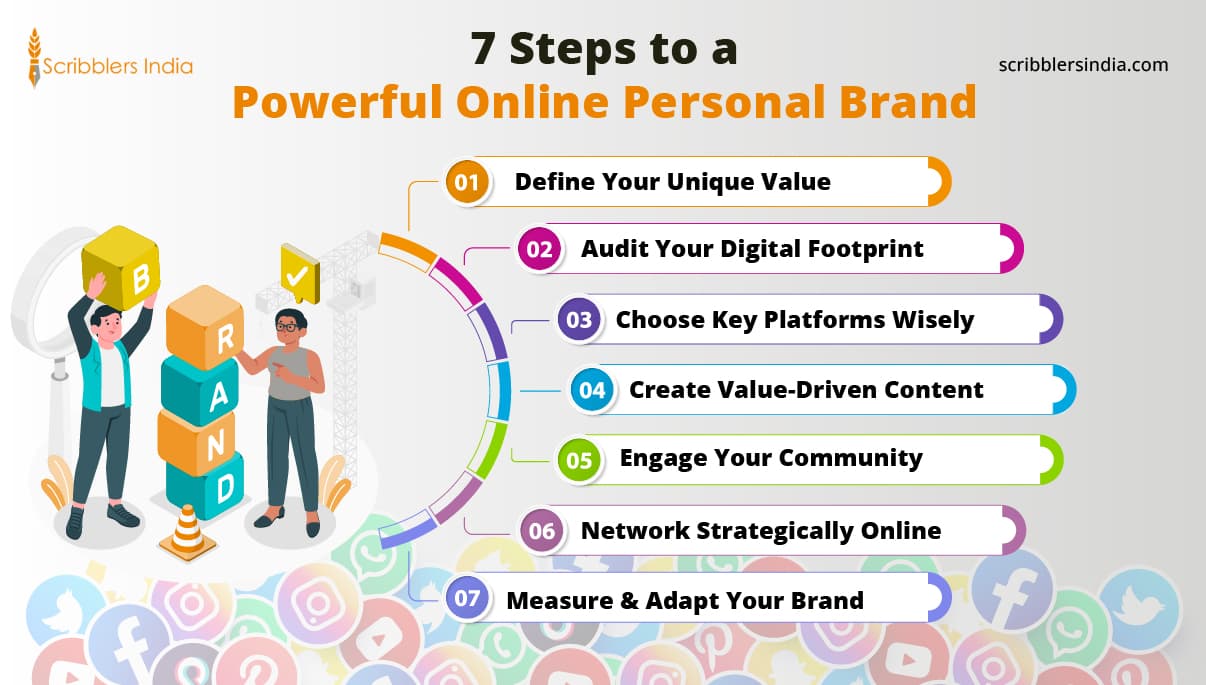
Building a strong professional reputation online is largely a matter of sequencing. Publishing more content cannot solve unclear positioning, while an impressive profile carries limited weight without credible proof. Expanding across several platforms also creates unnecessary work when the people you need to influence concentrate elsewhere. The practical approach to how to build personal brand online starts with understanding what people can already discover about you. You can then define the reputation you want, strengthen the evidence supporting it, choose appropriate channels, publish useful ideas, build relevant relationships, and improve discoverability across search. This guide on how to build personal brand online focuses on that complete operating system rather than individual platform tactics. If you are still evaluating the broader business or career case, start with our analysis on why personal branding is important. The process below begins once you have decided to invest in your reputation. Key Takeaways Review what search results and profiles currently communicate about your expertise. Choose the audience, expertise territory, and professional association you want remembered. Create one reliable home base that preserves control over professional proof. Prioritize platforms where your audience already evaluates expertise and professional credibility. Place cases, recommendations, research, and qualifications close to important claims. Turn real questions, decisions, research, and lessons into useful content. Keep names, biographies, author pages, and expertise descriptions consistently aligned. Track changes in relevant discovery, relationships, opportunities, and reputation over time. How Should You Audit Your Digital Footprint Before You Build Personal Brand Online? Before you build personal brand online, establish what people can already find and what those results communicate. Any practical approach to how to build personal brand online should begin with search results, major profiles, employer pages, author pages, published work, and prominent third-party mentions. Compare that public footprint with the professional association you want to strengthen. Look for outdated information, conflicting descriptions, weak proof, useful existing assets, and prominent pages that no longer reflect your present role, expertise, audience, or professional direction. What Should a Personal Brand Audit Review? Start by searching for your full professional name and inspect the first several result pages. Then review the assets most likely to influence someone evaluating you for a role, project, partnership, speaking opportunity, media request, investment conversation, or professional recommendation. Audit Area What to Review Common Problem Identity Current name, title, company, and role Prominent profiles conflict Positioning Expertise emphasized across visible assets Each platform tells a different story Biography Current experience and specialization Old career stages remain prominent Proof Work, results, research, recommendations Claims have little visible support Content Subjects repeatedly associated with your name Publishing covers unrelated themes Third-Party Pages Events, publications, podcasts, directories Important information is outdated Prioritize high-visibility inaccuracies rather than trying to clean every historical mention. A dated conference biography that still ranks prominently deserves more attention than an obscure directory listing. The audit should finish with three practical decisions: which assets to keep, which to update, and which to de-emphasize. Useful content, interviews, recommendations, case evidence, speaking videos, or research may already support the reputation you want. Identifying these assets before creating new material is an important part of how to build a personal brand online efficiently as it prevents unnecessary duplication and provides stronger evidence for later profile updates. What Type of Reputation You Need Before Building Personal Brand Online? A useful personal branding strategy starts with the association you want relevant people to make with your name. Understanding how to build personal brand online becomes easier once the audience, expertise territory, contribution, and supporting evidence are clear enough to guide later execution. Positioning should be narrow enough to guide recognition without reducing your career to one skill. Choose the association that should lead now, while your biography, experience, portfolio, and broader content provide additional context after people understand the main professional territory. Who Should Your Personal Brand Influence? Define the people whose decisions your reputation needs to influence. A consultant may prioritize buyers facing one recurring problem, while a founder may need credibility with customers and industry peers. An executive may communicate simultaneously with employees, customers, board members, investors, and professional communities. Audience definitions such as “professionals” or “business leaders” usually provide too little direction. A clearer audience helps determine what proof deserves prominence, which questions your content should answer, where you should publish, and which relationships should receive consistent attention over time. What Expertise Should People Associate With Your Name? Ask what someone should confidently approach you about after encountering your work several times. “Marketing” yields weak recall, while “category positioning for technical B2B companies” provides a more useful anchor for the reputation, guiding profile language, content topics, speaking opportunities, and professional introductions. Once the territory is clear, translate it into a concise positioning idea. Our guide to personal brand statements explains in detail how to write such a statement, while this hub uses it as the strategic source for the broader online reputation system. Where Should Your Online Personal Branding Home Base Live? A strong online personal branding system needs one dependable place where people can understand your position, inspect proof, and take a logical next step. In how to build personal brand online, that home base may be a personal website or strong professional profile, depending on the level of control required. The better decision is not website versus social media. Think in terms of owned and rented presence. Owned assets preserve long-term control, while established platforms provide discovery and network access. Most professionals benefit from combining both without building more infrastructure than they can maintain. A useful home base normally needs three things: a current professional biography, visible evidence of expertise, and a clear next step. LinkedIn can handle these for simpler requirements, while a website is more useful when you need deeper control over proofing, long-form work, or inquiries. Do You Need a Personal Website to Build Personal Brand Online? You do not need a website simply because personal-brand advice recommends one. A site becomes valuable
Building a strong professional reputation online is largely a matter of sequencing. Publishing more content cannot solve unclear positioning, while an impressive profile carries limited weight without credible proof. Expanding across several platforms also creates unnecessary work when the people you need to influence concentrate elsewhere. The practical approach to how to build personal brand online starts with understanding what people can already discover about you. You can then define the reputation you want, strengthen the evidence supporting it, choose appropriate channels, publish useful ideas, build relevant relationships, and improve discoverability across search. This guide on how to build personal brand online focuses on that complete operating system rather than individual platform tactics. If you are still evaluating the broader business or career case, start with our analysis on why personal branding is important. The process below begins once you have decided to invest in your reputation. Key Takeaways Review what search results and profiles currently communicate about your expertise. Choose the audience, expertise territory, and professional association you want remembered. Create one reliable home base that preserves control over professional proof. Prioritize platforms where your audience already evaluates expertise and professional credibility. Place cases, recommendations, research, and qualifications close to important claims. Turn real questions, decisions, research, and lessons into useful content. Keep names, biographies, author pages, and expertise descriptions consistently aligned. Track changes in relevant discovery, relationships, opportunities, and reputation over time. How Should You Audit Your Digital Footprint Before You Build Personal Brand Online? Before you build personal brand online, establish what people can already find and what those results communicate. Any practical approach to how to build personal brand online should begin with search results, major profiles, employer pages, author pages, published work, and prominent third-party mentions. Compare that public footprint with the professional association you want to strengthen. Look for outdated information, conflicting descriptions, weak proof, useful existing assets, and prominent pages that no longer reflect your present role, expertise, audience, or professional direction. What Should a Personal Brand Audit Review? Start by searching for your full professional name and inspect the first several result pages. Then review the assets most likely to influence someone evaluating you for a role, project, partnership, speaking opportunity, media request, investment conversation, or professional recommendation. Audit Area What to Review Common Problem Identity Current name, title, company, and role Prominent profiles conflict Positioning Expertise emphasized across visible assets Each platform tells a different story Biography Current experience and specialization Old career stages remain prominent Proof Work, results, research, recommendations Claims have little visible support Content Subjects repeatedly associated with your name Publishing covers unrelated themes Third-Party Pages Events, publications, podcasts, directories Important information is outdated Prioritize high-visibility inaccuracies rather than trying to clean every historical mention. A dated conference biography that still ranks prominently deserves more attention than an obscure directory listing. The audit should finish with three practical decisions: which assets to keep, which to update, and which to de-emphasize. Useful content, interviews, recommendations, case evidence, speaking videos, or research may already support the reputation you want. Identifying these assets before creating new material is an important part of how to build a personal brand online efficiently as it prevents unnecessary duplication and provides stronger evidence for later profile updates. What Type of Reputation You Need Before Building Personal Brand Online? A useful personal branding strategy starts with the association you want relevant people to make with your name. Understanding how to build personal brand online becomes easier once the audience, expertise territory, contribution, and supporting evidence are clear enough to guide later execution. Positioning should be narrow enough to guide recognition without reducing your career to one skill. Choose the association that should lead now, while your biography, experience, portfolio, and broader content provide additional context after people understand the main professional territory. Who Should Your Personal Brand Influence? Define the people whose decisions your reputation needs to influence. A consultant may prioritize buyers facing one recurring problem, while a founder may need credibility with customers and industry peers. An executive may communicate simultaneously with employees, customers, board members, investors, and professional communities. Audience definitions such as “professionals” or “business leaders” usually provide too little direction. A clearer audience helps determine what proof deserves prominence, which questions your content should answer, where you should publish, and which relationships should receive consistent attention over time. What Expertise Should People Associate With Your Name? Ask what someone should confidently approach you about after encountering your work several times. “Marketing” yields weak recall, while “category positioning for technical B2B companies” provides a more useful anchor for the reputation, guiding profile language, content topics, speaking opportunities, and professional introductions. Once the territory is clear, translate it into a concise positioning idea. Our guide to personal brand statements explains in detail how to write such a statement, while this hub uses it as the strategic source for the broader online reputation system. Where Should Your Online Personal Branding Home Base Live? A strong online personal branding system needs one dependable place where people can understand your position, inspect proof, and take a logical next step. In how to build personal brand online, that home base may be a personal website or strong professional profile, depending on the level of control required. The better decision is not website versus social media. Think in terms of owned and rented presence. Owned assets preserve long-term control, while established platforms provide discovery and network access. Most professionals benefit from combining both without building more infrastructure than they can maintain. A useful home base normally needs three things: a current professional biography, visible evidence of expertise, and a clear next step. LinkedIn can handle these for simpler requirements, while a website is more useful when you need deeper control over proofing, long-form work, or inquiries. Do You Need a Personal Website to Build Personal Brand Online? You do not need a website simply because personal-brand advice recommends one. A site becomes valuable