
blog Articles
How To Build a Personal Brand Online in 2026?
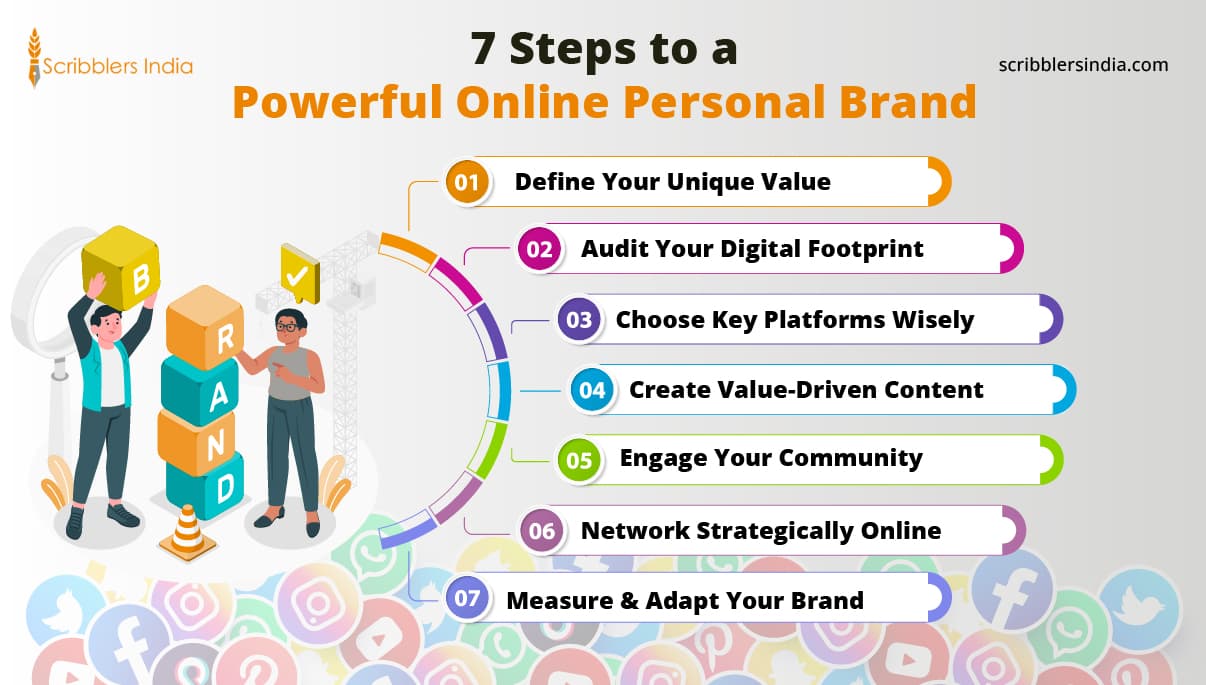
Building a strong professional reputation online is largely a matter of sequencing. Publishing more content cannot solve unclear positioning, while an impressive profile carries limited weight without credible proof. Expanding across several platforms also creates unnecessary work when the people you need to influence concentrate elsewhere. The practical approach to how to build personal brand online starts with understanding what people can already discover about you. You can then define the reputation you want, strengthen the evidence supporting it, choose appropriate channels, publish useful ideas, build relevant relationships, and improve discoverability across search. This guide on how to build personal brand online focuses on that complete operating system rather than individual platform tactics. If you are still evaluating the broader business or career case, start with our analysis on why personal branding is important. The process below begins once you have decided to invest in your reputation. Key Takeaways Review what search results and profiles currently communicate about your expertise. Choose the audience, expertise territory, and professional association you want remembered. Create one reliable home base that preserves control over professional proof. Prioritize platforms where your audience already evaluates expertise and professional credibility. Place cases, recommendations, research, and qualifications close to important claims. Turn real questions, decisions, research, and lessons into useful content. Keep names, biographies, author pages, and expertise descriptions consistently aligned. Track changes in relevant discovery, relationships, opportunities, and reputation over time. How Should You Audit Your Digital Footprint Before You Build Personal Brand Online? Before you build personal brand online, establish what people can already find and what those results communicate. Any practical approach to how to build personal brand online should begin with search results, major profiles, employer pages, author pages, published work, and prominent third-party mentions. Compare that public footprint with the professional association you want to strengthen. Look for outdated information, conflicting descriptions, weak proof, useful existing assets, and prominent pages that no longer reflect your present role, expertise, audience, or professional direction. What Should a Personal Brand Audit Review? Start by searching for your full professional name and inspect the first several result pages. Then review the assets most likely to influence someone evaluating you for a role, project, partnership, speaking opportunity, media request, investment conversation, or professional recommendation. Audit Area What to Review Common Problem Identity Current name, title, company, and role Prominent profiles conflict Positioning Expertise emphasized across visible assets Each platform tells a different story Biography Current experience and specialization Old career stages remain prominent Proof Work, results, research, recommendations Claims have little visible support Content Subjects repeatedly associated with your name Publishing covers unrelated themes Third-Party Pages Events, publications, podcasts, directories Important information is outdated Prioritize high-visibility inaccuracies rather than trying to clean every historical mention. A dated conference biography that still ranks prominently deserves more attention than an obscure directory listing. The audit should finish with three practical decisions: which assets to keep, which to update, and which to de-emphasize. Useful content, interviews, recommendations, case evidence, speaking videos, or research may already support the reputation you want. Identifying these assets before creating new material is an important part of how to build a personal brand online efficiently as it prevents unnecessary duplication and provides stronger evidence for later profile updates. What Type of Reputation You Need Before Building Personal Brand Online? A useful personal branding strategy starts with the association you want relevant people to make with your name. Understanding how to build personal brand online becomes easier once the audience, expertise territory, contribution, and supporting evidence are clear enough to guide later execution. Positioning should be narrow enough to guide recognition without reducing your career to one skill. Choose the association that should lead now, while your biography, experience, portfolio, and broader content provide additional context after people understand the main professional territory. Who Should Your Personal Brand Influence? Define the people whose decisions your reputation needs to influence. A consultant may prioritize buyers facing one recurring problem, while a founder may need credibility with customers and industry peers. An executive may communicate simultaneously with employees, customers, board members, investors, and professional communities. Audience definitions such as “professionals” or “business leaders” usually provide too little direction. A clearer audience helps determine what proof deserves prominence, which questions your content should answer, where you should publish, and which relationships should receive consistent attention over time. What Expertise Should People Associate With Your Name? Ask what someone should confidently approach you about after encountering your work several times. “Marketing” yields weak recall, while “category positioning for technical B2B companies” provides a more useful anchor for the reputation, guiding profile language, content topics, speaking opportunities, and professional introductions. Once the territory is clear, translate it into a concise positioning idea. Our guide to personal brand statements explains in detail how to write such a statement, while this hub uses it as the strategic source for the broader online reputation system. Where Should Your Online Personal Branding Home Base Live? A strong online personal branding system needs one dependable place where people can understand your position, inspect proof, and take a logical next step. In how to build personal brand online, that home base may be a personal website or strong professional profile, depending on the level of control required. The better decision is not website versus social media. Think in terms of owned and rented presence. Owned assets preserve long-term control, while established platforms provide discovery and network access. Most professionals benefit from combining both without building more infrastructure than they can maintain. A useful home base normally needs three things: a current professional biography, visible evidence of expertise, and a clear next step. LinkedIn can handle these for simpler requirements, while a website is more useful when you need deeper control over proofing, long-form work, or inquiries. Do You Need a Personal Website to Build Personal Brand Online? You do not need a website simply because personal-brand advice recommends one. A site becomes valuable
Building a strong professional reputation online is largely a matter of sequencing. Publishing more content cannot solve unclear positioning, while an impressive profile carries limited weight without credible proof. Expanding across several platforms also creates unnecessary work when the people you need to influence concentrate elsewhere. The practical approach to how to build personal brand online starts with understanding what people can already discover about you. You can then define the reputation you want, strengthen the evidence supporting it, choose appropriate channels, publish useful ideas, build relevant relationships, and improve discoverability across search. This guide on how to build personal brand online focuses on that complete operating system rather than individual platform tactics. If you are still evaluating the broader business or career case, start with our analysis on why personal branding is important. The process below begins once you have decided to invest in your reputation. Key Takeaways Review what search results and profiles currently communicate about your expertise. Choose the audience, expertise territory, and professional association you want remembered. Create one reliable home base that preserves control over professional proof. Prioritize platforms where your audience already evaluates expertise and professional credibility. Place cases, recommendations, research, and qualifications close to important claims. Turn real questions, decisions, research, and lessons into useful content. Keep names, biographies, author pages, and expertise descriptions consistently aligned. Track changes in relevant discovery, relationships, opportunities, and reputation over time. How Should You Audit Your Digital Footprint Before You Build Personal Brand Online? Before you build personal brand online, establish what people can already find and what those results communicate. Any practical approach to how to build personal brand online should begin with search results, major profiles, employer pages, author pages, published work, and prominent third-party mentions. Compare that public footprint with the professional association you want to strengthen. Look for outdated information, conflicting descriptions, weak proof, useful existing assets, and prominent pages that no longer reflect your present role, expertise, audience, or professional direction. What Should a Personal Brand Audit Review? Start by searching for your full professional name and inspect the first several result pages. Then review the assets most likely to influence someone evaluating you for a role, project, partnership, speaking opportunity, media request, investment conversation, or professional recommendation. Audit Area What to Review Common Problem Identity Current name, title, company, and role Prominent profiles conflict Positioning Expertise emphasized across visible assets Each platform tells a different story Biography Current experience and specialization Old career stages remain prominent Proof Work, results, research, recommendations Claims have little visible support Content Subjects repeatedly associated with your name Publishing covers unrelated themes Third-Party Pages Events, publications, podcasts, directories Important information is outdated Prioritize high-visibility inaccuracies rather than trying to clean every historical mention. A dated conference biography that still ranks prominently deserves more attention than an obscure directory listing. The audit should finish with three practical decisions: which assets to keep, which to update, and which to de-emphasize. Useful content, interviews, recommendations, case evidence, speaking videos, or research may already support the reputation you want. Identifying these assets before creating new material is an important part of how to build a personal brand online efficiently as it prevents unnecessary duplication and provides stronger evidence for later profile updates. What Type of Reputation You Need Before Building Personal Brand Online? A useful personal branding strategy starts with the association you want relevant people to make with your name. Understanding how to build personal brand online becomes easier once the audience, expertise territory, contribution, and supporting evidence are clear enough to guide later execution. Positioning should be narrow enough to guide recognition without reducing your career to one skill. Choose the association that should lead now, while your biography, experience, portfolio, and broader content provide additional context after people understand the main professional territory. Who Should Your Personal Brand Influence? Define the people whose decisions your reputation needs to influence. A consultant may prioritize buyers facing one recurring problem, while a founder may need credibility with customers and industry peers. An executive may communicate simultaneously with employees, customers, board members, investors, and professional communities. Audience definitions such as “professionals” or “business leaders” usually provide too little direction. A clearer audience helps determine what proof deserves prominence, which questions your content should answer, where you should publish, and which relationships should receive consistent attention over time. What Expertise Should People Associate With Your Name? Ask what someone should confidently approach you about after encountering your work several times. “Marketing” yields weak recall, while “category positioning for technical B2B companies” provides a more useful anchor for the reputation, guiding profile language, content topics, speaking opportunities, and professional introductions. Once the territory is clear, translate it into a concise positioning idea. Our guide to personal brand statements explains in detail how to write such a statement, while this hub uses it as the strategic source for the broader online reputation system. Where Should Your Online Personal Branding Home Base Live? A strong online personal branding system needs one dependable place where people can understand your position, inspect proof, and take a logical next step. In how to build personal brand online, that home base may be a personal website or strong professional profile, depending on the level of control required. The better decision is not website versus social media. Think in terms of owned and rented presence. Owned assets preserve long-term control, while established platforms provide discovery and network access. Most professionals benefit from combining both without building more infrastructure than they can maintain. A useful home base normally needs three things: a current professional biography, visible evidence of expertise, and a clear next step. LinkedIn can handle these for simpler requirements, while a website is more useful when you need deeper control over proofing, long-form work, or inquiries. Do You Need a Personal Website to Build Personal Brand Online? You do not need a website simply because personal-brand advice recommends one. A site becomes valuable
How Does a LinkedIn Ghostwriting Agency Build Thought Leadership?
A founder can have strong opinions, years of experience, and useful stories without having time to turn them into LinkedIn posts every week. The difficult part is rarely finding something to say. It is capturing those ideas, developing them, and publishing them in a voice people recognize. A LinkedIn ghostwriting agency creates the system around that work. The executive remains the source of expertise while writers handle interviews, research, drafting, editing, and content planning. The strongest engagements preserve the leader’s judgment rather than replace it with generic social content. This distinction has become crucial in 2026. LinkedIn is actively addressing low-effort AI content that sounds polished while offering little original perspective. This guide explains how the process should work, which service model suits different requirements, what you should receive each month, and how to evaluate an agency before signing a retainer. Key Takeaways: A LinkedIn ghostwriting agency turns executive expertise into consistent, publishable professional content. Strong ghostwriting starts with source extraction before writers begin drafting LinkedIn posts. Voice guides should capture thinking patterns, language preferences, examples, and editorial boundaries. Generic AI content makes first-hand experience and clear professional opinions more valuable. Agencies, freelancers, internal writers, and AI-assisted workflows serve different operating requirements. Compare providers through source depth, voice continuity, evidence standards, workflow, and measurement. Monthly deliverables should include source capture, drafts, approvals, planning, and performance review. Measure progress from relevant exposure through conversations, opportunities, and attributable professional outcomes. What Does a LinkedIn Ghostwriting Agency Actually Do? A LinkedIn ghostwriting agency helps founders and executives turn their knowledge into content published under their own names. The work can include positioning, interviews, idea development, research, writing, editing, content planning, and performance reviews. The leader supplies the expertise and retains final control over what becomes public. This is different from sending a writer a topic and asking for ten posts. Professional LinkedIn ghostwriting needs enough context to understand how the executive thinks. Writers need access to opinions, customer observations, industry experience, previous content, and current business priorities. A useful division of responsibilities looks like this: The Executive Should Provide The Ghostwriting Team Can Handle Professional opinions and positions Turning raw ideas into structured posts First-hand experiences Researching supporting context Customer and market observations Developing content angles Examples from actual work Drafting and editing Sensitive-context decisions Formatting and content sequencing Final approval Maintaining the publishing calendar The writer therefore works with existing expertise. They should never manufacture professional positions the executive would not defend in a real conversation. This approach also connects naturally with LinkedIn personal branding. A recognizable public voice is more effective when the profile, content themes, and professional positioning reinforce one another. With the responsibilities clear, the next question is how raw executive knowledge becomes usable content. How Does a LinkedIn Ghostwriting Agency Work? A capable LinkedIn ghostwriting agency should have a repeatable process for collecting ideas and improving them over time. The workflow usually requires more executive input during onboarding. Once the writer understands the voice, recurring source collection and batch approvals can make publishing easier to manage. 1. Define What the Executive Should Be Known For Posting starts after positioning is clear. A LinkedIn ghostwriting agency first identifies the executive’s audience, expertise, business context, and subjects worth owning. It should also define which topics sit outside the intended public position. For example, a cybersecurity founder could build content around enterprise AI security, security operations, and emerging risk. Random leadership advice would add activity without strengthening that association. A broader personal branding strategy can help establish these positioning decisions before regular LinkedIn publishing begins. 2. Capture the Executive’s Raw Knowledge Interviews are among the most useful sources because executives often explain ideas better in conversation than in a blank document. The writer can ask about recent customer discussions, decisions, failed assumptions, market shifts, internal debates, and professional opinions. Existing podcasts, presentations, articles, emails, sales calls, and conference appearances can add further context. Published 2026 agency processes increasingly use detailed voice interviews during onboarding. Some describe initial voice-calibration sessions lasting around 60 to 90 minutes. The duration will vary. The important point is depth. A five-question form rarely captures enough context for sustained executive ghostwriting. 3. Build a Working Voice Guide Voice capture extends beyond labels such as “professional,” “friendly,” or “authoritative.” A useful guide records how the executive explains ideas. It should capture preferred vocabulary, sentence patterns, recurring beliefs, examples, subjects to be avoided, and phrases the person would never use. The guide should evolve as new drafts receive feedback. If every post requires the executive to rewrite entire sections, the system has not learned enough from previous reviews. 4. Develop Ideas Before Drafting Posts Strong source material can produce several angles. One customer conversation might lead to a market observation. A related operating decision could become a lesson for founders. The same underlying idea may later support an article or newsletter. The agency should therefore maintain an idea bank rather than treating each publication date as a fresh search for a topic. Each idea also needs an editorial purpose. Some posts can explain expertise. Others can share a point of view or make a complex subject easier to understand. 5. Draft, Review, and Learn From Feedback The first drafts establish the initial voice match. Executive feedback then becomes new information for the writer. Comments such as “I would never say this,” “this example needs more context,” or “my position is stronger than this” should be included in the voice guide. Batch reviews can reduce repetitive approvals. The executive still retains final decision-making authority over what appears under their name. Over several cycles, the goal is simple: the writer understands more context, while the executive needs fewer corrections. This learning loop is becoming especially valuable as LinkedIn fills with easily generated content. Why Has LinkedIn Ghostwriting Become Harder in an AI-Saturated Feed? LinkedIn is actively trying to reduce low-effort content that lacks real perspective. In May 2026, LinkedIn clarified its stance: AI can support writing, but
A founder can have strong opinions, years of experience, and useful stories without having time to turn them into LinkedIn posts every week. The difficult part is rarely finding something to say. It is capturing those ideas, developing them, and publishing them in a voice people recognize. A LinkedIn ghostwriting agency creates the system around that work. The executive remains the source of expertise while writers handle interviews, research, drafting, editing, and content planning. The strongest engagements preserve the leader’s judgment rather than replace it with generic social content. This distinction has become crucial in 2026. LinkedIn is actively addressing low-effort AI content that sounds polished while offering little original perspective. This guide explains how the process should work, which service model suits different requirements, what you should receive each month, and how to evaluate an agency before signing a retainer. Key Takeaways: A LinkedIn ghostwriting agency turns executive expertise into consistent, publishable professional content. Strong ghostwriting starts with source extraction before writers begin drafting LinkedIn posts. Voice guides should capture thinking patterns, language preferences, examples, and editorial boundaries. Generic AI content makes first-hand experience and clear professional opinions more valuable. Agencies, freelancers, internal writers, and AI-assisted workflows serve different operating requirements. Compare providers through source depth, voice continuity, evidence standards, workflow, and measurement. Monthly deliverables should include source capture, drafts, approvals, planning, and performance review. Measure progress from relevant exposure through conversations, opportunities, and attributable professional outcomes. What Does a LinkedIn Ghostwriting Agency Actually Do? A LinkedIn ghostwriting agency helps founders and executives turn their knowledge into content published under their own names. The work can include positioning, interviews, idea development, research, writing, editing, content planning, and performance reviews. The leader supplies the expertise and retains final control over what becomes public. This is different from sending a writer a topic and asking for ten posts. Professional LinkedIn ghostwriting needs enough context to understand how the executive thinks. Writers need access to opinions, customer observations, industry experience, previous content, and current business priorities. A useful division of responsibilities looks like this: The Executive Should Provide The Ghostwriting Team Can Handle Professional opinions and positions Turning raw ideas into structured posts First-hand experiences Researching supporting context Customer and market observations Developing content angles Examples from actual work Drafting and editing Sensitive-context decisions Formatting and content sequencing Final approval Maintaining the publishing calendar The writer therefore works with existing expertise. They should never manufacture professional positions the executive would not defend in a real conversation. This approach also connects naturally with LinkedIn personal branding. A recognizable public voice is more effective when the profile, content themes, and professional positioning reinforce one another. With the responsibilities clear, the next question is how raw executive knowledge becomes usable content. How Does a LinkedIn Ghostwriting Agency Work? A capable LinkedIn ghostwriting agency should have a repeatable process for collecting ideas and improving them over time. The workflow usually requires more executive input during onboarding. Once the writer understands the voice, recurring source collection and batch approvals can make publishing easier to manage. 1. Define What the Executive Should Be Known For Posting starts after positioning is clear. A LinkedIn ghostwriting agency first identifies the executive’s audience, expertise, business context, and subjects worth owning. It should also define which topics sit outside the intended public position. For example, a cybersecurity founder could build content around enterprise AI security, security operations, and emerging risk. Random leadership advice would add activity without strengthening that association. A broader personal branding strategy can help establish these positioning decisions before regular LinkedIn publishing begins. 2. Capture the Executive’s Raw Knowledge Interviews are among the most useful sources because executives often explain ideas better in conversation than in a blank document. The writer can ask about recent customer discussions, decisions, failed assumptions, market shifts, internal debates, and professional opinions. Existing podcasts, presentations, articles, emails, sales calls, and conference appearances can add further context. Published 2026 agency processes increasingly use detailed voice interviews during onboarding. Some describe initial voice-calibration sessions lasting around 60 to 90 minutes. The duration will vary. The important point is depth. A five-question form rarely captures enough context for sustained executive ghostwriting. 3. Build a Working Voice Guide Voice capture extends beyond labels such as “professional,” “friendly,” or “authoritative.” A useful guide records how the executive explains ideas. It should capture preferred vocabulary, sentence patterns, recurring beliefs, examples, subjects to be avoided, and phrases the person would never use. The guide should evolve as new drafts receive feedback. If every post requires the executive to rewrite entire sections, the system has not learned enough from previous reviews. 4. Develop Ideas Before Drafting Posts Strong source material can produce several angles. One customer conversation might lead to a market observation. A related operating decision could become a lesson for founders. The same underlying idea may later support an article or newsletter. The agency should therefore maintain an idea bank rather than treating each publication date as a fresh search for a topic. Each idea also needs an editorial purpose. Some posts can explain expertise. Others can share a point of view or make a complex subject easier to understand. 5. Draft, Review, and Learn From Feedback The first drafts establish the initial voice match. Executive feedback then becomes new information for the writer. Comments such as “I would never say this,” “this example needs more context,” or “my position is stronger than this” should be included in the voice guide. Batch reviews can reduce repetitive approvals. The executive still retains final decision-making authority over what appears under their name. Over several cycles, the goal is simple: the writer understands more context, while the executive needs fewer corrections. This learning loop is becoming especially valuable as LinkedIn fills with easily generated content. Why Has LinkedIn Ghostwriting Become Harder in an AI-Saturated Feed? LinkedIn is actively trying to reduce low-effort content that lacks real perspective. In May 2026, LinkedIn clarified its stance: AI can support writing, but

10 Best Ghostwriting Agencies in India for 2026 (Updated August 2026)
Choosing the best ghostwriting agencies in India becomes difficult once you look beyond similar service descriptions. An executive building thought leadership has different requirements from an entrepreneur writing a business book. A memoir also requires a different working relationship from a recurring LinkedIn program. The right comparison therefore starts with fit. You need to understand who supplies the ideas, how the writer captures your voice, who handles research, and how revisions work. Ownership terms, editorial oversight, confidentiality, and continuity also deserve careful review. This guide compares 10 best ghostwriting agencies in India based on their stated specializations, working processes, pricing visibility, and likely client fit. Key Takeaways: The best ghostwriting agency depends on format, audience, expertise, and collaboration needs. Scribblers India suits founders seeking executive ghostwriting, thought leadership, and LinkedIn continuity. Write Right and Estorytellers focus strongly on developing complete books and manuscripts. Ghostwriting India offers structured, voice-led processes for long-form non-fiction projects and memoirs. GhostwritersIndia publishes indicative rates, making initial cost comparison easier during shortlisting. IIP Books publishes detailed ghostwriting pricing for human and AI-assisted workflows online. Orange Publishers serves authors seeking ghostwriting, as well as a range of publishing support services. Public pricing helps comparison, although scope, interviews, editing, and rights need review. Compare agencies through evidence, writer fit, ownership terms, process, and handover quality. Provider information last verified: August 2026. Pricing, services, and delivery models can change after publication. How Did We Evaluate the Best Ghostwriting Agencies in India? We reviewed providers with active ghostwriting or professional book-writing services visible on their websites in August 2026. The comparison focuses on what a prospective client can verify publicly. We avoided numerical quality scores because websites rarely provide enough comparable evidence to support precise rankings. Scribblers India publishes this guide and appears in the comparison. Readers should therefore consider our assessment of Scribblers India commercially interested. We apply the same public-information criteria to each provider and identify suitable use cases instead of making unsupported judgments about competitors. The evaluation uses seven areas: Evaluation Criterion What We Reviewed Ghostwriting specialization The content types, genres, and client requirements the provider publicly supports. Voice-capture process Interviews, source materials, voice profiling, feedback, and other stated methods. Domain or genre fit The subject areas or writing categories the agency explicitly serves. Editorial workflow Outlining, research, drafting, editing, revisions, approvals, and project management. Confidentiality and ownership Published information about NDAs, copyright, authorship, and content rights. Public proof Visible processes, testimonials, case examples, portfolios, or service documentation. Pricing transparency Published rates, indicative prices, package information, or custom-quote requirements. A provider can perform well without publishing every detail online. Ghostwriting often requires discretion, so public portfolios can remain limited. The strongest buying decision combines online research with direct questions about your project. This distinction becomes clearer when the agencies are compared side by side. Which Are the 10 Best Ghostwriting Agencies in India for 2026? The current Indian market includes executive-content specialists, book-focused agencies, publishing-led providers, and broader writing companies. Their service models overlap in places, although the underlying workflows can differ considerably. Your shortlist should therefore follow the type of intellectual property you want to create and maintain. Agency Best Fit Based on Public Offering Core Ghostwriting Focus Public Pricing Visibility Scribblers India Founders, CXOs, consultants, B2B experts Executive thought leadership, LinkedIn, op-eds, newsletters, speeches Custom Estorytellers Authors seeking complete book development Fiction, non-fiction, business books, memoirs Custom Ghostwriter.in Non-fiction authors wanting visible reference pricing Non-fiction books, long-form writing, blogs Published rate card GhostwritersIndia Authors seeking book writing with editing support Fiction, non-fiction, self-help, memoirs, articles Indicative rates published Ghostwriting India Authors, executives, entrepreneurs Business books, non-fiction, memoirs, self-help Custom IIP Books Book authors seeking multilingual and publishing support Academic and non-academic books Detailed rates published Kalam Kagaz Authors and businesses needing varied written formats Books, ebooks, memoirs, blogs, articles Custom Orange Publishers Authors combining writing with publishing support Fiction, non-fiction, autobiography, business books Custom Taletel Authors seeking writing, memoir, and ebook support Books, memoirs, ebooks, fiction, non-fiction Custom Write Right Authors needing a structured manuscript-development process Business books, fiction, non-fiction, memoirs Scope-based quote Our analysis is based on each provider’s own current service information rather than third-party descriptions. The next step is understanding what those differences mean during an actual engagement. 1. Scribblers India Scribblers India is a content strategy and ghostwriting agency that works primarily with founders, CXOs, consultants, and B2B subject-matter experts. Its ghostwriting work extends beyond standalone writing assignments to executive thought leadership, LinkedIn content, articles, newsletters, speeches, and other authority-building formats. As one of the best ghostwriting agencies in India, it combines voice capture with research, editorial planning, personal branding, AEO, and GEO considerations. This makes its model more relevant for leaders building an ongoing body of professional content than authors seeking a conventional fiction or memoir-writing service. Best for: Founders, CXOs, consultants, and B2B experts who need recurring executive content across LinkedIn, articles, newsletters, speeches, and thought leadership formats while preserving one consistent professional voice. Primary services: Executive ghostwriting draws on interviews, source material, and existing communication to create content that retains the leader’s natural voice. With LinkedIn ghostwriting, executive expertise and timely ideas are developed into posts for relevant professional audiences. Original viewpoints can be expanded through thought leadership into articles, op-eds, newsletters, reports, and other authority-building formats. Speeches and long-form content give leaders more space to explain complex ideas across professional and industry settings. Personal branding brings these efforts together around positioning, discoverability, and a coherent professional identity. How the process works: Projects begin with voice calibration using interviews, previous content, recordings, and other source material. The team then develops topics, drafts, and editorial direction around the executive’s priorities. Feedback strengthens voice consistency over time. Pricing is customized according to format, volume, research depth, and engagement scope. Notable strength: Scribblers India combines executive ghostwriting with thought leadership, personal branding, AEO, and GEO strategy. This supports leaders building a sustained body of professional content across multiple channels. 2. Estorytellers Estorytellers is a book-focused writing
Choosing the best ghostwriting agencies in India becomes difficult once you look beyond similar service descriptions. An executive building thought leadership has different requirements from an entrepreneur writing a business book. A memoir also requires a different working relationship from a recurring LinkedIn program. The right comparison therefore starts with fit. You need to understand who supplies the ideas, how the writer captures your voice, who handles research, and how revisions work. Ownership terms, editorial oversight, confidentiality, and continuity also deserve careful review. This guide compares 10 best ghostwriting agencies in India based on their stated specializations, working processes, pricing visibility, and likely client fit. Key Takeaways: The best ghostwriting agency depends on format, audience, expertise, and collaboration needs. Scribblers India suits founders seeking executive ghostwriting, thought leadership, and LinkedIn continuity. Write Right and Estorytellers focus strongly on developing complete books and manuscripts. Ghostwriting India offers structured, voice-led processes for long-form non-fiction projects and memoirs. GhostwritersIndia publishes indicative rates, making initial cost comparison easier during shortlisting. IIP Books publishes detailed ghostwriting pricing for human and AI-assisted workflows online. Orange Publishers serves authors seeking ghostwriting, as well as a range of publishing support services. Public pricing helps comparison, although scope, interviews, editing, and rights need review. Compare agencies through evidence, writer fit, ownership terms, process, and handover quality. Provider information last verified: August 2026. Pricing, services, and delivery models can change after publication. How Did We Evaluate the Best Ghostwriting Agencies in India? We reviewed providers with active ghostwriting or professional book-writing services visible on their websites in August 2026. The comparison focuses on what a prospective client can verify publicly. We avoided numerical quality scores because websites rarely provide enough comparable evidence to support precise rankings. Scribblers India publishes this guide and appears in the comparison. Readers should therefore consider our assessment of Scribblers India commercially interested. We apply the same public-information criteria to each provider and identify suitable use cases instead of making unsupported judgments about competitors. The evaluation uses seven areas: Evaluation Criterion What We Reviewed Ghostwriting specialization The content types, genres, and client requirements the provider publicly supports. Voice-capture process Interviews, source materials, voice profiling, feedback, and other stated methods. Domain or genre fit The subject areas or writing categories the agency explicitly serves. Editorial workflow Outlining, research, drafting, editing, revisions, approvals, and project management. Confidentiality and ownership Published information about NDAs, copyright, authorship, and content rights. Public proof Visible processes, testimonials, case examples, portfolios, or service documentation. Pricing transparency Published rates, indicative prices, package information, or custom-quote requirements. A provider can perform well without publishing every detail online. Ghostwriting often requires discretion, so public portfolios can remain limited. The strongest buying decision combines online research with direct questions about your project. This distinction becomes clearer when the agencies are compared side by side. Which Are the 10 Best Ghostwriting Agencies in India for 2026? The current Indian market includes executive-content specialists, book-focused agencies, publishing-led providers, and broader writing companies. Their service models overlap in places, although the underlying workflows can differ considerably. Your shortlist should therefore follow the type of intellectual property you want to create and maintain. Agency Best Fit Based on Public Offering Core Ghostwriting Focus Public Pricing Visibility Scribblers India Founders, CXOs, consultants, B2B experts Executive thought leadership, LinkedIn, op-eds, newsletters, speeches Custom Estorytellers Authors seeking complete book development Fiction, non-fiction, business books, memoirs Custom Ghostwriter.in Non-fiction authors wanting visible reference pricing Non-fiction books, long-form writing, blogs Published rate card GhostwritersIndia Authors seeking book writing with editing support Fiction, non-fiction, self-help, memoirs, articles Indicative rates published Ghostwriting India Authors, executives, entrepreneurs Business books, non-fiction, memoirs, self-help Custom IIP Books Book authors seeking multilingual and publishing support Academic and non-academic books Detailed rates published Kalam Kagaz Authors and businesses needing varied written formats Books, ebooks, memoirs, blogs, articles Custom Orange Publishers Authors combining writing with publishing support Fiction, non-fiction, autobiography, business books Custom Taletel Authors seeking writing, memoir, and ebook support Books, memoirs, ebooks, fiction, non-fiction Custom Write Right Authors needing a structured manuscript-development process Business books, fiction, non-fiction, memoirs Scope-based quote Our analysis is based on each provider’s own current service information rather than third-party descriptions. The next step is understanding what those differences mean during an actual engagement. 1. Scribblers India Scribblers India is a content strategy and ghostwriting agency that works primarily with founders, CXOs, consultants, and B2B subject-matter experts. Its ghostwriting work extends beyond standalone writing assignments to executive thought leadership, LinkedIn content, articles, newsletters, speeches, and other authority-building formats. As one of the best ghostwriting agencies in India, it combines voice capture with research, editorial planning, personal branding, AEO, and GEO considerations. This makes its model more relevant for leaders building an ongoing body of professional content than authors seeking a conventional fiction or memoir-writing service. Best for: Founders, CXOs, consultants, and B2B experts who need recurring executive content across LinkedIn, articles, newsletters, speeches, and thought leadership formats while preserving one consistent professional voice. Primary services: Executive ghostwriting draws on interviews, source material, and existing communication to create content that retains the leader’s natural voice. With LinkedIn ghostwriting, executive expertise and timely ideas are developed into posts for relevant professional audiences. Original viewpoints can be expanded through thought leadership into articles, op-eds, newsletters, reports, and other authority-building formats. Speeches and long-form content give leaders more space to explain complex ideas across professional and industry settings. Personal branding brings these efforts together around positioning, discoverability, and a coherent professional identity. How the process works: Projects begin with voice calibration using interviews, previous content, recordings, and other source material. The team then develops topics, drafts, and editorial direction around the executive’s priorities. Feedback strengthens voice consistency over time. Pricing is customized according to format, volume, research depth, and engagement scope. Notable strength: Scribblers India combines executive ghostwriting with thought leadership, personal branding, AEO, and GEO strategy. This supports leaders building a sustained body of professional content across multiple channels. 2. Estorytellers Estorytellers is a book-focused writing
Executive Branding vs Personal Branding: What Changes at Leadership Level?
A senior leader’s public reputation carries a wider set of consequences than an ordinary professional profile. Employees can read the same post as customers. Investors, partners, candidates, industry peers, and journalists may interpret the same comment through very different lenses. This wider audience changes the job of executive branding. The work still begins with expertise, reputation, and professional visibility. It also must account for the organization the executive represents, the claims that require review, and the topics where personal perspective intersects with corporate responsibility. This guide compares personal branding vs executive branding at the leadership level. It covers the stakeholders an executive needs to consider, governance boundaries, content depth, career transitions, measurement, and corporate alignment. Key Takeaways: Leadership branding connects expertise with organizational context, stakeholder expectations, and reputation risk. Senior leaders communicate simultaneously with employees, buyers, investors, partners, peers, and media. Governance becomes important when public commentary touches company claims, regulation, or sensitive events. Strong executive content combines expertise, evidence, experience, and a defensible market point of view. Company alignment should preserve individual perspective while keeping material facts and commitments consistent. Career transitions require deliberate decisions about portable expertise, company associations, and public positioning. Measurement should track audience quality, authority signals, opportunities, and reputation indicators together. Ghostwriting can support executive visibility when the leader retains substantive input and approval. What Is Executive Branding? Executive branding is the deliberate management of how a senior leader’s expertise, judgment, values, experience, and public communication are understood by relevant stakeholders. It connects the individual’s professional reputation with the responsibilities that come with representing an organization. An executive personal branding program can include positioning, profile development, thought leadership, speaking themes, media contributions, LinkedIn content, search visibility, and reputation monitoring. The exact mix should follow the leader’s role and stakeholder exposure. The distinction from ordinary personal branding appears in the operating constraints. A consultant can often speak primarily for themselves. A CEO, CFO, CHRO, CTO, or business-unit leader can be interpreted as speaking with organizational authority, even when the topic begins from personal expertise. That creates a second layer of work. The leader needs a recognizable professional position, while the company needs clarity around claims, sensitive subjects, review ownership, and where personal views end and official positions begin. This is why the work functions best as a reputation system supported by an editorial workflow. Personal Branding vs Executive Branding: What Changes? The relationship between personal branding vs executive branding is evolutionary. Both build recognition around an individual. Executive branding adds organizational representation, more complex stakeholders, and stronger governance requirements. Area Personal Branding Executive Branding Primary purpose Build recognition around individual expertise and professional value Build leadership reputation while supporting an organizational role Core audiences Peers, recruiters, clients, collaborators, professional communities Employees, customers, board, investors, partners, candidates, media Content source Experience, opinions, work, interests, professional learning Leadership experience, market insight, research, company context, approved evidence Governance Usually personal judgment and platform rules May involve communications, legal, compliance, IR, HR, or specialist reviewers Reputation risk Concentrated mainly around the individual Can affect both the leader and organization Portability Travels largely with the individual Expertise travels; company-specific authority remains tied to the role Measurement Visibility, network quality, reputation, professional opportunities Stakeholder reach, authority, audience quality, opportunities, alignment, risk signals The comparison also explains why copying a creator-style personal branding playbook can create problems for a senior leader. High publishing frequency has little value when the ideas lack depth, the evidence remains weak, or every post requires retroactive clarification inside the company. A stronger approach begins with the leader’s expertise territory and the stakeholders whose decisions the public presence may influence. Governance and format follow from that map. Why You Need an Executive Stakeholder Map Before Building a Content Calendar? A useful leadership-reputation strategy begins by asking who is evaluating the leader and what each group needs to understand. One post can reach multiple stakeholder groups, so the public presence benefits from a broader audience model rather than a single target persona. Employees and Future Talent Employees often look to senior leaders for clarity around direction, priorities, operating principles, and leadership judgment. Candidates may also use public executive communication to understand how the organization thinks and what its leaders value. Public content can draw on management lessons, organizational design, technical decisions, or industry change, while internal communications retain their separate role and confidential information remains protected. That gives the leader space to demonstrate judgment without turning an external publishing program into an extension of the internal communications calendar. Customers and Buying Groups Customers may use executive content to understand the company’s expertise, market perspective, and approach to important problems. This becomes especially relevant in complex B2B categories where buying decisions involve several internal stakeholders. The 2025 Edelman-LinkedIn B2B Thought Leadership Impact Report found that 56% of target buyers and 55% of hidden buyers use thought leadership during vendor evaluation. The research suggests that expert-led ideas can reach people beyond the obvious buyer contacts inside an account. That does not make executive content a substitute for product proof, pricing, procurement, or sales engagement. It gives the leader another way to help stakeholders understand the category and the organization’s thinking. Board, Investors, and Financial Stakeholders For leaders with investor-facing responsibilities, public communication carries additional context. Market commentary, company performance, forward-looking subjects, acquisitions, financial claims, and strategy can require tighter coordination with official communication processes. The publishing system should identify those boundaries before drafting begins. A strong point of view can still develop inside clear factual and governance rules. This is also where content teams need a reliable source of truth. Current company descriptions, approved statistics, executive biographies, public commitments, and officially released information should be easy to retrieve during editorial review. Partners and Industry Peers Partners and industry peers may evaluate the executive’s ability to interpret category shifts, collaborate, and contribute useful expertise. Research-led commentary, operating lessons, industry frameworks, and informed responses to market developments can create a more useful professional signal than broad motivational publishing. This audience
A senior leader’s public reputation carries a wider set of consequences than an ordinary professional profile. Employees can read the same post as customers. Investors, partners, candidates, industry peers, and journalists may interpret the same comment through very different lenses. This wider audience changes the job of executive branding. The work still begins with expertise, reputation, and professional visibility. It also must account for the organization the executive represents, the claims that require review, and the topics where personal perspective intersects with corporate responsibility. This guide compares personal branding vs executive branding at the leadership level. It covers the stakeholders an executive needs to consider, governance boundaries, content depth, career transitions, measurement, and corporate alignment. Key Takeaways: Leadership branding connects expertise with organizational context, stakeholder expectations, and reputation risk. Senior leaders communicate simultaneously with employees, buyers, investors, partners, peers, and media. Governance becomes important when public commentary touches company claims, regulation, or sensitive events. Strong executive content combines expertise, evidence, experience, and a defensible market point of view. Company alignment should preserve individual perspective while keeping material facts and commitments consistent. Career transitions require deliberate decisions about portable expertise, company associations, and public positioning. Measurement should track audience quality, authority signals, opportunities, and reputation indicators together. Ghostwriting can support executive visibility when the leader retains substantive input and approval. What Is Executive Branding? Executive branding is the deliberate management of how a senior leader’s expertise, judgment, values, experience, and public communication are understood by relevant stakeholders. It connects the individual’s professional reputation with the responsibilities that come with representing an organization. An executive personal branding program can include positioning, profile development, thought leadership, speaking themes, media contributions, LinkedIn content, search visibility, and reputation monitoring. The exact mix should follow the leader’s role and stakeholder exposure. The distinction from ordinary personal branding appears in the operating constraints. A consultant can often speak primarily for themselves. A CEO, CFO, CHRO, CTO, or business-unit leader can be interpreted as speaking with organizational authority, even when the topic begins from personal expertise. That creates a second layer of work. The leader needs a recognizable professional position, while the company needs clarity around claims, sensitive subjects, review ownership, and where personal views end and official positions begin. This is why the work functions best as a reputation system supported by an editorial workflow. Personal Branding vs Executive Branding: What Changes? The relationship between personal branding vs executive branding is evolutionary. Both build recognition around an individual. Executive branding adds organizational representation, more complex stakeholders, and stronger governance requirements. Area Personal Branding Executive Branding Primary purpose Build recognition around individual expertise and professional value Build leadership reputation while supporting an organizational role Core audiences Peers, recruiters, clients, collaborators, professional communities Employees, customers, board, investors, partners, candidates, media Content source Experience, opinions, work, interests, professional learning Leadership experience, market insight, research, company context, approved evidence Governance Usually personal judgment and platform rules May involve communications, legal, compliance, IR, HR, or specialist reviewers Reputation risk Concentrated mainly around the individual Can affect both the leader and organization Portability Travels largely with the individual Expertise travels; company-specific authority remains tied to the role Measurement Visibility, network quality, reputation, professional opportunities Stakeholder reach, authority, audience quality, opportunities, alignment, risk signals The comparison also explains why copying a creator-style personal branding playbook can create problems for a senior leader. High publishing frequency has little value when the ideas lack depth, the evidence remains weak, or every post requires retroactive clarification inside the company. A stronger approach begins with the leader’s expertise territory and the stakeholders whose decisions the public presence may influence. Governance and format follow from that map. Why You Need an Executive Stakeholder Map Before Building a Content Calendar? A useful leadership-reputation strategy begins by asking who is evaluating the leader and what each group needs to understand. One post can reach multiple stakeholder groups, so the public presence benefits from a broader audience model rather than a single target persona. Employees and Future Talent Employees often look to senior leaders for clarity around direction, priorities, operating principles, and leadership judgment. Candidates may also use public executive communication to understand how the organization thinks and what its leaders value. Public content can draw on management lessons, organizational design, technical decisions, or industry change, while internal communications retain their separate role and confidential information remains protected. That gives the leader space to demonstrate judgment without turning an external publishing program into an extension of the internal communications calendar. Customers and Buying Groups Customers may use executive content to understand the company’s expertise, market perspective, and approach to important problems. This becomes especially relevant in complex B2B categories where buying decisions involve several internal stakeholders. The 2025 Edelman-LinkedIn B2B Thought Leadership Impact Report found that 56% of target buyers and 55% of hidden buyers use thought leadership during vendor evaluation. The research suggests that expert-led ideas can reach people beyond the obvious buyer contacts inside an account. That does not make executive content a substitute for product proof, pricing, procurement, or sales engagement. It gives the leader another way to help stakeholders understand the category and the organization’s thinking. Board, Investors, and Financial Stakeholders For leaders with investor-facing responsibilities, public communication carries additional context. Market commentary, company performance, forward-looking subjects, acquisitions, financial claims, and strategy can require tighter coordination with official communication processes. The publishing system should identify those boundaries before drafting begins. A strong point of view can still develop inside clear factual and governance rules. This is also where content teams need a reliable source of truth. Current company descriptions, approved statistics, executive biographies, public commitments, and officially released information should be easy to retrieve during editorial review. Partners and Industry Peers Partners and industry peers may evaluate the executive’s ability to interpret category shifts, collaborate, and contribute useful expertise. Research-led commentary, operating lessons, industry frameworks, and informed responses to market developments can create a more useful professional signal than broad motivational publishing. This audience

Why Is Personal Branding Important? A Decision Guide for Professionals and Founders
A promotion, funding round, consulting launch, career move, or public leadership role can change the extent to which your professional reputation influences professional decisions. That is when the question why is personal branding important becomes practical. People may search your name, review your work, read your ideas, and compare your public profile with the expertise or role you represent. Personal branding helps make that evaluation more consistent. It gives people clearer context about what you know, the experience that supports your expertise, and the professional value you can bring before they have worked with you directly. The resulting benefits of personal branding can range from greater recognition of expertise and discoverability to more relevant professional conversations and opportunities. This blog focuses on the decision that comes before those outcomes. It explains when personal branding deserves greater investment, how it creates value, and which situations may require other priorities first. Key Takeaways: Personal branding becomes valuable when professional decisions increasingly depend on public reputation. Clear positioning helps audiences connect your name with relevant expertise and evidence. Career transitions increase the value of searchable professional reputation during evaluation. Founders benefit when market education depends on their specialist knowledge and perspective. Executives need stronger governance as visibility begins representing the wider organization publicly. Consultants gain more from personal branding when expertise influences selection and trust. Personal branding should follow stronger fundamentals when the underlying offer remains unclear. A simple diagnostic can show whether reputation deserves more investment right now. Why Is Personal Branding Important? Personal branding helps other people understand what you are known for, where your expertise comes from, and why your perspective deserves attention. It creates a more coherent professional signal across search results, profiles, published work, conversations, recommendations, and public appearances. The simplest answer to why is personal branding important is that professional reputation already exists, even when you leave it unmanaged. Personal branding gives you more influence over which parts of your experience, expertise, and point of view become easiest for others to discover and remember. Harvard Business School Online describes personal branding as defining what you want to communicate and expressing it effectively. It also treats audience perception as central to understanding a personal brand. The value comes from four mechanisms: Reputation clarity: People can connect your name with a specific area of expertise. Discoverability: Relevant information about you is easier to find when someone searches or evaluates you. Evidence: Your work, thinking, experience, and third-party proof make professional claims easier to assess. Context: Your network and published ideas help audiences understand how your expertise applies to real problems. These mechanisms can support many outcomes, while actual results still depend on expertise, audience fit, timing, and follow-through. That distinction is central to understanding why is personal branding important without turning personal branding into a promise of professional success Branding demands commitment; commitment to continual re-invention; striking chords with people to stir their emotions; and commitment to imagination. It is easy to be cynical about such things, much harder to be successful. ~ Sir Richard Branson When Does Personal Branding Become Strategically Crucial? The need for personal branding changes with the role you occupy and the decisions other people make about you. A private specialist with stable internal responsibilities may need little public visibility. A founder educating a new market may depend heavily on it. Our personal branding case study for a study-abroad consultant shows how a more deliberate visibility strategy was applied in practice. The question why is personal branding important becomes much easier to answer when you examine the professional situation and the decisions shaped by reputation. During a Career Transition A career move creates an information gap. Recruiters, hiring managers, peers, or future collaborators need to understand where your experience fits next. An outdated profile can leave your previous role defining you long after your expertise has changed. For someone changing industries, moving into leadership, returning after a break, or pursuing board roles, why is personal branding important has a practical answer. A clearer public record helps connect earlier experience with the direction you now want to pursue. A career transition rarely requires daily publishing. Relevant case evidence, updated professional profiles, thoughtful commentary, and visible work can be enough to make the transition easier to interpret. When a Founder Has to Educate the Market Some businesses enter categories buyers already understand. Others need the founder to explain an emerging problem, challenge an established assumption, or translate technical change into business language. In that situation, the answer to the question ‘why is personal branding important’ is closely tied to category education. The founder can become a recognizable source of explanation through operating experience, customer questions, product decisions, and informed market observations. This visibility can help audiences understand the category while the company builds recognition around its own capabilities and evidence. The balance becomes more important as the business grows. The founder can continue shaping market conversations, while trust gradually extends to the wider organization. Deciding how much visibility to give to each requires a clear understanding of personal branding vs. company branding at different stages of growth. When an Executive Represents More Than Personal Expertise A senior leader may communicate with employees, customers, investors, partners, regulators, industry peers, and media audiences. Their public presence therefore carries organizational context alongside individual expertise. For senior leaders, understanding why is personal branding important also involves managing that wider responsibility. Expertise needs enough visibility to establish a recognizable professional position, while company claims, sensitive subjects, role boundaries, and public commentary may require more deliberate review. These responsibilities become particularly important after a promotion, a CEO appointment, a board role, or a company transition. At this level, executive branding adds considerations of stakeholder alignment, governance, and reputation risk to the broader personal branding process. When Independent Expertise Drives Selection Consultants, advisors, coaches, fractional leaders, speakers, analysts, and other independent experts are often evaluated before a formal sales conversation begins. Buyers may review articles, presentations, testimonials, frameworks, prior work, or mutual connections before making contact. Here,
A promotion, funding round, consulting launch, career move, or public leadership role can change the extent to which your professional reputation influences professional decisions. That is when the question why is personal branding important becomes practical. People may search your name, review your work, read your ideas, and compare your public profile with the expertise or role you represent. Personal branding helps make that evaluation more consistent. It gives people clearer context about what you know, the experience that supports your expertise, and the professional value you can bring before they have worked with you directly. The resulting benefits of personal branding can range from greater recognition of expertise and discoverability to more relevant professional conversations and opportunities. This blog focuses on the decision that comes before those outcomes. It explains when personal branding deserves greater investment, how it creates value, and which situations may require other priorities first. Key Takeaways: Personal branding becomes valuable when professional decisions increasingly depend on public reputation. Clear positioning helps audiences connect your name with relevant expertise and evidence. Career transitions increase the value of searchable professional reputation during evaluation. Founders benefit when market education depends on their specialist knowledge and perspective. Executives need stronger governance as visibility begins representing the wider organization publicly. Consultants gain more from personal branding when expertise influences selection and trust. Personal branding should follow stronger fundamentals when the underlying offer remains unclear. A simple diagnostic can show whether reputation deserves more investment right now. Why Is Personal Branding Important? Personal branding helps other people understand what you are known for, where your expertise comes from, and why your perspective deserves attention. It creates a more coherent professional signal across search results, profiles, published work, conversations, recommendations, and public appearances. The simplest answer to why is personal branding important is that professional reputation already exists, even when you leave it unmanaged. Personal branding gives you more influence over which parts of your experience, expertise, and point of view become easiest for others to discover and remember. Harvard Business School Online describes personal branding as defining what you want to communicate and expressing it effectively. It also treats audience perception as central to understanding a personal brand. The value comes from four mechanisms: Reputation clarity: People can connect your name with a specific area of expertise. Discoverability: Relevant information about you is easier to find when someone searches or evaluates you. Evidence: Your work, thinking, experience, and third-party proof make professional claims easier to assess. Context: Your network and published ideas help audiences understand how your expertise applies to real problems. These mechanisms can support many outcomes, while actual results still depend on expertise, audience fit, timing, and follow-through. That distinction is central to understanding why is personal branding important without turning personal branding into a promise of professional success Branding demands commitment; commitment to continual re-invention; striking chords with people to stir their emotions; and commitment to imagination. It is easy to be cynical about such things, much harder to be successful. ~ Sir Richard Branson When Does Personal Branding Become Strategically Crucial? The need for personal branding changes with the role you occupy and the decisions other people make about you. A private specialist with stable internal responsibilities may need little public visibility. A founder educating a new market may depend heavily on it. Our personal branding case study for a study-abroad consultant shows how a more deliberate visibility strategy was applied in practice. The question why is personal branding important becomes much easier to answer when you examine the professional situation and the decisions shaped by reputation. During a Career Transition A career move creates an information gap. Recruiters, hiring managers, peers, or future collaborators need to understand where your experience fits next. An outdated profile can leave your previous role defining you long after your expertise has changed. For someone changing industries, moving into leadership, returning after a break, or pursuing board roles, why is personal branding important has a practical answer. A clearer public record helps connect earlier experience with the direction you now want to pursue. A career transition rarely requires daily publishing. Relevant case evidence, updated professional profiles, thoughtful commentary, and visible work can be enough to make the transition easier to interpret. When a Founder Has to Educate the Market Some businesses enter categories buyers already understand. Others need the founder to explain an emerging problem, challenge an established assumption, or translate technical change into business language. In that situation, the answer to the question ‘why is personal branding important’ is closely tied to category education. The founder can become a recognizable source of explanation through operating experience, customer questions, product decisions, and informed market observations. This visibility can help audiences understand the category while the company builds recognition around its own capabilities and evidence. The balance becomes more important as the business grows. The founder can continue shaping market conversations, while trust gradually extends to the wider organization. Deciding how much visibility to give to each requires a clear understanding of personal branding vs. company branding at different stages of growth. When an Executive Represents More Than Personal Expertise A senior leader may communicate with employees, customers, investors, partners, regulators, industry peers, and media audiences. Their public presence therefore carries organizational context alongside individual expertise. For senior leaders, understanding why is personal branding important also involves managing that wider responsibility. Expertise needs enough visibility to establish a recognizable professional position, while company claims, sensitive subjects, role boundaries, and public commentary may require more deliberate review. These responsibilities become particularly important after a promotion, a CEO appointment, a board role, or a company transition. At this level, executive branding adds considerations of stakeholder alignment, governance, and reputation risk to the broader personal branding process. When Independent Expertise Drives Selection Consultants, advisors, coaches, fractional leaders, speakers, analysts, and other independent experts are often evaluated before a formal sales conversation begins. Buyers may review articles, presentations, testimonials, frameworks, prior work, or mutual connections before making contact. Here,

Which Are the Best AEO Agencies in India for Startups and Growing Businesses
Search is moving from traditional blue links towards direct, source-backed answers, making the right AEO agency in India increasingly important for startups. A 2026 large-scale study found that Google AI Overviews appeared for 64.7% of question-based queries. Users now ask detailed questions across Google, ChatGPT, Perplexity, and Gemini and expect useful answers without having to browse multiple pages. This shift changes how brands need to approach AI search visibility. Content must answer specific questions clearly, give AI platforms reliable evidence, and make important information easy to extract and cite. This requirement cannot be satisfied with traditional SEO. Businesses need partners who understand prompt-led search behavior, answer structure, topical authority, and citation readiness. This blog covers the leading AEO agencies in India and the criteria brands should use to compare them. We will also see why Scribblers India stands out to brands seeking a strategy-led approach to improving visibility across AI search platforms. Key Takeaways AEO helps brands appear more often in answer-led search experiences. Strong agencies understand user intent before planning content or optimization. Clear content structure improves how answer engines extract useful information. AI Overviews favor pages that answer specific questions with clarity. Effective AEO combines search optimization with strong content strategy. AEO pricing usually varies by scope, competition, and existing assets. Scribblers India builds structured content systems designed for answer visibility. The right agency should meet clear strategic and execution criteria. How Does an AEO Agency Help Brands Earn AI Search Visibility? An AEO agency in India helps brands earn visibility on answer engines through structured content, intent mapping, and clean source signals. The work covers search strategy, on-page structure, schema, and editorial depth. The goal is consistent extraction in AI Overviews, ChatGPT, Perplexity, and Gemini. Answer-led content strategy: A capable agency builds topic maps around real user questions, prompt-style queries, and decision-stage searches. Every page is written to answer one core question before adding supporting detail and structure. Search intent and question mapping: The agency studies how users phrase queries on Google, prompt ChatGPT, query Perplexity, and explore Gemini. This research shapes the headline, the first paragraph, and the format of every section on the page. Featured snippet and AI Overview readiness: Writers format short definitions, lists, tables, and direct responses near the top of each section. This structure improves the chances of being cited in answer panels and AI summaries. FAQ, schema, and content structure: The team adds FAQ blocks, internal links, structured headings, and schema markup to help engines parse pages cleanly. Clear headings and short paragraphs help answer engines find the exact response quickly. Measurement across search and AI platforms: A serious agency tracks rankings, AI citations, impressions, and mention share across answer surfaces. Reporting covers classic SERP wins, as well as visibility in AI Overviews and ChatGPT. Why Should Businesses Hire an AEO Agency in India? Hiring an AEO agency in India gives brands access to senior content strategists, English-first writing teams, proven SEO depth, and growing AI search expertise. Indian agencies now lead programs for clients in the United States, the United Kingdom, Europe, and Australia. The cost structure also funds deeper research and editorial work. Cost-effective strategic execution: An AEO agency in India often delivers senior strategy, content design, editorial work, and reporting at 30% to 50% of the cost charged by agencies in the United States or the United Kingdom. This frees budget for research depth and content refresh cycles. Strong English-language content capability: India produces a large pool of writers trained in business English, technical content, academic research, and digital editorial work. The best agencies pair these writers with editors who shape tone, accuracy, AEO structure, and source quality on every draft. Growing India-based SEO and AI search expertise: Indian agencies have spent over a decade serving global SEO clients and now apply the same depth to AEO and GEO. Many teams test AI Overview signals weekly and track citations inside ChatGPT, Perplexity, Gemini, and Google AI Mode. Support for global B2B content requirements: A skilled AEO agency in India can run multi-market content programs across SaaS, professional services, finance, and healthcare. This breadth helps brands maintain consistent voice, structure, AI readiness, and editorial quality across every region and product line. Industry research from 2026 tracks steady expansion of AI Overview coverage across informational queries, with AIOs now appearing in over 11% of Google queries. What Should Brands Look for in an AEO Agency in India? The best AEO agency in India should integrate search intent, answer-led writing, technical accessibility, and source quality into a single strategy. A strong AEO strategy starts before drafting and continues after publication through visibility testing. This prevents answer optimization from becoming a formatting exercise built solely around question-based headings. Search Strategy and Intent Mapping A capable AEO agency should understand the questions behind a topic before deciding what content to create. Keyword data remains useful, although answer engines deal with complete questions, comparisons, follow-up prompts, and decision-stage queries that traditional keyword lists may not capture well. The research process should build a query universe around each topic. This means studying how audiences ask the same question across Google Search, AI Overviews, ChatGPT, Perplexity, Gemini, forums, and other research environments. Professional AEO services use this question-led approach to connect content planning with answer readiness. A strong AEO research process should examine: People Also Ask questions to identify common search formulations and useful follow-up queries around the same topic. AI search prompts to understand longer questions, comparison requests, recommendations, and decision journeys traditional keywords may miss. Community discussions to uncover the language buyers use when explaining problems outside polished brand or competitor content. Sales and customer conversations to identify objections and information gaps that appear before buyers make important decisions. Competitor answer coverage to find questions competitors answer well and valuable subtopics their existing content leaves unresolved. Research should then influence page architecture. Question-led H2s, direct-answer passages, contextual FAQs, and supporting sections should come from genuine information needs rather than
Search is moving from traditional blue links towards direct, source-backed answers, making the right AEO agency in India increasingly important for startups. A 2026 large-scale study found that Google AI Overviews appeared for 64.7% of question-based queries. Users now ask detailed questions across Google, ChatGPT, Perplexity, and Gemini and expect useful answers without having to browse multiple pages. This shift changes how brands need to approach AI search visibility. Content must answer specific questions clearly, give AI platforms reliable evidence, and make important information easy to extract and cite. This requirement cannot be satisfied with traditional SEO. Businesses need partners who understand prompt-led search behavior, answer structure, topical authority, and citation readiness. This blog covers the leading AEO agencies in India and the criteria brands should use to compare them. We will also see why Scribblers India stands out to brands seeking a strategy-led approach to improving visibility across AI search platforms. Key Takeaways AEO helps brands appear more often in answer-led search experiences. Strong agencies understand user intent before planning content or optimization. Clear content structure improves how answer engines extract useful information. AI Overviews favor pages that answer specific questions with clarity. Effective AEO combines search optimization with strong content strategy. AEO pricing usually varies by scope, competition, and existing assets. Scribblers India builds structured content systems designed for answer visibility. The right agency should meet clear strategic and execution criteria. How Does an AEO Agency Help Brands Earn AI Search Visibility? An AEO agency in India helps brands earn visibility on answer engines through structured content, intent mapping, and clean source signals. The work covers search strategy, on-page structure, schema, and editorial depth. The goal is consistent extraction in AI Overviews, ChatGPT, Perplexity, and Gemini. Answer-led content strategy: A capable agency builds topic maps around real user questions, prompt-style queries, and decision-stage searches. Every page is written to answer one core question before adding supporting detail and structure. Search intent and question mapping: The agency studies how users phrase queries on Google, prompt ChatGPT, query Perplexity, and explore Gemini. This research shapes the headline, the first paragraph, and the format of every section on the page. Featured snippet and AI Overview readiness: Writers format short definitions, lists, tables, and direct responses near the top of each section. This structure improves the chances of being cited in answer panels and AI summaries. FAQ, schema, and content structure: The team adds FAQ blocks, internal links, structured headings, and schema markup to help engines parse pages cleanly. Clear headings and short paragraphs help answer engines find the exact response quickly. Measurement across search and AI platforms: A serious agency tracks rankings, AI citations, impressions, and mention share across answer surfaces. Reporting covers classic SERP wins, as well as visibility in AI Overviews and ChatGPT. Why Should Businesses Hire an AEO Agency in India? Hiring an AEO agency in India gives brands access to senior content strategists, English-first writing teams, proven SEO depth, and growing AI search expertise. Indian agencies now lead programs for clients in the United States, the United Kingdom, Europe, and Australia. The cost structure also funds deeper research and editorial work. Cost-effective strategic execution: An AEO agency in India often delivers senior strategy, content design, editorial work, and reporting at 30% to 50% of the cost charged by agencies in the United States or the United Kingdom. This frees budget for research depth and content refresh cycles. Strong English-language content capability: India produces a large pool of writers trained in business English, technical content, academic research, and digital editorial work. The best agencies pair these writers with editors who shape tone, accuracy, AEO structure, and source quality on every draft. Growing India-based SEO and AI search expertise: Indian agencies have spent over a decade serving global SEO clients and now apply the same depth to AEO and GEO. Many teams test AI Overview signals weekly and track citations inside ChatGPT, Perplexity, Gemini, and Google AI Mode. Support for global B2B content requirements: A skilled AEO agency in India can run multi-market content programs across SaaS, professional services, finance, and healthcare. This breadth helps brands maintain consistent voice, structure, AI readiness, and editorial quality across every region and product line. Industry research from 2026 tracks steady expansion of AI Overview coverage across informational queries, with AIOs now appearing in over 11% of Google queries. What Should Brands Look for in an AEO Agency in India? The best AEO agency in India should integrate search intent, answer-led writing, technical accessibility, and source quality into a single strategy. A strong AEO strategy starts before drafting and continues after publication through visibility testing. This prevents answer optimization from becoming a formatting exercise built solely around question-based headings. Search Strategy and Intent Mapping A capable AEO agency should understand the questions behind a topic before deciding what content to create. Keyword data remains useful, although answer engines deal with complete questions, comparisons, follow-up prompts, and decision-stage queries that traditional keyword lists may not capture well. The research process should build a query universe around each topic. This means studying how audiences ask the same question across Google Search, AI Overviews, ChatGPT, Perplexity, Gemini, forums, and other research environments. Professional AEO services use this question-led approach to connect content planning with answer readiness. A strong AEO research process should examine: People Also Ask questions to identify common search formulations and useful follow-up queries around the same topic. AI search prompts to understand longer questions, comparison requests, recommendations, and decision journeys traditional keywords may miss. Community discussions to uncover the language buyers use when explaining problems outside polished brand or competitor content. Sales and customer conversations to identify objections and information gaps that appear before buyers make important decisions. Competitor answer coverage to find questions competitors answer well and valuable subtopics their existing content leaves unresolved. Research should then influence page architecture. Question-led H2s, direct-answer passages, contextual FAQs, and supporting sections should come from genuine information needs rather than