
blog Articles
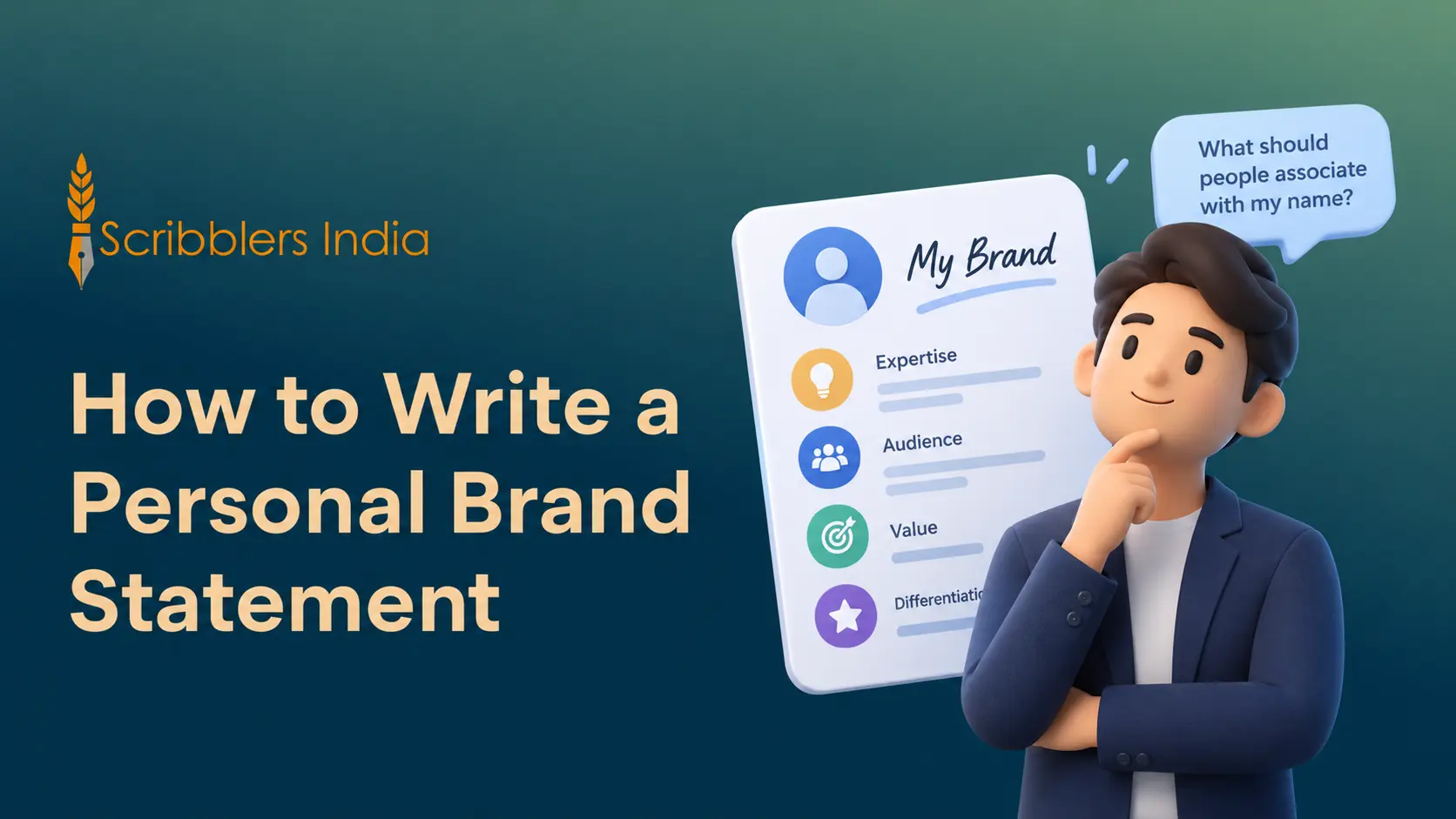
How Do You Write a Personal Brand Statement That Works (15+ Examples)
A personal brand statement explains the professional association you want people to make with your name. It can guide your positioning internally, while shorter versions can shape LinkedIn profiles, websites, portfolios, resumes, speaker materials, and other places where people encounter your professional identity. One sentence rarely performs all those jobs equally well. An internal positioning statement can provide more context about your audience, expertise, and contribution, while a LinkedIn headline needs to be clearer more quickly. The underlying professional position should remain consistent even when the wording changes. This guide starts with that core position and then explains how to build it on evidence rather than adjectives. You will also find role-specific formulas, practical personal brand statement examples, weak-to-strong rewrites, channel adaptations, and a simple framework for testing whether the statement communicates what you intend. Key Takeaways Define what people should professionally associate with your name first. Build recognition around a clear area of professional expertise. Show where your expertise becomes useful for specific audiences. Build differentiation from experience, outcomes, research, or perspective. Keep positioning stable while changing language for each platform. Use structures to guide thinking rather than copy templates. Check whether intended audiences understand your professional position correctly. Update positioning when your career direction or audience changes materially. What Is a Personal Brand Statement? A personal brand statement is a concise expression of the professional position you want associated with your name. It can communicate your expertise, intended audience, contribution, perspective, or relevant differentiation. Its exact length depends on whether it guides internal positioning or appears publicly. Different personal branding frameworks interpret the statement differently. William Arruda, writing in Forbes, treats it primarily as an internal positioning guide, while Shopify recognizes its role across both strategic positioning and outward professional communication. A useful way to reconcile these approaches is to separate the core position from its public expression: Layer Main Question Purpose Core Positioning What should people associate with your name? Guides the wider personal brand Channel Expression How should that idea appear here? Adapts positioning to the context Your core statement becomes the source of truth. A LinkedIn profile, a website, a speaker biography, a portfolio, or an email introduction can then express that position differently without forcing one sentence to carry every communication requirement. How Is a Personal Brand Statement Different From a Bio or Tagline? A personal brand statement defines your professional position within your broader communication. A headline conveys the position quickly, while a professional bio provides evidence and context. A tagline focuses more heavily on memorability, and a value proposition emphasizes usefulness for a defined audience. These assets should reinforce the same professional association without repeating identical wording. When the underlying position shifts with every format change, the problem usually runs deeper than copywriting. The professional identity itself still needs a clearer strategic center. Asset Primary Job Typical Expression Personal Brand Statement Defines professional positioning One or several short sentences LinkedIn Headline Communicates relevance quickly Short searchable profile field Professional Bio Adds evidence and context Short or long paragraph Tagline Improves memorability Very short phrase Elevator Introduction Explains relevance conversationally Short spoken explanation Value Proposition Shows value for an audience Audience and outcome focused Senior leaders often need an even broader positioning system because their reputation can influence employees, customers, investors, and industry peers simultaneously. Our personal branding vs executive branding analysis explains how those stakeholder expectations change the branding approach. What Are the Five Components of a Strong Personal Brand Statement? A strong personal brand statement usually reflects five foundations: audience, expertise territory, professional contribution, credible differentiation, and natural voice. Every element does not need to appear literally in the final sentence, although each should be clear before you start refining the wording. 1. Who Is the Relevant Audience for Your Personal Brand? Start with the people whose decisions your reputation needs to influence. “Business leaders” creates limited direction, while “CFOs at growth-stage SaaS companies” creates a useful boundary. Executives may need several audiences, while consultants can often define their commercial audience more narrowly. 2. What Expertise Should People Associate With Your Name? Choose an expertise territory rather than compiling a list of skills. “Marketing” covers too much, while “B2B category positioning for enterprise software” provides a clearer association. Ask which professional subject you want someone to connect with your name six months from now. 3. Where Does Your Expertise Create Professional Value? Expertise becomes more meaningful when people understand where it applies. Instead of describing yourself as an experienced organizational consultant, explain the context you understand, such as helping scaling leadership teams clarify decision ownership when rapid growth makes coordination increasingly difficult. 4. What Makes Your Personal Positioning Credible? Differentiation does not require claiming that nobody else performs similar work. Credibility can come from specialized industry exposure, repeated experience with one difficult problem, documented outcomes, original research, cross-functional experience, or a professional perspective your career can genuinely support. 5. Does the Personal Brand Statement Sound Like You? Avoid depending on adjectives such as “visionary,” “dynamic,” or “results-driven” to create authority. Specific professional language carries more information. Read the statement aloud and ask whether you could use similar language when someone asks what you do in a real conversation. Which Personal Brand Statement Formula Should You Use? The right formula depends on your role and the professional decision your reputation needs to support. Consultants can lead with an audience problem, while founders may express a market belief. Executives usually need an expertise territory that avoids sounding like a sales proposition. Use these formulas as scaffolds rather than finished templates: Role Formula Example Consultant I help [audience] address [problem] through [expertise]. I help B2B SaaS teams clarify category positioning when product complexity makes enterprise value difficult to explain. Executive I work at the intersection of [expertise] and [business problem]. I work at the intersection of enterprise AI governance and product adoption, helping organizations introduce AI with clearer accountability. Founder I am building [company/category] around the belief that [market
A personal brand statement explains the professional association you want people to make with your name. It can guide your positioning internally, while shorter versions can shape LinkedIn profiles, websites, portfolios, resumes, speaker materials, and other places where people encounter your professional identity. One sentence rarely performs all those jobs equally well. An internal positioning statement can provide more context about your audience, expertise, and contribution, while a LinkedIn headline needs to be clearer more quickly. The underlying professional position should remain consistent even when the wording changes. This guide starts with that core position and then explains how to build it on evidence rather than adjectives. You will also find role-specific formulas, practical personal brand statement examples, weak-to-strong rewrites, channel adaptations, and a simple framework for testing whether the statement communicates what you intend. Key Takeaways Define what people should professionally associate with your name first. Build recognition around a clear area of professional expertise. Show where your expertise becomes useful for specific audiences. Build differentiation from experience, outcomes, research, or perspective. Keep positioning stable while changing language for each platform. Use structures to guide thinking rather than copy templates. Check whether intended audiences understand your professional position correctly. Update positioning when your career direction or audience changes materially. What Is a Personal Brand Statement? A personal brand statement is a concise expression of the professional position you want associated with your name. It can communicate your expertise, intended audience, contribution, perspective, or relevant differentiation. Its exact length depends on whether it guides internal positioning or appears publicly. Different personal branding frameworks interpret the statement differently. William Arruda, writing in Forbes, treats it primarily as an internal positioning guide, while Shopify recognizes its role across both strategic positioning and outward professional communication. A useful way to reconcile these approaches is to separate the core position from its public expression: Layer Main Question Purpose Core Positioning What should people associate with your name? Guides the wider personal brand Channel Expression How should that idea appear here? Adapts positioning to the context Your core statement becomes the source of truth. A LinkedIn profile, a website, a speaker biography, a portfolio, or an email introduction can then express that position differently without forcing one sentence to carry every communication requirement. How Is a Personal Brand Statement Different From a Bio or Tagline? A personal brand statement defines your professional position within your broader communication. A headline conveys the position quickly, while a professional bio provides evidence and context. A tagline focuses more heavily on memorability, and a value proposition emphasizes usefulness for a defined audience. These assets should reinforce the same professional association without repeating identical wording. When the underlying position shifts with every format change, the problem usually runs deeper than copywriting. The professional identity itself still needs a clearer strategic center. Asset Primary Job Typical Expression Personal Brand Statement Defines professional positioning One or several short sentences LinkedIn Headline Communicates relevance quickly Short searchable profile field Professional Bio Adds evidence and context Short or long paragraph Tagline Improves memorability Very short phrase Elevator Introduction Explains relevance conversationally Short spoken explanation Value Proposition Shows value for an audience Audience and outcome focused Senior leaders often need an even broader positioning system because their reputation can influence employees, customers, investors, and industry peers simultaneously. Our personal branding vs executive branding analysis explains how those stakeholder expectations change the branding approach. What Are the Five Components of a Strong Personal Brand Statement? A strong personal brand statement usually reflects five foundations: audience, expertise territory, professional contribution, credible differentiation, and natural voice. Every element does not need to appear literally in the final sentence, although each should be clear before you start refining the wording. 1. Who Is the Relevant Audience for Your Personal Brand? Start with the people whose decisions your reputation needs to influence. “Business leaders” creates limited direction, while “CFOs at growth-stage SaaS companies” creates a useful boundary. Executives may need several audiences, while consultants can often define their commercial audience more narrowly. 2. What Expertise Should People Associate With Your Name? Choose an expertise territory rather than compiling a list of skills. “Marketing” covers too much, while “B2B category positioning for enterprise software” provides a clearer association. Ask which professional subject you want someone to connect with your name six months from now. 3. Where Does Your Expertise Create Professional Value? Expertise becomes more meaningful when people understand where it applies. Instead of describing yourself as an experienced organizational consultant, explain the context you understand, such as helping scaling leadership teams clarify decision ownership when rapid growth makes coordination increasingly difficult. 4. What Makes Your Personal Positioning Credible? Differentiation does not require claiming that nobody else performs similar work. Credibility can come from specialized industry exposure, repeated experience with one difficult problem, documented outcomes, original research, cross-functional experience, or a professional perspective your career can genuinely support. 5. Does the Personal Brand Statement Sound Like You? Avoid depending on adjectives such as “visionary,” “dynamic,” or “results-driven” to create authority. Specific professional language carries more information. Read the statement aloud and ask whether you could use similar language when someone asks what you do in a real conversation. Which Personal Brand Statement Formula Should You Use? The right formula depends on your role and the professional decision your reputation needs to support. Consultants can lead with an audience problem, while founders may express a market belief. Executives usually need an expertise territory that avoids sounding like a sales proposition. Use these formulas as scaffolds rather than finished templates: Role Formula Example Consultant I help [audience] address [problem] through [expertise]. I help B2B SaaS teams clarify category positioning when product complexity makes enterprise value difficult to explain. Executive I work at the intersection of [expertise] and [business problem]. I work at the intersection of enterprise AI governance and product adoption, helping organizations introduce AI with clearer accountability. Founder I am building [company/category] around the belief that [market

What Should Businesses Expect From a GEO Agency Retainer in 2026?
A GEO retainer can describe very different agency engagements. One proposal may combine prompt tracking, page refreshes, technical reviews, content development, external-source analysis, and recurring measurement. Another may provide a monthly dashboard with limited explanation of what the team will change once new findings emerge. That difference matters as AI-assisted discovery becomes a larger part of search behavior. Google says AI Overviews now reach more than 2.5 billion monthly active users, while AI Mode has surpassed one billion. These search experiences create new discovery opportunities while making measurement more complex. A useful engagement should therefore connect diagnosis with execution and repeat measurement. This guide explains what businesses should receive during the first 90 days, which services fall within the ongoing scope, how reporting and SLAs should work, and when a recurring arrangement warrants continued investment. Key Takeaways GEO retainers should establish measurable visibility before recommending large content changes. Early work should identify priority gaps before expanding monthly publishing volume. Core prompt sets make visibility changes easier to compare across reporting periods. Monthly reports should connect observed movement with specific implementation decisions and owners. Agencies should guarantee controllable work rather than citations or recommendation positions. Retainer costs change with markets, prompts, content needs, and implementation depth. Monthly priorities should evolve when evidence reveals stronger or weaker opportunities. What Is a GEO Retainer? A GEO retainer is an ongoing engagement focused on improving and measuring how a brand appears across AI-assisted discovery. The work can include prompt monitoring, content updates, technical checks, source analysis, authority development, and reporting, with priorities changing as new evidence emerges. The important distinction is recurrence. AI-generated answers can change as public information, competing content, platform behavior, and buyer questions evolve. A recurring engagement gives the team a structured way to observe those changes, implement improvements, and test whether the resulting AI visibility pattern changes afterward. That does not mean every company needs monthly support. Some businesses need a baseline first, while others already know which pages or information gaps require attention. The engagement model should therefore follow the problem’s maturity rather than immediately default to a retainer. Engagement Model Primary Purpose Best Fit GEO Audit Diagnose current visibility and information gaps Brands without a reliable baseline Fixed Sprint Address a defined group of priorities Teams with known implementation needs Ongoing Engagement Measure and improve recurring visibility Brands with sustained AI-search opportunity Internal Program Build and manage capability in-house Mature teams with adequate expertise Teams that are still assessing overall readiness can use Scribblers India’s AI Search Visibility Scorecard to identify broad weaknesses before deciding whether deeper diagnosis or recurring implementation is justified. The next question is whether the visibility environment changes enough to warrant continuing work. Why Does GEO Require Ongoing Work in 2026? Ongoing GEO work is useful because AI search visibility can change over time. A brand may appear for one prompt and disappear for another, while cited sources and recommendation context can also shift. Repeated testing helps businesses identify consistent patterns instead of reacting to individual responses. The wider environment is changing quickly too. After a May 2026 update to the ChatGPT interface that made brand links more prominent, total referral traffic increased by 157.7% week over week. Changes like this can quickly affect how users discover and visit brands through AI platforms. A recurring GEO program should therefore monitor both the information a brand controls and changes happening outside its website. Content quality, factual accuracy, technical access, and published evidence can be improved directly, while competitor activity, platform updates, cited sources, and evolving buyer questions require ongoing monitoring. What Services Should a GEO Services Retainer Include? A GEO retainer should connect measurement with practical improvements across priority content and supporting public evidence. The exact mix should follow the baseline findings. Strong programs avoid treating monthly content volume as the objective when existing pages or source gaps create the larger visibility problem. 1. Commercial Prompt Mapping and AI Visibility Monitoring Prompt Mapping defines the category, recommendation, comparison, alternative, and validation questions to monitor. Each prompt should have a clear business reason for inclusion, while the baseline should record brand appearances, relevant competitors, description accuracy, and cited sources using consistent testing rules. 2. Prompt-to-Page Content Mapping Content Mapping connects commercially important questions with the strongest existing destination pages. Some prompts reveal missing assets, while others expose incomplete service pages or comparisons. Scribblers India’s AI content gap analysis explains why many visibility gaps can be solved by strengthening existing pages rather than adding another URL. 3. Technical Search and Crawler Review Technical Review checks whether priority information remains accessible to relevant search systems. Google says existing SEO fundamentals remain relevant for AI Overviews and AI Mode, with no special AI-specific technical requirements. OpenAI separately recommends allowing OAI-SearchBot when publishers want their public content to be discoverable in ChatGPT Search. 4. Priority Page Refreshes Page Refreshes improve existing commercial assets when they already serve the right search job. Updates can strengthen direct answers, product or service detail, comparison depth, evidence, freshness, internal pathways, and factual consistency without creating unnecessary content overlap across the site. 5. New Authority Assets Authority Assets become useful when no existing page can answer an important question properly. These may include research reports, buyer guides, comparison resources, case studies, glossaries, or expert-led thought leadership that provides buyers with deeper evidence on a category or decision. 6. External Source and Brand Evidence Review Source Review examines how credible third-party pages describe the company and its expertise. Relevant publications, review platforms, partner profiles, directories, customer evidence, or expert pages can reveal inconsistencies that website-only analysis misses and may influence how buyers validate AI-generated recommendations. 7. Measurement and Monthly Reprioritization Recurring Measurement repeats the stable prompt panel and connects observed movement with the next implementation cycle. Scribblers India’s GEO services apply the same connected approach, linking search foundations, answer-led content, authority development, and visibility measurement to documented business gaps. What Should Happen During GEO Onboarding? GEO onboarding should establish business
A GEO retainer can describe very different agency engagements. One proposal may combine prompt tracking, page refreshes, technical reviews, content development, external-source analysis, and recurring measurement. Another may provide a monthly dashboard with limited explanation of what the team will change once new findings emerge. That difference matters as AI-assisted discovery becomes a larger part of search behavior. Google says AI Overviews now reach more than 2.5 billion monthly active users, while AI Mode has surpassed one billion. These search experiences create new discovery opportunities while making measurement more complex. A useful engagement should therefore connect diagnosis with execution and repeat measurement. This guide explains what businesses should receive during the first 90 days, which services fall within the ongoing scope, how reporting and SLAs should work, and when a recurring arrangement warrants continued investment. Key Takeaways GEO retainers should establish measurable visibility before recommending large content changes. Early work should identify priority gaps before expanding monthly publishing volume. Core prompt sets make visibility changes easier to compare across reporting periods. Monthly reports should connect observed movement with specific implementation decisions and owners. Agencies should guarantee controllable work rather than citations or recommendation positions. Retainer costs change with markets, prompts, content needs, and implementation depth. Monthly priorities should evolve when evidence reveals stronger or weaker opportunities. What Is a GEO Retainer? A GEO retainer is an ongoing engagement focused on improving and measuring how a brand appears across AI-assisted discovery. The work can include prompt monitoring, content updates, technical checks, source analysis, authority development, and reporting, with priorities changing as new evidence emerges. The important distinction is recurrence. AI-generated answers can change as public information, competing content, platform behavior, and buyer questions evolve. A recurring engagement gives the team a structured way to observe those changes, implement improvements, and test whether the resulting AI visibility pattern changes afterward. That does not mean every company needs monthly support. Some businesses need a baseline first, while others already know which pages or information gaps require attention. The engagement model should therefore follow the problem’s maturity rather than immediately default to a retainer. Engagement Model Primary Purpose Best Fit GEO Audit Diagnose current visibility and information gaps Brands without a reliable baseline Fixed Sprint Address a defined group of priorities Teams with known implementation needs Ongoing Engagement Measure and improve recurring visibility Brands with sustained AI-search opportunity Internal Program Build and manage capability in-house Mature teams with adequate expertise Teams that are still assessing overall readiness can use Scribblers India’s AI Search Visibility Scorecard to identify broad weaknesses before deciding whether deeper diagnosis or recurring implementation is justified. The next question is whether the visibility environment changes enough to warrant continuing work. Why Does GEO Require Ongoing Work in 2026? Ongoing GEO work is useful because AI search visibility can change over time. A brand may appear for one prompt and disappear for another, while cited sources and recommendation context can also shift. Repeated testing helps businesses identify consistent patterns instead of reacting to individual responses. The wider environment is changing quickly too. After a May 2026 update to the ChatGPT interface that made brand links more prominent, total referral traffic increased by 157.7% week over week. Changes like this can quickly affect how users discover and visit brands through AI platforms. A recurring GEO program should therefore monitor both the information a brand controls and changes happening outside its website. Content quality, factual accuracy, technical access, and published evidence can be improved directly, while competitor activity, platform updates, cited sources, and evolving buyer questions require ongoing monitoring. What Services Should a GEO Services Retainer Include? A GEO retainer should connect measurement with practical improvements across priority content and supporting public evidence. The exact mix should follow the baseline findings. Strong programs avoid treating monthly content volume as the objective when existing pages or source gaps create the larger visibility problem. 1. Commercial Prompt Mapping and AI Visibility Monitoring Prompt Mapping defines the category, recommendation, comparison, alternative, and validation questions to monitor. Each prompt should have a clear business reason for inclusion, while the baseline should record brand appearances, relevant competitors, description accuracy, and cited sources using consistent testing rules. 2. Prompt-to-Page Content Mapping Content Mapping connects commercially important questions with the strongest existing destination pages. Some prompts reveal missing assets, while others expose incomplete service pages or comparisons. Scribblers India’s AI content gap analysis explains why many visibility gaps can be solved by strengthening existing pages rather than adding another URL. 3. Technical Search and Crawler Review Technical Review checks whether priority information remains accessible to relevant search systems. Google says existing SEO fundamentals remain relevant for AI Overviews and AI Mode, with no special AI-specific technical requirements. OpenAI separately recommends allowing OAI-SearchBot when publishers want their public content to be discoverable in ChatGPT Search. 4. Priority Page Refreshes Page Refreshes improve existing commercial assets when they already serve the right search job. Updates can strengthen direct answers, product or service detail, comparison depth, evidence, freshness, internal pathways, and factual consistency without creating unnecessary content overlap across the site. 5. New Authority Assets Authority Assets become useful when no existing page can answer an important question properly. These may include research reports, buyer guides, comparison resources, case studies, glossaries, or expert-led thought leadership that provides buyers with deeper evidence on a category or decision. 6. External Source and Brand Evidence Review Source Review examines how credible third-party pages describe the company and its expertise. Relevant publications, review platforms, partner profiles, directories, customer evidence, or expert pages can reveal inconsistencies that website-only analysis misses and may influence how buyers validate AI-generated recommendations. 7. Measurement and Monthly Reprioritization Recurring Measurement repeats the stable prompt panel and connects observed movement with the next implementation cycle. Scribblers India’s GEO services apply the same connected approach, linking search foundations, answer-led content, authority development, and visibility measurement to documented business gaps. What Should Happen During GEO Onboarding? GEO onboarding should establish business
What Should a GEO Audit Checklist Cover for AI Search Visibility in 2026?
A GEO audit checklist should answer a practical question: why does your brand appear, disappear, or get described inaccurately during AI-assisted research? Checking whether ChatGPT mentions the company once cannot answer that question. A useful audit examines the broader information system that supports discovery. The scale now warrants more structured measurement. Google reported at I/O 2026 that AI Overviews had surpassed 2.5 billion monthly active users, while AI Mode had exceeded one billion. These experiences increasingly support complex exploration and comparison across Search. A complete audit should therefore connect commercial prompts with technical access, content coverage, public evidence, and recurring measurement. The framework below covers 25 checks across six diagnostic layers, then shows how to prioritize the findings and convert them into an implementation roadmap. Key Takeaways Commercial buyer prompts should define the starting point for every useful GEO audit. Stable prompt sets make AI visibility changes easier to compare over time. Technical access should be checked before teams rewrite or expand existing content. Prompt-to-page mapping reveals whether brands need refreshes or genuinely new assets. External sources can expose brand-description gaps that website audits often miss entirely. GEO measurement should separate mentions, citations, accuracy, competitors, and commercial outcomes. Audit findings need to be organized around commercial priorities rather than a single, undifferentiated list of issues. Final deliverables should convert diagnosis into clear actions, ownership, and measurement plans. What Is a GEO Audit? A GEO audit examines how a brand appears across AI-assisted discovery and identifies factors that may limit accurate visibility. It reviews relevant prompts, technical accessibility, content coverage, external evidence, and measurement. The output should explain what needs attention and why each recommendation deserves priority. A GEO audit overlaps with existing search and content diagnostics, although it serves a different purpose. Teams that already understand Generative Engine Optimization can think of the audit as the diagnostic layer that identifies where their wider GEO system breaks down. Audit Type Primary Question Typical Output SEO Audit Can search engines access and understand the site? Technical and search recommendations Content Audit Is existing content useful and strategically aligned? Keep, refresh, consolidate, or remove decisions AI Content Gap Analysis Which important buyer questions remain weak? Page-level content opportunities GEO Audit How does the brand appear across AI-led discovery? Visibility, source, content, and action roadmap This distinction prevents duplicated work. A content audit may identify an outdated service page, while a GEO audit asks whether that page supports commercially important prompts and whether external AI-assisted research accurately represents the brand. Why Should a GEO Audit Start with Commercial Questions? A GEO audit should start with questions connected to discovery, comparison, validation, or purchase decisions. Generic industry prompts can create impressive screenshots without revealing valuable gaps. Commercial questions give each test a clear reason for inclusion and make later prioritization easier for the business. Start with the decisions customers make rather than converting an SEO keyword list directly into prompts. A SaaS brand may need category comparisons, while a professional services company may care more about provider recommendations, expertise questions, and evidence supporting its credibility. Useful prompt families that can feature on your GEO audit checklist are: Category Discovery: Questions identifying relevant products, providers, or service categories. Best-Fit Recommendations: Questions adding industry, audience, geography, or business constraints. Alternatives: Questions exploring substitutes for known brands or existing solutions. Direct Comparisons: Questions comparing two or more shortlisted options. Use Cases: Questions connecting solutions with specific operating problems. Commercial Validation: Questions covering pricing, scope, implementation, or suitability. Trust Questions: Questions examining credibility, evidence, expertise, or relevant experience. Implementation Questions: Questions addressing practical adoption or service delivery requirements. Google says AI Mode is particularly useful for nuanced questions involving exploration and complex comparisons. Its systems can also use query fan-out across related searches, which makes buyer journeys a stronger audit foundation than isolated keyword substitutions. The prompt library serves as the anchor for every subsequent audit layer. Content, technical access, external sources, and measurement should all connect back to the questions that the business has decided are worth influencing. Which Commercial Prompt Checks Belong in a GEO Audit Checklist? The first layer of a GEO audit checklist establishes what will be measured and how subsequent comparisons will be conducted. The audit needs commercially relevant prompts, a stable baseline, competitive context, and answer-quality review. Without these elements, later visibility changes become difficult to interpret reliably. S. No. Check What to Review Useful Audit Output 1 Define High-Value Prompt Families Group questions around actual buyer decisions Commercial prompt map 2 Build a Stable Core Prompt Set Keep important questions unchanged across tests Repeatable baseline 3 Record Brand and Competitor Visibility Capture which relevant brands appear Competitive visibility record 4 Test Description Accuracy Review category, audience, capabilities, and context Accuracy gap log A stable core prompt set should remain separate from experimental prompts. New questions can still be added as markets or products change, while the stable group protects comparability across reporting periods. For each test, record the exact wording, platform, date, brand appearance, cited sources, competing brands, and answer context. A mention should never automatically receive a positive score in your GEO audit checklist, as an inaccurate or unfavorable description can create a more serious issue than absence. Another analyst should be able to understand how the baseline was created. If the documentation cannot explain why each prompt matters or how the result was interpreted, the methodology needs improvement before the findings guide content decisions. Which Technical Access Tests Should a GEO Audit Checklist Include? An AI search visibility audit should verify that priority information remains technically accessible before recommending major content changes. Google requires no separate technical standard for AI Overviews or AI Mode. Normal Search eligibility still matters, while ChatGPT Search provides its own crawler guidance for public websites. The next four checks in your GEO audit checklist will help establish that technical foundation: S. No. Check What to Review Why It Matters 5 Confirm Google Eligibility Indexing and snippet eligibility Supporting links
A GEO audit checklist should answer a practical question: why does your brand appear, disappear, or get described inaccurately during AI-assisted research? Checking whether ChatGPT mentions the company once cannot answer that question. A useful audit examines the broader information system that supports discovery. The scale now warrants more structured measurement. Google reported at I/O 2026 that AI Overviews had surpassed 2.5 billion monthly active users, while AI Mode had exceeded one billion. These experiences increasingly support complex exploration and comparison across Search. A complete audit should therefore connect commercial prompts with technical access, content coverage, public evidence, and recurring measurement. The framework below covers 25 checks across six diagnostic layers, then shows how to prioritize the findings and convert them into an implementation roadmap. Key Takeaways Commercial buyer prompts should define the starting point for every useful GEO audit. Stable prompt sets make AI visibility changes easier to compare over time. Technical access should be checked before teams rewrite or expand existing content. Prompt-to-page mapping reveals whether brands need refreshes or genuinely new assets. External sources can expose brand-description gaps that website audits often miss entirely. GEO measurement should separate mentions, citations, accuracy, competitors, and commercial outcomes. Audit findings need to be organized around commercial priorities rather than a single, undifferentiated list of issues. Final deliverables should convert diagnosis into clear actions, ownership, and measurement plans. What Is a GEO Audit? A GEO audit examines how a brand appears across AI-assisted discovery and identifies factors that may limit accurate visibility. It reviews relevant prompts, technical accessibility, content coverage, external evidence, and measurement. The output should explain what needs attention and why each recommendation deserves priority. A GEO audit overlaps with existing search and content diagnostics, although it serves a different purpose. Teams that already understand Generative Engine Optimization can think of the audit as the diagnostic layer that identifies where their wider GEO system breaks down. Audit Type Primary Question Typical Output SEO Audit Can search engines access and understand the site? Technical and search recommendations Content Audit Is existing content useful and strategically aligned? Keep, refresh, consolidate, or remove decisions AI Content Gap Analysis Which important buyer questions remain weak? Page-level content opportunities GEO Audit How does the brand appear across AI-led discovery? Visibility, source, content, and action roadmap This distinction prevents duplicated work. A content audit may identify an outdated service page, while a GEO audit asks whether that page supports commercially important prompts and whether external AI-assisted research accurately represents the brand. Why Should a GEO Audit Start with Commercial Questions? A GEO audit should start with questions connected to discovery, comparison, validation, or purchase decisions. Generic industry prompts can create impressive screenshots without revealing valuable gaps. Commercial questions give each test a clear reason for inclusion and make later prioritization easier for the business. Start with the decisions customers make rather than converting an SEO keyword list directly into prompts. A SaaS brand may need category comparisons, while a professional services company may care more about provider recommendations, expertise questions, and evidence supporting its credibility. Useful prompt families that can feature on your GEO audit checklist are: Category Discovery: Questions identifying relevant products, providers, or service categories. Best-Fit Recommendations: Questions adding industry, audience, geography, or business constraints. Alternatives: Questions exploring substitutes for known brands or existing solutions. Direct Comparisons: Questions comparing two or more shortlisted options. Use Cases: Questions connecting solutions with specific operating problems. Commercial Validation: Questions covering pricing, scope, implementation, or suitability. Trust Questions: Questions examining credibility, evidence, expertise, or relevant experience. Implementation Questions: Questions addressing practical adoption or service delivery requirements. Google says AI Mode is particularly useful for nuanced questions involving exploration and complex comparisons. Its systems can also use query fan-out across related searches, which makes buyer journeys a stronger audit foundation than isolated keyword substitutions. The prompt library serves as the anchor for every subsequent audit layer. Content, technical access, external sources, and measurement should all connect back to the questions that the business has decided are worth influencing. Which Commercial Prompt Checks Belong in a GEO Audit Checklist? The first layer of a GEO audit checklist establishes what will be measured and how subsequent comparisons will be conducted. The audit needs commercially relevant prompts, a stable baseline, competitive context, and answer-quality review. Without these elements, later visibility changes become difficult to interpret reliably. S. No. Check What to Review Useful Audit Output 1 Define High-Value Prompt Families Group questions around actual buyer decisions Commercial prompt map 2 Build a Stable Core Prompt Set Keep important questions unchanged across tests Repeatable baseline 3 Record Brand and Competitor Visibility Capture which relevant brands appear Competitive visibility record 4 Test Description Accuracy Review category, audience, capabilities, and context Accuracy gap log A stable core prompt set should remain separate from experimental prompts. New questions can still be added as markets or products change, while the stable group protects comparability across reporting periods. For each test, record the exact wording, platform, date, brand appearance, cited sources, competing brands, and answer context. A mention should never automatically receive a positive score in your GEO audit checklist, as an inaccurate or unfavorable description can create a more serious issue than absence. Another analyst should be able to understand how the baseline was created. If the documentation cannot explain why each prompt matters or how the result was interpreted, the methodology needs improvement before the findings guide content decisions. Which Technical Access Tests Should a GEO Audit Checklist Include? An AI search visibility audit should verify that priority information remains technically accessible before recommending major content changes. Google requires no separate technical standard for AI Overviews or AI Mode. Normal Search eligibility still matters, while ChatGPT Search provides its own crawler guidance for public websites. The next four checks in your GEO audit checklist will help establish that technical foundation: S. No. Check What to Review Why It Matters 5 Confirm Google Eligibility Indexing and snippet eligibility Supporting links
How Should You Use AI for Personal Branding in 2026?
A founder can turn a detailed interview into several possible content angles, while an executive can organize months’ worth of audience questions without having to review every note manually. These efficiencies explain the growing interest in AI for personal branding, especially when professionals already produce substantial knowledge through their work. The risk begins when AI starts supplying the expertise it was meant to communicate. Effective AI for personal branding uses technology to organize, compare, draft, transform, and analyze approved material while the professional retains ownership of experiences, facts, opinions, confidential information, and the final publication decision. This article focuses on that operating model rather than on AI search optimization or another debate about humans versus machines. For the wider positioning, proof, channel, networking, and distribution system, use our how to build a personal brand online guide as the broader strategic foundation. Key Takeaways AI should process genuine experience rather than manufacture professional authority. Verified facts and voice references make recurring AI workflows more reliable. Professionals should control positioning, opinions, sensitive information, and final publication. Organize questions and supplied evidence before developing stronger content angles. Interviews, notes, presentations, and approved examples preserve voice and factual grounding. Adapt approved ideas by channel without changing evidence, meaning, or certainty. AI can identify patterns while humans judge causality and business relevance. Privacy controls, factual verification, disclosure rules, and approvals remain essential safeguards. What Can AI for Personal Branding Handle Safely? AI for personal branding can reduce repetitive work across research, organization, drafting, editing, repurposing, and performance review. The safest boundary depends on the consequence of an error: AI can assist with processing information, while human owners remain responsible for professional claims, judgment, sensitive facts, and publication. A practical workflow separates tasks according to who owns the source material, who can accelerate the work, and where human review is mandatory. This avoids treating every task as equally suitable for automation simply because a model can technically produce an answer. Task Human Owns AI Can Assist With Human Review Professional Positioning Expertise territory and audience Alternatives, objections, clarity checks Always Career Facts Verified roles and achievements Organizing approved information Always Personal Experiences What happened and why it matters Theme extraction and structure Always Point of View Final opinion and judgment Counterarguments and implications Always Research Source standards and final conclusions Question clustering and synthesis Always Drafting Argument and approved inputs Initial prose and restructuring Always Repurposing Original meaning and channel boundaries Format adaptation Always Performance Analysis Business interpretation Pattern detection and summarization Always Publication Final accountability Formatting and preflight checks Always Which Personal Branding Tasks Should Remain Human-Owned? Human ownership should remain strongest where errors can alter professional identity, credibility, or accountability. Positioning, personal experience, judgment, sensitive facts, and final approval need direct human control, while AI can support organization, critique, restructuring, and alternative wording within defined boundaries. Keep positioning decisions with the professional because they determine the expertise, audience, and publicly built reputation. Require personal experiences and stories to come from verified memory, notes, interviews, or other genuine first-hand sources. Reserve professional judgments and opinions for human owners, even when AI helps test objections or alternative interpretations. Verify achievements, client results, dates, and career facts independently before allowing them to appear in published content. Keep sensitive reputation decisions under human review, especially when content involves employers, clients, regulated topics, or confidential information. Make final publication approval a human responsibility so that every claim, example, and viewpoint is clearly accountable. How Do You Build a Source Library for AI for Personal Branding? Recurring AI for personal branding becomes more reliable when each session starts with verified material rather than a blank prompt. Build a controlled source-of-truth library containing approved biography facts, professional claims, experience stories, viewpoints, voice references, and restricted topics before asking AI to support recurring content production. Source Library Component What to Store Why It Helps Verified Biography Current role, previous positions, credentials, links Prevents invented or outdated career facts Approved Claims Public company facts, disclosed results, approved milestones Creates boundaries around usable evidence Experience Bank Decisions, failures, lessons, customer conversations Supplies genuine narrative material Point-of-View Library Beliefs, supporting experience, limits, disagreements Preserves real professional judgment Voice References Transcripts, posts, articles, presentations, emails Improves wording and tone calibration Restricted Topics Confidential, regulated, privileged, or unpublished information Prevents unsafe workflow inputs How Should You Build a Professional Point-of-View Library? For each important topic, document what the professional believes, why they believe it, which experience supports the position, and where the argument has limits. This creates better source material than a generic instruction asking AI to sound “authoritative,” “bold,” or “thought-provoking.” A founder discussing AI adoption, for example, should provide actual operating experience and documented views rather than asking a model to invent a provocative stance. The same principle applies when building thought leadership around executives whose professional credibility depends on informed judgment. How Can AI for Personal Branding Improve Research and Audience Listening? Research is one of AI’s strongest roles in a personal-brand workflow because models can quickly organize large collections of questions, notes, transcripts, comments, and supplied documents. The value comes from finding patterns in real material, while source selection and final interpretation remain human responsibilities. Start with audience evidence already generated through professional activity. Sales-call notes, webinar questions, conference discussions, LinkedIn comments, customer FAQs, interviews, and internal subject-matter notes can reveal recurring objections, misconceptions, decision questions, and areas where audiences repeatedly need clearer explanations. Can AI Turn Real Audience Questions Into Better Content Ideas? Ask AI to cluster similar questions, identify recurring themes, and separate introductory questions from decision-stage concerns. The output becomes an editorial research map that professionals can evaluate against their expertise, rather than a generic trend list produced without evidence about the intended audience. This also helps distinguish popular subjects from useful subjects. A theme that appears repeatedly among relevant buyers or professional peers may deserve deeper attention even when it attracts less broad search volume than a generic industry trend with limited connection to the
A founder can turn a detailed interview into several possible content angles, while an executive can organize months’ worth of audience questions without having to review every note manually. These efficiencies explain the growing interest in AI for personal branding, especially when professionals already produce substantial knowledge through their work. The risk begins when AI starts supplying the expertise it was meant to communicate. Effective AI for personal branding uses technology to organize, compare, draft, transform, and analyze approved material while the professional retains ownership of experiences, facts, opinions, confidential information, and the final publication decision. This article focuses on that operating model rather than on AI search optimization or another debate about humans versus machines. For the wider positioning, proof, channel, networking, and distribution system, use our how to build a personal brand online guide as the broader strategic foundation. Key Takeaways AI should process genuine experience rather than manufacture professional authority. Verified facts and voice references make recurring AI workflows more reliable. Professionals should control positioning, opinions, sensitive information, and final publication. Organize questions and supplied evidence before developing stronger content angles. Interviews, notes, presentations, and approved examples preserve voice and factual grounding. Adapt approved ideas by channel without changing evidence, meaning, or certainty. AI can identify patterns while humans judge causality and business relevance. Privacy controls, factual verification, disclosure rules, and approvals remain essential safeguards. What Can AI for Personal Branding Handle Safely? AI for personal branding can reduce repetitive work across research, organization, drafting, editing, repurposing, and performance review. The safest boundary depends on the consequence of an error: AI can assist with processing information, while human owners remain responsible for professional claims, judgment, sensitive facts, and publication. A practical workflow separates tasks according to who owns the source material, who can accelerate the work, and where human review is mandatory. This avoids treating every task as equally suitable for automation simply because a model can technically produce an answer. Task Human Owns AI Can Assist With Human Review Professional Positioning Expertise territory and audience Alternatives, objections, clarity checks Always Career Facts Verified roles and achievements Organizing approved information Always Personal Experiences What happened and why it matters Theme extraction and structure Always Point of View Final opinion and judgment Counterarguments and implications Always Research Source standards and final conclusions Question clustering and synthesis Always Drafting Argument and approved inputs Initial prose and restructuring Always Repurposing Original meaning and channel boundaries Format adaptation Always Performance Analysis Business interpretation Pattern detection and summarization Always Publication Final accountability Formatting and preflight checks Always Which Personal Branding Tasks Should Remain Human-Owned? Human ownership should remain strongest where errors can alter professional identity, credibility, or accountability. Positioning, personal experience, judgment, sensitive facts, and final approval need direct human control, while AI can support organization, critique, restructuring, and alternative wording within defined boundaries. Keep positioning decisions with the professional because they determine the expertise, audience, and publicly built reputation. Require personal experiences and stories to come from verified memory, notes, interviews, or other genuine first-hand sources. Reserve professional judgments and opinions for human owners, even when AI helps test objections or alternative interpretations. Verify achievements, client results, dates, and career facts independently before allowing them to appear in published content. Keep sensitive reputation decisions under human review, especially when content involves employers, clients, regulated topics, or confidential information. Make final publication approval a human responsibility so that every claim, example, and viewpoint is clearly accountable. How Do You Build a Source Library for AI for Personal Branding? Recurring AI for personal branding becomes more reliable when each session starts with verified material rather than a blank prompt. Build a controlled source-of-truth library containing approved biography facts, professional claims, experience stories, viewpoints, voice references, and restricted topics before asking AI to support recurring content production. Source Library Component What to Store Why It Helps Verified Biography Current role, previous positions, credentials, links Prevents invented or outdated career facts Approved Claims Public company facts, disclosed results, approved milestones Creates boundaries around usable evidence Experience Bank Decisions, failures, lessons, customer conversations Supplies genuine narrative material Point-of-View Library Beliefs, supporting experience, limits, disagreements Preserves real professional judgment Voice References Transcripts, posts, articles, presentations, emails Improves wording and tone calibration Restricted Topics Confidential, regulated, privileged, or unpublished information Prevents unsafe workflow inputs How Should You Build a Professional Point-of-View Library? For each important topic, document what the professional believes, why they believe it, which experience supports the position, and where the argument has limits. This creates better source material than a generic instruction asking AI to sound “authoritative,” “bold,” or “thought-provoking.” A founder discussing AI adoption, for example, should provide actual operating experience and documented views rather than asking a model to invent a provocative stance. The same principle applies when building thought leadership around executives whose professional credibility depends on informed judgment. How Can AI for Personal Branding Improve Research and Audience Listening? Research is one of AI’s strongest roles in a personal-brand workflow because models can quickly organize large collections of questions, notes, transcripts, comments, and supplied documents. The value comes from finding patterns in real material, while source selection and final interpretation remain human responsibilities. Start with audience evidence already generated through professional activity. Sales-call notes, webinar questions, conference discussions, LinkedIn comments, customer FAQs, interviews, and internal subject-matter notes can reveal recurring objections, misconceptions, decision questions, and areas where audiences repeatedly need clearer explanations. Can AI Turn Real Audience Questions Into Better Content Ideas? Ask AI to cluster similar questions, identify recurring themes, and separate introductory questions from decision-stage concerns. The output becomes an editorial research map that professionals can evaluate against their expertise, rather than a generic trend list produced without evidence about the intended audience. This also helps distinguish popular subjects from useful subjects. A theme that appears repeatedly among relevant buyers or professional peers may deserve deeper attention even when it attracts less broad search volume than a generic industry trend with limited connection to the
How Do You Measure Personal Branding ROI Accurately?
A LinkedIn post can reach 100,000 people without generating one relevant opportunity. Another article may reach a much smaller audience and lead to a board introduction, a consulting inquiry, a speaking invitation, or a qualified sales conversation. Both results have value, although they belong to different stages of measurement. That distinction sits at the center of personal branding ROI. Reach, audience quality, authority, conversations, opportunities, and financial outcomes should not be grouped into a single return metric. Doing so can make performance reports appear stronger while making future investment decisions considerably less reliable. A useful measurement system starts with three questions: What are you investing? What professional outcome should change? How confidently can that change relate to the personal brand? The framework below answers those questions through cost calculation, attribution rules, worked examples, and practical reporting. Key Takeaways Choose personal branding metrics only after deciding what professional outcome should improve. Treat reach and search visibility as indicators, rather than financial ROI. Include agency fees, production, tools, distribution, and professional time consistently. Separate direct, assisted, influenced, and qualitative outcomes before assigning financial value. Use self-reported attribution to better identify offline and cross-platform discovery paths. Financial ROI requires attributable monetary value and defensible investment costs. Track operating signals monthly and evaluate meaningful outcomes over longer periods. Reputation influences some decisions that analytics cannot fully observe or isolate. What Does Personal Branding ROI Measure? Personal branding ROI compares the value created by a professional reputation program with the resources invested in building it. Financial ROI can be calculated when monetary outcomes are defensibly attributable. Wider professional value needs separate measures when reputation influences decisions without immediately creating a financial transaction. The standard financial formula remains useful: ROI (%) = (Attributed Financial Value − Total Investment) ÷ Total Investment × 100. The arithmetic is simple. The difficult part is deciding which outcomes deserve monetary value and how much credit the personal brand should receive. A follower, profile visit, search appearance, comment, or speaking invitation does not have an automatic financial value. Each belongs to a different stage of the reputation journey, so return on investment personal branding analysis should separate the following layers: Measurement Layer What It Answers Examples Visibility Are relevant people encountering you? Impressions, searches, profile appearances Audience Quality Are the right people seeing you? Companies, roles, industries, seniority Authority Is your expertise receiving meaningful response? Saves, citations, media or speaking requests Conversation Is reputation creating professional interaction? DMs, replies, introductions, calls Opportunity Are conversations creating valuable possibilities? Leads, interviews, partnerships, board discussions Financial Outcome Has attributable monetary value been created? Revenue, fees, retained business LinkedIn currently provides members with profile appearances and Search Appearances information, including available context such as the companies and job titles associated with people finding them. These signals can help assess professional discovery and audience relevance, although they remain upstream of financial return. What Should Count as the Cost of Personal Branding? To measure personal branding ROI accurately, calculate more than the agency or freelancer invoice. The real investment can include content production, specialist tools, paid distribution, website work, and the professional’s own time. Missing significant inputs artificially lowers the denominator and overstates the eventual return. Here is a useful model you can refer to: Total Investment = External Professional Spend + Production and Tools + Paid Distribution + Professional Time Apply the same cost method across reporting periods so changes in ROI reflect actual performance rather than a different accounting approach. Investment Category Examples How to Treat It Professional Support Strategy, ghostwriting, design, video, PR Include agreed fees Production and Tools Hosting, analytics, software, research tools Allocate relevant program cost Paid Distribution Sponsored posts, event promotion, media amplification Keep separate from earned reach Professional Time Interviews, reviews, events, networking Track hours or apply agreed rate Additional Assets Photography, websites, research, reports Include when created for the program Professional time needs particular care. A founder who spends ten hours each month discussing ideas, reviewing content, attending events, and networking has contributed a meaningful resource. Businesses can assign an agreed opportunity-cost rate where financial analysis requires it, while simpler programs can record those hours separately. If you are still establishing the investment side of the equation, our personal branding services cost guide explains how strategy, ghostwriting, visual production, senior involvement, websites, PR, and other scope variables affect the cost of a professional branding program. Which Personal Branding Metrics Should You Track? The right personal branding metrics depend on the job the reputation is expected to perform. A consultant looking for qualified inquiries needs a different scorecard from an executive building board visibility or a professional preparing for a career move. Start with the objective and work backward. This prevents one of the most common measurement errors: reporting the metrics that are easiest to collect rather than those most closely tied to the desired outcome. A smaller, more relevant audience can create greater professional value than a large audience that is not relevant to the objective. Primary Goal Leading Indicators Outcome Indicators Founder Demand Generation Relevant reach, buyer engagement, site visits Qualified inquiries, influenced pipeline Consulting Growth Case activity, referrals, target-audience engagement Calls, proposals, attributable clients Executive Visibility Stakeholder discovery, media interest Speaking, board, industry opportunities Career Mobility Search appearances, recruiter activity Interviews, role conversations, offers Speaking or Advisory Work Content citations, invitations, expert response Paid engagements, advisory mandates Thought Leadership Saves, citations, expert engagement Media, partnerships, category influence What Is the Difference Between Leading and Lagging Personal Branding Metrics? Leading indicators show whether the reputation system is moving in the intended direction. Visibility, search appearances, relevant profile visits, content saves, website traffic, and target-audience engagement help teams understand early movement before a meaningful professional opportunity appears. Lagging indicators sit closer to the intended result. Qualified inquiries, speaking invitations, interviews, proposals, partnerships, board conversations, and attributable revenue provide stronger evidence that reputation has influenced a real decision. They usually take longer to accumulate and therefore deserve a longer reporting window. Authority belongs between these
A LinkedIn post can reach 100,000 people without generating one relevant opportunity. Another article may reach a much smaller audience and lead to a board introduction, a consulting inquiry, a speaking invitation, or a qualified sales conversation. Both results have value, although they belong to different stages of measurement. That distinction sits at the center of personal branding ROI. Reach, audience quality, authority, conversations, opportunities, and financial outcomes should not be grouped into a single return metric. Doing so can make performance reports appear stronger while making future investment decisions considerably less reliable. A useful measurement system starts with three questions: What are you investing? What professional outcome should change? How confidently can that change relate to the personal brand? The framework below answers those questions through cost calculation, attribution rules, worked examples, and practical reporting. Key Takeaways Choose personal branding metrics only after deciding what professional outcome should improve. Treat reach and search visibility as indicators, rather than financial ROI. Include agency fees, production, tools, distribution, and professional time consistently. Separate direct, assisted, influenced, and qualitative outcomes before assigning financial value. Use self-reported attribution to better identify offline and cross-platform discovery paths. Financial ROI requires attributable monetary value and defensible investment costs. Track operating signals monthly and evaluate meaningful outcomes over longer periods. Reputation influences some decisions that analytics cannot fully observe or isolate. What Does Personal Branding ROI Measure? Personal branding ROI compares the value created by a professional reputation program with the resources invested in building it. Financial ROI can be calculated when monetary outcomes are defensibly attributable. Wider professional value needs separate measures when reputation influences decisions without immediately creating a financial transaction. The standard financial formula remains useful: ROI (%) = (Attributed Financial Value − Total Investment) ÷ Total Investment × 100. The arithmetic is simple. The difficult part is deciding which outcomes deserve monetary value and how much credit the personal brand should receive. A follower, profile visit, search appearance, comment, or speaking invitation does not have an automatic financial value. Each belongs to a different stage of the reputation journey, so return on investment personal branding analysis should separate the following layers: Measurement Layer What It Answers Examples Visibility Are relevant people encountering you? Impressions, searches, profile appearances Audience Quality Are the right people seeing you? Companies, roles, industries, seniority Authority Is your expertise receiving meaningful response? Saves, citations, media or speaking requests Conversation Is reputation creating professional interaction? DMs, replies, introductions, calls Opportunity Are conversations creating valuable possibilities? Leads, interviews, partnerships, board discussions Financial Outcome Has attributable monetary value been created? Revenue, fees, retained business LinkedIn currently provides members with profile appearances and Search Appearances information, including available context such as the companies and job titles associated with people finding them. These signals can help assess professional discovery and audience relevance, although they remain upstream of financial return. What Should Count as the Cost of Personal Branding? To measure personal branding ROI accurately, calculate more than the agency or freelancer invoice. The real investment can include content production, specialist tools, paid distribution, website work, and the professional’s own time. Missing significant inputs artificially lowers the denominator and overstates the eventual return. Here is a useful model you can refer to: Total Investment = External Professional Spend + Production and Tools + Paid Distribution + Professional Time Apply the same cost method across reporting periods so changes in ROI reflect actual performance rather than a different accounting approach. Investment Category Examples How to Treat It Professional Support Strategy, ghostwriting, design, video, PR Include agreed fees Production and Tools Hosting, analytics, software, research tools Allocate relevant program cost Paid Distribution Sponsored posts, event promotion, media amplification Keep separate from earned reach Professional Time Interviews, reviews, events, networking Track hours or apply agreed rate Additional Assets Photography, websites, research, reports Include when created for the program Professional time needs particular care. A founder who spends ten hours each month discussing ideas, reviewing content, attending events, and networking has contributed a meaningful resource. Businesses can assign an agreed opportunity-cost rate where financial analysis requires it, while simpler programs can record those hours separately. If you are still establishing the investment side of the equation, our personal branding services cost guide explains how strategy, ghostwriting, visual production, senior involvement, websites, PR, and other scope variables affect the cost of a professional branding program. Which Personal Branding Metrics Should You Track? The right personal branding metrics depend on the job the reputation is expected to perform. A consultant looking for qualified inquiries needs a different scorecard from an executive building board visibility or a professional preparing for a career move. Start with the objective and work backward. This prevents one of the most common measurement errors: reporting the metrics that are easiest to collect rather than those most closely tied to the desired outcome. A smaller, more relevant audience can create greater professional value than a large audience that is not relevant to the objective. Primary Goal Leading Indicators Outcome Indicators Founder Demand Generation Relevant reach, buyer engagement, site visits Qualified inquiries, influenced pipeline Consulting Growth Case activity, referrals, target-audience engagement Calls, proposals, attributable clients Executive Visibility Stakeholder discovery, media interest Speaking, board, industry opportunities Career Mobility Search appearances, recruiter activity Interviews, role conversations, offers Speaking or Advisory Work Content citations, invitations, expert response Paid engagements, advisory mandates Thought Leadership Saves, citations, expert engagement Media, partnerships, category influence What Is the Difference Between Leading and Lagging Personal Branding Metrics? Leading indicators show whether the reputation system is moving in the intended direction. Visibility, search appearances, relevant profile visits, content saves, website traffic, and target-audience engagement help teams understand early movement before a meaningful professional opportunity appears. Lagging indicators sit closer to the intended result. Qualified inquiries, speaking invitations, interviews, proposals, partnerships, board conversations, and attributable revenue provide stronger evidence that reputation has influenced a real decision. They usually take longer to accumulate and therefore deserve a longer reporting window. Authority belongs between these

How Should SaaS Companies Use GEO for AI Search Visibility?
Software buyers rarely research products using a single broad keyword anymore. They ask whether a platform fits their company’s size, integrates with their existing stack, supports the required workflow, or compares favorably with another product already under consideration. This makes GEO for SaaS different from generic AI search optimization. SaaS companies need accurate information across product pages, comparisons, pricing, integrations, documentation, customer proof, and other assets that support evaluation before a buyer reaches sales. The shift is already visible in buyer research. G2 reports that 51% of B2B software buyers now start their research with an AI chatbot more often than Google. Another 71% use AI chatbots at some point during software research. For SaaS teams, the opportunity extends beyond publishing more educational content. The stronger question is whether buyers can find enough current information to understand, compare, validate, and shortlist the product during AI-assisted research. Key Takeaways AI search increasingly influences which SaaS vendors enter buyer shortlists before website visits. GEO for SaaS should begin with commercial prompts rather than generic industry questions. Product pages need accurate details across pricing, integrations, security, and core capabilities. Comparison content should explain real differences in fit without making unsupported claims of superiority. Documentation helps buyers validate technical requirements that broad marketing pages cannot answer. Third-party evidence can reinforce product credibility during AI-assisted software research and validation. SaaS GEO measurement should connect visibility signals with demos, trials, and pipeline. Strong GEO programs refresh existing commercial pages before expanding informational content libraries. What Is GEO for SaaS? GEO for SaaS improves how a software product is discovered, understood, compared, and referenced during AI-assisted research. It connects buyer questions with accurate product information, decision-focused content, credible public evidence, and recurring visibility measurements across the search experiences that influence software consideration. A SaaS buyer may ask which payroll software supports several countries or which CRM connects with an existing finance system. Another buyer may ask for alternatives based on reporting depth, pricing structure, security requirements, or implementation effort. These prompts combine product category with business context. They can shape which vendors receive deeper evaluation before the buyer visits a product website, reads the documentation, or enters a sales conversation. This means SaaS GEO cannot depend on blogs alone. Product pages, comparison assets, pricing information, integrations, case studies, and technical resources need enough detail to support the same buying journey. SaaS teams new to this discipline should first understand Generative Engine Optimization and how it extends traditional search visibility to AI-assisted discovery. For software companies, the next step is to apply those principles to product comparisons, integrations, validation questions, and other information buyers use to create shortlists. Why is GEO for SaaS Companies Different from Others? SaaS buying involves repeated comparison and validation before a contract begins. Buyers need to understand product fit, pricing, compatibility, implementation requirements, and risk. A strong SaaS GEO strategy must therefore improve information across several decision stages rather than concentrate only on informational content. G2’s 2026 research found that 53% of surveyed software buyers considered AI chatbot research more productive than traditional search, compared with 36% seven months earlier. The finding suggests that AI-assisted research is becoming a normal part of software evaluation. Google is seeing a related shift inside Search. AI Mode has surpassed one billion monthly active users globally, while its queries have more than doubled every quarter since launch. Google says people use the experience for longer and more exploratory questions. Those behaviors fit software buying especially well because buyers often need several conditions evaluated together. SaaS Buying Characteristic What It Means for GEO Buyers Compare Several Vendors Comparison information needs meaningful depth Requirements Depend on Context Use-case content needs specific operating detail Integrations Influence Selection Integration pages must remain accurate Features Change Regularly Product information needs scheduled reviews Reviews Shape Validation Third-party descriptions need monitoring Security Affects Enterprise Deals Compliance claims require clear evidence Pricing Influences Shortlists Commercial information needs clarity Several Stakeholders Join Evaluation Content must answer different buyer questions A strong program therefore starts with the buying journey. Once the team understands which questions influence discovery and evaluation, it can map those questions to the pages that should answer them. Which AI Search Prompts Should SaaS Companies Track? A GEO for SaaS program should track prompts across discovery, shortlisting, evaluation, and validation. Broad category questions provide one part of the picture. Commercial prompts involving product fit, alternatives, integrations, pricing, or security often reveal more useful visibility gaps. A practical prompt library can use seven groups. Each group should connect with a real buyer decision and a suitable content asset, rather than be included just because the wording resembles an SEO keyword. 1. Category Discovery Prompts Category Prompts help buyers identify available products before they create a shortlist. Examples include “best payroll platforms for global companies” or “software for managing field service operations.” Track categories where the product genuinely fits, rather than trying to appear for every broad market term. 2. Best-Fit Recommendation Prompts Best-Fit Prompts introduce company size, industry, workflow, or operating context. A buyer might ask for a CRM for a 50-person SaaS company or an HR platform for distributed teams. These questions test whether the public information clearly defines the intended audience. 3. Alternatives Prompts Alternatives Prompts often appear when buyers already know the category or incumbent product. They may want stronger reporting, easier implementation, different pricing, or another deployment model. Useful alternative content should explain differences in fit rather than attack the competing product. 4. Direct Comparison Prompts Comparison Prompts appear as buyers narrow the consideration set. They can ask which product suits enterprise teams or how two platforms differ on workflows. These questions require current, evidence-based comparison content rather than broad superiority claims. 5. Integration and Compatibility Prompts Integration Prompts carry high decision value because software rarely operates alone. Buyers may need a CRM that integrates with Xero or payroll software that connects to Workday. Dedicated integration content can answer these questions more precisely than general
Software buyers rarely research products using a single broad keyword anymore. They ask whether a platform fits their company’s size, integrates with their existing stack, supports the required workflow, or compares favorably with another product already under consideration. This makes GEO for SaaS different from generic AI search optimization. SaaS companies need accurate information across product pages, comparisons, pricing, integrations, documentation, customer proof, and other assets that support evaluation before a buyer reaches sales. The shift is already visible in buyer research. G2 reports that 51% of B2B software buyers now start their research with an AI chatbot more often than Google. Another 71% use AI chatbots at some point during software research. For SaaS teams, the opportunity extends beyond publishing more educational content. The stronger question is whether buyers can find enough current information to understand, compare, validate, and shortlist the product during AI-assisted research. Key Takeaways AI search increasingly influences which SaaS vendors enter buyer shortlists before website visits. GEO for SaaS should begin with commercial prompts rather than generic industry questions. Product pages need accurate details across pricing, integrations, security, and core capabilities. Comparison content should explain real differences in fit without making unsupported claims of superiority. Documentation helps buyers validate technical requirements that broad marketing pages cannot answer. Third-party evidence can reinforce product credibility during AI-assisted software research and validation. SaaS GEO measurement should connect visibility signals with demos, trials, and pipeline. Strong GEO programs refresh existing commercial pages before expanding informational content libraries. What Is GEO for SaaS? GEO for SaaS improves how a software product is discovered, understood, compared, and referenced during AI-assisted research. It connects buyer questions with accurate product information, decision-focused content, credible public evidence, and recurring visibility measurements across the search experiences that influence software consideration. A SaaS buyer may ask which payroll software supports several countries or which CRM connects with an existing finance system. Another buyer may ask for alternatives based on reporting depth, pricing structure, security requirements, or implementation effort. These prompts combine product category with business context. They can shape which vendors receive deeper evaluation before the buyer visits a product website, reads the documentation, or enters a sales conversation. This means SaaS GEO cannot depend on blogs alone. Product pages, comparison assets, pricing information, integrations, case studies, and technical resources need enough detail to support the same buying journey. SaaS teams new to this discipline should first understand Generative Engine Optimization and how it extends traditional search visibility to AI-assisted discovery. For software companies, the next step is to apply those principles to product comparisons, integrations, validation questions, and other information buyers use to create shortlists. Why is GEO for SaaS Companies Different from Others? SaaS buying involves repeated comparison and validation before a contract begins. Buyers need to understand product fit, pricing, compatibility, implementation requirements, and risk. A strong SaaS GEO strategy must therefore improve information across several decision stages rather than concentrate only on informational content. G2’s 2026 research found that 53% of surveyed software buyers considered AI chatbot research more productive than traditional search, compared with 36% seven months earlier. The finding suggests that AI-assisted research is becoming a normal part of software evaluation. Google is seeing a related shift inside Search. AI Mode has surpassed one billion monthly active users globally, while its queries have more than doubled every quarter since launch. Google says people use the experience for longer and more exploratory questions. Those behaviors fit software buying especially well because buyers often need several conditions evaluated together. SaaS Buying Characteristic What It Means for GEO Buyers Compare Several Vendors Comparison information needs meaningful depth Requirements Depend on Context Use-case content needs specific operating detail Integrations Influence Selection Integration pages must remain accurate Features Change Regularly Product information needs scheduled reviews Reviews Shape Validation Third-party descriptions need monitoring Security Affects Enterprise Deals Compliance claims require clear evidence Pricing Influences Shortlists Commercial information needs clarity Several Stakeholders Join Evaluation Content must answer different buyer questions A strong program therefore starts with the buying journey. Once the team understands which questions influence discovery and evaluation, it can map those questions to the pages that should answer them. Which AI Search Prompts Should SaaS Companies Track? A GEO for SaaS program should track prompts across discovery, shortlisting, evaluation, and validation. Broad category questions provide one part of the picture. Commercial prompts involving product fit, alternatives, integrations, pricing, or security often reveal more useful visibility gaps. A practical prompt library can use seven groups. Each group should connect with a real buyer decision and a suitable content asset, rather than be included just because the wording resembles an SEO keyword. 1. Category Discovery Prompts Category Prompts help buyers identify available products before they create a shortlist. Examples include “best payroll platforms for global companies” or “software for managing field service operations.” Track categories where the product genuinely fits, rather than trying to appear for every broad market term. 2. Best-Fit Recommendation Prompts Best-Fit Prompts introduce company size, industry, workflow, or operating context. A buyer might ask for a CRM for a 50-person SaaS company or an HR platform for distributed teams. These questions test whether the public information clearly defines the intended audience. 3. Alternatives Prompts Alternatives Prompts often appear when buyers already know the category or incumbent product. They may want stronger reporting, easier implementation, different pricing, or another deployment model. Useful alternative content should explain differences in fit rather than attack the competing product. 4. Direct Comparison Prompts Comparison Prompts appear as buyers narrow the consideration set. They can ask which product suits enterprise teams or how two platforms differ on workflows. These questions require current, evidence-based comparison content rather than broad superiority claims. 5. Integration and Compatibility Prompts Integration Prompts carry high decision value because software rarely operates alone. Buyers may need a CRM that integrates with Xero or payroll software that connects to Workday. Dedicated integration content can answer these questions more precisely than general