
Linkedin Personal Branding Posts
How Can You Build a Personal Brand with Zero Followers?
Having no existing audience does not prevent you from building professional authority. You can build a personal brand with zero followers by starting with clear positioning, credible evidence, relevant relationships, and useful ideas instead of treating follower growth as the first objective. The early goal should therefore be clearer than “grow an audience.” You first need relevant people to understand what you know and why your perspective deserves attention. Positioning, profile evidence, thoughtful participation, and useful content create those first signals before follower numbers become meaningful. That distinction is crucial as professional discovery no longer happens through social feeds alone. Search results, LinkedIn profiles, articles, referrals, events, and AI-led research can all shape how someone evaluates you before making contact. This blog explains how to build a personal brand with zero followers without turning the process into a daily content job. Key Takeaways Zero followers does not mean zero professional credibility or existing relationships. Define what you want remembered before deciding what to publish. Build credibility in your profile before directing new people to it. Start with relevant relationships instead of chasing broad audience growth. Early content should demonstrate expertise rather than maximize posting frequency. Thoughtful participation can create discovery before standalone content gains reach. Search visibility can develop before meaningful growth in social followers occurs. AI discovery depends on clear public information and credible sources. Measure audience quality and opportunities before celebrating follower growth alone. A 90-day plan should prioritize learning before increasing publishing volume. What Changes When You Build a Personal Brand With Zero Followers? When you build a personal brand with zero followers, your biggest limitation is distribution rather than credibility. You may already have years of experience, professional relationships, useful ideas, or evidence. The challenge is creating enough public context for new people to understand that expertise without relying on an established audience. Your first audience also does not need to consist entirely of strangers. Former colleagues, customers, professional peers, alumni, collaborators, and industry contacts may already understand your work. They can become the first relevant network for a newly visible professional presence without resorting to artificial audience-building tactics. Starting from zero can even simplify positioning. You have less historical content to correct and fewer outdated audience expectations to overcome. The challenge is deciding what you want new audiences to associate with your name before several months of inconsistent publishing create another reputation to untangle. That makes the early phase primarily about clarity and evidence. Audience growth should follow those foundations. Otherwise, increased visibility can simply expose more people to a profile or content system that still leaves them uncertain about what you know. What Should You Define Before You Build a Personal Brand With Zero Followers? Before you build a personal brand with zero followers, decide what professional association you want the first few months to create. A new audience needs an easy way to understand where your experience fits. Broad labels such as “business leader” or “marketing expert” rarely provide enough direction for recognition or content. Start with these four decisions before building a publishing calendar: Authority territory: Define the professional problem or field you can discuss with genuine depth. Your starting position should be specific enough to guide recognition without reducing your entire career to one narrow skill. A deeper personal brand positioning framework can help refine that territory later. Relevant audience: Decide whose perception matters to the professional outcome you want. A consultant may prioritize potential buyers, while a founder may also need industry peers, prospective employees, partners, and investors. The audience should influence examples, questions, proof, and channel choices. Evidence you already have: List work outcomes, frameworks, specialist experience, recommendations, published material, speaking appearances, research, or relevant qualifications. You do not need all of them. You need enough visible evidence to show that your public positioning has a genuine professional foundation. Future professional direction: Positioning should support where you want to go rather than summarize every role you previously held. Once that direction becomes clear, a concise personal brand statement can express the idea across profiles and introductions without becoming the strategy itself. What Should Your Profile Prove Before You Start Posting? Your profile should provide enough evidence for someone discovering you for the first time. This becomes especially important when you build a personal brand with zero followers, because every profile visit may be one of the earliest opportunities to explain who you are and what expertise you offer. Use this simple profile test before publishing regularly: Profile Area What It Should Communicate Common Starting Problem Better Approach Headline Current role and recognizable expertise Several vague labels compete Lead with one useful professional association About section How you think and where you add value Reads like a résumé summary Connect experience with current expertise Experience Evidence supporting the position Lists responsibilities only Highlight relevant decisions and outcomes Featured section Strongest visible professional proof Empty or filled randomly Surface useful work and credible evidence Photo and identity Clear professional identification Inconsistent imagery or names Keep major profiles easy to recognize Contact path Logical next step Visitors have nowhere useful to go Add one appropriate route for contact LinkedIn allows parts of a public profile to appear in Google, Bing, and other search tools when the relevant visibility settings are enabled. LinkedIn also notes that search engines can take time to refresh profile changes. That means profile work can support more than social discovery. A strong LinkedIn personal branding system can become one early layer of wider professional visibility. How Do You Find an Audience When You Build a Personal Brand With Zero Followers? When you build a personal brand with zero followers, audience development should begin with relevance rather than scale. The first people who encounter your ideas can help test positioning, reveal useful questions, and create introductions. Artificial engagement is less useful because it provides little information about genuine professional interest. Here are five ways to create that first layer of discovery: Reconnect with existing professional relationships: Former
Having no existing audience does not prevent you from building professional authority. You can build a personal brand with zero followers by starting with clear positioning, credible evidence, relevant relationships, and useful ideas instead of treating follower growth as the first objective. The early goal should therefore be clearer than “grow an audience.” You first need relevant people to understand what you know and why your perspective deserves attention. Positioning, profile evidence, thoughtful participation, and useful content create those first signals before follower numbers become meaningful. That distinction is crucial as professional discovery no longer happens through social feeds alone. Search results, LinkedIn profiles, articles, referrals, events, and AI-led research can all shape how someone evaluates you before making contact. This blog explains how to build a personal brand with zero followers without turning the process into a daily content job. Key Takeaways Zero followers does not mean zero professional credibility or existing relationships. Define what you want remembered before deciding what to publish. Build credibility in your profile before directing new people to it. Start with relevant relationships instead of chasing broad audience growth. Early content should demonstrate expertise rather than maximize posting frequency. Thoughtful participation can create discovery before standalone content gains reach. Search visibility can develop before meaningful growth in social followers occurs. AI discovery depends on clear public information and credible sources. Measure audience quality and opportunities before celebrating follower growth alone. A 90-day plan should prioritize learning before increasing publishing volume. What Changes When You Build a Personal Brand With Zero Followers? When you build a personal brand with zero followers, your biggest limitation is distribution rather than credibility. You may already have years of experience, professional relationships, useful ideas, or evidence. The challenge is creating enough public context for new people to understand that expertise without relying on an established audience. Your first audience also does not need to consist entirely of strangers. Former colleagues, customers, professional peers, alumni, collaborators, and industry contacts may already understand your work. They can become the first relevant network for a newly visible professional presence without resorting to artificial audience-building tactics. Starting from zero can even simplify positioning. You have less historical content to correct and fewer outdated audience expectations to overcome. The challenge is deciding what you want new audiences to associate with your name before several months of inconsistent publishing create another reputation to untangle. That makes the early phase primarily about clarity and evidence. Audience growth should follow those foundations. Otherwise, increased visibility can simply expose more people to a profile or content system that still leaves them uncertain about what you know. What Should You Define Before You Build a Personal Brand With Zero Followers? Before you build a personal brand with zero followers, decide what professional association you want the first few months to create. A new audience needs an easy way to understand where your experience fits. Broad labels such as “business leader” or “marketing expert” rarely provide enough direction for recognition or content. Start with these four decisions before building a publishing calendar: Authority territory: Define the professional problem or field you can discuss with genuine depth. Your starting position should be specific enough to guide recognition without reducing your entire career to one narrow skill. A deeper personal brand positioning framework can help refine that territory later. Relevant audience: Decide whose perception matters to the professional outcome you want. A consultant may prioritize potential buyers, while a founder may also need industry peers, prospective employees, partners, and investors. The audience should influence examples, questions, proof, and channel choices. Evidence you already have: List work outcomes, frameworks, specialist experience, recommendations, published material, speaking appearances, research, or relevant qualifications. You do not need all of them. You need enough visible evidence to show that your public positioning has a genuine professional foundation. Future professional direction: Positioning should support where you want to go rather than summarize every role you previously held. Once that direction becomes clear, a concise personal brand statement can express the idea across profiles and introductions without becoming the strategy itself. What Should Your Profile Prove Before You Start Posting? Your profile should provide enough evidence for someone discovering you for the first time. This becomes especially important when you build a personal brand with zero followers, because every profile visit may be one of the earliest opportunities to explain who you are and what expertise you offer. Use this simple profile test before publishing regularly: Profile Area What It Should Communicate Common Starting Problem Better Approach Headline Current role and recognizable expertise Several vague labels compete Lead with one useful professional association About section How you think and where you add value Reads like a résumé summary Connect experience with current expertise Experience Evidence supporting the position Lists responsibilities only Highlight relevant decisions and outcomes Featured section Strongest visible professional proof Empty or filled randomly Surface useful work and credible evidence Photo and identity Clear professional identification Inconsistent imagery or names Keep major profiles easy to recognize Contact path Logical next step Visitors have nowhere useful to go Add one appropriate route for contact LinkedIn allows parts of a public profile to appear in Google, Bing, and other search tools when the relevant visibility settings are enabled. LinkedIn also notes that search engines can take time to refresh profile changes. That means profile work can support more than social discovery. A strong LinkedIn personal branding system can become one early layer of wider professional visibility. How Do You Find an Audience When You Build a Personal Brand With Zero Followers? When you build a personal brand with zero followers, audience development should begin with relevance rather than scale. The first people who encounter your ideas can help test positioning, reveal useful questions, and create introductions. Artificial engagement is less useful because it provides little information about genuine professional interest. Here are five ways to create that first layer of discovery: Reconnect with existing professional relationships: Former
Personal Brand Voice
A personal brand voice gives a professional’s communication a recognizable character that audiences can identify across different topics and formats. Two people may share similar expertise, yet one may rely on clear examples while another prefers deeper analysis. Those choices shape how each person sounds and is remembered by audiences. A consistent voice reflects how someone explains ideas, shares opinions, responds to disagreement, and shows professional judgment. It should feel natural rather than manufactured for a platform. Over time, that consistency helps audiences connect the person’s name with a familiar way of thinking and communicating across different relevant public channels. Key Takeaways A clear personal brand voice helps audiences recognize communication across changing formats and topics. Voice should remain consistent while tone changes to suit different situations and audiences. Natural communication samples reveal stronger voice patterns than lists of descriptive adjectives alone. Professional beliefs shape how leaders explain ideas and respond when judgment is required. Simple voice guidelines help writers stay consistent without producing imitation or scripted language. Ghostwriting works better when leaders regularly share first-hand thinking behind their decisions. Format changes should preserve the professional’s perspective, preferred language, and reasoning style. Distinctive expertise can strengthen authority signals across search results and AI discovery. What Is Personal Brand Voice? Personal brand voice is the consistent way a professional communicates their ideas, expertise, and perspective. It reflects vocabulary, sentence style, formality, argument patterns, examples, and personal judgment. A strong voice helps audiences recognize how someone thinks while maintaining consistency across profiles, articles, interviews, speeches, and social content. Voice develops from the person rather than from a list of adjectives such as “professional” or “friendly.” A useful personal brand voice should reflect: The language the professional uses naturally How directly they express opinions The examples they prefer using How much detail they usually provide Their approach to disagreement The level of formality they prefer How they explain complex ideas Their recurring professional beliefs A defined voice gives professional communication a recognizable character, although it should never become a rigid script. The next distinction is important because voice remains relatively stable, whereas tone varies with audience, platform, and situation. How Is Personal Brand Voice Different From Tone? Personal brand voice represents the professional’s underlying communication identity. Tone describes how that voice adapts to a particular situation. The voice may remain thoughtful and direct across channels, while the tone becomes more formal for an industry report or more conversational during a LinkedIn discussion. Area Personal brand voice Tone Purpose Creates a recognizable communication identity Adapts communication to the situation Consistency Remains relatively stable Changes according to context Influenced by Personality, beliefs, experience, and language habits Audience, channel, topic, and emotional context Example Analytical and evidence-led Reassuring during a crisis Strategic role Strengthens recognition over time Makes communication appropriate for each situation A leader can therefore use the same voice across an article and keynote while adjusting the tone for each audience. This distinction becomes particularly important when professionals publish frequently. A strong voice can remain recognizable across LinkedIn without turning every post into a formal company statement. Scribblers India’s take on building a personal brand on LinkedIn explains how positioning and content can work together across the platform. What Shapes a Personal Brand Voice? A personal brand voice develops from how someone naturally communicates and how they want audiences to experience their expertise. Professional background influences the language they use. Personal judgment affects how strongly they take positions, while repeated experiences shape the examples and stories they return to. Here are the key elements that deserve attention: Professional Experience: Years spent solving particular problems influence vocabulary and reasoning. A cybersecurity leader may naturally discuss risk differently from a founder building consumer products. Beliefs and Principles: Strong voices reveal how the person evaluates professional questions. These principles help audiences understand the reasoning behind recommendations instead of seeing isolated opinions. Natural Language Patterns: Some professionals use short explanations and direct statements. Others prefer stories or detailed reasoning. Voice should refine these habits without replacing them. Degree of Certainty: Leaders differ in how they express confidence. Some state conclusions firmly, while others emphasize conditions and trade-offs. Both approaches can sound credible when they reflect genuine judgment. Audience Expectations: Voice should remain recognizable while respecting the intended audience’s knowledge level and expectations. Technical depth can increase without turning the professional into a different person. These elements give voice a foundation grounded in real communication rather than invented brand language. Once these elements are documented, professionals can convert those observations into practical voice guidelines that writers and internal teams can follow consistently. How Do You Define Your Personal Brand Voice? Defining a personal brand voice starts with observing existing communication rather than inventing a new personality. Review recorded conversations, personally written emails, presentations, interviews, and published content. Look for repeated language patterns and decision-making habits that sound natural enough to remain sustainable over time. A practical voice-development process includes: Collect natural samples: Use recordings and personally written material rather than polished corporate copy. Identify repeated patterns: Review vocabulary, sentence length, examples, humor, formality, and argument structure. Document strong preferences: Record expressions the professional likes and language they would never use. Map recurring beliefs: Identify viewpoints that regularly influence how the professional interprets industry questions. Define boundaries: Clarify topics requiring caution, specialist review, or different levels of formality. Test real content: Apply the voice guide to several assets before treating it as complete. Update from feedback: Add recurring corrections so later drafts require less intervention. Voice development often forms part of the wider process used by a personal branding agency. Positioning and voice should ideally become clear before higher publishing volumes make inconsistent communication harder to correct. A written guide makes voice easier to preserve, although consistency is tested when one person appears across several formats. The next challenge is adapting that voice to LinkedIn, articles, newsletters, interviews, and deeper owned content without making everything sound identical. How Should Personal Brand Voice
A personal brand voice gives a professional’s communication a recognizable character that audiences can identify across different topics and formats. Two people may share similar expertise, yet one may rely on clear examples while another prefers deeper analysis. Those choices shape how each person sounds and is remembered by audiences. A consistent voice reflects how someone explains ideas, shares opinions, responds to disagreement, and shows professional judgment. It should feel natural rather than manufactured for a platform. Over time, that consistency helps audiences connect the person’s name with a familiar way of thinking and communicating across different relevant public channels. Key Takeaways A clear personal brand voice helps audiences recognize communication across changing formats and topics. Voice should remain consistent while tone changes to suit different situations and audiences. Natural communication samples reveal stronger voice patterns than lists of descriptive adjectives alone. Professional beliefs shape how leaders explain ideas and respond when judgment is required. Simple voice guidelines help writers stay consistent without producing imitation or scripted language. Ghostwriting works better when leaders regularly share first-hand thinking behind their decisions. Format changes should preserve the professional’s perspective, preferred language, and reasoning style. Distinctive expertise can strengthen authority signals across search results and AI discovery. What Is Personal Brand Voice? Personal brand voice is the consistent way a professional communicates their ideas, expertise, and perspective. It reflects vocabulary, sentence style, formality, argument patterns, examples, and personal judgment. A strong voice helps audiences recognize how someone thinks while maintaining consistency across profiles, articles, interviews, speeches, and social content. Voice develops from the person rather than from a list of adjectives such as “professional” or “friendly.” A useful personal brand voice should reflect: The language the professional uses naturally How directly they express opinions The examples they prefer using How much detail they usually provide Their approach to disagreement The level of formality they prefer How they explain complex ideas Their recurring professional beliefs A defined voice gives professional communication a recognizable character, although it should never become a rigid script. The next distinction is important because voice remains relatively stable, whereas tone varies with audience, platform, and situation. How Is Personal Brand Voice Different From Tone? Personal brand voice represents the professional’s underlying communication identity. Tone describes how that voice adapts to a particular situation. The voice may remain thoughtful and direct across channels, while the tone becomes more formal for an industry report or more conversational during a LinkedIn discussion. Area Personal brand voice Tone Purpose Creates a recognizable communication identity Adapts communication to the situation Consistency Remains relatively stable Changes according to context Influenced by Personality, beliefs, experience, and language habits Audience, channel, topic, and emotional context Example Analytical and evidence-led Reassuring during a crisis Strategic role Strengthens recognition over time Makes communication appropriate for each situation A leader can therefore use the same voice across an article and keynote while adjusting the tone for each audience. This distinction becomes particularly important when professionals publish frequently. A strong voice can remain recognizable across LinkedIn without turning every post into a formal company statement. Scribblers India’s take on building a personal brand on LinkedIn explains how positioning and content can work together across the platform. What Shapes a Personal Brand Voice? A personal brand voice develops from how someone naturally communicates and how they want audiences to experience their expertise. Professional background influences the language they use. Personal judgment affects how strongly they take positions, while repeated experiences shape the examples and stories they return to. Here are the key elements that deserve attention: Professional Experience: Years spent solving particular problems influence vocabulary and reasoning. A cybersecurity leader may naturally discuss risk differently from a founder building consumer products. Beliefs and Principles: Strong voices reveal how the person evaluates professional questions. These principles help audiences understand the reasoning behind recommendations instead of seeing isolated opinions. Natural Language Patterns: Some professionals use short explanations and direct statements. Others prefer stories or detailed reasoning. Voice should refine these habits without replacing them. Degree of Certainty: Leaders differ in how they express confidence. Some state conclusions firmly, while others emphasize conditions and trade-offs. Both approaches can sound credible when they reflect genuine judgment. Audience Expectations: Voice should remain recognizable while respecting the intended audience’s knowledge level and expectations. Technical depth can increase without turning the professional into a different person. These elements give voice a foundation grounded in real communication rather than invented brand language. Once these elements are documented, professionals can convert those observations into practical voice guidelines that writers and internal teams can follow consistently. How Do You Define Your Personal Brand Voice? Defining a personal brand voice starts with observing existing communication rather than inventing a new personality. Review recorded conversations, personally written emails, presentations, interviews, and published content. Look for repeated language patterns and decision-making habits that sound natural enough to remain sustainable over time. A practical voice-development process includes: Collect natural samples: Use recordings and personally written material rather than polished corporate copy. Identify repeated patterns: Review vocabulary, sentence length, examples, humor, formality, and argument structure. Document strong preferences: Record expressions the professional likes and language they would never use. Map recurring beliefs: Identify viewpoints that regularly influence how the professional interprets industry questions. Define boundaries: Clarify topics requiring caution, specialist review, or different levels of formality. Test real content: Apply the voice guide to several assets before treating it as complete. Update from feedback: Add recurring corrections so later drafts require less intervention. Voice development often forms part of the wider process used by a personal branding agency. Positioning and voice should ideally become clear before higher publishing volumes make inconsistent communication harder to correct. A written guide makes voice easier to preserve, although consistency is tested when one person appears across several formats. The next challenge is adapting that voice to LinkedIn, articles, newsletters, interviews, and deeper owned content without making everything sound identical. How Should Personal Brand Voice

Personal Branding Strategy
A personal branding strategy gives a professional presence a clear purpose, rather than allowing visibility to grow without direction. Profiles may look polished and content may appear regularly, yet audiences can still struggle to understand what the person stands for or why their expertise deserves sustained attention across relevant channels. The strategy connects the desired position to the people who need to recognize it and to the evidence that supports it. Content, profiles, distribution, and measurement then work toward the same professional association. This creates a more coherent presence that can build recognition, authority, and trust over time across discovery channels. Key Takeaways: A strong strategy connects expertise with clear audience expectations. Positioning should guide content across channels before publishing begins. Proof strengthens professional claims and makes authority more credible. Channels should serve distinct discovery, depth, or validation roles. Search visibility improves when identity and expertise remain consistent. AI discovery depends on structured, credible, and connected authority signals. Measurement should track audience relevance, recognition, and business influence. Quarterly reviews help refine execution without constantly changing positioning. What Is a Personal Branding Strategy? A personal branding strategy is a structured plan for building, communicating, and measuring a professional identity. It defines who the person wants to reach, what expertise they should become known for, which evidence supports that position, where they should appear, and how progress should be evaluated over time. The strategy converts professional expertise into a deliberate authority system rather than a collection of unrelated activities. It should clarify questions such as: Which audiences can influence the professional’s goals? What expertise should become associated with their name? Which experiences provide credible supporting proof? What content can consistently demonstrate that expertise? Which channels deserve sustained attention? Which external opportunities can strengthen validation? How should search and AI discovery support visibility? Which indicators will show meaningful progress? A professional may express part of this direction through a personal brand statement, although the wider strategy determines how that message becomes visible through content, profiles, proof, and repeated audience interactions. Once the strategy defines the desired outcome, the next step is separating it from positioning. The two work together, although positioning decides the professional association while strategy determines how that association will be built and reinforced. How Is Personal Branding Strategy Different From Personal Brand Positioning? Personal brand positioning defines what a professional should become known for and why that association is credible. Personal branding strategy determines how the position will be communicated, supported, distributed, and measured. Positioning therefore gives the brand its direction, while strategy organizes the work required to build it. Area Personal brand positioning Personal branding strategy Core question What should this person be known for? How will that association be built? Primary focus Audience, expertise, differentiation, and proof Content, channels, authority building, and measurement Main output Clear professional position Coordinated execution plan Content role Defines which topics fit the position Determines formats, cadence, and distribution Measurement role Clarifies desired perception Tracks whether that perception is developing Review trigger Professional direction changes Performance or audience behavior changes Positioning should therefore come before large-scale publishing. Without it, teams can produce substantial content without building a memorable professional association. What Should a Personal Branding Strategy Include? A personal branding strategy should connect positioning to audience understanding, authoritative content, distribution, credible evidence, and performance measurement. Each element performs a different job. Together, they ensure that visibility supports a defined professional association rather than producing disconnected impressions across social platforms, search results, and external appearances. Audience Definition: Identify the people whose decisions affect the professional’s goals. A founder seeking investors needs different visibility from an executive pursuing board roles. Audience clarity influences examples, proof requirements, channel choices, and the questions content should address. Authority Position: Define the expertise territory and perspective the person should own. The position should reflect real experience and future goals. Broad labels such as “business leader” provide little guidance for content creation or audience recognition. Content System: Translate the position into recurring themes and useful formats. Short posts can maintain familiarity, while articles, interviews, reports, or ebooks can provide deeper evidence of expertise. Proof System: Support public claims with first-hand experience, case evidence, research, external recognition, and documented outcomes. Proof prevents personal branding from becoming self-description without credible evidence. Distribution Plan: Decide where each asset should appear and how stronger ideas should spread through appropriate channels. Distribution should follow audience behavior rather than spreading every piece across every available platform. Measurement Framework: Track whether the intended audience increasingly discovers and associates the professional with the desired expertise. Measurements should include recognition quality, authority development, commercial influence, and AI discovery where relevant. At Scribblers India, we combine these areas in our personal branding services, where profile positioning and content production sit within a broader authority-building system rather than operating as isolated deliverables. How Do You Build a Personal Branding Strategy? Building a personal brand positioning approach starts with evidence of the professional’s current position and desired direction. The process should move from diagnosis into positioning, then content planning and distribution. Measurement comes after the system has enough activity to reveal whether the intended audience association is developing. A practical sequence looks like this: Audit the existing presence: Review search results, LinkedIn, biographies, published content, media appearances, and external references. Define the intended audience: Identify whose decisions can advance the professional’s business or career objectives. Choose the authority territory: Determine which problems and areas of expertise should be associated with the person. Document supporting proof: Map direct experience, cases, frameworks, research, and credible third-party validation. Create content pillars: Build recurring themes around the selected authority territory. Assign channel roles: Decide where discovery, depth, interaction, and owned authority should develop. Establish production workflows: Define responsibilities for interviews, drafting, approvals, repurposing, and publishing. Set measurement criteria: Track audience fit, authority signals, business influence, search discovery, and AI visibility. Existing activity should be examined before adding more. A personal brand audit can reveal outdated positioning or weak evidence that additional
A personal branding strategy gives a professional presence a clear purpose, rather than allowing visibility to grow without direction. Profiles may look polished and content may appear regularly, yet audiences can still struggle to understand what the person stands for or why their expertise deserves sustained attention across relevant channels. The strategy connects the desired position to the people who need to recognize it and to the evidence that supports it. Content, profiles, distribution, and measurement then work toward the same professional association. This creates a more coherent presence that can build recognition, authority, and trust over time across discovery channels. Key Takeaways: A strong strategy connects expertise with clear audience expectations. Positioning should guide content across channels before publishing begins. Proof strengthens professional claims and makes authority more credible. Channels should serve distinct discovery, depth, or validation roles. Search visibility improves when identity and expertise remain consistent. AI discovery depends on structured, credible, and connected authority signals. Measurement should track audience relevance, recognition, and business influence. Quarterly reviews help refine execution without constantly changing positioning. What Is a Personal Branding Strategy? A personal branding strategy is a structured plan for building, communicating, and measuring a professional identity. It defines who the person wants to reach, what expertise they should become known for, which evidence supports that position, where they should appear, and how progress should be evaluated over time. The strategy converts professional expertise into a deliberate authority system rather than a collection of unrelated activities. It should clarify questions such as: Which audiences can influence the professional’s goals? What expertise should become associated with their name? Which experiences provide credible supporting proof? What content can consistently demonstrate that expertise? Which channels deserve sustained attention? Which external opportunities can strengthen validation? How should search and AI discovery support visibility? Which indicators will show meaningful progress? A professional may express part of this direction through a personal brand statement, although the wider strategy determines how that message becomes visible through content, profiles, proof, and repeated audience interactions. Once the strategy defines the desired outcome, the next step is separating it from positioning. The two work together, although positioning decides the professional association while strategy determines how that association will be built and reinforced. How Is Personal Branding Strategy Different From Personal Brand Positioning? Personal brand positioning defines what a professional should become known for and why that association is credible. Personal branding strategy determines how the position will be communicated, supported, distributed, and measured. Positioning therefore gives the brand its direction, while strategy organizes the work required to build it. Area Personal brand positioning Personal branding strategy Core question What should this person be known for? How will that association be built? Primary focus Audience, expertise, differentiation, and proof Content, channels, authority building, and measurement Main output Clear professional position Coordinated execution plan Content role Defines which topics fit the position Determines formats, cadence, and distribution Measurement role Clarifies desired perception Tracks whether that perception is developing Review trigger Professional direction changes Performance or audience behavior changes Positioning should therefore come before large-scale publishing. Without it, teams can produce substantial content without building a memorable professional association. What Should a Personal Branding Strategy Include? A personal branding strategy should connect positioning to audience understanding, authoritative content, distribution, credible evidence, and performance measurement. Each element performs a different job. Together, they ensure that visibility supports a defined professional association rather than producing disconnected impressions across social platforms, search results, and external appearances. Audience Definition: Identify the people whose decisions affect the professional’s goals. A founder seeking investors needs different visibility from an executive pursuing board roles. Audience clarity influences examples, proof requirements, channel choices, and the questions content should address. Authority Position: Define the expertise territory and perspective the person should own. The position should reflect real experience and future goals. Broad labels such as “business leader” provide little guidance for content creation or audience recognition. Content System: Translate the position into recurring themes and useful formats. Short posts can maintain familiarity, while articles, interviews, reports, or ebooks can provide deeper evidence of expertise. Proof System: Support public claims with first-hand experience, case evidence, research, external recognition, and documented outcomes. Proof prevents personal branding from becoming self-description without credible evidence. Distribution Plan: Decide where each asset should appear and how stronger ideas should spread through appropriate channels. Distribution should follow audience behavior rather than spreading every piece across every available platform. Measurement Framework: Track whether the intended audience increasingly discovers and associates the professional with the desired expertise. Measurements should include recognition quality, authority development, commercial influence, and AI discovery where relevant. At Scribblers India, we combine these areas in our personal branding services, where profile positioning and content production sit within a broader authority-building system rather than operating as isolated deliverables. How Do You Build a Personal Branding Strategy? Building a personal brand positioning approach starts with evidence of the professional’s current position and desired direction. The process should move from diagnosis into positioning, then content planning and distribution. Measurement comes after the system has enough activity to reveal whether the intended audience association is developing. A practical sequence looks like this: Audit the existing presence: Review search results, LinkedIn, biographies, published content, media appearances, and external references. Define the intended audience: Identify whose decisions can advance the professional’s business or career objectives. Choose the authority territory: Determine which problems and areas of expertise should be associated with the person. Document supporting proof: Map direct experience, cases, frameworks, research, and credible third-party validation. Create content pillars: Build recurring themes around the selected authority territory. Assign channel roles: Decide where discovery, depth, interaction, and owned authority should develop. Establish production workflows: Define responsibilities for interviews, drafting, approvals, repurposing, and publishing. Set measurement criteria: Track audience fit, authority signals, business influence, search discovery, and AI visibility. Existing activity should be examined before adding more. A personal brand audit can reveal outdated positioning or weak evidence that additional
Executive Branding vs Personal Branding: What Changes at Leadership Level?
A senior leader’s public reputation carries a wider set of consequences than an ordinary professional profile. Employees can read the same post as customers. Investors, partners, candidates, industry peers, and journalists may interpret the same comment through very different lenses. This wider audience changes the job of executive branding. The work still begins with expertise, reputation, and professional visibility. It also must account for the organization the executive represents, the claims that require review, and the topics where personal perspective intersects with corporate responsibility. This guide compares personal branding vs executive branding at the leadership level. It covers the stakeholders an executive needs to consider, governance boundaries, content depth, career transitions, measurement, and corporate alignment. Key Takeaways: Leadership branding connects expertise with organizational context, stakeholder expectations, and reputation risk. Senior leaders communicate simultaneously with employees, buyers, investors, partners, peers, and media. Governance becomes important when public commentary touches company claims, regulation, or sensitive events. Strong executive content combines expertise, evidence, experience, and a defensible market point of view. Company alignment should preserve individual perspective while keeping material facts and commitments consistent. Career transitions require deliberate decisions about portable expertise, company associations, and public positioning. Measurement should track audience quality, authority signals, opportunities, and reputation indicators together. Ghostwriting can support executive visibility when the leader retains substantive input and approval. What Is Executive Branding? Executive branding is the deliberate management of how a senior leader’s expertise, judgment, values, experience, and public communication are understood by relevant stakeholders. It connects the individual’s professional reputation with the responsibilities that come with representing an organization. An executive personal branding program can include positioning, profile development, thought leadership, speaking themes, media contributions, LinkedIn content, search visibility, and reputation monitoring. The exact mix should follow the leader’s role and stakeholder exposure. The distinction from ordinary personal branding appears in the operating constraints. A consultant can often speak primarily for themselves. A CEO, CFO, CHRO, CTO, or business-unit leader can be interpreted as speaking with organizational authority, even when the topic begins from personal expertise. That creates a second layer of work. The leader needs a recognizable professional position, while the company needs clarity around claims, sensitive subjects, review ownership, and where personal views end and official positions begin. This is why the work functions best as a reputation system supported by an editorial workflow. Personal Branding vs Executive Branding: What Changes? The relationship between personal branding vs executive branding is evolutionary. Both build recognition around an individual. Executive branding adds organizational representation, more complex stakeholders, and stronger governance requirements. Area Personal Branding Executive Branding Primary purpose Build recognition around individual expertise and professional value Build leadership reputation while supporting an organizational role Core audiences Peers, recruiters, clients, collaborators, professional communities Employees, customers, board, investors, partners, candidates, media Content source Experience, opinions, work, interests, professional learning Leadership experience, market insight, research, company context, approved evidence Governance Usually personal judgment and platform rules May involve communications, legal, compliance, IR, HR, or specialist reviewers Reputation risk Concentrated mainly around the individual Can affect both the leader and organization Portability Travels largely with the individual Expertise travels; company-specific authority remains tied to the role Measurement Visibility, network quality, reputation, professional opportunities Stakeholder reach, authority, audience quality, opportunities, alignment, risk signals The comparison also explains why copying a creator-style personal branding playbook can create problems for a senior leader. High publishing frequency has little value when the ideas lack depth, the evidence remains weak, or every post requires retroactive clarification inside the company. A stronger approach begins with the leader’s expertise territory and the stakeholders whose decisions the public presence may influence. Governance and format follow from that map. Why You Need an Executive Stakeholder Map Before Building a Content Calendar? A useful leadership-reputation strategy begins by asking who is evaluating the leader and what each group needs to understand. One post can reach multiple stakeholder groups, so the public presence benefits from a broader audience model rather than a single target persona. Employees and Future Talent Employees often look to senior leaders for clarity around direction, priorities, operating principles, and leadership judgment. Candidates may also use public executive communication to understand how the organization thinks and what its leaders value. Public content can draw on management lessons, organizational design, technical decisions, or industry change, while internal communications retain their separate role and confidential information remains protected. That gives the leader space to demonstrate judgment without turning an external publishing program into an extension of the internal communications calendar. Customers and Buying Groups Customers may use executive content to understand the company’s expertise, market perspective, and approach to important problems. This becomes especially relevant in complex B2B categories where buying decisions involve several internal stakeholders. The 2025 Edelman-LinkedIn B2B Thought Leadership Impact Report found that 56% of target buyers and 55% of hidden buyers use thought leadership during vendor evaluation. The research suggests that expert-led ideas can reach people beyond the obvious buyer contacts inside an account. That does not make executive content a substitute for product proof, pricing, procurement, or sales engagement. It gives the leader another way to help stakeholders understand the category and the organization’s thinking. Board, Investors, and Financial Stakeholders For leaders with investor-facing responsibilities, public communication carries additional context. Market commentary, company performance, forward-looking subjects, acquisitions, financial claims, and strategy can require tighter coordination with official communication processes. The publishing system should identify those boundaries before drafting begins. A strong point of view can still develop inside clear factual and governance rules. This is also where content teams need a reliable source of truth. Current company descriptions, approved statistics, executive biographies, public commitments, and officially released information should be easy to retrieve during editorial review. Partners and Industry Peers Partners and industry peers may evaluate the executive’s ability to interpret category shifts, collaborate, and contribute useful expertise. Research-led commentary, operating lessons, industry frameworks, and informed responses to market developments can create a more useful professional signal than broad motivational publishing. This audience
A senior leader’s public reputation carries a wider set of consequences than an ordinary professional profile. Employees can read the same post as customers. Investors, partners, candidates, industry peers, and journalists may interpret the same comment through very different lenses. This wider audience changes the job of executive branding. The work still begins with expertise, reputation, and professional visibility. It also must account for the organization the executive represents, the claims that require review, and the topics where personal perspective intersects with corporate responsibility. This guide compares personal branding vs executive branding at the leadership level. It covers the stakeholders an executive needs to consider, governance boundaries, content depth, career transitions, measurement, and corporate alignment. Key Takeaways: Leadership branding connects expertise with organizational context, stakeholder expectations, and reputation risk. Senior leaders communicate simultaneously with employees, buyers, investors, partners, peers, and media. Governance becomes important when public commentary touches company claims, regulation, or sensitive events. Strong executive content combines expertise, evidence, experience, and a defensible market point of view. Company alignment should preserve individual perspective while keeping material facts and commitments consistent. Career transitions require deliberate decisions about portable expertise, company associations, and public positioning. Measurement should track audience quality, authority signals, opportunities, and reputation indicators together. Ghostwriting can support executive visibility when the leader retains substantive input and approval. What Is Executive Branding? Executive branding is the deliberate management of how a senior leader’s expertise, judgment, values, experience, and public communication are understood by relevant stakeholders. It connects the individual’s professional reputation with the responsibilities that come with representing an organization. An executive personal branding program can include positioning, profile development, thought leadership, speaking themes, media contributions, LinkedIn content, search visibility, and reputation monitoring. The exact mix should follow the leader’s role and stakeholder exposure. The distinction from ordinary personal branding appears in the operating constraints. A consultant can often speak primarily for themselves. A CEO, CFO, CHRO, CTO, or business-unit leader can be interpreted as speaking with organizational authority, even when the topic begins from personal expertise. That creates a second layer of work. The leader needs a recognizable professional position, while the company needs clarity around claims, sensitive subjects, review ownership, and where personal views end and official positions begin. This is why the work functions best as a reputation system supported by an editorial workflow. Personal Branding vs Executive Branding: What Changes? The relationship between personal branding vs executive branding is evolutionary. Both build recognition around an individual. Executive branding adds organizational representation, more complex stakeholders, and stronger governance requirements. Area Personal Branding Executive Branding Primary purpose Build recognition around individual expertise and professional value Build leadership reputation while supporting an organizational role Core audiences Peers, recruiters, clients, collaborators, professional communities Employees, customers, board, investors, partners, candidates, media Content source Experience, opinions, work, interests, professional learning Leadership experience, market insight, research, company context, approved evidence Governance Usually personal judgment and platform rules May involve communications, legal, compliance, IR, HR, or specialist reviewers Reputation risk Concentrated mainly around the individual Can affect both the leader and organization Portability Travels largely with the individual Expertise travels; company-specific authority remains tied to the role Measurement Visibility, network quality, reputation, professional opportunities Stakeholder reach, authority, audience quality, opportunities, alignment, risk signals The comparison also explains why copying a creator-style personal branding playbook can create problems for a senior leader. High publishing frequency has little value when the ideas lack depth, the evidence remains weak, or every post requires retroactive clarification inside the company. A stronger approach begins with the leader’s expertise territory and the stakeholders whose decisions the public presence may influence. Governance and format follow from that map. Why You Need an Executive Stakeholder Map Before Building a Content Calendar? A useful leadership-reputation strategy begins by asking who is evaluating the leader and what each group needs to understand. One post can reach multiple stakeholder groups, so the public presence benefits from a broader audience model rather than a single target persona. Employees and Future Talent Employees often look to senior leaders for clarity around direction, priorities, operating principles, and leadership judgment. Candidates may also use public executive communication to understand how the organization thinks and what its leaders value. Public content can draw on management lessons, organizational design, technical decisions, or industry change, while internal communications retain their separate role and confidential information remains protected. That gives the leader space to demonstrate judgment without turning an external publishing program into an extension of the internal communications calendar. Customers and Buying Groups Customers may use executive content to understand the company’s expertise, market perspective, and approach to important problems. This becomes especially relevant in complex B2B categories where buying decisions involve several internal stakeholders. The 2025 Edelman-LinkedIn B2B Thought Leadership Impact Report found that 56% of target buyers and 55% of hidden buyers use thought leadership during vendor evaluation. The research suggests that expert-led ideas can reach people beyond the obvious buyer contacts inside an account. That does not make executive content a substitute for product proof, pricing, procurement, or sales engagement. It gives the leader another way to help stakeholders understand the category and the organization’s thinking. Board, Investors, and Financial Stakeholders For leaders with investor-facing responsibilities, public communication carries additional context. Market commentary, company performance, forward-looking subjects, acquisitions, financial claims, and strategy can require tighter coordination with official communication processes. The publishing system should identify those boundaries before drafting begins. A strong point of view can still develop inside clear factual and governance rules. This is also where content teams need a reliable source of truth. Current company descriptions, approved statistics, executive biographies, public commitments, and officially released information should be easy to retrieve during editorial review. Partners and Industry Peers Partners and industry peers may evaluate the executive’s ability to interpret category shifts, collaborate, and contribute useful expertise. Research-led commentary, operating lessons, industry frameworks, and informed responses to market developments can create a more useful professional signal than broad motivational publishing. This audience
How Improved AI Visibility for Personal Brands Strengthens Founder’s Authority?
Buyers no longer wait until a sales call to research founders. They ask ChatGPT for opinions, check LinkedIn feeds, and read AI Overviews before opening the vendor’s website. This shift means AI visibility for personal brands now sits at the heart of every founder-led growth program. Founders who stay invisible across AI systems lose influence before conversations begin. The problem cuts across categories, from B2B SaaS to consulting and professional services. Buyers form opinions inside AI answers, and those opinions shape shortlists. This blog explains what AI visibility for personal brands means for founders and executives, how it works across major platforms, and how founders can build a program that supports long-term authority. Every section connects strategy to specific actions your team can start this quarter. Key Takeaways: AI systems increasingly influence how buyers discover and evaluate founders online. Clear entity signals connect names, roles, expertise, and supporting evidence. Consistent publishing builds stronger topic associations across generative search platforms. LinkedIn content supports discovery when profiles reinforce clear professional authority. Original frameworks give AI systems useful material beyond generic summaries. Third-party mentions strengthen credibility across recommendations and generated professional answers. Owned websites provide deeper context than social profiles alone can. Inconsistent biographies can confuse platforms and weaken professional entity recognition. Prompt testing reveals missing topics, weak sources, competing experts, and inaccurate descriptions. Ghostwriting helps busy founders publish consistently without losing authentic perspective. What is AI Visibility for Personal Brands? AI visibility for personal brands measures how often a founder appears within AI-generated answers across professional queries. It covers mentions, citations, description accuracy, and share of voice against category peers. It also reveals whether platforms associate the founder with the right expertise and business context. The concept extends personal branding into a new discovery layer. Traditional personal branding focused heavily on LinkedIn reach and speaking visibility. AI visibility adds another question: how do ChatGPT, Perplexity, Gemini, and Google AI Overviews describe the founder during buyer research? Accurate visibility depends on entity clarity across the public web. AI systems need reliable evidence linking a founder with their category, company, professional role, and expertise. Consistent biographies, author pages, expert bylines, and regular public content help platforms build that picture. Weak signals may produce inaccurate answers or complete omission. Building those signals requires a connected strategy rather than isolated profile updates. Professional personal branding services help founders align their positioning, profiles, thought leadership, owned content, and external authority signals. This creates a clearer professional identity across search engines and AI-led discovery platforms. What is the Importance of AI Visibility for Personal Brands? AI visibility for personal brands is crucial, as buyers now use AI systems to conduct early founder research across the category. Absent founders lose influence during the earliest, most impressionable stages of the buyer journey. The evidence keeps building across major platforms. OpenAI reported more than 900 million weekly ChatGPT users in March 2026, with search usage nearly tripling across the previous year. Google AI Mode also crossed one billion monthly users by May 2026. Professional platforms now feed AI answers at meaningful scale. Recent Profound data, covered by Axios, showed that LinkedIn citations in ChatGPT responses had doubled since November 2025 for professional queries. This trend confirms that AI systems increasingly pull founder content into vendor research answers. The commercial implication runs deep. When a buyer asks ChatGPT to compare vendors, the AI answer often names founders alongside companies. When a buyer asks Perplexity about a category expert, the answer often cites LinkedIn profiles and published articles. Founders’ absence from these answers hands influence to competitors during the shortlisting stage. How Do AI Systems Discover and Cite Personal Brands? AI systems discover personal brands through training data patterns, live retrieval, entity signals, and third-party validation. Each pathway shapes how often a founder appears inside answers across generative platforms. Training data feeds foundational model behavior. AI systems learn from web content across large datasets during model training cycles. Founders with steady mentions across trusted sources appear more often in category prompts. Consistent messaging across the web strengthens this pattern over time. Live retrieval covers current information across recent pages. ChatGPT Search, Perplexity, and Google AI Mode retrieve information from indexed sources when generating answers. Well-structured LinkedIn articles, expert bylines, and interviews with clear positioning earn retrieval priority across professional queries. Entity signals help platforms connect that evidence with the correct person. Consistent biographies across LinkedIn, personal websites, speaker pages, and company profiles reduce ambiguity. Clear author pages, contextual internal links, and suitable schema markup further explain how the founder, organization, expertise, and published content relate. Independent validation strengthens this information trail by confirming expertise beyond self-published claims. Industry articles, podcast appearances, event profiles, and expert contributions provide additional context during professional research. A comprehensive thought leadership content strategy helps founders build credible external and owned signals through a single, connected authority program. Which Signals Strengthen AI Visibility for Personal Brands? Four signal categories shape AI discovery for personal brands across every generative platform. Founders who address each category build steady visibility gains over time. Consistent entity signals: Aligned bios across LinkedIn, personal websites, About pages, and speaker profiles reduce ambiguity across AI systems. This clarity helps ChatGPT and Perplexity describe the founder accurately across category prompts. Original expert content: LinkedIn articles, blog posts, and bylined pieces with distinct frameworks give AI systems attributable expertise signals. Generic commentary offers no such distinction across the wider category. External authority coverage: Industry publications, podcast appearances, and expert roundups strengthen credibility in response to professional queries. AI systems often prioritize third-party validation over founder-owned content when generating answers. Structured, extractable formatting: Question-led headings, direct answers, and clear definitions inside founder content improve extraction odds across AI Overviews. Well-formatted articles feed clean text chunks into generative answers. Founders who address these four signals together see stronger visibility gains than those working across a single channel. Scattered efforts across single signals produce scattered results across AI platforms over time. How Is AI Visibility Different from Traditional
Buyers no longer wait until a sales call to research founders. They ask ChatGPT for opinions, check LinkedIn feeds, and read AI Overviews before opening the vendor’s website. This shift means AI visibility for personal brands now sits at the heart of every founder-led growth program. Founders who stay invisible across AI systems lose influence before conversations begin. The problem cuts across categories, from B2B SaaS to consulting and professional services. Buyers form opinions inside AI answers, and those opinions shape shortlists. This blog explains what AI visibility for personal brands means for founders and executives, how it works across major platforms, and how founders can build a program that supports long-term authority. Every section connects strategy to specific actions your team can start this quarter. Key Takeaways: AI systems increasingly influence how buyers discover and evaluate founders online. Clear entity signals connect names, roles, expertise, and supporting evidence. Consistent publishing builds stronger topic associations across generative search platforms. LinkedIn content supports discovery when profiles reinforce clear professional authority. Original frameworks give AI systems useful material beyond generic summaries. Third-party mentions strengthen credibility across recommendations and generated professional answers. Owned websites provide deeper context than social profiles alone can. Inconsistent biographies can confuse platforms and weaken professional entity recognition. Prompt testing reveals missing topics, weak sources, competing experts, and inaccurate descriptions. Ghostwriting helps busy founders publish consistently without losing authentic perspective. What is AI Visibility for Personal Brands? AI visibility for personal brands measures how often a founder appears within AI-generated answers across professional queries. It covers mentions, citations, description accuracy, and share of voice against category peers. It also reveals whether platforms associate the founder with the right expertise and business context. The concept extends personal branding into a new discovery layer. Traditional personal branding focused heavily on LinkedIn reach and speaking visibility. AI visibility adds another question: how do ChatGPT, Perplexity, Gemini, and Google AI Overviews describe the founder during buyer research? Accurate visibility depends on entity clarity across the public web. AI systems need reliable evidence linking a founder with their category, company, professional role, and expertise. Consistent biographies, author pages, expert bylines, and regular public content help platforms build that picture. Weak signals may produce inaccurate answers or complete omission. Building those signals requires a connected strategy rather than isolated profile updates. Professional personal branding services help founders align their positioning, profiles, thought leadership, owned content, and external authority signals. This creates a clearer professional identity across search engines and AI-led discovery platforms. What is the Importance of AI Visibility for Personal Brands? AI visibility for personal brands is crucial, as buyers now use AI systems to conduct early founder research across the category. Absent founders lose influence during the earliest, most impressionable stages of the buyer journey. The evidence keeps building across major platforms. OpenAI reported more than 900 million weekly ChatGPT users in March 2026, with search usage nearly tripling across the previous year. Google AI Mode also crossed one billion monthly users by May 2026. Professional platforms now feed AI answers at meaningful scale. Recent Profound data, covered by Axios, showed that LinkedIn citations in ChatGPT responses had doubled since November 2025 for professional queries. This trend confirms that AI systems increasingly pull founder content into vendor research answers. The commercial implication runs deep. When a buyer asks ChatGPT to compare vendors, the AI answer often names founders alongside companies. When a buyer asks Perplexity about a category expert, the answer often cites LinkedIn profiles and published articles. Founders’ absence from these answers hands influence to competitors during the shortlisting stage. How Do AI Systems Discover and Cite Personal Brands? AI systems discover personal brands through training data patterns, live retrieval, entity signals, and third-party validation. Each pathway shapes how often a founder appears inside answers across generative platforms. Training data feeds foundational model behavior. AI systems learn from web content across large datasets during model training cycles. Founders with steady mentions across trusted sources appear more often in category prompts. Consistent messaging across the web strengthens this pattern over time. Live retrieval covers current information across recent pages. ChatGPT Search, Perplexity, and Google AI Mode retrieve information from indexed sources when generating answers. Well-structured LinkedIn articles, expert bylines, and interviews with clear positioning earn retrieval priority across professional queries. Entity signals help platforms connect that evidence with the correct person. Consistent biographies across LinkedIn, personal websites, speaker pages, and company profiles reduce ambiguity. Clear author pages, contextual internal links, and suitable schema markup further explain how the founder, organization, expertise, and published content relate. Independent validation strengthens this information trail by confirming expertise beyond self-published claims. Industry articles, podcast appearances, event profiles, and expert contributions provide additional context during professional research. A comprehensive thought leadership content strategy helps founders build credible external and owned signals through a single, connected authority program. Which Signals Strengthen AI Visibility for Personal Brands? Four signal categories shape AI discovery for personal brands across every generative platform. Founders who address each category build steady visibility gains over time. Consistent entity signals: Aligned bios across LinkedIn, personal websites, About pages, and speaker profiles reduce ambiguity across AI systems. This clarity helps ChatGPT and Perplexity describe the founder accurately across category prompts. Original expert content: LinkedIn articles, blog posts, and bylined pieces with distinct frameworks give AI systems attributable expertise signals. Generic commentary offers no such distinction across the wider category. External authority coverage: Industry publications, podcast appearances, and expert roundups strengthen credibility in response to professional queries. AI systems often prioritize third-party validation over founder-owned content when generating answers. Structured, extractable formatting: Question-led headings, direct answers, and clear definitions inside founder content improve extraction odds across AI Overviews. Well-formatted articles feed clean text chunks into generative answers. Founders who address these four signals together see stronger visibility gains than those working across a single channel. Scattered efforts across single signals produce scattered results across AI platforms over time. How Is AI Visibility Different from Traditional
How Does Founder Personal Branding Build Trust and Credibility for the Company?
A capable founder can build a strong business but still remain difficult for prospective buyers to evaluate. Company pages explain products and services, yet buyers often want to understand the person shaping important decisions. Founder personal branding closes this gap by making relevant expertise, experience, and thinking easier to assess before a direct conversation. This visibility becomes more credible when supported by clear viewpoints, practical evidence, consistent publishing, and third-party validation. Founders may build these systems internally or work with a personal branding agency to bring greater structure to positioning, content development, and distribution. In either case, repeated proof builds stronger trust than frequent claims about authority or experience. The goal is to give buyers enough credible information to form their own conclusions during research and evaluation. This guide explains how to build a strong personal brand for a founder through positioning, thought leadership, LinkedIn personal branding, owned content, AI discovery, measurement, and a practical strategy. Key Takeaways Clear positioning helps audiences quickly understand a founder’s expertise. Specific proof turns founder claims into credible evidence. Consistent viewpoints build recognition across repeated buyer encounters. Useful thought leadership earns attention from hidden buyers. Founder visibility can strengthen trust in the company before outreach. Owned content expands authority across search and AI. Strong measurement connects visibility with real business outcomes. Strategic ghostwriting preserves voice while sustaining publishing consistency. What Is Founder Personal Branding? Founder personal branding is a strategy that shapes how people understand a founder’s expertise, judgment, values, and relevance. It connects public communication with real experience. The result is a recognizable reputation that supports buyer trust, company credibility, talent attraction, partnerships, and long-term category authority. The work begins with a clear answer to one question: What should the founder become known for? Content then gives that position visible proof across repeated audience encounters. A complete founder branding strategy covers four connected areas: Positioning: Defines the audience, area of expertise, point of view, and promised value. Proof: Shows experience through examples, outcomes, lessons, research, and informed commentary. Publishing: Distributes useful ideas through LinkedIn, articles, newsletters, videos, and interviews. Reputation: Aligns profiles, search results, media coverage, references, and company messaging. Personal branding and self-promotion produce different audience experiences. Self-promotion asks people to accept a claim. Personal branding lets people inspect the evidence behind that claim. A founder who repeatedly explains a difficult industry problem builds familiarity. A founder who shares decisions, constraints, trade-offs, and outcomes builds credibility in their personal brand. Over time, the audience associates that founder with a clear professional territory. Refer to this personal branding strategy guide from Scribblers India to understand how positioning connects with voice, proof, channels, and long-form authority assets. Why Does Founder Personal Branding Influence Company Decisions? Founder personal branding influences company decisions when buyers connect leadership judgment with delivery confidence. This effect is strongest in startups, SaaS firms, professional services, and founder-led businesses. Before choosing a company, buyers often assess the founder’s clarity, consistency, and credibility as signals of whether the business can deliver reliably after engagement begins. The 2026 Edelman Trust Barometer CEO Insights found that 66% trust their own CEO, while 54% trust CEOs generally. This 12-point difference shows how familiarity shapes confidence. Repeated exposure to a leader’s decisions, language, conduct, and responses helps audiences form a clearer view of professional reliability during major evaluations. Founder-led content creates a similar observation layer for external audiences. Buyers can see how the founder frames problems, explains trade-offs, and responds to industry change. This becomes evaluable when the company sells expertise, software, advisory services, or another high-consideration solution that requires confidence before commitment or investment decisions. This visibility also gives the company a human interpretation layer. Product pages explain capabilities, while founder content explains priorities, reasoning, customer understanding, and market direction. Clear communication reduces uncertainty earlier in the decision process, improving conversation quality, referral confidence, hiring interest, and internal buyer advocacy across the organization over time. How Does Founder Personal Branding Build Trust Over Time? Founder personal branding builds trust through repeated signals that support the same professional promise. Each signal answers a buyer question: Clear positioning explains relevance, evidence proves capability, consistent viewpoints show judgment, third-party validation reduces self-claim risk, and accessible communication makes expertise easier to evaluate. The trust process rarely depends on one viral post. Buyers often encounter a founder through several channels across different weeks. Every encounter either strengthens the same conclusion or creates confusion. Trust mechanism Buyer question answered Strong founder signal Trust outcome Positioning clarity What does this founder understand deeply? Specific audience and problem ownership Faster category association Evidence quality Can this founder support the claim? Cases, results, examples, and research Lower perceived risk Viewpoint consistency Does this person think coherently? Repeated principles across formats Stronger recognition Communication usefulness Will this founder help before selling? Practical explanations and frameworks Greater goodwill External validation Do credible others support this reputation? Testimonials, media, references, and invitations Stronger belief Trust builds more effectively when these mechanisms reinforce one another across different touchpoints. A sharp LinkedIn headline may create the first impression, while a detailed article demonstrates depth, a case study shows how that expertise translates into practice, and a podcast appearance adds third-party validation. Together, these signals create a credible trail that buyers can follow independently, without relying on a sales representative to explain the founder’s expertise. As that trail strengthens, the founder becomes easier to research, understand, and remember, while internal recommendations also become easier to make and support. Which Signals Make Founder Personal Branding Believable? Believable founder credibility combines lived experience with inspectable proof. Audiences need detail to judge the founder’s understanding. Strong signals include clear examples, documented outcomes, credible references, and accountability for previous decisions. Specificity gives every claim a visible foundation. Experience Should Produce Transferable Insight Experience gains value when the founder explains what others can learn from it. A project story should reveal the situation, decision logic, outcome, and reusable lesson. “Built three SaaS companies” provides a credential. “Here is
A capable founder can build a strong business but still remain difficult for prospective buyers to evaluate. Company pages explain products and services, yet buyers often want to understand the person shaping important decisions. Founder personal branding closes this gap by making relevant expertise, experience, and thinking easier to assess before a direct conversation. This visibility becomes more credible when supported by clear viewpoints, practical evidence, consistent publishing, and third-party validation. Founders may build these systems internally or work with a personal branding agency to bring greater structure to positioning, content development, and distribution. In either case, repeated proof builds stronger trust than frequent claims about authority or experience. The goal is to give buyers enough credible information to form their own conclusions during research and evaluation. This guide explains how to build a strong personal brand for a founder through positioning, thought leadership, LinkedIn personal branding, owned content, AI discovery, measurement, and a practical strategy. Key Takeaways Clear positioning helps audiences quickly understand a founder’s expertise. Specific proof turns founder claims into credible evidence. Consistent viewpoints build recognition across repeated buyer encounters. Useful thought leadership earns attention from hidden buyers. Founder visibility can strengthen trust in the company before outreach. Owned content expands authority across search and AI. Strong measurement connects visibility with real business outcomes. Strategic ghostwriting preserves voice while sustaining publishing consistency. What Is Founder Personal Branding? Founder personal branding is a strategy that shapes how people understand a founder’s expertise, judgment, values, and relevance. It connects public communication with real experience. The result is a recognizable reputation that supports buyer trust, company credibility, talent attraction, partnerships, and long-term category authority. The work begins with a clear answer to one question: What should the founder become known for? Content then gives that position visible proof across repeated audience encounters. A complete founder branding strategy covers four connected areas: Positioning: Defines the audience, area of expertise, point of view, and promised value. Proof: Shows experience through examples, outcomes, lessons, research, and informed commentary. Publishing: Distributes useful ideas through LinkedIn, articles, newsletters, videos, and interviews. Reputation: Aligns profiles, search results, media coverage, references, and company messaging. Personal branding and self-promotion produce different audience experiences. Self-promotion asks people to accept a claim. Personal branding lets people inspect the evidence behind that claim. A founder who repeatedly explains a difficult industry problem builds familiarity. A founder who shares decisions, constraints, trade-offs, and outcomes builds credibility in their personal brand. Over time, the audience associates that founder with a clear professional territory. Refer to this personal branding strategy guide from Scribblers India to understand how positioning connects with voice, proof, channels, and long-form authority assets. Why Does Founder Personal Branding Influence Company Decisions? Founder personal branding influences company decisions when buyers connect leadership judgment with delivery confidence. This effect is strongest in startups, SaaS firms, professional services, and founder-led businesses. Before choosing a company, buyers often assess the founder’s clarity, consistency, and credibility as signals of whether the business can deliver reliably after engagement begins. The 2026 Edelman Trust Barometer CEO Insights found that 66% trust their own CEO, while 54% trust CEOs generally. This 12-point difference shows how familiarity shapes confidence. Repeated exposure to a leader’s decisions, language, conduct, and responses helps audiences form a clearer view of professional reliability during major evaluations. Founder-led content creates a similar observation layer for external audiences. Buyers can see how the founder frames problems, explains trade-offs, and responds to industry change. This becomes evaluable when the company sells expertise, software, advisory services, or another high-consideration solution that requires confidence before commitment or investment decisions. This visibility also gives the company a human interpretation layer. Product pages explain capabilities, while founder content explains priorities, reasoning, customer understanding, and market direction. Clear communication reduces uncertainty earlier in the decision process, improving conversation quality, referral confidence, hiring interest, and internal buyer advocacy across the organization over time. How Does Founder Personal Branding Build Trust Over Time? Founder personal branding builds trust through repeated signals that support the same professional promise. Each signal answers a buyer question: Clear positioning explains relevance, evidence proves capability, consistent viewpoints show judgment, third-party validation reduces self-claim risk, and accessible communication makes expertise easier to evaluate. The trust process rarely depends on one viral post. Buyers often encounter a founder through several channels across different weeks. Every encounter either strengthens the same conclusion or creates confusion. Trust mechanism Buyer question answered Strong founder signal Trust outcome Positioning clarity What does this founder understand deeply? Specific audience and problem ownership Faster category association Evidence quality Can this founder support the claim? Cases, results, examples, and research Lower perceived risk Viewpoint consistency Does this person think coherently? Repeated principles across formats Stronger recognition Communication usefulness Will this founder help before selling? Practical explanations and frameworks Greater goodwill External validation Do credible others support this reputation? Testimonials, media, references, and invitations Stronger belief Trust builds more effectively when these mechanisms reinforce one another across different touchpoints. A sharp LinkedIn headline may create the first impression, while a detailed article demonstrates depth, a case study shows how that expertise translates into practice, and a podcast appearance adds third-party validation. Together, these signals create a credible trail that buyers can follow independently, without relying on a sales representative to explain the founder’s expertise. As that trail strengthens, the founder becomes easier to research, understand, and remember, while internal recommendations also become easier to make and support. Which Signals Make Founder Personal Branding Believable? Believable founder credibility combines lived experience with inspectable proof. Audiences need detail to judge the founder’s understanding. Strong signals include clear examples, documented outcomes, credible references, and accountability for previous decisions. Specificity gives every claim a visible foundation. Experience Should Produce Transferable Insight Experience gains value when the founder explains what others can learn from it. A project story should reveal the situation, decision logic, outcome, and reusable lesson. “Built three SaaS companies” provides a credential. “Here is
Personal Branding Case Study: Scribblers India Helps EdTech Leader Win Audience Trust
A strong personal branding strategy can help experienced leaders turn private expertise into public trust when the idea is clear, practical, and audience-aware. This mattered for an EdTech leader with more than 15 years of experience who needed discoverable content without revealing private client details or sensitive student context. That opportunity has become larger on visual-first platforms. DataReportal’s Digital 2025 India report found Instagram’s potential ad reach in India grew by 51 million, or 14%, between January 2024 and January 2025. The leader’s focused reel reflected that shift through useful educational insight and a direct message. The reel earned 109,040 views, reached 94,301 accounts, and attracted 99.6% of viewers from non-followers. Scribblers India shaped the strategy around positioning, content clarity, visual flow, and audience relevance. This personal branding case study shows how leaders can use saves, shares, follows, profile actions, and age patterns for future planning. Key Takeaways: An EdTech leader needed greater visibility to project a credible, expert-led public voice. Scribblers India shaped a personal branding strategy around clarity and audience relevance. The focused reel generated 109,040 views and reached 94,301 accounts overall online. Non-followers accounted for 99.6% of viewers, clearly indicating powerful discovery among new audiences. The reel earned 1,893 saves and 1,832 shares from engaged viewers online. Profile actions included 654 follows, 624 visits, and 43 bio link taps. Audience data showed interest across students, professionals, and parent-age decision influencers online. The performance revealed the content’s usefulness through saves, shares, and repeat-viewing signals. Future content refinement focused on profile clarity, conversion paths, and content pillars. What Visibility Challenge Did the EdTech Leader Need to Solve? The EdTech leader had built credibility over years of work. The online content needed sharper structure to make that expertise easy to discover and trust. The goal was to build recall through content that answered audience questions and encouraged profile action. Authority Frame: The leader needed a sharper public frame for her experience. The audience had to understand what she represented, how she guided people, and why her perspective deserved attention. Discovery Need: The account needed content that could reach new audiences. Expert-led content works better when it speaks to a real question and gives viewers a reason to save or share. Action Path: Reach had to connect with profile visits and follows. The content also needed a stronger profile journey so interested viewers could understand the leader after watching the reel. How Did Scribblers India Build a Personal Branding Strategy for the EdTech Leader? Scribblers India treated the leader as an expert brand with a defined point of view. Our team focused on positioning, message clarity, audience relevance, and visual flow. Our personal branding agency turned experience into content people could quickly understand and use immediately. The reel had to answer one high-interest education question with a clear takeaway. This helped the message stay focused instead of becoming broad commentary. Our wider content thinking connected SEO content, AEO-ready blog structures, GEO-focused content planning, and content gap analysis. Visual direction also supported the idea. The reel used a speaking-led format with text support. This made the message easier to follow and helped the insight stand on its own. How Did a Custom Personal Branding Strategy Help the EdTech Leader Reach New Audiences? The reel created discovery because the message was specific and useful. It generated 109,040 views and reached 94,301 accounts. The strongest signal came from 99.6% of viewers being non-followers, giving the EdTech leader fresh audience reach beyond its existing follower base. Metric Result Strategic Meaning Views 109,040 Strong visibility from a focused message Accounts reached 94,301 Wide discovery across new users Average watch time 11 seconds Short-form attention stayed active Followers among viewers 0.4% Existing audience formed a small share Non-followers among viewers 99.6% New audiences drove almost all discovery Views were around 16% higher than the number of accounts reached. This suggests repeat viewing or multiple viewing moments. For expert-led content, this can show that the message carried practical value. What Did Saves and Shares Show About the EdTech Leader’s Content Value? The engagement pattern showed that viewers found the content useful. The reel received 1,184 likes, 1,893 saves, and 1,832 shares. Saves and shares outperformed likes, giving our personal branding strategy a stronger signal for future planning than surface approval alone. Engagement Signal Result What It Revealed Likes 1,184 Viewers responded positively Saves 1,893 The advice had future reference value Shares 1,832 Viewers wanted others to see it Comments 13 Public conversation stayed limited Reposts 29 Some viewers amplified the message Saves were nearly 60% higher than likes. Shares were around 55% higher than likes. This showed that viewers treated the reel as useful advice. How Did Reel Views Turn Into Follows and Profile Visits for the EdTech Leader? The reel encouraged viewers to take the next step after watching. It generated 654 follows, 624 profile visits, and 43 bio link taps. These actions showed that some viewers wanted more context about the expert after the first content interaction. Action Signal Result Strategic Meaning Follows 654 Viewers chose to stay connected Profile visits 624 Viewers checked the leader’s wider presence Bio link taps 43 Some viewers moved toward higher intent This gave our team a clear path for refinement. Future profile updates had to explain the leader’s expertise more quickly and guide interested viewers to the next step. How Did Audience Insights Help Refine the Personal Branding Strategy? The audience mix showed interest across several decision groups. The 25-34 age group accounted for 26.1% of viewers, while the 45-54 age group accounted for 24.5%. This helped shape our content strategy for younger viewers and family decision supporters, without making the brand message too broad. Age Group Audience Share 13-17 1.6% 18-24 19.5% 25-34 26.1% 35-44 18.7% 45-54 24.5% 55-64 7.2% 65+ 2.4% The age spread gave our team a sharper planning cue. Future content could address learner questions while speaking to adults who influence education
A strong personal branding strategy can help experienced leaders turn private expertise into public trust when the idea is clear, practical, and audience-aware. This mattered for an EdTech leader with more than 15 years of experience who needed discoverable content without revealing private client details or sensitive student context. That opportunity has become larger on visual-first platforms. DataReportal’s Digital 2025 India report found Instagram’s potential ad reach in India grew by 51 million, or 14%, between January 2024 and January 2025. The leader’s focused reel reflected that shift through useful educational insight and a direct message. The reel earned 109,040 views, reached 94,301 accounts, and attracted 99.6% of viewers from non-followers. Scribblers India shaped the strategy around positioning, content clarity, visual flow, and audience relevance. This personal branding case study shows how leaders can use saves, shares, follows, profile actions, and age patterns for future planning. Key Takeaways: An EdTech leader needed greater visibility to project a credible, expert-led public voice. Scribblers India shaped a personal branding strategy around clarity and audience relevance. The focused reel generated 109,040 views and reached 94,301 accounts overall online. Non-followers accounted for 99.6% of viewers, clearly indicating powerful discovery among new audiences. The reel earned 1,893 saves and 1,832 shares from engaged viewers online. Profile actions included 654 follows, 624 visits, and 43 bio link taps. Audience data showed interest across students, professionals, and parent-age decision influencers online. The performance revealed the content’s usefulness through saves, shares, and repeat-viewing signals. Future content refinement focused on profile clarity, conversion paths, and content pillars. What Visibility Challenge Did the EdTech Leader Need to Solve? The EdTech leader had built credibility over years of work. The online content needed sharper structure to make that expertise easy to discover and trust. The goal was to build recall through content that answered audience questions and encouraged profile action. Authority Frame: The leader needed a sharper public frame for her experience. The audience had to understand what she represented, how she guided people, and why her perspective deserved attention. Discovery Need: The account needed content that could reach new audiences. Expert-led content works better when it speaks to a real question and gives viewers a reason to save or share. Action Path: Reach had to connect with profile visits and follows. The content also needed a stronger profile journey so interested viewers could understand the leader after watching the reel. How Did Scribblers India Build a Personal Branding Strategy for the EdTech Leader? Scribblers India treated the leader as an expert brand with a defined point of view. Our team focused on positioning, message clarity, audience relevance, and visual flow. Our personal branding agency turned experience into content people could quickly understand and use immediately. The reel had to answer one high-interest education question with a clear takeaway. This helped the message stay focused instead of becoming broad commentary. Our wider content thinking connected SEO content, AEO-ready blog structures, GEO-focused content planning, and content gap analysis. Visual direction also supported the idea. The reel used a speaking-led format with text support. This made the message easier to follow and helped the insight stand on its own. How Did a Custom Personal Branding Strategy Help the EdTech Leader Reach New Audiences? The reel created discovery because the message was specific and useful. It generated 109,040 views and reached 94,301 accounts. The strongest signal came from 99.6% of viewers being non-followers, giving the EdTech leader fresh audience reach beyond its existing follower base. Metric Result Strategic Meaning Views 109,040 Strong visibility from a focused message Accounts reached 94,301 Wide discovery across new users Average watch time 11 seconds Short-form attention stayed active Followers among viewers 0.4% Existing audience formed a small share Non-followers among viewers 99.6% New audiences drove almost all discovery Views were around 16% higher than the number of accounts reached. This suggests repeat viewing or multiple viewing moments. For expert-led content, this can show that the message carried practical value. What Did Saves and Shares Show About the EdTech Leader’s Content Value? The engagement pattern showed that viewers found the content useful. The reel received 1,184 likes, 1,893 saves, and 1,832 shares. Saves and shares outperformed likes, giving our personal branding strategy a stronger signal for future planning than surface approval alone. Engagement Signal Result What It Revealed Likes 1,184 Viewers responded positively Saves 1,893 The advice had future reference value Shares 1,832 Viewers wanted others to see it Comments 13 Public conversation stayed limited Reposts 29 Some viewers amplified the message Saves were nearly 60% higher than likes. Shares were around 55% higher than likes. This showed that viewers treated the reel as useful advice. How Did Reel Views Turn Into Follows and Profile Visits for the EdTech Leader? The reel encouraged viewers to take the next step after watching. It generated 654 follows, 624 profile visits, and 43 bio link taps. These actions showed that some viewers wanted more context about the expert after the first content interaction. Action Signal Result Strategic Meaning Follows 654 Viewers chose to stay connected Profile visits 624 Viewers checked the leader’s wider presence Bio link taps 43 Some viewers moved toward higher intent This gave our team a clear path for refinement. Future profile updates had to explain the leader’s expertise more quickly and guide interested viewers to the next step. How Did Audience Insights Help Refine the Personal Branding Strategy? The audience mix showed interest across several decision groups. The 25-34 age group accounted for 26.1% of viewers, while the 45-54 age group accounted for 24.5%. This helped shape our content strategy for younger viewers and family decision supporters, without making the brand message too broad. Age Group Audience Share 13-17 1.6% 18-24 19.5% 25-34 26.1% 35-44 18.7% 45-54 24.5% 55-64 7.2% 65+ 2.4% The age spread gave our team a sharper planning cue. Future content could address learner questions while speaking to adults who influence education
How Personal Branding Turned a Quiet Profile Into a Discovery Engine
A study abroad consultant had a strong placement record and deep expertise in postgraduate applications. The challenge was visibility. This personal branding case study shows how our team at Scribblers India helped turn that expertise into a stronger discovery engine. The market made this harder. Generic agencies dominated the category with broad promises, free counseling offers, and attention-led messaging. Standing out required a clearer personal brand built around trust, specificity, and student-first guidance. Scribblers India built the personal branding strategy from the ground up. We created a positioning framework, platform-specific content system, and publishing engine designed for discovery. The client identity and performance details have been anonymized for confidentiality. Key Takeaways: Strong expertise needed clearer positioning before it could drive meaningful discovery. Calendar-led content connected timely student concerns with the consultant’s guidance. Instagram Reels expanded reach beyond followers and attracted relevant prospective students. LinkedIn strengthened professional trust through advisory content and consistent publishing. Over 92% of content views came from previously unreached non-followers. Account reach increased over 640% during the measured 30-day period. Profile visits rose over 135%, signalling stronger interest in the consultant. Funnel-based platform roles turned consistent content into measurable discovery and trust. What Challenges Did the Study Abroad Consultant Face? The consultant had strong experience, deep counseling insight, and proven student outcomes. Her online presence, however, did not clearly convey that authority. As a result, students rarely discovered her while comparing study abroad counselors. Students are no longer choosing advisors only for university names. They now compare career outcomes, ROI, job prospects, and practical guidance before making study abroad decisions. Students usually make this decision during a short, sensitive window. They research programs, compare costs, review outcomes, and choose one advisor. Trust shapes the conversation before pricing or process becomes important. The consultant needed content that felt like mentorship instead of marketing. It had to simplify decisions, reduce anxiety, and reach students beyond the existing follower base. The personal brand had to become a discovery channel for the right audience. Trust Gap: The consultant had strong advisory experience, yet the public profile did not show enough authority. Students needed practical guidance and proof of expertise before starting a serious conversation. Discovery Gap: The small existing audience limited organic reach. Instagram needed to attract new students with high study-abroad intent, rather than serving only current followers. Positioning Gap: The consultant needed a sharper voice that felt warm, direct, and informed. The brand had to sound like a trusted mentor, rather than another brochure-style advisory page. How Did Scribblers India Build the Personal Branding Strategy? Scribblers India treated this as a positioning challenge before a publishing challenge. We first defined who the consultant was on the page and how she should sound. This gave every post a clearer role. The voice needed to feel direct and warm. The consultant had to sound like a knowledgeable mentor who tells students what generic agencies avoid explaining. Specificity replaced broad motivational advice. We then mapped content to the study abroad calendar. Application deadlines, results season, and scholarship windows became active content pillars. This helped posts appear when students already had questions. Positioning Document: We defined the consultant’s core identity, unique angle, voice, and differentiation from volume-driven agencies. This gave the brand a strong strategic base before content production began. Voice Framework: The content used a direct, warm, and mentor-led tone. It focused on practical guidance, honest student advice, and clear decision support. Calendar-Led Content: We mapped themes to moments when student anxiety peaks. Deadlines, scholarship windows, and application decisions became timely content opportunities. Platform-Specific Goals: Instagram handled top-funnel discovery through reels. LinkedIn supported mid-funnel trust with advisory posts and a structured publishing cadence. Content Engine: We built multiple content series and a prompt bank for long-term publishing. This gave the consultant enough direction for months of consistent content. What Results Did the Personal Branding Campaign Achieve? This personal branding case study shows how a focused content system improved discovery, audience quality, and profile-level interest. The results below cover a single 30-day reporting window. Metric Result Account reach Grew by over 640% compared to the prior month Content views from non-followers Over 92% of all views Interactions from non-followers Nearly 80% of all interactions Follower growth Increased by nearly 27% with zero unfollows Profile visits Increased by over 135% Profile activity Rose by over 140% Reel share of views Nearly 90% of all content views Breakout reel Over 5,700% more plays than the previous five reels combined The discovery signal was clear. The content reached new prospective students rather than recycling visibility among existing followers. Audience geography confirmed that top engagement came from major metro cities in the consultant’s target market. What Made This Personal Branding Strategy Work? The strategy worked because it treated personal branding as a funnel, not a posting habit. Instagram created discovery, while LinkedIn supported considered decisions. Every content asset played a defined role within the larger system. Positioning Before Publishing: Our team first clarified the consultant’s identity, voice, and audience promise. This helped the content sound distinct and recognizable. Reel-Led Discovery: Instagram Reels served as the top-of-funnel discovery channel. Reels were a logical discovery format as they account for 46% of time spent on Instagram and are shared more than 4.5 billion times daily. Calendar-Led Relevance: Content themes followed the study abroad cycle. Scholarship windows, admissions anxiety, and results season shaped timely topics. Mentor-Led Voice: The consultant sounded direct, warm, and specific. This positioned the brand as a knowledgeable guide in a crowded advisory market. Funnel-Based Thinking: Instagram and LinkedIn had separate jobs. Instagram expanded reach, while LinkedIn personal branding supported serious inquiries What Other Professionals Can Learn From This Case Study? This personal branding case study shows that consultants do not need to act like influencers to build visibility. They need a clear voice, useful content, and a system that reaches the right audience. Personal branding for consultants works when expertise becomes easy to discover. Specificity builds more trust than broad advice.
A study abroad consultant had a strong placement record and deep expertise in postgraduate applications. The challenge was visibility. This personal branding case study shows how our team at Scribblers India helped turn that expertise into a stronger discovery engine. The market made this harder. Generic agencies dominated the category with broad promises, free counseling offers, and attention-led messaging. Standing out required a clearer personal brand built around trust, specificity, and student-first guidance. Scribblers India built the personal branding strategy from the ground up. We created a positioning framework, platform-specific content system, and publishing engine designed for discovery. The client identity and performance details have been anonymized for confidentiality. Key Takeaways: Strong expertise needed clearer positioning before it could drive meaningful discovery. Calendar-led content connected timely student concerns with the consultant’s guidance. Instagram Reels expanded reach beyond followers and attracted relevant prospective students. LinkedIn strengthened professional trust through advisory content and consistent publishing. Over 92% of content views came from previously unreached non-followers. Account reach increased over 640% during the measured 30-day period. Profile visits rose over 135%, signalling stronger interest in the consultant. Funnel-based platform roles turned consistent content into measurable discovery and trust. What Challenges Did the Study Abroad Consultant Face? The consultant had strong experience, deep counseling insight, and proven student outcomes. Her online presence, however, did not clearly convey that authority. As a result, students rarely discovered her while comparing study abroad counselors. Students are no longer choosing advisors only for university names. They now compare career outcomes, ROI, job prospects, and practical guidance before making study abroad decisions. Students usually make this decision during a short, sensitive window. They research programs, compare costs, review outcomes, and choose one advisor. Trust shapes the conversation before pricing or process becomes important. The consultant needed content that felt like mentorship instead of marketing. It had to simplify decisions, reduce anxiety, and reach students beyond the existing follower base. The personal brand had to become a discovery channel for the right audience. Trust Gap: The consultant had strong advisory experience, yet the public profile did not show enough authority. Students needed practical guidance and proof of expertise before starting a serious conversation. Discovery Gap: The small existing audience limited organic reach. Instagram needed to attract new students with high study-abroad intent, rather than serving only current followers. Positioning Gap: The consultant needed a sharper voice that felt warm, direct, and informed. The brand had to sound like a trusted mentor, rather than another brochure-style advisory page. How Did Scribblers India Build the Personal Branding Strategy? Scribblers India treated this as a positioning challenge before a publishing challenge. We first defined who the consultant was on the page and how she should sound. This gave every post a clearer role. The voice needed to feel direct and warm. The consultant had to sound like a knowledgeable mentor who tells students what generic agencies avoid explaining. Specificity replaced broad motivational advice. We then mapped content to the study abroad calendar. Application deadlines, results season, and scholarship windows became active content pillars. This helped posts appear when students already had questions. Positioning Document: We defined the consultant’s core identity, unique angle, voice, and differentiation from volume-driven agencies. This gave the brand a strong strategic base before content production began. Voice Framework: The content used a direct, warm, and mentor-led tone. It focused on practical guidance, honest student advice, and clear decision support. Calendar-Led Content: We mapped themes to moments when student anxiety peaks. Deadlines, scholarship windows, and application decisions became timely content opportunities. Platform-Specific Goals: Instagram handled top-funnel discovery through reels. LinkedIn supported mid-funnel trust with advisory posts and a structured publishing cadence. Content Engine: We built multiple content series and a prompt bank for long-term publishing. This gave the consultant enough direction for months of consistent content. What Results Did the Personal Branding Campaign Achieve? This personal branding case study shows how a focused content system improved discovery, audience quality, and profile-level interest. The results below cover a single 30-day reporting window. Metric Result Account reach Grew by over 640% compared to the prior month Content views from non-followers Over 92% of all views Interactions from non-followers Nearly 80% of all interactions Follower growth Increased by nearly 27% with zero unfollows Profile visits Increased by over 135% Profile activity Rose by over 140% Reel share of views Nearly 90% of all content views Breakout reel Over 5,700% more plays than the previous five reels combined The discovery signal was clear. The content reached new prospective students rather than recycling visibility among existing followers. Audience geography confirmed that top engagement came from major metro cities in the consultant’s target market. What Made This Personal Branding Strategy Work? The strategy worked because it treated personal branding as a funnel, not a posting habit. Instagram created discovery, while LinkedIn supported considered decisions. Every content asset played a defined role within the larger system. Positioning Before Publishing: Our team first clarified the consultant’s identity, voice, and audience promise. This helped the content sound distinct and recognizable. Reel-Led Discovery: Instagram Reels served as the top-of-funnel discovery channel. Reels were a logical discovery format as they account for 46% of time spent on Instagram and are shared more than 4.5 billion times daily. Calendar-Led Relevance: Content themes followed the study abroad cycle. Scholarship windows, admissions anxiety, and results season shaped timely topics. Mentor-Led Voice: The consultant sounded direct, warm, and specific. This positioned the brand as a knowledgeable guide in a crowded advisory market. Funnel-Based Thinking: Instagram and LinkedIn had separate jobs. Instagram expanded reach, while LinkedIn personal branding supported serious inquiries What Other Professionals Can Learn From This Case Study? This personal branding case study shows that consultants do not need to act like influencers to build visibility. They need a clear voice, useful content, and a system that reaches the right audience. Personal branding for consultants works when expertise becomes easy to discover. Specificity builds more trust than broad advice.
LinkedIn Personal Branding
With over one billion users on the platform, LinkedIn has become the most consequential professional discovery tool in the world. When a potential client, investor, or hiring manager wants to understand who someone is, LinkedIn is where they go first. In the modern competitive landscape, mastering LinkedIn Personal Branding is more important than ever. LinkedIn personal branding is the practice of deliberately shaping how a professional appears, communicates, and engages on the platform. A strong LinkedIn presence transforms a profile from a static credential list into a living, credible demonstration of expertise, values, and professional identity. What Is LinkedIn Personal Branding and Why Does It Matter Now? LinkedIn personal branding is the strategic process of optimizing a professional’s LinkedIn presence to communicate their unique value, attract the right opportunities, and build sustained authority in their field. A strong personal brand encompasses profile optimization, content strategy, network engagement, and consistent positioning. The platform’s scale makes this practice increasingly important. LinkedIn data from 2025 shows 2.5 applicants per job posting, up from 1.5 in 2022. The platform now functions as the primary B2B discovery channel for clients, partners, and investors who research professionals before initiating any conversation. Professionals who invest in LinkedIn personal branding consistently report stronger inbound leads, faster trust with new contacts, and better visibility in both traditional and AI-powered search environments. How Does a Strong LinkedIn Profile Support Personal Branding? A LinkedIn profile is the infrastructure of a professional’s personal brand on the platform. Every element of the profile, from the photo to the headline to the About section, contributes to the first impression a visitor forms within the first few seconds of landing on the page. The profile must communicate expertise immediately and clearly. A visitor should understand exactly what the professional does, who they serve, and why their perspective matters within ten seconds of arriving on the profile page. Professional headshot: Profiles with high-quality photos receive up to 21x more views than those without. The photo should feel approachable while clearly representing the professional’s industry and level of seniority. Positioning-led headline: The headline should describe the professional’s expertise and audience in one line, rather than simply listing a job title that any competitor could hold. Strategic About section: A well-written About section tells the professional’s story, communicates their value proposition, and invites the reader to take a specific next action. Featured section content: Publishing case studies, articles, testimonials, or media appearances in the Featured section provides social proof that reinforces the professional’s authority and credibility. Recommendations and skills: Specific, outcome-focused recommendations from clients, managers, and collaborators build third-party credibility that a self-written profile alone cannot establish. What Content Strategy Builds a Strong LinkedIn Personal Brand? Content is the engine of LinkedIn personal branding. A well-optimized profile attracts visitors, but consistent, valuable content keeps a professional visible, relevant, and top of mind with their target audience over time. Professionals who publish regularly on LinkedIn build algorithmic visibility alongside audience trust. The platform rewards consistency, engagement, and specificity. It favors professionals who publish focused, valuable content over those who post occasionally or broadly. Original insights and expert perspectives demonstrate that the professional thinks independently and adds genuine value to industry conversations, rather than simply redistributing content others have already created. Experience-based storytelling connects professional achievements and lessons to practical takeaways that the audience can apply directly, making the content memorable and shareable across the network. Industry trend commentary positions the professional as a current, credible voice by demonstrating active engagement with the most relevant developments in their field and adjacent areas. Carousel and visual posts earn stronger engagement rates on the platform than text-only updates, making them an effective format for presenting frameworks, data, and step-by-step guidance. Consistent publishing schedule signals reliability to both the LinkedIn algorithm and the audience, building the familiarity and trust that eventually drives inbound messages and connection requests. How Does LinkedIn Personal Branding Support Thought Leadership? LinkedIn is the primary distribution channel for thought leadership content in the professional services and B2B world. Professionals who use the platform to share genuine expertise consistently build the kind of authority that influences decisions before any direct conversation occurs. Thought leadership on LinkedIn works best when it combines personal perspective with specific, applicable knowledge. Content that offers a unique point of view on a familiar challenge consistently outperforms generic “tips” content that any number of competitors could have published. Publishing LinkedIn articles, newsletters, and long-form posts alongside regular short-form updates creates a layered content presence. Short posts maintain visibility in the daily feed. Articles and newsletters build depth, demonstrate expertise, and attract search traffic from professionals researching specific topics. What Are the Key Mistakes Professionals Make with LinkedIn Personal Branding? Many professionals create LinkedIn profiles that communicate their past rather than their positioning. They list previous roles in reverse chronological order without ever communicating what they currently stand for and what unique value they offer their audience today. A second common mistake involves inconsistency between a person’s profile and the content they publish. A headline that claims expertise in one area while the content focuses on unrelated topics creates confusion and weakens the professional’s authority in their target field. Generic headlines: Using a default job title instead of a positioning-led description means the profile misses the opportunity to communicate expertise immediately to visitors who arrive with a specific need. Neglecting the About section: A blank or minimal About section signals to visitors that the professional has not invested in their own presence, reducing confidence in their attention to detail and communication skills. Sporadic posting without strategy: Publishing without a defined content pillar framework makes the overall presence feel scattered, preventing the consistent topic association that builds long-term authority. Passive network engagement: Failing to comment, respond, and engage on others’ content reduces visibility within the feed algorithm and limits the organic network growth that active participation generates. How Does LinkedIn Branding Connect to a Professional’s Overall Digital Presence? LinkedIn personal branding does
With over one billion users on the platform, LinkedIn has become the most consequential professional discovery tool in the world. When a potential client, investor, or hiring manager wants to understand who someone is, LinkedIn is where they go first. In the modern competitive landscape, mastering LinkedIn Personal Branding is more important than ever. LinkedIn personal branding is the practice of deliberately shaping how a professional appears, communicates, and engages on the platform. A strong LinkedIn presence transforms a profile from a static credential list into a living, credible demonstration of expertise, values, and professional identity. What Is LinkedIn Personal Branding and Why Does It Matter Now? LinkedIn personal branding is the strategic process of optimizing a professional’s LinkedIn presence to communicate their unique value, attract the right opportunities, and build sustained authority in their field. A strong personal brand encompasses profile optimization, content strategy, network engagement, and consistent positioning. The platform’s scale makes this practice increasingly important. LinkedIn data from 2025 shows 2.5 applicants per job posting, up from 1.5 in 2022. The platform now functions as the primary B2B discovery channel for clients, partners, and investors who research professionals before initiating any conversation. Professionals who invest in LinkedIn personal branding consistently report stronger inbound leads, faster trust with new contacts, and better visibility in both traditional and AI-powered search environments. How Does a Strong LinkedIn Profile Support Personal Branding? A LinkedIn profile is the infrastructure of a professional’s personal brand on the platform. Every element of the profile, from the photo to the headline to the About section, contributes to the first impression a visitor forms within the first few seconds of landing on the page. The profile must communicate expertise immediately and clearly. A visitor should understand exactly what the professional does, who they serve, and why their perspective matters within ten seconds of arriving on the profile page. Professional headshot: Profiles with high-quality photos receive up to 21x more views than those without. The photo should feel approachable while clearly representing the professional’s industry and level of seniority. Positioning-led headline: The headline should describe the professional’s expertise and audience in one line, rather than simply listing a job title that any competitor could hold. Strategic About section: A well-written About section tells the professional’s story, communicates their value proposition, and invites the reader to take a specific next action. Featured section content: Publishing case studies, articles, testimonials, or media appearances in the Featured section provides social proof that reinforces the professional’s authority and credibility. Recommendations and skills: Specific, outcome-focused recommendations from clients, managers, and collaborators build third-party credibility that a self-written profile alone cannot establish. What Content Strategy Builds a Strong LinkedIn Personal Brand? Content is the engine of LinkedIn personal branding. A well-optimized profile attracts visitors, but consistent, valuable content keeps a professional visible, relevant, and top of mind with their target audience over time. Professionals who publish regularly on LinkedIn build algorithmic visibility alongside audience trust. The platform rewards consistency, engagement, and specificity. It favors professionals who publish focused, valuable content over those who post occasionally or broadly. Original insights and expert perspectives demonstrate that the professional thinks independently and adds genuine value to industry conversations, rather than simply redistributing content others have already created. Experience-based storytelling connects professional achievements and lessons to practical takeaways that the audience can apply directly, making the content memorable and shareable across the network. Industry trend commentary positions the professional as a current, credible voice by demonstrating active engagement with the most relevant developments in their field and adjacent areas. Carousel and visual posts earn stronger engagement rates on the platform than text-only updates, making them an effective format for presenting frameworks, data, and step-by-step guidance. Consistent publishing schedule signals reliability to both the LinkedIn algorithm and the audience, building the familiarity and trust that eventually drives inbound messages and connection requests. How Does LinkedIn Personal Branding Support Thought Leadership? LinkedIn is the primary distribution channel for thought leadership content in the professional services and B2B world. Professionals who use the platform to share genuine expertise consistently build the kind of authority that influences decisions before any direct conversation occurs. Thought leadership on LinkedIn works best when it combines personal perspective with specific, applicable knowledge. Content that offers a unique point of view on a familiar challenge consistently outperforms generic “tips” content that any number of competitors could have published. Publishing LinkedIn articles, newsletters, and long-form posts alongside regular short-form updates creates a layered content presence. Short posts maintain visibility in the daily feed. Articles and newsletters build depth, demonstrate expertise, and attract search traffic from professionals researching specific topics. What Are the Key Mistakes Professionals Make with LinkedIn Personal Branding? Many professionals create LinkedIn profiles that communicate their past rather than their positioning. They list previous roles in reverse chronological order without ever communicating what they currently stand for and what unique value they offer their audience today. A second common mistake involves inconsistency between a person’s profile and the content they publish. A headline that claims expertise in one area while the content focuses on unrelated topics creates confusion and weakens the professional’s authority in their target field. Generic headlines: Using a default job title instead of a positioning-led description means the profile misses the opportunity to communicate expertise immediately to visitors who arrive with a specific need. Neglecting the About section: A blank or minimal About section signals to visitors that the professional has not invested in their own presence, reducing confidence in their attention to detail and communication skills. Sporadic posting without strategy: Publishing without a defined content pillar framework makes the overall presence feel scattered, preventing the consistent topic association that builds long-term authority. Passive network engagement: Failing to comment, respond, and engage on others’ content reduces visibility within the feed algorithm and limits the organic network growth that active participation generates. How Does LinkedIn Branding Connect to a Professional’s Overall Digital Presence? LinkedIn personal branding does
Executive Branding
The reputation of a company does not live solely in its logo, product, or advertising. Instead, it lives in the perception of the people who lead it. Executive branding is essential for leaders who want to build a deliberate, visible professional identity. Additionally, it gives their organizations a powerful competitive advantage that paid media alone cannot create. Executive branding is the strategic practice of shaping how a senior leader is perceived by clients, investors, employees, and industry peers. When done consistently, it amplifies the organization’s credibility and attracts top talent. It also accelerates business opportunities across every channel where audiences pay attention. What Is Executive Branding and Who Does It Apply To? Executive branding, also called CEO branding or C-suite personal branding, is the deliberate process of building and communicating a senior leader’s professional identity, values, and expertise across digital platforms. This process applies to founders, CEOs, managing directors, and any senior-level professional whose visibility influences business outcomes. The practice goes well past occasional social media posts or media appearances. Instead, it involves defining what a leader stands for and how they communicate their expertise. Furthermore, it includes how they align their public presence with the organization’s mission and values. Research consistently shows the impact of this work. Up to 82% of people report greater trust in companies whose leaders are visible and authentic online. Executive branding creates that visibility with purpose and consistency. Why Does Executive Branding Matter for Business Growth? Executive branding directly influences business outcomes at every level of an organization. With visible, credible leaders, organizations generate trust faster and attract stronger talent. As a result, they close deals with less friction than organizations where leadership remains invisible. The data support this clearly. Up to 44% of a company’s market value ties directly to the CEO’s reputation. Prospects and partners research leadership before engaging with a company. Therefore, an executive’s online presence becomes a critical part of the sales and partnership funnel. Trust acceleration: A leader with a clear, consistent public presence reduces the skepticism that new clients and partners bring to early conversations, shortening the time required to build confidence. Talent attraction: Research shows that 78% of professionals prefer working for organizations whose leaders are active and transparent on social media, making executive visibility a direct recruiting tool. Market differentiation: In crowded industries, a leader’s distinctive voice and perspective sets the organization apart from competitors whose leadership remains faceless and undifferentiated. Crisis resilience: An executive with an established positive reputation has significant credibility reserves to draw on when the organization faces public scrutiny or reputational challenges. How Does Executive Branding Differ from General Personal Branding? Executive branding and general personal branding share the same foundation. However, they differ in scope, stakes, and strategic intent. General personal branding focuses primarily on the individual’s career advancement, visibility, and professional identity. Yet, executive branding extends that focus to encompass the organization’s reputation, market positioning, and stakeholder trust simultaneously. Organizational alignment: Executive branding requires the leader’s personal narrative to align deliberately with the company’s mission, values, and strategic goals rather than existing as a separate professional identity. Stakeholder audience complexity: Executives communicate simultaneously with investors, clients, employees, media, and industry peers, each of whom requires different messaging within a unified brand framework. Scale of impact: An executive’s personal brand statement and public content directly influence how thousands or millions of people perceive the entire organization, not just the individual leader themselves. Crisis communication responsibility: When the organization faces a reputational challenge, the executive’s brand becomes a primary vehicle for managing the narrative and restoring stakeholder confidence publicly. Long-term legacy building: Executive branding builds industry authority and thought leadership that outlasts individual roles, creating a professional legacy that continues to generate opportunities across career transitions. What Are the Core Pillars of a Strong Executive Brand? An effective executive brand builds on four interlocking pillars that work together to create a consistent, credible, and compelling leadership presence across all channels. The first pillar is a defined point of view. An executive must stand for something specific and communicate that perspective consistently. In addition, leaders who share original insights, challenge conventional thinking, and demonstrate a distinct worldview earn recognition as thought leaders in their industry. Professional narrative: A clear, authentic story about the executive’s journey, values, and mission creates a human connection point that purely credential-based positioning cannot. Content and publishing strategy: Regular, valuable content, whether articles, social posts, or interviews, keeps the executive visible and relevant in the conversations their audience follows. Digital presence optimization: A professional LinkedIn profile, consistent social media activity, and a well-positioned personal website form the infrastructure through which the executive brand reaches and engages its audience. Network and speaking presence: Participation in industry events, podcasts, panel discussions, and collaborative content extends the executive’s reach and credibility into communities where their target audience actively gathers. What Role Does LinkedIn Play in Executive Branding? LinkedIn functions as the primary platform for executive branding in the B2B and professional services world. When investors, clients, and recruits want to understand a leader, LinkedIn is the first place they look. An executive’s LinkedIn profile serves as their permanent professional storefront. It features a professional headshot and a compelling headline that reflects genuine expertise rather than a job title. Besides that, an About section built around the leader’s values and vision works to create a strong first impression. Content published on LinkedIn builds visibility over time. Executives who share original insights, comment on industry developments, and engage authentically with their audience consistently grow their authority and inbound opportunities. As a result, this is where a focused LinkedIn personal branding approach pays compounding dividends over time. How Do Executives Build Thought Leadership Through Content? Thought leadership content is the most powerful tool an executive has for building sustained industry authority. It transforms expertise into visibility and credibility into business opportunities. Effective executive thought leadership content does not simply describe what a leader does. Instead, it teaches, challenges,
The reputation of a company does not live solely in its logo, product, or advertising. Instead, it lives in the perception of the people who lead it. Executive branding is essential for leaders who want to build a deliberate, visible professional identity. Additionally, it gives their organizations a powerful competitive advantage that paid media alone cannot create. Executive branding is the strategic practice of shaping how a senior leader is perceived by clients, investors, employees, and industry peers. When done consistently, it amplifies the organization’s credibility and attracts top talent. It also accelerates business opportunities across every channel where audiences pay attention. What Is Executive Branding and Who Does It Apply To? Executive branding, also called CEO branding or C-suite personal branding, is the deliberate process of building and communicating a senior leader’s professional identity, values, and expertise across digital platforms. This process applies to founders, CEOs, managing directors, and any senior-level professional whose visibility influences business outcomes. The practice goes well past occasional social media posts or media appearances. Instead, it involves defining what a leader stands for and how they communicate their expertise. Furthermore, it includes how they align their public presence with the organization’s mission and values. Research consistently shows the impact of this work. Up to 82% of people report greater trust in companies whose leaders are visible and authentic online. Executive branding creates that visibility with purpose and consistency. Why Does Executive Branding Matter for Business Growth? Executive branding directly influences business outcomes at every level of an organization. With visible, credible leaders, organizations generate trust faster and attract stronger talent. As a result, they close deals with less friction than organizations where leadership remains invisible. The data support this clearly. Up to 44% of a company’s market value ties directly to the CEO’s reputation. Prospects and partners research leadership before engaging with a company. Therefore, an executive’s online presence becomes a critical part of the sales and partnership funnel. Trust acceleration: A leader with a clear, consistent public presence reduces the skepticism that new clients and partners bring to early conversations, shortening the time required to build confidence. Talent attraction: Research shows that 78% of professionals prefer working for organizations whose leaders are active and transparent on social media, making executive visibility a direct recruiting tool. Market differentiation: In crowded industries, a leader’s distinctive voice and perspective sets the organization apart from competitors whose leadership remains faceless and undifferentiated. Crisis resilience: An executive with an established positive reputation has significant credibility reserves to draw on when the organization faces public scrutiny or reputational challenges. How Does Executive Branding Differ from General Personal Branding? Executive branding and general personal branding share the same foundation. However, they differ in scope, stakes, and strategic intent. General personal branding focuses primarily on the individual’s career advancement, visibility, and professional identity. Yet, executive branding extends that focus to encompass the organization’s reputation, market positioning, and stakeholder trust simultaneously. Organizational alignment: Executive branding requires the leader’s personal narrative to align deliberately with the company’s mission, values, and strategic goals rather than existing as a separate professional identity. Stakeholder audience complexity: Executives communicate simultaneously with investors, clients, employees, media, and industry peers, each of whom requires different messaging within a unified brand framework. Scale of impact: An executive’s personal brand statement and public content directly influence how thousands or millions of people perceive the entire organization, not just the individual leader themselves. Crisis communication responsibility: When the organization faces a reputational challenge, the executive’s brand becomes a primary vehicle for managing the narrative and restoring stakeholder confidence publicly. Long-term legacy building: Executive branding builds industry authority and thought leadership that outlasts individual roles, creating a professional legacy that continues to generate opportunities across career transitions. What Are the Core Pillars of a Strong Executive Brand? An effective executive brand builds on four interlocking pillars that work together to create a consistent, credible, and compelling leadership presence across all channels. The first pillar is a defined point of view. An executive must stand for something specific and communicate that perspective consistently. In addition, leaders who share original insights, challenge conventional thinking, and demonstrate a distinct worldview earn recognition as thought leaders in their industry. Professional narrative: A clear, authentic story about the executive’s journey, values, and mission creates a human connection point that purely credential-based positioning cannot. Content and publishing strategy: Regular, valuable content, whether articles, social posts, or interviews, keeps the executive visible and relevant in the conversations their audience follows. Digital presence optimization: A professional LinkedIn profile, consistent social media activity, and a well-positioned personal website form the infrastructure through which the executive brand reaches and engages its audience. Network and speaking presence: Participation in industry events, podcasts, panel discussions, and collaborative content extends the executive’s reach and credibility into communities where their target audience actively gathers. What Role Does LinkedIn Play in Executive Branding? LinkedIn functions as the primary platform for executive branding in the B2B and professional services world. When investors, clients, and recruits want to understand a leader, LinkedIn is the first place they look. An executive’s LinkedIn profile serves as their permanent professional storefront. It features a professional headshot and a compelling headline that reflects genuine expertise rather than a job title. Besides that, an About section built around the leader’s values and vision works to create a strong first impression. Content published on LinkedIn builds visibility over time. Executives who share original insights, comment on industry developments, and engage authentically with their audience consistently grow their authority and inbound opportunities. As a result, this is where a focused LinkedIn personal branding approach pays compounding dividends over time. How Do Executives Build Thought Leadership Through Content? Thought leadership content is the most powerful tool an executive has for building sustained industry authority. It transforms expertise into visibility and credibility into business opportunities. Effective executive thought leadership content does not simply describe what a leader does. Instead, it teaches, challenges,
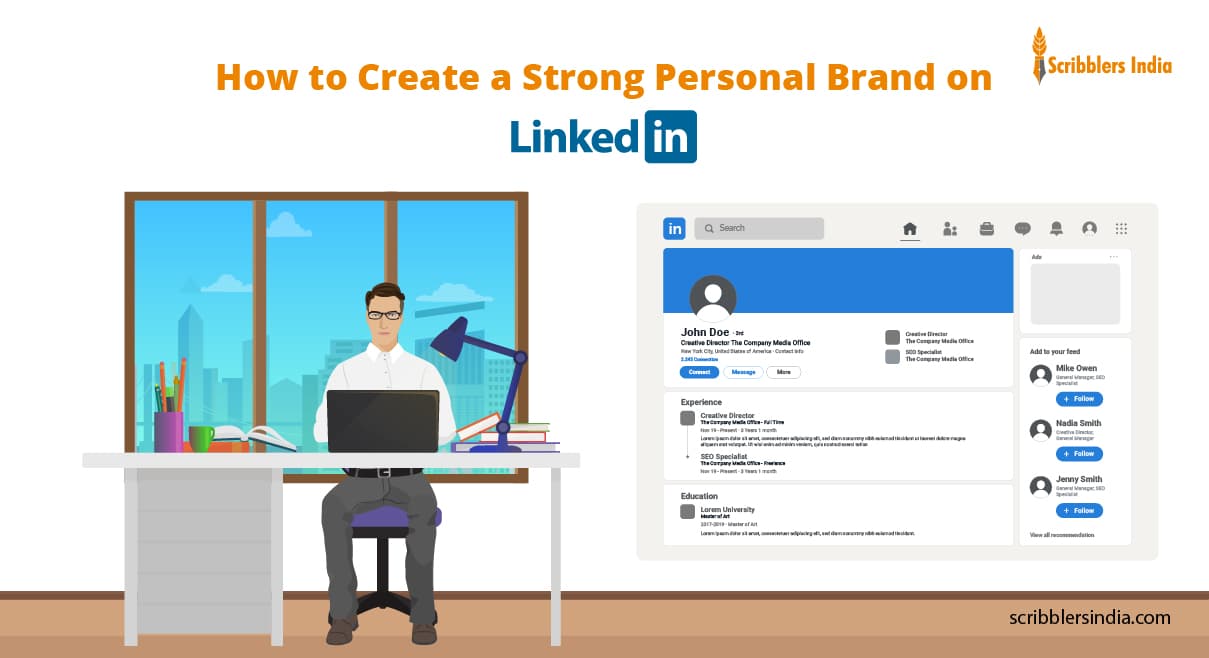
What Makes LinkedIn Personal Branding Effective for Executives and Founders?
LinkedIn personal branding can still produce little professional value when the profile looks polished but the positioning remains unclear. Your headline may sound credible, your About section may read well, and you may publish consistently. Yet visitors can still leave without understanding what you genuinely know, why your experience matters, or where your expertise fits. Effective LinkedIn personal branding solves that problem by connecting positioning, proof, content, relationships, discovery, and measurement. Your profile explains who you are and your work supports the claim. Your content demonstrates how you think, while relevant conversations help the right people encounter those ideas repeatedly. This guide explains how to build a personal brand on LinkedIn as a connected reputation system. You will learn how to define your position, strengthen your profile evidence, build content grounded in real expertise, grow the right network, improve discoverability, measure progress, and create a practical 90-day operating plan. Key Takeaways: Define the expertise and audience before rewriting individual profile sections Make important professional claims traceable to credible work and evidence Align your headline, About, Experience, recommendations, and Featured assets Build ideas from real expertise instead of copying popular posting formulas Prioritize relevant professional relationships instead of maximizing connection volume Use precise expertise language without turning your profile into SEO copy Keep your role and expertise aligned across authoritative online sources Track audience quality, profile activity, discovery, and professional outcomes separately Use the first 90 days to build foundations before increasing volume Which Questions Do You Need to Answer Before Starting LinkedIn Personal Branding? Before you optimize your profile, define who should recognize your expertise, what they should associate with your name, what evidence supports that position, and what professional action matters next. These decisions give your profile, content, network, and measurement system one clear strategic direction. Who Needs to Recognize Your Expertise? Avoid broad audiences such as “everyone in technology” or “business leaders.” A founder may need recognition among buyers, investors, analysts, senior hires, or partners. A consultant may care about decision-makers facing one defined problem, while a job seeker may prioritize hiring managers and relevant industry peers. Your choice of audience affects the evidence you emphasize and the conversations worth joining. If you want enterprise buyers to understand your work, your profile needs different proof from someone seeking a board role. Clear audience priorities also make later analytics easier to interpret. What Should They Associate With Your Name? Choose an expertise territory that is specific enough to become memorable. “Marketing leader” provides limited context, whereas “B2B SaaS positioning and category strategy” establishes a clearer professional association. “Technology executive” stays broad, while “enterprise AI governance and model-risk implementation” gives people a more useful reason to remember you. Strong personal branding on LinkedIn does not require you to discuss one narrow subject forever. Your territory can contain several related themes, provided those themes strengthen the same professional association rather than prompting your audience to infer a new professional identity with every post. What Evidence Makes the Position Credible? Before you claim expertise, identify what proves it. Useful evidence can include operating experience, projects, measurable outcomes, original frameworks, research, recommendations, conference sessions, credentials, interviews, products, teams, or programs you helped build. The strongest proof depends on the professional decision you want to influence. What Should Someone Do After Understanding Your Position? The next action depends on your objective. A consultant may want relevant prospects to start a conversation. A founder may want industry peers or buyers to follow their thinking. An executive may prioritize stakeholder visibility, while a professional planning a career move may want recruiters to understand fit. Your goal should guide the profile without turning every section into a sales pitch. If the positioning still feels unclear, use our guide to creating a personal brand statement before editing LinkedIn sections. Once the position is clear, the profile needs to prove it. How Should You Optimize Your Profile for LinkedIn Personal Branding? A strong LinkedIn profile should help visitors quickly understand your professional relevance and provide enough evidence to investigate further. Effective profile optimization aligns your photo, banner, headline, About section, Experience, skills, recommendations, Featured assets, and contact information around the same professional position. Profile Photo and Banner: Establish Recognition and Context Your profile photo mainly needs to make the account identifiable and appropriate for your professional setting. The banner has a different role. It can reinforce your expertise through one relevant message, visual, research asset, company context, event, or professional theme without competing with the introduction card. Headline: Explain Your Professional Relevance A job title often tells visitors where you sit inside an organization without showing why your expertise matters. A useful headline can combine your role or expertise, the problem or category you understand, and enough context to make the position meaningful to the audience. Executives may need to keep an official title prominent. Independent experts often have greater freedom to foreground the problem or category they understand best. In either case, your headline should sound natural to people rather than be a string of terms added purely for LinkedIn search visibility. About Section: Connect Positioning With Evidence Your About section should help a visitor move from understanding your headline to understanding why you have a credible perspective. Open with the professional territory, explain the experience behind it, add selected evidence, show how you think about the field, and provide appropriate engagement context. Avoid turning the About section into a complete autobiography. Detailed career history belongs in Experience. The strongest version helps someone understand your current professional relevance while giving enough evidence to continue exploring your profile, Featured assets, recent content, or external work. Experience: Show What You Actually Owned Strong Experience sections explain more than responsibilities. Where disclosure allows, show the problems you were responsible for solving, the scale involved, initiatives you led, functions or markets affected, changes implemented, supported outcomes, and specialist knowledge you developed through the work. Recommendations, Featured, and Contact Details: Reduce Uncertainty Recommendations add value when they describe
LinkedIn personal branding can still produce little professional value when the profile looks polished but the positioning remains unclear. Your headline may sound credible, your About section may read well, and you may publish consistently. Yet visitors can still leave without understanding what you genuinely know, why your experience matters, or where your expertise fits. Effective LinkedIn personal branding solves that problem by connecting positioning, proof, content, relationships, discovery, and measurement. Your profile explains who you are and your work supports the claim. Your content demonstrates how you think, while relevant conversations help the right people encounter those ideas repeatedly. This guide explains how to build a personal brand on LinkedIn as a connected reputation system. You will learn how to define your position, strengthen your profile evidence, build content grounded in real expertise, grow the right network, improve discoverability, measure progress, and create a practical 90-day operating plan. Key Takeaways: Define the expertise and audience before rewriting individual profile sections Make important professional claims traceable to credible work and evidence Align your headline, About, Experience, recommendations, and Featured assets Build ideas from real expertise instead of copying popular posting formulas Prioritize relevant professional relationships instead of maximizing connection volume Use precise expertise language without turning your profile into SEO copy Keep your role and expertise aligned across authoritative online sources Track audience quality, profile activity, discovery, and professional outcomes separately Use the first 90 days to build foundations before increasing volume Which Questions Do You Need to Answer Before Starting LinkedIn Personal Branding? Before you optimize your profile, define who should recognize your expertise, what they should associate with your name, what evidence supports that position, and what professional action matters next. These decisions give your profile, content, network, and measurement system one clear strategic direction. Who Needs to Recognize Your Expertise? Avoid broad audiences such as “everyone in technology” or “business leaders.” A founder may need recognition among buyers, investors, analysts, senior hires, or partners. A consultant may care about decision-makers facing one defined problem, while a job seeker may prioritize hiring managers and relevant industry peers. Your choice of audience affects the evidence you emphasize and the conversations worth joining. If you want enterprise buyers to understand your work, your profile needs different proof from someone seeking a board role. Clear audience priorities also make later analytics easier to interpret. What Should They Associate With Your Name? Choose an expertise territory that is specific enough to become memorable. “Marketing leader” provides limited context, whereas “B2B SaaS positioning and category strategy” establishes a clearer professional association. “Technology executive” stays broad, while “enterprise AI governance and model-risk implementation” gives people a more useful reason to remember you. Strong personal branding on LinkedIn does not require you to discuss one narrow subject forever. Your territory can contain several related themes, provided those themes strengthen the same professional association rather than prompting your audience to infer a new professional identity with every post. What Evidence Makes the Position Credible? Before you claim expertise, identify what proves it. Useful evidence can include operating experience, projects, measurable outcomes, original frameworks, research, recommendations, conference sessions, credentials, interviews, products, teams, or programs you helped build. The strongest proof depends on the professional decision you want to influence. What Should Someone Do After Understanding Your Position? The next action depends on your objective. A consultant may want relevant prospects to start a conversation. A founder may want industry peers or buyers to follow their thinking. An executive may prioritize stakeholder visibility, while a professional planning a career move may want recruiters to understand fit. Your goal should guide the profile without turning every section into a sales pitch. If the positioning still feels unclear, use our guide to creating a personal brand statement before editing LinkedIn sections. Once the position is clear, the profile needs to prove it. How Should You Optimize Your Profile for LinkedIn Personal Branding? A strong LinkedIn profile should help visitors quickly understand your professional relevance and provide enough evidence to investigate further. Effective profile optimization aligns your photo, banner, headline, About section, Experience, skills, recommendations, Featured assets, and contact information around the same professional position. Profile Photo and Banner: Establish Recognition and Context Your profile photo mainly needs to make the account identifiable and appropriate for your professional setting. The banner has a different role. It can reinforce your expertise through one relevant message, visual, research asset, company context, event, or professional theme without competing with the introduction card. Headline: Explain Your Professional Relevance A job title often tells visitors where you sit inside an organization without showing why your expertise matters. A useful headline can combine your role or expertise, the problem or category you understand, and enough context to make the position meaningful to the audience. Executives may need to keep an official title prominent. Independent experts often have greater freedom to foreground the problem or category they understand best. In either case, your headline should sound natural to people rather than be a string of terms added purely for LinkedIn search visibility. About Section: Connect Positioning With Evidence Your About section should help a visitor move from understanding your headline to understanding why you have a credible perspective. Open with the professional territory, explain the experience behind it, add selected evidence, show how you think about the field, and provide appropriate engagement context. Avoid turning the About section into a complete autobiography. Detailed career history belongs in Experience. The strongest version helps someone understand your current professional relevance while giving enough evidence to continue exploring your profile, Featured assets, recent content, or external work. Experience: Show What You Actually Owned Strong Experience sections explain more than responsibilities. Where disclosure allows, show the problems you were responsible for solving, the scale involved, initiatives you led, functions or markets affected, changes implemented, supported outcomes, and specialist knowledge you developed through the work. Recommendations, Featured, and Contact Details: Reduce Uncertainty Recommendations add value when they describe