
Supriya Jain
Supriya Jain works on content strategy, editorial planning, founder personal branding, and ghostwriting for brands that want stronger search and AI visibility. Her experience covers SEO, AEO, GEO, thought leadership content, and AI search-focused content development. She helps founders and leaders shape clear narratives, improve content quality, and create useful resources for readers and answer engines. At Scribblers India, she supports content planning, content gap analysis, editorial quality, and authority-led positioning. Her views on trending topics such as AI, content, and ghostwriting are regularly featured in leading publications.
Articles by Supriya Jain
Founder Personal Branding
A founder can become one of the most visible signals behind a company. Buyers may discover the founder through LinkedIn posts, articles, interviews, podcasts, search results, or AI-generated answers before visiting the business website. Founder personal branding gives those encounters a consistent professional context and helps audiences understand the expertise behind the company. At its core, founder personal branding connects a founder’s experience, viewpoints, and subject expertise with the problems they are qualified to discuss. Done consistently, it can build professional authority, strengthen company trust, and make the founder easier to discover across search, social platforms, media, and AI-led research. Key Takeaways Founder personal branding connects individual expertise with company trust and visibility. Clear positioning helps founders become associated with specific problems and expertise. Firsthand experience gives the founder content greater credibility and differentiation over time. Consistent publishing builds recognition across search, social, media, and AI discovery. Independent validation strengthens authority beyond content published on owned channels alone. Founder and company messaging should align without becoming identical or promotional. Starting early gives authority time to grow before major business moments. Structured support helps founders build visibility without having to manage every content task. What Is Founder Personal Branding? Founder personal branding is the structured process of shaping how a company founder is understood, remembered, and discovered professionally. It connects expertise, positioning, public content, and credible proof around a defined authority position. The founder retains a distinct professional identity, and their visibility can also strengthen confidence in the company. The process starts by defining why the founder should become known. That position then guides profiles, interviews, LinkedIn content, long-form articles, speaking opportunities, and external contributions. A strong founder personal brand should make several points clear: Which audience should recognize the founder? What expertise should they associate with the founder? Which experience supports that authority? What viewpoints belong distinctly to the founder? How does that expertise connect with the company? Where can audiences verify the founder’s experience? This makes founder personal branding different from frequent social posting. Publishing creates visibility, while positioning determines what that visibility should build toward. Once that foundation is clear, the next question is how founder branding differs from other leadership branding models. The distinction is crucial because founders carry a different relationship with company identity, market story, and business risk. How Is Founder Personal Branding Different From Executive Branding? Founder personal branding focuses on the individual who created or leads a business. Executive branding applies more broadly to CEOs, CXOs, senior professionals, and organizational leaders whose public authority extends beyond ownership or creation of a company. Both approaches build individual authority, though the founder’s identity is often more closely linked to the company’s origins and market direction. Area Founder personal branding Executive branding Business relationship Connected closely with a company the person founded Connected with a leadership role or organization Common themes Founder lessons, market interpretation, company direction, category thinking Leadership expertise, organizational insight, functional knowledge, industry perspective Portability Moves with the founder across future ventures Evolves across roles and organizations Business influence Can shape how audiences perceive the company itself Can strengthen confidence in organizational leadership Content emphasis Building experience and founder judgment Leadership expertise and professional perspective Founder branding also carries a different balance between personal and company identity. The founder can discuss decisions or lessons that extend beyond the company’s marketing while remaining connected to the problems the business addresses. Why Can Founder Personal Branding Influence Company Trust? Founder personal branding can influence trust in the company by giving audiences insight into the thinking behind the business. Product pages explain capabilities and offers. Founder content can reveal how leadership interprets customer problems, responds to market change, and makes decisions when the answer is less obvious. This becomes especially relevant for startups, SaaS companies, consulting firms, and expertise-led businesses. Buyers often evaluate the people behind the company alongside the solution itself. Founder content can support trust through several signals: First-hand explanations of recurring customer problems Clear opinions supported by direct experience Documented lessons from building the company Original frameworks derived from practical work Consistent viewpoints across different public channels External validation through interviews or industry contributions The quality of the audience also matters. Our EdTech leader personal branding case study shows how sharper positioning and audience-focused content can extend discovery beyond people already following the leader. Trust grows more reliably when the founder’s public presence is supported by clear positioning and visible proof. That makes the next question practical: what elements should sit inside a founder personal brand from the start? What Should a Founder Personal Brand Include? A founder personal brand should combine clear positioning with credible proof and a repeatable publishing system. Each element should help audiences understand the founder’s expertise without forcing them to piece together an identity from disconnected profiles, posts, biographies, and appearances across different channels. The following areas create a strong foundation for founder personal branding: Clear Positioning: The founder needs a defined audience and authority territory. Broad labels such as “entrepreneur” or “business leader” offer limited differentiation. Stronger positioning connects the founder with a recognizable problem, relevant experience, and a credible professional perspective. First-Hand Proof: Operating decisions, customer patterns, company-building lessons, frameworks, and documented outcomes give the founder something original to contribute. These signals separate experience-led authority from commentary that anyone could recreate through secondary research. Consistent Content: Articles, newsletters, LinkedIn posts, reports, interviews, and speaking appearances should reinforce related themes of expertise. Founders who cannot write every asset themselves can use ghostwriting services to turn structured interviews into publishable content without losing their original perspective. Independent Validation: Media coverage, podcast appearances, conference profiles, industry contributions, and relevant third-party references add evidence beyond channels controlled by the founder. This helps audiences verify authority rather than relying entirely on self-published claims. Together, these elements create a clearer system of authority around the founder’s name. Once that system exists, it can also influence how search engines and AI platforms understand, retrieve, and describe the founder’s
A founder can become one of the most visible signals behind a company. Buyers may discover the founder through LinkedIn posts, articles, interviews, podcasts, search results, or AI-generated answers before visiting the business website. Founder personal branding gives those encounters a consistent professional context and helps audiences understand the expertise behind the company. At its core, founder personal branding connects a founder’s experience, viewpoints, and subject expertise with the problems they are qualified to discuss. Done consistently, it can build professional authority, strengthen company trust, and make the founder easier to discover across search, social platforms, media, and AI-led research. Key Takeaways Founder personal branding connects individual expertise with company trust and visibility. Clear positioning helps founders become associated with specific problems and expertise. Firsthand experience gives the founder content greater credibility and differentiation over time. Consistent publishing builds recognition across search, social, media, and AI discovery. Independent validation strengthens authority beyond content published on owned channels alone. Founder and company messaging should align without becoming identical or promotional. Starting early gives authority time to grow before major business moments. Structured support helps founders build visibility without having to manage every content task. What Is Founder Personal Branding? Founder personal branding is the structured process of shaping how a company founder is understood, remembered, and discovered professionally. It connects expertise, positioning, public content, and credible proof around a defined authority position. The founder retains a distinct professional identity, and their visibility can also strengthen confidence in the company. The process starts by defining why the founder should become known. That position then guides profiles, interviews, LinkedIn content, long-form articles, speaking opportunities, and external contributions. A strong founder personal brand should make several points clear: Which audience should recognize the founder? What expertise should they associate with the founder? Which experience supports that authority? What viewpoints belong distinctly to the founder? How does that expertise connect with the company? Where can audiences verify the founder’s experience? This makes founder personal branding different from frequent social posting. Publishing creates visibility, while positioning determines what that visibility should build toward. Once that foundation is clear, the next question is how founder branding differs from other leadership branding models. The distinction is crucial because founders carry a different relationship with company identity, market story, and business risk. How Is Founder Personal Branding Different From Executive Branding? Founder personal branding focuses on the individual who created or leads a business. Executive branding applies more broadly to CEOs, CXOs, senior professionals, and organizational leaders whose public authority extends beyond ownership or creation of a company. Both approaches build individual authority, though the founder’s identity is often more closely linked to the company’s origins and market direction. Area Founder personal branding Executive branding Business relationship Connected closely with a company the person founded Connected with a leadership role or organization Common themes Founder lessons, market interpretation, company direction, category thinking Leadership expertise, organizational insight, functional knowledge, industry perspective Portability Moves with the founder across future ventures Evolves across roles and organizations Business influence Can shape how audiences perceive the company itself Can strengthen confidence in organizational leadership Content emphasis Building experience and founder judgment Leadership expertise and professional perspective Founder branding also carries a different balance between personal and company identity. The founder can discuss decisions or lessons that extend beyond the company’s marketing while remaining connected to the problems the business addresses. Why Can Founder Personal Branding Influence Company Trust? Founder personal branding can influence trust in the company by giving audiences insight into the thinking behind the business. Product pages explain capabilities and offers. Founder content can reveal how leadership interprets customer problems, responds to market change, and makes decisions when the answer is less obvious. This becomes especially relevant for startups, SaaS companies, consulting firms, and expertise-led businesses. Buyers often evaluate the people behind the company alongside the solution itself. Founder content can support trust through several signals: First-hand explanations of recurring customer problems Clear opinions supported by direct experience Documented lessons from building the company Original frameworks derived from practical work Consistent viewpoints across different public channels External validation through interviews or industry contributions The quality of the audience also matters. Our EdTech leader personal branding case study shows how sharper positioning and audience-focused content can extend discovery beyond people already following the leader. Trust grows more reliably when the founder’s public presence is supported by clear positioning and visible proof. That makes the next question practical: what elements should sit inside a founder personal brand from the start? What Should a Founder Personal Brand Include? A founder personal brand should combine clear positioning with credible proof and a repeatable publishing system. Each element should help audiences understand the founder’s expertise without forcing them to piece together an identity from disconnected profiles, posts, biographies, and appearances across different channels. The following areas create a strong foundation for founder personal branding: Clear Positioning: The founder needs a defined audience and authority territory. Broad labels such as “entrepreneur” or “business leader” offer limited differentiation. Stronger positioning connects the founder with a recognizable problem, relevant experience, and a credible professional perspective. First-Hand Proof: Operating decisions, customer patterns, company-building lessons, frameworks, and documented outcomes give the founder something original to contribute. These signals separate experience-led authority from commentary that anyone could recreate through secondary research. Consistent Content: Articles, newsletters, LinkedIn posts, reports, interviews, and speaking appearances should reinforce related themes of expertise. Founders who cannot write every asset themselves can use ghostwriting services to turn structured interviews into publishable content without losing their original perspective. Independent Validation: Media coverage, podcast appearances, conference profiles, industry contributions, and relevant third-party references add evidence beyond channels controlled by the founder. This helps audiences verify authority rather than relying entirely on self-published claims. Together, these elements create a clearer system of authority around the founder’s name. Once that system exists, it can also influence how search engines and AI platforms understand, retrieve, and describe the founder’s

Does Schema Markup Help AI Search Visibility in 2026?
Schema markup for AI search has acquired a new reputation since generative search entered mainstream marketing discussions. Some advice now presents structured data as a direct route into ChatGPT responses or Google AI Overviews. Other recommendations suggest creating an extensive “GEO schema” layer before addressing weak website content. The evidence does not support that interpretation. Schema markup for AI search can still serve useful technical purposes, yet current Google guidance does not treat it as a generative ranking requirement. Recent independent testing also fails to show a clear increase in citations from adding JSON-LD alone. That distinction changes how businesses should prioritize technical work. Schema remains part of a healthy search foundation, while greater AI visibility depends on a broader information ecosystem. Brands need accurate entities, useful answers, credible evidence, sound search access, and content that deserves retrieval. Key Takeaways Schema markup for AI search helps machines classify information but does not guarantee AI citations. Google says generative Search requires no special structured data or schema. Recent testing found no meaningful uplift in citations after adding JSON-LD markup. Structured data still supports rich results and clearer entity information today. Product and local schemas remain useful where structured facts affect discovery. Schema works best when visible content already provides complete, trustworthy answers. Brands should fix weak content before expanding large structured data implementations. Measure the schema against defined outcomes rather than assuming automatic GEO benefits. Does Schema Markup Directly Improve AI Search Visibility? Schema markup for AI search does not currently have proven direct impact on citation visibility. Google explicitly says structured data is not required for generative AI Search. Independent 2026 testing also found no meaningful increase in citations after pages added JSON-LD in Google AI Mode or ChatGPT. This conclusion differs from a common marketing claim that schema automatically makes content easier for large language models to cite. Structured data can provide machine-readable context, yet that technical function should not be confused with a confirmed citation-ranking signal. A 2026 industry study tracked 1,885 pages that added JSON-LD between August 2025 and March 2026. The researchers matched those pages against control URLs and measured citation changes across AI Overviews, AI Mode, and ChatGPT. No clear positive citation effect appeared. Google reaches the same practical conclusion from a platform perspective. Its current generative search guidance says there is no special Schema.org markup that websites must add for AI Overviews or AI Mode. The crucial question is therefore not whether Schema markup for AI search is “good” or “bad.” Businesses need to understand what it genuinely does before deciding how much effort it deserves. How Does Structured Data Help Search Engines? Structured data provides standardized information that helps search engines classify page content and specific entities. It can support rich-result eligibility and clarify facts about products or organizations. Its established value lies mainly in search understanding and search presentation, rather than in guaranteed visibility for generative citations. Schema.org provides the vocabulary, while formats such as JSON-LD carry that vocabulary inside webpages. A search engine can use the markup to identify an author, product, organization, location, rating, price, event, or another supported entity. Google explains that structured data provides explicit clues about a page and can make eligible content available for richer search experiences. Google currently recommends JSON-LD for many implementations because teams can usually maintain it more easily. That function remains useful even when schema does not create an independent AI-ranking advantage. A product page with accurate Product markup can support search features. An organization page can provide clearer administrative details. This distinction creates the first practical rule: implement schema for supported information and search functions, not as an isolated shortcut into generative answers. Why Do So Many AI-Cited Pages Still Use Schema Markup? AI-cited pages frequently use schema because well-maintained websites often invest in several search fundamentals together. Those sites may publish stronger content and maintain cleaner technical infrastructure. Schema markup for AI search can therefore correlate with AI visibility without causing the visibility that marketers observe. The difference between correlation and causation is especially important here. Ahrefs first analyzed 6 million URLs and found that schema markup for AI search was substantially more common among pages receiving AI citations. In that dataset, 53% of AI-cited pages used schema markup. This observation could easily support the wrong conclusion. Websites that use structured data often invest in content quality, page maintenance, internal linking, authority development, and stronger conventional SEO. Ahrefs therefore ran a second analysis designed to isolate the schema change. The citation advantage largely disappeared when pages adding JSON-LD were compared with matched controls. Observation Easy Conclusion Better Interpretation Cited pages often contain schema Schema causes citations Strong websites often use schema JSON-LD is common on authoritative sites AI systems reward JSON-LD Technical maturity may correlate with authority Schema pages earn rich results Schema improves all search visibility Rich-result eligibility is a separate outcome Adding schema changes machine-readable data Citations should increase automatically Retrieval still depends on wider signals This is why the broader Scribblers India AI Search Discovery Benchmark evaluates AI readiness across multiple information signals instead of assigning schema disproportionate weight. Does Google Require Schema markup for AI search for AI Mode or Overviews? Google does not require structured data for AI Overviews or AI Mode. Its 2026 guidance explicitly states that generative search requires no special schema markup for AI search. Google recommends continuing normal structured data practices where they support conventional Search features, while keeping established SEO fundamentals in place. This clarification addresses one of the biggest misconceptions around structured data for AI search. Google’s generative features rely on its Search index and core ranking systems rather than a separate schema-driven submission process. A valid schema implementation, therefore, does not automatically make a page eligible for citation in an AI Overview. The page still needs to be accessible and relevant. Its visible content must also provide information worth retrieving in response to the query. The same logic applies to elaborate
Schema markup for AI search has acquired a new reputation since generative search entered mainstream marketing discussions. Some advice now presents structured data as a direct route into ChatGPT responses or Google AI Overviews. Other recommendations suggest creating an extensive “GEO schema” layer before addressing weak website content. The evidence does not support that interpretation. Schema markup for AI search can still serve useful technical purposes, yet current Google guidance does not treat it as a generative ranking requirement. Recent independent testing also fails to show a clear increase in citations from adding JSON-LD alone. That distinction changes how businesses should prioritize technical work. Schema remains part of a healthy search foundation, while greater AI visibility depends on a broader information ecosystem. Brands need accurate entities, useful answers, credible evidence, sound search access, and content that deserves retrieval. Key Takeaways Schema markup for AI search helps machines classify information but does not guarantee AI citations. Google says generative Search requires no special structured data or schema. Recent testing found no meaningful uplift in citations after adding JSON-LD markup. Structured data still supports rich results and clearer entity information today. Product and local schemas remain useful where structured facts affect discovery. Schema works best when visible content already provides complete, trustworthy answers. Brands should fix weak content before expanding large structured data implementations. Measure the schema against defined outcomes rather than assuming automatic GEO benefits. Does Schema Markup Directly Improve AI Search Visibility? Schema markup for AI search does not currently have proven direct impact on citation visibility. Google explicitly says structured data is not required for generative AI Search. Independent 2026 testing also found no meaningful increase in citations after pages added JSON-LD in Google AI Mode or ChatGPT. This conclusion differs from a common marketing claim that schema automatically makes content easier for large language models to cite. Structured data can provide machine-readable context, yet that technical function should not be confused with a confirmed citation-ranking signal. A 2026 industry study tracked 1,885 pages that added JSON-LD between August 2025 and March 2026. The researchers matched those pages against control URLs and measured citation changes across AI Overviews, AI Mode, and ChatGPT. No clear positive citation effect appeared. Google reaches the same practical conclusion from a platform perspective. Its current generative search guidance says there is no special Schema.org markup that websites must add for AI Overviews or AI Mode. The crucial question is therefore not whether Schema markup for AI search is “good” or “bad.” Businesses need to understand what it genuinely does before deciding how much effort it deserves. How Does Structured Data Help Search Engines? Structured data provides standardized information that helps search engines classify page content and specific entities. It can support rich-result eligibility and clarify facts about products or organizations. Its established value lies mainly in search understanding and search presentation, rather than in guaranteed visibility for generative citations. Schema.org provides the vocabulary, while formats such as JSON-LD carry that vocabulary inside webpages. A search engine can use the markup to identify an author, product, organization, location, rating, price, event, or another supported entity. Google explains that structured data provides explicit clues about a page and can make eligible content available for richer search experiences. Google currently recommends JSON-LD for many implementations because teams can usually maintain it more easily. That function remains useful even when schema does not create an independent AI-ranking advantage. A product page with accurate Product markup can support search features. An organization page can provide clearer administrative details. This distinction creates the first practical rule: implement schema for supported information and search functions, not as an isolated shortcut into generative answers. Why Do So Many AI-Cited Pages Still Use Schema Markup? AI-cited pages frequently use schema because well-maintained websites often invest in several search fundamentals together. Those sites may publish stronger content and maintain cleaner technical infrastructure. Schema markup for AI search can therefore correlate with AI visibility without causing the visibility that marketers observe. The difference between correlation and causation is especially important here. Ahrefs first analyzed 6 million URLs and found that schema markup for AI search was substantially more common among pages receiving AI citations. In that dataset, 53% of AI-cited pages used schema markup. This observation could easily support the wrong conclusion. Websites that use structured data often invest in content quality, page maintenance, internal linking, authority development, and stronger conventional SEO. Ahrefs therefore ran a second analysis designed to isolate the schema change. The citation advantage largely disappeared when pages adding JSON-LD were compared with matched controls. Observation Easy Conclusion Better Interpretation Cited pages often contain schema Schema causes citations Strong websites often use schema JSON-LD is common on authoritative sites AI systems reward JSON-LD Technical maturity may correlate with authority Schema pages earn rich results Schema improves all search visibility Rich-result eligibility is a separate outcome Adding schema changes machine-readable data Citations should increase automatically Retrieval still depends on wider signals This is why the broader Scribblers India AI Search Discovery Benchmark evaluates AI readiness across multiple information signals instead of assigning schema disproportionate weight. Does Google Require Schema markup for AI search for AI Mode or Overviews? Google does not require structured data for AI Overviews or AI Mode. Its 2026 guidance explicitly states that generative search requires no special schema markup for AI search. Google recommends continuing normal structured data practices where they support conventional Search features, while keeping established SEO fundamentals in place. This clarification addresses one of the biggest misconceptions around structured data for AI search. Google’s generative features rely on its Search index and core ranking systems rather than a separate schema-driven submission process. A valid schema implementation, therefore, does not automatically make a page eligible for citation in an AI Overview. The page still needs to be accessible and relevant. Its visible content must also provide information worth retrieving in response to the query. The same logic applies to elaborate
AI Share of Voice
AI-generated answers can shape which brands buyers discover, compare, and shortlist before they visit a website. This makes competitive AI visibility an important measurement layer alongside rankings, traffic, and traditional search share. AI share of voice shows how much of that visibility your brand captures compared with selected competitors across relevant prompts and platforms. Tracking AI share of voice helps teams see where a brand is consistently present and where competitors control important buyer conversations. The metric can compare mentions, citations, recommendations, or weighted placements across a fixed benchmark. Used carefully, it gives marketing teams a clearer basis for improving content, authority, and AI search share over time. Key Takeaways: AI share of voice compares brand visibility against selected competitors. Stable prompt sets make competitive visibility comparisons more reliable over time. Mention, citation, and recommendation shares should be measured separately for clarity. Buyer-stage weighting keeps AI visibility aligned with commercial priorities over time. Platform-level reporting prevents strong results from hiding weaker performance elsewhere. Repeated testing reduces misleading conclusions from individual generated answers over time. Competitor displacement shows which brands replace others across key prompts. AEO and GEO can strengthen competitive AI visibility across journeys. What Does AI Share of Voice Mean? AI share of voice measures your brand’s visibility relative to selected competitors in AI-generated answers. It can track mentions, citations, recommendations, or weighted placements. The metric shows competitive presence across a defined set of prompts, platform groups, markets, and reporting periods. A 30% score means the brand owns 30% of the chosen visibility units across the benchmark. However, teams must define those units before calculation. Mention-based share differs from citation-based share because the former tracks recognition, while the latter tracks source ownership across the same questions, platforms, markets, and competitors. The metric becomes useful when teams connect it with AI search visibility, answer accuracy, and buyer value. A high score can still hide negative descriptions or weak decision-stage presence. Strong reporting explains where the brand appears, how competitors perform, and why that visibility matters over a single reporting cycle. How Should Teams Calculate AI Share of Voice? Teams calculate AI share of voice by dividing one brand’s visibility units by total tracked brand visibility units. They then multiply the result by 100. Every report should define the method, eligible prompts, competitor group, platform scope, and observation period. Calculation Method Visibility Unit Best Use Main Caution Mention-based share Answers naming each brand Measures category recognition Mentions may remain neutral Citation-based share Links tied to each brand Measures source visibility Citations may support background facts Recommendation share Shortlists containing each brand Measures evaluation-stage inclusion Recommendation strength can differ First-position share Answers placing a brand first Measures leading recommendation presence Ordering may change across runs Top-three share Brands appearing within three positions Measures shortlist strength Some answers lack ordered lists Prompt-weighted share Visibility adjusted by prompt value Protects commercial relevance Weak weights can distort results Platform-weighted share Visibility adjusted by platform importance Reflects audience behavior Platform assumptions need evidence Decision-stage share Mentions within high-intent prompts Measures late-stage influence Narrow scope misses educational value Owned-source share Citations pointing to owned pages Measures website source ownership External authority remains invisible Accurate-mention share Correct brand mentions only Protects message quality Manual review increases effort Teams should report the component scores before presenting one combined percentage. An AI visibility measurement framework keeps definitions, weighting rules, and review cycles consistent. This structure prevents dashboard changes from creating artificial gains or losses between reporting periods. How Should Brands Choose Prompts and Competitors? Brands should choose prompts and competitors that reflect real buyer decisions rather than internal assumptions. The benchmark needs category questions and commercial comparisons. It should include known sales rivals, AI-visible brands, adjacent options, and relevant regional providers within target markets. A strong benchmark combines buyer research with observed AI behavior. Sales conversations reveal known rivals, while repeated testing surfaces brands that influence discovery before buyers contact sales. Our AI search benchmarking process keeps the core set stable while testing emerging questions separately. Map the buyer stages before testing: education, problem discovery, use cases, comparisons, objections, and final decision validation. Include brand-free category prompts to reveal which companies’ AI systems are introduced before buyers develop a shortlist or comparison set. Start with known commercial rivals appearing in sales conversations, procurement reviews, lost deals, or active customer comparisons. Add repeated AI-visible competitors when unfamiliar brands consistently appear across several sessions, platforms, or commercially important prompt groups. Freeze prompts during reporting cycles and test new language separately before changing the formal benchmark or historical comparison base. How Does AI Share of Voice Reveal Category Ownership? Category ownership indicates whether a brand appears frequently enough to become a default AI recommendation within a defined market. AI share of voice provides a starting measure. Teams should examine concentration, prompt breadth, recommendation order, and repeated inclusion across platforms. A June 2026 study analyzed 3,750 responses across 50 brands, five industries, and three AI models. It proposed category ownership, competitive vacuum, and displacement metrics. The study found a moderate concentration of recommendations, challenging the idea that every AI category follows a winner-takes-all pattern. Brands should treat category ownership as a pattern rather than a permanent title. Strong ownership requires visibility across buyer stages, repeat runs, and relevant markets. A focused prompt-coverage program shows whether the brand addresses a single narrow question or supports the broader journey across industries and decision contexts. Why Should Platform Agreement and Brand Displacement Stay Separate? AI platforms can recommend different leaders for the same category question. Teams should keep platform results separate before combining them into a single score. They should also track whether one brand repeatedly replaces another across comparable recommendation sets during evaluation journeys. Platform agreement: Compare which brand leads on ChatGPT, Gemini, Perplexity, and Google AI features. The 2026 category ownership study found only 41.6% agreement on the leading brand across its three tested models. Brand displacement: Record when one competitor appears after another disappears from repeated answers. This pattern can reveal asymmetric competition,
AI-generated answers can shape which brands buyers discover, compare, and shortlist before they visit a website. This makes competitive AI visibility an important measurement layer alongside rankings, traffic, and traditional search share. AI share of voice shows how much of that visibility your brand captures compared with selected competitors across relevant prompts and platforms. Tracking AI share of voice helps teams see where a brand is consistently present and where competitors control important buyer conversations. The metric can compare mentions, citations, recommendations, or weighted placements across a fixed benchmark. Used carefully, it gives marketing teams a clearer basis for improving content, authority, and AI search share over time. Key Takeaways: AI share of voice compares brand visibility against selected competitors. Stable prompt sets make competitive visibility comparisons more reliable over time. Mention, citation, and recommendation shares should be measured separately for clarity. Buyer-stage weighting keeps AI visibility aligned with commercial priorities over time. Platform-level reporting prevents strong results from hiding weaker performance elsewhere. Repeated testing reduces misleading conclusions from individual generated answers over time. Competitor displacement shows which brands replace others across key prompts. AEO and GEO can strengthen competitive AI visibility across journeys. What Does AI Share of Voice Mean? AI share of voice measures your brand’s visibility relative to selected competitors in AI-generated answers. It can track mentions, citations, recommendations, or weighted placements. The metric shows competitive presence across a defined set of prompts, platform groups, markets, and reporting periods. A 30% score means the brand owns 30% of the chosen visibility units across the benchmark. However, teams must define those units before calculation. Mention-based share differs from citation-based share because the former tracks recognition, while the latter tracks source ownership across the same questions, platforms, markets, and competitors. The metric becomes useful when teams connect it with AI search visibility, answer accuracy, and buyer value. A high score can still hide negative descriptions or weak decision-stage presence. Strong reporting explains where the brand appears, how competitors perform, and why that visibility matters over a single reporting cycle. How Should Teams Calculate AI Share of Voice? Teams calculate AI share of voice by dividing one brand’s visibility units by total tracked brand visibility units. They then multiply the result by 100. Every report should define the method, eligible prompts, competitor group, platform scope, and observation period. Calculation Method Visibility Unit Best Use Main Caution Mention-based share Answers naming each brand Measures category recognition Mentions may remain neutral Citation-based share Links tied to each brand Measures source visibility Citations may support background facts Recommendation share Shortlists containing each brand Measures evaluation-stage inclusion Recommendation strength can differ First-position share Answers placing a brand first Measures leading recommendation presence Ordering may change across runs Top-three share Brands appearing within three positions Measures shortlist strength Some answers lack ordered lists Prompt-weighted share Visibility adjusted by prompt value Protects commercial relevance Weak weights can distort results Platform-weighted share Visibility adjusted by platform importance Reflects audience behavior Platform assumptions need evidence Decision-stage share Mentions within high-intent prompts Measures late-stage influence Narrow scope misses educational value Owned-source share Citations pointing to owned pages Measures website source ownership External authority remains invisible Accurate-mention share Correct brand mentions only Protects message quality Manual review increases effort Teams should report the component scores before presenting one combined percentage. An AI visibility measurement framework keeps definitions, weighting rules, and review cycles consistent. This structure prevents dashboard changes from creating artificial gains or losses between reporting periods. How Should Brands Choose Prompts and Competitors? Brands should choose prompts and competitors that reflect real buyer decisions rather than internal assumptions. The benchmark needs category questions and commercial comparisons. It should include known sales rivals, AI-visible brands, adjacent options, and relevant regional providers within target markets. A strong benchmark combines buyer research with observed AI behavior. Sales conversations reveal known rivals, while repeated testing surfaces brands that influence discovery before buyers contact sales. Our AI search benchmarking process keeps the core set stable while testing emerging questions separately. Map the buyer stages before testing: education, problem discovery, use cases, comparisons, objections, and final decision validation. Include brand-free category prompts to reveal which companies’ AI systems are introduced before buyers develop a shortlist or comparison set. Start with known commercial rivals appearing in sales conversations, procurement reviews, lost deals, or active customer comparisons. Add repeated AI-visible competitors when unfamiliar brands consistently appear across several sessions, platforms, or commercially important prompt groups. Freeze prompts during reporting cycles and test new language separately before changing the formal benchmark or historical comparison base. How Does AI Share of Voice Reveal Category Ownership? Category ownership indicates whether a brand appears frequently enough to become a default AI recommendation within a defined market. AI share of voice provides a starting measure. Teams should examine concentration, prompt breadth, recommendation order, and repeated inclusion across platforms. A June 2026 study analyzed 3,750 responses across 50 brands, five industries, and three AI models. It proposed category ownership, competitive vacuum, and displacement metrics. The study found a moderate concentration of recommendations, challenging the idea that every AI category follows a winner-takes-all pattern. Brands should treat category ownership as a pattern rather than a permanent title. Strong ownership requires visibility across buyer stages, repeat runs, and relevant markets. A focused prompt-coverage program shows whether the brand addresses a single narrow question or supports the broader journey across industries and decision contexts. Why Should Platform Agreement and Brand Displacement Stay Separate? AI platforms can recommend different leaders for the same category question. Teams should keep platform results separate before combining them into a single score. They should also track whether one brand repeatedly replaces another across comparable recommendation sets during evaluation journeys. Platform agreement: Compare which brand leads on ChatGPT, Gemini, Perplexity, and Google AI features. The 2026 category ownership study found only 41.6% agreement on the leading brand across its three tested models. Brand displacement: Record when one competitor appears after another disappears from repeated answers. This pattern can reveal asymmetric competition,

What are GEO services cost in India for 2026?
Finding a reliable answer for GEO services cost in India has become difficult because agencies package very different work under the same label. One provider may offer prompt tracking and basic technical checks. Another may combine research, content development, authority building, page optimization, and ongoing visibility measurement. That difference explains why published prices can range from a few thousand rupees for basic audits to several lakh rupees monthly. Comparing those numbers without understanding their scope can therefore create a misleading view of the actual market. Businesses need a better pricing framework. The right question is not simply, “How much do GEO services cost in India?” The more useful question asks what level of GEO work your current visibility gaps require. Key Takeaways GEO retainers in India vary widely because the scope of services differs among providers. A serious GEO audit should diagnose visibility gaps before recommending monthly execution. Monthly GEO pricing rises with content depth and broader cross-platform measurement complexity. Cheap packages often cover monitoring while larger retainers fund ongoing implementation work. Google requires no special AI markup for AI Overview or Mode visibility. Brands should compare deliverables and ownership before judging the prices of competing GEO agencies. Strong SEO foundations still support generative visibility across Google AI experiences today. GEO performance requires repeatable prompts, along with source and business outcome measurement. How Much Do GEO Services Cost in India in 2026? GEO services in India can cost around ₹15,000–₹60,000 for a substantive one-time audit. Focused monthly programs often start near ₹35,000–₹80,000. Broader growth retainers may reach ₹75,000–₹1.5 lakh, while scaled programs can exceed ₹1.5–₹3.5 lakh monthly. These ranges for GEO services cost in India should be treated as planning benchmarks rather than fixed industry prices. Publicly listed Indian offers currently show monthly pricing starting around ₹18,000, ₹35,000, and ₹40,000 across different providers. Other published GEO pricing frameworks set higher retainers at ₹1.5 lakh per month or above. The table below normalizes those public offers by the likely depth of engagement. Engagement Type Indicative 2026 Budget Typical Scope Suitable For Focused GEO audit ₹15,000–₹60,000 one-time Visibility baseline, prompt testing, competitor review, prioritized roadmap First-time GEO buyers Focused retainer ₹35,000–₹80,000 monthly Priority prompts, key-page updates, basic tracking, limited new content Smaller brands Growth program ₹75,000–₹1.5 lakh monthly Content creation, refreshes, competitor tracking, deeper source analysis Growing B2B brands Scaled GEO program ₹1.5–₹3.5 lakh+ monthly Larger topic coverage, authority assets, cross-platform measurement, deeper execution Competitive categories Enterprise engagement ₹3 lakh+ monthly Multiple markets, complex portfolios, extensive authority work, dedicated reporting Larger organizations UpGrowth, for example, places Indian mid-market GEO and AEO retainers at ₹75,000 to ₹3.5 lakh per month. Other providers publish lower starting rates because their entry packages cover narrower workloads. This range makes one point clear. Price begins making sense only after you understand exactly what the agency intends to deliver. What Does GEO Services Cost in India Cover? GEO agency pricing should fund work that changes how your brand is understood and represented across generative discovery. That normally includes diagnosis and execution. A useful engagement should not be limited to improving the owned content and external information sources that influence important buyer questions. Understanding this distinction becomes easier after reviewing what generative engine optimization services involve. GEO examines buyer prompts, competing brands, relevant sources, content gaps, entity accuracy, and measurable representation across selected platforms. A robust GEO engagement in India generally covers several connected workstreams: Buyer Prompt Research: Commercially relevant prompts should reflect how buyers research problems and evaluate providers. The agency should separate high-value questions from broad informational queries. This keeps tracking connected with actual business priorities rather than producing an impressive prompt count with limited commercial value. Visibility Baseline: Initial testing should document where the brand appears across agreed AI experiences. It should also record competitor presence, citations where available, and answer context. These observations create the controlled baseline needed for later comparisons after content or authority improvements. Content Gap Mapping: Existing pages should be reviewed against the questions AI systems and buyers need answered. Scribblers India explains this process further in its AI content gap analysis framework, which identifies missing answers, weak evidence, and incomplete content coverage. Content Execution: GEO programs often require existing pages to be refreshed or new assets created. The scope may include comparison pages, expert guides, original research, case-led resources, service content, or commercially focused articles designed around verified information gaps. Measurement Cycles: Priority prompts must be tested again under comparable conditions after implementation. A useful report should show changes in brand representation and competitor presence. It should also connect those observations with referral traffic or commercial outcomes where attribution is available. Why Does GEO Pricing in India Vary So Widely? GEO services cost in India varies because the underlying workload changes considerably across brands. Prompt coverage, content requirements, existing authority, website complexity, market competition, and measurement depth can all increase execution needs. Agencies also differ in how much implementation they include inside the monthly fee. Consider two B2B companies paying for GEO. The first already has strong organic rankings and extensive expert content. Its main requirement may involve restructuring existing pages and improving measurement. The second may lack comparison pages, evidence-backed guides, founder expertise, and external validation. Those companies should not receive the same scope or price. Cost Driver Lower-Complexity Situation Higher-Complexity Situation Prompt portfolio Small set of priority buyer questions Large multi-product prompt library Existing content Strong library needing targeted refreshes Major informational and commercial gaps Market complexity Narrow service category Multiple services, regions, or audiences Authority position Recognized brand with external coverage Limited independent validation Website condition Strong search fundamentals Indexing or architecture problems Measurement depth Periodic manual checks Wider recurring platform analysis The same principle applies to content planning. Scribblers India’s content strategy services start by connecting assets with business priorities rather than treating publishing volume as the objective. Once these variables are clear, businesses can decide whether they require diagnosis first or an ongoing execution program. How Is GEO
Finding a reliable answer for GEO services cost in India has become difficult because agencies package very different work under the same label. One provider may offer prompt tracking and basic technical checks. Another may combine research, content development, authority building, page optimization, and ongoing visibility measurement. That difference explains why published prices can range from a few thousand rupees for basic audits to several lakh rupees monthly. Comparing those numbers without understanding their scope can therefore create a misleading view of the actual market. Businesses need a better pricing framework. The right question is not simply, “How much do GEO services cost in India?” The more useful question asks what level of GEO work your current visibility gaps require. Key Takeaways GEO retainers in India vary widely because the scope of services differs among providers. A serious GEO audit should diagnose visibility gaps before recommending monthly execution. Monthly GEO pricing rises with content depth and broader cross-platform measurement complexity. Cheap packages often cover monitoring while larger retainers fund ongoing implementation work. Google requires no special AI markup for AI Overview or Mode visibility. Brands should compare deliverables and ownership before judging the prices of competing GEO agencies. Strong SEO foundations still support generative visibility across Google AI experiences today. GEO performance requires repeatable prompts, along with source and business outcome measurement. How Much Do GEO Services Cost in India in 2026? GEO services in India can cost around ₹15,000–₹60,000 for a substantive one-time audit. Focused monthly programs often start near ₹35,000–₹80,000. Broader growth retainers may reach ₹75,000–₹1.5 lakh, while scaled programs can exceed ₹1.5–₹3.5 lakh monthly. These ranges for GEO services cost in India should be treated as planning benchmarks rather than fixed industry prices. Publicly listed Indian offers currently show monthly pricing starting around ₹18,000, ₹35,000, and ₹40,000 across different providers. Other published GEO pricing frameworks set higher retainers at ₹1.5 lakh per month or above. The table below normalizes those public offers by the likely depth of engagement. Engagement Type Indicative 2026 Budget Typical Scope Suitable For Focused GEO audit ₹15,000–₹60,000 one-time Visibility baseline, prompt testing, competitor review, prioritized roadmap First-time GEO buyers Focused retainer ₹35,000–₹80,000 monthly Priority prompts, key-page updates, basic tracking, limited new content Smaller brands Growth program ₹75,000–₹1.5 lakh monthly Content creation, refreshes, competitor tracking, deeper source analysis Growing B2B brands Scaled GEO program ₹1.5–₹3.5 lakh+ monthly Larger topic coverage, authority assets, cross-platform measurement, deeper execution Competitive categories Enterprise engagement ₹3 lakh+ monthly Multiple markets, complex portfolios, extensive authority work, dedicated reporting Larger organizations UpGrowth, for example, places Indian mid-market GEO and AEO retainers at ₹75,000 to ₹3.5 lakh per month. Other providers publish lower starting rates because their entry packages cover narrower workloads. This range makes one point clear. Price begins making sense only after you understand exactly what the agency intends to deliver. What Does GEO Services Cost in India Cover? GEO agency pricing should fund work that changes how your brand is understood and represented across generative discovery. That normally includes diagnosis and execution. A useful engagement should not be limited to improving the owned content and external information sources that influence important buyer questions. Understanding this distinction becomes easier after reviewing what generative engine optimization services involve. GEO examines buyer prompts, competing brands, relevant sources, content gaps, entity accuracy, and measurable representation across selected platforms. A robust GEO engagement in India generally covers several connected workstreams: Buyer Prompt Research: Commercially relevant prompts should reflect how buyers research problems and evaluate providers. The agency should separate high-value questions from broad informational queries. This keeps tracking connected with actual business priorities rather than producing an impressive prompt count with limited commercial value. Visibility Baseline: Initial testing should document where the brand appears across agreed AI experiences. It should also record competitor presence, citations where available, and answer context. These observations create the controlled baseline needed for later comparisons after content or authority improvements. Content Gap Mapping: Existing pages should be reviewed against the questions AI systems and buyers need answered. Scribblers India explains this process further in its AI content gap analysis framework, which identifies missing answers, weak evidence, and incomplete content coverage. Content Execution: GEO programs often require existing pages to be refreshed or new assets created. The scope may include comparison pages, expert guides, original research, case-led resources, service content, or commercially focused articles designed around verified information gaps. Measurement Cycles: Priority prompts must be tested again under comparable conditions after implementation. A useful report should show changes in brand representation and competitor presence. It should also connect those observations with referral traffic or commercial outcomes where attribution is available. Why Does GEO Pricing in India Vary So Widely? GEO services cost in India varies because the underlying workload changes considerably across brands. Prompt coverage, content requirements, existing authority, website complexity, market competition, and measurement depth can all increase execution needs. Agencies also differ in how much implementation they include inside the monthly fee. Consider two B2B companies paying for GEO. The first already has strong organic rankings and extensive expert content. Its main requirement may involve restructuring existing pages and improving measurement. The second may lack comparison pages, evidence-backed guides, founder expertise, and external validation. Those companies should not receive the same scope or price. Cost Driver Lower-Complexity Situation Higher-Complexity Situation Prompt portfolio Small set of priority buyer questions Large multi-product prompt library Existing content Strong library needing targeted refreshes Major informational and commercial gaps Market complexity Narrow service category Multiple services, regions, or audiences Authority position Recognized brand with external coverage Limited independent validation Website condition Strong search fundamentals Indexing or architecture problems Measurement depth Periodic manual checks Wider recurring platform analysis The same principle applies to content planning. Scribblers India’s content strategy services start by connecting assets with business priorities rather than treating publishing volume as the objective. Once these variables are clear, businesses can decide whether they require diagnosis first or an ongoing execution program. How Is GEO
How to Choose Between Personal Branding vs Online Reputation Management?
When someone searches a founder’s name, they rarely separate branding from reputation. They judge whatever appears across profiles, articles, reviews, and generated answers. Undertaking a comparison between personal branding vs reputation management helps leaders shape that experience. It prevents incomplete information from defining their identity across digital touchpoints. Personal branding gives the market a clear reason to remember and trust someone. Reputation management monitors the information environment and responds when accuracy or public confidence is at risk. One builds the narrative over time, while the other protects it when pressure rises during important business decisions. The strongest approach starts before a crisis. It builds searchable expertise, proof, case evidence, and third-party validation, then adds monitoring and response rules. This guide explains the differences between personal branding and reputation management, the overlap, the right order of investment, and the practical boundaries. It also covers measurement across search and AI discovery channels. Key Takeaways: Personal branding builds authority before reputation risks influence public judgment. Reputation management protects accuracy when harmful digital information appears. Branding shapes your narrative, while ORM responds to existing threats. Strong owned content provides audiences with more credible context under scrutiny. Clear profiles and evidence improve visibility across search and AI. Monitoring helps leaders identify inaccuracies, impersonation, privacy risks, and criticism. Serious crises require specialist support beyond routine personal branding efforts. Separate scorecards help accurately measure authority growth and reputation risk. Is Personal Branding Same as Reputation Management? Personal branding defines how relevant audiences should understand a professional’s expertise, values, goals, and point of view. Online reputation management tracks how digital information currently shapes public perception. The first creates recognizable authority across public platforms, while the second protects accuracy and reduces reputational risk. A strong personal branding strategy begins with positioning. It identifies the audience, professional territory, useful viewpoints, and evidence supporting the desired identity. Content then turns that strategy into visible proof across LinkedIn, owned websites, interviews, newsletters, and industry publications. A sustained publishing cycle strengthens recognition. Online reputation management, often called ORM, begins with the existing information environment. It reviews search results, media coverage, public comments, outdated profiles, privacy exposure, and impersonation risks. This strategy explains how monitoring, correction, response, and escalation fit together across relevant digital channels. The comparison between personal branding vs reputation management becomes clearer when reputation is understood as the audience’s accumulated judgment. Leaders shape evidence through communication and conduct. Audiences interpret it through expectations and experience. This distinction prepares the reader to compare how the two disciplines operate in daily business operations. What are the Key Differences Between Personal Branding vs Reputation Management? Personal branding develops the authority a leader wants to own over time. Online reputation management protects the accuracy and stability of the leader’s existing digital footprint. Their goals overlap around trust, although their triggers, processes, specialists, deliverables, success measures, and budget choices remain distinctly different. A detailed analysis of personal branding vs reputation management shows where each discipline begins and how its work creates practical value. Comparison area Personal branding Reputation management What this means for leaders Primary goal Build recognition and authority Protect accuracy and reduce risk Each needs a separate strategy Starting point Desired future position Current public information One begins with intent, the other with evidence Typical trigger Growth, visibility, or category leadership Inaccuracy, criticism, privacy, or crisis Timing changes the work required Main activities Positioning, content, profiles, and thought leadership Monitoring, correction, response, and escalation Team capabilities differ considerably Level of control High control over owned communication Limited control over third-party information ORM influences perception within clear limits Main metrics Authority, discovery, audience quality, and opportunities Accuracy, exposure, response speed, and resolution Reporting should use two scorecards This analysis will help you understand the key differences between the two strategies. The personal branding vs online reputation management decision now depends on why proactive authority should usually come first. How Does Personal Branding Build Trust Before a Reputation Problem? Personal branding builds trust by giving audiences repeated evidence of a leader’s judgment before any sensitive event occurs. Clear positioning creates recognition, while useful content demonstrates expertise. Cases and external validation strengthen credibility. This public record helps stakeholders assess new information against established professional evidence. The following trust signals help turn a visible profile into a credible authority system over time: Clear professional positioning: A leader becomes easier to remember when audiences can connect one name with a specific business problem. Broad labels create weak recall. A focused personal brand statement gives profiles, content, interviews, and professional introductions one consistent direction. Useful first-hand insight: Strong content explains decisions, constraints, lessons, and trade-offs drawn from real professional work. The 2025 Edelman and LinkedIn report found that 91% of hidden buyers value insights revealing overlooked challenges or opportunities. That finding rewards experience-led publishing. Visible evidence and validation: Case studies, documented outcomes, customer patterns, and practical frameworks make claims easier to assess. Media mentions, client references, event invitations, and expert citations add outside confirmation. Together, these signals create trust more reliably than repeated descriptions of expertise. Consistent content over time: Repeated publishing gives audiences several opportunities to evaluate the leader’s thinking. The same study found that 95% of hidden buyers become more receptive to outreach after strong thought leadership. Consistency therefore supports trust before sales contact Why a Digital Reputation Shield is Crucial for Personal Branding vs Reputation Management Comparison? A digital reputation shield connects accurate profiles, owned content, credible proof, independent validation, and monitoring. Together, these assets surround a professional name with useful context. Audiences can form a balanced view from several reliable signals. The shield improves resilience before reputation pressure appears and reduces dependence on crisis-led repair. These connected layers make that protection useful and credible across the wider digital information environment: Clear Identity Signals Every major profile should carry the same current name, role, organization, expertise, and professional description. Consistency reduces confusion across Google Search, LinkedIn, directories, author pages, and AI-generated answers. It also helps audiences distinguish the real professional from
When someone searches a founder’s name, they rarely separate branding from reputation. They judge whatever appears across profiles, articles, reviews, and generated answers. Undertaking a comparison between personal branding vs reputation management helps leaders shape that experience. It prevents incomplete information from defining their identity across digital touchpoints. Personal branding gives the market a clear reason to remember and trust someone. Reputation management monitors the information environment and responds when accuracy or public confidence is at risk. One builds the narrative over time, while the other protects it when pressure rises during important business decisions. The strongest approach starts before a crisis. It builds searchable expertise, proof, case evidence, and third-party validation, then adds monitoring and response rules. This guide explains the differences between personal branding and reputation management, the overlap, the right order of investment, and the practical boundaries. It also covers measurement across search and AI discovery channels. Key Takeaways: Personal branding builds authority before reputation risks influence public judgment. Reputation management protects accuracy when harmful digital information appears. Branding shapes your narrative, while ORM responds to existing threats. Strong owned content provides audiences with more credible context under scrutiny. Clear profiles and evidence improve visibility across search and AI. Monitoring helps leaders identify inaccuracies, impersonation, privacy risks, and criticism. Serious crises require specialist support beyond routine personal branding efforts. Separate scorecards help accurately measure authority growth and reputation risk. Is Personal Branding Same as Reputation Management? Personal branding defines how relevant audiences should understand a professional’s expertise, values, goals, and point of view. Online reputation management tracks how digital information currently shapes public perception. The first creates recognizable authority across public platforms, while the second protects accuracy and reduces reputational risk. A strong personal branding strategy begins with positioning. It identifies the audience, professional territory, useful viewpoints, and evidence supporting the desired identity. Content then turns that strategy into visible proof across LinkedIn, owned websites, interviews, newsletters, and industry publications. A sustained publishing cycle strengthens recognition. Online reputation management, often called ORM, begins with the existing information environment. It reviews search results, media coverage, public comments, outdated profiles, privacy exposure, and impersonation risks. This strategy explains how monitoring, correction, response, and escalation fit together across relevant digital channels. The comparison between personal branding vs reputation management becomes clearer when reputation is understood as the audience’s accumulated judgment. Leaders shape evidence through communication and conduct. Audiences interpret it through expectations and experience. This distinction prepares the reader to compare how the two disciplines operate in daily business operations. What are the Key Differences Between Personal Branding vs Reputation Management? Personal branding develops the authority a leader wants to own over time. Online reputation management protects the accuracy and stability of the leader’s existing digital footprint. Their goals overlap around trust, although their triggers, processes, specialists, deliverables, success measures, and budget choices remain distinctly different. A detailed analysis of personal branding vs reputation management shows where each discipline begins and how its work creates practical value. Comparison area Personal branding Reputation management What this means for leaders Primary goal Build recognition and authority Protect accuracy and reduce risk Each needs a separate strategy Starting point Desired future position Current public information One begins with intent, the other with evidence Typical trigger Growth, visibility, or category leadership Inaccuracy, criticism, privacy, or crisis Timing changes the work required Main activities Positioning, content, profiles, and thought leadership Monitoring, correction, response, and escalation Team capabilities differ considerably Level of control High control over owned communication Limited control over third-party information ORM influences perception within clear limits Main metrics Authority, discovery, audience quality, and opportunities Accuracy, exposure, response speed, and resolution Reporting should use two scorecards This analysis will help you understand the key differences between the two strategies. The personal branding vs online reputation management decision now depends on why proactive authority should usually come first. How Does Personal Branding Build Trust Before a Reputation Problem? Personal branding builds trust by giving audiences repeated evidence of a leader’s judgment before any sensitive event occurs. Clear positioning creates recognition, while useful content demonstrates expertise. Cases and external validation strengthen credibility. This public record helps stakeholders assess new information against established professional evidence. The following trust signals help turn a visible profile into a credible authority system over time: Clear professional positioning: A leader becomes easier to remember when audiences can connect one name with a specific business problem. Broad labels create weak recall. A focused personal brand statement gives profiles, content, interviews, and professional introductions one consistent direction. Useful first-hand insight: Strong content explains decisions, constraints, lessons, and trade-offs drawn from real professional work. The 2025 Edelman and LinkedIn report found that 91% of hidden buyers value insights revealing overlooked challenges or opportunities. That finding rewards experience-led publishing. Visible evidence and validation: Case studies, documented outcomes, customer patterns, and practical frameworks make claims easier to assess. Media mentions, client references, event invitations, and expert citations add outside confirmation. Together, these signals create trust more reliably than repeated descriptions of expertise. Consistent content over time: Repeated publishing gives audiences several opportunities to evaluate the leader’s thinking. The same study found that 95% of hidden buyers become more receptive to outreach after strong thought leadership. Consistency therefore supports trust before sales contact Why a Digital Reputation Shield is Crucial for Personal Branding vs Reputation Management Comparison? A digital reputation shield connects accurate profiles, owned content, credible proof, independent validation, and monitoring. Together, these assets surround a professional name with useful context. Audiences can form a balanced view from several reliable signals. The shield improves resilience before reputation pressure appears and reduces dependence on crisis-led repair. These connected layers make that protection useful and credible across the wider digital information environment: Clear Identity Signals Every major profile should carry the same current name, role, organization, expertise, and professional description. Consistency reduces confusion across Google Search, LinkedIn, directories, author pages, and AI-generated answers. It also helps audiences distinguish the real professional from
Why Should You Hire a Personal Branding Agency Instead of an ORM Company?
Many founders decide to hire a personal branding agency after low visibility begins to affect sales and hiring. By then, scattered profiles and inconsistent content already shape buyer perception. The stronger decision comes earlier, when leadership expertise still needs a clear public position and a repeatable publishing system. An ORM company serves a different need. It monitors harmful information and supports correction, removal, privacy, or crisis response. Those services become important during active risk. They do not replace the strategic work required to build authority, relevance, trust, and recognition before that risk appears. This blog explains how both service models create value. It compares deliverables, costs, timelines, capabilities, and measurable returns. You will also learn when personal branding deserves priority, when ORM support becomes necessary, and how Scribblers India builds founder authority across search, LinkedIn, and AI-led discovery. Key Takeaways: Personal branding builds demand before reputation problems require expensive specialist intervention. ORM companies manage active risks, while branding agencies build authority. Agencies integrate positioning, content, distribution, and measurement into a single system. Founder expertise becomes searchable proof through consistent owned authority assets. Strong thought leadership improves buyer confidence before sales conversations begin. ORM remains essential in the face of false information, privacy risks, impersonation, or crises. Clear metrics connect personal brand visibility with commercial business outcomes. A paid pilot reveals agency fit before a longer engagement begins. The right partner reduces leadership workload without diluting authentic expertise. Why You Need to Hire a Personal Branding Agency? When you hire a personal branding agency, you gain a strategic team that turns professional expertise into a recognizable public identity. The agency defines your position, captures your voice, creates authority content, and connects every asset with business goals. This work builds visibility before reputation concerns demand urgent intervention. Expertise receives a clear market position: A strategist identifies which audience should recognize your expertise and which problem should define that association. The resulting position guides your profiles, content pillars, proof assets, and public commentary. This foundation prevents different platforms from presenting unrelated versions of your professional identity. Ideas become a publishing system: Founder interviews capture experience that rarely reaches public content. The agency turns those conversations into articles, LinkedIn posts, newsletters, case studies, and signature frameworks. Each format performs a distinct role across discovery and evaluation, creating greater value from every hour the founder contributes. Public voice becomes consistent: A voice framework records vocabulary, sentence patterns, professional beliefs, and editorial boundaries. Writers then use that guidance across every asset. Consistency helps audiences recognize the founder across formats without making the content feel manufactured or detached from the person’s natural communication. Visibility connects with business outcomes: A serious agency tracks audience quality, profile discovery, branded searches, authority signals, and qualified conversations. Publishing decisions then respond to evidence instead of platform activity alone. The personal branding agency process explains how these strategic and editorial layers work together. Many current hiring guides treat agencies as content-scaling partners after demand already exists. That framing misses founders who need positioning before any content can perform effectively. Why Should You Hire a Personal Branding Agency Before You Need ORM? You should hire a personal branding agency before reputation risks appear because authority needs time to develop. Profiles, articles, case studies, and external references gradually create a credible professional record. That record gives audiences useful context before isolated criticism or outdated information receives greater attention. A founder with limited public evidence remains vulnerable to whatever appears first. One old biography or unfavorable article may become the main reference point. A broader authority system provides searchers with several credible sources to understand the founder’s work, experience, current role, and professional judgment. Early personal branding also improves commercial discovery. The 2025 Edelman and LinkedIn report found that 95% of hidden buyers become more receptive after strong thought leadership. These buyers often influence decisions without speaking directly with sales teams. Founder content can reach them before formal evaluation begins. Waiting for a problem changes the available options. ORM specialists may manage urgent monitoring, correction, or removal processes. They cannot immediately create several years of trusted thought leadership. A proactive agency builds that credibility reserve through useful work published consistently over time. This timing difference explains why the two services should never share one vague reputation budget. What Is the Difference Between a Personal Branding Agency and an ORM Company? When you hire a personal branding agency, it builds the intended authority, audience, and public body of work. An ORM company protects the existing digital reputation when inaccurate or harmful information creates risk. Their work overlaps around AI search visibility, although their starting points, specialist skills, deliverables, and success measures remain different. The comparison below shows which provider best fits each business objective and operating situation. Comparison area Personal branding agency ORM company What the difference means Primary goal Build authority and relevant visibility Protect accuracy and manage risk Choose according to the current problem Starting question What should this leader represent? What harmful information exists now? One starts with future positioning Core work Strategy, ghostwriting, content, and distribution Monitoring, correction, privacy, and response Teams require different capabilities Main assets Profiles, articles, cases, and newsletters Alerts, audits, requests, and response plans Deliverables should remain clearly separated Time horizon Long-term authority development Issue-led or continuous risk protection Branding gains value through consistency Main metrics Discovery, relevance, authority, and opportunities Accuracy, exposure, resolution, and response speed Reporting requires separate scorecards Suitable trigger Weak visibility or unclear positioning Active misinformation or privacy exposure Urgency determines service priority Business value Creates future opportunity Protects existing trust One builds value, while one limits damage When Should You Hire a Personal Branding Agency Instead of an ORM Company? Hire a personal branding agency when your digital presence is accurate yet unclear, inconsistent, or commercially weak. You need an ORM first when false information, impersonation, exposure of personal information, or a crisis creates an immediate risk. Most founders without active threats derive greater long-term value from
Many founders decide to hire a personal branding agency after low visibility begins to affect sales and hiring. By then, scattered profiles and inconsistent content already shape buyer perception. The stronger decision comes earlier, when leadership expertise still needs a clear public position and a repeatable publishing system. An ORM company serves a different need. It monitors harmful information and supports correction, removal, privacy, or crisis response. Those services become important during active risk. They do not replace the strategic work required to build authority, relevance, trust, and recognition before that risk appears. This blog explains how both service models create value. It compares deliverables, costs, timelines, capabilities, and measurable returns. You will also learn when personal branding deserves priority, when ORM support becomes necessary, and how Scribblers India builds founder authority across search, LinkedIn, and AI-led discovery. Key Takeaways: Personal branding builds demand before reputation problems require expensive specialist intervention. ORM companies manage active risks, while branding agencies build authority. Agencies integrate positioning, content, distribution, and measurement into a single system. Founder expertise becomes searchable proof through consistent owned authority assets. Strong thought leadership improves buyer confidence before sales conversations begin. ORM remains essential in the face of false information, privacy risks, impersonation, or crises. Clear metrics connect personal brand visibility with commercial business outcomes. A paid pilot reveals agency fit before a longer engagement begins. The right partner reduces leadership workload without diluting authentic expertise. Why You Need to Hire a Personal Branding Agency? When you hire a personal branding agency, you gain a strategic team that turns professional expertise into a recognizable public identity. The agency defines your position, captures your voice, creates authority content, and connects every asset with business goals. This work builds visibility before reputation concerns demand urgent intervention. Expertise receives a clear market position: A strategist identifies which audience should recognize your expertise and which problem should define that association. The resulting position guides your profiles, content pillars, proof assets, and public commentary. This foundation prevents different platforms from presenting unrelated versions of your professional identity. Ideas become a publishing system: Founder interviews capture experience that rarely reaches public content. The agency turns those conversations into articles, LinkedIn posts, newsletters, case studies, and signature frameworks. Each format performs a distinct role across discovery and evaluation, creating greater value from every hour the founder contributes. Public voice becomes consistent: A voice framework records vocabulary, sentence patterns, professional beliefs, and editorial boundaries. Writers then use that guidance across every asset. Consistency helps audiences recognize the founder across formats without making the content feel manufactured or detached from the person’s natural communication. Visibility connects with business outcomes: A serious agency tracks audience quality, profile discovery, branded searches, authority signals, and qualified conversations. Publishing decisions then respond to evidence instead of platform activity alone. The personal branding agency process explains how these strategic and editorial layers work together. Many current hiring guides treat agencies as content-scaling partners after demand already exists. That framing misses founders who need positioning before any content can perform effectively. Why Should You Hire a Personal Branding Agency Before You Need ORM? You should hire a personal branding agency before reputation risks appear because authority needs time to develop. Profiles, articles, case studies, and external references gradually create a credible professional record. That record gives audiences useful context before isolated criticism or outdated information receives greater attention. A founder with limited public evidence remains vulnerable to whatever appears first. One old biography or unfavorable article may become the main reference point. A broader authority system provides searchers with several credible sources to understand the founder’s work, experience, current role, and professional judgment. Early personal branding also improves commercial discovery. The 2025 Edelman and LinkedIn report found that 95% of hidden buyers become more receptive after strong thought leadership. These buyers often influence decisions without speaking directly with sales teams. Founder content can reach them before formal evaluation begins. Waiting for a problem changes the available options. ORM specialists may manage urgent monitoring, correction, or removal processes. They cannot immediately create several years of trusted thought leadership. A proactive agency builds that credibility reserve through useful work published consistently over time. This timing difference explains why the two services should never share one vague reputation budget. What Is the Difference Between a Personal Branding Agency and an ORM Company? When you hire a personal branding agency, it builds the intended authority, audience, and public body of work. An ORM company protects the existing digital reputation when inaccurate or harmful information creates risk. Their work overlaps around AI search visibility, although their starting points, specialist skills, deliverables, and success measures remain different. The comparison below shows which provider best fits each business objective and operating situation. Comparison area Personal branding agency ORM company What the difference means Primary goal Build authority and relevant visibility Protect accuracy and manage risk Choose according to the current problem Starting question What should this leader represent? What harmful information exists now? One starts with future positioning Core work Strategy, ghostwriting, content, and distribution Monitoring, correction, privacy, and response Teams require different capabilities Main assets Profiles, articles, cases, and newsletters Alerts, audits, requests, and response plans Deliverables should remain clearly separated Time horizon Long-term authority development Issue-led or continuous risk protection Branding gains value through consistency Main metrics Discovery, relevance, authority, and opportunities Accuracy, exposure, resolution, and response speed Reporting requires separate scorecards Suitable trigger Weak visibility or unclear positioning Active misinformation or privacy exposure Urgency determines service priority Business value Creates future opportunity Protects existing trust One builds value, while one limits damage When Should You Hire a Personal Branding Agency Instead of an ORM Company? Hire a personal branding agency when your digital presence is accurate yet unclear, inconsistent, or commercially weak. You need an ORM first when false information, impersonation, exposure of personal information, or a crisis creates an immediate risk. Most founders without active threats derive greater long-term value from
What Should a GEO Audit Checklist Cover for AI Search Visibility in 2026?
A GEO audit checklist should answer a practical question: why does your brand appear, disappear, or get described inaccurately during AI-assisted research? Checking whether ChatGPT mentions the company once cannot answer that question. A useful audit examines the broader information system that supports discovery. The scale now warrants more structured measurement. Google reported at I/O 2026 that AI Overviews had surpassed 2.5 billion monthly active users, while AI Mode had exceeded one billion. These experiences increasingly support complex exploration and comparison across Search. A complete audit should therefore connect commercial prompts with technical access, content coverage, public evidence, and recurring measurement. The framework below covers 25 checks across six diagnostic layers, then shows how to prioritize the findings and convert them into an implementation roadmap. Key Takeaways Commercial buyer prompts should define the starting point for every useful GEO audit. Stable prompt sets make AI visibility changes easier to compare over time. Technical access should be checked before teams rewrite or expand existing content. Prompt-to-page mapping reveals whether brands need refreshes or genuinely new assets. External sources can expose brand-description gaps that website audits often miss entirely. GEO measurement should separate mentions, citations, accuracy, competitors, and commercial outcomes. Audit findings need to be organized around commercial priorities rather than a single, undifferentiated list of issues. Final deliverables should convert diagnosis into clear actions, ownership, and measurement plans. What Is a GEO Audit? A GEO audit examines how a brand appears across AI-assisted discovery and identifies factors that may limit accurate visibility. It reviews relevant prompts, technical accessibility, content coverage, external evidence, and measurement. The output should explain what needs attention and why each recommendation deserves priority. A GEO audit overlaps with existing search and content diagnostics, although it serves a different purpose. Teams that already understand Generative Engine Optimization can think of the audit as the diagnostic layer that identifies where their wider GEO system breaks down. Audit Type Primary Question Typical Output SEO Audit Can search engines access and understand the site? Technical and search recommendations Content Audit Is existing content useful and strategically aligned? Keep, refresh, consolidate, or remove decisions AI Content Gap Analysis Which important buyer questions remain weak? Page-level content opportunities GEO Audit How does the brand appear across AI-led discovery? Visibility, source, content, and action roadmap This distinction prevents duplicated work. A content audit may identify an outdated service page, while a GEO audit asks whether that page supports commercially important prompts and whether external AI-assisted research accurately represents the brand. Why Should a GEO Audit Start with Commercial Questions? A GEO audit should start with questions connected to discovery, comparison, validation, or purchase decisions. Generic industry prompts can create impressive screenshots without revealing valuable gaps. Commercial questions give each test a clear reason for inclusion and make later prioritization easier for the business. Start with the decisions customers make rather than converting an SEO keyword list directly into prompts. A SaaS brand may need category comparisons, while a professional services company may care more about provider recommendations, expertise questions, and evidence supporting its credibility. Useful prompt families that can feature on your GEO audit checklist are: Category Discovery: Questions identifying relevant products, providers, or service categories. Best-Fit Recommendations: Questions adding industry, audience, geography, or business constraints. Alternatives: Questions exploring substitutes for known brands or existing solutions. Direct Comparisons: Questions comparing two or more shortlisted options. Use Cases: Questions connecting solutions with specific operating problems. Commercial Validation: Questions covering pricing, scope, implementation, or suitability. Trust Questions: Questions examining credibility, evidence, expertise, or relevant experience. Implementation Questions: Questions addressing practical adoption or service delivery requirements. Google says AI Mode is particularly useful for nuanced questions involving exploration and complex comparisons. Its systems can also use query fan-out across related searches, which makes buyer journeys a stronger audit foundation than isolated keyword substitutions. The prompt library serves as the anchor for every subsequent audit layer. Content, technical access, external sources, and measurement should all connect back to the questions that the business has decided are worth influencing. Which Commercial Prompt Checks Belong in a GEO Audit Checklist? The first layer of a GEO audit checklist establishes what will be measured and how subsequent comparisons will be conducted. The audit needs commercially relevant prompts, a stable baseline, competitive context, and answer-quality review. Without these elements, later visibility changes become difficult to interpret reliably. S. No. Check What to Review Useful Audit Output 1 Define High-Value Prompt Families Group questions around actual buyer decisions Commercial prompt map 2 Build a Stable Core Prompt Set Keep important questions unchanged across tests Repeatable baseline 3 Record Brand and Competitor Visibility Capture which relevant brands appear Competitive visibility record 4 Test Description Accuracy Review category, audience, capabilities, and context Accuracy gap log A stable core prompt set should remain separate from experimental prompts. New questions can still be added as markets or products change, while the stable group protects comparability across reporting periods. For each test, record the exact wording, platform, date, brand appearance, cited sources, competing brands, and answer context. A mention should never automatically receive a positive score in your GEO audit checklist, as an inaccurate or unfavorable description can create a more serious issue than absence. Another analyst should be able to understand how the baseline was created. If the documentation cannot explain why each prompt matters or how the result was interpreted, the methodology needs improvement before the findings guide content decisions. Which Technical Access Tests Should a GEO Audit Checklist Include? An AI search visibility audit should verify that priority information remains technically accessible before recommending major content changes. Google requires no separate technical standard for AI Overviews or AI Mode. Normal Search eligibility still matters, while ChatGPT Search provides its own crawler guidance for public websites. The next four checks in your GEO audit checklist will help establish that technical foundation: S. No. Check What to Review Why It Matters 5 Confirm Google Eligibility Indexing and snippet eligibility Supporting links
A GEO audit checklist should answer a practical question: why does your brand appear, disappear, or get described inaccurately during AI-assisted research? Checking whether ChatGPT mentions the company once cannot answer that question. A useful audit examines the broader information system that supports discovery. The scale now warrants more structured measurement. Google reported at I/O 2026 that AI Overviews had surpassed 2.5 billion monthly active users, while AI Mode had exceeded one billion. These experiences increasingly support complex exploration and comparison across Search. A complete audit should therefore connect commercial prompts with technical access, content coverage, public evidence, and recurring measurement. The framework below covers 25 checks across six diagnostic layers, then shows how to prioritize the findings and convert them into an implementation roadmap. Key Takeaways Commercial buyer prompts should define the starting point for every useful GEO audit. Stable prompt sets make AI visibility changes easier to compare over time. Technical access should be checked before teams rewrite or expand existing content. Prompt-to-page mapping reveals whether brands need refreshes or genuinely new assets. External sources can expose brand-description gaps that website audits often miss entirely. GEO measurement should separate mentions, citations, accuracy, competitors, and commercial outcomes. Audit findings need to be organized around commercial priorities rather than a single, undifferentiated list of issues. Final deliverables should convert diagnosis into clear actions, ownership, and measurement plans. What Is a GEO Audit? A GEO audit examines how a brand appears across AI-assisted discovery and identifies factors that may limit accurate visibility. It reviews relevant prompts, technical accessibility, content coverage, external evidence, and measurement. The output should explain what needs attention and why each recommendation deserves priority. A GEO audit overlaps with existing search and content diagnostics, although it serves a different purpose. Teams that already understand Generative Engine Optimization can think of the audit as the diagnostic layer that identifies where their wider GEO system breaks down. Audit Type Primary Question Typical Output SEO Audit Can search engines access and understand the site? Technical and search recommendations Content Audit Is existing content useful and strategically aligned? Keep, refresh, consolidate, or remove decisions AI Content Gap Analysis Which important buyer questions remain weak? Page-level content opportunities GEO Audit How does the brand appear across AI-led discovery? Visibility, source, content, and action roadmap This distinction prevents duplicated work. A content audit may identify an outdated service page, while a GEO audit asks whether that page supports commercially important prompts and whether external AI-assisted research accurately represents the brand. Why Should a GEO Audit Start with Commercial Questions? A GEO audit should start with questions connected to discovery, comparison, validation, or purchase decisions. Generic industry prompts can create impressive screenshots without revealing valuable gaps. Commercial questions give each test a clear reason for inclusion and make later prioritization easier for the business. Start with the decisions customers make rather than converting an SEO keyword list directly into prompts. A SaaS brand may need category comparisons, while a professional services company may care more about provider recommendations, expertise questions, and evidence supporting its credibility. Useful prompt families that can feature on your GEO audit checklist are: Category Discovery: Questions identifying relevant products, providers, or service categories. Best-Fit Recommendations: Questions adding industry, audience, geography, or business constraints. Alternatives: Questions exploring substitutes for known brands or existing solutions. Direct Comparisons: Questions comparing two or more shortlisted options. Use Cases: Questions connecting solutions with specific operating problems. Commercial Validation: Questions covering pricing, scope, implementation, or suitability. Trust Questions: Questions examining credibility, evidence, expertise, or relevant experience. Implementation Questions: Questions addressing practical adoption or service delivery requirements. Google says AI Mode is particularly useful for nuanced questions involving exploration and complex comparisons. Its systems can also use query fan-out across related searches, which makes buyer journeys a stronger audit foundation than isolated keyword substitutions. The prompt library serves as the anchor for every subsequent audit layer. Content, technical access, external sources, and measurement should all connect back to the questions that the business has decided are worth influencing. Which Commercial Prompt Checks Belong in a GEO Audit Checklist? The first layer of a GEO audit checklist establishes what will be measured and how subsequent comparisons will be conducted. The audit needs commercially relevant prompts, a stable baseline, competitive context, and answer-quality review. Without these elements, later visibility changes become difficult to interpret reliably. S. No. Check What to Review Useful Audit Output 1 Define High-Value Prompt Families Group questions around actual buyer decisions Commercial prompt map 2 Build a Stable Core Prompt Set Keep important questions unchanged across tests Repeatable baseline 3 Record Brand and Competitor Visibility Capture which relevant brands appear Competitive visibility record 4 Test Description Accuracy Review category, audience, capabilities, and context Accuracy gap log A stable core prompt set should remain separate from experimental prompts. New questions can still be added as markets or products change, while the stable group protects comparability across reporting periods. For each test, record the exact wording, platform, date, brand appearance, cited sources, competing brands, and answer context. A mention should never automatically receive a positive score in your GEO audit checklist, as an inaccurate or unfavorable description can create a more serious issue than absence. Another analyst should be able to understand how the baseline was created. If the documentation cannot explain why each prompt matters or how the result was interpreted, the methodology needs improvement before the findings guide content decisions. Which Technical Access Tests Should a GEO Audit Checklist Include? An AI search visibility audit should verify that priority information remains technically accessible before recommending major content changes. Google requires no separate technical standard for AI Overviews or AI Mode. Normal Search eligibility still matters, while ChatGPT Search provides its own crawler guidance for public websites. The next four checks in your GEO audit checklist will help establish that technical foundation: S. No. Check What to Review Why It Matters 5 Confirm Google Eligibility Indexing and snippet eligibility Supporting links
How Should SaaS Companies Use GEO for AI Search Visibility?
Software buyers rarely research products using a single broad keyword anymore. They ask whether a platform fits their company’s size, integrates with their existing stack, supports the required workflow, or compares favorably with another product already under consideration. This makes GEO for SaaS different from generic AI search optimization. SaaS companies need accurate information across product pages, comparisons, pricing, integrations, documentation, customer proof, and other assets that support evaluation before a buyer reaches sales. The shift is already visible in buyer research. G2 reports that 51% of B2B software buyers now start their research with an AI chatbot more often than Google. Another 71% use AI chatbots at some point during software research. For SaaS teams, the opportunity extends beyond publishing more educational content. The stronger question is whether buyers can find enough current information to understand, compare, validate, and shortlist the product during AI-assisted research. Key Takeaways AI search increasingly influences which SaaS vendors enter buyer shortlists before website visits. GEO for SaaS should begin with commercial prompts rather than generic industry questions. Product pages need accurate details across pricing, integrations, security, and core capabilities. Comparison content should explain real differences in fit without making unsupported claims of superiority. Documentation helps buyers validate technical requirements that broad marketing pages cannot answer. Third-party evidence can reinforce product credibility during AI-assisted software research and validation. SaaS GEO measurement should connect visibility signals with demos, trials, and pipeline. Strong GEO programs refresh existing commercial pages before expanding informational content libraries. What Is GEO for SaaS? GEO for SaaS improves how a software product is discovered, understood, compared, and referenced during AI-assisted research. It connects buyer questions with accurate product information, decision-focused content, credible public evidence, and recurring visibility measurements across the search experiences that influence software consideration. A SaaS buyer may ask which payroll software supports several countries or which CRM connects with an existing finance system. Another buyer may ask for alternatives based on reporting depth, pricing structure, security requirements, or implementation effort. These prompts combine product category with business context. They can shape which vendors receive deeper evaluation before the buyer visits a product website, reads the documentation, or enters a sales conversation. This means SaaS GEO cannot depend on blogs alone. Product pages, comparison assets, pricing information, integrations, case studies, and technical resources need enough detail to support the same buying journey. SaaS teams new to this discipline should first understand Generative Engine Optimization and how it extends traditional search visibility to AI-assisted discovery. For software companies, the next step is to apply those principles to product comparisons, integrations, validation questions, and other information buyers use to create shortlists. Why is GEO for SaaS Companies Different from Others? SaaS buying involves repeated comparison and validation before a contract begins. Buyers need to understand product fit, pricing, compatibility, implementation requirements, and risk. A strong SaaS GEO strategy must therefore improve information across several decision stages rather than concentrate only on informational content. G2’s 2026 research found that 53% of surveyed software buyers considered AI chatbot research more productive than traditional search, compared with 36% seven months earlier. The finding suggests that AI-assisted research is becoming a normal part of software evaluation. Google is seeing a related shift inside Search. AI Mode has surpassed one billion monthly active users globally, while its queries have more than doubled every quarter since launch. Google says people use the experience for longer and more exploratory questions. Those behaviors fit software buying especially well because buyers often need several conditions evaluated together. SaaS Buying Characteristic What It Means for GEO Buyers Compare Several Vendors Comparison information needs meaningful depth Requirements Depend on Context Use-case content needs specific operating detail Integrations Influence Selection Integration pages must remain accurate Features Change Regularly Product information needs scheduled reviews Reviews Shape Validation Third-party descriptions need monitoring Security Affects Enterprise Deals Compliance claims require clear evidence Pricing Influences Shortlists Commercial information needs clarity Several Stakeholders Join Evaluation Content must answer different buyer questions A strong program therefore starts with the buying journey. Once the team understands which questions influence discovery and evaluation, it can map those questions to the pages that should answer them. Which AI Search Prompts Should SaaS Companies Track? A GEO for SaaS program should track prompts across discovery, shortlisting, evaluation, and validation. Broad category questions provide one part of the picture. Commercial prompts involving product fit, alternatives, integrations, pricing, or security often reveal more useful visibility gaps. A practical prompt library can use seven groups. Each group should connect with a real buyer decision and a suitable content asset, rather than be included just because the wording resembles an SEO keyword. 1. Category Discovery Prompts Category Prompts help buyers identify available products before they create a shortlist. Examples include “best payroll platforms for global companies” or “software for managing field service operations.” Track categories where the product genuinely fits, rather than trying to appear for every broad market term. 2. Best-Fit Recommendation Prompts Best-Fit Prompts introduce company size, industry, workflow, or operating context. A buyer might ask for a CRM for a 50-person SaaS company or an HR platform for distributed teams. These questions test whether the public information clearly defines the intended audience. 3. Alternatives Prompts Alternatives Prompts often appear when buyers already know the category or incumbent product. They may want stronger reporting, easier implementation, different pricing, or another deployment model. Useful alternative content should explain differences in fit rather than attack the competing product. 4. Direct Comparison Prompts Comparison Prompts appear as buyers narrow the consideration set. They can ask which product suits enterprise teams or how two platforms differ on workflows. These questions require current, evidence-based comparison content rather than broad superiority claims. 5. Integration and Compatibility Prompts Integration Prompts carry high decision value because software rarely operates alone. Buyers may need a CRM that integrates with Xero or payroll software that connects to Workday. Dedicated integration content can answer these questions more precisely than general
Software buyers rarely research products using a single broad keyword anymore. They ask whether a platform fits their company’s size, integrates with their existing stack, supports the required workflow, or compares favorably with another product already under consideration. This makes GEO for SaaS different from generic AI search optimization. SaaS companies need accurate information across product pages, comparisons, pricing, integrations, documentation, customer proof, and other assets that support evaluation before a buyer reaches sales. The shift is already visible in buyer research. G2 reports that 51% of B2B software buyers now start their research with an AI chatbot more often than Google. Another 71% use AI chatbots at some point during software research. For SaaS teams, the opportunity extends beyond publishing more educational content. The stronger question is whether buyers can find enough current information to understand, compare, validate, and shortlist the product during AI-assisted research. Key Takeaways AI search increasingly influences which SaaS vendors enter buyer shortlists before website visits. GEO for SaaS should begin with commercial prompts rather than generic industry questions. Product pages need accurate details across pricing, integrations, security, and core capabilities. Comparison content should explain real differences in fit without making unsupported claims of superiority. Documentation helps buyers validate technical requirements that broad marketing pages cannot answer. Third-party evidence can reinforce product credibility during AI-assisted software research and validation. SaaS GEO measurement should connect visibility signals with demos, trials, and pipeline. Strong GEO programs refresh existing commercial pages before expanding informational content libraries. What Is GEO for SaaS? GEO for SaaS improves how a software product is discovered, understood, compared, and referenced during AI-assisted research. It connects buyer questions with accurate product information, decision-focused content, credible public evidence, and recurring visibility measurements across the search experiences that influence software consideration. A SaaS buyer may ask which payroll software supports several countries or which CRM connects with an existing finance system. Another buyer may ask for alternatives based on reporting depth, pricing structure, security requirements, or implementation effort. These prompts combine product category with business context. They can shape which vendors receive deeper evaluation before the buyer visits a product website, reads the documentation, or enters a sales conversation. This means SaaS GEO cannot depend on blogs alone. Product pages, comparison assets, pricing information, integrations, case studies, and technical resources need enough detail to support the same buying journey. SaaS teams new to this discipline should first understand Generative Engine Optimization and how it extends traditional search visibility to AI-assisted discovery. For software companies, the next step is to apply those principles to product comparisons, integrations, validation questions, and other information buyers use to create shortlists. Why is GEO for SaaS Companies Different from Others? SaaS buying involves repeated comparison and validation before a contract begins. Buyers need to understand product fit, pricing, compatibility, implementation requirements, and risk. A strong SaaS GEO strategy must therefore improve information across several decision stages rather than concentrate only on informational content. G2’s 2026 research found that 53% of surveyed software buyers considered AI chatbot research more productive than traditional search, compared with 36% seven months earlier. The finding suggests that AI-assisted research is becoming a normal part of software evaluation. Google is seeing a related shift inside Search. AI Mode has surpassed one billion monthly active users globally, while its queries have more than doubled every quarter since launch. Google says people use the experience for longer and more exploratory questions. Those behaviors fit software buying especially well because buyers often need several conditions evaluated together. SaaS Buying Characteristic What It Means for GEO Buyers Compare Several Vendors Comparison information needs meaningful depth Requirements Depend on Context Use-case content needs specific operating detail Integrations Influence Selection Integration pages must remain accurate Features Change Regularly Product information needs scheduled reviews Reviews Shape Validation Third-party descriptions need monitoring Security Affects Enterprise Deals Compliance claims require clear evidence Pricing Influences Shortlists Commercial information needs clarity Several Stakeholders Join Evaluation Content must answer different buyer questions A strong program therefore starts with the buying journey. Once the team understands which questions influence discovery and evaluation, it can map those questions to the pages that should answer them. Which AI Search Prompts Should SaaS Companies Track? A GEO for SaaS program should track prompts across discovery, shortlisting, evaluation, and validation. Broad category questions provide one part of the picture. Commercial prompts involving product fit, alternatives, integrations, pricing, or security often reveal more useful visibility gaps. A practical prompt library can use seven groups. Each group should connect with a real buyer decision and a suitable content asset, rather than be included just because the wording resembles an SEO keyword. 1. Category Discovery Prompts Category Prompts help buyers identify available products before they create a shortlist. Examples include “best payroll platforms for global companies” or “software for managing field service operations.” Track categories where the product genuinely fits, rather than trying to appear for every broad market term. 2. Best-Fit Recommendation Prompts Best-Fit Prompts introduce company size, industry, workflow, or operating context. A buyer might ask for a CRM for a 50-person SaaS company or an HR platform for distributed teams. These questions test whether the public information clearly defines the intended audience. 3. Alternatives Prompts Alternatives Prompts often appear when buyers already know the category or incumbent product. They may want stronger reporting, easier implementation, different pricing, or another deployment model. Useful alternative content should explain differences in fit rather than attack the competing product. 4. Direct Comparison Prompts Comparison Prompts appear as buyers narrow the consideration set. They can ask which product suits enterprise teams or how two platforms differ on workflows. These questions require current, evidence-based comparison content rather than broad superiority claims. 5. Integration and Compatibility Prompts Integration Prompts carry high decision value because software rarely operates alone. Buyers may need a CRM that integrates with Xero or payroll software that connects to Workday. Dedicated integration content can answer these questions more precisely than general
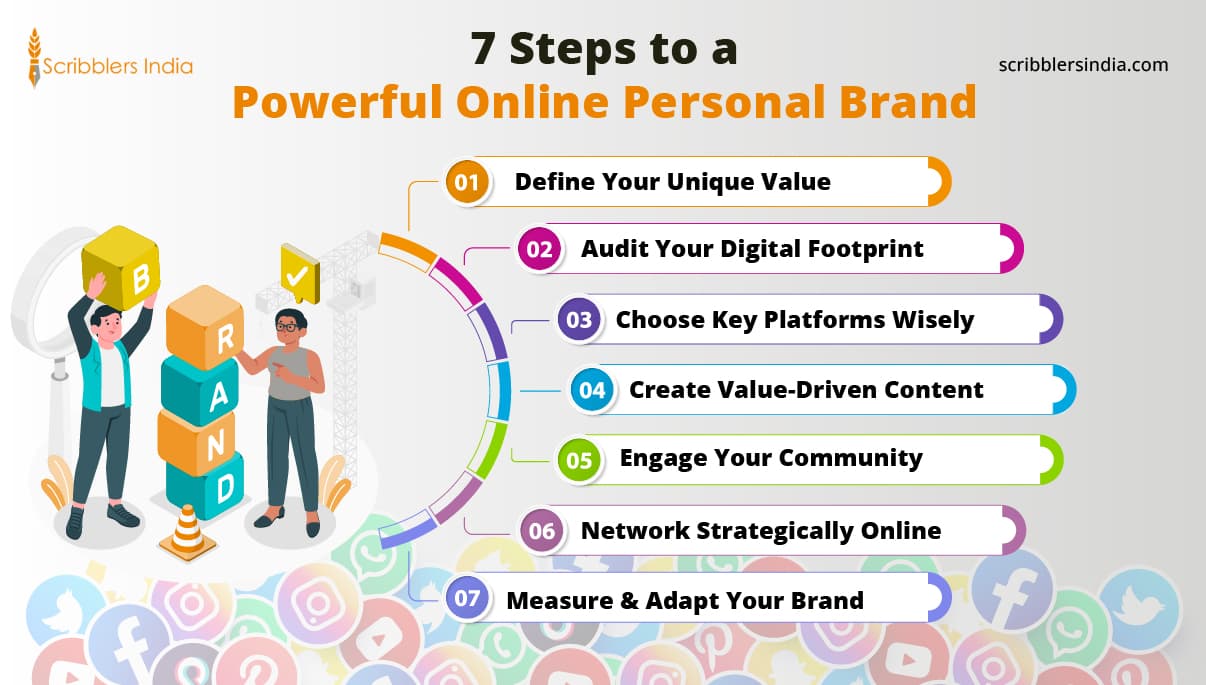
How To Build a Personal Brand Online in 2026?
Building a strong professional reputation online is largely a matter of sequencing. Publishing more content cannot solve unclear positioning, while an impressive profile carries limited weight without credible proof. Expanding across several platforms also creates unnecessary work when the people you need to influence concentrate elsewhere. The practical approach to how to build personal brand online starts with understanding what people can already discover about you. You can then define the reputation you want, strengthen the evidence supporting it, choose appropriate channels, publish useful ideas, build relevant relationships, and improve discoverability across search. This guide on how to build personal brand online focuses on that complete operating system rather than individual platform tactics. If you are still evaluating the broader business or career case, start with our analysis on why personal branding is important. The process below begins once you have decided to invest in your reputation. Key Takeaways Review what search results and profiles currently communicate about your expertise. Choose the audience, expertise territory, and professional association you want remembered. Create one reliable home base that preserves control over professional proof. Prioritize platforms where your audience already evaluates expertise and professional credibility. Place cases, recommendations, research, and qualifications close to important claims. Turn real questions, decisions, research, and lessons into useful content. Keep names, biographies, author pages, and expertise descriptions consistently aligned. Track changes in relevant discovery, relationships, opportunities, and reputation over time. How Should You Audit Your Digital Footprint Before You Build Personal Brand Online? Before you build personal brand online, establish what people can already find and what those results communicate. Any practical approach to how to build personal brand online should begin with search results, major profiles, employer pages, author pages, published work, and prominent third-party mentions. Compare that public footprint with the professional association you want to strengthen. Look for outdated information, conflicting descriptions, weak proof, useful existing assets, and prominent pages that no longer reflect your present role, expertise, audience, or professional direction. What Should a Personal Brand Audit Review? Start by searching for your full professional name and inspect the first several result pages. Then review the assets most likely to influence someone evaluating you for a role, project, partnership, speaking opportunity, media request, investment conversation, or professional recommendation. Audit Area What to Review Common Problem Identity Current name, title, company, and role Prominent profiles conflict Positioning Expertise emphasized across visible assets Each platform tells a different story Biography Current experience and specialization Old career stages remain prominent Proof Work, results, research, recommendations Claims have little visible support Content Subjects repeatedly associated with your name Publishing covers unrelated themes Third-Party Pages Events, publications, podcasts, directories Important information is outdated Prioritize high-visibility inaccuracies rather than trying to clean every historical mention. A dated conference biography that still ranks prominently deserves more attention than an obscure directory listing. The audit should finish with three practical decisions: which assets to keep, which to update, and which to de-emphasize. Useful content, interviews, recommendations, case evidence, speaking videos, or research may already support the reputation you want. Identifying these assets before creating new material is an important part of how to build a personal brand online efficiently as it prevents unnecessary duplication and provides stronger evidence for later profile updates. What Type of Reputation You Need Before Building Personal Brand Online? A useful personal branding strategy starts with the association you want relevant people to make with your name. Understanding how to build personal brand online becomes easier once the audience, expertise territory, contribution, and supporting evidence are clear enough to guide later execution. Positioning should be narrow enough to guide recognition without reducing your career to one skill. Choose the association that should lead now, while your biography, experience, portfolio, and broader content provide additional context after people understand the main professional territory. Who Should Your Personal Brand Influence? Define the people whose decisions your reputation needs to influence. A consultant may prioritize buyers facing one recurring problem, while a founder may need credibility with customers and industry peers. An executive may communicate simultaneously with employees, customers, board members, investors, and professional communities. Audience definitions such as “professionals” or “business leaders” usually provide too little direction. A clearer audience helps determine what proof deserves prominence, which questions your content should answer, where you should publish, and which relationships should receive consistent attention over time. What Expertise Should People Associate With Your Name? Ask what someone should confidently approach you about after encountering your work several times. “Marketing” yields weak recall, while “category positioning for technical B2B companies” provides a more useful anchor for the reputation, guiding profile language, content topics, speaking opportunities, and professional introductions. Once the territory is clear, translate it into a concise positioning idea. Our guide to personal brand statements explains in detail how to write such a statement, while this hub uses it as the strategic source for the broader online reputation system. Where Should Your Online Personal Branding Home Base Live? A strong online personal branding system needs one dependable place where people can understand your position, inspect proof, and take a logical next step. In how to build personal brand online, that home base may be a personal website or strong professional profile, depending on the level of control required. The better decision is not website versus social media. Think in terms of owned and rented presence. Owned assets preserve long-term control, while established platforms provide discovery and network access. Most professionals benefit from combining both without building more infrastructure than they can maintain. A useful home base normally needs three things: a current professional biography, visible evidence of expertise, and a clear next step. LinkedIn can handle these for simpler requirements, while a website is more useful when you need deeper control over proofing, long-form work, or inquiries. Do You Need a Personal Website to Build Personal Brand Online? You do not need a website simply because personal-brand advice recommends one. A site becomes valuable
Building a strong professional reputation online is largely a matter of sequencing. Publishing more content cannot solve unclear positioning, while an impressive profile carries limited weight without credible proof. Expanding across several platforms also creates unnecessary work when the people you need to influence concentrate elsewhere. The practical approach to how to build personal brand online starts with understanding what people can already discover about you. You can then define the reputation you want, strengthen the evidence supporting it, choose appropriate channels, publish useful ideas, build relevant relationships, and improve discoverability across search. This guide on how to build personal brand online focuses on that complete operating system rather than individual platform tactics. If you are still evaluating the broader business or career case, start with our analysis on why personal branding is important. The process below begins once you have decided to invest in your reputation. Key Takeaways Review what search results and profiles currently communicate about your expertise. Choose the audience, expertise territory, and professional association you want remembered. Create one reliable home base that preserves control over professional proof. Prioritize platforms where your audience already evaluates expertise and professional credibility. Place cases, recommendations, research, and qualifications close to important claims. Turn real questions, decisions, research, and lessons into useful content. Keep names, biographies, author pages, and expertise descriptions consistently aligned. Track changes in relevant discovery, relationships, opportunities, and reputation over time. How Should You Audit Your Digital Footprint Before You Build Personal Brand Online? Before you build personal brand online, establish what people can already find and what those results communicate. Any practical approach to how to build personal brand online should begin with search results, major profiles, employer pages, author pages, published work, and prominent third-party mentions. Compare that public footprint with the professional association you want to strengthen. Look for outdated information, conflicting descriptions, weak proof, useful existing assets, and prominent pages that no longer reflect your present role, expertise, audience, or professional direction. What Should a Personal Brand Audit Review? Start by searching for your full professional name and inspect the first several result pages. Then review the assets most likely to influence someone evaluating you for a role, project, partnership, speaking opportunity, media request, investment conversation, or professional recommendation. Audit Area What to Review Common Problem Identity Current name, title, company, and role Prominent profiles conflict Positioning Expertise emphasized across visible assets Each platform tells a different story Biography Current experience and specialization Old career stages remain prominent Proof Work, results, research, recommendations Claims have little visible support Content Subjects repeatedly associated with your name Publishing covers unrelated themes Third-Party Pages Events, publications, podcasts, directories Important information is outdated Prioritize high-visibility inaccuracies rather than trying to clean every historical mention. A dated conference biography that still ranks prominently deserves more attention than an obscure directory listing. The audit should finish with three practical decisions: which assets to keep, which to update, and which to de-emphasize. Useful content, interviews, recommendations, case evidence, speaking videos, or research may already support the reputation you want. Identifying these assets before creating new material is an important part of how to build a personal brand online efficiently as it prevents unnecessary duplication and provides stronger evidence for later profile updates. What Type of Reputation You Need Before Building Personal Brand Online? A useful personal branding strategy starts with the association you want relevant people to make with your name. Understanding how to build personal brand online becomes easier once the audience, expertise territory, contribution, and supporting evidence are clear enough to guide later execution. Positioning should be narrow enough to guide recognition without reducing your career to one skill. Choose the association that should lead now, while your biography, experience, portfolio, and broader content provide additional context after people understand the main professional territory. Who Should Your Personal Brand Influence? Define the people whose decisions your reputation needs to influence. A consultant may prioritize buyers facing one recurring problem, while a founder may need credibility with customers and industry peers. An executive may communicate simultaneously with employees, customers, board members, investors, and professional communities. Audience definitions such as “professionals” or “business leaders” usually provide too little direction. A clearer audience helps determine what proof deserves prominence, which questions your content should answer, where you should publish, and which relationships should receive consistent attention over time. What Expertise Should People Associate With Your Name? Ask what someone should confidently approach you about after encountering your work several times. “Marketing” yields weak recall, while “category positioning for technical B2B companies” provides a more useful anchor for the reputation, guiding profile language, content topics, speaking opportunities, and professional introductions. Once the territory is clear, translate it into a concise positioning idea. Our guide to personal brand statements explains in detail how to write such a statement, while this hub uses it as the strategic source for the broader online reputation system. Where Should Your Online Personal Branding Home Base Live? A strong online personal branding system needs one dependable place where people can understand your position, inspect proof, and take a logical next step. In how to build personal brand online, that home base may be a personal website or strong professional profile, depending on the level of control required. The better decision is not website versus social media. Think in terms of owned and rented presence. Owned assets preserve long-term control, while established platforms provide discovery and network access. Most professionals benefit from combining both without building more infrastructure than they can maintain. A useful home base normally needs three things: a current professional biography, visible evidence of expertise, and a clear next step. LinkedIn can handle these for simpler requirements, while a website is more useful when you need deeper control over proofing, long-form work, or inquiries. Do You Need a Personal Website to Build Personal Brand Online? You do not need a website simply because personal-brand advice recommends one. A site becomes valuable