
Content Strategy Posts
Prompt Coverage in AI Search
AI search visibility rarely depends on appearing for one high-value question. Brands need to surface across the prompts buyers use to discover a category, compare providers, assess concerns, and validate decisions. Prompt coverage measures how broadly a brand appears across that defined set of AI search queries and buyer conversations. Tracking prompt coverage helps teams see whether visibility extends across the research journey or remains concentrated around prompts. It reveals missing topics, buyer-stage support, and content gaps that may limit AI search visibility. Used consistently, the metric gives brands a basis for prioritizing content, authority, and measurement efforts more effectively. Key Takeaways Prompt coverage measures brand visibility across a defined set of AI prompts. Stable prompt libraries make performance comparisons more reliable over time. Coverage measures the breadth of visibility, while frequency tracks repeated brand appearances. Buyer-stage weighting keeps prompt coverage aligned with commercial priorities. Different AI platforms require separate testing because visibility can vary. Coverage gaps reveal missing topics, weak authority, or unsupported buyer questions. Declining coverage may reflect source changes, prompt drift, or testing inconsistency. AEO and GEO strategies can strengthen visibility across weak prompt clusters. What Does Prompt Coverage Mean For AI Search Visibility? Prompt coverage measures the percentage of tracked prompts in which a brand appears in AI-generated answers. It shows breadth of visibility across buyer questions. The metric helps teams identify missing conversations before planning content, authority, or measurement improvements around those gaps today. If a brand appears in 40 of 100 tracked prompts, its prompt coverage equals 40%. The calculation uses prompt inclusion instead of total mention volume across repeated tests. Teams must define an appearance before testing, such as a mention, recommendation, citation, or approved signal for each platform and review cycle. Coverage becomes useful when the prompt library reflects buyer research across education, comparisons, use cases, objections, and decisions. Our content strategy services connect missing prompt groups with suitable pages, expert assets, refresh priorities, and measurable visibility goals at each buyer stage to drive sustained growth. How Is Prompt Coverage Different From Mention Frequency? Prompt coverage measures the breadth across the tracked prompt library, while mention frequency measures how often a term appears within individual prompts. Both support AI visibility reporting. However, each reveals a different weakness and requires a different content or authority response from marketing teams. Metric focus: Coverage counts prompts where the brand appears at least once during testing. Frequency counts repeated appearances for the same prompt under comparable conditions. This difference separates visibility breadth from repeat inclusion within the chosen measurement framework. Question answered: Coverage asks whether the brand appears across the wider category journey. Frequency asks whether the brand maintains visibility when teams repeat prompts that already include it. Both questions need consistent testing throughout every planned reporting period. Content signal: Low coverage points toward missing topics, weak buyer-stage support, or absent use cases. Low frequency suggests fragile authority within topics the brand already addresses. Teams should examine existing content and external references across the complete buyer journey. Improvement approach: Coverage improves through new pages, cluster expansion, comparison assets, and objection content. Frequency improves through stronger evidence, clearer positioning, content refreshes, and external validation. These actions should follow confirmed gaps across future review cycles and markets. Review cadence: Teams can assess full coverage quarterly after preserving a stable prompt library. They should review frequency monthly for priority questions where recommendations or citations change often. This cadence supports stronger decisions across platforms and competitive categories. Both metrics belong inside a complete AI visibility program. Our AEO services improve coverage through broader question support. They strengthen frequency through clearer answers, structured pages, stronger evidence, and reliable authority signals across priority buyer topics. How Should Brands Build a Prompt List for Coverage Tracking? Brands should build prompt lists around buyer language, research stages, market context, and commercial priorities. The list should include branded and nonbranded questions. It must remain stable for comparisons while allowing separate tests for emerging language and new buyer concerns. Prompt source Example prompt Coverage purpose Category education What is generative engine optimization? Tests foundational topic visibility Problem discovery How can brands appear in AI answers? Measures unaided brand discovery Use-case research Which agencies support B2B AI visibility? Tests contextual service relevance Feature evaluation Which agencies offer AEO services in India? Checks capability recognition Vendor comparison Best agencies for AI search content Measures competitive presence Alternative research Alternatives to traditional SEO agencies Tests adjacent category visibility Objection handling Is AI search worth investing in? Measures trust and category confidence Implementation planning How should brands start AI optimization? Tests process authority Founder research Who leads Scribblers India? Checks founder entity recognition Decision validation Which AI visibility agency should I choose? Measures shortlist inclusion Google explains that AI features may use query fan-out across related subtopics and data sources. This behavior supports prompt libraries that cover connected questions. Our content strategy services map those questions to suitable pages and authority assets for future measurement. How Should Brands Weight Prompts by Business Value? Prompt weighting gives greater influence to questions that matter more for qualified discovery or buyer decisions. It prevents broad educational prompts from dominating the score. Teams should document every weight before reporting results or comparing performance across future review periods. Start by grouping prompts according to buyer stage and expected commercial value. A vendor recommendation may deserve more influence than a broad definition. However, education prompts still matter because they shape awareness and category understanding before buyers compare providers across the complete research journey. Report unweighted coverage beside weighted coverage so leaders can see both breadth and business relevance. Document every rule before testing begins. Review weights when services or buyer behavior change, then preserve them throughout the next reporting period across quarterly and annual reviews. Our AI search benchmarking process documents prompt groups and scoring rules before testing begins. This discipline prevents changing business priorities or internal preferences from distorting historical comparisons. How Can Brands Accurately Calculate Prompt Coverage? Brands calculate
AI search visibility rarely depends on appearing for one high-value question. Brands need to surface across the prompts buyers use to discover a category, compare providers, assess concerns, and validate decisions. Prompt coverage measures how broadly a brand appears across that defined set of AI search queries and buyer conversations. Tracking prompt coverage helps teams see whether visibility extends across the research journey or remains concentrated around prompts. It reveals missing topics, buyer-stage support, and content gaps that may limit AI search visibility. Used consistently, the metric gives brands a basis for prioritizing content, authority, and measurement efforts more effectively. Key Takeaways Prompt coverage measures brand visibility across a defined set of AI prompts. Stable prompt libraries make performance comparisons more reliable over time. Coverage measures the breadth of visibility, while frequency tracks repeated brand appearances. Buyer-stage weighting keeps prompt coverage aligned with commercial priorities. Different AI platforms require separate testing because visibility can vary. Coverage gaps reveal missing topics, weak authority, or unsupported buyer questions. Declining coverage may reflect source changes, prompt drift, or testing inconsistency. AEO and GEO strategies can strengthen visibility across weak prompt clusters. What Does Prompt Coverage Mean For AI Search Visibility? Prompt coverage measures the percentage of tracked prompts in which a brand appears in AI-generated answers. It shows breadth of visibility across buyer questions. The metric helps teams identify missing conversations before planning content, authority, or measurement improvements around those gaps today. If a brand appears in 40 of 100 tracked prompts, its prompt coverage equals 40%. The calculation uses prompt inclusion instead of total mention volume across repeated tests. Teams must define an appearance before testing, such as a mention, recommendation, citation, or approved signal for each platform and review cycle. Coverage becomes useful when the prompt library reflects buyer research across education, comparisons, use cases, objections, and decisions. Our content strategy services connect missing prompt groups with suitable pages, expert assets, refresh priorities, and measurable visibility goals at each buyer stage to drive sustained growth. How Is Prompt Coverage Different From Mention Frequency? Prompt coverage measures the breadth across the tracked prompt library, while mention frequency measures how often a term appears within individual prompts. Both support AI visibility reporting. However, each reveals a different weakness and requires a different content or authority response from marketing teams. Metric focus: Coverage counts prompts where the brand appears at least once during testing. Frequency counts repeated appearances for the same prompt under comparable conditions. This difference separates visibility breadth from repeat inclusion within the chosen measurement framework. Question answered: Coverage asks whether the brand appears across the wider category journey. Frequency asks whether the brand maintains visibility when teams repeat prompts that already include it. Both questions need consistent testing throughout every planned reporting period. Content signal: Low coverage points toward missing topics, weak buyer-stage support, or absent use cases. Low frequency suggests fragile authority within topics the brand already addresses. Teams should examine existing content and external references across the complete buyer journey. Improvement approach: Coverage improves through new pages, cluster expansion, comparison assets, and objection content. Frequency improves through stronger evidence, clearer positioning, content refreshes, and external validation. These actions should follow confirmed gaps across future review cycles and markets. Review cadence: Teams can assess full coverage quarterly after preserving a stable prompt library. They should review frequency monthly for priority questions where recommendations or citations change often. This cadence supports stronger decisions across platforms and competitive categories. Both metrics belong inside a complete AI visibility program. Our AEO services improve coverage through broader question support. They strengthen frequency through clearer answers, structured pages, stronger evidence, and reliable authority signals across priority buyer topics. How Should Brands Build a Prompt List for Coverage Tracking? Brands should build prompt lists around buyer language, research stages, market context, and commercial priorities. The list should include branded and nonbranded questions. It must remain stable for comparisons while allowing separate tests for emerging language and new buyer concerns. Prompt source Example prompt Coverage purpose Category education What is generative engine optimization? Tests foundational topic visibility Problem discovery How can brands appear in AI answers? Measures unaided brand discovery Use-case research Which agencies support B2B AI visibility? Tests contextual service relevance Feature evaluation Which agencies offer AEO services in India? Checks capability recognition Vendor comparison Best agencies for AI search content Measures competitive presence Alternative research Alternatives to traditional SEO agencies Tests adjacent category visibility Objection handling Is AI search worth investing in? Measures trust and category confidence Implementation planning How should brands start AI optimization? Tests process authority Founder research Who leads Scribblers India? Checks founder entity recognition Decision validation Which AI visibility agency should I choose? Measures shortlist inclusion Google explains that AI features may use query fan-out across related subtopics and data sources. This behavior supports prompt libraries that cover connected questions. Our content strategy services map those questions to suitable pages and authority assets for future measurement. How Should Brands Weight Prompts by Business Value? Prompt weighting gives greater influence to questions that matter more for qualified discovery or buyer decisions. It prevents broad educational prompts from dominating the score. Teams should document every weight before reporting results or comparing performance across future review periods. Start by grouping prompts according to buyer stage and expected commercial value. A vendor recommendation may deserve more influence than a broad definition. However, education prompts still matter because they shape awareness and category understanding before buyers compare providers across the complete research journey. Report unweighted coverage beside weighted coverage so leaders can see both breadth and business relevance. Document every rule before testing begins. Review weights when services or buyer behavior change, then preserve them throughout the next reporting period across quarterly and annual reviews. Our AI search benchmarking process documents prompt groups and scoring rules before testing begins. This discipline prevents changing business priorities or internal preferences from distorting historical comparisons. How Can Brands Accurately Calculate Prompt Coverage? Brands calculate
How Does AEO Pricing in India Work in 2026?
Businesses researching AEO pricing in India quickly encounter numbers that appear difficult to reconcile. One agency may advertise services below ₹30,000 per month, while another positions itself as offering serious answer engine optimization at above ₹1 lakh. Both offers may use the same AEO label despite covering very different workloads. The difference usually sits inside the scope. Some packages focus on audits and content restructuring. Broader programs may include query research, new content, technical support, competitive analysis, recurring optimization, and visibility measurement across several answer-led search experiences. That makes the headline AEO pricing in India a poor starting point for comparison. A better approach is to understand what AEO must improve, then decide how much execution your existing content requires. Key Takeaways AEO pricing varies because agencies package very different answer optimization workloads today. Entry-level AEO packages often cover audits, restructuring, and limited monthly tracking support. Higher retainers fund deeper content production, technical support, and wider query coverage. Google still treats strong SEO foundations as essential for generative search visibility. Commercial AI Overviews make answer-ready content relevant beyond informational search alone today. Buyers should compare optimized pages, content outputs, and measurement before monthly fees. Schema helps structure content, yet Google requires no special AI-specific markup today. AEO returns should connect answer visibility with qualified discovery and conversions over time. How Much Do AEO Services Cost in India in 2026? AEO pricing in India can start at ₹20,000–₹50,000 per month for limited optimization programs. Broader retainers typically range from ₹50,000 to ₹1.5 lakh, while scaled programs may exceed ₹1.5–₹2.75 lakh monthly. One-time audits can cost less when businesses retain implementation internally. Current public offers illustrate this spread. Digipuush offers its AEO and GEO packages from ₹25,000 per month, while its broader search package starts at a higher price. Nico Digital publishes AEO tiers ranging from ₹50,000–₹75,000 monthly through ₹2.75 lakh-plus enterprise engagements. These AEO pricing estimates in India become more useful when grouped by likely engagement depth rather than by provider terminology. AEO Engagement Indicative India Budget Typical Scope Suitable For Focused AEO audit ₹15,000–₹50,000 one-time Query gaps, page review, answer structure, roadmap First-time buyers Entry-level retainer ₹20,000–₹50,000 monthly Limited pages, basic answer optimization, reporting Smaller websites Growth AEO program ₹50,000–₹1.5 lakh monthly Page refreshes, new content, query research, wider measurement Growing brands Scaled AEO program ₹1.5–₹2.75 lakh+ monthly Larger content estate, technical support, authority assets, deeper tracking Competitive categories Enterprise engagement Custom Complex sites, multiple markets, governance, extensive content operations Larger organizations These ranges are planning benchmarks rather than fixed market rates. The next step is understanding why seemingly similar AEO packages can carry very different prices. What Services Does AEO Pricing in India Cover for Brands? AEO pricing in India should fund the work required to identify valuable questions and improve the content answering them. The scope can include research, page restructuring, new content, technical checks, internal linking, and recurring measurement. Strong programs connect these activities rather than selling answer formatting alone. Businesses unfamiliar with the discipline can first review how Answer Engine Optimization works. The key objective is to make useful information clearer and easier to retrieve across answer-led search experiences, while maintaining the depth readers need. An essential monthly engagement normally distributes effort across several areas: Answer-intent research identifies commercially useful questions across the customer journey. Research should include definitions, comparisons, requirements, objections, implementation issues, and decision questions, rather than mechanically converting existing keywords into question-format headings. Content audits reveal pages that already have authority yet answer questions poorly. These pages often offer faster opportunities because rankings, backlinks, topical relevance, or traffic already exist and do not need to be rebuilt from scratch. Page restructuring improves the clarity of important answers without making content shallow. This may involve stronger headings, concise opening responses, clearer tables, useful definitions, supporting evidence, and more logical progression between related questions. New content closes gaps that existing pages cannot answer without becoming unfocused. New assets may include comparison guides, glossaries, frameworks, service explainers, research articles, or decision content addressing separate stages of buyer research. Measurement shows whether answer visibility and commercial discovery change after implementation. Reporting should examine relevant queries consistently rather than celebrating isolated appearances that may disappear when wording, timing, location, or platform conditions change. This work explains why meaningful AEO services cost more than adding FAQs to existing articles. The exact price then depends on how much of this work your content estate needs. Why Does AEO Pricing in India Vary Between Agencies? AEO pricing in India varies because agencies differ substantially in what they optimize and deliver. Page volume, content maturity, question coverage, research depth, technical requirements, and reporting effort can each increase the workload. Bundling traditional SEO or GEO services can widen pricing differences further. A five-page professional services website presents a very different problem from a SaaS platform with hundreds of informational pages. The smaller site may require stronger foundational coverage, while the larger site may need extensive auditing before the team can determine which pages warrant intervention. The following variables usually explain most pricing differences: Cost Driver Lower-Complexity Scope Higher-Complexity Scope Pages requiring work Small priority set Large existing content library Question coverage Narrow service area Multiple products or buyer journeys Existing content quality Strong pages needing restructuring Thin or outdated content Research requirement Established topic with clear sources Technical category requiring expert input New content production Occasional supporting pages Continuous new asset creation Technical involvement Healthy search setup Indexing or architecture problems Measurement depth Selected query monitoring Larger recurring answer portfolio This distinction is important because AI content gap analysis can uncover very different problems between two similar businesses. One may lack direct answers, while another may already answer the questions yet lack sufficient depth or useful comparative content. Once those gaps are understood, businesses can separate the cost of diagnosis from the cost of fixing them. What is the Actual Cost of an AEO Audit in India? An AEO audit should cost less than an
Businesses researching AEO pricing in India quickly encounter numbers that appear difficult to reconcile. One agency may advertise services below ₹30,000 per month, while another positions itself as offering serious answer engine optimization at above ₹1 lakh. Both offers may use the same AEO label despite covering very different workloads. The difference usually sits inside the scope. Some packages focus on audits and content restructuring. Broader programs may include query research, new content, technical support, competitive analysis, recurring optimization, and visibility measurement across several answer-led search experiences. That makes the headline AEO pricing in India a poor starting point for comparison. A better approach is to understand what AEO must improve, then decide how much execution your existing content requires. Key Takeaways AEO pricing varies because agencies package very different answer optimization workloads today. Entry-level AEO packages often cover audits, restructuring, and limited monthly tracking support. Higher retainers fund deeper content production, technical support, and wider query coverage. Google still treats strong SEO foundations as essential for generative search visibility. Commercial AI Overviews make answer-ready content relevant beyond informational search alone today. Buyers should compare optimized pages, content outputs, and measurement before monthly fees. Schema helps structure content, yet Google requires no special AI-specific markup today. AEO returns should connect answer visibility with qualified discovery and conversions over time. How Much Do AEO Services Cost in India in 2026? AEO pricing in India can start at ₹20,000–₹50,000 per month for limited optimization programs. Broader retainers typically range from ₹50,000 to ₹1.5 lakh, while scaled programs may exceed ₹1.5–₹2.75 lakh monthly. One-time audits can cost less when businesses retain implementation internally. Current public offers illustrate this spread. Digipuush offers its AEO and GEO packages from ₹25,000 per month, while its broader search package starts at a higher price. Nico Digital publishes AEO tiers ranging from ₹50,000–₹75,000 monthly through ₹2.75 lakh-plus enterprise engagements. These AEO pricing estimates in India become more useful when grouped by likely engagement depth rather than by provider terminology. AEO Engagement Indicative India Budget Typical Scope Suitable For Focused AEO audit ₹15,000–₹50,000 one-time Query gaps, page review, answer structure, roadmap First-time buyers Entry-level retainer ₹20,000–₹50,000 monthly Limited pages, basic answer optimization, reporting Smaller websites Growth AEO program ₹50,000–₹1.5 lakh monthly Page refreshes, new content, query research, wider measurement Growing brands Scaled AEO program ₹1.5–₹2.75 lakh+ monthly Larger content estate, technical support, authority assets, deeper tracking Competitive categories Enterprise engagement Custom Complex sites, multiple markets, governance, extensive content operations Larger organizations These ranges are planning benchmarks rather than fixed market rates. The next step is understanding why seemingly similar AEO packages can carry very different prices. What Services Does AEO Pricing in India Cover for Brands? AEO pricing in India should fund the work required to identify valuable questions and improve the content answering them. The scope can include research, page restructuring, new content, technical checks, internal linking, and recurring measurement. Strong programs connect these activities rather than selling answer formatting alone. Businesses unfamiliar with the discipline can first review how Answer Engine Optimization works. The key objective is to make useful information clearer and easier to retrieve across answer-led search experiences, while maintaining the depth readers need. An essential monthly engagement normally distributes effort across several areas: Answer-intent research identifies commercially useful questions across the customer journey. Research should include definitions, comparisons, requirements, objections, implementation issues, and decision questions, rather than mechanically converting existing keywords into question-format headings. Content audits reveal pages that already have authority yet answer questions poorly. These pages often offer faster opportunities because rankings, backlinks, topical relevance, or traffic already exist and do not need to be rebuilt from scratch. Page restructuring improves the clarity of important answers without making content shallow. This may involve stronger headings, concise opening responses, clearer tables, useful definitions, supporting evidence, and more logical progression between related questions. New content closes gaps that existing pages cannot answer without becoming unfocused. New assets may include comparison guides, glossaries, frameworks, service explainers, research articles, or decision content addressing separate stages of buyer research. Measurement shows whether answer visibility and commercial discovery change after implementation. Reporting should examine relevant queries consistently rather than celebrating isolated appearances that may disappear when wording, timing, location, or platform conditions change. This work explains why meaningful AEO services cost more than adding FAQs to existing articles. The exact price then depends on how much of this work your content estate needs. Why Does AEO Pricing in India Vary Between Agencies? AEO pricing in India varies because agencies differ substantially in what they optimize and deliver. Page volume, content maturity, question coverage, research depth, technical requirements, and reporting effort can each increase the workload. Bundling traditional SEO or GEO services can widen pricing differences further. A five-page professional services website presents a very different problem from a SaaS platform with hundreds of informational pages. The smaller site may require stronger foundational coverage, while the larger site may need extensive auditing before the team can determine which pages warrant intervention. The following variables usually explain most pricing differences: Cost Driver Lower-Complexity Scope Higher-Complexity Scope Pages requiring work Small priority set Large existing content library Question coverage Narrow service area Multiple products or buyer journeys Existing content quality Strong pages needing restructuring Thin or outdated content Research requirement Established topic with clear sources Technical category requiring expert input New content production Occasional supporting pages Continuous new asset creation Technical involvement Healthy search setup Indexing or architecture problems Measurement depth Selected query monitoring Larger recurring answer portfolio This distinction is important because AI content gap analysis can uncover very different problems between two similar businesses. One may lack direct answers, while another may already answer the questions yet lack sufficient depth or useful comparative content. Once those gaps are understood, businesses can separate the cost of diagnosis from the cost of fixing them. What is the Actual Cost of an AEO Audit in India? An AEO audit should cost less than an

What are GEO services cost in India for 2026?
Finding a reliable answer for GEO services cost in India has become difficult because agencies package very different work under the same label. One provider may offer prompt tracking and basic technical checks. Another may combine research, content development, authority building, page optimization, and ongoing visibility measurement. That difference explains why published prices can range from a few thousand rupees for basic audits to several lakh rupees monthly. Comparing those numbers without understanding their scope can therefore create a misleading view of the actual market. Businesses need a better pricing framework. The right question is not simply, “How much do GEO services cost in India?” The more useful question asks what level of GEO work your current visibility gaps require. Key Takeaways GEO retainers in India vary widely because the scope of services differs among providers. A serious GEO audit should diagnose visibility gaps before recommending monthly execution. Monthly GEO pricing rises with content depth and broader cross-platform measurement complexity. Cheap packages often cover monitoring while larger retainers fund ongoing implementation work. Google requires no special AI markup for AI Overview or Mode visibility. Brands should compare deliverables and ownership before judging the prices of competing GEO agencies. Strong SEO foundations still support generative visibility across Google AI experiences today. GEO performance requires repeatable prompts, along with source and business outcome measurement. How Much Do GEO Services Cost in India in 2026? GEO services in India can cost around ₹15,000–₹60,000 for a substantive one-time audit. Focused monthly programs often start near ₹35,000–₹80,000. Broader growth retainers may reach ₹75,000–₹1.5 lakh, while scaled programs can exceed ₹1.5–₹3.5 lakh monthly. These ranges for GEO services cost in India should be treated as planning benchmarks rather than fixed industry prices. Publicly listed Indian offers currently show monthly pricing starting around ₹18,000, ₹35,000, and ₹40,000 across different providers. Other published GEO pricing frameworks set higher retainers at ₹1.5 lakh per month or above. The table below normalizes those public offers by the likely depth of engagement. Engagement Type Indicative 2026 Budget Typical Scope Suitable For Focused GEO audit ₹15,000–₹60,000 one-time Visibility baseline, prompt testing, competitor review, prioritized roadmap First-time GEO buyers Focused retainer ₹35,000–₹80,000 monthly Priority prompts, key-page updates, basic tracking, limited new content Smaller brands Growth program ₹75,000–₹1.5 lakh monthly Content creation, refreshes, competitor tracking, deeper source analysis Growing B2B brands Scaled GEO program ₹1.5–₹3.5 lakh+ monthly Larger topic coverage, authority assets, cross-platform measurement, deeper execution Competitive categories Enterprise engagement ₹3 lakh+ monthly Multiple markets, complex portfolios, extensive authority work, dedicated reporting Larger organizations UpGrowth, for example, places Indian mid-market GEO and AEO retainers at ₹75,000 to ₹3.5 lakh per month. Other providers publish lower starting rates because their entry packages cover narrower workloads. This range makes one point clear. Price begins making sense only after you understand exactly what the agency intends to deliver. What Does GEO Services Cost in India Cover? GEO agency pricing should fund work that changes how your brand is understood and represented across generative discovery. That normally includes diagnosis and execution. A useful engagement should not be limited to improving the owned content and external information sources that influence important buyer questions. Understanding this distinction becomes easier after reviewing what generative engine optimization services involve. GEO examines buyer prompts, competing brands, relevant sources, content gaps, entity accuracy, and measurable representation across selected platforms. A robust GEO engagement in India generally covers several connected workstreams: Buyer Prompt Research: Commercially relevant prompts should reflect how buyers research problems and evaluate providers. The agency should separate high-value questions from broad informational queries. This keeps tracking connected with actual business priorities rather than producing an impressive prompt count with limited commercial value. Visibility Baseline: Initial testing should document where the brand appears across agreed AI experiences. It should also record competitor presence, citations where available, and answer context. These observations create the controlled baseline needed for later comparisons after content or authority improvements. Content Gap Mapping: Existing pages should be reviewed against the questions AI systems and buyers need answered. Scribblers India explains this process further in its AI content gap analysis framework, which identifies missing answers, weak evidence, and incomplete content coverage. Content Execution: GEO programs often require existing pages to be refreshed or new assets created. The scope may include comparison pages, expert guides, original research, case-led resources, service content, or commercially focused articles designed around verified information gaps. Measurement Cycles: Priority prompts must be tested again under comparable conditions after implementation. A useful report should show changes in brand representation and competitor presence. It should also connect those observations with referral traffic or commercial outcomes where attribution is available. Why Does GEO Pricing in India Vary So Widely? GEO services cost in India varies because the underlying workload changes considerably across brands. Prompt coverage, content requirements, existing authority, website complexity, market competition, and measurement depth can all increase execution needs. Agencies also differ in how much implementation they include inside the monthly fee. Consider two B2B companies paying for GEO. The first already has strong organic rankings and extensive expert content. Its main requirement may involve restructuring existing pages and improving measurement. The second may lack comparison pages, evidence-backed guides, founder expertise, and external validation. Those companies should not receive the same scope or price. Cost Driver Lower-Complexity Situation Higher-Complexity Situation Prompt portfolio Small set of priority buyer questions Large multi-product prompt library Existing content Strong library needing targeted refreshes Major informational and commercial gaps Market complexity Narrow service category Multiple services, regions, or audiences Authority position Recognized brand with external coverage Limited independent validation Website condition Strong search fundamentals Indexing or architecture problems Measurement depth Periodic manual checks Wider recurring platform analysis The same principle applies to content planning. Scribblers India’s content strategy services start by connecting assets with business priorities rather than treating publishing volume as the objective. Once these variables are clear, businesses can decide whether they require diagnosis first or an ongoing execution program. How Is GEO
Finding a reliable answer for GEO services cost in India has become difficult because agencies package very different work under the same label. One provider may offer prompt tracking and basic technical checks. Another may combine research, content development, authority building, page optimization, and ongoing visibility measurement. That difference explains why published prices can range from a few thousand rupees for basic audits to several lakh rupees monthly. Comparing those numbers without understanding their scope can therefore create a misleading view of the actual market. Businesses need a better pricing framework. The right question is not simply, “How much do GEO services cost in India?” The more useful question asks what level of GEO work your current visibility gaps require. Key Takeaways GEO retainers in India vary widely because the scope of services differs among providers. A serious GEO audit should diagnose visibility gaps before recommending monthly execution. Monthly GEO pricing rises with content depth and broader cross-platform measurement complexity. Cheap packages often cover monitoring while larger retainers fund ongoing implementation work. Google requires no special AI markup for AI Overview or Mode visibility. Brands should compare deliverables and ownership before judging the prices of competing GEO agencies. Strong SEO foundations still support generative visibility across Google AI experiences today. GEO performance requires repeatable prompts, along with source and business outcome measurement. How Much Do GEO Services Cost in India in 2026? GEO services in India can cost around ₹15,000–₹60,000 for a substantive one-time audit. Focused monthly programs often start near ₹35,000–₹80,000. Broader growth retainers may reach ₹75,000–₹1.5 lakh, while scaled programs can exceed ₹1.5–₹3.5 lakh monthly. These ranges for GEO services cost in India should be treated as planning benchmarks rather than fixed industry prices. Publicly listed Indian offers currently show monthly pricing starting around ₹18,000, ₹35,000, and ₹40,000 across different providers. Other published GEO pricing frameworks set higher retainers at ₹1.5 lakh per month or above. The table below normalizes those public offers by the likely depth of engagement. Engagement Type Indicative 2026 Budget Typical Scope Suitable For Focused GEO audit ₹15,000–₹60,000 one-time Visibility baseline, prompt testing, competitor review, prioritized roadmap First-time GEO buyers Focused retainer ₹35,000–₹80,000 monthly Priority prompts, key-page updates, basic tracking, limited new content Smaller brands Growth program ₹75,000–₹1.5 lakh monthly Content creation, refreshes, competitor tracking, deeper source analysis Growing B2B brands Scaled GEO program ₹1.5–₹3.5 lakh+ monthly Larger topic coverage, authority assets, cross-platform measurement, deeper execution Competitive categories Enterprise engagement ₹3 lakh+ monthly Multiple markets, complex portfolios, extensive authority work, dedicated reporting Larger organizations UpGrowth, for example, places Indian mid-market GEO and AEO retainers at ₹75,000 to ₹3.5 lakh per month. Other providers publish lower starting rates because their entry packages cover narrower workloads. This range makes one point clear. Price begins making sense only after you understand exactly what the agency intends to deliver. What Does GEO Services Cost in India Cover? GEO agency pricing should fund work that changes how your brand is understood and represented across generative discovery. That normally includes diagnosis and execution. A useful engagement should not be limited to improving the owned content and external information sources that influence important buyer questions. Understanding this distinction becomes easier after reviewing what generative engine optimization services involve. GEO examines buyer prompts, competing brands, relevant sources, content gaps, entity accuracy, and measurable representation across selected platforms. A robust GEO engagement in India generally covers several connected workstreams: Buyer Prompt Research: Commercially relevant prompts should reflect how buyers research problems and evaluate providers. The agency should separate high-value questions from broad informational queries. This keeps tracking connected with actual business priorities rather than producing an impressive prompt count with limited commercial value. Visibility Baseline: Initial testing should document where the brand appears across agreed AI experiences. It should also record competitor presence, citations where available, and answer context. These observations create the controlled baseline needed for later comparisons after content or authority improvements. Content Gap Mapping: Existing pages should be reviewed against the questions AI systems and buyers need answered. Scribblers India explains this process further in its AI content gap analysis framework, which identifies missing answers, weak evidence, and incomplete content coverage. Content Execution: GEO programs often require existing pages to be refreshed or new assets created. The scope may include comparison pages, expert guides, original research, case-led resources, service content, or commercially focused articles designed around verified information gaps. Measurement Cycles: Priority prompts must be tested again under comparable conditions after implementation. A useful report should show changes in brand representation and competitor presence. It should also connect those observations with referral traffic or commercial outcomes where attribution is available. Why Does GEO Pricing in India Vary So Widely? GEO services cost in India varies because the underlying workload changes considerably across brands. Prompt coverage, content requirements, existing authority, website complexity, market competition, and measurement depth can all increase execution needs. Agencies also differ in how much implementation they include inside the monthly fee. Consider two B2B companies paying for GEO. The first already has strong organic rankings and extensive expert content. Its main requirement may involve restructuring existing pages and improving measurement. The second may lack comparison pages, evidence-backed guides, founder expertise, and external validation. Those companies should not receive the same scope or price. Cost Driver Lower-Complexity Situation Higher-Complexity Situation Prompt portfolio Small set of priority buyer questions Large multi-product prompt library Existing content Strong library needing targeted refreshes Major informational and commercial gaps Market complexity Narrow service category Multiple services, regions, or audiences Authority position Recognized brand with external coverage Limited independent validation Website condition Strong search fundamentals Indexing or architecture problems Measurement depth Periodic manual checks Wider recurring platform analysis The same principle applies to content planning. Scribblers India’s content strategy services start by connecting assets with business priorities rather than treating publishing volume as the objective. Once these variables are clear, businesses can decide whether they require diagnosis first or an ongoing execution program. How Is GEO
Why Should You Hire a Personal Branding Agency Instead of an ORM Company?
Many founders decide to hire a personal branding agency after low visibility begins to affect sales and hiring. By then, scattered profiles and inconsistent content already shape buyer perception. The stronger decision comes earlier, when leadership expertise still needs a clear public position and a repeatable publishing system. An ORM company serves a different need. It monitors harmful information and supports correction, removal, privacy, or crisis response. Those services become important during active risk. They do not replace the strategic work required to build authority, relevance, trust, and recognition before that risk appears. This blog explains how both service models create value. It compares deliverables, costs, timelines, capabilities, and measurable returns. You will also learn when personal branding deserves priority, when ORM support becomes necessary, and how Scribblers India builds founder authority across search, LinkedIn, and AI-led discovery. Key Takeaways: Personal branding builds demand before reputation problems require expensive specialist intervention. ORM companies manage active risks, while branding agencies build authority. Agencies integrate positioning, content, distribution, and measurement into a single system. Founder expertise becomes searchable proof through consistent owned authority assets. Strong thought leadership improves buyer confidence before sales conversations begin. ORM remains essential in the face of false information, privacy risks, impersonation, or crises. Clear metrics connect personal brand visibility with commercial business outcomes. A paid pilot reveals agency fit before a longer engagement begins. The right partner reduces leadership workload without diluting authentic expertise. Why You Need to Hire a Personal Branding Agency? When you hire a personal branding agency, you gain a strategic team that turns professional expertise into a recognizable public identity. The agency defines your position, captures your voice, creates authority content, and connects every asset with business goals. This work builds visibility before reputation concerns demand urgent intervention. Expertise receives a clear market position: A strategist identifies which audience should recognize your expertise and which problem should define that association. The resulting position guides your profiles, content pillars, proof assets, and public commentary. This foundation prevents different platforms from presenting unrelated versions of your professional identity. Ideas become a publishing system: Founder interviews capture experience that rarely reaches public content. The agency turns those conversations into articles, LinkedIn posts, newsletters, case studies, and signature frameworks. Each format performs a distinct role across discovery and evaluation, creating greater value from every hour the founder contributes. Public voice becomes consistent: A voice framework records vocabulary, sentence patterns, professional beliefs, and editorial boundaries. Writers then use that guidance across every asset. Consistency helps audiences recognize the founder across formats without making the content feel manufactured or detached from the person’s natural communication. Visibility connects with business outcomes: A serious agency tracks audience quality, profile discovery, branded searches, authority signals, and qualified conversations. Publishing decisions then respond to evidence instead of platform activity alone. The personal branding agency process explains how these strategic and editorial layers work together. Many current hiring guides treat agencies as content-scaling partners after demand already exists. That framing misses founders who need positioning before any content can perform effectively. Why Should You Hire a Personal Branding Agency Before You Need ORM? You should hire a personal branding agency before reputation risks appear because authority needs time to develop. Profiles, articles, case studies, and external references gradually create a credible professional record. That record gives audiences useful context before isolated criticism or outdated information receives greater attention. A founder with limited public evidence remains vulnerable to whatever appears first. One old biography or unfavorable article may become the main reference point. A broader authority system provides searchers with several credible sources to understand the founder’s work, experience, current role, and professional judgment. Early personal branding also improves commercial discovery. The 2025 Edelman and LinkedIn report found that 95% of hidden buyers become more receptive after strong thought leadership. These buyers often influence decisions without speaking directly with sales teams. Founder content can reach them before formal evaluation begins. Waiting for a problem changes the available options. ORM specialists may manage urgent monitoring, correction, or removal processes. They cannot immediately create several years of trusted thought leadership. A proactive agency builds that credibility reserve through useful work published consistently over time. This timing difference explains why the two services should never share one vague reputation budget. What Is the Difference Between a Personal Branding Agency and an ORM Company? When you hire a personal branding agency, it builds the intended authority, audience, and public body of work. An ORM company protects the existing digital reputation when inaccurate or harmful information creates risk. Their work overlaps around AI search visibility, although their starting points, specialist skills, deliverables, and success measures remain different. The comparison below shows which provider best fits each business objective and operating situation. Comparison area Personal branding agency ORM company What the difference means Primary goal Build authority and relevant visibility Protect accuracy and manage risk Choose according to the current problem Starting question What should this leader represent? What harmful information exists now? One starts with future positioning Core work Strategy, ghostwriting, content, and distribution Monitoring, correction, privacy, and response Teams require different capabilities Main assets Profiles, articles, cases, and newsletters Alerts, audits, requests, and response plans Deliverables should remain clearly separated Time horizon Long-term authority development Issue-led or continuous risk protection Branding gains value through consistency Main metrics Discovery, relevance, authority, and opportunities Accuracy, exposure, resolution, and response speed Reporting requires separate scorecards Suitable trigger Weak visibility or unclear positioning Active misinformation or privacy exposure Urgency determines service priority Business value Creates future opportunity Protects existing trust One builds value, while one limits damage When Should You Hire a Personal Branding Agency Instead of an ORM Company? Hire a personal branding agency when your digital presence is accurate yet unclear, inconsistent, or commercially weak. You need an ORM first when false information, impersonation, exposure of personal information, or a crisis creates an immediate risk. Most founders without active threats derive greater long-term value from
Many founders decide to hire a personal branding agency after low visibility begins to affect sales and hiring. By then, scattered profiles and inconsistent content already shape buyer perception. The stronger decision comes earlier, when leadership expertise still needs a clear public position and a repeatable publishing system. An ORM company serves a different need. It monitors harmful information and supports correction, removal, privacy, or crisis response. Those services become important during active risk. They do not replace the strategic work required to build authority, relevance, trust, and recognition before that risk appears. This blog explains how both service models create value. It compares deliverables, costs, timelines, capabilities, and measurable returns. You will also learn when personal branding deserves priority, when ORM support becomes necessary, and how Scribblers India builds founder authority across search, LinkedIn, and AI-led discovery. Key Takeaways: Personal branding builds demand before reputation problems require expensive specialist intervention. ORM companies manage active risks, while branding agencies build authority. Agencies integrate positioning, content, distribution, and measurement into a single system. Founder expertise becomes searchable proof through consistent owned authority assets. Strong thought leadership improves buyer confidence before sales conversations begin. ORM remains essential in the face of false information, privacy risks, impersonation, or crises. Clear metrics connect personal brand visibility with commercial business outcomes. A paid pilot reveals agency fit before a longer engagement begins. The right partner reduces leadership workload without diluting authentic expertise. Why You Need to Hire a Personal Branding Agency? When you hire a personal branding agency, you gain a strategic team that turns professional expertise into a recognizable public identity. The agency defines your position, captures your voice, creates authority content, and connects every asset with business goals. This work builds visibility before reputation concerns demand urgent intervention. Expertise receives a clear market position: A strategist identifies which audience should recognize your expertise and which problem should define that association. The resulting position guides your profiles, content pillars, proof assets, and public commentary. This foundation prevents different platforms from presenting unrelated versions of your professional identity. Ideas become a publishing system: Founder interviews capture experience that rarely reaches public content. The agency turns those conversations into articles, LinkedIn posts, newsletters, case studies, and signature frameworks. Each format performs a distinct role across discovery and evaluation, creating greater value from every hour the founder contributes. Public voice becomes consistent: A voice framework records vocabulary, sentence patterns, professional beliefs, and editorial boundaries. Writers then use that guidance across every asset. Consistency helps audiences recognize the founder across formats without making the content feel manufactured or detached from the person’s natural communication. Visibility connects with business outcomes: A serious agency tracks audience quality, profile discovery, branded searches, authority signals, and qualified conversations. Publishing decisions then respond to evidence instead of platform activity alone. The personal branding agency process explains how these strategic and editorial layers work together. Many current hiring guides treat agencies as content-scaling partners after demand already exists. That framing misses founders who need positioning before any content can perform effectively. Why Should You Hire a Personal Branding Agency Before You Need ORM? You should hire a personal branding agency before reputation risks appear because authority needs time to develop. Profiles, articles, case studies, and external references gradually create a credible professional record. That record gives audiences useful context before isolated criticism or outdated information receives greater attention. A founder with limited public evidence remains vulnerable to whatever appears first. One old biography or unfavorable article may become the main reference point. A broader authority system provides searchers with several credible sources to understand the founder’s work, experience, current role, and professional judgment. Early personal branding also improves commercial discovery. The 2025 Edelman and LinkedIn report found that 95% of hidden buyers become more receptive after strong thought leadership. These buyers often influence decisions without speaking directly with sales teams. Founder content can reach them before formal evaluation begins. Waiting for a problem changes the available options. ORM specialists may manage urgent monitoring, correction, or removal processes. They cannot immediately create several years of trusted thought leadership. A proactive agency builds that credibility reserve through useful work published consistently over time. This timing difference explains why the two services should never share one vague reputation budget. What Is the Difference Between a Personal Branding Agency and an ORM Company? When you hire a personal branding agency, it builds the intended authority, audience, and public body of work. An ORM company protects the existing digital reputation when inaccurate or harmful information creates risk. Their work overlaps around AI search visibility, although their starting points, specialist skills, deliverables, and success measures remain different. The comparison below shows which provider best fits each business objective and operating situation. Comparison area Personal branding agency ORM company What the difference means Primary goal Build authority and relevant visibility Protect accuracy and manage risk Choose according to the current problem Starting question What should this leader represent? What harmful information exists now? One starts with future positioning Core work Strategy, ghostwriting, content, and distribution Monitoring, correction, privacy, and response Teams require different capabilities Main assets Profiles, articles, cases, and newsletters Alerts, audits, requests, and response plans Deliverables should remain clearly separated Time horizon Long-term authority development Issue-led or continuous risk protection Branding gains value through consistency Main metrics Discovery, relevance, authority, and opportunities Accuracy, exposure, resolution, and response speed Reporting requires separate scorecards Suitable trigger Weak visibility or unclear positioning Active misinformation or privacy exposure Urgency determines service priority Business value Creates future opportunity Protects existing trust One builds value, while one limits damage When Should You Hire a Personal Branding Agency Instead of an ORM Company? Hire a personal branding agency when your digital presence is accurate yet unclear, inconsistent, or commercially weak. You need an ORM first when false information, impersonation, exposure of personal information, or a crisis creates an immediate risk. Most founders without active threats derive greater long-term value from
What Should Businesses Expect From a GEO Agency Retainer in 2026?
A GEO retainer can describe very different agency engagements. One proposal may combine prompt tracking, page refreshes, technical reviews, content development, external-source analysis, and recurring measurement. Another may provide a monthly dashboard with limited explanation of what the team will change once new findings emerge. That difference matters as AI-assisted discovery becomes a larger part of search behavior. Google says AI Overviews now reach more than 2.5 billion monthly active users, while AI Mode has surpassed one billion. These search experiences create new discovery opportunities while making measurement more complex. A useful engagement should therefore connect diagnosis with execution and repeat measurement. This guide explains what businesses should receive during the first 90 days, which services fall within the ongoing scope, how reporting and SLAs should work, and when a recurring arrangement warrants continued investment. Key Takeaways GEO retainers should establish measurable visibility before recommending large content changes. Early work should identify priority gaps before expanding monthly publishing volume. Core prompt sets make visibility changes easier to compare across reporting periods. Monthly reports should connect observed movement with specific implementation decisions and owners. Agencies should guarantee controllable work rather than citations or recommendation positions. Retainer costs change with markets, prompts, content needs, and implementation depth. Monthly priorities should evolve when evidence reveals stronger or weaker opportunities. What Is a GEO Retainer? A GEO retainer is an ongoing engagement focused on improving and measuring how a brand appears across AI-assisted discovery. The work can include prompt monitoring, content updates, technical checks, source analysis, authority development, and reporting, with priorities changing as new evidence emerges. The important distinction is recurrence. AI-generated answers can change as public information, competing content, platform behavior, and buyer questions evolve. A recurring engagement gives the team a structured way to observe those changes, implement improvements, and test whether the resulting AI visibility pattern changes afterward. That does not mean every company needs monthly support. Some businesses need a baseline first, while others already know which pages or information gaps require attention. The engagement model should therefore follow the problem’s maturity rather than immediately default to a retainer. Engagement Model Primary Purpose Best Fit GEO Audit Diagnose current visibility and information gaps Brands without a reliable baseline Fixed Sprint Address a defined group of priorities Teams with known implementation needs Ongoing Engagement Measure and improve recurring visibility Brands with sustained AI-search opportunity Internal Program Build and manage capability in-house Mature teams with adequate expertise Teams that are still assessing overall readiness can use Scribblers India’s AI Search Visibility Scorecard to identify broad weaknesses before deciding whether deeper diagnosis or recurring implementation is justified. The next question is whether the visibility environment changes enough to warrant continuing work. Why Does GEO Require Ongoing Work in 2026? Ongoing GEO work is useful because AI search visibility can change over time. A brand may appear for one prompt and disappear for another, while cited sources and recommendation context can also shift. Repeated testing helps businesses identify consistent patterns instead of reacting to individual responses. The wider environment is changing quickly too. After a May 2026 update to the ChatGPT interface that made brand links more prominent, total referral traffic increased by 157.7% week over week. Changes like this can quickly affect how users discover and visit brands through AI platforms. A recurring GEO program should therefore monitor both the information a brand controls and changes happening outside its website. Content quality, factual accuracy, technical access, and published evidence can be improved directly, while competitor activity, platform updates, cited sources, and evolving buyer questions require ongoing monitoring. What Services Should a GEO Services Retainer Include? A GEO retainer should connect measurement with practical improvements across priority content and supporting public evidence. The exact mix should follow the baseline findings. Strong programs avoid treating monthly content volume as the objective when existing pages or source gaps create the larger visibility problem. 1. Commercial Prompt Mapping and AI Visibility Monitoring Prompt Mapping defines the category, recommendation, comparison, alternative, and validation questions to monitor. Each prompt should have a clear business reason for inclusion, while the baseline should record brand appearances, relevant competitors, description accuracy, and cited sources using consistent testing rules. 2. Prompt-to-Page Content Mapping Content Mapping connects commercially important questions with the strongest existing destination pages. Some prompts reveal missing assets, while others expose incomplete service pages or comparisons. Scribblers India’s AI content gap analysis explains why many visibility gaps can be solved by strengthening existing pages rather than adding another URL. 3. Technical Search and Crawler Review Technical Review checks whether priority information remains accessible to relevant search systems. Google says existing SEO fundamentals remain relevant for AI Overviews and AI Mode, with no special AI-specific technical requirements. OpenAI separately recommends allowing OAI-SearchBot when publishers want their public content to be discoverable in ChatGPT Search. 4. Priority Page Refreshes Page Refreshes improve existing commercial assets when they already serve the right search job. Updates can strengthen direct answers, product or service detail, comparison depth, evidence, freshness, internal pathways, and factual consistency without creating unnecessary content overlap across the site. 5. New Authority Assets Authority Assets become useful when no existing page can answer an important question properly. These may include research reports, buyer guides, comparison resources, case studies, glossaries, or expert-led thought leadership that provides buyers with deeper evidence on a category or decision. 6. External Source and Brand Evidence Review Source Review examines how credible third-party pages describe the company and its expertise. Relevant publications, review platforms, partner profiles, directories, customer evidence, or expert pages can reveal inconsistencies that website-only analysis misses and may influence how buyers validate AI-generated recommendations. 7. Measurement and Monthly Reprioritization Recurring Measurement repeats the stable prompt panel and connects observed movement with the next implementation cycle. Scribblers India’s GEO services apply the same connected approach, linking search foundations, answer-led content, authority development, and visibility measurement to documented business gaps. What Should Happen During GEO Onboarding? GEO onboarding should establish business
A GEO retainer can describe very different agency engagements. One proposal may combine prompt tracking, page refreshes, technical reviews, content development, external-source analysis, and recurring measurement. Another may provide a monthly dashboard with limited explanation of what the team will change once new findings emerge. That difference matters as AI-assisted discovery becomes a larger part of search behavior. Google says AI Overviews now reach more than 2.5 billion monthly active users, while AI Mode has surpassed one billion. These search experiences create new discovery opportunities while making measurement more complex. A useful engagement should therefore connect diagnosis with execution and repeat measurement. This guide explains what businesses should receive during the first 90 days, which services fall within the ongoing scope, how reporting and SLAs should work, and when a recurring arrangement warrants continued investment. Key Takeaways GEO retainers should establish measurable visibility before recommending large content changes. Early work should identify priority gaps before expanding monthly publishing volume. Core prompt sets make visibility changes easier to compare across reporting periods. Monthly reports should connect observed movement with specific implementation decisions and owners. Agencies should guarantee controllable work rather than citations or recommendation positions. Retainer costs change with markets, prompts, content needs, and implementation depth. Monthly priorities should evolve when evidence reveals stronger or weaker opportunities. What Is a GEO Retainer? A GEO retainer is an ongoing engagement focused on improving and measuring how a brand appears across AI-assisted discovery. The work can include prompt monitoring, content updates, technical checks, source analysis, authority development, and reporting, with priorities changing as new evidence emerges. The important distinction is recurrence. AI-generated answers can change as public information, competing content, platform behavior, and buyer questions evolve. A recurring engagement gives the team a structured way to observe those changes, implement improvements, and test whether the resulting AI visibility pattern changes afterward. That does not mean every company needs monthly support. Some businesses need a baseline first, while others already know which pages or information gaps require attention. The engagement model should therefore follow the problem’s maturity rather than immediately default to a retainer. Engagement Model Primary Purpose Best Fit GEO Audit Diagnose current visibility and information gaps Brands without a reliable baseline Fixed Sprint Address a defined group of priorities Teams with known implementation needs Ongoing Engagement Measure and improve recurring visibility Brands with sustained AI-search opportunity Internal Program Build and manage capability in-house Mature teams with adequate expertise Teams that are still assessing overall readiness can use Scribblers India’s AI Search Visibility Scorecard to identify broad weaknesses before deciding whether deeper diagnosis or recurring implementation is justified. The next question is whether the visibility environment changes enough to warrant continuing work. Why Does GEO Require Ongoing Work in 2026? Ongoing GEO work is useful because AI search visibility can change over time. A brand may appear for one prompt and disappear for another, while cited sources and recommendation context can also shift. Repeated testing helps businesses identify consistent patterns instead of reacting to individual responses. The wider environment is changing quickly too. After a May 2026 update to the ChatGPT interface that made brand links more prominent, total referral traffic increased by 157.7% week over week. Changes like this can quickly affect how users discover and visit brands through AI platforms. A recurring GEO program should therefore monitor both the information a brand controls and changes happening outside its website. Content quality, factual accuracy, technical access, and published evidence can be improved directly, while competitor activity, platform updates, cited sources, and evolving buyer questions require ongoing monitoring. What Services Should a GEO Services Retainer Include? A GEO retainer should connect measurement with practical improvements across priority content and supporting public evidence. The exact mix should follow the baseline findings. Strong programs avoid treating monthly content volume as the objective when existing pages or source gaps create the larger visibility problem. 1. Commercial Prompt Mapping and AI Visibility Monitoring Prompt Mapping defines the category, recommendation, comparison, alternative, and validation questions to monitor. Each prompt should have a clear business reason for inclusion, while the baseline should record brand appearances, relevant competitors, description accuracy, and cited sources using consistent testing rules. 2. Prompt-to-Page Content Mapping Content Mapping connects commercially important questions with the strongest existing destination pages. Some prompts reveal missing assets, while others expose incomplete service pages or comparisons. Scribblers India’s AI content gap analysis explains why many visibility gaps can be solved by strengthening existing pages rather than adding another URL. 3. Technical Search and Crawler Review Technical Review checks whether priority information remains accessible to relevant search systems. Google says existing SEO fundamentals remain relevant for AI Overviews and AI Mode, with no special AI-specific technical requirements. OpenAI separately recommends allowing OAI-SearchBot when publishers want their public content to be discoverable in ChatGPT Search. 4. Priority Page Refreshes Page Refreshes improve existing commercial assets when they already serve the right search job. Updates can strengthen direct answers, product or service detail, comparison depth, evidence, freshness, internal pathways, and factual consistency without creating unnecessary content overlap across the site. 5. New Authority Assets Authority Assets become useful when no existing page can answer an important question properly. These may include research reports, buyer guides, comparison resources, case studies, glossaries, or expert-led thought leadership that provides buyers with deeper evidence on a category or decision. 6. External Source and Brand Evidence Review Source Review examines how credible third-party pages describe the company and its expertise. Relevant publications, review platforms, partner profiles, directories, customer evidence, or expert pages can reveal inconsistencies that website-only analysis misses and may influence how buyers validate AI-generated recommendations. 7. Measurement and Monthly Reprioritization Recurring Measurement repeats the stable prompt panel and connects observed movement with the next implementation cycle. Scribblers India’s GEO services apply the same connected approach, linking search foundations, answer-led content, authority development, and visibility measurement to documented business gaps. What Should Happen During GEO Onboarding? GEO onboarding should establish business
What Should a GEO Audit Checklist Cover for AI Search Visibility in 2026?
A GEO audit checklist should answer a practical question: why does your brand appear, disappear, or get described inaccurately during AI-assisted research? Checking whether ChatGPT mentions the company once cannot answer that question. A useful audit examines the broader information system that supports discovery. The scale now warrants more structured measurement. Google reported at I/O 2026 that AI Overviews had surpassed 2.5 billion monthly active users, while AI Mode had exceeded one billion. These experiences increasingly support complex exploration and comparison across Search. A complete audit should therefore connect commercial prompts with technical access, content coverage, public evidence, and recurring measurement. The framework below covers 25 checks across six diagnostic layers, then shows how to prioritize the findings and convert them into an implementation roadmap. Key Takeaways Commercial buyer prompts should define the starting point for every useful GEO audit. Stable prompt sets make AI visibility changes easier to compare over time. Technical access should be checked before teams rewrite or expand existing content. Prompt-to-page mapping reveals whether brands need refreshes or genuinely new assets. External sources can expose brand-description gaps that website audits often miss entirely. GEO measurement should separate mentions, citations, accuracy, competitors, and commercial outcomes. Audit findings need to be organized around commercial priorities rather than a single, undifferentiated list of issues. Final deliverables should convert diagnosis into clear actions, ownership, and measurement plans. What Is a GEO Audit? A GEO audit examines how a brand appears across AI-assisted discovery and identifies factors that may limit accurate visibility. It reviews relevant prompts, technical accessibility, content coverage, external evidence, and measurement. The output should explain what needs attention and why each recommendation deserves priority. A GEO audit overlaps with existing search and content diagnostics, although it serves a different purpose. Teams that already understand Generative Engine Optimization can think of the audit as the diagnostic layer that identifies where their wider GEO system breaks down. Audit Type Primary Question Typical Output SEO Audit Can search engines access and understand the site? Technical and search recommendations Content Audit Is existing content useful and strategically aligned? Keep, refresh, consolidate, or remove decisions AI Content Gap Analysis Which important buyer questions remain weak? Page-level content opportunities GEO Audit How does the brand appear across AI-led discovery? Visibility, source, content, and action roadmap This distinction prevents duplicated work. A content audit may identify an outdated service page, while a GEO audit asks whether that page supports commercially important prompts and whether external AI-assisted research accurately represents the brand. Why Should a GEO Audit Start with Commercial Questions? A GEO audit should start with questions connected to discovery, comparison, validation, or purchase decisions. Generic industry prompts can create impressive screenshots without revealing valuable gaps. Commercial questions give each test a clear reason for inclusion and make later prioritization easier for the business. Start with the decisions customers make rather than converting an SEO keyword list directly into prompts. A SaaS brand may need category comparisons, while a professional services company may care more about provider recommendations, expertise questions, and evidence supporting its credibility. Useful prompt families that can feature on your GEO audit checklist are: Category Discovery: Questions identifying relevant products, providers, or service categories. Best-Fit Recommendations: Questions adding industry, audience, geography, or business constraints. Alternatives: Questions exploring substitutes for known brands or existing solutions. Direct Comparisons: Questions comparing two or more shortlisted options. Use Cases: Questions connecting solutions with specific operating problems. Commercial Validation: Questions covering pricing, scope, implementation, or suitability. Trust Questions: Questions examining credibility, evidence, expertise, or relevant experience. Implementation Questions: Questions addressing practical adoption or service delivery requirements. Google says AI Mode is particularly useful for nuanced questions involving exploration and complex comparisons. Its systems can also use query fan-out across related searches, which makes buyer journeys a stronger audit foundation than isolated keyword substitutions. The prompt library serves as the anchor for every subsequent audit layer. Content, technical access, external sources, and measurement should all connect back to the questions that the business has decided are worth influencing. Which Commercial Prompt Checks Belong in a GEO Audit Checklist? The first layer of a GEO audit checklist establishes what will be measured and how subsequent comparisons will be conducted. The audit needs commercially relevant prompts, a stable baseline, competitive context, and answer-quality review. Without these elements, later visibility changes become difficult to interpret reliably. S. No. Check What to Review Useful Audit Output 1 Define High-Value Prompt Families Group questions around actual buyer decisions Commercial prompt map 2 Build a Stable Core Prompt Set Keep important questions unchanged across tests Repeatable baseline 3 Record Brand and Competitor Visibility Capture which relevant brands appear Competitive visibility record 4 Test Description Accuracy Review category, audience, capabilities, and context Accuracy gap log A stable core prompt set should remain separate from experimental prompts. New questions can still be added as markets or products change, while the stable group protects comparability across reporting periods. For each test, record the exact wording, platform, date, brand appearance, cited sources, competing brands, and answer context. A mention should never automatically receive a positive score in your GEO audit checklist, as an inaccurate or unfavorable description can create a more serious issue than absence. Another analyst should be able to understand how the baseline was created. If the documentation cannot explain why each prompt matters or how the result was interpreted, the methodology needs improvement before the findings guide content decisions. Which Technical Access Tests Should a GEO Audit Checklist Include? An AI search visibility audit should verify that priority information remains technically accessible before recommending major content changes. Google requires no separate technical standard for AI Overviews or AI Mode. Normal Search eligibility still matters, while ChatGPT Search provides its own crawler guidance for public websites. The next four checks in your GEO audit checklist will help establish that technical foundation: S. No. Check What to Review Why It Matters 5 Confirm Google Eligibility Indexing and snippet eligibility Supporting links
A GEO audit checklist should answer a practical question: why does your brand appear, disappear, or get described inaccurately during AI-assisted research? Checking whether ChatGPT mentions the company once cannot answer that question. A useful audit examines the broader information system that supports discovery. The scale now warrants more structured measurement. Google reported at I/O 2026 that AI Overviews had surpassed 2.5 billion monthly active users, while AI Mode had exceeded one billion. These experiences increasingly support complex exploration and comparison across Search. A complete audit should therefore connect commercial prompts with technical access, content coverage, public evidence, and recurring measurement. The framework below covers 25 checks across six diagnostic layers, then shows how to prioritize the findings and convert them into an implementation roadmap. Key Takeaways Commercial buyer prompts should define the starting point for every useful GEO audit. Stable prompt sets make AI visibility changes easier to compare over time. Technical access should be checked before teams rewrite or expand existing content. Prompt-to-page mapping reveals whether brands need refreshes or genuinely new assets. External sources can expose brand-description gaps that website audits often miss entirely. GEO measurement should separate mentions, citations, accuracy, competitors, and commercial outcomes. Audit findings need to be organized around commercial priorities rather than a single, undifferentiated list of issues. Final deliverables should convert diagnosis into clear actions, ownership, and measurement plans. What Is a GEO Audit? A GEO audit examines how a brand appears across AI-assisted discovery and identifies factors that may limit accurate visibility. It reviews relevant prompts, technical accessibility, content coverage, external evidence, and measurement. The output should explain what needs attention and why each recommendation deserves priority. A GEO audit overlaps with existing search and content diagnostics, although it serves a different purpose. Teams that already understand Generative Engine Optimization can think of the audit as the diagnostic layer that identifies where their wider GEO system breaks down. Audit Type Primary Question Typical Output SEO Audit Can search engines access and understand the site? Technical and search recommendations Content Audit Is existing content useful and strategically aligned? Keep, refresh, consolidate, or remove decisions AI Content Gap Analysis Which important buyer questions remain weak? Page-level content opportunities GEO Audit How does the brand appear across AI-led discovery? Visibility, source, content, and action roadmap This distinction prevents duplicated work. A content audit may identify an outdated service page, while a GEO audit asks whether that page supports commercially important prompts and whether external AI-assisted research accurately represents the brand. Why Should a GEO Audit Start with Commercial Questions? A GEO audit should start with questions connected to discovery, comparison, validation, or purchase decisions. Generic industry prompts can create impressive screenshots without revealing valuable gaps. Commercial questions give each test a clear reason for inclusion and make later prioritization easier for the business. Start with the decisions customers make rather than converting an SEO keyword list directly into prompts. A SaaS brand may need category comparisons, while a professional services company may care more about provider recommendations, expertise questions, and evidence supporting its credibility. Useful prompt families that can feature on your GEO audit checklist are: Category Discovery: Questions identifying relevant products, providers, or service categories. Best-Fit Recommendations: Questions adding industry, audience, geography, or business constraints. Alternatives: Questions exploring substitutes for known brands or existing solutions. Direct Comparisons: Questions comparing two or more shortlisted options. Use Cases: Questions connecting solutions with specific operating problems. Commercial Validation: Questions covering pricing, scope, implementation, or suitability. Trust Questions: Questions examining credibility, evidence, expertise, or relevant experience. Implementation Questions: Questions addressing practical adoption or service delivery requirements. Google says AI Mode is particularly useful for nuanced questions involving exploration and complex comparisons. Its systems can also use query fan-out across related searches, which makes buyer journeys a stronger audit foundation than isolated keyword substitutions. The prompt library serves as the anchor for every subsequent audit layer. Content, technical access, external sources, and measurement should all connect back to the questions that the business has decided are worth influencing. Which Commercial Prompt Checks Belong in a GEO Audit Checklist? The first layer of a GEO audit checklist establishes what will be measured and how subsequent comparisons will be conducted. The audit needs commercially relevant prompts, a stable baseline, competitive context, and answer-quality review. Without these elements, later visibility changes become difficult to interpret reliably. S. No. Check What to Review Useful Audit Output 1 Define High-Value Prompt Families Group questions around actual buyer decisions Commercial prompt map 2 Build a Stable Core Prompt Set Keep important questions unchanged across tests Repeatable baseline 3 Record Brand and Competitor Visibility Capture which relevant brands appear Competitive visibility record 4 Test Description Accuracy Review category, audience, capabilities, and context Accuracy gap log A stable core prompt set should remain separate from experimental prompts. New questions can still be added as markets or products change, while the stable group protects comparability across reporting periods. For each test, record the exact wording, platform, date, brand appearance, cited sources, competing brands, and answer context. A mention should never automatically receive a positive score in your GEO audit checklist, as an inaccurate or unfavorable description can create a more serious issue than absence. Another analyst should be able to understand how the baseline was created. If the documentation cannot explain why each prompt matters or how the result was interpreted, the methodology needs improvement before the findings guide content decisions. Which Technical Access Tests Should a GEO Audit Checklist Include? An AI search visibility audit should verify that priority information remains technically accessible before recommending major content changes. Google requires no separate technical standard for AI Overviews or AI Mode. Normal Search eligibility still matters, while ChatGPT Search provides its own crawler guidance for public websites. The next four checks in your GEO audit checklist will help establish that technical foundation: S. No. Check What to Review Why It Matters 5 Confirm Google Eligibility Indexing and snippet eligibility Supporting links
How Do You Measure Personal Branding ROI Accurately?
A LinkedIn post can reach 100,000 people without generating one relevant opportunity. Another article may reach a much smaller audience and lead to a board introduction, a consulting inquiry, a speaking invitation, or a qualified sales conversation. Both results have value, although they belong to different stages of measurement. That distinction sits at the center of personal branding ROI. Reach, audience quality, authority, conversations, opportunities, and financial outcomes should not be grouped into a single return metric. Doing so can make performance reports appear stronger while making future investment decisions considerably less reliable. A useful measurement system starts with three questions: What are you investing? What professional outcome should change? How confidently can that change relate to the personal brand? The framework below answers those questions through cost calculation, attribution rules, worked examples, and practical reporting. Key Takeaways Choose personal branding metrics only after deciding what professional outcome should improve. Treat reach and search visibility as indicators, rather than financial ROI. Include agency fees, production, tools, distribution, and professional time consistently. Separate direct, assisted, influenced, and qualitative outcomes before assigning financial value. Use self-reported attribution to better identify offline and cross-platform discovery paths. Financial ROI requires attributable monetary value and defensible investment costs. Track operating signals monthly and evaluate meaningful outcomes over longer periods. Reputation influences some decisions that analytics cannot fully observe or isolate. What Does Personal Branding ROI Measure? Personal branding ROI compares the value created by a professional reputation program with the resources invested in building it. Financial ROI can be calculated when monetary outcomes are defensibly attributable. Wider professional value needs separate measures when reputation influences decisions without immediately creating a financial transaction. The standard financial formula remains useful: ROI (%) = (Attributed Financial Value − Total Investment) ÷ Total Investment × 100. The arithmetic is simple. The difficult part is deciding which outcomes deserve monetary value and how much credit the personal brand should receive. A follower, profile visit, search appearance, comment, or speaking invitation does not have an automatic financial value. Each belongs to a different stage of the reputation journey, so return on investment personal branding analysis should separate the following layers: Measurement Layer What It Answers Examples Visibility Are relevant people encountering you? Impressions, searches, profile appearances Audience Quality Are the right people seeing you? Companies, roles, industries, seniority Authority Is your expertise receiving meaningful response? Saves, citations, media or speaking requests Conversation Is reputation creating professional interaction? DMs, replies, introductions, calls Opportunity Are conversations creating valuable possibilities? Leads, interviews, partnerships, board discussions Financial Outcome Has attributable monetary value been created? Revenue, fees, retained business LinkedIn currently provides members with profile appearances and Search Appearances information, including available context such as the companies and job titles associated with people finding them. These signals can help assess professional discovery and audience relevance, although they remain upstream of financial return. What Should Count as the Cost of Personal Branding? To measure personal branding ROI accurately, calculate more than the agency or freelancer invoice. The real investment can include content production, specialist tools, paid distribution, website work, and the professional’s own time. Missing significant inputs artificially lowers the denominator and overstates the eventual return. Here is a useful model you can refer to: Total Investment = External Professional Spend + Production and Tools + Paid Distribution + Professional Time Apply the same cost method across reporting periods so changes in ROI reflect actual performance rather than a different accounting approach. Investment Category Examples How to Treat It Professional Support Strategy, ghostwriting, design, video, PR Include agreed fees Production and Tools Hosting, analytics, software, research tools Allocate relevant program cost Paid Distribution Sponsored posts, event promotion, media amplification Keep separate from earned reach Professional Time Interviews, reviews, events, networking Track hours or apply agreed rate Additional Assets Photography, websites, research, reports Include when created for the program Professional time needs particular care. A founder who spends ten hours each month discussing ideas, reviewing content, attending events, and networking has contributed a meaningful resource. Businesses can assign an agreed opportunity-cost rate where financial analysis requires it, while simpler programs can record those hours separately. If you are still establishing the investment side of the equation, our personal branding services cost guide explains how strategy, ghostwriting, visual production, senior involvement, websites, PR, and other scope variables affect the cost of a professional branding program. Which Personal Branding Metrics Should You Track? The right personal branding metrics depend on the job the reputation is expected to perform. A consultant looking for qualified inquiries needs a different scorecard from an executive building board visibility or a professional preparing for a career move. Start with the objective and work backward. This prevents one of the most common measurement errors: reporting the metrics that are easiest to collect rather than those most closely tied to the desired outcome. A smaller, more relevant audience can create greater professional value than a large audience that is not relevant to the objective. Primary Goal Leading Indicators Outcome Indicators Founder Demand Generation Relevant reach, buyer engagement, site visits Qualified inquiries, influenced pipeline Consulting Growth Case activity, referrals, target-audience engagement Calls, proposals, attributable clients Executive Visibility Stakeholder discovery, media interest Speaking, board, industry opportunities Career Mobility Search appearances, recruiter activity Interviews, role conversations, offers Speaking or Advisory Work Content citations, invitations, expert response Paid engagements, advisory mandates Thought Leadership Saves, citations, expert engagement Media, partnerships, category influence What Is the Difference Between Leading and Lagging Personal Branding Metrics? Leading indicators show whether the reputation system is moving in the intended direction. Visibility, search appearances, relevant profile visits, content saves, website traffic, and target-audience engagement help teams understand early movement before a meaningful professional opportunity appears. Lagging indicators sit closer to the intended result. Qualified inquiries, speaking invitations, interviews, proposals, partnerships, board conversations, and attributable revenue provide stronger evidence that reputation has influenced a real decision. They usually take longer to accumulate and therefore deserve a longer reporting window. Authority belongs between these
A LinkedIn post can reach 100,000 people without generating one relevant opportunity. Another article may reach a much smaller audience and lead to a board introduction, a consulting inquiry, a speaking invitation, or a qualified sales conversation. Both results have value, although they belong to different stages of measurement. That distinction sits at the center of personal branding ROI. Reach, audience quality, authority, conversations, opportunities, and financial outcomes should not be grouped into a single return metric. Doing so can make performance reports appear stronger while making future investment decisions considerably less reliable. A useful measurement system starts with three questions: What are you investing? What professional outcome should change? How confidently can that change relate to the personal brand? The framework below answers those questions through cost calculation, attribution rules, worked examples, and practical reporting. Key Takeaways Choose personal branding metrics only after deciding what professional outcome should improve. Treat reach and search visibility as indicators, rather than financial ROI. Include agency fees, production, tools, distribution, and professional time consistently. Separate direct, assisted, influenced, and qualitative outcomes before assigning financial value. Use self-reported attribution to better identify offline and cross-platform discovery paths. Financial ROI requires attributable monetary value and defensible investment costs. Track operating signals monthly and evaluate meaningful outcomes over longer periods. Reputation influences some decisions that analytics cannot fully observe or isolate. What Does Personal Branding ROI Measure? Personal branding ROI compares the value created by a professional reputation program with the resources invested in building it. Financial ROI can be calculated when monetary outcomes are defensibly attributable. Wider professional value needs separate measures when reputation influences decisions without immediately creating a financial transaction. The standard financial formula remains useful: ROI (%) = (Attributed Financial Value − Total Investment) ÷ Total Investment × 100. The arithmetic is simple. The difficult part is deciding which outcomes deserve monetary value and how much credit the personal brand should receive. A follower, profile visit, search appearance, comment, or speaking invitation does not have an automatic financial value. Each belongs to a different stage of the reputation journey, so return on investment personal branding analysis should separate the following layers: Measurement Layer What It Answers Examples Visibility Are relevant people encountering you? Impressions, searches, profile appearances Audience Quality Are the right people seeing you? Companies, roles, industries, seniority Authority Is your expertise receiving meaningful response? Saves, citations, media or speaking requests Conversation Is reputation creating professional interaction? DMs, replies, introductions, calls Opportunity Are conversations creating valuable possibilities? Leads, interviews, partnerships, board discussions Financial Outcome Has attributable monetary value been created? Revenue, fees, retained business LinkedIn currently provides members with profile appearances and Search Appearances information, including available context such as the companies and job titles associated with people finding them. These signals can help assess professional discovery and audience relevance, although they remain upstream of financial return. What Should Count as the Cost of Personal Branding? To measure personal branding ROI accurately, calculate more than the agency or freelancer invoice. The real investment can include content production, specialist tools, paid distribution, website work, and the professional’s own time. Missing significant inputs artificially lowers the denominator and overstates the eventual return. Here is a useful model you can refer to: Total Investment = External Professional Spend + Production and Tools + Paid Distribution + Professional Time Apply the same cost method across reporting periods so changes in ROI reflect actual performance rather than a different accounting approach. Investment Category Examples How to Treat It Professional Support Strategy, ghostwriting, design, video, PR Include agreed fees Production and Tools Hosting, analytics, software, research tools Allocate relevant program cost Paid Distribution Sponsored posts, event promotion, media amplification Keep separate from earned reach Professional Time Interviews, reviews, events, networking Track hours or apply agreed rate Additional Assets Photography, websites, research, reports Include when created for the program Professional time needs particular care. A founder who spends ten hours each month discussing ideas, reviewing content, attending events, and networking has contributed a meaningful resource. Businesses can assign an agreed opportunity-cost rate where financial analysis requires it, while simpler programs can record those hours separately. If you are still establishing the investment side of the equation, our personal branding services cost guide explains how strategy, ghostwriting, visual production, senior involvement, websites, PR, and other scope variables affect the cost of a professional branding program. Which Personal Branding Metrics Should You Track? The right personal branding metrics depend on the job the reputation is expected to perform. A consultant looking for qualified inquiries needs a different scorecard from an executive building board visibility or a professional preparing for a career move. Start with the objective and work backward. This prevents one of the most common measurement errors: reporting the metrics that are easiest to collect rather than those most closely tied to the desired outcome. A smaller, more relevant audience can create greater professional value than a large audience that is not relevant to the objective. Primary Goal Leading Indicators Outcome Indicators Founder Demand Generation Relevant reach, buyer engagement, site visits Qualified inquiries, influenced pipeline Consulting Growth Case activity, referrals, target-audience engagement Calls, proposals, attributable clients Executive Visibility Stakeholder discovery, media interest Speaking, board, industry opportunities Career Mobility Search appearances, recruiter activity Interviews, role conversations, offers Speaking or Advisory Work Content citations, invitations, expert response Paid engagements, advisory mandates Thought Leadership Saves, citations, expert engagement Media, partnerships, category influence What Is the Difference Between Leading and Lagging Personal Branding Metrics? Leading indicators show whether the reputation system is moving in the intended direction. Visibility, search appearances, relevant profile visits, content saves, website traffic, and target-audience engagement help teams understand early movement before a meaningful professional opportunity appears. Lagging indicators sit closer to the intended result. Qualified inquiries, speaking invitations, interviews, proposals, partnerships, board conversations, and attributable revenue provide stronger evidence that reputation has influenced a real decision. They usually take longer to accumulate and therefore deserve a longer reporting window. Authority belongs between these
How Should SaaS Companies Use GEO for AI Search Visibility?
Software buyers rarely research products using a single broad keyword anymore. They ask whether a platform fits their company’s size, integrates with their existing stack, supports the required workflow, or compares favorably with another product already under consideration. This makes GEO for SaaS different from generic AI search optimization. SaaS companies need accurate information across product pages, comparisons, pricing, integrations, documentation, customer proof, and other assets that support evaluation before a buyer reaches sales. The shift is already visible in buyer research. G2 reports that 51% of B2B software buyers now start their research with an AI chatbot more often than Google. Another 71% use AI chatbots at some point during software research. For SaaS teams, the opportunity extends beyond publishing more educational content. The stronger question is whether buyers can find enough current information to understand, compare, validate, and shortlist the product during AI-assisted research. Key Takeaways AI search increasingly influences which SaaS vendors enter buyer shortlists before website visits. GEO for SaaS should begin with commercial prompts rather than generic industry questions. Product pages need accurate details across pricing, integrations, security, and core capabilities. Comparison content should explain real differences in fit without making unsupported claims of superiority. Documentation helps buyers validate technical requirements that broad marketing pages cannot answer. Third-party evidence can reinforce product credibility during AI-assisted software research and validation. SaaS GEO measurement should connect visibility signals with demos, trials, and pipeline. Strong GEO programs refresh existing commercial pages before expanding informational content libraries. What Is GEO for SaaS? GEO for SaaS improves how a software product is discovered, understood, compared, and referenced during AI-assisted research. It connects buyer questions with accurate product information, decision-focused content, credible public evidence, and recurring visibility measurements across the search experiences that influence software consideration. A SaaS buyer may ask which payroll software supports several countries or which CRM connects with an existing finance system. Another buyer may ask for alternatives based on reporting depth, pricing structure, security requirements, or implementation effort. These prompts combine product category with business context. They can shape which vendors receive deeper evaluation before the buyer visits a product website, reads the documentation, or enters a sales conversation. This means SaaS GEO cannot depend on blogs alone. Product pages, comparison assets, pricing information, integrations, case studies, and technical resources need enough detail to support the same buying journey. SaaS teams new to this discipline should first understand Generative Engine Optimization and how it extends traditional search visibility to AI-assisted discovery. For software companies, the next step is to apply those principles to product comparisons, integrations, validation questions, and other information buyers use to create shortlists. Why is GEO for SaaS Companies Different from Others? SaaS buying involves repeated comparison and validation before a contract begins. Buyers need to understand product fit, pricing, compatibility, implementation requirements, and risk. A strong SaaS GEO strategy must therefore improve information across several decision stages rather than concentrate only on informational content. G2’s 2026 research found that 53% of surveyed software buyers considered AI chatbot research more productive than traditional search, compared with 36% seven months earlier. The finding suggests that AI-assisted research is becoming a normal part of software evaluation. Google is seeing a related shift inside Search. AI Mode has surpassed one billion monthly active users globally, while its queries have more than doubled every quarter since launch. Google says people use the experience for longer and more exploratory questions. Those behaviors fit software buying especially well because buyers often need several conditions evaluated together. SaaS Buying Characteristic What It Means for GEO Buyers Compare Several Vendors Comparison information needs meaningful depth Requirements Depend on Context Use-case content needs specific operating detail Integrations Influence Selection Integration pages must remain accurate Features Change Regularly Product information needs scheduled reviews Reviews Shape Validation Third-party descriptions need monitoring Security Affects Enterprise Deals Compliance claims require clear evidence Pricing Influences Shortlists Commercial information needs clarity Several Stakeholders Join Evaluation Content must answer different buyer questions A strong program therefore starts with the buying journey. Once the team understands which questions influence discovery and evaluation, it can map those questions to the pages that should answer them. Which AI Search Prompts Should SaaS Companies Track? A GEO for SaaS program should track prompts across discovery, shortlisting, evaluation, and validation. Broad category questions provide one part of the picture. Commercial prompts involving product fit, alternatives, integrations, pricing, or security often reveal more useful visibility gaps. A practical prompt library can use seven groups. Each group should connect with a real buyer decision and a suitable content asset, rather than be included just because the wording resembles an SEO keyword. 1. Category Discovery Prompts Category Prompts help buyers identify available products before they create a shortlist. Examples include “best payroll platforms for global companies” or “software for managing field service operations.” Track categories where the product genuinely fits, rather than trying to appear for every broad market term. 2. Best-Fit Recommendation Prompts Best-Fit Prompts introduce company size, industry, workflow, or operating context. A buyer might ask for a CRM for a 50-person SaaS company or an HR platform for distributed teams. These questions test whether the public information clearly defines the intended audience. 3. Alternatives Prompts Alternatives Prompts often appear when buyers already know the category or incumbent product. They may want stronger reporting, easier implementation, different pricing, or another deployment model. Useful alternative content should explain differences in fit rather than attack the competing product. 4. Direct Comparison Prompts Comparison Prompts appear as buyers narrow the consideration set. They can ask which product suits enterprise teams or how two platforms differ on workflows. These questions require current, evidence-based comparison content rather than broad superiority claims. 5. Integration and Compatibility Prompts Integration Prompts carry high decision value because software rarely operates alone. Buyers may need a CRM that integrates with Xero or payroll software that connects to Workday. Dedicated integration content can answer these questions more precisely than general
Software buyers rarely research products using a single broad keyword anymore. They ask whether a platform fits their company’s size, integrates with their existing stack, supports the required workflow, or compares favorably with another product already under consideration. This makes GEO for SaaS different from generic AI search optimization. SaaS companies need accurate information across product pages, comparisons, pricing, integrations, documentation, customer proof, and other assets that support evaluation before a buyer reaches sales. The shift is already visible in buyer research. G2 reports that 51% of B2B software buyers now start their research with an AI chatbot more often than Google. Another 71% use AI chatbots at some point during software research. For SaaS teams, the opportunity extends beyond publishing more educational content. The stronger question is whether buyers can find enough current information to understand, compare, validate, and shortlist the product during AI-assisted research. Key Takeaways AI search increasingly influences which SaaS vendors enter buyer shortlists before website visits. GEO for SaaS should begin with commercial prompts rather than generic industry questions. Product pages need accurate details across pricing, integrations, security, and core capabilities. Comparison content should explain real differences in fit without making unsupported claims of superiority. Documentation helps buyers validate technical requirements that broad marketing pages cannot answer. Third-party evidence can reinforce product credibility during AI-assisted software research and validation. SaaS GEO measurement should connect visibility signals with demos, trials, and pipeline. Strong GEO programs refresh existing commercial pages before expanding informational content libraries. What Is GEO for SaaS? GEO for SaaS improves how a software product is discovered, understood, compared, and referenced during AI-assisted research. It connects buyer questions with accurate product information, decision-focused content, credible public evidence, and recurring visibility measurements across the search experiences that influence software consideration. A SaaS buyer may ask which payroll software supports several countries or which CRM connects with an existing finance system. Another buyer may ask for alternatives based on reporting depth, pricing structure, security requirements, or implementation effort. These prompts combine product category with business context. They can shape which vendors receive deeper evaluation before the buyer visits a product website, reads the documentation, or enters a sales conversation. This means SaaS GEO cannot depend on blogs alone. Product pages, comparison assets, pricing information, integrations, case studies, and technical resources need enough detail to support the same buying journey. SaaS teams new to this discipline should first understand Generative Engine Optimization and how it extends traditional search visibility to AI-assisted discovery. For software companies, the next step is to apply those principles to product comparisons, integrations, validation questions, and other information buyers use to create shortlists. Why is GEO for SaaS Companies Different from Others? SaaS buying involves repeated comparison and validation before a contract begins. Buyers need to understand product fit, pricing, compatibility, implementation requirements, and risk. A strong SaaS GEO strategy must therefore improve information across several decision stages rather than concentrate only on informational content. G2’s 2026 research found that 53% of surveyed software buyers considered AI chatbot research more productive than traditional search, compared with 36% seven months earlier. The finding suggests that AI-assisted research is becoming a normal part of software evaluation. Google is seeing a related shift inside Search. AI Mode has surpassed one billion monthly active users globally, while its queries have more than doubled every quarter since launch. Google says people use the experience for longer and more exploratory questions. Those behaviors fit software buying especially well because buyers often need several conditions evaluated together. SaaS Buying Characteristic What It Means for GEO Buyers Compare Several Vendors Comparison information needs meaningful depth Requirements Depend on Context Use-case content needs specific operating detail Integrations Influence Selection Integration pages must remain accurate Features Change Regularly Product information needs scheduled reviews Reviews Shape Validation Third-party descriptions need monitoring Security Affects Enterprise Deals Compliance claims require clear evidence Pricing Influences Shortlists Commercial information needs clarity Several Stakeholders Join Evaluation Content must answer different buyer questions A strong program therefore starts with the buying journey. Once the team understands which questions influence discovery and evaluation, it can map those questions to the pages that should answer them. Which AI Search Prompts Should SaaS Companies Track? A GEO for SaaS program should track prompts across discovery, shortlisting, evaluation, and validation. Broad category questions provide one part of the picture. Commercial prompts involving product fit, alternatives, integrations, pricing, or security often reveal more useful visibility gaps. A practical prompt library can use seven groups. Each group should connect with a real buyer decision and a suitable content asset, rather than be included just because the wording resembles an SEO keyword. 1. Category Discovery Prompts Category Prompts help buyers identify available products before they create a shortlist. Examples include “best payroll platforms for global companies” or “software for managing field service operations.” Track categories where the product genuinely fits, rather than trying to appear for every broad market term. 2. Best-Fit Recommendation Prompts Best-Fit Prompts introduce company size, industry, workflow, or operating context. A buyer might ask for a CRM for a 50-person SaaS company or an HR platform for distributed teams. These questions test whether the public information clearly defines the intended audience. 3. Alternatives Prompts Alternatives Prompts often appear when buyers already know the category or incumbent product. They may want stronger reporting, easier implementation, different pricing, or another deployment model. Useful alternative content should explain differences in fit rather than attack the competing product. 4. Direct Comparison Prompts Comparison Prompts appear as buyers narrow the consideration set. They can ask which product suits enterprise teams or how two platforms differ on workflows. These questions require current, evidence-based comparison content rather than broad superiority claims. 5. Integration and Compatibility Prompts Integration Prompts carry high decision value because software rarely operates alone. Buyers may need a CRM that integrates with Xero or payroll software that connects to Workday. Dedicated integration content can answer these questions more precisely than general
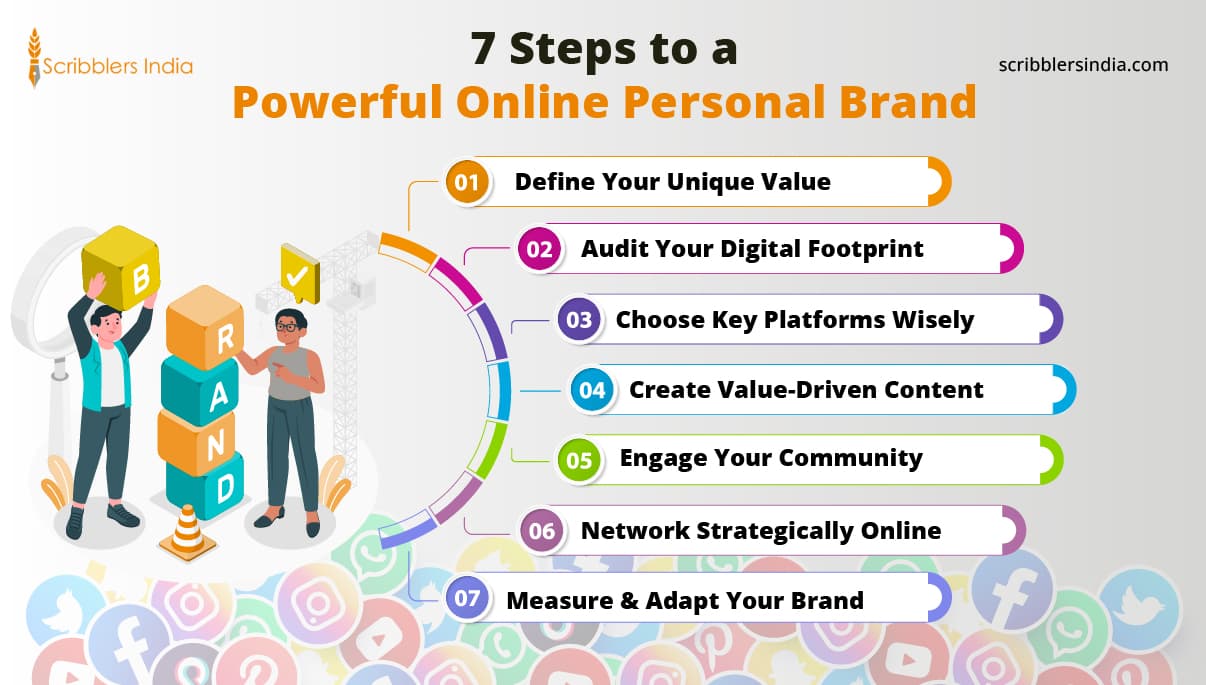
How To Build a Personal Brand Online in 2026?
Building a strong professional reputation online is largely a matter of sequencing. Publishing more content cannot solve unclear positioning, while an impressive profile carries limited weight without credible proof. Expanding across several platforms also creates unnecessary work when the people you need to influence concentrate elsewhere. The practical approach to how to build personal brand online starts with understanding what people can already discover about you. You can then define the reputation you want, strengthen the evidence supporting it, choose appropriate channels, publish useful ideas, build relevant relationships, and improve discoverability across search. This guide on how to build personal brand online focuses on that complete operating system rather than individual platform tactics. If you are still evaluating the broader business or career case, start with our analysis on why personal branding is important. The process below begins once you have decided to invest in your reputation. Key Takeaways Review what search results and profiles currently communicate about your expertise. Choose the audience, expertise territory, and professional association you want remembered. Create one reliable home base that preserves control over professional proof. Prioritize platforms where your audience already evaluates expertise and professional credibility. Place cases, recommendations, research, and qualifications close to important claims. Turn real questions, decisions, research, and lessons into useful content. Keep names, biographies, author pages, and expertise descriptions consistently aligned. Track changes in relevant discovery, relationships, opportunities, and reputation over time. How Should You Audit Your Digital Footprint Before You Build Personal Brand Online? Before you build personal brand online, establish what people can already find and what those results communicate. Any practical approach to how to build personal brand online should begin with search results, major profiles, employer pages, author pages, published work, and prominent third-party mentions. Compare that public footprint with the professional association you want to strengthen. Look for outdated information, conflicting descriptions, weak proof, useful existing assets, and prominent pages that no longer reflect your present role, expertise, audience, or professional direction. What Should a Personal Brand Audit Review? Start by searching for your full professional name and inspect the first several result pages. Then review the assets most likely to influence someone evaluating you for a role, project, partnership, speaking opportunity, media request, investment conversation, or professional recommendation. Audit Area What to Review Common Problem Identity Current name, title, company, and role Prominent profiles conflict Positioning Expertise emphasized across visible assets Each platform tells a different story Biography Current experience and specialization Old career stages remain prominent Proof Work, results, research, recommendations Claims have little visible support Content Subjects repeatedly associated with your name Publishing covers unrelated themes Third-Party Pages Events, publications, podcasts, directories Important information is outdated Prioritize high-visibility inaccuracies rather than trying to clean every historical mention. A dated conference biography that still ranks prominently deserves more attention than an obscure directory listing. The audit should finish with three practical decisions: which assets to keep, which to update, and which to de-emphasize. Useful content, interviews, recommendations, case evidence, speaking videos, or research may already support the reputation you want. Identifying these assets before creating new material is an important part of how to build a personal brand online efficiently as it prevents unnecessary duplication and provides stronger evidence for later profile updates. What Type of Reputation You Need Before Building Personal Brand Online? A useful personal branding strategy starts with the association you want relevant people to make with your name. Understanding how to build personal brand online becomes easier once the audience, expertise territory, contribution, and supporting evidence are clear enough to guide later execution. Positioning should be narrow enough to guide recognition without reducing your career to one skill. Choose the association that should lead now, while your biography, experience, portfolio, and broader content provide additional context after people understand the main professional territory. Who Should Your Personal Brand Influence? Define the people whose decisions your reputation needs to influence. A consultant may prioritize buyers facing one recurring problem, while a founder may need credibility with customers and industry peers. An executive may communicate simultaneously with employees, customers, board members, investors, and professional communities. Audience definitions such as “professionals” or “business leaders” usually provide too little direction. A clearer audience helps determine what proof deserves prominence, which questions your content should answer, where you should publish, and which relationships should receive consistent attention over time. What Expertise Should People Associate With Your Name? Ask what someone should confidently approach you about after encountering your work several times. “Marketing” yields weak recall, while “category positioning for technical B2B companies” provides a more useful anchor for the reputation, guiding profile language, content topics, speaking opportunities, and professional introductions. Once the territory is clear, translate it into a concise positioning idea. Our guide to personal brand statements explains in detail how to write such a statement, while this hub uses it as the strategic source for the broader online reputation system. Where Should Your Online Personal Branding Home Base Live? A strong online personal branding system needs one dependable place where people can understand your position, inspect proof, and take a logical next step. In how to build personal brand online, that home base may be a personal website or strong professional profile, depending on the level of control required. The better decision is not website versus social media. Think in terms of owned and rented presence. Owned assets preserve long-term control, while established platforms provide discovery and network access. Most professionals benefit from combining both without building more infrastructure than they can maintain. A useful home base normally needs three things: a current professional biography, visible evidence of expertise, and a clear next step. LinkedIn can handle these for simpler requirements, while a website is more useful when you need deeper control over proofing, long-form work, or inquiries. Do You Need a Personal Website to Build Personal Brand Online? You do not need a website simply because personal-brand advice recommends one. A site becomes valuable
Building a strong professional reputation online is largely a matter of sequencing. Publishing more content cannot solve unclear positioning, while an impressive profile carries limited weight without credible proof. Expanding across several platforms also creates unnecessary work when the people you need to influence concentrate elsewhere. The practical approach to how to build personal brand online starts with understanding what people can already discover about you. You can then define the reputation you want, strengthen the evidence supporting it, choose appropriate channels, publish useful ideas, build relevant relationships, and improve discoverability across search. This guide on how to build personal brand online focuses on that complete operating system rather than individual platform tactics. If you are still evaluating the broader business or career case, start with our analysis on why personal branding is important. The process below begins once you have decided to invest in your reputation. Key Takeaways Review what search results and profiles currently communicate about your expertise. Choose the audience, expertise territory, and professional association you want remembered. Create one reliable home base that preserves control over professional proof. Prioritize platforms where your audience already evaluates expertise and professional credibility. Place cases, recommendations, research, and qualifications close to important claims. Turn real questions, decisions, research, and lessons into useful content. Keep names, biographies, author pages, and expertise descriptions consistently aligned. Track changes in relevant discovery, relationships, opportunities, and reputation over time. How Should You Audit Your Digital Footprint Before You Build Personal Brand Online? Before you build personal brand online, establish what people can already find and what those results communicate. Any practical approach to how to build personal brand online should begin with search results, major profiles, employer pages, author pages, published work, and prominent third-party mentions. Compare that public footprint with the professional association you want to strengthen. Look for outdated information, conflicting descriptions, weak proof, useful existing assets, and prominent pages that no longer reflect your present role, expertise, audience, or professional direction. What Should a Personal Brand Audit Review? Start by searching for your full professional name and inspect the first several result pages. Then review the assets most likely to influence someone evaluating you for a role, project, partnership, speaking opportunity, media request, investment conversation, or professional recommendation. Audit Area What to Review Common Problem Identity Current name, title, company, and role Prominent profiles conflict Positioning Expertise emphasized across visible assets Each platform tells a different story Biography Current experience and specialization Old career stages remain prominent Proof Work, results, research, recommendations Claims have little visible support Content Subjects repeatedly associated with your name Publishing covers unrelated themes Third-Party Pages Events, publications, podcasts, directories Important information is outdated Prioritize high-visibility inaccuracies rather than trying to clean every historical mention. A dated conference biography that still ranks prominently deserves more attention than an obscure directory listing. The audit should finish with three practical decisions: which assets to keep, which to update, and which to de-emphasize. Useful content, interviews, recommendations, case evidence, speaking videos, or research may already support the reputation you want. Identifying these assets before creating new material is an important part of how to build a personal brand online efficiently as it prevents unnecessary duplication and provides stronger evidence for later profile updates. What Type of Reputation You Need Before Building Personal Brand Online? A useful personal branding strategy starts with the association you want relevant people to make with your name. Understanding how to build personal brand online becomes easier once the audience, expertise territory, contribution, and supporting evidence are clear enough to guide later execution. Positioning should be narrow enough to guide recognition without reducing your career to one skill. Choose the association that should lead now, while your biography, experience, portfolio, and broader content provide additional context after people understand the main professional territory. Who Should Your Personal Brand Influence? Define the people whose decisions your reputation needs to influence. A consultant may prioritize buyers facing one recurring problem, while a founder may need credibility with customers and industry peers. An executive may communicate simultaneously with employees, customers, board members, investors, and professional communities. Audience definitions such as “professionals” or “business leaders” usually provide too little direction. A clearer audience helps determine what proof deserves prominence, which questions your content should answer, where you should publish, and which relationships should receive consistent attention over time. What Expertise Should People Associate With Your Name? Ask what someone should confidently approach you about after encountering your work several times. “Marketing” yields weak recall, while “category positioning for technical B2B companies” provides a more useful anchor for the reputation, guiding profile language, content topics, speaking opportunities, and professional introductions. Once the territory is clear, translate it into a concise positioning idea. Our guide to personal brand statements explains in detail how to write such a statement, while this hub uses it as the strategic source for the broader online reputation system. Where Should Your Online Personal Branding Home Base Live? A strong online personal branding system needs one dependable place where people can understand your position, inspect proof, and take a logical next step. In how to build personal brand online, that home base may be a personal website or strong professional profile, depending on the level of control required. The better decision is not website versus social media. Think in terms of owned and rented presence. Owned assets preserve long-term control, while established platforms provide discovery and network access. Most professionals benefit from combining both without building more infrastructure than they can maintain. A useful home base normally needs three things: a current professional biography, visible evidence of expertise, and a clear next step. LinkedIn can handle these for simpler requirements, while a website is more useful when you need deeper control over proofing, long-form work, or inquiries. Do You Need a Personal Website to Build Personal Brand Online? You do not need a website simply because personal-brand advice recommends one. A site becomes valuable
How Does a LinkedIn Ghostwriting Agency Build Thought Leadership?
A founder can have strong opinions, years of experience, and useful stories without having time to turn them into LinkedIn posts every week. The difficult part is rarely finding something to say. It is capturing those ideas, developing them, and publishing them in a voice people recognize. A LinkedIn ghostwriting agency creates the system around that work. The executive remains the source of expertise while writers handle interviews, research, drafting, editing, and content planning. The strongest engagements preserve the leader’s judgment rather than replace it with generic social content. This distinction has become crucial in 2026. LinkedIn is actively addressing low-effort AI content that sounds polished while offering little original perspective. This guide explains how the process should work, which service model suits different requirements, what you should receive each month, and how to evaluate an agency before signing a retainer. Key Takeaways: A LinkedIn ghostwriting agency turns executive expertise into consistent, publishable professional content. Strong ghostwriting starts with source extraction before writers begin drafting LinkedIn posts. Voice guides should capture thinking patterns, language preferences, examples, and editorial boundaries. Generic AI content makes first-hand experience and clear professional opinions more valuable. Agencies, freelancers, internal writers, and AI-assisted workflows serve different operating requirements. Compare providers through source depth, voice continuity, evidence standards, workflow, and measurement. Monthly deliverables should include source capture, drafts, approvals, planning, and performance review. Measure progress from relevant exposure through conversations, opportunities, and attributable professional outcomes. What Does a LinkedIn Ghostwriting Agency Actually Do? A LinkedIn ghostwriting agency helps founders and executives turn their knowledge into content published under their own names. The work can include positioning, interviews, idea development, research, writing, editing, content planning, and performance reviews. The leader supplies the expertise and retains final control over what becomes public. This is different from sending a writer a topic and asking for ten posts. Professional LinkedIn ghostwriting needs enough context to understand how the executive thinks. Writers need access to opinions, customer observations, industry experience, previous content, and current business priorities. A useful division of responsibilities looks like this: The Executive Should Provide The Ghostwriting Team Can Handle Professional opinions and positions Turning raw ideas into structured posts First-hand experiences Researching supporting context Customer and market observations Developing content angles Examples from actual work Drafting and editing Sensitive-context decisions Formatting and content sequencing Final approval Maintaining the publishing calendar The writer therefore works with existing expertise. They should never manufacture professional positions the executive would not defend in a real conversation. This approach also connects naturally with LinkedIn personal branding. A recognizable public voice is more effective when the profile, content themes, and professional positioning reinforce one another. With the responsibilities clear, the next question is how raw executive knowledge becomes usable content. How Does a LinkedIn Ghostwriting Agency Work? A capable LinkedIn ghostwriting agency should have a repeatable process for collecting ideas and improving them over time. The workflow usually requires more executive input during onboarding. Once the writer understands the voice, recurring source collection and batch approvals can make publishing easier to manage. 1. Define What the Executive Should Be Known For Posting starts after positioning is clear. A LinkedIn ghostwriting agency first identifies the executive’s audience, expertise, business context, and subjects worth owning. It should also define which topics sit outside the intended public position. For example, a cybersecurity founder could build content around enterprise AI security, security operations, and emerging risk. Random leadership advice would add activity without strengthening that association. A broader personal branding strategy can help establish these positioning decisions before regular LinkedIn publishing begins. 2. Capture the Executive’s Raw Knowledge Interviews are among the most useful sources because executives often explain ideas better in conversation than in a blank document. The writer can ask about recent customer discussions, decisions, failed assumptions, market shifts, internal debates, and professional opinions. Existing podcasts, presentations, articles, emails, sales calls, and conference appearances can add further context. Published 2026 agency processes increasingly use detailed voice interviews during onboarding. Some describe initial voice-calibration sessions lasting around 60 to 90 minutes. The duration will vary. The important point is depth. A five-question form rarely captures enough context for sustained executive ghostwriting. 3. Build a Working Voice Guide Voice capture extends beyond labels such as “professional,” “friendly,” or “authoritative.” A useful guide records how the executive explains ideas. It should capture preferred vocabulary, sentence patterns, recurring beliefs, examples, subjects to be avoided, and phrases the person would never use. The guide should evolve as new drafts receive feedback. If every post requires the executive to rewrite entire sections, the system has not learned enough from previous reviews. 4. Develop Ideas Before Drafting Posts Strong source material can produce several angles. One customer conversation might lead to a market observation. A related operating decision could become a lesson for founders. The same underlying idea may later support an article or newsletter. The agency should therefore maintain an idea bank rather than treating each publication date as a fresh search for a topic. Each idea also needs an editorial purpose. Some posts can explain expertise. Others can share a point of view or make a complex subject easier to understand. 5. Draft, Review, and Learn From Feedback The first drafts establish the initial voice match. Executive feedback then becomes new information for the writer. Comments such as “I would never say this,” “this example needs more context,” or “my position is stronger than this” should be included in the voice guide. Batch reviews can reduce repetitive approvals. The executive still retains final decision-making authority over what appears under their name. Over several cycles, the goal is simple: the writer understands more context, while the executive needs fewer corrections. This learning loop is becoming especially valuable as LinkedIn fills with easily generated content. Why Has LinkedIn Ghostwriting Become Harder in an AI-Saturated Feed? LinkedIn is actively trying to reduce low-effort content that lacks real perspective. In May 2026, LinkedIn clarified its stance: AI can support writing, but
A founder can have strong opinions, years of experience, and useful stories without having time to turn them into LinkedIn posts every week. The difficult part is rarely finding something to say. It is capturing those ideas, developing them, and publishing them in a voice people recognize. A LinkedIn ghostwriting agency creates the system around that work. The executive remains the source of expertise while writers handle interviews, research, drafting, editing, and content planning. The strongest engagements preserve the leader’s judgment rather than replace it with generic social content. This distinction has become crucial in 2026. LinkedIn is actively addressing low-effort AI content that sounds polished while offering little original perspective. This guide explains how the process should work, which service model suits different requirements, what you should receive each month, and how to evaluate an agency before signing a retainer. Key Takeaways: A LinkedIn ghostwriting agency turns executive expertise into consistent, publishable professional content. Strong ghostwriting starts with source extraction before writers begin drafting LinkedIn posts. Voice guides should capture thinking patterns, language preferences, examples, and editorial boundaries. Generic AI content makes first-hand experience and clear professional opinions more valuable. Agencies, freelancers, internal writers, and AI-assisted workflows serve different operating requirements. Compare providers through source depth, voice continuity, evidence standards, workflow, and measurement. Monthly deliverables should include source capture, drafts, approvals, planning, and performance review. Measure progress from relevant exposure through conversations, opportunities, and attributable professional outcomes. What Does a LinkedIn Ghostwriting Agency Actually Do? A LinkedIn ghostwriting agency helps founders and executives turn their knowledge into content published under their own names. The work can include positioning, interviews, idea development, research, writing, editing, content planning, and performance reviews. The leader supplies the expertise and retains final control over what becomes public. This is different from sending a writer a topic and asking for ten posts. Professional LinkedIn ghostwriting needs enough context to understand how the executive thinks. Writers need access to opinions, customer observations, industry experience, previous content, and current business priorities. A useful division of responsibilities looks like this: The Executive Should Provide The Ghostwriting Team Can Handle Professional opinions and positions Turning raw ideas into structured posts First-hand experiences Researching supporting context Customer and market observations Developing content angles Examples from actual work Drafting and editing Sensitive-context decisions Formatting and content sequencing Final approval Maintaining the publishing calendar The writer therefore works with existing expertise. They should never manufacture professional positions the executive would not defend in a real conversation. This approach also connects naturally with LinkedIn personal branding. A recognizable public voice is more effective when the profile, content themes, and professional positioning reinforce one another. With the responsibilities clear, the next question is how raw executive knowledge becomes usable content. How Does a LinkedIn Ghostwriting Agency Work? A capable LinkedIn ghostwriting agency should have a repeatable process for collecting ideas and improving them over time. The workflow usually requires more executive input during onboarding. Once the writer understands the voice, recurring source collection and batch approvals can make publishing easier to manage. 1. Define What the Executive Should Be Known For Posting starts after positioning is clear. A LinkedIn ghostwriting agency first identifies the executive’s audience, expertise, business context, and subjects worth owning. It should also define which topics sit outside the intended public position. For example, a cybersecurity founder could build content around enterprise AI security, security operations, and emerging risk. Random leadership advice would add activity without strengthening that association. A broader personal branding strategy can help establish these positioning decisions before regular LinkedIn publishing begins. 2. Capture the Executive’s Raw Knowledge Interviews are among the most useful sources because executives often explain ideas better in conversation than in a blank document. The writer can ask about recent customer discussions, decisions, failed assumptions, market shifts, internal debates, and professional opinions. Existing podcasts, presentations, articles, emails, sales calls, and conference appearances can add further context. Published 2026 agency processes increasingly use detailed voice interviews during onboarding. Some describe initial voice-calibration sessions lasting around 60 to 90 minutes. The duration will vary. The important point is depth. A five-question form rarely captures enough context for sustained executive ghostwriting. 3. Build a Working Voice Guide Voice capture extends beyond labels such as “professional,” “friendly,” or “authoritative.” A useful guide records how the executive explains ideas. It should capture preferred vocabulary, sentence patterns, recurring beliefs, examples, subjects to be avoided, and phrases the person would never use. The guide should evolve as new drafts receive feedback. If every post requires the executive to rewrite entire sections, the system has not learned enough from previous reviews. 4. Develop Ideas Before Drafting Posts Strong source material can produce several angles. One customer conversation might lead to a market observation. A related operating decision could become a lesson for founders. The same underlying idea may later support an article or newsletter. The agency should therefore maintain an idea bank rather than treating each publication date as a fresh search for a topic. Each idea also needs an editorial purpose. Some posts can explain expertise. Others can share a point of view or make a complex subject easier to understand. 5. Draft, Review, and Learn From Feedback The first drafts establish the initial voice match. Executive feedback then becomes new information for the writer. Comments such as “I would never say this,” “this example needs more context,” or “my position is stronger than this” should be included in the voice guide. Batch reviews can reduce repetitive approvals. The executive still retains final decision-making authority over what appears under their name. Over several cycles, the goal is simple: the writer understands more context, while the executive needs fewer corrections. This learning loop is becoming especially valuable as LinkedIn fills with easily generated content. Why Has LinkedIn Ghostwriting Become Harder in an AI-Saturated Feed? LinkedIn is actively trying to reduce low-effort content that lacks real perspective. In May 2026, LinkedIn clarified its stance: AI can support writing, but

10 Best Ghostwriting Agencies in India for 2026 (Updated August 2026)
Choosing the best ghostwriting agencies in India becomes difficult once you look beyond similar service descriptions. An executive building thought leadership has different requirements from an entrepreneur writing a business book. A memoir also requires a different working relationship from a recurring LinkedIn program. The right comparison therefore starts with fit. You need to understand who supplies the ideas, how the writer captures your voice, who handles research, and how revisions work. Ownership terms, editorial oversight, confidentiality, and continuity also deserve careful review. This guide compares 10 best ghostwriting agencies in India based on their stated specializations, working processes, pricing visibility, and likely client fit. Key Takeaways: The best ghostwriting agency depends on format, audience, expertise, and collaboration needs. Scribblers India suits founders seeking executive ghostwriting, thought leadership, and LinkedIn continuity. Write Right and Estorytellers focus strongly on developing complete books and manuscripts. Ghostwriting India offers structured, voice-led processes for long-form non-fiction projects and memoirs. GhostwritersIndia publishes indicative rates, making initial cost comparison easier during shortlisting. IIP Books publishes detailed ghostwriting pricing for human and AI-assisted workflows online. Orange Publishers serves authors seeking ghostwriting, as well as a range of publishing support services. Public pricing helps comparison, although scope, interviews, editing, and rights need review. Compare agencies through evidence, writer fit, ownership terms, process, and handover quality. Provider information last verified: August 2026. Pricing, services, and delivery models can change after publication. How Did We Evaluate the Best Ghostwriting Agencies in India? We reviewed providers with active ghostwriting or professional book-writing services visible on their websites in August 2026. The comparison focuses on what a prospective client can verify publicly. We avoided numerical quality scores because websites rarely provide enough comparable evidence to support precise rankings. Scribblers India publishes this guide and appears in the comparison. Readers should therefore consider our assessment of Scribblers India commercially interested. We apply the same public-information criteria to each provider and identify suitable use cases instead of making unsupported judgments about competitors. The evaluation uses seven areas: Evaluation Criterion What We Reviewed Ghostwriting specialization The content types, genres, and client requirements the provider publicly supports. Voice-capture process Interviews, source materials, voice profiling, feedback, and other stated methods. Domain or genre fit The subject areas or writing categories the agency explicitly serves. Editorial workflow Outlining, research, drafting, editing, revisions, approvals, and project management. Confidentiality and ownership Published information about NDAs, copyright, authorship, and content rights. Public proof Visible processes, testimonials, case examples, portfolios, or service documentation. Pricing transparency Published rates, indicative prices, package information, or custom-quote requirements. A provider can perform well without publishing every detail online. Ghostwriting often requires discretion, so public portfolios can remain limited. The strongest buying decision combines online research with direct questions about your project. This distinction becomes clearer when the agencies are compared side by side. Which Are the 10 Best Ghostwriting Agencies in India for 2026? The current Indian market includes executive-content specialists, book-focused agencies, publishing-led providers, and broader writing companies. Their service models overlap in places, although the underlying workflows can differ considerably. Your shortlist should therefore follow the type of intellectual property you want to create and maintain. Agency Best Fit Based on Public Offering Core Ghostwriting Focus Public Pricing Visibility Scribblers India Founders, CXOs, consultants, B2B experts Executive thought leadership, LinkedIn, op-eds, newsletters, speeches Custom Estorytellers Authors seeking complete book development Fiction, non-fiction, business books, memoirs Custom Ghostwriter.in Non-fiction authors wanting visible reference pricing Non-fiction books, long-form writing, blogs Published rate card GhostwritersIndia Authors seeking book writing with editing support Fiction, non-fiction, self-help, memoirs, articles Indicative rates published Ghostwriting India Authors, executives, entrepreneurs Business books, non-fiction, memoirs, self-help Custom IIP Books Book authors seeking multilingual and publishing support Academic and non-academic books Detailed rates published Kalam Kagaz Authors and businesses needing varied written formats Books, ebooks, memoirs, blogs, articles Custom Orange Publishers Authors combining writing with publishing support Fiction, non-fiction, autobiography, business books Custom Taletel Authors seeking writing, memoir, and ebook support Books, memoirs, ebooks, fiction, non-fiction Custom Write Right Authors needing a structured manuscript-development process Business books, fiction, non-fiction, memoirs Scope-based quote Our analysis is based on each provider’s own current service information rather than third-party descriptions. The next step is understanding what those differences mean during an actual engagement. 1. Scribblers India Scribblers India is a content strategy and ghostwriting agency that works primarily with founders, CXOs, consultants, and B2B subject-matter experts. Its ghostwriting work extends beyond standalone writing assignments to executive thought leadership, LinkedIn content, articles, newsletters, speeches, and other authority-building formats. As one of the best ghostwriting agencies in India, it combines voice capture with research, editorial planning, personal branding, AEO, and GEO considerations. This makes its model more relevant for leaders building an ongoing body of professional content than authors seeking a conventional fiction or memoir-writing service. Best for: Founders, CXOs, consultants, and B2B experts who need recurring executive content across LinkedIn, articles, newsletters, speeches, and thought leadership formats while preserving one consistent professional voice. Primary services: Executive ghostwriting draws on interviews, source material, and existing communication to create content that retains the leader’s natural voice. With LinkedIn ghostwriting, executive expertise and timely ideas are developed into posts for relevant professional audiences. Original viewpoints can be expanded through thought leadership into articles, op-eds, newsletters, reports, and other authority-building formats. Speeches and long-form content give leaders more space to explain complex ideas across professional and industry settings. Personal branding brings these efforts together around positioning, discoverability, and a coherent professional identity. How the process works: Projects begin with voice calibration using interviews, previous content, recordings, and other source material. The team then develops topics, drafts, and editorial direction around the executive’s priorities. Feedback strengthens voice consistency over time. Pricing is customized according to format, volume, research depth, and engagement scope. Notable strength: Scribblers India combines executive ghostwriting with thought leadership, personal branding, AEO, and GEO strategy. This supports leaders building a sustained body of professional content across multiple channels. 2. Estorytellers Estorytellers is a book-focused writing
Choosing the best ghostwriting agencies in India becomes difficult once you look beyond similar service descriptions. An executive building thought leadership has different requirements from an entrepreneur writing a business book. A memoir also requires a different working relationship from a recurring LinkedIn program. The right comparison therefore starts with fit. You need to understand who supplies the ideas, how the writer captures your voice, who handles research, and how revisions work. Ownership terms, editorial oversight, confidentiality, and continuity also deserve careful review. This guide compares 10 best ghostwriting agencies in India based on their stated specializations, working processes, pricing visibility, and likely client fit. Key Takeaways: The best ghostwriting agency depends on format, audience, expertise, and collaboration needs. Scribblers India suits founders seeking executive ghostwriting, thought leadership, and LinkedIn continuity. Write Right and Estorytellers focus strongly on developing complete books and manuscripts. Ghostwriting India offers structured, voice-led processes for long-form non-fiction projects and memoirs. GhostwritersIndia publishes indicative rates, making initial cost comparison easier during shortlisting. IIP Books publishes detailed ghostwriting pricing for human and AI-assisted workflows online. Orange Publishers serves authors seeking ghostwriting, as well as a range of publishing support services. Public pricing helps comparison, although scope, interviews, editing, and rights need review. Compare agencies through evidence, writer fit, ownership terms, process, and handover quality. Provider information last verified: August 2026. Pricing, services, and delivery models can change after publication. How Did We Evaluate the Best Ghostwriting Agencies in India? We reviewed providers with active ghostwriting or professional book-writing services visible on their websites in August 2026. The comparison focuses on what a prospective client can verify publicly. We avoided numerical quality scores because websites rarely provide enough comparable evidence to support precise rankings. Scribblers India publishes this guide and appears in the comparison. Readers should therefore consider our assessment of Scribblers India commercially interested. We apply the same public-information criteria to each provider and identify suitable use cases instead of making unsupported judgments about competitors. The evaluation uses seven areas: Evaluation Criterion What We Reviewed Ghostwriting specialization The content types, genres, and client requirements the provider publicly supports. Voice-capture process Interviews, source materials, voice profiling, feedback, and other stated methods. Domain or genre fit The subject areas or writing categories the agency explicitly serves. Editorial workflow Outlining, research, drafting, editing, revisions, approvals, and project management. Confidentiality and ownership Published information about NDAs, copyright, authorship, and content rights. Public proof Visible processes, testimonials, case examples, portfolios, or service documentation. Pricing transparency Published rates, indicative prices, package information, or custom-quote requirements. A provider can perform well without publishing every detail online. Ghostwriting often requires discretion, so public portfolios can remain limited. The strongest buying decision combines online research with direct questions about your project. This distinction becomes clearer when the agencies are compared side by side. Which Are the 10 Best Ghostwriting Agencies in India for 2026? The current Indian market includes executive-content specialists, book-focused agencies, publishing-led providers, and broader writing companies. Their service models overlap in places, although the underlying workflows can differ considerably. Your shortlist should therefore follow the type of intellectual property you want to create and maintain. Agency Best Fit Based on Public Offering Core Ghostwriting Focus Public Pricing Visibility Scribblers India Founders, CXOs, consultants, B2B experts Executive thought leadership, LinkedIn, op-eds, newsletters, speeches Custom Estorytellers Authors seeking complete book development Fiction, non-fiction, business books, memoirs Custom Ghostwriter.in Non-fiction authors wanting visible reference pricing Non-fiction books, long-form writing, blogs Published rate card GhostwritersIndia Authors seeking book writing with editing support Fiction, non-fiction, self-help, memoirs, articles Indicative rates published Ghostwriting India Authors, executives, entrepreneurs Business books, non-fiction, memoirs, self-help Custom IIP Books Book authors seeking multilingual and publishing support Academic and non-academic books Detailed rates published Kalam Kagaz Authors and businesses needing varied written formats Books, ebooks, memoirs, blogs, articles Custom Orange Publishers Authors combining writing with publishing support Fiction, non-fiction, autobiography, business books Custom Taletel Authors seeking writing, memoir, and ebook support Books, memoirs, ebooks, fiction, non-fiction Custom Write Right Authors needing a structured manuscript-development process Business books, fiction, non-fiction, memoirs Scope-based quote Our analysis is based on each provider’s own current service information rather than third-party descriptions. The next step is understanding what those differences mean during an actual engagement. 1. Scribblers India Scribblers India is a content strategy and ghostwriting agency that works primarily with founders, CXOs, consultants, and B2B subject-matter experts. Its ghostwriting work extends beyond standalone writing assignments to executive thought leadership, LinkedIn content, articles, newsletters, speeches, and other authority-building formats. As one of the best ghostwriting agencies in India, it combines voice capture with research, editorial planning, personal branding, AEO, and GEO considerations. This makes its model more relevant for leaders building an ongoing body of professional content than authors seeking a conventional fiction or memoir-writing service. Best for: Founders, CXOs, consultants, and B2B experts who need recurring executive content across LinkedIn, articles, newsletters, speeches, and thought leadership formats while preserving one consistent professional voice. Primary services: Executive ghostwriting draws on interviews, source material, and existing communication to create content that retains the leader’s natural voice. With LinkedIn ghostwriting, executive expertise and timely ideas are developed into posts for relevant professional audiences. Original viewpoints can be expanded through thought leadership into articles, op-eds, newsletters, reports, and other authority-building formats. Speeches and long-form content give leaders more space to explain complex ideas across professional and industry settings. Personal branding brings these efforts together around positioning, discoverability, and a coherent professional identity. How the process works: Projects begin with voice calibration using interviews, previous content, recordings, and other source material. The team then develops topics, drafts, and editorial direction around the executive’s priorities. Feedback strengthens voice consistency over time. Pricing is customized according to format, volume, research depth, and engagement scope. Notable strength: Scribblers India combines executive ghostwriting with thought leadership, personal branding, AEO, and GEO strategy. This supports leaders building a sustained body of professional content across multiple channels. 2. Estorytellers Estorytellers is a book-focused writing

Why Is Personal Branding Important? A Decision Guide for Professionals and Founders
A promotion, funding round, consulting launch, career move, or public leadership role can change the extent to which your professional reputation influences professional decisions. That is when the question why is personal branding important becomes practical. People may search your name, review your work, read your ideas, and compare your public profile with the expertise or role you represent. Personal branding helps make that evaluation more consistent. It gives people clearer context about what you know, the experience that supports your expertise, and the professional value you can bring before they have worked with you directly. The resulting benefits of personal branding can range from greater recognition of expertise and discoverability to more relevant professional conversations and opportunities. This blog focuses on the decision that comes before those outcomes. It explains when personal branding deserves greater investment, how it creates value, and which situations may require other priorities first. Key Takeaways: Personal branding becomes valuable when professional decisions increasingly depend on public reputation. Clear positioning helps audiences connect your name with relevant expertise and evidence. Career transitions increase the value of searchable professional reputation during evaluation. Founders benefit when market education depends on their specialist knowledge and perspective. Executives need stronger governance as visibility begins representing the wider organization publicly. Consultants gain more from personal branding when expertise influences selection and trust. Personal branding should follow stronger fundamentals when the underlying offer remains unclear. A simple diagnostic can show whether reputation deserves more investment right now. Why Is Personal Branding Important? Personal branding helps other people understand what you are known for, where your expertise comes from, and why your perspective deserves attention. It creates a more coherent professional signal across search results, profiles, published work, conversations, recommendations, and public appearances. The simplest answer to why is personal branding important is that professional reputation already exists, even when you leave it unmanaged. Personal branding gives you more influence over which parts of your experience, expertise, and point of view become easiest for others to discover and remember. Harvard Business School Online describes personal branding as defining what you want to communicate and expressing it effectively. It also treats audience perception as central to understanding a personal brand. The value comes from four mechanisms: Reputation clarity: People can connect your name with a specific area of expertise. Discoverability: Relevant information about you is easier to find when someone searches or evaluates you. Evidence: Your work, thinking, experience, and third-party proof make professional claims easier to assess. Context: Your network and published ideas help audiences understand how your expertise applies to real problems. These mechanisms can support many outcomes, while actual results still depend on expertise, audience fit, timing, and follow-through. That distinction is central to understanding why is personal branding important without turning personal branding into a promise of professional success Branding demands commitment; commitment to continual re-invention; striking chords with people to stir their emotions; and commitment to imagination. It is easy to be cynical about such things, much harder to be successful. ~ Sir Richard Branson When Does Personal Branding Become Strategically Crucial? The need for personal branding changes with the role you occupy and the decisions other people make about you. A private specialist with stable internal responsibilities may need little public visibility. A founder educating a new market may depend heavily on it. Our personal branding case study for a study-abroad consultant shows how a more deliberate visibility strategy was applied in practice. The question why is personal branding important becomes much easier to answer when you examine the professional situation and the decisions shaped by reputation. During a Career Transition A career move creates an information gap. Recruiters, hiring managers, peers, or future collaborators need to understand where your experience fits next. An outdated profile can leave your previous role defining you long after your expertise has changed. For someone changing industries, moving into leadership, returning after a break, or pursuing board roles, why is personal branding important has a practical answer. A clearer public record helps connect earlier experience with the direction you now want to pursue. A career transition rarely requires daily publishing. Relevant case evidence, updated professional profiles, thoughtful commentary, and visible work can be enough to make the transition easier to interpret. When a Founder Has to Educate the Market Some businesses enter categories buyers already understand. Others need the founder to explain an emerging problem, challenge an established assumption, or translate technical change into business language. In that situation, the answer to the question ‘why is personal branding important’ is closely tied to category education. The founder can become a recognizable source of explanation through operating experience, customer questions, product decisions, and informed market observations. This visibility can help audiences understand the category while the company builds recognition around its own capabilities and evidence. The balance becomes more important as the business grows. The founder can continue shaping market conversations, while trust gradually extends to the wider organization. Deciding how much visibility to give to each requires a clear understanding of personal branding vs. company branding at different stages of growth. When an Executive Represents More Than Personal Expertise A senior leader may communicate with employees, customers, investors, partners, regulators, industry peers, and media audiences. Their public presence therefore carries organizational context alongside individual expertise. For senior leaders, understanding why is personal branding important also involves managing that wider responsibility. Expertise needs enough visibility to establish a recognizable professional position, while company claims, sensitive subjects, role boundaries, and public commentary may require more deliberate review. These responsibilities become particularly important after a promotion, a CEO appointment, a board role, or a company transition. At this level, executive branding adds considerations of stakeholder alignment, governance, and reputation risk to the broader personal branding process. When Independent Expertise Drives Selection Consultants, advisors, coaches, fractional leaders, speakers, analysts, and other independent experts are often evaluated before a formal sales conversation begins. Buyers may review articles, presentations, testimonials, frameworks, prior work, or mutual connections before making contact. Here,
A promotion, funding round, consulting launch, career move, or public leadership role can change the extent to which your professional reputation influences professional decisions. That is when the question why is personal branding important becomes practical. People may search your name, review your work, read your ideas, and compare your public profile with the expertise or role you represent. Personal branding helps make that evaluation more consistent. It gives people clearer context about what you know, the experience that supports your expertise, and the professional value you can bring before they have worked with you directly. The resulting benefits of personal branding can range from greater recognition of expertise and discoverability to more relevant professional conversations and opportunities. This blog focuses on the decision that comes before those outcomes. It explains when personal branding deserves greater investment, how it creates value, and which situations may require other priorities first. Key Takeaways: Personal branding becomes valuable when professional decisions increasingly depend on public reputation. Clear positioning helps audiences connect your name with relevant expertise and evidence. Career transitions increase the value of searchable professional reputation during evaluation. Founders benefit when market education depends on their specialist knowledge and perspective. Executives need stronger governance as visibility begins representing the wider organization publicly. Consultants gain more from personal branding when expertise influences selection and trust. Personal branding should follow stronger fundamentals when the underlying offer remains unclear. A simple diagnostic can show whether reputation deserves more investment right now. Why Is Personal Branding Important? Personal branding helps other people understand what you are known for, where your expertise comes from, and why your perspective deserves attention. It creates a more coherent professional signal across search results, profiles, published work, conversations, recommendations, and public appearances. The simplest answer to why is personal branding important is that professional reputation already exists, even when you leave it unmanaged. Personal branding gives you more influence over which parts of your experience, expertise, and point of view become easiest for others to discover and remember. Harvard Business School Online describes personal branding as defining what you want to communicate and expressing it effectively. It also treats audience perception as central to understanding a personal brand. The value comes from four mechanisms: Reputation clarity: People can connect your name with a specific area of expertise. Discoverability: Relevant information about you is easier to find when someone searches or evaluates you. Evidence: Your work, thinking, experience, and third-party proof make professional claims easier to assess. Context: Your network and published ideas help audiences understand how your expertise applies to real problems. These mechanisms can support many outcomes, while actual results still depend on expertise, audience fit, timing, and follow-through. That distinction is central to understanding why is personal branding important without turning personal branding into a promise of professional success Branding demands commitment; commitment to continual re-invention; striking chords with people to stir their emotions; and commitment to imagination. It is easy to be cynical about such things, much harder to be successful. ~ Sir Richard Branson When Does Personal Branding Become Strategically Crucial? The need for personal branding changes with the role you occupy and the decisions other people make about you. A private specialist with stable internal responsibilities may need little public visibility. A founder educating a new market may depend heavily on it. Our personal branding case study for a study-abroad consultant shows how a more deliberate visibility strategy was applied in practice. The question why is personal branding important becomes much easier to answer when you examine the professional situation and the decisions shaped by reputation. During a Career Transition A career move creates an information gap. Recruiters, hiring managers, peers, or future collaborators need to understand where your experience fits next. An outdated profile can leave your previous role defining you long after your expertise has changed. For someone changing industries, moving into leadership, returning after a break, or pursuing board roles, why is personal branding important has a practical answer. A clearer public record helps connect earlier experience with the direction you now want to pursue. A career transition rarely requires daily publishing. Relevant case evidence, updated professional profiles, thoughtful commentary, and visible work can be enough to make the transition easier to interpret. When a Founder Has to Educate the Market Some businesses enter categories buyers already understand. Others need the founder to explain an emerging problem, challenge an established assumption, or translate technical change into business language. In that situation, the answer to the question ‘why is personal branding important’ is closely tied to category education. The founder can become a recognizable source of explanation through operating experience, customer questions, product decisions, and informed market observations. This visibility can help audiences understand the category while the company builds recognition around its own capabilities and evidence. The balance becomes more important as the business grows. The founder can continue shaping market conversations, while trust gradually extends to the wider organization. Deciding how much visibility to give to each requires a clear understanding of personal branding vs. company branding at different stages of growth. When an Executive Represents More Than Personal Expertise A senior leader may communicate with employees, customers, investors, partners, regulators, industry peers, and media audiences. Their public presence therefore carries organizational context alongside individual expertise. For senior leaders, understanding why is personal branding important also involves managing that wider responsibility. Expertise needs enough visibility to establish a recognizable professional position, while company claims, sensitive subjects, role boundaries, and public commentary may require more deliberate review. These responsibilities become particularly important after a promotion, a CEO appointment, a board role, or a company transition. At this level, executive branding adds considerations of stakeholder alignment, governance, and reputation risk to the broader personal branding process. When Independent Expertise Drives Selection Consultants, advisors, coaches, fractional leaders, speakers, analysts, and other independent experts are often evaluated before a formal sales conversation begins. Buyers may review articles, presentations, testimonials, frameworks, prior work, or mutual connections before making contact. Here,