
Thought Leadership Posts
How Do You Measure Personal Branding ROI Accurately?
A LinkedIn post can reach 100,000 people without generating one relevant opportunity. Another article may reach a much smaller audience and lead to a board introduction, a consulting inquiry, a speaking invitation, or a qualified sales conversation. Both results have value, although they belong to different stages of measurement. That distinction sits at the center of personal branding ROI. Reach, audience quality, authority, conversations, opportunities, and financial outcomes should not be grouped into a single return metric. Doing so can make performance reports appear stronger while making future investment decisions considerably less reliable. A useful measurement system starts with three questions: What are you investing? What professional outcome should change? How confidently can that change relate to the personal brand? The framework below answers those questions through cost calculation, attribution rules, worked examples, and practical reporting. Key Takeaways Choose personal branding metrics only after deciding what professional outcome should improve. Treat reach and search visibility as indicators, rather than financial ROI. Include agency fees, production, tools, distribution, and professional time consistently. Separate direct, assisted, influenced, and qualitative outcomes before assigning financial value. Use self-reported attribution to better identify offline and cross-platform discovery paths. Financial ROI requires attributable monetary value and defensible investment costs. Track operating signals monthly and evaluate meaningful outcomes over longer periods. Reputation influences some decisions that analytics cannot fully observe or isolate. What Does Personal Branding ROI Measure? Personal branding ROI compares the value created by a professional reputation program with the resources invested in building it. Financial ROI can be calculated when monetary outcomes are defensibly attributable. Wider professional value needs separate measures when reputation influences decisions without immediately creating a financial transaction. The standard financial formula remains useful: ROI (%) = (Attributed Financial Value − Total Investment) ÷ Total Investment × 100. The arithmetic is simple. The difficult part is deciding which outcomes deserve monetary value and how much credit the personal brand should receive. A follower, profile visit, search appearance, comment, or speaking invitation does not have an automatic financial value. Each belongs to a different stage of the reputation journey, so return on investment personal branding analysis should separate the following layers: Measurement Layer What It Answers Examples Visibility Are relevant people encountering you? Impressions, searches, profile appearances Audience Quality Are the right people seeing you? Companies, roles, industries, seniority Authority Is your expertise receiving meaningful response? Saves, citations, media or speaking requests Conversation Is reputation creating professional interaction? DMs, replies, introductions, calls Opportunity Are conversations creating valuable possibilities? Leads, interviews, partnerships, board discussions Financial Outcome Has attributable monetary value been created? Revenue, fees, retained business LinkedIn currently provides members with profile appearances and Search Appearances information, including available context such as the companies and job titles associated with people finding them. These signals can help assess professional discovery and audience relevance, although they remain upstream of financial return. What Should Count as the Cost of Personal Branding? To measure personal branding ROI accurately, calculate more than the agency or freelancer invoice. The real investment can include content production, specialist tools, paid distribution, website work, and the professional’s own time. Missing significant inputs artificially lowers the denominator and overstates the eventual return. Here is a useful model you can refer to: Total Investment = External Professional Spend + Production and Tools + Paid Distribution + Professional Time Apply the same cost method across reporting periods so changes in ROI reflect actual performance rather than a different accounting approach. Investment Category Examples How to Treat It Professional Support Strategy, ghostwriting, design, video, PR Include agreed fees Production and Tools Hosting, analytics, software, research tools Allocate relevant program cost Paid Distribution Sponsored posts, event promotion, media amplification Keep separate from earned reach Professional Time Interviews, reviews, events, networking Track hours or apply agreed rate Additional Assets Photography, websites, research, reports Include when created for the program Professional time needs particular care. A founder who spends ten hours each month discussing ideas, reviewing content, attending events, and networking has contributed a meaningful resource. Businesses can assign an agreed opportunity-cost rate where financial analysis requires it, while simpler programs can record those hours separately. If you are still establishing the investment side of the equation, our personal branding services cost guide explains how strategy, ghostwriting, visual production, senior involvement, websites, PR, and other scope variables affect the cost of a professional branding program. Which Personal Branding Metrics Should You Track? The right personal branding metrics depend on the job the reputation is expected to perform. A consultant looking for qualified inquiries needs a different scorecard from an executive building board visibility or a professional preparing for a career move. Start with the objective and work backward. This prevents one of the most common measurement errors: reporting the metrics that are easiest to collect rather than those most closely tied to the desired outcome. A smaller, more relevant audience can create greater professional value than a large audience that is not relevant to the objective. Primary Goal Leading Indicators Outcome Indicators Founder Demand Generation Relevant reach, buyer engagement, site visits Qualified inquiries, influenced pipeline Consulting Growth Case activity, referrals, target-audience engagement Calls, proposals, attributable clients Executive Visibility Stakeholder discovery, media interest Speaking, board, industry opportunities Career Mobility Search appearances, recruiter activity Interviews, role conversations, offers Speaking or Advisory Work Content citations, invitations, expert response Paid engagements, advisory mandates Thought Leadership Saves, citations, expert engagement Media, partnerships, category influence What Is the Difference Between Leading and Lagging Personal Branding Metrics? Leading indicators show whether the reputation system is moving in the intended direction. Visibility, search appearances, relevant profile visits, content saves, website traffic, and target-audience engagement help teams understand early movement before a meaningful professional opportunity appears. Lagging indicators sit closer to the intended result. Qualified inquiries, speaking invitations, interviews, proposals, partnerships, board conversations, and attributable revenue provide stronger evidence that reputation has influenced a real decision. They usually take longer to accumulate and therefore deserve a longer reporting window. Authority belongs between these
A LinkedIn post can reach 100,000 people without generating one relevant opportunity. Another article may reach a much smaller audience and lead to a board introduction, a consulting inquiry, a speaking invitation, or a qualified sales conversation. Both results have value, although they belong to different stages of measurement. That distinction sits at the center of personal branding ROI. Reach, audience quality, authority, conversations, opportunities, and financial outcomes should not be grouped into a single return metric. Doing so can make performance reports appear stronger while making future investment decisions considerably less reliable. A useful measurement system starts with three questions: What are you investing? What professional outcome should change? How confidently can that change relate to the personal brand? The framework below answers those questions through cost calculation, attribution rules, worked examples, and practical reporting. Key Takeaways Choose personal branding metrics only after deciding what professional outcome should improve. Treat reach and search visibility as indicators, rather than financial ROI. Include agency fees, production, tools, distribution, and professional time consistently. Separate direct, assisted, influenced, and qualitative outcomes before assigning financial value. Use self-reported attribution to better identify offline and cross-platform discovery paths. Financial ROI requires attributable monetary value and defensible investment costs. Track operating signals monthly and evaluate meaningful outcomes over longer periods. Reputation influences some decisions that analytics cannot fully observe or isolate. What Does Personal Branding ROI Measure? Personal branding ROI compares the value created by a professional reputation program with the resources invested in building it. Financial ROI can be calculated when monetary outcomes are defensibly attributable. Wider professional value needs separate measures when reputation influences decisions without immediately creating a financial transaction. The standard financial formula remains useful: ROI (%) = (Attributed Financial Value − Total Investment) ÷ Total Investment × 100. The arithmetic is simple. The difficult part is deciding which outcomes deserve monetary value and how much credit the personal brand should receive. A follower, profile visit, search appearance, comment, or speaking invitation does not have an automatic financial value. Each belongs to a different stage of the reputation journey, so return on investment personal branding analysis should separate the following layers: Measurement Layer What It Answers Examples Visibility Are relevant people encountering you? Impressions, searches, profile appearances Audience Quality Are the right people seeing you? Companies, roles, industries, seniority Authority Is your expertise receiving meaningful response? Saves, citations, media or speaking requests Conversation Is reputation creating professional interaction? DMs, replies, introductions, calls Opportunity Are conversations creating valuable possibilities? Leads, interviews, partnerships, board discussions Financial Outcome Has attributable monetary value been created? Revenue, fees, retained business LinkedIn currently provides members with profile appearances and Search Appearances information, including available context such as the companies and job titles associated with people finding them. These signals can help assess professional discovery and audience relevance, although they remain upstream of financial return. What Should Count as the Cost of Personal Branding? To measure personal branding ROI accurately, calculate more than the agency or freelancer invoice. The real investment can include content production, specialist tools, paid distribution, website work, and the professional’s own time. Missing significant inputs artificially lowers the denominator and overstates the eventual return. Here is a useful model you can refer to: Total Investment = External Professional Spend + Production and Tools + Paid Distribution + Professional Time Apply the same cost method across reporting periods so changes in ROI reflect actual performance rather than a different accounting approach. Investment Category Examples How to Treat It Professional Support Strategy, ghostwriting, design, video, PR Include agreed fees Production and Tools Hosting, analytics, software, research tools Allocate relevant program cost Paid Distribution Sponsored posts, event promotion, media amplification Keep separate from earned reach Professional Time Interviews, reviews, events, networking Track hours or apply agreed rate Additional Assets Photography, websites, research, reports Include when created for the program Professional time needs particular care. A founder who spends ten hours each month discussing ideas, reviewing content, attending events, and networking has contributed a meaningful resource. Businesses can assign an agreed opportunity-cost rate where financial analysis requires it, while simpler programs can record those hours separately. If you are still establishing the investment side of the equation, our personal branding services cost guide explains how strategy, ghostwriting, visual production, senior involvement, websites, PR, and other scope variables affect the cost of a professional branding program. Which Personal Branding Metrics Should You Track? The right personal branding metrics depend on the job the reputation is expected to perform. A consultant looking for qualified inquiries needs a different scorecard from an executive building board visibility or a professional preparing for a career move. Start with the objective and work backward. This prevents one of the most common measurement errors: reporting the metrics that are easiest to collect rather than those most closely tied to the desired outcome. A smaller, more relevant audience can create greater professional value than a large audience that is not relevant to the objective. Primary Goal Leading Indicators Outcome Indicators Founder Demand Generation Relevant reach, buyer engagement, site visits Qualified inquiries, influenced pipeline Consulting Growth Case activity, referrals, target-audience engagement Calls, proposals, attributable clients Executive Visibility Stakeholder discovery, media interest Speaking, board, industry opportunities Career Mobility Search appearances, recruiter activity Interviews, role conversations, offers Speaking or Advisory Work Content citations, invitations, expert response Paid engagements, advisory mandates Thought Leadership Saves, citations, expert engagement Media, partnerships, category influence What Is the Difference Between Leading and Lagging Personal Branding Metrics? Leading indicators show whether the reputation system is moving in the intended direction. Visibility, search appearances, relevant profile visits, content saves, website traffic, and target-audience engagement help teams understand early movement before a meaningful professional opportunity appears. Lagging indicators sit closer to the intended result. Qualified inquiries, speaking invitations, interviews, proposals, partnerships, board conversations, and attributable revenue provide stronger evidence that reputation has influenced a real decision. They usually take longer to accumulate and therefore deserve a longer reporting window. Authority belongs between these
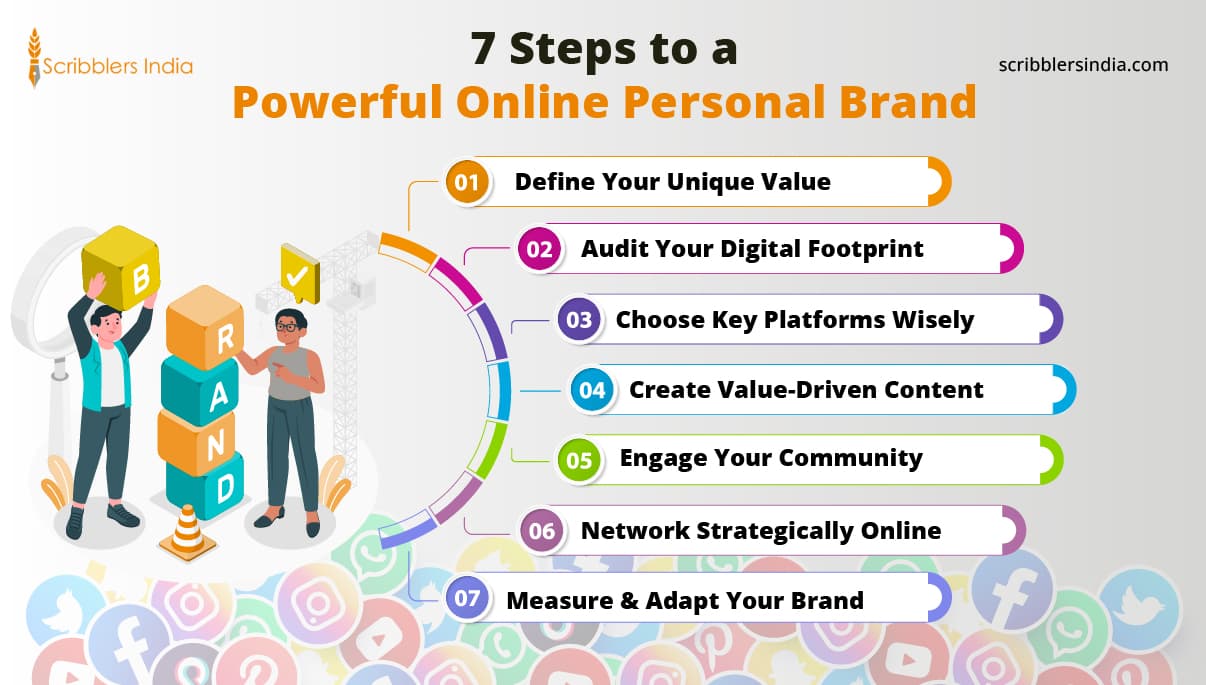
How To Build a Personal Brand Online in 2026?
Building a strong professional reputation online is largely a matter of sequencing. Publishing more content cannot solve unclear positioning, while an impressive profile carries limited weight without credible proof. Expanding across several platforms also creates unnecessary work when the people you need to influence concentrate elsewhere. The practical approach to how to build personal brand online starts with understanding what people can already discover about you. You can then define the reputation you want, strengthen the evidence supporting it, choose appropriate channels, publish useful ideas, build relevant relationships, and improve discoverability across search. This guide on how to build personal brand online focuses on that complete operating system rather than individual platform tactics. If you are still evaluating the broader business or career case, start with our analysis on why personal branding is important. The process below begins once you have decided to invest in your reputation. Key Takeaways Review what search results and profiles currently communicate about your expertise. Choose the audience, expertise territory, and professional association you want remembered. Create one reliable home base that preserves control over professional proof. Prioritize platforms where your audience already evaluates expertise and professional credibility. Place cases, recommendations, research, and qualifications close to important claims. Turn real questions, decisions, research, and lessons into useful content. Keep names, biographies, author pages, and expertise descriptions consistently aligned. Track changes in relevant discovery, relationships, opportunities, and reputation over time. How Should You Audit Your Digital Footprint Before You Build Personal Brand Online? Before you build personal brand online, establish what people can already find and what those results communicate. Any practical approach to how to build personal brand online should begin with search results, major profiles, employer pages, author pages, published work, and prominent third-party mentions. Compare that public footprint with the professional association you want to strengthen. Look for outdated information, conflicting descriptions, weak proof, useful existing assets, and prominent pages that no longer reflect your present role, expertise, audience, or professional direction. What Should a Personal Brand Audit Review? Start by searching for your full professional name and inspect the first several result pages. Then review the assets most likely to influence someone evaluating you for a role, project, partnership, speaking opportunity, media request, investment conversation, or professional recommendation. Audit Area What to Review Common Problem Identity Current name, title, company, and role Prominent profiles conflict Positioning Expertise emphasized across visible assets Each platform tells a different story Biography Current experience and specialization Old career stages remain prominent Proof Work, results, research, recommendations Claims have little visible support Content Subjects repeatedly associated with your name Publishing covers unrelated themes Third-Party Pages Events, publications, podcasts, directories Important information is outdated Prioritize high-visibility inaccuracies rather than trying to clean every historical mention. A dated conference biography that still ranks prominently deserves more attention than an obscure directory listing. The audit should finish with three practical decisions: which assets to keep, which to update, and which to de-emphasize. Useful content, interviews, recommendations, case evidence, speaking videos, or research may already support the reputation you want. Identifying these assets before creating new material is an important part of how to build a personal brand online efficiently as it prevents unnecessary duplication and provides stronger evidence for later profile updates. What Type of Reputation You Need Before Building Personal Brand Online? A useful personal branding strategy starts with the association you want relevant people to make with your name. Understanding how to build personal brand online becomes easier once the audience, expertise territory, contribution, and supporting evidence are clear enough to guide later execution. Positioning should be narrow enough to guide recognition without reducing your career to one skill. Choose the association that should lead now, while your biography, experience, portfolio, and broader content provide additional context after people understand the main professional territory. Who Should Your Personal Brand Influence? Define the people whose decisions your reputation needs to influence. A consultant may prioritize buyers facing one recurring problem, while a founder may need credibility with customers and industry peers. An executive may communicate simultaneously with employees, customers, board members, investors, and professional communities. Audience definitions such as “professionals” or “business leaders” usually provide too little direction. A clearer audience helps determine what proof deserves prominence, which questions your content should answer, where you should publish, and which relationships should receive consistent attention over time. What Expertise Should People Associate With Your Name? Ask what someone should confidently approach you about after encountering your work several times. “Marketing” yields weak recall, while “category positioning for technical B2B companies” provides a more useful anchor for the reputation, guiding profile language, content topics, speaking opportunities, and professional introductions. Once the territory is clear, translate it into a concise positioning idea. Our guide to personal brand statements explains in detail how to write such a statement, while this hub uses it as the strategic source for the broader online reputation system. Where Should Your Online Personal Branding Home Base Live? A strong online personal branding system needs one dependable place where people can understand your position, inspect proof, and take a logical next step. In how to build personal brand online, that home base may be a personal website or strong professional profile, depending on the level of control required. The better decision is not website versus social media. Think in terms of owned and rented presence. Owned assets preserve long-term control, while established platforms provide discovery and network access. Most professionals benefit from combining both without building more infrastructure than they can maintain. A useful home base normally needs three things: a current professional biography, visible evidence of expertise, and a clear next step. LinkedIn can handle these for simpler requirements, while a website is more useful when you need deeper control over proofing, long-form work, or inquiries. Do You Need a Personal Website to Build Personal Brand Online? You do not need a website simply because personal-brand advice recommends one. A site becomes valuable
Building a strong professional reputation online is largely a matter of sequencing. Publishing more content cannot solve unclear positioning, while an impressive profile carries limited weight without credible proof. Expanding across several platforms also creates unnecessary work when the people you need to influence concentrate elsewhere. The practical approach to how to build personal brand online starts with understanding what people can already discover about you. You can then define the reputation you want, strengthen the evidence supporting it, choose appropriate channels, publish useful ideas, build relevant relationships, and improve discoverability across search. This guide on how to build personal brand online focuses on that complete operating system rather than individual platform tactics. If you are still evaluating the broader business or career case, start with our analysis on why personal branding is important. The process below begins once you have decided to invest in your reputation. Key Takeaways Review what search results and profiles currently communicate about your expertise. Choose the audience, expertise territory, and professional association you want remembered. Create one reliable home base that preserves control over professional proof. Prioritize platforms where your audience already evaluates expertise and professional credibility. Place cases, recommendations, research, and qualifications close to important claims. Turn real questions, decisions, research, and lessons into useful content. Keep names, biographies, author pages, and expertise descriptions consistently aligned. Track changes in relevant discovery, relationships, opportunities, and reputation over time. How Should You Audit Your Digital Footprint Before You Build Personal Brand Online? Before you build personal brand online, establish what people can already find and what those results communicate. Any practical approach to how to build personal brand online should begin with search results, major profiles, employer pages, author pages, published work, and prominent third-party mentions. Compare that public footprint with the professional association you want to strengthen. Look for outdated information, conflicting descriptions, weak proof, useful existing assets, and prominent pages that no longer reflect your present role, expertise, audience, or professional direction. What Should a Personal Brand Audit Review? Start by searching for your full professional name and inspect the first several result pages. Then review the assets most likely to influence someone evaluating you for a role, project, partnership, speaking opportunity, media request, investment conversation, or professional recommendation. Audit Area What to Review Common Problem Identity Current name, title, company, and role Prominent profiles conflict Positioning Expertise emphasized across visible assets Each platform tells a different story Biography Current experience and specialization Old career stages remain prominent Proof Work, results, research, recommendations Claims have little visible support Content Subjects repeatedly associated with your name Publishing covers unrelated themes Third-Party Pages Events, publications, podcasts, directories Important information is outdated Prioritize high-visibility inaccuracies rather than trying to clean every historical mention. A dated conference biography that still ranks prominently deserves more attention than an obscure directory listing. The audit should finish with three practical decisions: which assets to keep, which to update, and which to de-emphasize. Useful content, interviews, recommendations, case evidence, speaking videos, or research may already support the reputation you want. Identifying these assets before creating new material is an important part of how to build a personal brand online efficiently as it prevents unnecessary duplication and provides stronger evidence for later profile updates. What Type of Reputation You Need Before Building Personal Brand Online? A useful personal branding strategy starts with the association you want relevant people to make with your name. Understanding how to build personal brand online becomes easier once the audience, expertise territory, contribution, and supporting evidence are clear enough to guide later execution. Positioning should be narrow enough to guide recognition without reducing your career to one skill. Choose the association that should lead now, while your biography, experience, portfolio, and broader content provide additional context after people understand the main professional territory. Who Should Your Personal Brand Influence? Define the people whose decisions your reputation needs to influence. A consultant may prioritize buyers facing one recurring problem, while a founder may need credibility with customers and industry peers. An executive may communicate simultaneously with employees, customers, board members, investors, and professional communities. Audience definitions such as “professionals” or “business leaders” usually provide too little direction. A clearer audience helps determine what proof deserves prominence, which questions your content should answer, where you should publish, and which relationships should receive consistent attention over time. What Expertise Should People Associate With Your Name? Ask what someone should confidently approach you about after encountering your work several times. “Marketing” yields weak recall, while “category positioning for technical B2B companies” provides a more useful anchor for the reputation, guiding profile language, content topics, speaking opportunities, and professional introductions. Once the territory is clear, translate it into a concise positioning idea. Our guide to personal brand statements explains in detail how to write such a statement, while this hub uses it as the strategic source for the broader online reputation system. Where Should Your Online Personal Branding Home Base Live? A strong online personal branding system needs one dependable place where people can understand your position, inspect proof, and take a logical next step. In how to build personal brand online, that home base may be a personal website or strong professional profile, depending on the level of control required. The better decision is not website versus social media. Think in terms of owned and rented presence. Owned assets preserve long-term control, while established platforms provide discovery and network access. Most professionals benefit from combining both without building more infrastructure than they can maintain. A useful home base normally needs three things: a current professional biography, visible evidence of expertise, and a clear next step. LinkedIn can handle these for simpler requirements, while a website is more useful when you need deeper control over proofing, long-form work, or inquiries. Do You Need a Personal Website to Build Personal Brand Online? You do not need a website simply because personal-brand advice recommends one. A site becomes valuable
How Does a LinkedIn Ghostwriting Agency Build Thought Leadership?
A founder can have strong opinions, years of experience, and useful stories without having time to turn them into LinkedIn posts every week. The difficult part is rarely finding something to say. It is capturing those ideas, developing them, and publishing them in a voice people recognize. A LinkedIn ghostwriting agency creates the system around that work. The executive remains the source of expertise while writers handle interviews, research, drafting, editing, and content planning. The strongest engagements preserve the leader’s judgment rather than replace it with generic social content. This distinction has become crucial in 2026. LinkedIn is actively addressing low-effort AI content that sounds polished while offering little original perspective. This guide explains how the process should work, which service model suits different requirements, what you should receive each month, and how to evaluate an agency before signing a retainer. Key Takeaways: A LinkedIn ghostwriting agency turns executive expertise into consistent, publishable professional content. Strong ghostwriting starts with source extraction before writers begin drafting LinkedIn posts. Voice guides should capture thinking patterns, language preferences, examples, and editorial boundaries. Generic AI content makes first-hand experience and clear professional opinions more valuable. Agencies, freelancers, internal writers, and AI-assisted workflows serve different operating requirements. Compare providers through source depth, voice continuity, evidence standards, workflow, and measurement. Monthly deliverables should include source capture, drafts, approvals, planning, and performance review. Measure progress from relevant exposure through conversations, opportunities, and attributable professional outcomes. What Does a LinkedIn Ghostwriting Agency Actually Do? A LinkedIn ghostwriting agency helps founders and executives turn their knowledge into content published under their own names. The work can include positioning, interviews, idea development, research, writing, editing, content planning, and performance reviews. The leader supplies the expertise and retains final control over what becomes public. This is different from sending a writer a topic and asking for ten posts. Professional LinkedIn ghostwriting needs enough context to understand how the executive thinks. Writers need access to opinions, customer observations, industry experience, previous content, and current business priorities. A useful division of responsibilities looks like this: The Executive Should Provide The Ghostwriting Team Can Handle Professional opinions and positions Turning raw ideas into structured posts First-hand experiences Researching supporting context Customer and market observations Developing content angles Examples from actual work Drafting and editing Sensitive-context decisions Formatting and content sequencing Final approval Maintaining the publishing calendar The writer therefore works with existing expertise. They should never manufacture professional positions the executive would not defend in a real conversation. This approach also connects naturally with LinkedIn personal branding. A recognizable public voice is more effective when the profile, content themes, and professional positioning reinforce one another. With the responsibilities clear, the next question is how raw executive knowledge becomes usable content. How Does a LinkedIn Ghostwriting Agency Work? A capable LinkedIn ghostwriting agency should have a repeatable process for collecting ideas and improving them over time. The workflow usually requires more executive input during onboarding. Once the writer understands the voice, recurring source collection and batch approvals can make publishing easier to manage. 1. Define What the Executive Should Be Known For Posting starts after positioning is clear. A LinkedIn ghostwriting agency first identifies the executive’s audience, expertise, business context, and subjects worth owning. It should also define which topics sit outside the intended public position. For example, a cybersecurity founder could build content around enterprise AI security, security operations, and emerging risk. Random leadership advice would add activity without strengthening that association. A broader personal branding strategy can help establish these positioning decisions before regular LinkedIn publishing begins. 2. Capture the Executive’s Raw Knowledge Interviews are among the most useful sources because executives often explain ideas better in conversation than in a blank document. The writer can ask about recent customer discussions, decisions, failed assumptions, market shifts, internal debates, and professional opinions. Existing podcasts, presentations, articles, emails, sales calls, and conference appearances can add further context. Published 2026 agency processes increasingly use detailed voice interviews during onboarding. Some describe initial voice-calibration sessions lasting around 60 to 90 minutes. The duration will vary. The important point is depth. A five-question form rarely captures enough context for sustained executive ghostwriting. 3. Build a Working Voice Guide Voice capture extends beyond labels such as “professional,” “friendly,” or “authoritative.” A useful guide records how the executive explains ideas. It should capture preferred vocabulary, sentence patterns, recurring beliefs, examples, subjects to be avoided, and phrases the person would never use. The guide should evolve as new drafts receive feedback. If every post requires the executive to rewrite entire sections, the system has not learned enough from previous reviews. 4. Develop Ideas Before Drafting Posts Strong source material can produce several angles. One customer conversation might lead to a market observation. A related operating decision could become a lesson for founders. The same underlying idea may later support an article or newsletter. The agency should therefore maintain an idea bank rather than treating each publication date as a fresh search for a topic. Each idea also needs an editorial purpose. Some posts can explain expertise. Others can share a point of view or make a complex subject easier to understand. 5. Draft, Review, and Learn From Feedback The first drafts establish the initial voice match. Executive feedback then becomes new information for the writer. Comments such as “I would never say this,” “this example needs more context,” or “my position is stronger than this” should be included in the voice guide. Batch reviews can reduce repetitive approvals. The executive still retains final decision-making authority over what appears under their name. Over several cycles, the goal is simple: the writer understands more context, while the executive needs fewer corrections. This learning loop is becoming especially valuable as LinkedIn fills with easily generated content. Why Has LinkedIn Ghostwriting Become Harder in an AI-Saturated Feed? LinkedIn is actively trying to reduce low-effort content that lacks real perspective. In May 2026, LinkedIn clarified its stance: AI can support writing, but
A founder can have strong opinions, years of experience, and useful stories without having time to turn them into LinkedIn posts every week. The difficult part is rarely finding something to say. It is capturing those ideas, developing them, and publishing them in a voice people recognize. A LinkedIn ghostwriting agency creates the system around that work. The executive remains the source of expertise while writers handle interviews, research, drafting, editing, and content planning. The strongest engagements preserve the leader’s judgment rather than replace it with generic social content. This distinction has become crucial in 2026. LinkedIn is actively addressing low-effort AI content that sounds polished while offering little original perspective. This guide explains how the process should work, which service model suits different requirements, what you should receive each month, and how to evaluate an agency before signing a retainer. Key Takeaways: A LinkedIn ghostwriting agency turns executive expertise into consistent, publishable professional content. Strong ghostwriting starts with source extraction before writers begin drafting LinkedIn posts. Voice guides should capture thinking patterns, language preferences, examples, and editorial boundaries. Generic AI content makes first-hand experience and clear professional opinions more valuable. Agencies, freelancers, internal writers, and AI-assisted workflows serve different operating requirements. Compare providers through source depth, voice continuity, evidence standards, workflow, and measurement. Monthly deliverables should include source capture, drafts, approvals, planning, and performance review. Measure progress from relevant exposure through conversations, opportunities, and attributable professional outcomes. What Does a LinkedIn Ghostwriting Agency Actually Do? A LinkedIn ghostwriting agency helps founders and executives turn their knowledge into content published under their own names. The work can include positioning, interviews, idea development, research, writing, editing, content planning, and performance reviews. The leader supplies the expertise and retains final control over what becomes public. This is different from sending a writer a topic and asking for ten posts. Professional LinkedIn ghostwriting needs enough context to understand how the executive thinks. Writers need access to opinions, customer observations, industry experience, previous content, and current business priorities. A useful division of responsibilities looks like this: The Executive Should Provide The Ghostwriting Team Can Handle Professional opinions and positions Turning raw ideas into structured posts First-hand experiences Researching supporting context Customer and market observations Developing content angles Examples from actual work Drafting and editing Sensitive-context decisions Formatting and content sequencing Final approval Maintaining the publishing calendar The writer therefore works with existing expertise. They should never manufacture professional positions the executive would not defend in a real conversation. This approach also connects naturally with LinkedIn personal branding. A recognizable public voice is more effective when the profile, content themes, and professional positioning reinforce one another. With the responsibilities clear, the next question is how raw executive knowledge becomes usable content. How Does a LinkedIn Ghostwriting Agency Work? A capable LinkedIn ghostwriting agency should have a repeatable process for collecting ideas and improving them over time. The workflow usually requires more executive input during onboarding. Once the writer understands the voice, recurring source collection and batch approvals can make publishing easier to manage. 1. Define What the Executive Should Be Known For Posting starts after positioning is clear. A LinkedIn ghostwriting agency first identifies the executive’s audience, expertise, business context, and subjects worth owning. It should also define which topics sit outside the intended public position. For example, a cybersecurity founder could build content around enterprise AI security, security operations, and emerging risk. Random leadership advice would add activity without strengthening that association. A broader personal branding strategy can help establish these positioning decisions before regular LinkedIn publishing begins. 2. Capture the Executive’s Raw Knowledge Interviews are among the most useful sources because executives often explain ideas better in conversation than in a blank document. The writer can ask about recent customer discussions, decisions, failed assumptions, market shifts, internal debates, and professional opinions. Existing podcasts, presentations, articles, emails, sales calls, and conference appearances can add further context. Published 2026 agency processes increasingly use detailed voice interviews during onboarding. Some describe initial voice-calibration sessions lasting around 60 to 90 minutes. The duration will vary. The important point is depth. A five-question form rarely captures enough context for sustained executive ghostwriting. 3. Build a Working Voice Guide Voice capture extends beyond labels such as “professional,” “friendly,” or “authoritative.” A useful guide records how the executive explains ideas. It should capture preferred vocabulary, sentence patterns, recurring beliefs, examples, subjects to be avoided, and phrases the person would never use. The guide should evolve as new drafts receive feedback. If every post requires the executive to rewrite entire sections, the system has not learned enough from previous reviews. 4. Develop Ideas Before Drafting Posts Strong source material can produce several angles. One customer conversation might lead to a market observation. A related operating decision could become a lesson for founders. The same underlying idea may later support an article or newsletter. The agency should therefore maintain an idea bank rather than treating each publication date as a fresh search for a topic. Each idea also needs an editorial purpose. Some posts can explain expertise. Others can share a point of view or make a complex subject easier to understand. 5. Draft, Review, and Learn From Feedback The first drafts establish the initial voice match. Executive feedback then becomes new information for the writer. Comments such as “I would never say this,” “this example needs more context,” or “my position is stronger than this” should be included in the voice guide. Batch reviews can reduce repetitive approvals. The executive still retains final decision-making authority over what appears under their name. Over several cycles, the goal is simple: the writer understands more context, while the executive needs fewer corrections. This learning loop is becoming especially valuable as LinkedIn fills with easily generated content. Why Has LinkedIn Ghostwriting Become Harder in an AI-Saturated Feed? LinkedIn is actively trying to reduce low-effort content that lacks real perspective. In May 2026, LinkedIn clarified its stance: AI can support writing, but

10 Best Ghostwriting Agencies in India for 2026 (Updated August 2026)
Choosing the best ghostwriting agencies in India becomes difficult once you look beyond similar service descriptions. An executive building thought leadership has different requirements from an entrepreneur writing a business book. A memoir also requires a different working relationship from a recurring LinkedIn program. The right comparison therefore starts with fit. You need to understand who supplies the ideas, how the writer captures your voice, who handles research, and how revisions work. Ownership terms, editorial oversight, confidentiality, and continuity also deserve careful review. This guide compares 10 best ghostwriting agencies in India based on their stated specializations, working processes, pricing visibility, and likely client fit. Key Takeaways: The best ghostwriting agency depends on format, audience, expertise, and collaboration needs. Scribblers India suits founders seeking executive ghostwriting, thought leadership, and LinkedIn continuity. Write Right and Estorytellers focus strongly on developing complete books and manuscripts. Ghostwriting India offers structured, voice-led processes for long-form non-fiction projects and memoirs. GhostwritersIndia publishes indicative rates, making initial cost comparison easier during shortlisting. IIP Books publishes detailed ghostwriting pricing for human and AI-assisted workflows online. Orange Publishers serves authors seeking ghostwriting, as well as a range of publishing support services. Public pricing helps comparison, although scope, interviews, editing, and rights need review. Compare agencies through evidence, writer fit, ownership terms, process, and handover quality. Provider information last verified: August 2026. Pricing, services, and delivery models can change after publication. How Did We Evaluate the Best Ghostwriting Agencies in India? We reviewed providers with active ghostwriting or professional book-writing services visible on their websites in August 2026. The comparison focuses on what a prospective client can verify publicly. We avoided numerical quality scores because websites rarely provide enough comparable evidence to support precise rankings. Scribblers India publishes this guide and appears in the comparison. Readers should therefore consider our assessment of Scribblers India commercially interested. We apply the same public-information criteria to each provider and identify suitable use cases instead of making unsupported judgments about competitors. The evaluation uses seven areas: Evaluation Criterion What We Reviewed Ghostwriting specialization The content types, genres, and client requirements the provider publicly supports. Voice-capture process Interviews, source materials, voice profiling, feedback, and other stated methods. Domain or genre fit The subject areas or writing categories the agency explicitly serves. Editorial workflow Outlining, research, drafting, editing, revisions, approvals, and project management. Confidentiality and ownership Published information about NDAs, copyright, authorship, and content rights. Public proof Visible processes, testimonials, case examples, portfolios, or service documentation. Pricing transparency Published rates, indicative prices, package information, or custom-quote requirements. A provider can perform well without publishing every detail online. Ghostwriting often requires discretion, so public portfolios can remain limited. The strongest buying decision combines online research with direct questions about your project. This distinction becomes clearer when the agencies are compared side by side. Which Are the 10 Best Ghostwriting Agencies in India for 2026? The current Indian market includes executive-content specialists, book-focused agencies, publishing-led providers, and broader writing companies. Their service models overlap in places, although the underlying workflows can differ considerably. Your shortlist should therefore follow the type of intellectual property you want to create and maintain. Agency Best Fit Based on Public Offering Core Ghostwriting Focus Public Pricing Visibility Scribblers India Founders, CXOs, consultants, B2B experts Executive thought leadership, LinkedIn, op-eds, newsletters, speeches Custom Estorytellers Authors seeking complete book development Fiction, non-fiction, business books, memoirs Custom Ghostwriter.in Non-fiction authors wanting visible reference pricing Non-fiction books, long-form writing, blogs Published rate card GhostwritersIndia Authors seeking book writing with editing support Fiction, non-fiction, self-help, memoirs, articles Indicative rates published Ghostwriting India Authors, executives, entrepreneurs Business books, non-fiction, memoirs, self-help Custom IIP Books Book authors seeking multilingual and publishing support Academic and non-academic books Detailed rates published Kalam Kagaz Authors and businesses needing varied written formats Books, ebooks, memoirs, blogs, articles Custom Orange Publishers Authors combining writing with publishing support Fiction, non-fiction, autobiography, business books Custom Taletel Authors seeking writing, memoir, and ebook support Books, memoirs, ebooks, fiction, non-fiction Custom Write Right Authors needing a structured manuscript-development process Business books, fiction, non-fiction, memoirs Scope-based quote Our analysis is based on each provider’s own current service information rather than third-party descriptions. The next step is understanding what those differences mean during an actual engagement. 1. Scribblers India Scribblers India is a content strategy and ghostwriting agency that works primarily with founders, CXOs, consultants, and B2B subject-matter experts. Its ghostwriting work extends beyond standalone writing assignments to executive thought leadership, LinkedIn content, articles, newsletters, speeches, and other authority-building formats. As one of the best ghostwriting agencies in India, it combines voice capture with research, editorial planning, personal branding, AEO, and GEO considerations. This makes its model more relevant for leaders building an ongoing body of professional content than authors seeking a conventional fiction or memoir-writing service. Best for: Founders, CXOs, consultants, and B2B experts who need recurring executive content across LinkedIn, articles, newsletters, speeches, and thought leadership formats while preserving one consistent professional voice. Primary services: Executive ghostwriting draws on interviews, source material, and existing communication to create content that retains the leader’s natural voice. With LinkedIn ghostwriting, executive expertise and timely ideas are developed into posts for relevant professional audiences. Original viewpoints can be expanded through thought leadership into articles, op-eds, newsletters, reports, and other authority-building formats. Speeches and long-form content give leaders more space to explain complex ideas across professional and industry settings. Personal branding brings these efforts together around positioning, discoverability, and a coherent professional identity. How the process works: Projects begin with voice calibration using interviews, previous content, recordings, and other source material. The team then develops topics, drafts, and editorial direction around the executive’s priorities. Feedback strengthens voice consistency over time. Pricing is customized according to format, volume, research depth, and engagement scope. Notable strength: Scribblers India combines executive ghostwriting with thought leadership, personal branding, AEO, and GEO strategy. This supports leaders building a sustained body of professional content across multiple channels. 2. Estorytellers Estorytellers is a book-focused writing
Choosing the best ghostwriting agencies in India becomes difficult once you look beyond similar service descriptions. An executive building thought leadership has different requirements from an entrepreneur writing a business book. A memoir also requires a different working relationship from a recurring LinkedIn program. The right comparison therefore starts with fit. You need to understand who supplies the ideas, how the writer captures your voice, who handles research, and how revisions work. Ownership terms, editorial oversight, confidentiality, and continuity also deserve careful review. This guide compares 10 best ghostwriting agencies in India based on their stated specializations, working processes, pricing visibility, and likely client fit. Key Takeaways: The best ghostwriting agency depends on format, audience, expertise, and collaboration needs. Scribblers India suits founders seeking executive ghostwriting, thought leadership, and LinkedIn continuity. Write Right and Estorytellers focus strongly on developing complete books and manuscripts. Ghostwriting India offers structured, voice-led processes for long-form non-fiction projects and memoirs. GhostwritersIndia publishes indicative rates, making initial cost comparison easier during shortlisting. IIP Books publishes detailed ghostwriting pricing for human and AI-assisted workflows online. Orange Publishers serves authors seeking ghostwriting, as well as a range of publishing support services. Public pricing helps comparison, although scope, interviews, editing, and rights need review. Compare agencies through evidence, writer fit, ownership terms, process, and handover quality. Provider information last verified: August 2026. Pricing, services, and delivery models can change after publication. How Did We Evaluate the Best Ghostwriting Agencies in India? We reviewed providers with active ghostwriting or professional book-writing services visible on their websites in August 2026. The comparison focuses on what a prospective client can verify publicly. We avoided numerical quality scores because websites rarely provide enough comparable evidence to support precise rankings. Scribblers India publishes this guide and appears in the comparison. Readers should therefore consider our assessment of Scribblers India commercially interested. We apply the same public-information criteria to each provider and identify suitable use cases instead of making unsupported judgments about competitors. The evaluation uses seven areas: Evaluation Criterion What We Reviewed Ghostwriting specialization The content types, genres, and client requirements the provider publicly supports. Voice-capture process Interviews, source materials, voice profiling, feedback, and other stated methods. Domain or genre fit The subject areas or writing categories the agency explicitly serves. Editorial workflow Outlining, research, drafting, editing, revisions, approvals, and project management. Confidentiality and ownership Published information about NDAs, copyright, authorship, and content rights. Public proof Visible processes, testimonials, case examples, portfolios, or service documentation. Pricing transparency Published rates, indicative prices, package information, or custom-quote requirements. A provider can perform well without publishing every detail online. Ghostwriting often requires discretion, so public portfolios can remain limited. The strongest buying decision combines online research with direct questions about your project. This distinction becomes clearer when the agencies are compared side by side. Which Are the 10 Best Ghostwriting Agencies in India for 2026? The current Indian market includes executive-content specialists, book-focused agencies, publishing-led providers, and broader writing companies. Their service models overlap in places, although the underlying workflows can differ considerably. Your shortlist should therefore follow the type of intellectual property you want to create and maintain. Agency Best Fit Based on Public Offering Core Ghostwriting Focus Public Pricing Visibility Scribblers India Founders, CXOs, consultants, B2B experts Executive thought leadership, LinkedIn, op-eds, newsletters, speeches Custom Estorytellers Authors seeking complete book development Fiction, non-fiction, business books, memoirs Custom Ghostwriter.in Non-fiction authors wanting visible reference pricing Non-fiction books, long-form writing, blogs Published rate card GhostwritersIndia Authors seeking book writing with editing support Fiction, non-fiction, self-help, memoirs, articles Indicative rates published Ghostwriting India Authors, executives, entrepreneurs Business books, non-fiction, memoirs, self-help Custom IIP Books Book authors seeking multilingual and publishing support Academic and non-academic books Detailed rates published Kalam Kagaz Authors and businesses needing varied written formats Books, ebooks, memoirs, blogs, articles Custom Orange Publishers Authors combining writing with publishing support Fiction, non-fiction, autobiography, business books Custom Taletel Authors seeking writing, memoir, and ebook support Books, memoirs, ebooks, fiction, non-fiction Custom Write Right Authors needing a structured manuscript-development process Business books, fiction, non-fiction, memoirs Scope-based quote Our analysis is based on each provider’s own current service information rather than third-party descriptions. The next step is understanding what those differences mean during an actual engagement. 1. Scribblers India Scribblers India is a content strategy and ghostwriting agency that works primarily with founders, CXOs, consultants, and B2B subject-matter experts. Its ghostwriting work extends beyond standalone writing assignments to executive thought leadership, LinkedIn content, articles, newsletters, speeches, and other authority-building formats. As one of the best ghostwriting agencies in India, it combines voice capture with research, editorial planning, personal branding, AEO, and GEO considerations. This makes its model more relevant for leaders building an ongoing body of professional content than authors seeking a conventional fiction or memoir-writing service. Best for: Founders, CXOs, consultants, and B2B experts who need recurring executive content across LinkedIn, articles, newsletters, speeches, and thought leadership formats while preserving one consistent professional voice. Primary services: Executive ghostwriting draws on interviews, source material, and existing communication to create content that retains the leader’s natural voice. With LinkedIn ghostwriting, executive expertise and timely ideas are developed into posts for relevant professional audiences. Original viewpoints can be expanded through thought leadership into articles, op-eds, newsletters, reports, and other authority-building formats. Speeches and long-form content give leaders more space to explain complex ideas across professional and industry settings. Personal branding brings these efforts together around positioning, discoverability, and a coherent professional identity. How the process works: Projects begin with voice calibration using interviews, previous content, recordings, and other source material. The team then develops topics, drafts, and editorial direction around the executive’s priorities. Feedback strengthens voice consistency over time. Pricing is customized according to format, volume, research depth, and engagement scope. Notable strength: Scribblers India combines executive ghostwriting with thought leadership, personal branding, AEO, and GEO strategy. This supports leaders building a sustained body of professional content across multiple channels. 2. Estorytellers Estorytellers is a book-focused writing
Executive Branding vs Personal Branding: What Changes at Leadership Level?
A senior leader’s public reputation carries a wider set of consequences than an ordinary professional profile. Employees can read the same post as customers. Investors, partners, candidates, industry peers, and journalists may interpret the same comment through very different lenses. This wider audience changes the job of executive branding. The work still begins with expertise, reputation, and professional visibility. It also must account for the organization the executive represents, the claims that require review, and the topics where personal perspective intersects with corporate responsibility. This guide compares personal branding vs executive branding at the leadership level. It covers the stakeholders an executive needs to consider, governance boundaries, content depth, career transitions, measurement, and corporate alignment. Key Takeaways: Leadership branding connects expertise with organizational context, stakeholder expectations, and reputation risk. Senior leaders communicate simultaneously with employees, buyers, investors, partners, peers, and media. Governance becomes important when public commentary touches company claims, regulation, or sensitive events. Strong executive content combines expertise, evidence, experience, and a defensible market point of view. Company alignment should preserve individual perspective while keeping material facts and commitments consistent. Career transitions require deliberate decisions about portable expertise, company associations, and public positioning. Measurement should track audience quality, authority signals, opportunities, and reputation indicators together. Ghostwriting can support executive visibility when the leader retains substantive input and approval. What Is Executive Branding? Executive branding is the deliberate management of how a senior leader’s expertise, judgment, values, experience, and public communication are understood by relevant stakeholders. It connects the individual’s professional reputation with the responsibilities that come with representing an organization. An executive personal branding program can include positioning, profile development, thought leadership, speaking themes, media contributions, LinkedIn content, search visibility, and reputation monitoring. The exact mix should follow the leader’s role and stakeholder exposure. The distinction from ordinary personal branding appears in the operating constraints. A consultant can often speak primarily for themselves. A CEO, CFO, CHRO, CTO, or business-unit leader can be interpreted as speaking with organizational authority, even when the topic begins from personal expertise. That creates a second layer of work. The leader needs a recognizable professional position, while the company needs clarity around claims, sensitive subjects, review ownership, and where personal views end and official positions begin. This is why the work functions best as a reputation system supported by an editorial workflow. Personal Branding vs Executive Branding: What Changes? The relationship between personal branding vs executive branding is evolutionary. Both build recognition around an individual. Executive branding adds organizational representation, more complex stakeholders, and stronger governance requirements. Area Personal Branding Executive Branding Primary purpose Build recognition around individual expertise and professional value Build leadership reputation while supporting an organizational role Core audiences Peers, recruiters, clients, collaborators, professional communities Employees, customers, board, investors, partners, candidates, media Content source Experience, opinions, work, interests, professional learning Leadership experience, market insight, research, company context, approved evidence Governance Usually personal judgment and platform rules May involve communications, legal, compliance, IR, HR, or specialist reviewers Reputation risk Concentrated mainly around the individual Can affect both the leader and organization Portability Travels largely with the individual Expertise travels; company-specific authority remains tied to the role Measurement Visibility, network quality, reputation, professional opportunities Stakeholder reach, authority, audience quality, opportunities, alignment, risk signals The comparison also explains why copying a creator-style personal branding playbook can create problems for a senior leader. High publishing frequency has little value when the ideas lack depth, the evidence remains weak, or every post requires retroactive clarification inside the company. A stronger approach begins with the leader’s expertise territory and the stakeholders whose decisions the public presence may influence. Governance and format follow from that map. Why You Need an Executive Stakeholder Map Before Building a Content Calendar? A useful leadership-reputation strategy begins by asking who is evaluating the leader and what each group needs to understand. One post can reach multiple stakeholder groups, so the public presence benefits from a broader audience model rather than a single target persona. Employees and Future Talent Employees often look to senior leaders for clarity around direction, priorities, operating principles, and leadership judgment. Candidates may also use public executive communication to understand how the organization thinks and what its leaders value. Public content can draw on management lessons, organizational design, technical decisions, or industry change, while internal communications retain their separate role and confidential information remains protected. That gives the leader space to demonstrate judgment without turning an external publishing program into an extension of the internal communications calendar. Customers and Buying Groups Customers may use executive content to understand the company’s expertise, market perspective, and approach to important problems. This becomes especially relevant in complex B2B categories where buying decisions involve several internal stakeholders. The 2025 Edelman-LinkedIn B2B Thought Leadership Impact Report found that 56% of target buyers and 55% of hidden buyers use thought leadership during vendor evaluation. The research suggests that expert-led ideas can reach people beyond the obvious buyer contacts inside an account. That does not make executive content a substitute for product proof, pricing, procurement, or sales engagement. It gives the leader another way to help stakeholders understand the category and the organization’s thinking. Board, Investors, and Financial Stakeholders For leaders with investor-facing responsibilities, public communication carries additional context. Market commentary, company performance, forward-looking subjects, acquisitions, financial claims, and strategy can require tighter coordination with official communication processes. The publishing system should identify those boundaries before drafting begins. A strong point of view can still develop inside clear factual and governance rules. This is also where content teams need a reliable source of truth. Current company descriptions, approved statistics, executive biographies, public commitments, and officially released information should be easy to retrieve during editorial review. Partners and Industry Peers Partners and industry peers may evaluate the executive’s ability to interpret category shifts, collaborate, and contribute useful expertise. Research-led commentary, operating lessons, industry frameworks, and informed responses to market developments can create a more useful professional signal than broad motivational publishing. This audience
A senior leader’s public reputation carries a wider set of consequences than an ordinary professional profile. Employees can read the same post as customers. Investors, partners, candidates, industry peers, and journalists may interpret the same comment through very different lenses. This wider audience changes the job of executive branding. The work still begins with expertise, reputation, and professional visibility. It also must account for the organization the executive represents, the claims that require review, and the topics where personal perspective intersects with corporate responsibility. This guide compares personal branding vs executive branding at the leadership level. It covers the stakeholders an executive needs to consider, governance boundaries, content depth, career transitions, measurement, and corporate alignment. Key Takeaways: Leadership branding connects expertise with organizational context, stakeholder expectations, and reputation risk. Senior leaders communicate simultaneously with employees, buyers, investors, partners, peers, and media. Governance becomes important when public commentary touches company claims, regulation, or sensitive events. Strong executive content combines expertise, evidence, experience, and a defensible market point of view. Company alignment should preserve individual perspective while keeping material facts and commitments consistent. Career transitions require deliberate decisions about portable expertise, company associations, and public positioning. Measurement should track audience quality, authority signals, opportunities, and reputation indicators together. Ghostwriting can support executive visibility when the leader retains substantive input and approval. What Is Executive Branding? Executive branding is the deliberate management of how a senior leader’s expertise, judgment, values, experience, and public communication are understood by relevant stakeholders. It connects the individual’s professional reputation with the responsibilities that come with representing an organization. An executive personal branding program can include positioning, profile development, thought leadership, speaking themes, media contributions, LinkedIn content, search visibility, and reputation monitoring. The exact mix should follow the leader’s role and stakeholder exposure. The distinction from ordinary personal branding appears in the operating constraints. A consultant can often speak primarily for themselves. A CEO, CFO, CHRO, CTO, or business-unit leader can be interpreted as speaking with organizational authority, even when the topic begins from personal expertise. That creates a second layer of work. The leader needs a recognizable professional position, while the company needs clarity around claims, sensitive subjects, review ownership, and where personal views end and official positions begin. This is why the work functions best as a reputation system supported by an editorial workflow. Personal Branding vs Executive Branding: What Changes? The relationship between personal branding vs executive branding is evolutionary. Both build recognition around an individual. Executive branding adds organizational representation, more complex stakeholders, and stronger governance requirements. Area Personal Branding Executive Branding Primary purpose Build recognition around individual expertise and professional value Build leadership reputation while supporting an organizational role Core audiences Peers, recruiters, clients, collaborators, professional communities Employees, customers, board, investors, partners, candidates, media Content source Experience, opinions, work, interests, professional learning Leadership experience, market insight, research, company context, approved evidence Governance Usually personal judgment and platform rules May involve communications, legal, compliance, IR, HR, or specialist reviewers Reputation risk Concentrated mainly around the individual Can affect both the leader and organization Portability Travels largely with the individual Expertise travels; company-specific authority remains tied to the role Measurement Visibility, network quality, reputation, professional opportunities Stakeholder reach, authority, audience quality, opportunities, alignment, risk signals The comparison also explains why copying a creator-style personal branding playbook can create problems for a senior leader. High publishing frequency has little value when the ideas lack depth, the evidence remains weak, or every post requires retroactive clarification inside the company. A stronger approach begins with the leader’s expertise territory and the stakeholders whose decisions the public presence may influence. Governance and format follow from that map. Why You Need an Executive Stakeholder Map Before Building a Content Calendar? A useful leadership-reputation strategy begins by asking who is evaluating the leader and what each group needs to understand. One post can reach multiple stakeholder groups, so the public presence benefits from a broader audience model rather than a single target persona. Employees and Future Talent Employees often look to senior leaders for clarity around direction, priorities, operating principles, and leadership judgment. Candidates may also use public executive communication to understand how the organization thinks and what its leaders value. Public content can draw on management lessons, organizational design, technical decisions, or industry change, while internal communications retain their separate role and confidential information remains protected. That gives the leader space to demonstrate judgment without turning an external publishing program into an extension of the internal communications calendar. Customers and Buying Groups Customers may use executive content to understand the company’s expertise, market perspective, and approach to important problems. This becomes especially relevant in complex B2B categories where buying decisions involve several internal stakeholders. The 2025 Edelman-LinkedIn B2B Thought Leadership Impact Report found that 56% of target buyers and 55% of hidden buyers use thought leadership during vendor evaluation. The research suggests that expert-led ideas can reach people beyond the obvious buyer contacts inside an account. That does not make executive content a substitute for product proof, pricing, procurement, or sales engagement. It gives the leader another way to help stakeholders understand the category and the organization’s thinking. Board, Investors, and Financial Stakeholders For leaders with investor-facing responsibilities, public communication carries additional context. Market commentary, company performance, forward-looking subjects, acquisitions, financial claims, and strategy can require tighter coordination with official communication processes. The publishing system should identify those boundaries before drafting begins. A strong point of view can still develop inside clear factual and governance rules. This is also where content teams need a reliable source of truth. Current company descriptions, approved statistics, executive biographies, public commitments, and officially released information should be easy to retrieve during editorial review. Partners and Industry Peers Partners and industry peers may evaluate the executive’s ability to interpret category shifts, collaborate, and contribute useful expertise. Research-led commentary, operating lessons, industry frameworks, and informed responses to market developments can create a more useful professional signal than broad motivational publishing. This audience

Why Is Personal Branding Important? A Decision Guide for Professionals and Founders
A promotion, funding round, consulting launch, career move, or public leadership role can change the extent to which your professional reputation influences professional decisions. That is when the question why is personal branding important becomes practical. People may search your name, review your work, read your ideas, and compare your public profile with the expertise or role you represent. Personal branding helps make that evaluation more consistent. It gives people clearer context about what you know, the experience that supports your expertise, and the professional value you can bring before they have worked with you directly. The resulting benefits of personal branding can range from greater recognition of expertise and discoverability to more relevant professional conversations and opportunities. This blog focuses on the decision that comes before those outcomes. It explains when personal branding deserves greater investment, how it creates value, and which situations may require other priorities first. Key Takeaways: Personal branding becomes valuable when professional decisions increasingly depend on public reputation. Clear positioning helps audiences connect your name with relevant expertise and evidence. Career transitions increase the value of searchable professional reputation during evaluation. Founders benefit when market education depends on their specialist knowledge and perspective. Executives need stronger governance as visibility begins representing the wider organization publicly. Consultants gain more from personal branding when expertise influences selection and trust. Personal branding should follow stronger fundamentals when the underlying offer remains unclear. A simple diagnostic can show whether reputation deserves more investment right now. Why Is Personal Branding Important? Personal branding helps other people understand what you are known for, where your expertise comes from, and why your perspective deserves attention. It creates a more coherent professional signal across search results, profiles, published work, conversations, recommendations, and public appearances. The simplest answer to why is personal branding important is that professional reputation already exists, even when you leave it unmanaged. Personal branding gives you more influence over which parts of your experience, expertise, and point of view become easiest for others to discover and remember. Harvard Business School Online describes personal branding as defining what you want to communicate and expressing it effectively. It also treats audience perception as central to understanding a personal brand. The value comes from four mechanisms: Reputation clarity: People can connect your name with a specific area of expertise. Discoverability: Relevant information about you is easier to find when someone searches or evaluates you. Evidence: Your work, thinking, experience, and third-party proof make professional claims easier to assess. Context: Your network and published ideas help audiences understand how your expertise applies to real problems. These mechanisms can support many outcomes, while actual results still depend on expertise, audience fit, timing, and follow-through. That distinction is central to understanding why is personal branding important without turning personal branding into a promise of professional success Branding demands commitment; commitment to continual re-invention; striking chords with people to stir their emotions; and commitment to imagination. It is easy to be cynical about such things, much harder to be successful. ~ Sir Richard Branson When Does Personal Branding Become Strategically Crucial? The need for personal branding changes with the role you occupy and the decisions other people make about you. A private specialist with stable internal responsibilities may need little public visibility. A founder educating a new market may depend heavily on it. Our personal branding case study for a study-abroad consultant shows how a more deliberate visibility strategy was applied in practice. The question why is personal branding important becomes much easier to answer when you examine the professional situation and the decisions shaped by reputation. During a Career Transition A career move creates an information gap. Recruiters, hiring managers, peers, or future collaborators need to understand where your experience fits next. An outdated profile can leave your previous role defining you long after your expertise has changed. For someone changing industries, moving into leadership, returning after a break, or pursuing board roles, why is personal branding important has a practical answer. A clearer public record helps connect earlier experience with the direction you now want to pursue. A career transition rarely requires daily publishing. Relevant case evidence, updated professional profiles, thoughtful commentary, and visible work can be enough to make the transition easier to interpret. When a Founder Has to Educate the Market Some businesses enter categories buyers already understand. Others need the founder to explain an emerging problem, challenge an established assumption, or translate technical change into business language. In that situation, the answer to the question ‘why is personal branding important’ is closely tied to category education. The founder can become a recognizable source of explanation through operating experience, customer questions, product decisions, and informed market observations. This visibility can help audiences understand the category while the company builds recognition around its own capabilities and evidence. The balance becomes more important as the business grows. The founder can continue shaping market conversations, while trust gradually extends to the wider organization. Deciding how much visibility to give to each requires a clear understanding of personal branding vs. company branding at different stages of growth. When an Executive Represents More Than Personal Expertise A senior leader may communicate with employees, customers, investors, partners, regulators, industry peers, and media audiences. Their public presence therefore carries organizational context alongside individual expertise. For senior leaders, understanding why is personal branding important also involves managing that wider responsibility. Expertise needs enough visibility to establish a recognizable professional position, while company claims, sensitive subjects, role boundaries, and public commentary may require more deliberate review. These responsibilities become particularly important after a promotion, a CEO appointment, a board role, or a company transition. At this level, executive branding adds considerations of stakeholder alignment, governance, and reputation risk to the broader personal branding process. When Independent Expertise Drives Selection Consultants, advisors, coaches, fractional leaders, speakers, analysts, and other independent experts are often evaluated before a formal sales conversation begins. Buyers may review articles, presentations, testimonials, frameworks, prior work, or mutual connections before making contact. Here,
A promotion, funding round, consulting launch, career move, or public leadership role can change the extent to which your professional reputation influences professional decisions. That is when the question why is personal branding important becomes practical. People may search your name, review your work, read your ideas, and compare your public profile with the expertise or role you represent. Personal branding helps make that evaluation more consistent. It gives people clearer context about what you know, the experience that supports your expertise, and the professional value you can bring before they have worked with you directly. The resulting benefits of personal branding can range from greater recognition of expertise and discoverability to more relevant professional conversations and opportunities. This blog focuses on the decision that comes before those outcomes. It explains when personal branding deserves greater investment, how it creates value, and which situations may require other priorities first. Key Takeaways: Personal branding becomes valuable when professional decisions increasingly depend on public reputation. Clear positioning helps audiences connect your name with relevant expertise and evidence. Career transitions increase the value of searchable professional reputation during evaluation. Founders benefit when market education depends on their specialist knowledge and perspective. Executives need stronger governance as visibility begins representing the wider organization publicly. Consultants gain more from personal branding when expertise influences selection and trust. Personal branding should follow stronger fundamentals when the underlying offer remains unclear. A simple diagnostic can show whether reputation deserves more investment right now. Why Is Personal Branding Important? Personal branding helps other people understand what you are known for, where your expertise comes from, and why your perspective deserves attention. It creates a more coherent professional signal across search results, profiles, published work, conversations, recommendations, and public appearances. The simplest answer to why is personal branding important is that professional reputation already exists, even when you leave it unmanaged. Personal branding gives you more influence over which parts of your experience, expertise, and point of view become easiest for others to discover and remember. Harvard Business School Online describes personal branding as defining what you want to communicate and expressing it effectively. It also treats audience perception as central to understanding a personal brand. The value comes from four mechanisms: Reputation clarity: People can connect your name with a specific area of expertise. Discoverability: Relevant information about you is easier to find when someone searches or evaluates you. Evidence: Your work, thinking, experience, and third-party proof make professional claims easier to assess. Context: Your network and published ideas help audiences understand how your expertise applies to real problems. These mechanisms can support many outcomes, while actual results still depend on expertise, audience fit, timing, and follow-through. That distinction is central to understanding why is personal branding important without turning personal branding into a promise of professional success Branding demands commitment; commitment to continual re-invention; striking chords with people to stir their emotions; and commitment to imagination. It is easy to be cynical about such things, much harder to be successful. ~ Sir Richard Branson When Does Personal Branding Become Strategically Crucial? The need for personal branding changes with the role you occupy and the decisions other people make about you. A private specialist with stable internal responsibilities may need little public visibility. A founder educating a new market may depend heavily on it. Our personal branding case study for a study-abroad consultant shows how a more deliberate visibility strategy was applied in practice. The question why is personal branding important becomes much easier to answer when you examine the professional situation and the decisions shaped by reputation. During a Career Transition A career move creates an information gap. Recruiters, hiring managers, peers, or future collaborators need to understand where your experience fits next. An outdated profile can leave your previous role defining you long after your expertise has changed. For someone changing industries, moving into leadership, returning after a break, or pursuing board roles, why is personal branding important has a practical answer. A clearer public record helps connect earlier experience with the direction you now want to pursue. A career transition rarely requires daily publishing. Relevant case evidence, updated professional profiles, thoughtful commentary, and visible work can be enough to make the transition easier to interpret. When a Founder Has to Educate the Market Some businesses enter categories buyers already understand. Others need the founder to explain an emerging problem, challenge an established assumption, or translate technical change into business language. In that situation, the answer to the question ‘why is personal branding important’ is closely tied to category education. The founder can become a recognizable source of explanation through operating experience, customer questions, product decisions, and informed market observations. This visibility can help audiences understand the category while the company builds recognition around its own capabilities and evidence. The balance becomes more important as the business grows. The founder can continue shaping market conversations, while trust gradually extends to the wider organization. Deciding how much visibility to give to each requires a clear understanding of personal branding vs. company branding at different stages of growth. When an Executive Represents More Than Personal Expertise A senior leader may communicate with employees, customers, investors, partners, regulators, industry peers, and media audiences. Their public presence therefore carries organizational context alongside individual expertise. For senior leaders, understanding why is personal branding important also involves managing that wider responsibility. Expertise needs enough visibility to establish a recognizable professional position, while company claims, sensitive subjects, role boundaries, and public commentary may require more deliberate review. These responsibilities become particularly important after a promotion, a CEO appointment, a board role, or a company transition. At this level, executive branding adds considerations of stakeholder alignment, governance, and reputation risk to the broader personal branding process. When Independent Expertise Drives Selection Consultants, advisors, coaches, fractional leaders, speakers, analysts, and other independent experts are often evaluated before a formal sales conversation begins. Buyers may review articles, presentations, testimonials, frameworks, prior work, or mutual connections before making contact. Here,

Are Affordable Ghostwriting Services in India Worth Hiring for Business Content?
A low quote can appear attractive when demand for content continues to grow. Poorly planned ghostwriting creates hidden costs through revisions, weak positioning, delayed approvals, and missed publishing opportunities. Choosing affordable ghostwriting services in India requires a broader assessment than simply comparing rates or calculating a fixed price per word. The right partner understands your audience and the ideas you want associated with your name. They should capture your voice, support your professional position, and consistently deliver publishable content. The service becomes affordable when its workflow reduces your involvement while increasing the usable value of every asset. This guide to affordable ghostwriting companies in India explains how to compare providers without sacrificing credibility. It covers scope, pricing models, voice development, search readiness, ownership, pilot projects, and performance measurement. The goal is a partnership that fits your budget while giving your expertise the structure required for sustained business value. Key Takeaways Affordable ghostwriting should reduce total effort without weakening strategic content quality. Clear scopes prevent misleading comparisons between different ghostwriting packages and providers. Voice capture separates credible ghostwriting from ordinary outsourced content production services. Domain knowledge significantly reduces factual errors, revisions, and reputational risk. Content formats require different workloads for research, interviews, editing, and approval. Strong processes protect deadlines, confidentiality, authorship rights, and publishing consistency. Paid pilots reveal voice alignment before longer ghostwriting commitments begin. Ghostwriting ROI includes saved time, authority growth, and qualified opportunities. What Are Affordable Ghostwriting Services? Affordable ghostwriting services in India create content under another person’s name at a sustainable total cost. They combine writing quality, relevant expertise, efficient workflows, and suitable editorial support. Their value comes from reducing leadership effort while producing credible content that supports AI search visibility, authority, audience education, or commercial goals over time. Affordability depends on the client’s objective. A consultant publishing four LinkedIn posts needs a different service from a SaaS founder building a complete authority program. True cost includes briefing, research, editing, approvals, and internal coordination. A low-priced draft becomes expensive when senior employees spend several hours correcting its argument or rebuilding its structure. Professional ghostwriting is not limited to grammatical accuracy. The writer must understand how the author thinks, which experiences support the argument, and which claims require restraint. The Scribblers India guide explaining what a ghostwriter does explores this distinction in greater detail. Affordable ghostwriting delivers the required quality and consistency without moving avoidable work back to the client. What Costs Do Affordable Ghostwriting Guides Often Miss? Most guides compare hourly fees, project prices, or per-word rates. These numbers rarely reflect the full cost of publishing content. Buyers should also consider internal review time, unpublished drafts, long-term asset value, and reputational risk before deciding whether affordable ghostwriting services offer genuine savings. These overlooked factors can often determine whether a low quote creates genuine savings. Internal Review Cost: Senior leaders may spend several hours correcting generic drafts, supplying missing context, or rebuilding arguments. Those hours have a direct business cost. A stronger initial process can justify a higher writing fee by reducing the need for repeated intervention throughout the engagement. Unused Content Cost: A draft has limited value when it remains unpublished. Delays often begin with weak voice alignment or unclear approval responsibilities. Affordable ghostwriting services should produce assets that teams can confidently approve, publish, repurpose, and use within wider commercial workflows. Intellectual Property Value: Founder interviews often contain frameworks, customer patterns, operating lessons, and market observations. Skilled ghostwriting turns this knowledge into reusable intellectual property. Per-word pricing rarely captures the value of an article that later supports sales enablement or an ebook. Reputational Cost: Content published under a leader’s name influences professional credibility. Unsupported claims or shallow opinions can weaken trust. A credible provider protects the author through source checks, editorial restraint, and clear boundaries around confidential or sensitive information. Ghostwriting services can genuinely be considered affordable when they reduce internal effort, produce publishable content, create reusable assets, and protect credibility. The initial quote shows only one part of that value. What are the Differences Between Cheap and Affordable Ghostwriting Services? Cheap ghostwriting reduces the invoice by removing interviews, research, specialist editing, or strategic planning. Affordable ghostwriting services remove avoidable production friction while protecting the work that supports credibility. The distinction becomes evident in author involvement, draft quality, revision time, and the usefulness of the final content across business channels. The comparison below shows how low pricing can lead to higher costs elsewhere: Comparison point Cheap ghostwriting services Affordable ghostwriting services Briefing Short questionnaire with limited business context Structured discovery using interviews and source material Voice capture General labels such as formal or conversational Language patterns, beliefs, examples, and argument preferences Research Surface summaries from easily available pages Relevant sources combined with first-hand author knowledge First draft Requires extensive clarification and rewriting Reflects the intended argument and professional position Revisions Reactive changes without a learning process Feedback enters a living voice and editorial guide Strategy Executes isolated topics Connects content with audience needs and business goals Asset value Produces one disposable deliverable Creates content suitable for reuse across several channels Client effort Moves editorial work back to internal teams Reduces involvement after initial voice calibration The 2026 Content Marketing Institute research found that 96% of surveyed B2B marketers create thought leadership. Only 47% described their programs as established, advanced, or leading. The gap shows why frequent output cannot replace a mature editorial process. Affordable ghostwriting services should remove work from your schedule. The engagement should never create additional writing responsibilities for the author or the marketing team. What Should an Affordable Ghostwriting Services Package Include? Affordable ghostwriting services should include every activity required to produce usable content within the agreed scope. The package may exclude publishing or design. It still needs sufficient discovery, research, voice development, drafting, editing, and revision support to prevent the client from having to rebuild every asset internally after delivery. A complete proposal for ghostwriting services in India should clarify the following services before production begins: A discovery
A low quote can appear attractive when demand for content continues to grow. Poorly planned ghostwriting creates hidden costs through revisions, weak positioning, delayed approvals, and missed publishing opportunities. Choosing affordable ghostwriting services in India requires a broader assessment than simply comparing rates or calculating a fixed price per word. The right partner understands your audience and the ideas you want associated with your name. They should capture your voice, support your professional position, and consistently deliver publishable content. The service becomes affordable when its workflow reduces your involvement while increasing the usable value of every asset. This guide to affordable ghostwriting companies in India explains how to compare providers without sacrificing credibility. It covers scope, pricing models, voice development, search readiness, ownership, pilot projects, and performance measurement. The goal is a partnership that fits your budget while giving your expertise the structure required for sustained business value. Key Takeaways Affordable ghostwriting should reduce total effort without weakening strategic content quality. Clear scopes prevent misleading comparisons between different ghostwriting packages and providers. Voice capture separates credible ghostwriting from ordinary outsourced content production services. Domain knowledge significantly reduces factual errors, revisions, and reputational risk. Content formats require different workloads for research, interviews, editing, and approval. Strong processes protect deadlines, confidentiality, authorship rights, and publishing consistency. Paid pilots reveal voice alignment before longer ghostwriting commitments begin. Ghostwriting ROI includes saved time, authority growth, and qualified opportunities. What Are Affordable Ghostwriting Services? Affordable ghostwriting services in India create content under another person’s name at a sustainable total cost. They combine writing quality, relevant expertise, efficient workflows, and suitable editorial support. Their value comes from reducing leadership effort while producing credible content that supports AI search visibility, authority, audience education, or commercial goals over time. Affordability depends on the client’s objective. A consultant publishing four LinkedIn posts needs a different service from a SaaS founder building a complete authority program. True cost includes briefing, research, editing, approvals, and internal coordination. A low-priced draft becomes expensive when senior employees spend several hours correcting its argument or rebuilding its structure. Professional ghostwriting is not limited to grammatical accuracy. The writer must understand how the author thinks, which experiences support the argument, and which claims require restraint. The Scribblers India guide explaining what a ghostwriter does explores this distinction in greater detail. Affordable ghostwriting delivers the required quality and consistency without moving avoidable work back to the client. What Costs Do Affordable Ghostwriting Guides Often Miss? Most guides compare hourly fees, project prices, or per-word rates. These numbers rarely reflect the full cost of publishing content. Buyers should also consider internal review time, unpublished drafts, long-term asset value, and reputational risk before deciding whether affordable ghostwriting services offer genuine savings. These overlooked factors can often determine whether a low quote creates genuine savings. Internal Review Cost: Senior leaders may spend several hours correcting generic drafts, supplying missing context, or rebuilding arguments. Those hours have a direct business cost. A stronger initial process can justify a higher writing fee by reducing the need for repeated intervention throughout the engagement. Unused Content Cost: A draft has limited value when it remains unpublished. Delays often begin with weak voice alignment or unclear approval responsibilities. Affordable ghostwriting services should produce assets that teams can confidently approve, publish, repurpose, and use within wider commercial workflows. Intellectual Property Value: Founder interviews often contain frameworks, customer patterns, operating lessons, and market observations. Skilled ghostwriting turns this knowledge into reusable intellectual property. Per-word pricing rarely captures the value of an article that later supports sales enablement or an ebook. Reputational Cost: Content published under a leader’s name influences professional credibility. Unsupported claims or shallow opinions can weaken trust. A credible provider protects the author through source checks, editorial restraint, and clear boundaries around confidential or sensitive information. Ghostwriting services can genuinely be considered affordable when they reduce internal effort, produce publishable content, create reusable assets, and protect credibility. The initial quote shows only one part of that value. What are the Differences Between Cheap and Affordable Ghostwriting Services? Cheap ghostwriting reduces the invoice by removing interviews, research, specialist editing, or strategic planning. Affordable ghostwriting services remove avoidable production friction while protecting the work that supports credibility. The distinction becomes evident in author involvement, draft quality, revision time, and the usefulness of the final content across business channels. The comparison below shows how low pricing can lead to higher costs elsewhere: Comparison point Cheap ghostwriting services Affordable ghostwriting services Briefing Short questionnaire with limited business context Structured discovery using interviews and source material Voice capture General labels such as formal or conversational Language patterns, beliefs, examples, and argument preferences Research Surface summaries from easily available pages Relevant sources combined with first-hand author knowledge First draft Requires extensive clarification and rewriting Reflects the intended argument and professional position Revisions Reactive changes without a learning process Feedback enters a living voice and editorial guide Strategy Executes isolated topics Connects content with audience needs and business goals Asset value Produces one disposable deliverable Creates content suitable for reuse across several channels Client effort Moves editorial work back to internal teams Reduces involvement after initial voice calibration The 2026 Content Marketing Institute research found that 96% of surveyed B2B marketers create thought leadership. Only 47% described their programs as established, advanced, or leading. The gap shows why frequent output cannot replace a mature editorial process. Affordable ghostwriting services should remove work from your schedule. The engagement should never create additional writing responsibilities for the author or the marketing team. What Should an Affordable Ghostwriting Services Package Include? Affordable ghostwriting services should include every activity required to produce usable content within the agreed scope. The package may exclude publishing or design. It still needs sufficient discovery, research, voice development, drafting, editing, and revision support to prevent the client from having to rebuild every asset internally after delivery. A complete proposal for ghostwriting services in India should clarify the following services before production begins: A discovery

How Improved AI Visibility for Personal Brands Strengthens Founder’s Authority?
Buyers no longer wait until a sales call to research founders. They ask ChatGPT for opinions, check LinkedIn feeds, and read AI Overviews before opening the vendor’s website. This shift means AI visibility for personal brands now sits at the heart of every founder-led growth program. Founders who stay invisible across AI systems lose influence before conversations begin. The problem cuts across categories, from B2B SaaS to consulting and professional services. Buyers form opinions inside AI answers, and those opinions shape shortlists. This blog explains what AI visibility for personal brands means for founders and executives, how it works across major platforms, and how founders can build a program that supports long-term authority. Every section connects strategy to specific actions your team can start this quarter. Key Takeaways: AI systems increasingly influence how buyers discover and evaluate founders online. Clear entity signals connect names, roles, expertise, and supporting evidence. Consistent publishing builds stronger topic associations across generative search platforms. LinkedIn content supports discovery when profiles reinforce clear professional authority. Original frameworks give AI systems useful material beyond generic summaries. Third-party mentions strengthen credibility across recommendations and generated professional answers. Owned websites provide deeper context than social profiles alone can. Inconsistent biographies can confuse platforms and weaken professional entity recognition. Prompt testing reveals missing topics, weak sources, competing experts, and inaccurate descriptions. Ghostwriting helps busy founders publish consistently without losing authentic perspective. What is AI Visibility for Personal Brands? AI visibility for personal brands measures how often a founder appears within AI-generated answers across professional queries. It covers mentions, citations, description accuracy, and share of voice against category peers. It also reveals whether platforms associate the founder with the right expertise and business context. The concept extends personal branding into a new discovery layer. Traditional personal branding focused heavily on LinkedIn reach and speaking visibility. AI visibility adds another question: how do ChatGPT, Perplexity, Gemini, and Google AI Overviews describe the founder during buyer research? Accurate visibility depends on entity clarity across the public web. AI systems need reliable evidence linking a founder with their category, company, professional role, and expertise. Consistent biographies, author pages, expert bylines, and regular public content help platforms build that picture. Weak signals may produce inaccurate answers or complete omission. Building those signals requires a connected strategy rather than isolated profile updates. Professional personal branding services help founders align their positioning, profiles, thought leadership, owned content, and external authority signals. This creates a clearer professional identity across search engines and AI-led discovery platforms. What is the Importance of AI Visibility for Personal Brands? AI visibility for personal brands is crucial, as buyers now use AI systems to conduct early founder research across the category. Absent founders lose influence during the earliest, most impressionable stages of the buyer journey. The evidence keeps building across major platforms. OpenAI reported more than 900 million weekly ChatGPT users in March 2026, with search usage nearly tripling across the previous year. Google AI Mode also crossed one billion monthly users by May 2026. Professional platforms now feed AI answers at meaningful scale. Recent Profound data, covered by Axios, showed that LinkedIn citations in ChatGPT responses had doubled since November 2025 for professional queries. This trend confirms that AI systems increasingly pull founder content into vendor research answers. The commercial implication runs deep. When a buyer asks ChatGPT to compare vendors, the AI answer often names founders alongside companies. When a buyer asks Perplexity about a category expert, the answer often cites LinkedIn profiles and published articles. Founders’ absence from these answers hands influence to competitors during the shortlisting stage. How Do AI Systems Discover and Cite Personal Brands? AI systems discover personal brands through training data patterns, live retrieval, entity signals, and third-party validation. Each pathway shapes how often a founder appears inside answers across generative platforms. Training data feeds foundational model behavior. AI systems learn from web content across large datasets during model training cycles. Founders with steady mentions across trusted sources appear more often in category prompts. Consistent messaging across the web strengthens this pattern over time. Live retrieval covers current information across recent pages. ChatGPT Search, Perplexity, and Google AI Mode retrieve information from indexed sources when generating answers. Well-structured LinkedIn articles, expert bylines, and interviews with clear positioning earn retrieval priority across professional queries. Entity signals help platforms connect that evidence with the correct person. Consistent biographies across LinkedIn, personal websites, speaker pages, and company profiles reduce ambiguity. Clear author pages, contextual internal links, and suitable schema markup further explain how the founder, organization, expertise, and published content relate. Independent validation strengthens this information trail by confirming expertise beyond self-published claims. Industry articles, podcast appearances, event profiles, and expert contributions provide additional context during professional research. A comprehensive thought leadership content strategy helps founders build credible external and owned signals through a single, connected authority program. Which Signals Strengthen AI Visibility for Personal Brands? Four signal categories shape AI discovery for personal brands across every generative platform. Founders who address each category build steady visibility gains over time. Consistent entity signals: Aligned bios across LinkedIn, personal websites, About pages, and speaker profiles reduce ambiguity across AI systems. This clarity helps ChatGPT and Perplexity describe the founder accurately across category prompts. Original expert content: LinkedIn articles, blog posts, and bylined pieces with distinct frameworks give AI systems attributable expertise signals. Generic commentary offers no such distinction across the wider category. External authority coverage: Industry publications, podcast appearances, and expert roundups strengthen credibility in response to professional queries. AI systems often prioritize third-party validation over founder-owned content when generating answers. Structured, extractable formatting: Question-led headings, direct answers, and clear definitions inside founder content improve extraction odds across AI Overviews. Well-formatted articles feed clean text chunks into generative answers. Founders who address these four signals together see stronger visibility gains than those working across a single channel. Scattered efforts across single signals produce scattered results across AI platforms over time. How Is AI Visibility Different from Traditional
Buyers no longer wait until a sales call to research founders. They ask ChatGPT for opinions, check LinkedIn feeds, and read AI Overviews before opening the vendor’s website. This shift means AI visibility for personal brands now sits at the heart of every founder-led growth program. Founders who stay invisible across AI systems lose influence before conversations begin. The problem cuts across categories, from B2B SaaS to consulting and professional services. Buyers form opinions inside AI answers, and those opinions shape shortlists. This blog explains what AI visibility for personal brands means for founders and executives, how it works across major platforms, and how founders can build a program that supports long-term authority. Every section connects strategy to specific actions your team can start this quarter. Key Takeaways: AI systems increasingly influence how buyers discover and evaluate founders online. Clear entity signals connect names, roles, expertise, and supporting evidence. Consistent publishing builds stronger topic associations across generative search platforms. LinkedIn content supports discovery when profiles reinforce clear professional authority. Original frameworks give AI systems useful material beyond generic summaries. Third-party mentions strengthen credibility across recommendations and generated professional answers. Owned websites provide deeper context than social profiles alone can. Inconsistent biographies can confuse platforms and weaken professional entity recognition. Prompt testing reveals missing topics, weak sources, competing experts, and inaccurate descriptions. Ghostwriting helps busy founders publish consistently without losing authentic perspective. What is AI Visibility for Personal Brands? AI visibility for personal brands measures how often a founder appears within AI-generated answers across professional queries. It covers mentions, citations, description accuracy, and share of voice against category peers. It also reveals whether platforms associate the founder with the right expertise and business context. The concept extends personal branding into a new discovery layer. Traditional personal branding focused heavily on LinkedIn reach and speaking visibility. AI visibility adds another question: how do ChatGPT, Perplexity, Gemini, and Google AI Overviews describe the founder during buyer research? Accurate visibility depends on entity clarity across the public web. AI systems need reliable evidence linking a founder with their category, company, professional role, and expertise. Consistent biographies, author pages, expert bylines, and regular public content help platforms build that picture. Weak signals may produce inaccurate answers or complete omission. Building those signals requires a connected strategy rather than isolated profile updates. Professional personal branding services help founders align their positioning, profiles, thought leadership, owned content, and external authority signals. This creates a clearer professional identity across search engines and AI-led discovery platforms. What is the Importance of AI Visibility for Personal Brands? AI visibility for personal brands is crucial, as buyers now use AI systems to conduct early founder research across the category. Absent founders lose influence during the earliest, most impressionable stages of the buyer journey. The evidence keeps building across major platforms. OpenAI reported more than 900 million weekly ChatGPT users in March 2026, with search usage nearly tripling across the previous year. Google AI Mode also crossed one billion monthly users by May 2026. Professional platforms now feed AI answers at meaningful scale. Recent Profound data, covered by Axios, showed that LinkedIn citations in ChatGPT responses had doubled since November 2025 for professional queries. This trend confirms that AI systems increasingly pull founder content into vendor research answers. The commercial implication runs deep. When a buyer asks ChatGPT to compare vendors, the AI answer often names founders alongside companies. When a buyer asks Perplexity about a category expert, the answer often cites LinkedIn profiles and published articles. Founders’ absence from these answers hands influence to competitors during the shortlisting stage. How Do AI Systems Discover and Cite Personal Brands? AI systems discover personal brands through training data patterns, live retrieval, entity signals, and third-party validation. Each pathway shapes how often a founder appears inside answers across generative platforms. Training data feeds foundational model behavior. AI systems learn from web content across large datasets during model training cycles. Founders with steady mentions across trusted sources appear more often in category prompts. Consistent messaging across the web strengthens this pattern over time. Live retrieval covers current information across recent pages. ChatGPT Search, Perplexity, and Google AI Mode retrieve information from indexed sources when generating answers. Well-structured LinkedIn articles, expert bylines, and interviews with clear positioning earn retrieval priority across professional queries. Entity signals help platforms connect that evidence with the correct person. Consistent biographies across LinkedIn, personal websites, speaker pages, and company profiles reduce ambiguity. Clear author pages, contextual internal links, and suitable schema markup further explain how the founder, organization, expertise, and published content relate. Independent validation strengthens this information trail by confirming expertise beyond self-published claims. Industry articles, podcast appearances, event profiles, and expert contributions provide additional context during professional research. A comprehensive thought leadership content strategy helps founders build credible external and owned signals through a single, connected authority program. Which Signals Strengthen AI Visibility for Personal Brands? Four signal categories shape AI discovery for personal brands across every generative platform. Founders who address each category build steady visibility gains over time. Consistent entity signals: Aligned bios across LinkedIn, personal websites, About pages, and speaker profiles reduce ambiguity across AI systems. This clarity helps ChatGPT and Perplexity describe the founder accurately across category prompts. Original expert content: LinkedIn articles, blog posts, and bylined pieces with distinct frameworks give AI systems attributable expertise signals. Generic commentary offers no such distinction across the wider category. External authority coverage: Industry publications, podcast appearances, and expert roundups strengthen credibility in response to professional queries. AI systems often prioritize third-party validation over founder-owned content when generating answers. Structured, extractable formatting: Question-led headings, direct answers, and clear definitions inside founder content improve extraction odds across AI Overviews. Well-formatted articles feed clean text chunks into generative answers. Founders who address these four signals together see stronger visibility gains than those working across a single channel. Scattered efforts across single signals produce scattered results across AI platforms over time. How Is AI Visibility Different from Traditional
How Does A Personal Branding Agency Work: Creating a Purpose-Driven Personal Brand
A personal branding agency helps founders, executives, consultants, doctors, coaches, and senior professionals build public trust in their expertise. The work starts with positioning and continues through voice development, content strategy, LinkedIn presence, thought leadership content, ghostwriting, and reputation-building across digital channels. This matters because buyers now research people before they start serious conversations. The 2025 Edelman-LinkedIn B2B Thought Leadership Impact Report found that 56% of target buyers and 55% of hidden buyers use thought leadership during vendor evaluation. That makes visible expertise a direct trust signal. In India, the opportunity is also growing. DataReportal’s Digital 2026 India report says LinkedIn had 170 million members in India in late 2025, based on LinkedIn’s advertising resources. Professional discovery now happens at scale, which makes a clear personal brand more valuable. Key Takeaways A personal branding agency turns expertise into visible professional authority. Strategy should come before regular LinkedIn posting or ghostwriting. Founder voice development prevents content from sounding generic or borrowed. Thought leadership content helps leaders influence the serious buyer evaluation process. LinkedIn personal branding should connect profile clarity with business outcomes. Strong agencies measure inbound quality, not only likes or impressions. AEO and GEO now make founder authority useful for AI discovery. Scribblers India builds personal branding systems around voice and trust. What is the need for a personal branding agency? A personal branding agency builds a clear public identity for an individual professional. It defines what the person should become known for, who they should influence, and how they should show up across platforms. The work connects positioning, content, voice, visibility, and business outcomes. Most professionals already have expertise. The harder part is making that expertise easy to discover, understand, and trust. A personal branding agency closes that gap by turning scattered knowledge into a focused public presence. This work usually includes LinkedIn optimization, content planning, ghostwriting, thought leadership articles, media positioning, digital footprint review, and performance tracking. The best agencies treat personal branding as a strategic system, not as social media posting. Personal branding layer What it does Why it matters Positioning Defines the expert’s niche and audience Prevents scattered content Voice development Captures how the person thinks and speaks Makes content feel authentic LinkedIn strategy Improves profile clarity and content reach Supports professional discovery Thought leadership Turns expertise into deeper public ideas Builds long-term authority Ghostwriting Converts raw ideas into publishable content Saves time without losing voice Reputation management Improves the public digital footprint Protects trust and credibility Measurement Tracks business and visibility signals Keeps activity tied to outcomes A weak agency starts with a posting calendar. A strong agency starts with the question that matters more: what should this person become known for? What services does a personal branding agency offer? A personal branding agency usually offers positioning, LinkedIn profile work, ghostwriting, thought leadership content, visual direction, reputation support, and performance tracking. These personal branding services help professionals build trust across search, social platforms, media, and events, and establish accurate AI discovery benchmarks. The exact service mix depends on the professional’s goal. A founder may need investor-facing authority, a consultant may seek inbound leads, a doctor may look for educational credibility, and a CEO may require executive presence and industry trust. The best personal branding services connect every deliverable with a clear business purpose. A post should not exist only to fill a calendar. It should reinforce expertise, answer audience questions, create recall, and support the next business conversation. Brand strategy and positioning: A strategy team defines the target audience, area of expertise, value proposition, and core narrative before content production begins. Clear positioning gives every post, profile section, article, and media response a consistent direction. LinkedIn personal branding: LinkedIn work includes headline rewriting, About section improvement, banner messaging, Featured section planning, content pillars, and regular post development. The profile should explain who the person helps and why their expertise matters. Thought leadership content writing: Thought leadership content includes opinion articles, long-form essays, frameworks, newsletters, and bylined pieces. These assets help professionals explain ideas with depth and become associated with specific market conversations. Ghostwriting and executive content: Ghostwriting turns interviews, voice notes, stories, and raw ideas into publishable content. A skilled writer improves clarity and structure while preserving the person’s actual voice, examples, and point of view. Performance review: The best personal branding agencies track more than just likes or impressions. They review profile visits, saved posts, quality comments, inbound messages, referrals, partnership interest, media requests, and audience quality across review periods. Why do professionals need a personal branding agency in 2026? Professionals need a personal branding agency because expertise alone does not create visibility. Buyers, investors, partners, recruiters, patients, and students often evaluate public signals before starting a conversation. A structured personal brand helps the right people assess credibility more quickly. The market rewards clear and useful expertise. Edelman and LinkedIn’s 2025 report says 64% of target buyers and 63% of hidden buyers spend more than one hour per week consuming thought leadership. That time shapes perception before many sales conversations begin. A personal branding agency helps professionals show up inside that research journey. Instead of relying on referrals alone, professionals build a visible body of ideas, proof, and public trust that keeps working even when they are not actively pitching. Professional discovery has changed: People search names before meetings, referrals, interviews, and purchase decisions. A weak or outdated profile creates doubt, while a clear personal brand creates confidence before the first conversation. Thought leadership influences serious buyers: Strong ideas help buyers understand problems and evaluate vendors. Edelman’s 2025 hidden buyer analysis found that 95% of hidden buyers say strong thought leadership makes them more receptive to sales and marketing outreach. Trust often starts with people: Buyers may not trust a new company immediately, but they can trust the founder’s judgment. Founder personal branding creates a human bridge between market attention and business credibility. AI search now reads public authority: ChatGPT, Perplexity, Gemini, and Google AI experiences can surface people and
A personal branding agency helps founders, executives, consultants, doctors, coaches, and senior professionals build public trust in their expertise. The work starts with positioning and continues through voice development, content strategy, LinkedIn presence, thought leadership content, ghostwriting, and reputation-building across digital channels. This matters because buyers now research people before they start serious conversations. The 2025 Edelman-LinkedIn B2B Thought Leadership Impact Report found that 56% of target buyers and 55% of hidden buyers use thought leadership during vendor evaluation. That makes visible expertise a direct trust signal. In India, the opportunity is also growing. DataReportal’s Digital 2026 India report says LinkedIn had 170 million members in India in late 2025, based on LinkedIn’s advertising resources. Professional discovery now happens at scale, which makes a clear personal brand more valuable. Key Takeaways A personal branding agency turns expertise into visible professional authority. Strategy should come before regular LinkedIn posting or ghostwriting. Founder voice development prevents content from sounding generic or borrowed. Thought leadership content helps leaders influence the serious buyer evaluation process. LinkedIn personal branding should connect profile clarity with business outcomes. Strong agencies measure inbound quality, not only likes or impressions. AEO and GEO now make founder authority useful for AI discovery. Scribblers India builds personal branding systems around voice and trust. What is the need for a personal branding agency? A personal branding agency builds a clear public identity for an individual professional. It defines what the person should become known for, who they should influence, and how they should show up across platforms. The work connects positioning, content, voice, visibility, and business outcomes. Most professionals already have expertise. The harder part is making that expertise easy to discover, understand, and trust. A personal branding agency closes that gap by turning scattered knowledge into a focused public presence. This work usually includes LinkedIn optimization, content planning, ghostwriting, thought leadership articles, media positioning, digital footprint review, and performance tracking. The best agencies treat personal branding as a strategic system, not as social media posting. Personal branding layer What it does Why it matters Positioning Defines the expert’s niche and audience Prevents scattered content Voice development Captures how the person thinks and speaks Makes content feel authentic LinkedIn strategy Improves profile clarity and content reach Supports professional discovery Thought leadership Turns expertise into deeper public ideas Builds long-term authority Ghostwriting Converts raw ideas into publishable content Saves time without losing voice Reputation management Improves the public digital footprint Protects trust and credibility Measurement Tracks business and visibility signals Keeps activity tied to outcomes A weak agency starts with a posting calendar. A strong agency starts with the question that matters more: what should this person become known for? What services does a personal branding agency offer? A personal branding agency usually offers positioning, LinkedIn profile work, ghostwriting, thought leadership content, visual direction, reputation support, and performance tracking. These personal branding services help professionals build trust across search, social platforms, media, and events, and establish accurate AI discovery benchmarks. The exact service mix depends on the professional’s goal. A founder may need investor-facing authority, a consultant may seek inbound leads, a doctor may look for educational credibility, and a CEO may require executive presence and industry trust. The best personal branding services connect every deliverable with a clear business purpose. A post should not exist only to fill a calendar. It should reinforce expertise, answer audience questions, create recall, and support the next business conversation. Brand strategy and positioning: A strategy team defines the target audience, area of expertise, value proposition, and core narrative before content production begins. Clear positioning gives every post, profile section, article, and media response a consistent direction. LinkedIn personal branding: LinkedIn work includes headline rewriting, About section improvement, banner messaging, Featured section planning, content pillars, and regular post development. The profile should explain who the person helps and why their expertise matters. Thought leadership content writing: Thought leadership content includes opinion articles, long-form essays, frameworks, newsletters, and bylined pieces. These assets help professionals explain ideas with depth and become associated with specific market conversations. Ghostwriting and executive content: Ghostwriting turns interviews, voice notes, stories, and raw ideas into publishable content. A skilled writer improves clarity and structure while preserving the person’s actual voice, examples, and point of view. Performance review: The best personal branding agencies track more than just likes or impressions. They review profile visits, saved posts, quality comments, inbound messages, referrals, partnership interest, media requests, and audience quality across review periods. Why do professionals need a personal branding agency in 2026? Professionals need a personal branding agency because expertise alone does not create visibility. Buyers, investors, partners, recruiters, patients, and students often evaluate public signals before starting a conversation. A structured personal brand helps the right people assess credibility more quickly. The market rewards clear and useful expertise. Edelman and LinkedIn’s 2025 report says 64% of target buyers and 63% of hidden buyers spend more than one hour per week consuming thought leadership. That time shapes perception before many sales conversations begin. A personal branding agency helps professionals show up inside that research journey. Instead of relying on referrals alone, professionals build a visible body of ideas, proof, and public trust that keeps working even when they are not actively pitching. Professional discovery has changed: People search names before meetings, referrals, interviews, and purchase decisions. A weak or outdated profile creates doubt, while a clear personal brand creates confidence before the first conversation. Thought leadership influences serious buyers: Strong ideas help buyers understand problems and evaluate vendors. Edelman’s 2025 hidden buyer analysis found that 95% of hidden buyers say strong thought leadership makes them more receptive to sales and marketing outreach. Trust often starts with people: Buyers may not trust a new company immediately, but they can trust the founder’s judgment. Founder personal branding creates a human bridge between market attention and business credibility. AI search now reads public authority: ChatGPT, Perplexity, Gemini, and Google AI experiences can surface people and
Personal Branding vs. Company Branding: Which One is More Effective?
Personal branding vs company branding determines where professional reputation, trust, and recognition accumulate. A personal brand builds those assets around an individual, while a company brand builds them around the organization. Early-stage businesses may rely more heavily on founder visibility, while growing companies usually need more institutional proof and recognition. A founder can become the strongest source of attention for a company. Their posts travel further, their perspective gives the category a human voice, and customers begin associating the business with the person behind it. That can be useful in the early stages. The equation changes as the company grows. Buyers start evaluating the team, delivery capabilities, customer experience, product, proof, and the organization’s longevity. A business that remains inseparable from one founder can eventually create a different problem. That is the real decision behind personal branding vs company branding. The question is less about choosing a winner and more about deciding where trust should sit at this stage of the business and where it needs to move next. This guide explains which brand should lead at different stages of the company, how both brands can reinforce each other, and how to manage the risks that arise when an individual and an organization share public visibility. Key Takeaways Personal brands center their reputation on expertise, experience, perspective, and individual professional identity. Company brands build recognition around an organization, offering, evidence, culture, and delivery. Early businesses can use founder visibility to explain categories and establish market context. Growing companies need institutional proof that can operate independently of one visible person. Personal and company brands should share strategic themes while retaining distinct editorial voices. Founder dependence becomes risky when trust, relationships, and visibility cannot transfer internally. The right branding allocation changes as the company, audience, and buying process mature. Personal Branding vs Company Branding: What Is the Practical Difference? The practical difference between personal branding vs company branding is where reputation accumulates, who owns it, and whether it can move with an individual. A personal brand belongs primarily to the professional. A company brand belongs to the organization and should remain valuable through normal changes in leadership. A personal brand belongs to an individual. It develops through visible expertise, professional experience, opinions, relationships, public contributions, and evidence connected to that person. If the individual changes companies, the reputation can travel with them. A company brand belongs to the organization. It develops through positioning, products or services, customer experience, employees, company content, visual identity, proof, and repeated market interactions. Its long-term value depends on the organization remaining recognizable beyond any individual leader. Forbes Books draws a similar distinction between corporate branding, which centers the organization, and personal branding, which elevates an individual professional identity. Its broader conclusion is that business leaders may need both assets rather than treating one as a substitute for the other. Personal Branding vs Company Branding: Comparative Analysis The important differences between these strategies become clearer when the two are compared operationally. Area Personal Brand Company Brand Primary owner Individual professional Organization Core reputation source Expertise, experience, judgment, personality Offer, delivery, customer experience, organizational evidence Portability Travels with the individual Remains with the organization Editorial freedom Usually broader and more personal Usually governed by company positioning and policies Primary proof Experience, ideas, work, recommendations, achievements Customers, products, team, processes, cases, market record Continuity risk Dependent on one person’s activity and reputation Can survive leadership changes when institutionalized Best early role Humanize expertise and establish recognition Clarify the business and provide institutional credibility Long-term role Maintain individual authority and relationships Accumulate durable company recognition and trust This brand-and-company difference becomes especially important for founders because the individual and the business often begin with considerable overlap. A solo consultant may effectively be the business. A funded company with 300 employees has a very different brand architecture. Treating both situations the same leads to poor allocation decisions. That is why the next question should be which factors determine where the emphasis belongs. Should You Prioritize Personal Branding or Company Branding? You should prioritize personal branding when individual expertise, judgment, or relationships drive evaluation. Prioritize company branding when buyers increasingly depend on organizational proof, team depth, delivery capability, and continuity. Company maturity and the future ownership of trust should determine the final balance. 1. Who Does the Audience Believe It Is Buying? Start with the buyer’s evaluation process. For a consultant, coach, advisor, creative professional, recruiter, or specialist firm, the buyer may be evaluating the individual directly. The person’s judgment, experience, and working style form part of the offer. In those situations, the personal brand deserves substantial attention because separating the person from the service creates little practical value. The balance changes when buyers evaluate an organization. Enterprise software, financial services, manufacturing, managed services, healthcare systems, and larger professional-services engagements may involve several stakeholders. They need confidence in their delivery beyond a single visible leader. A strong founder brand can still create attention, while the company brand must answer the institutional questions that follow. 2. How Much of the Sale Depends on Personal Trust? Some sales begin with the expert. A founder explains an emerging category. A consultant publishes a useful framework. An executive discusses a shift affecting the market. These contributions can give prospective buyers a useful way to assess how the person thinks before any formal conversation. That does not mean every company should become founder-led. It means the personal brand can play a larger role where expertise influences evaluation. The distinction between personal and corporate branding becomes sharper as organizational proof carries more weight than personal familiarity. 3. What Stage Has the Company Reached? Early companies often have limited institutional proof. The founder may have the stronger network, deeper category knowledge, and more recognizable voice. As the company gains customers, employees, products, proprietary knowledge, case evidence, and additional leaders, it has more material from which to build its reputation. Brand investment should follow that progression. A company with significant organizational evidence should gradually make more of that evidence visible,
Personal branding vs company branding determines where professional reputation, trust, and recognition accumulate. A personal brand builds those assets around an individual, while a company brand builds them around the organization. Early-stage businesses may rely more heavily on founder visibility, while growing companies usually need more institutional proof and recognition. A founder can become the strongest source of attention for a company. Their posts travel further, their perspective gives the category a human voice, and customers begin associating the business with the person behind it. That can be useful in the early stages. The equation changes as the company grows. Buyers start evaluating the team, delivery capabilities, customer experience, product, proof, and the organization’s longevity. A business that remains inseparable from one founder can eventually create a different problem. That is the real decision behind personal branding vs company branding. The question is less about choosing a winner and more about deciding where trust should sit at this stage of the business and where it needs to move next. This guide explains which brand should lead at different stages of the company, how both brands can reinforce each other, and how to manage the risks that arise when an individual and an organization share public visibility. Key Takeaways Personal brands center their reputation on expertise, experience, perspective, and individual professional identity. Company brands build recognition around an organization, offering, evidence, culture, and delivery. Early businesses can use founder visibility to explain categories and establish market context. Growing companies need institutional proof that can operate independently of one visible person. Personal and company brands should share strategic themes while retaining distinct editorial voices. Founder dependence becomes risky when trust, relationships, and visibility cannot transfer internally. The right branding allocation changes as the company, audience, and buying process mature. Personal Branding vs Company Branding: What Is the Practical Difference? The practical difference between personal branding vs company branding is where reputation accumulates, who owns it, and whether it can move with an individual. A personal brand belongs primarily to the professional. A company brand belongs to the organization and should remain valuable through normal changes in leadership. A personal brand belongs to an individual. It develops through visible expertise, professional experience, opinions, relationships, public contributions, and evidence connected to that person. If the individual changes companies, the reputation can travel with them. A company brand belongs to the organization. It develops through positioning, products or services, customer experience, employees, company content, visual identity, proof, and repeated market interactions. Its long-term value depends on the organization remaining recognizable beyond any individual leader. Forbes Books draws a similar distinction between corporate branding, which centers the organization, and personal branding, which elevates an individual professional identity. Its broader conclusion is that business leaders may need both assets rather than treating one as a substitute for the other. Personal Branding vs Company Branding: Comparative Analysis The important differences between these strategies become clearer when the two are compared operationally. Area Personal Brand Company Brand Primary owner Individual professional Organization Core reputation source Expertise, experience, judgment, personality Offer, delivery, customer experience, organizational evidence Portability Travels with the individual Remains with the organization Editorial freedom Usually broader and more personal Usually governed by company positioning and policies Primary proof Experience, ideas, work, recommendations, achievements Customers, products, team, processes, cases, market record Continuity risk Dependent on one person’s activity and reputation Can survive leadership changes when institutionalized Best early role Humanize expertise and establish recognition Clarify the business and provide institutional credibility Long-term role Maintain individual authority and relationships Accumulate durable company recognition and trust This brand-and-company difference becomes especially important for founders because the individual and the business often begin with considerable overlap. A solo consultant may effectively be the business. A funded company with 300 employees has a very different brand architecture. Treating both situations the same leads to poor allocation decisions. That is why the next question should be which factors determine where the emphasis belongs. Should You Prioritize Personal Branding or Company Branding? You should prioritize personal branding when individual expertise, judgment, or relationships drive evaluation. Prioritize company branding when buyers increasingly depend on organizational proof, team depth, delivery capability, and continuity. Company maturity and the future ownership of trust should determine the final balance. 1. Who Does the Audience Believe It Is Buying? Start with the buyer’s evaluation process. For a consultant, coach, advisor, creative professional, recruiter, or specialist firm, the buyer may be evaluating the individual directly. The person’s judgment, experience, and working style form part of the offer. In those situations, the personal brand deserves substantial attention because separating the person from the service creates little practical value. The balance changes when buyers evaluate an organization. Enterprise software, financial services, manufacturing, managed services, healthcare systems, and larger professional-services engagements may involve several stakeholders. They need confidence in their delivery beyond a single visible leader. A strong founder brand can still create attention, while the company brand must answer the institutional questions that follow. 2. How Much of the Sale Depends on Personal Trust? Some sales begin with the expert. A founder explains an emerging category. A consultant publishes a useful framework. An executive discusses a shift affecting the market. These contributions can give prospective buyers a useful way to assess how the person thinks before any formal conversation. That does not mean every company should become founder-led. It means the personal brand can play a larger role where expertise influences evaluation. The distinction between personal and corporate branding becomes sharper as organizational proof carries more weight than personal familiarity. 3. What Stage Has the Company Reached? Early companies often have limited institutional proof. The founder may have the stronger network, deeper category knowledge, and more recognizable voice. As the company gains customers, employees, products, proprietary knowledge, case evidence, and additional leaders, it has more material from which to build its reputation. Brand investment should follow that progression. A company with significant organizational evidence should gradually make more of that evidence visible,

Why AI Ghostwriting Still Needs Human Judgment and Founder Voice
When AI writing tools became everyday software, many founders asked a practical question. If a tool can write in seconds, why should anyone hire a ghostwriter? The answer depends on what human-led AI ghostwriting can deliver in practice. Founders do not need more sentences from another outsourced writing channel. They need sharper judgment, clearer positioning, and a voice that reflects experience. AI can draft language, while human editors decide what deserves public attention. A recent LiveMint Premium story captured this shift through Scribblers India founder Supriya Jain’s comments. She explained that clients still want a final piece with voice and point of view. Her sharper line was clear: “AI is bad at judgment.” Key Takeaways: AI accelerates drafting, while human judgment protects voice, credibility, and relevance. High-value ghostwriting now centers on positioning, lived context, and editorial restraint. Supriya Jain, Scribblers India founder, was quoted by LiveMint on the topic. Founder voice has become a strategic asset across trust and discovery. Brands should use AI for preparation, never for final public judgment. Strong ghostwriting translates founder experience into distinctive, credible market narratives. Founder-led content strengthens search visibility, entity clarity, and AI recognition. The future favors fewer, sharper ideas shaped through human editorial direction. What Did the LiveMint Article Reveal About AI Ghostwriting? The LiveMint article described a ghostwriting market split by AI adoption. Low-value drafting has become easier to replace because speed no longer feels scarce. Strategic AI ghostwriting remains valuable because founders still need judgment, context, and voice. The article also showed why the market has not vanished completely. Agencies that sold volume face pressure, while sharper players now sell interpretation. Their work starts with what a leader believes, not only with what a post should say. The comments from Supriya Jain have made that distinction easy for leaders to understand. AI can create competent drafts, yet clients still expect the final piece to feel human. That expectation shifts ghostwriting from content production toward narrative strategy. How Has AI Disrupted Ghostwriting? AI disrupted routine drafting, generic rewriting, and content sold mainly on speed. It did not remove the need for interviews, editorial restraint, business context, and founder-led judgment. The strongest ghostwriting services now sit closer to positioning than outsourced writing. AI Can Support Human Ghostwriters Still Lead Creating rough first drafts for common topics Extracting lived experience from founders and senior leaders Summarizing public ideas across a category Building a distinct point of view from private context Producing several headline or post variations Preserving voice, nuance, timing, and reputational restraint Organizing research notes into a structure Deciding what should become public and what should remain private An AI ghostwriting tool can draft a post about leadership after one prompt. It cannot know which lesson came from a difficult hiring decision. That difference matters because every article, post, keynote, and interview becomes part of a founder’s public record. Why Has Founder Voice Become a Business Asset? Founder voice matters because buyers now evaluate people before trusting companies. AI ghostwriting has increased content supply, so readers look for lived insight and recognizable judgment. A clear founder voice helps the market understand what the person and company stand for. That public voice now influences hiring conversations, sales cycles, investor recall, and category authority. A founder who repeats meaningful themes becomes easier to remember. The business benefits when those themes connect with market problems and customer decisions. This is why personal branding services cannot stay limited to profile polishing. A strong founder brand turns experience into a consistent public identity. Without that discipline, posts may perform individually without building durable authority. Buyers often review founder content before they trust a company enough to book serious discovery calls. Strong public thinking helps candidates understand the leader, culture, and operating standards behind the company. Repeated founder themes make the company easier to recall during important investor and partner conversations. Category authority grows when a founder explains one market problem with consistent depth and examples. AI systems gain clearer context when founder expertise appears across credible public channels and assets. How Should Brands Use AI Without Losing Human Voice? Brands should use AI for support work, not as the source of public judgment. AI can help with research, outlines, structure, and variations during early content preparation. Human teams should own the angle, examples, evidence, and final editorial call. Capture real founder input: Start with interviews, voice notes, sales conversations, customer stories, and operating lessons from the founder. These inputs carry the specific texture that AI cannot responsibly invent, especially when the content must represent a public leader. Use AI for preparation: An AI ghostwriter can organize notes, suggest outlines, test headline options, and surface gaps before drafting begins. Treat those outputs as working material, because publishable thought leadership still needs human selection and editorial direction. Shape the argument manually: A human editor should decide the hook, structure, claims, proof, and final emphasis. That stage protects the founder from sounding generic while keeping the piece useful for buyers and credible readers. Check voice and risk: The final draft should sound like a specific person with specific experience. Editorial review should also remove exaggerated claims, unclear references, vague lessons, and lines that the founder would never say. Why Does AI Ghostwriting Matter for Search and AI Visibility? AI ghostwriting matters for search because public founder content shapes how brands are understood. Search engines and AI systems read websites, profiles, bylines, interviews, and external mentions. Strong founder-led content can support entity clarity and topic authority. A founder article is no longer only a LinkedIn asset. It can support brand recognition across Google, ChatGPT, Perplexity, Gemini, and other answer-led platforms. Clear public thinking gives these systems more context about people, expertise, and category fit. Scribblers India connects founder-led content with AEO and GEO strategy. AEO makes important content easier to extract as direct answers. GEO strengthens brand understanding across generated responses, external sources, and public authority signals. What Should Founders Learn From Supriya Jain’s LiveMint Comments?
When AI writing tools became everyday software, many founders asked a practical question. If a tool can write in seconds, why should anyone hire a ghostwriter? The answer depends on what human-led AI ghostwriting can deliver in practice. Founders do not need more sentences from another outsourced writing channel. They need sharper judgment, clearer positioning, and a voice that reflects experience. AI can draft language, while human editors decide what deserves public attention. A recent LiveMint Premium story captured this shift through Scribblers India founder Supriya Jain’s comments. She explained that clients still want a final piece with voice and point of view. Her sharper line was clear: “AI is bad at judgment.” Key Takeaways: AI accelerates drafting, while human judgment protects voice, credibility, and relevance. High-value ghostwriting now centers on positioning, lived context, and editorial restraint. Supriya Jain, Scribblers India founder, was quoted by LiveMint on the topic. Founder voice has become a strategic asset across trust and discovery. Brands should use AI for preparation, never for final public judgment. Strong ghostwriting translates founder experience into distinctive, credible market narratives. Founder-led content strengthens search visibility, entity clarity, and AI recognition. The future favors fewer, sharper ideas shaped through human editorial direction. What Did the LiveMint Article Reveal About AI Ghostwriting? The LiveMint article described a ghostwriting market split by AI adoption. Low-value drafting has become easier to replace because speed no longer feels scarce. Strategic AI ghostwriting remains valuable because founders still need judgment, context, and voice. The article also showed why the market has not vanished completely. Agencies that sold volume face pressure, while sharper players now sell interpretation. Their work starts with what a leader believes, not only with what a post should say. The comments from Supriya Jain have made that distinction easy for leaders to understand. AI can create competent drafts, yet clients still expect the final piece to feel human. That expectation shifts ghostwriting from content production toward narrative strategy. How Has AI Disrupted Ghostwriting? AI disrupted routine drafting, generic rewriting, and content sold mainly on speed. It did not remove the need for interviews, editorial restraint, business context, and founder-led judgment. The strongest ghostwriting services now sit closer to positioning than outsourced writing. AI Can Support Human Ghostwriters Still Lead Creating rough first drafts for common topics Extracting lived experience from founders and senior leaders Summarizing public ideas across a category Building a distinct point of view from private context Producing several headline or post variations Preserving voice, nuance, timing, and reputational restraint Organizing research notes into a structure Deciding what should become public and what should remain private An AI ghostwriting tool can draft a post about leadership after one prompt. It cannot know which lesson came from a difficult hiring decision. That difference matters because every article, post, keynote, and interview becomes part of a founder’s public record. Why Has Founder Voice Become a Business Asset? Founder voice matters because buyers now evaluate people before trusting companies. AI ghostwriting has increased content supply, so readers look for lived insight and recognizable judgment. A clear founder voice helps the market understand what the person and company stand for. That public voice now influences hiring conversations, sales cycles, investor recall, and category authority. A founder who repeats meaningful themes becomes easier to remember. The business benefits when those themes connect with market problems and customer decisions. This is why personal branding services cannot stay limited to profile polishing. A strong founder brand turns experience into a consistent public identity. Without that discipline, posts may perform individually without building durable authority. Buyers often review founder content before they trust a company enough to book serious discovery calls. Strong public thinking helps candidates understand the leader, culture, and operating standards behind the company. Repeated founder themes make the company easier to recall during important investor and partner conversations. Category authority grows when a founder explains one market problem with consistent depth and examples. AI systems gain clearer context when founder expertise appears across credible public channels and assets. How Should Brands Use AI Without Losing Human Voice? Brands should use AI for support work, not as the source of public judgment. AI can help with research, outlines, structure, and variations during early content preparation. Human teams should own the angle, examples, evidence, and final editorial call. Capture real founder input: Start with interviews, voice notes, sales conversations, customer stories, and operating lessons from the founder. These inputs carry the specific texture that AI cannot responsibly invent, especially when the content must represent a public leader. Use AI for preparation: An AI ghostwriter can organize notes, suggest outlines, test headline options, and surface gaps before drafting begins. Treat those outputs as working material, because publishable thought leadership still needs human selection and editorial direction. Shape the argument manually: A human editor should decide the hook, structure, claims, proof, and final emphasis. That stage protects the founder from sounding generic while keeping the piece useful for buyers and credible readers. Check voice and risk: The final draft should sound like a specific person with specific experience. Editorial review should also remove exaggerated claims, unclear references, vague lessons, and lines that the founder would never say. Why Does AI Ghostwriting Matter for Search and AI Visibility? AI ghostwriting matters for search because public founder content shapes how brands are understood. Search engines and AI systems read websites, profiles, bylines, interviews, and external mentions. Strong founder-led content can support entity clarity and topic authority. A founder article is no longer only a LinkedIn asset. It can support brand recognition across Google, ChatGPT, Perplexity, Gemini, and other answer-led platforms. Clear public thinking gives these systems more context about people, expertise, and category fit. Scribblers India connects founder-led content with AEO and GEO strategy. AEO makes important content easier to extract as direct answers. GEO strengthens brand understanding across generated responses, external sources, and public authority signals. What Should Founders Learn From Supriya Jain’s LiveMint Comments?

We Studied 200+ AI Answers and Found These 10 Content Types That Earn the Most Brand Mentions
AI brand mentions now influence which companies enter the buyer’s consideration set before a website visit happens. People ask ChatGPT, Perplexity, Gemini, Google AI Overviews, and Google AI Mode for recommendations long before opening a traditional search result. The brands named inside those answers gain visibility. The brands left out quietly lose demand. According to a 2025 BrightEdge study, ChatGPT mentions brands in 99.3% of eCommerce responses, while Google AI Overview mentions them in only 6.2%. That spread shows how much your platform mix matters when planning content for AI visibility. The opportunity is wide, yet most brands still write for traditional keyword rankings. Content marketing decides whether your brand earns these mentions. The right mix of blog posts, thought leadership pieces, and comparison content helps AI tools recognize your name as a trusted source in the category. Skip the work, and competitors fill the gap. This blog explains the ten content types behind almost every AI brand mention we see in 2026 audits. TL;DR AI tools mention brands they trust the most. Educational content builds early-stage brand recognition. Thought leadership shapes how AI defines categories. Comparison pages drive middle-funnel brand mentions. Original data improves AI citation share quickly. Consistent publishing builds long-term mention authority. Sentiment around your brand affects AI descriptions. We help brands publish citation-ready content assets. What Are AI Brand Mentions and Why Do They Matter? AI brand mentions are references to your company inside answers generated by ChatGPT, Perplexity, Gemini, Google AI Overviews, and Google AI Mode. They shape buyer perception during research and decision stages. A mention reaches the user even when no click ever happens. A mention names your brand inside the answer, while a citation links your domain as a supporting source. Both signals matter yet mentions carry stronger commercial weight because they deliver brand exposure with zero click dependency. AI tools transfer trust to the brands they name, so users read the mention as a vetted recommendation. Mentions reach buyers across every research stage, from category discovery to final shortlist comparisons. Brands that earn mention share enjoy a sharp visibility advantage that traditional analytics dashboards rarely capture cleanly. Why Do Brand Mentions Matter More Than Backlinks in AI Search? Brand mentions matter more than backlinks in AI search because AI tools weigh consensus across the open web. They check whether several independent sources agree on a brand. A page with mentions across many trusted domains earns higher visibility than one resting on backlink authority alone. Consensus signals beat single authority: AI tools cross-check several independent sources before naming a brand. A backlink from a single strong site cannot replace agreement from many sources covering your category. Sentiment shapes brand descriptions: AI tools describe brands using language drawn from source content. Pages that frame your personal or corporate brand with clear, positive context improve the words AI tools assign to your name. Mentions reach zero-click users: Most AI answers end without any click. A brand mentioned inside the answer still reaches the buyer. A backlink that goes unclicked delivers zero impact. Cross-platform coverage compounds value: A brand mentioned across reviews, blogs, and forums earns recognition across ChatGPT, Perplexity, and AI Overviews. Backlinks support one channel while mentions support every AI tool. Entity strength outranks domain authority: AI tools treat brands as entities tied to topics, examples, and outcomes. A high-domain-rating site without entity clarity loses to a smaller brand with consistent mention coverage. What Are the 10 Content Types That Help AI Tools Recognize Your Brand? When we studied 200+ AI answers, we found that 10 content types recurred alongside strong AI tool brand visibility. Each format gives AI systems a different reason to recognize, describe, cite, or recommend your brand. Educational blogs build category context, comparisons support decision-stage prompts, and research, reviews, and third-party mentions create the agreement signals needed for stronger AI brand mentions. 1. Educational Blogs Educational blogs explain core topics in your category. They define terms, clarify processes, and help users learn what they need before buying anything. AI tools rely on these blogs to build category context around your brand name. When your brand publishes deep educational content, AI tools associate your name with the topic itself. A SaaS brand that writes the clearest blog on “what is product-led growth” becomes a likely mention when users ask AI tools about the term across follow-up prompts. 2. Thought Leadership Articles Thought leadership articles share original insight, expert framing, and category opinions. They help AI tools position your brand as a category voice rather than another vendor competing for keyword rankings. A founder-led blog on industry shifts often earns more mentions than a polished company page ever does. AI tools value content with named authors, specific opinions, and verifiable expertise. Pages built around founder views or unique frameworks give AI tools a reason to cite your brand on shaping questions. 3. Comparison Content Comparison content shows how your product stacks against alternatives across price, features, and use cases. AI tools rely on these pages to answer middle-funnel prompts such as “best CRM for SaaS” or “alternatives to platform X” with confidence. A clean comparison page with tables, pricing notes, and use cases helps AI tools generate accurate answers. Brands that publish honest comparison content earn mentions even when prompted to name competitors. Skipping comparisons hands the category narrative to aggregator sites. 4. Service-Led Explainers Service-led explainers describe what your service does, who it helps, and how the process works. They give AI tools the context needed to recommend your brand for solution-focused prompts across discovery and decision stages. A clear service explainer covers scope, pricing logic, ideal client fit, and outcomes. AI tools use this content to match user prompts with relevant providers. Vague service pages lose recommendation share to those that explain the work plainly with specific deliverables and timelines. 5. Original Research and Data Reports Original research builds the strongest entity authority of any content format we track. AI tools cite
AI brand mentions now influence which companies enter the buyer’s consideration set before a website visit happens. People ask ChatGPT, Perplexity, Gemini, Google AI Overviews, and Google AI Mode for recommendations long before opening a traditional search result. The brands named inside those answers gain visibility. The brands left out quietly lose demand. According to a 2025 BrightEdge study, ChatGPT mentions brands in 99.3% of eCommerce responses, while Google AI Overview mentions them in only 6.2%. That spread shows how much your platform mix matters when planning content for AI visibility. The opportunity is wide, yet most brands still write for traditional keyword rankings. Content marketing decides whether your brand earns these mentions. The right mix of blog posts, thought leadership pieces, and comparison content helps AI tools recognize your name as a trusted source in the category. Skip the work, and competitors fill the gap. This blog explains the ten content types behind almost every AI brand mention we see in 2026 audits. TL;DR AI tools mention brands they trust the most. Educational content builds early-stage brand recognition. Thought leadership shapes how AI defines categories. Comparison pages drive middle-funnel brand mentions. Original data improves AI citation share quickly. Consistent publishing builds long-term mention authority. Sentiment around your brand affects AI descriptions. We help brands publish citation-ready content assets. What Are AI Brand Mentions and Why Do They Matter? AI brand mentions are references to your company inside answers generated by ChatGPT, Perplexity, Gemini, Google AI Overviews, and Google AI Mode. They shape buyer perception during research and decision stages. A mention reaches the user even when no click ever happens. A mention names your brand inside the answer, while a citation links your domain as a supporting source. Both signals matter yet mentions carry stronger commercial weight because they deliver brand exposure with zero click dependency. AI tools transfer trust to the brands they name, so users read the mention as a vetted recommendation. Mentions reach buyers across every research stage, from category discovery to final shortlist comparisons. Brands that earn mention share enjoy a sharp visibility advantage that traditional analytics dashboards rarely capture cleanly. Why Do Brand Mentions Matter More Than Backlinks in AI Search? Brand mentions matter more than backlinks in AI search because AI tools weigh consensus across the open web. They check whether several independent sources agree on a brand. A page with mentions across many trusted domains earns higher visibility than one resting on backlink authority alone. Consensus signals beat single authority: AI tools cross-check several independent sources before naming a brand. A backlink from a single strong site cannot replace agreement from many sources covering your category. Sentiment shapes brand descriptions: AI tools describe brands using language drawn from source content. Pages that frame your personal or corporate brand with clear, positive context improve the words AI tools assign to your name. Mentions reach zero-click users: Most AI answers end without any click. A brand mentioned inside the answer still reaches the buyer. A backlink that goes unclicked delivers zero impact. Cross-platform coverage compounds value: A brand mentioned across reviews, blogs, and forums earns recognition across ChatGPT, Perplexity, and AI Overviews. Backlinks support one channel while mentions support every AI tool. Entity strength outranks domain authority: AI tools treat brands as entities tied to topics, examples, and outcomes. A high-domain-rating site without entity clarity loses to a smaller brand with consistent mention coverage. What Are the 10 Content Types That Help AI Tools Recognize Your Brand? When we studied 200+ AI answers, we found that 10 content types recurred alongside strong AI tool brand visibility. Each format gives AI systems a different reason to recognize, describe, cite, or recommend your brand. Educational blogs build category context, comparisons support decision-stage prompts, and research, reviews, and third-party mentions create the agreement signals needed for stronger AI brand mentions. 1. Educational Blogs Educational blogs explain core topics in your category. They define terms, clarify processes, and help users learn what they need before buying anything. AI tools rely on these blogs to build category context around your brand name. When your brand publishes deep educational content, AI tools associate your name with the topic itself. A SaaS brand that writes the clearest blog on “what is product-led growth” becomes a likely mention when users ask AI tools about the term across follow-up prompts. 2. Thought Leadership Articles Thought leadership articles share original insight, expert framing, and category opinions. They help AI tools position your brand as a category voice rather than another vendor competing for keyword rankings. A founder-led blog on industry shifts often earns more mentions than a polished company page ever does. AI tools value content with named authors, specific opinions, and verifiable expertise. Pages built around founder views or unique frameworks give AI tools a reason to cite your brand on shaping questions. 3. Comparison Content Comparison content shows how your product stacks against alternatives across price, features, and use cases. AI tools rely on these pages to answer middle-funnel prompts such as “best CRM for SaaS” or “alternatives to platform X” with confidence. A clean comparison page with tables, pricing notes, and use cases helps AI tools generate accurate answers. Brands that publish honest comparison content earn mentions even when prompted to name competitors. Skipping comparisons hands the category narrative to aggregator sites. 4. Service-Led Explainers Service-led explainers describe what your service does, who it helps, and how the process works. They give AI tools the context needed to recommend your brand for solution-focused prompts across discovery and decision stages. A clear service explainer covers scope, pricing logic, ideal client fit, and outcomes. AI tools use this content to match user prompts with relevant providers. Vague service pages lose recommendation share to those that explain the work plainly with specific deliverables and timelines. 5. Original Research and Data Reports Original research builds the strongest entity authority of any content format we track. AI tools cite